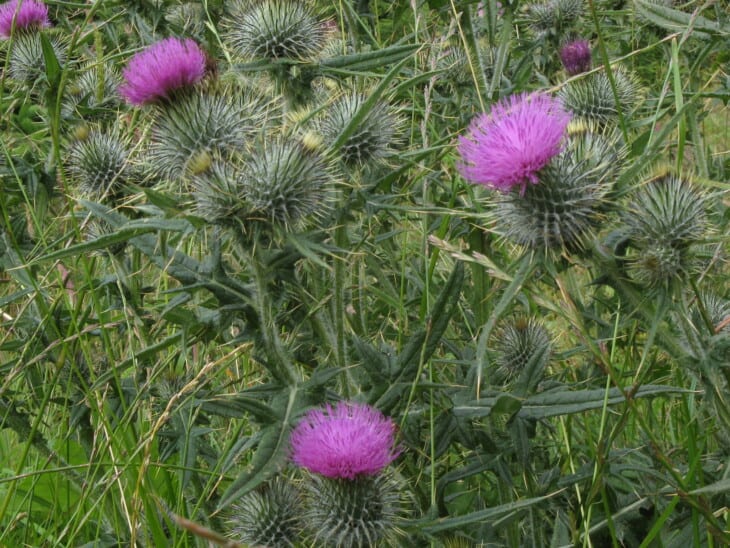
The plants that look most like thistle fall into two groups. For the garden, globe thistle, sea holly, Miss Willmott’s ghost, cardoon, globe artichoke and basket flower give you the spiny, purple, architectural look without the weediness. In the wild, the plants mistaken for thistle are usually knapweed, yellow star-thistle, burdock, teasel, sow thistle or milk thistle. To identify a true thistle, look for spines along the leaf edges and on the bracts under the flower head, plus a head made only of fluffy disc florets that turns into a puff of downy seeds.
Contents
True thistles are members of the daisy family, mainly in the genera Cirsium, Carduus, Onopordum and Silybum. Not all of them are weeds. Canada thistle and bull thistle are listed as noxious in many states and should be removed, but North America also has dozens of native thistles, such as field, tall and pasture thistle, which are valuable plants: bumblebees and swallowtails feed at the flowers, and goldfinches eat the seeds and line their nests with the down. Learn which one you have before you spray.

- Thistle-Like Plants for the Garden
- Thistle-Like Weeds
- How to Tell a True Thistle
- Weedy Thistles vs. Native Thistles
| Plant | Botanical name | A true thistle? | How to tell it apart |
|---|---|---|---|
| Globe Thistle | Echinops ritro | No, but a close relative | Perfectly round, steel-blue flower balls; no spines on the stem |
| Sea Holly | Eryngium planum and E. maritimum | No; it is in the carrot family | Cone-shaped heads with a stiff ruff of spiny bracts; metallic blue stems |
| Miss Willmott’s Ghost | Eryngium giganteum | No; also a sea holly | Huge silvery-white bracts; a biennial that dies after flowering |
| Cardoon | Cynara cardunculus | Yes, it is a true thistle | Enormous silver leaves; flower heads 3 inches across on 6-foot stems |
| Globe Artichoke | Cynara cardunculus var. scolymus | Yes, it is a true thistle | The “vegetable” is an unopened thistle flower bud |
| American Basket Flower | Plectocephalus americanus (Centaurea americana) | No; it is a knapweed relative | Big pink-lavender heads with a cream center; no spines at all |
| Common Knapweed | Centaurea nigra | No | Hard, dark, scaly flower bud; no spines on the leaves |
| Spotted Knapweed | Centaurea stoebe | No | Ragged pink-purple flowers; black-tipped bracts; deeply cut gray leaves |
| Yellow Star-Thistle | Centaurea solstitialis | No, despite the name | Yellow flowers with long, sharp, straw-colored spines |
| Burdock | Arctium minus and A. lappa | No | Huge rhubarb-like leaves; flowers turn into hooked burrs |
| Common Teasel | Dipsacus fullonum | No; it isn’t even in the daisy family | Stiff, egg-shaped head; flowers open in a band around the middle |
| Sow Thistle | Sonchus species | No | Yellow dandelion-like flowers; soft prickles; milky sap |
| Milk Thistle | Silybum marianum | Yes, it is a true thistle | Glossy leaves marbled with white veins |
Thistle-Like Plants for the Garden
Globe Thistle (Echinops ritro)
Globe thistle is the thistle lookalike most gardeners want: a stiff, upright perennial, 2 to 4 feet tall, with silvery stems and deeply cut, prickly-edged leaves, topped in midsummer by perfectly spherical, steel-blue flower heads 1 to 2 inches across. Bees cover it. It is in the daisy family like real thistles, but its flower heads are round drumsticks rather than shaving brushes, and it doesn’t run at the root. It is hardy in zones 3 to 9, thrives in poor, dry soil and dries well for arrangements. Deadhead it, because it self-seeds.
Sea Holly (Eryngium planum and E. maritimum)

Sea holly looks like a thistle that has been dipped in metal. Each flower is a small, egg-shaped cone of tiny flowers surrounded by a starry collar of narrow, spiny bracts, and in good varieties the whole upper plant turns steel-blue or silver. It grows 1 to 3 feet tall, thrives in poor, sandy, sharply drained soil and full sun, and hates wet winters. Despite the look, it is in the carrot family, not the daisy family, alongside Queen Anne’s lace. It has a long taproot, so plant it where it can stay.
Miss Willmott’s Ghost (Eryngium giganteum)

Miss Willmott’s ghost is the biggest and palest sea holly, 3 to 4 feet tall, with pale green flower cones surrounded by wide, ghostly silver-white bracts. It is a biennial: it makes a rosette the first year, flowers the second, then dies, leaving plenty of seedlings behind. The story goes that the Edwardian gardener Ellen Willmott scattered its seed in other people’s gardens, which is how it got its name.
Cardoon (Cynara cardunculus)

Cardoon is a giant thistle from the Mediterranean, grown both as a vegetable and as an ornamental. It makes a fountain of deeply cut, silver-gray leaves 3 feet long, then sends up branched stems 5 to 7 feet tall topped with violet-purple thistle flowers that bumblebees swarm. The blanched leaf stalks are eaten in Italy, Spain and southern France. It is hardy in zones 7 to 9 and can self-seed aggressively; in California it is an invasive weed, so check before planting.
Globe Artichoke (Cynara cardunculus var. scolymus)

The globe artichoke is a cardoon bred for its fat flower buds, and the part you eat is the base of the bracts and the immature flower head, picked before it opens. Let one go and it opens into a spectacular purple thistle flower 6 inches across. Plants grow 4 to 5 feet tall and wide and are perennial in zones 7 to 11, where they crop for several years; farther north they are grown as annuals from seed started in winter and chilled.
American Basket Flower (Plectocephalus americanus (Centaurea americana))

American basket flower is a native annual wildflower of the southern Great Plains, 3 to 5 feet tall, with fragrant, honey-scented flower heads 4 to 5 inches across: lavender-pink outer florets around a creamy center, over a woven, basket-like ring of bracts. It looks like a thistle but has no prickles anywhere, so it is easy to cut and handle. Sow seed in fall for bloom the following summer. Bees and butterflies love it, and unlike its knapweed relatives it isn’t invasive.
Thistle-Like Weeds
Common Knapweed (Centaurea nigra)

Common knapweed, or black knapweed, is a European perennial of grasslands and roadsides, 1 to 3 feet tall, with purple, thistle-like flower heads sitting on a hard, dark brown, scaly bud. Its leaves are narrow and have no prickles at all, which is the quickest way to tell it from a thistle. It is a good nectar plant in its native Britain, but in North America it is a non-native weed of pastures.
Spotted Knapweed (Centaurea stoebe)

Spotted knapweed is one of the most damaging invasive plants in the West and upper Midwest, covering millions of acres of rangeland. It grows 1 to 4 feet tall, with wiry stems, gray-green, finely divided leaves and ragged pink-purple flower heads whose bracts have distinctive black, comb-like tips. It releases chemicals that suppress neighboring plants, and its sap can irritate skin, so wear gloves when pulling it. Report and remove it.
Yellow Star-Thistle (Centaurea solstitialis)

Yellow star-thistle is a gray-green annual, 1 to 3 feet tall, with small yellow flower heads surrounded by stiff, straw-colored spines up to an inch long. It has taken over millions of acres of California grassland and is spreading through the Northwest. It causes “chewing disease”, a fatal brain disorder, in horses that eat it over weeks, so remove it from horse pastures. Pull or mow it before it sets seed.
Burdock (Arctium minus and A. lappa)
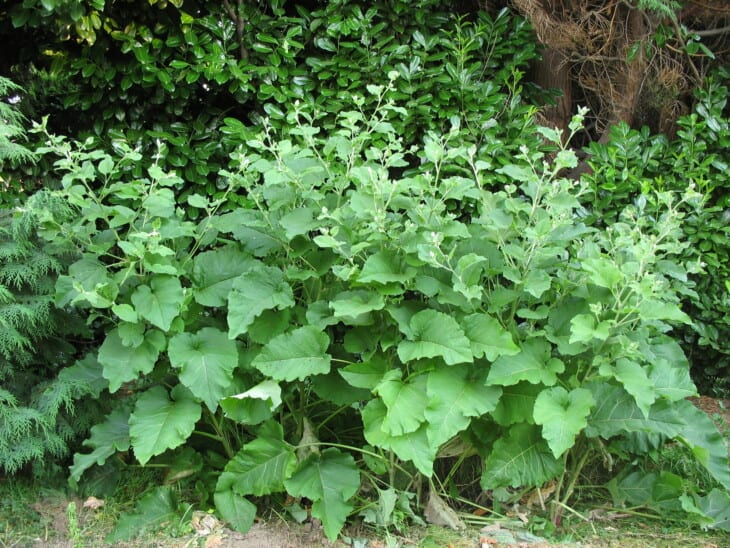
Burdock is the plant people most often mistake for a giant thistle in its first year, when it makes a rosette of very large, heart-shaped, woolly leaves. In its second year it sends up a branched stalk 3 to 6 feet tall with small purple flower heads wrapped in hooked bracts, which dry into the burs that stick to dogs and socks and inspired Velcro. The long taproot is eaten as gobo in Japan. It has no spines on its leaves.
Common Teasel (Dipsacus fullonum)

Teasel is unmistakable once you know it: a prickly, egg-shaped flower head 2 to 4 inches long, surrounded by long, upswept spiny bracts, with a ring of small lilac flowers that opens as a band around the middle and moves up and down the head. It grows 4 to 7 feet tall, with a prickly stem, and the dried heads stand all winter. Fuller’s teasel was once used to raise the nap on wool. It is an invasive weed across much of North America.
Sow Thistle (Sonchus species)
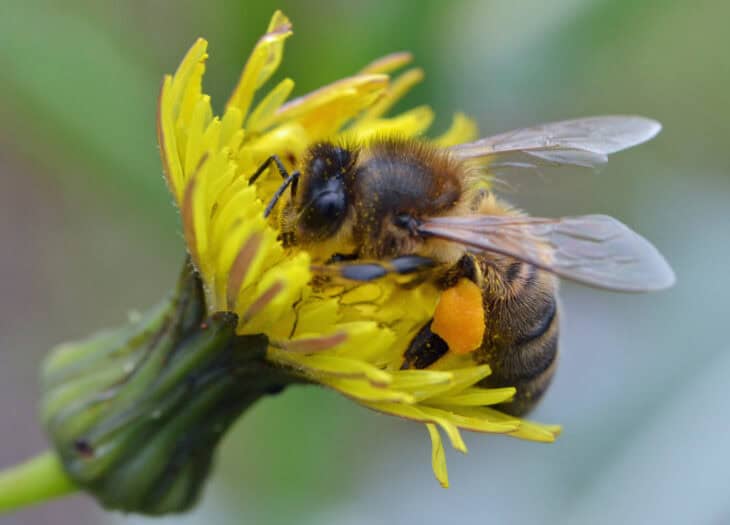
Sow thistles are annual weeds with jagged, clasping leaves edged in soft prickles that look fierce but bend under a finger. Their flower heads are yellow and dandelion-like, and every broken stem leaks milky white sap, which no true thistle does. They grow 1 to 6 feet tall in gardens, fields and pavement cracks, and they are edible when young. See our list of plants that look like dandelions.
Milk Thistle (Silybum marianum)
Milk thistle is a true thistle and easy to recognize by its large, glossy, spiny leaves marbled with milky-white veins. It grows 3 to 6 feet tall with big purple flower heads. Its seeds are the source of silymarin, sold as a liver supplement. It is also an aggressive invasive weed in California and other western states, where it forms dense stands and can poison cattle through nitrate accumulation, so don’t plant it.
How to Tell a True Thistle
- Spines in two places: a true thistle has spiny leaf edges and spine-tipped bracts around the flower head. Knapweeds have soft leaves, burdock has burs, and sea holly’s spines are on the bracts alone.
- Disc florets only: a thistle head is a shaving brush of narrow tubular florets, with no flat “petals” around the edge. Basket flower and cornflower have longer, ragged outer florets.
- Thistledown: the seeds carry a parachute of fine, feathery hairs, which is what goldfinches gather.
- Milky sap means sow thistle, not a true thistle.
- Round, drumstick heads mean globe thistle; a cone with a starry ruff means sea holly, which is in the carrot family.
Weedy Thistles vs. Native Thistles
- Canada thistle (Cirsium arvense): the worst one. It spreads by creeping roots, so pulling makes it worse. It has small, pale lilac heads, no spines on the flower stalk and separate male and female plants. Repeated cutting at bud stage over several seasons, or targeted herbicide, is the way out.
- Bull thistle (Cirsium vulgare): a biennial with big, spiky purple heads. Dig the rosette in its first year and it is gone.
- Native thistles such as field thistle, tall thistle and pasture thistle have leaves that are white and woolly underneath and grow as single plants, not thickets. Leave them: they are among the best nectar plants in North America, and several rare butterflies depend on them.
- If in doubt, check with your county extension office before removing a thistle from a prairie or meadow.