
Key Facts
- Common name lilac is Syringa vulgaris.
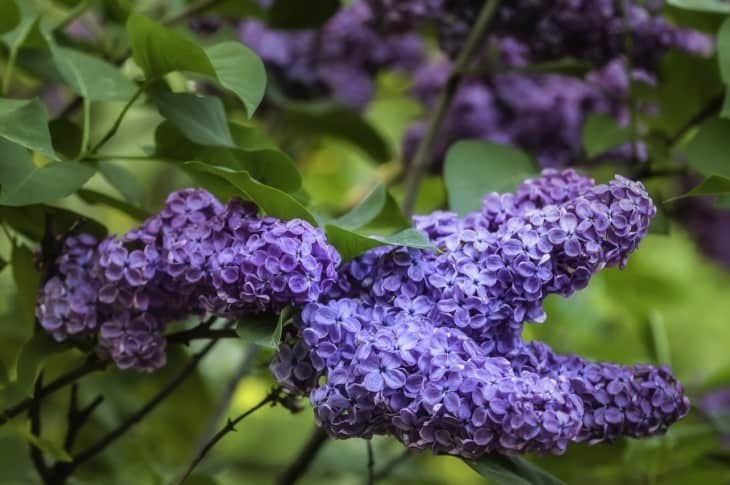
- Fragrant spring flowers often in shades of purple or white.
- Best flowering occurs in full sun.
- Prefers well drained, neutral to slightly alkaline soil.
- Hardy to about USDA zones 3–7.
- Usually grown as a multi stem shrub or small tree.
- Prune immediately after flowering to avoid removing next year blooms.
- Propagated by suckers, cuttings or grafting for named cultivars.
Lilac is a spring flowering shrub valued for its fragrant clusters of purple or white blooms and its role as a multi stem specimen in mixed borders. It performs best in full sun and well drained neutral to slightly alkaline soil while flowering reliably in cool temperate climates.
Identification
Syringa vulgaris grows as a multi stem shrub or small tree reaching about 8 to 15 feet tall with a spread commonly around 6 to 12 feet. Flower panicles appear in spring often around April and May in the Northern Hemisphere and carry a strong fragrance that makes the plant easy to recognize.
Best places to grow and typical uses
Use lilac as a specimen shrub, a flowering hedge or in a mixed shrub border where spring fragrance and visual impact are desired. Best flowering requires at least six hours of sun daily so place where sunlight is reliable rather than in deep shade.
Planting time and spacing
Plant while the plant is dormant in spring or fall depending on local climate and soil workability. Space plants according to their mature spread which is typically six to twelve feet apart so each shrub has room to develop without crowding and to reduce disease risk.
Soil light and watering
Lilac prefers well drained fertile soil with a neutral to slightly alkaline pH around 6.5 to 7.5 and does not tolerate waterlogged sites. In poorly drained soils root decline and poor flowering are common so choose a site with good drainage and avoid prolonged wet feet.
After flowering care and pruning
Prune immediately after flowering to shape the shrub and to avoid cutting off next year blooms. Remove spent flower panicles and thin older stems to encourage new growth while leaving some mature wood to support spring blossoms.
Controlling spread and propagation
Lilac commonly produces suckers and root shoots that can expand the planting if left unchecked. Remove unwanted suckers at their source or use root barriers to contain spread. Propagation is by suckers, hardwood or semi ripe cuttings and by grafting when maintaining named cultivars.
Frequently asked questions
- How fast does Lilac grow?
- Growth rate varies by cultivar and conditions. Expect a multi stem shrub to reach the typical mature height of 8 to 15 feet over several years as it establishes.
- When do lilacs bloom?
- Blooming occurs in spring often in April to May in the Northern Hemisphere but exact timing depends on local climate and latitude.
- Are lilacs safe for pets and children?
- Lilac is not generally listed as highly toxic and ingestion typically causes mild stomach upset. Verify safety with local poison control or the ASPCA database for specific concerns.
- When should I prune my lilac?
- Prune immediately after flowering to avoid removing next year blooms and to shape the shrub while new growth is still young.
- How far apart should I plant lilacs?
- Plant so mature shrubs will be about six to twelve feet apart depending on the cultivar and whether suckers will be allowed to develop.
Gallery




Related Plants


Mentioned In (7)

Plants
6 Plants That Look Like Snowballs
The Japanese snowball bush (Viburnum plicatum) is native to Taiwan, Korea, China, and Japan. These plants belong to the Adoxaceae…

Plants
9 Plants That Look Like Butterfly Bush
The butterfly bush (Buddleja davidii) may be a beautiful plant, but it is also an invasive species in North America.…

Plants
8 Plants That Look Like Hydrangea
Hydrangeas are one of those plants that makes a lasting impression because of the beautiful, snow globe-sized flower bunches. There…

Trees
23 Flowering Trees For Pennsylvania Gardens
Do you want to enhance the curbside appeal of your Pennsylvania home by planting flowering trees in your garden? Well,…

Trees
27 Best Flowering trees For California by Color
Are you looking forward to planting breathtaking flowering trees in your Cali garden? You will be ecstatic to know that…
Trees
14 Beautiful Purple Flowering Trees in Spring
If you’re a fan of planting uniquely colored flowering trees in your garden, you must love purple flowering trees. After…

Trees
23 Beautiful Types of Lilac Trees
If you love the pleasing aroma of a lilac tree, you’re in luck. Contrary to what some people believe, there…