
Key Facts
- Deciduous ornamental tree with large heart shaped leaves.
- Showy white tubular flowers appear in late spring to early summer.
- Produces long bean like seed pods that persist into fall.
- Native to the central United States and widely planted elsewhere as a specimen or street tree.
- Tolerant of a wide range of soils including clay and alkaline conditions.
- Performs best in full sun but tolerates partial shade.
- Fast growing and can produce basal suckers or multiple stems.
- Valued for summer shade and dramatic floral display.
Northern Catalpa is a large deciduous tree prized for its broad heart shaped leaves and dramatic clusters of white tubular flowers in late spring to early summer. It produces long bean like seed pods that persist into fall and is commonly planted as a specimen or street tree.
Identification
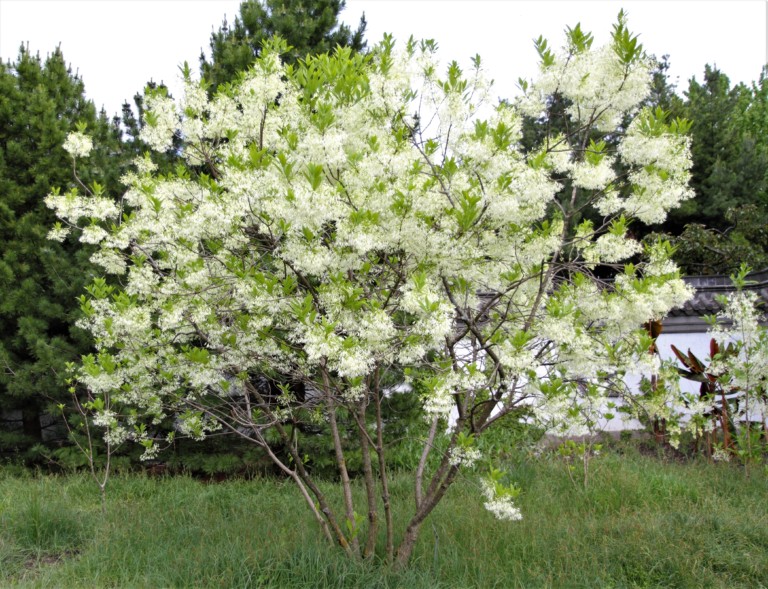
Leaves are large and heart shaped, forming a bold summer canopy. Clusters of showy white tubular flowers appear in May and June in many climates and give way to long bean like seed pods that remain through autumn. Mature height typically reaches 40 to 70 feet with a 25 to 40 foot spread.
Best uses and where to grow
Use Northern Catalpa as a specimen shade tree, a focal street tree or in large lawns where its dramatic flowers and summer shade are desired. It is native to the central United States and is hardy in USDA zones 4 to 8. Plant in full sun for the best floral display, though it tolerates some afternoon shade.
Soil, planting season and spacing
Prefers moist fertile well drained soil but tolerates clay, dry and alkaline soils. Plant in spring or fall to give roots time to establish before temperature extremes. Allow at least the trees mature spread when siting a specimen roughly 25 to 40 feet from buildings or other large trees to avoid crowding and root conflicts.
Watering and routine care
Keep soil consistently moist while young to encourage deep roots; established trees tolerate drier sites and a range of soil types. Avoid sites with persistent waterlogging which can lead to root decline. Prune to remove crossing branches, manage form and clear basal suckers; light pruning after flowering helps maintain a tidy canopy.
Controlling spread and suckers
Northern Catalpa can send up basal suckers and occasionally form multi stem clumps if not managed. Remove unwanted suckers at their base and maintain a single trunk if a clear bole is desired. Regular removal prevents thickets and reduces the need for heavier corrective pruning later.
Propagation
Propagate by seed, root suckers, softwood cuttings or grafting for named cultivars. Seedlings are variable in traits while suckers and grafted material preserve parent characteristics. Take care with vegetative volunteers to avoid unintended thickets in landscape settings.
Frequently asked questions
- How fast does Northern Catalpa grow?
- Fast growing; it often reaches its 40 to 70 foot mature height quicker than many shade trees, though yearly rate varies with site.
- When does it bloom?
- Flowers typically appear in late spring to early summer, often May and June depending on local climate.
- What soils will it tolerate?
- Prefers moist fertile well drained soil but tolerates clay, dry and alkaline conditions.
- Is it suitable for small yards?
- Its large mature size and suckering habit make it better suited to larger sites than small urban yards.
- How do I keep it from forming thickets?
- Remove basal suckers at the root and prune to a single trunk to prevent clonal spread.
Related Plants


Mentioned In (2)
Trees
Trees of Iowa: 40 Common Native Trees (and 4 to Avoid)
The most common trees in Iowa are silver maple, eastern cottonwood, bur oak, hackberry, American elm, green ash, black walnut,…
Trees
Trees of Pennsylvania: Common Trees & Native Pines
Pennsylvania means "Penn's Woods", and the name still fits: close to 60% of the state, about 17 million acres, is…