
Key Facts
- Perennial woody subshrub grown as an herb.
- Aromatic grey green leaves commonly used in cooking.
- Produces upright flower spikes in spring to early summer.
- Prefers well drained soil and full sun exposure.
- Tolerates poor, rocky soils but resents waterlogged conditions.
- Attracts bees and other pollinators when in bloom.
- Easily propagated by seed and by cuttings.
- Can be semi evergreen in mild winters and dies back in cold climates.
Sage is a perennial woody subshrub grown for its aromatic grey green leaves and upright flower spikes. It is prized in herb gardens for cooking and for attracting bees, but it needs full sun and very good drainage to thrive.
Identification
Leaves are grey green and aromatic and the plant forms a woody base with leafy stems. Plants typically reach about 18 to 24 inches tall and spread roughly 24 to 36 inches. Flowers appear in late spring to early summer on upright spikes and draw pollinators.
Where to grow and best uses
Grow sage in full sun for the best flavor and compact form. It tolerates poor and rocky soils but resents waterlogged ground which leads to root rot. Use sage in an herb bed, a sunny mixed border, or a pollinator patch where its blooms can be seen and visited by bees.
Hardiness and seasonal notes
Common garden sage is typically hardy in USDA zones 4 to 8. In colder areas expect winter dieback and consider protecting crowns. In mild winters plants can remain semi evergreen but may become woodier in very warm climates.
Planting and spacing
Space plants so mature clumps have about 24 to 36 inches between centers to allow airflow and reduce disease. Plant in a sunny, well drained spot and avoid low depressions that collect water. New transplants establish best when they have several weeks of steady conditions to develop roots before winter.
Watering and care
Once established water sparingly. Excess moisture causes root decline and wilting. Light trimming through the season keeps growth fresh and prevents plants from getting too woody.
After flowering and pruning
After flowering cut back longer stems to encourage new growth and to keep the plant compact. Regular pruning helps limit natural spread and renews foliage for cooking.
Propagation
Sage is easily propagated by seed and by cuttings. Division of mature clumps can renew plants and control spread. Cuttings root quickly in a well drained medium.
Problems and safety
Major problems come from poor drainage and winter wet, which cause root rot. Ingestion of normal culinary amounts is safe. Concentrated sage oil or very large doses of extracts can cause adverse effects due to thujone, so handle essential oils with caution and contact poison control for exposures of concern.
Frequently asked questions
- How fast does Sage grow?
- Growth is moderate. Sage commonly reaches its typical height of 18 to 24 inches and spreads to 24 to 36 inches once established over one to a few growing seasons depending on site and care.
- When does Sage bloom?
- Flowers appear in late spring to early summer, with occasional rebloom in some climates.
- What soil does Sage prefer?
- Well drained, moderately fertile soil with neutral to slightly alkaline pH. Avoid heavy clay and sites that stay wet.
- Can I grow Sage in a container?
- Yes when the potting mix drains well and the container is in full sun. Containers help if garden soil stays wet.
- How do I propagate Sage?
- By seed, softwood or semi ripe cuttings, hardwood cuttings and by dividing established clumps.
Related Plants
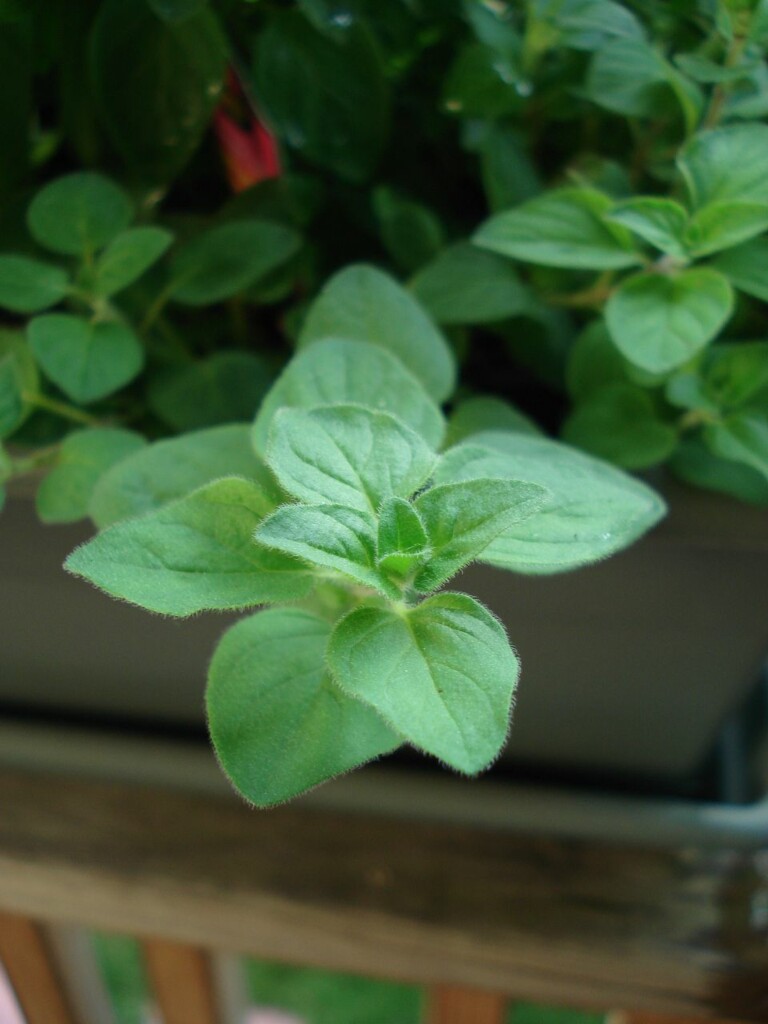
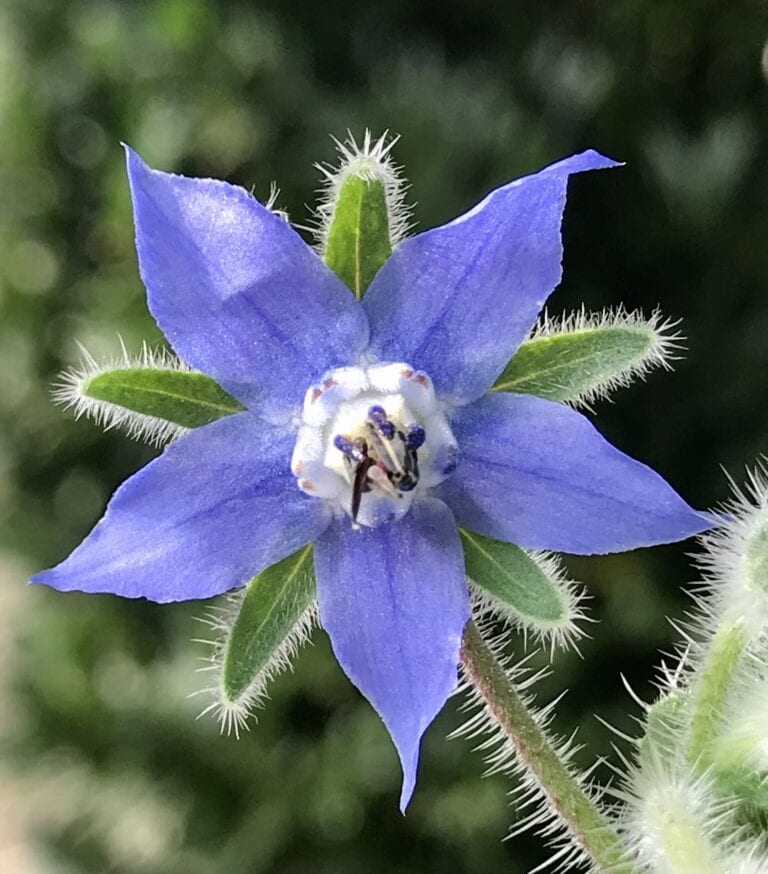

Mentioned In (4)
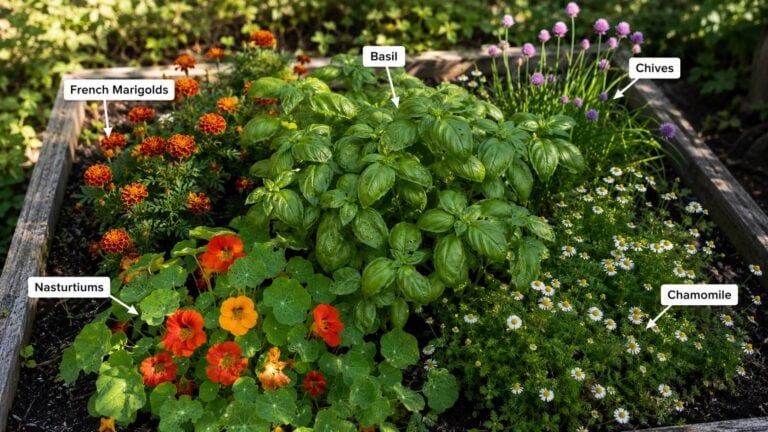
Plants
Companion Plants for Basil: What Works and Why
Basil bolts faster than almost any other herb in the summer garden, and once it flowers, the leaves turn bitter…
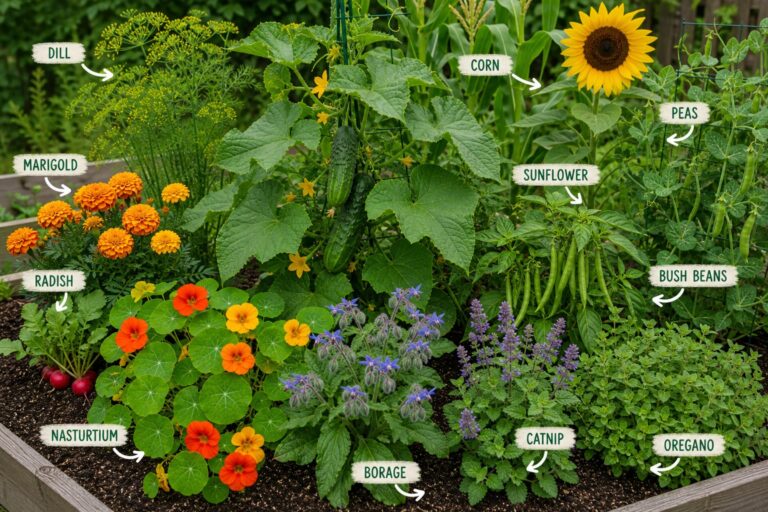
Plants
Companion Plants for Cucumber: What Works (and what Doesn’t)
Cucumber beetles are one of the most destructive forces in the vegetable garden — and they don't just eat foliage.…

Plants
10 Plants That Look Like Tarragon
Tarragon (Artemisia dracunculus) is a perennial herb that grows wild in North America, Europe, and Asia. It is used in…

Plants
8 Plants That Look Like Lamb’s ear
Lamb’s ear (Stachys byzantine) is a unique plant with velvety leaves that hang downwards to form "lamb’s ears". Lamb’s ear…