
Key Facts
- Deciduous bramble in the rose family native to western North America.
- Common in moist forests, riparian edges and disturbed sites.
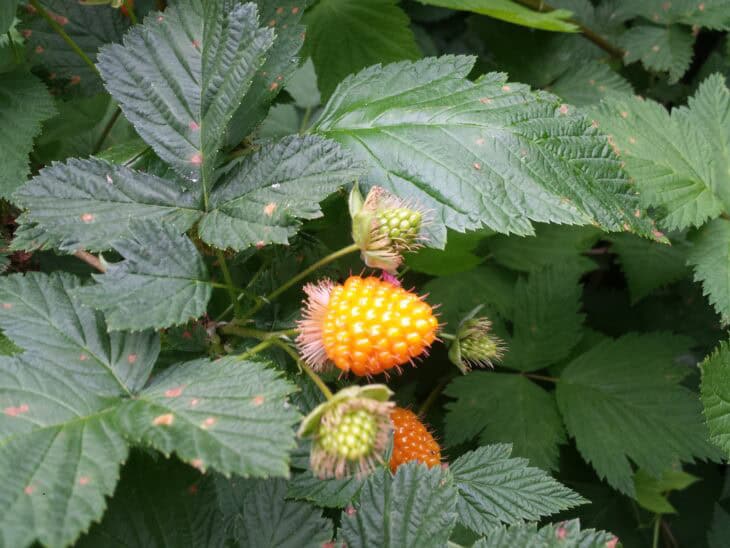
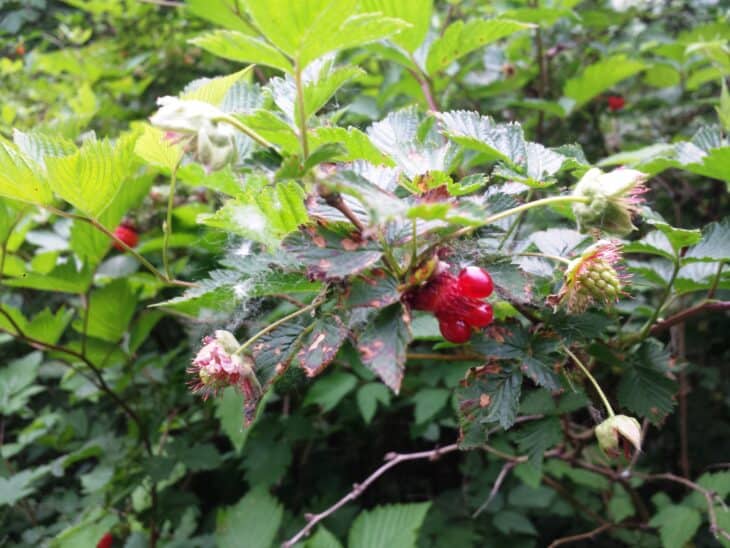
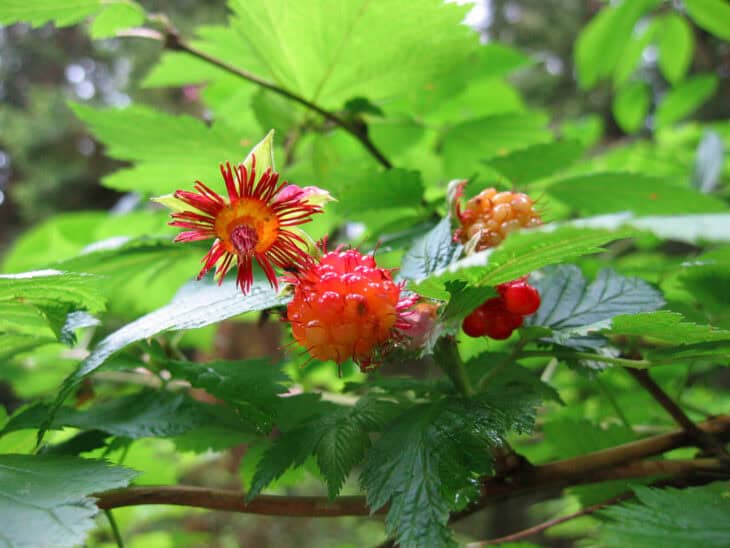
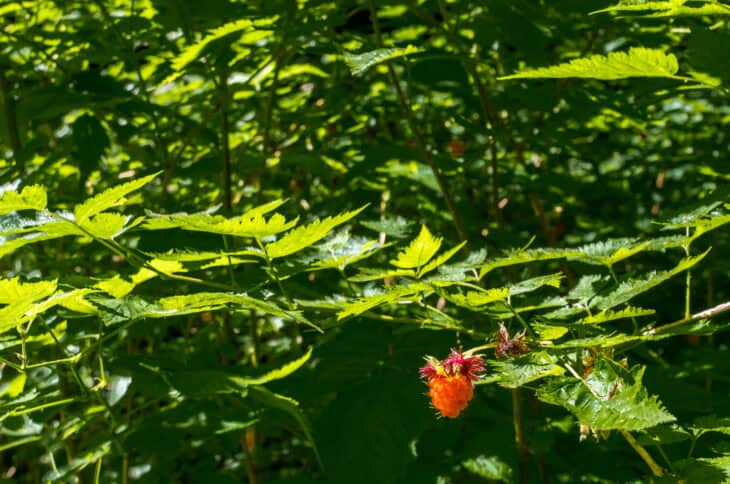
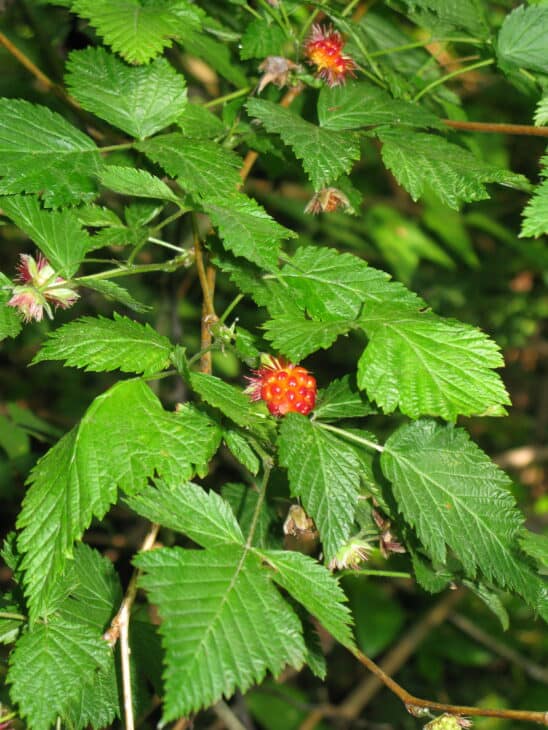
- Produces orange to red edible aggregate berries.
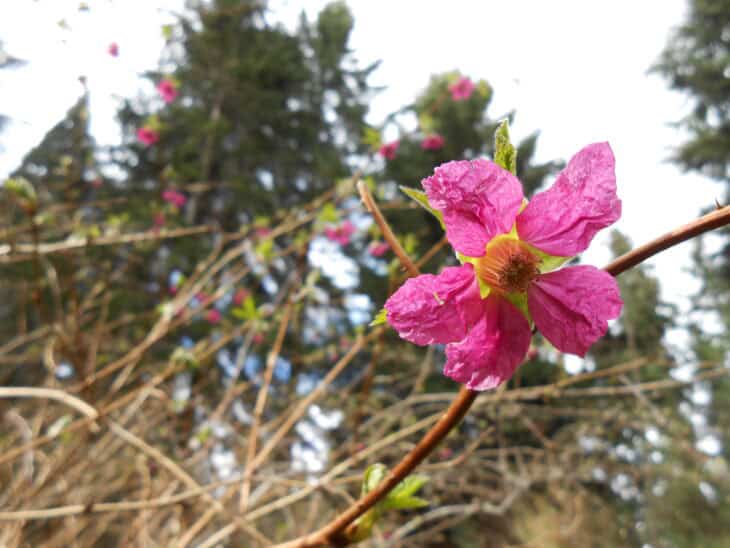
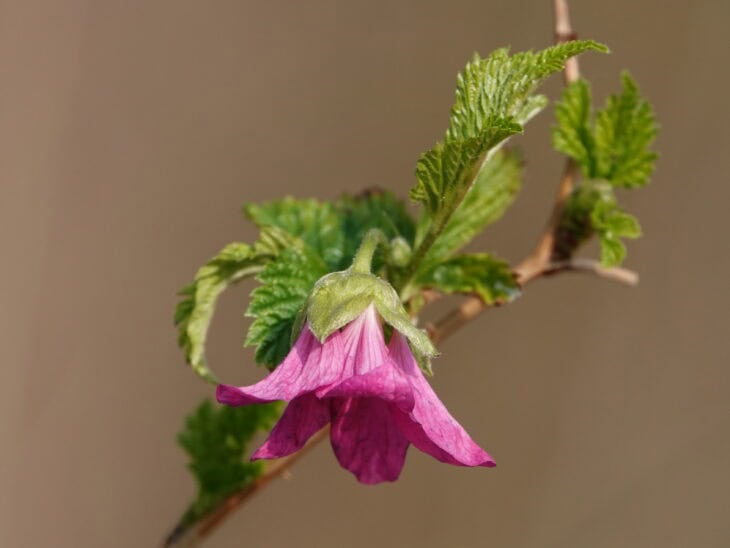
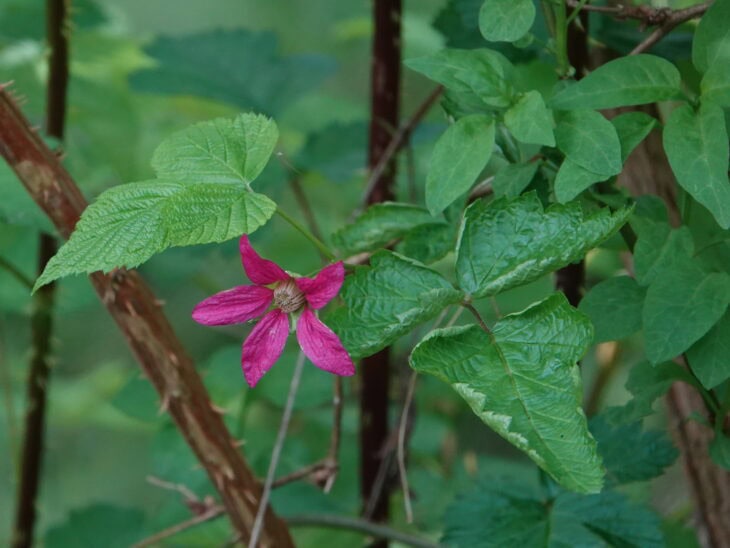
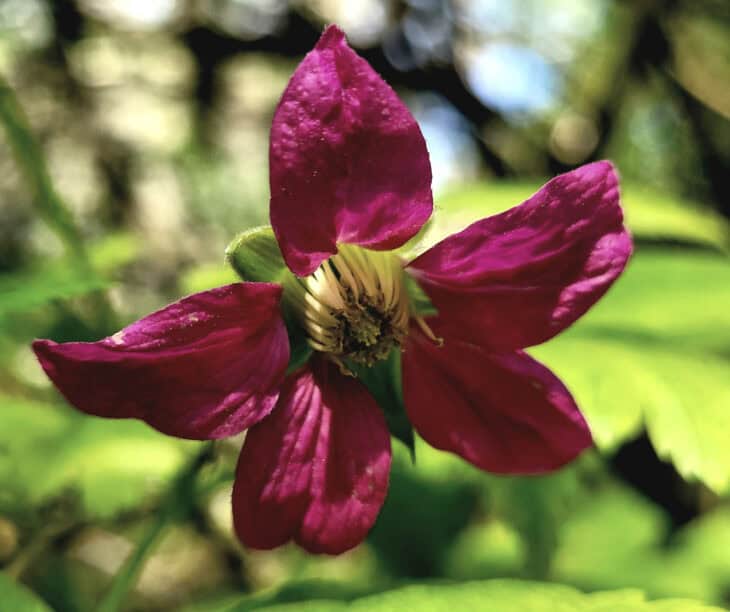
- Flowers are pink to orange and appear in spring.
- Spreads by root suckers and tip layering to form thickets.
- Used as a food source by Indigenous peoples and by wildlife.
- Tolerates shade and prefers moist acidic to neutral soils.
Salmonberry (Rubus spectabilis) is a deciduous bramble native to western North America that produces orange to red edible berries in spring and early summer. It forms thickets by root suckering and tip layering, making it useful for wildlife habitat and naturalizing areas but harder to contain in small gardens.
Identification
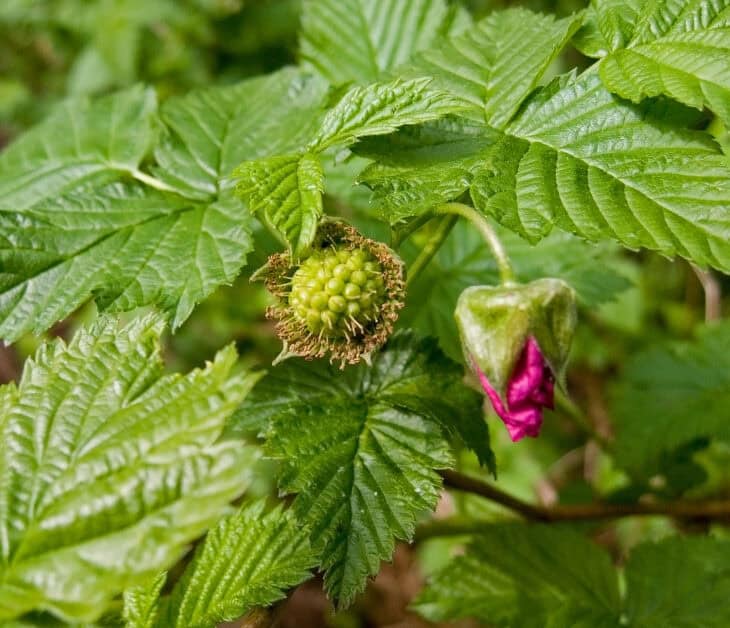
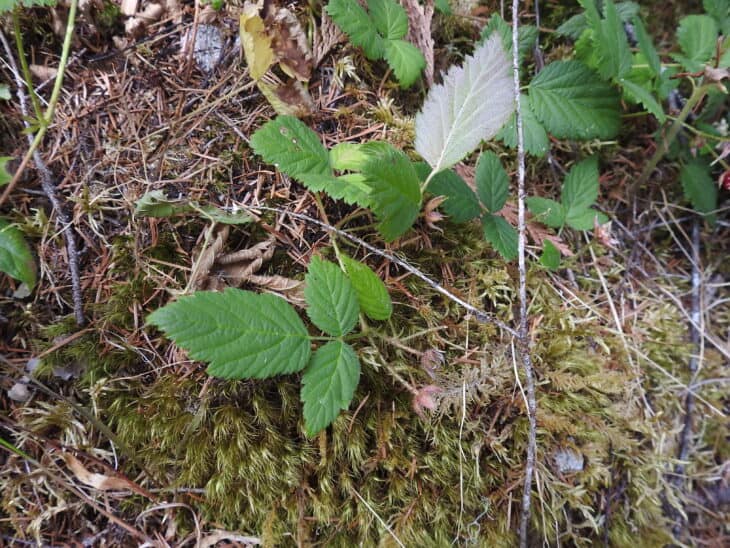
Salmonberry is a deciduous shrub in the rose family with pink to orange flowers in spring and aggregate berries that turn orange to red as they ripen. Plants commonly reach about 3 to 10 ft tall and spread 3 to 8 ft or wider when allowed to form thickets.
Where to grow and best uses
Native to moist forests and riparian edges, salmonberries do best in moist, acidic to neutral soils and tolerate part shade to full shade; they will take full sun only where soil moisture is reliable. Use them for wildlife hedgerows, riparian buffers, erosion control and naturalized edges where a spreading shrub is acceptable.
Hardiness and bloom
Salmonberries are generally suited to USDA zones 4 to 8, roughly covering cool temperate coastal and montane areas where the species occurs. Flowers appear in spring and berries ripen in late spring to early summer, with exact timing varying by latitude and elevation.
Planting and spacing
Space plants roughly 3 to 8 ft apart depending on whether you want isolated specimens or a dense thicket. Set plants at the same depth they were growing in their nursery container and allow room for basal shoots and layering to develop.
Water and soil
Plant in moist, well drained to periodically wet soils and avoid dry compacted sites. In drier garden soils expect reduced vigor and fewer berries unless supplemental irrigation is provided.
After-flowering care and pruning
Thin canes and remove excess basal shoots to limit thicket formation and keep paths or adjacent plants clear. Regular pruning and removing tip-layered stems before they root will reduce spread. Picking ripe fruit and clearing fallen berries can limit volunteer seedlings where desired.
Propagation
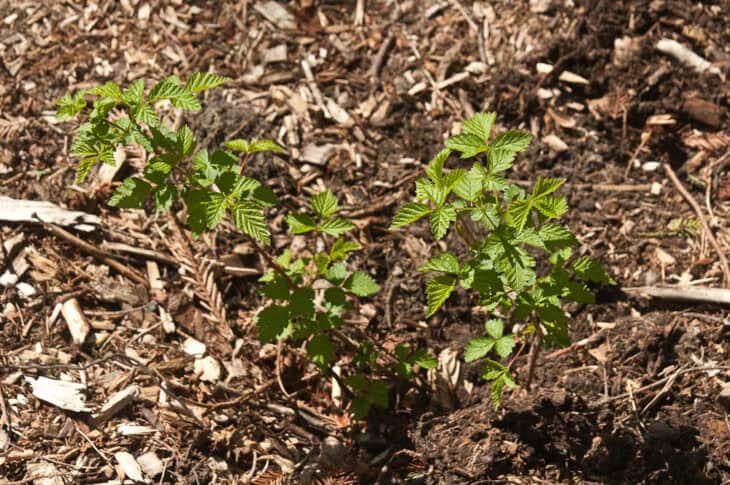
Salmonberries propagate easily by tip layering and root suckers, and can be divided from established clumps. Seed will produce plants but seedlings may vary from the parent. Hardwood cuttings are another reliable method for vegetative propagation.
Containment and landscape considerations
Left unmanaged salmonberries form dense thickets that can outcompete low plants and take up large areas. Control comes from regular pruning, removing suckers and occasional thinning. They provide good cover and food for wildlife but are not ideal where tight plant spacing or tidy borders are required.
Frequently asked questions
- How fast does Salmonberries grow?
- They spread moderately fast by root suckers and tip layering and can form dense thickets; individual plants commonly reach 3 to 10 ft tall as they mature.
- How do I propagate Salmonberries?
- Propagate by tip layering, division of suckers, hardwood cuttings or seed. Vegetative methods produce plants true to the parent.
- Are the berries edible?
- Yes. The orange to red aggregate berries are edible and were traditionally used by Indigenous peoples; wildlife also eats them.
- Are Salmonberries invasive?
- They are not classed as a widespread invasive outside their native range but will readily naturalize and form extensive thickets in suitable moist sites if unmanaged.
- Do Salmonberries tolerate shade?
- Yes. They tolerate part shade and can grow in shady forest understories, though they will fruit best with some light and steady soil moisture.
- Can I grow Salmonberries in containers?
- They are generally better suited to the ground because of basal suckering and tip layering, though container culture is possible with frequent root pruning and close management.
Gallery
Related Plants


Mentioned In (2)

Plants
5 Plants That Look Like Blackberries
Blackberries are a superfood as they contain vitamin A, a range of B vitamins, vitamin C, vitamin E, and vitamin…

Plants
11 Plants That Look Like Raspberries
Raspberries (Rubus idaeus var.) are some of the most common berries in America since they are native to parts of…