
Key Facts
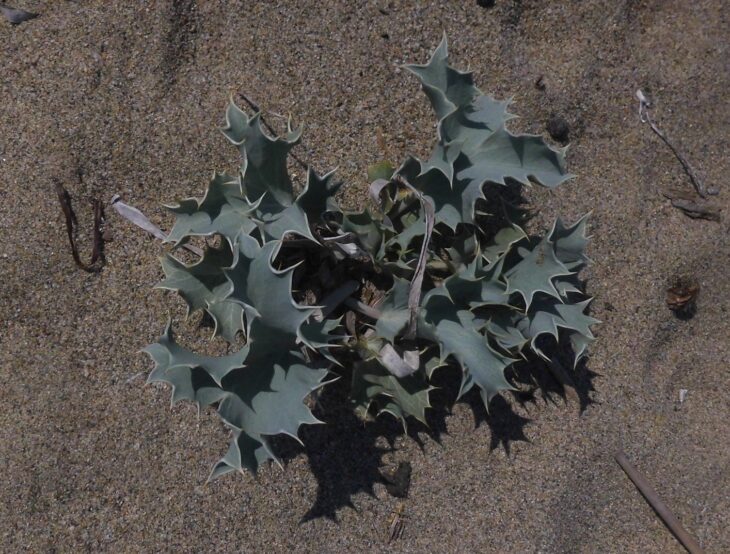
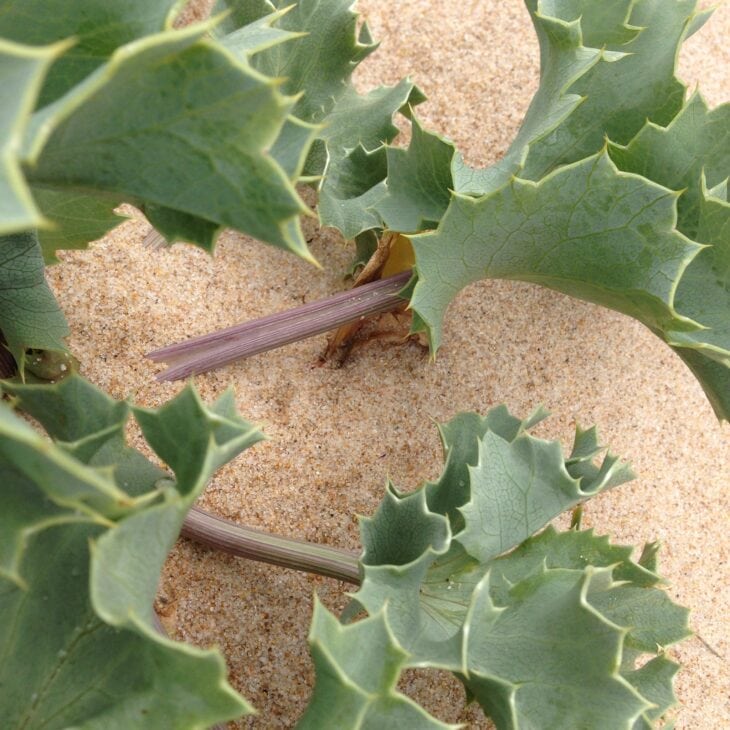
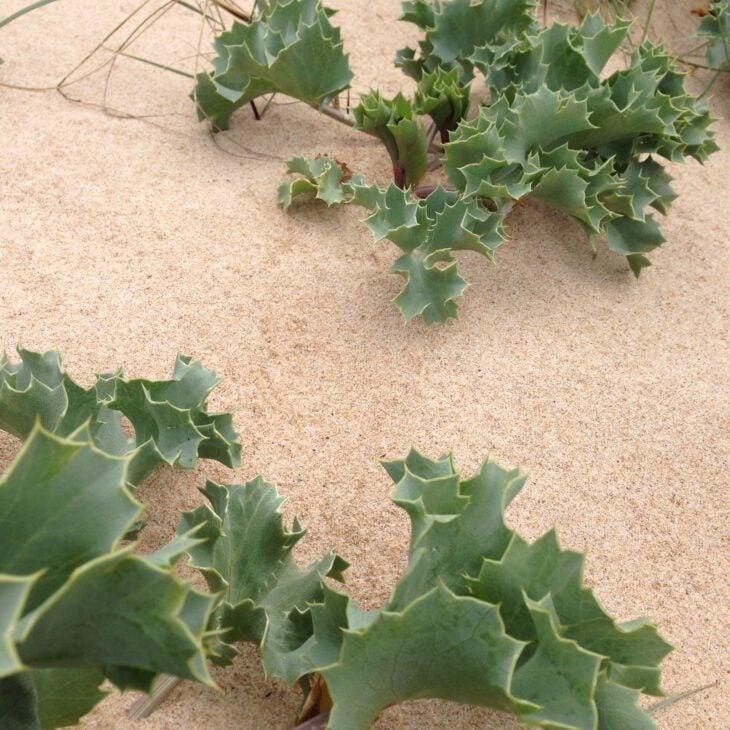
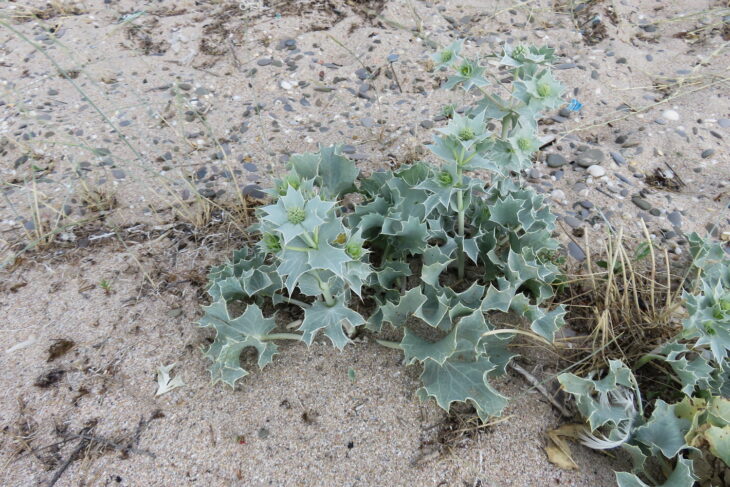
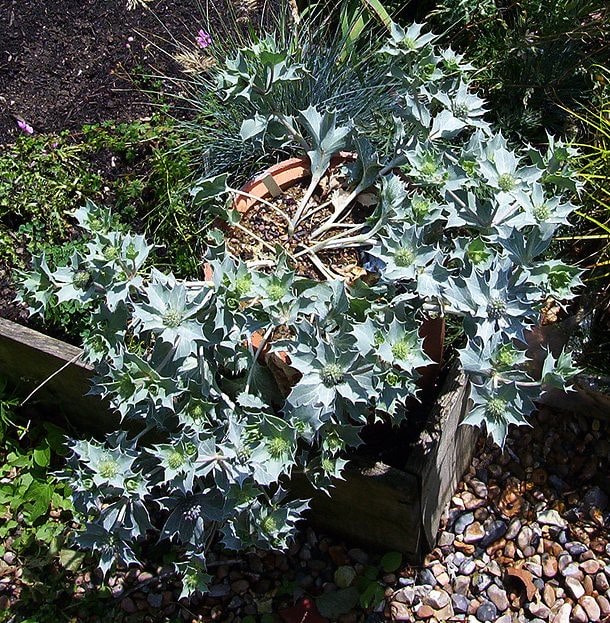
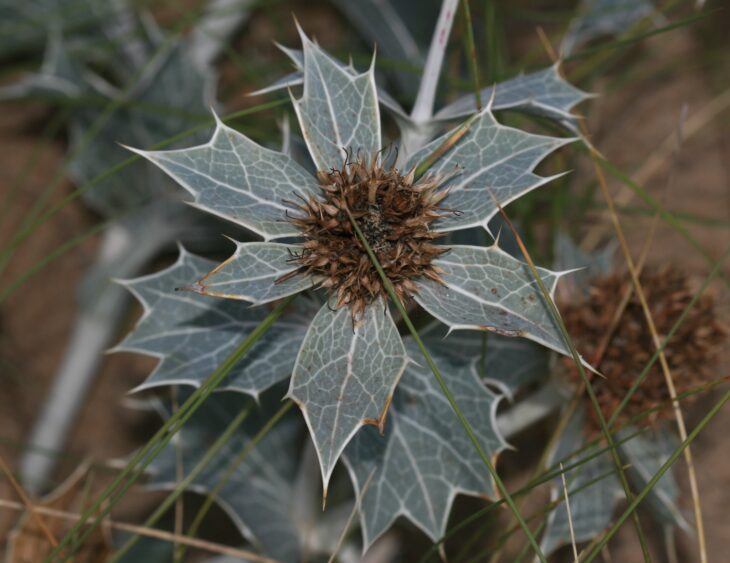
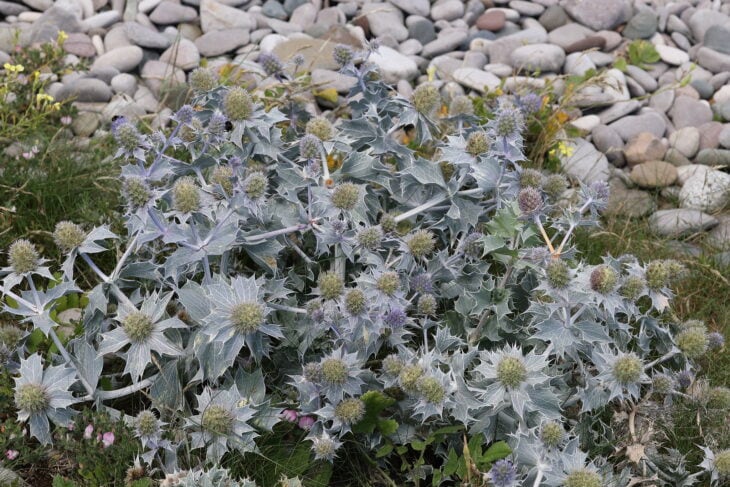
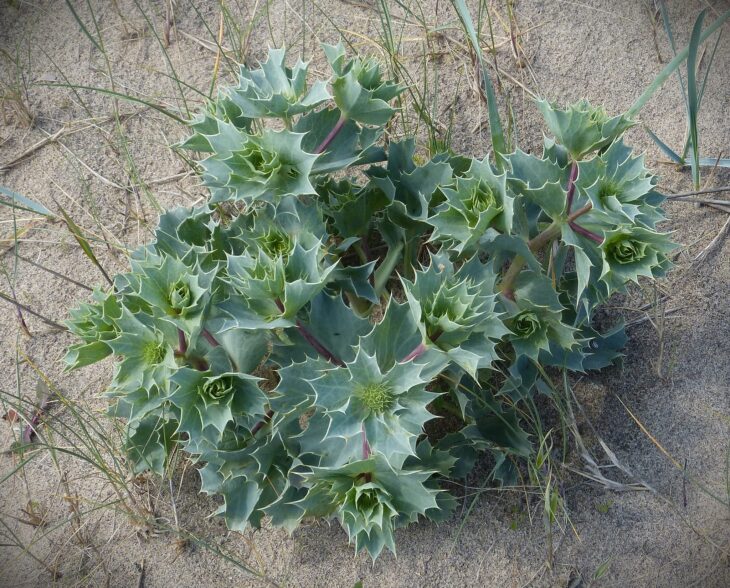
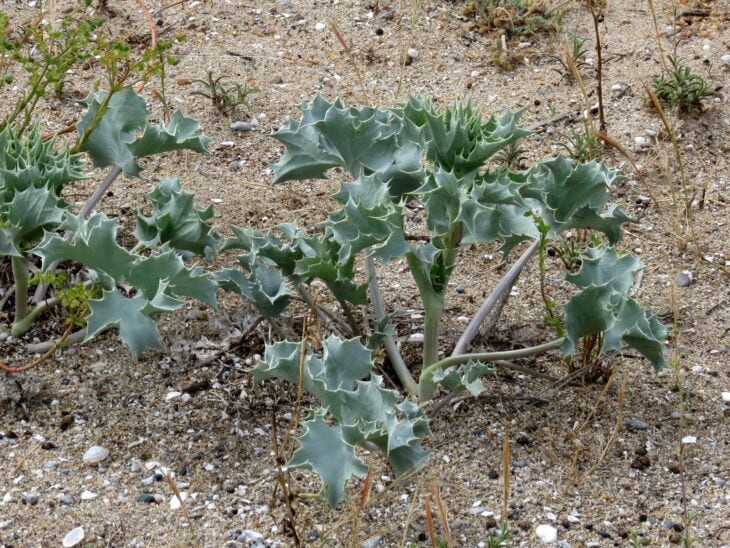
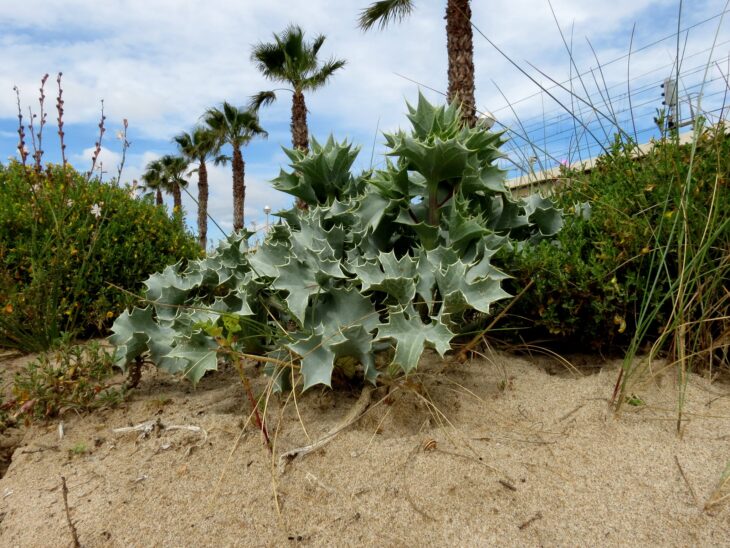
- Perennial coastal plant with spiny, silvery foliage.
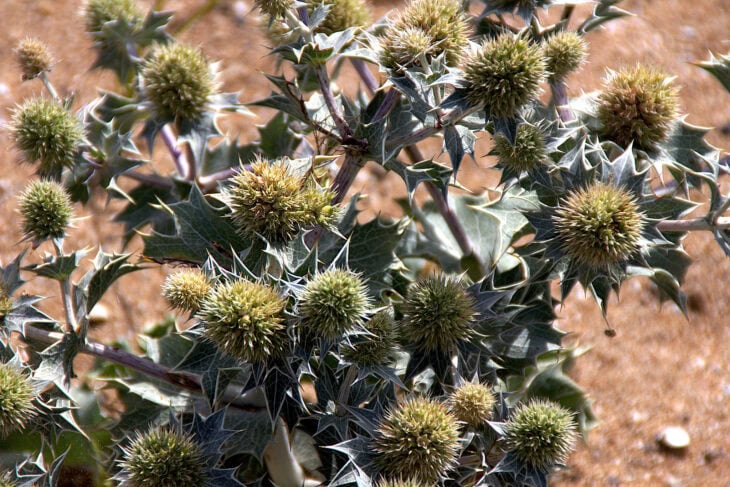
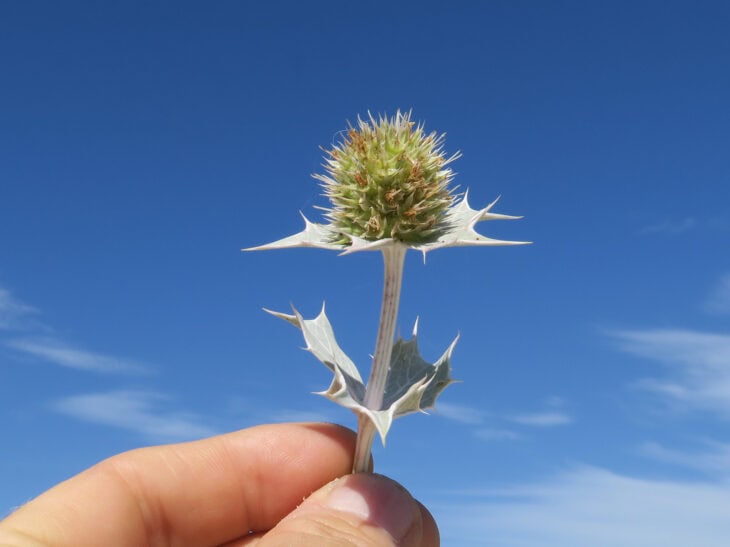
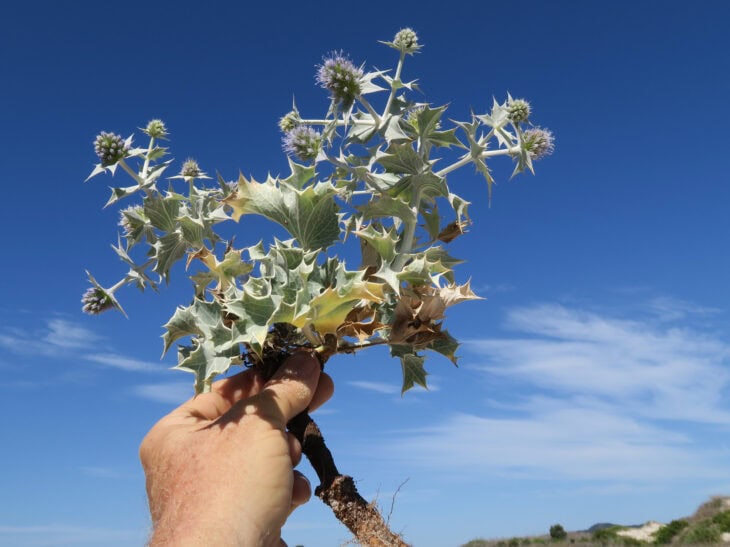
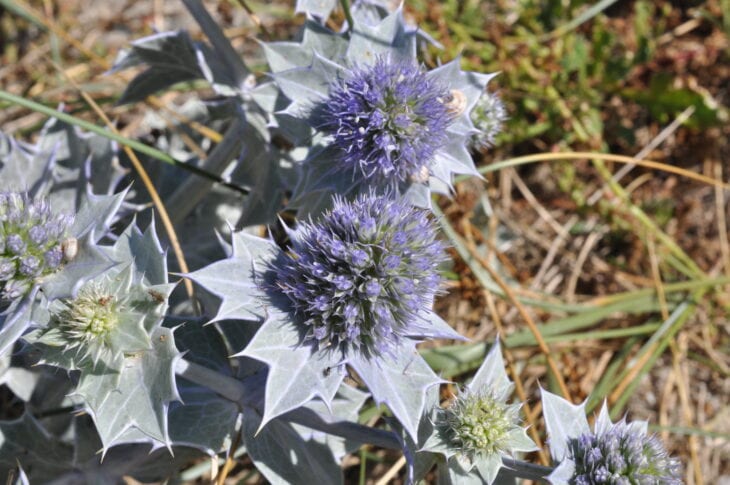
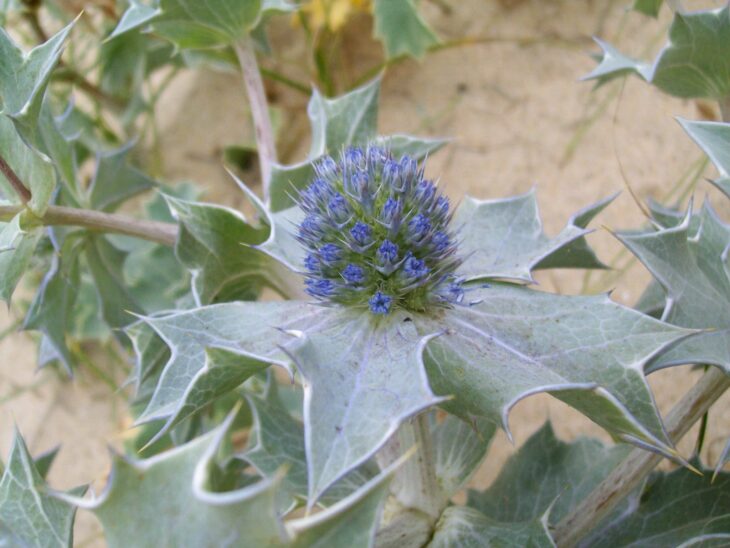
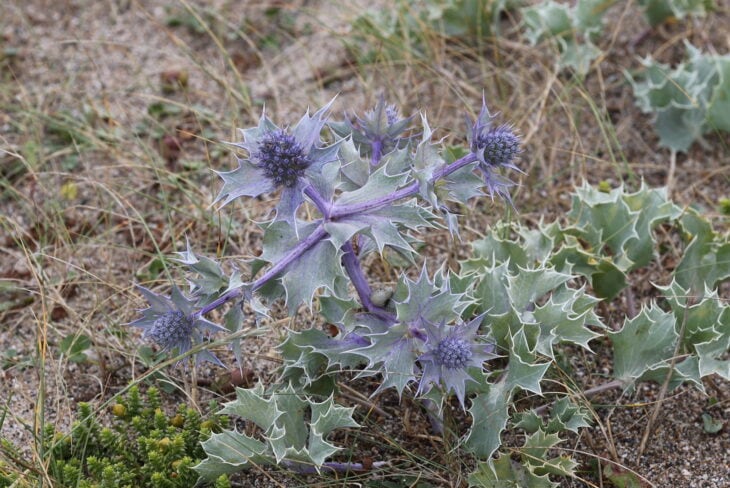
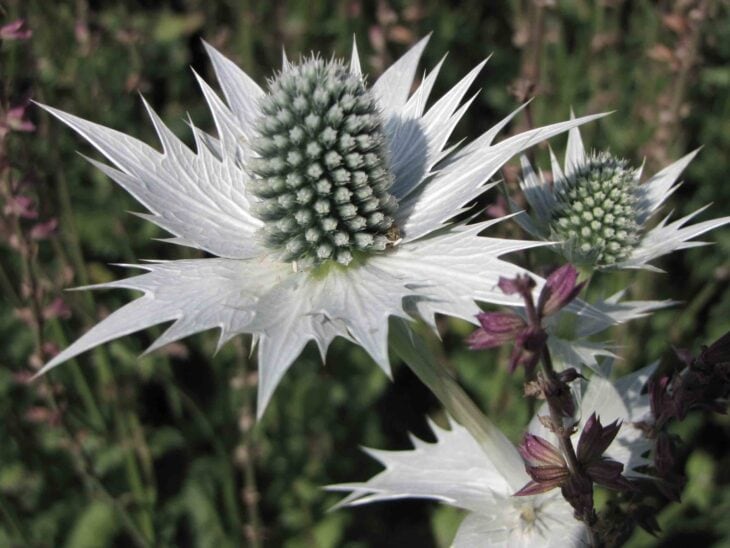
- Distinctive metallic blue to steel flower heads surrounded by bracts.
- Prefers sandy, well drained soils and tolerates salt spray.
- Attracts bees and other pollinators.
- Drought tolerant once established.
- Best grown in full sun and exposed sites.
- Useful in rock gardens and coastal plantings.
- Can be propagated by seed and by division.
Sea Hollies (Eryngium maritimum) are low perennial plants with spiky silvery foliage and metallic blue to steel flower heads. They suit sunny, exposed sites and coastal or rock garden planting where sandy, free draining soil is available.
Identification
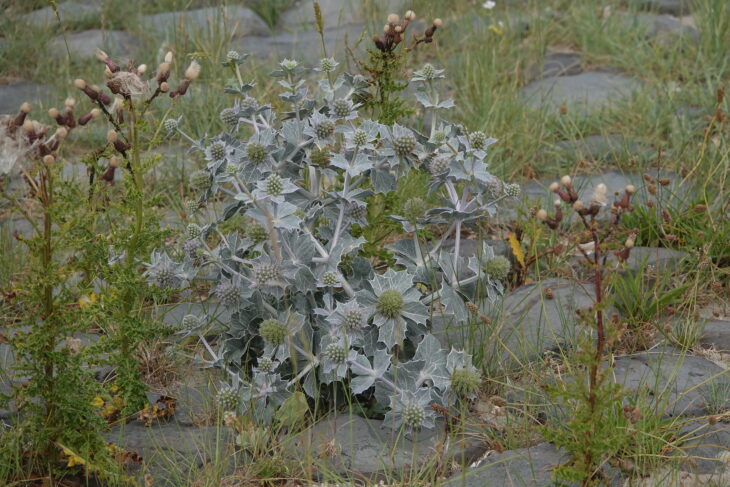
Sea Hollies form compact clumps of thorny, silvery leaves and produce distinctive blue to steel globes of flowers surrounded by papery bracts. Plants typically reach about 20 to 50 cm tall with flowering stems often rising above the foliage. Mature clumps commonly spread to roughly 30 to 60 cm across and flower in summer in the northern hemisphere.
Where to grow and best uses
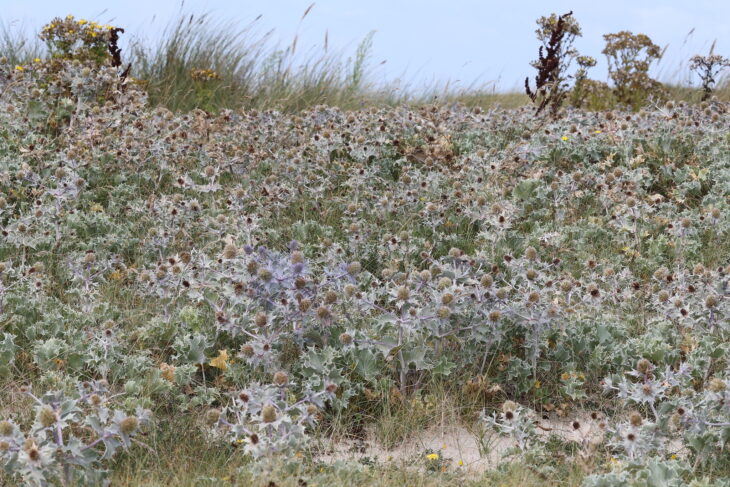
These perennials excel in coastal borders, dune restorations and rock gardens where salt spray and wind limit other plants. They prefer full sun and exposed positions and perform poorly in heavy shade. Plant Sea Hollies in mixed gravel beds or sandy corners to add architectural blue flowers and to support bees and other pollinators.
Planting and spacing
Sow seed outdoors or after a period of cold stratification and lift and divide established clumps in spring to renew plants. Allow about 30 to 60 cm between plants to match their natural spread and preserve air flow. Avoid planting in poorly drained hollows where water can collect.
Watering and soil
Choose sandy, well drained soil of low to moderate fertility and avoid heavy clay that stays wet. Sea Hollies tolerate salt spray and are drought tolerant once established. Poor drainage leads to crown rot so improve soil drainage or use a raised bed on inland sites.
After flowering and routine care
Flowering stems can be left for seasonal interest and to feed pollinators or cut back to the basal rosette to tidy the clump. Divide congested clumps in spring to maintain vigor and to propagate new plants. Minimal feeding is needed in poor soils.
Spread control and propagation
Sea Hollies spread slowly by basal growth and do not usually become invasive. Propagate from seed or by division of mature clumps in spring. Seeds may benefit from cold stratification before sowing and divisions root reliably when planted into free draining sand amended soil.
Frequently asked questions
- How fast does Sea Hollies grow?
- Growth is generally slow to moderate. Plants form compact clumps that gradually reach about 20 to 50 cm tall and 30 to 60 cm wide over several seasons.
- When do Sea Hollies bloom?
- Sea Hollies bloom in summer in the northern hemisphere with peak flowers in June to August depending on local climate.
- How should I space Sea Hollies?
- Allow roughly 30 to 60 cm between plants to accommodate their typical spread and to maintain good air circulation.
- How do I propagate Sea Hollies?
- Propagate by seed sown outdoors or after cold stratification and by dividing established clumps in spring.
- Are Sea Hollies good for pollinators?
- Yes. The metallic blue flower heads attract bees and other pollinators during the summer flowering period.
Gallery
Related Plants


Mentioned In (1)
Plants
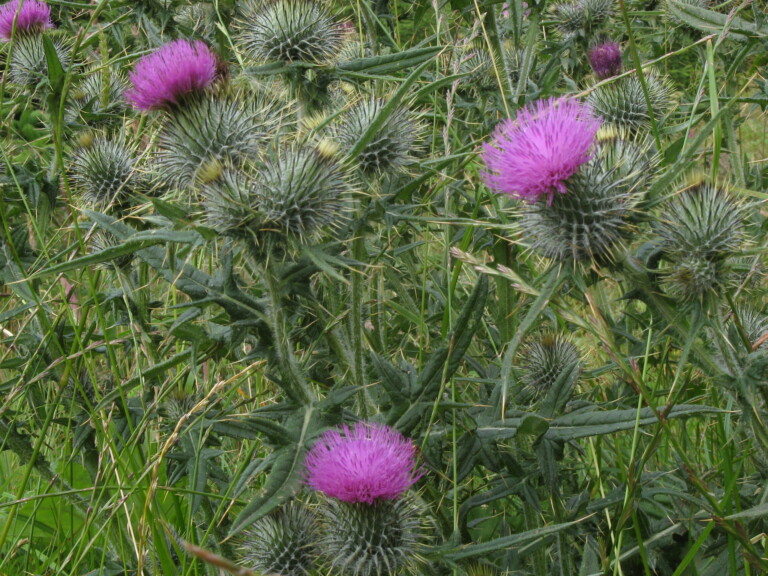
6 Plants That Look Like Thistle
Thistles are quite pretty flowering plants that are common in most gardens and can sprout without warning and without planting…