
Key Facts
- Rhizomatous perennial adapted to wet ground and shallow water.
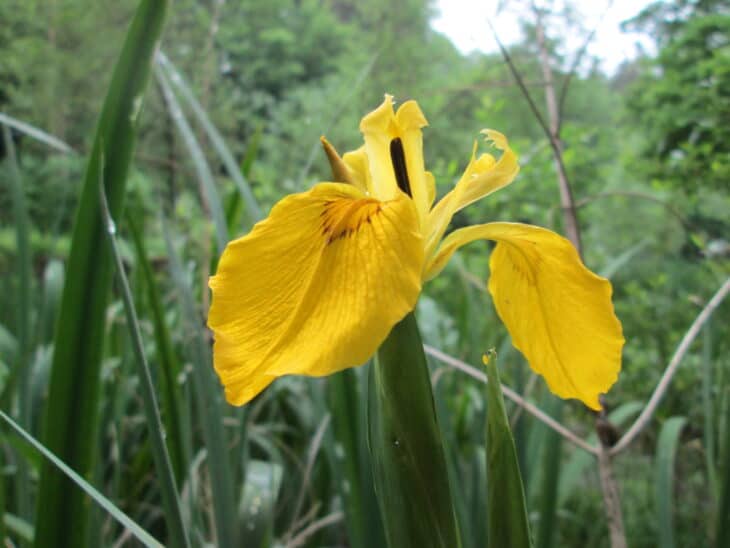
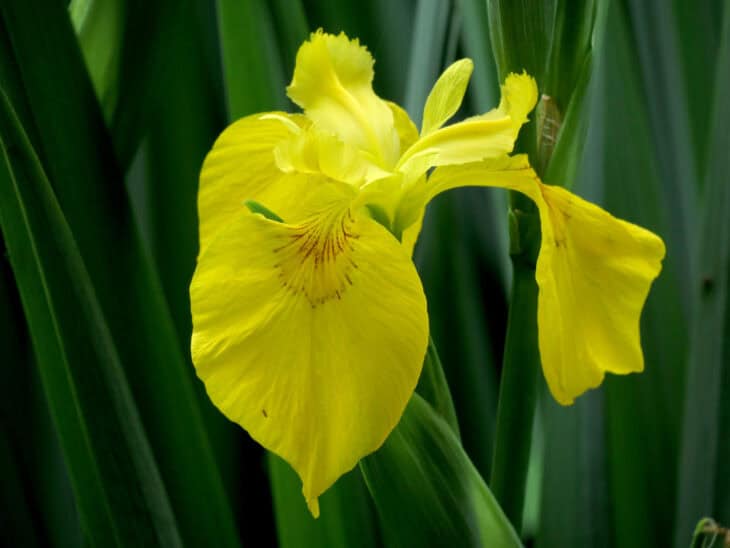
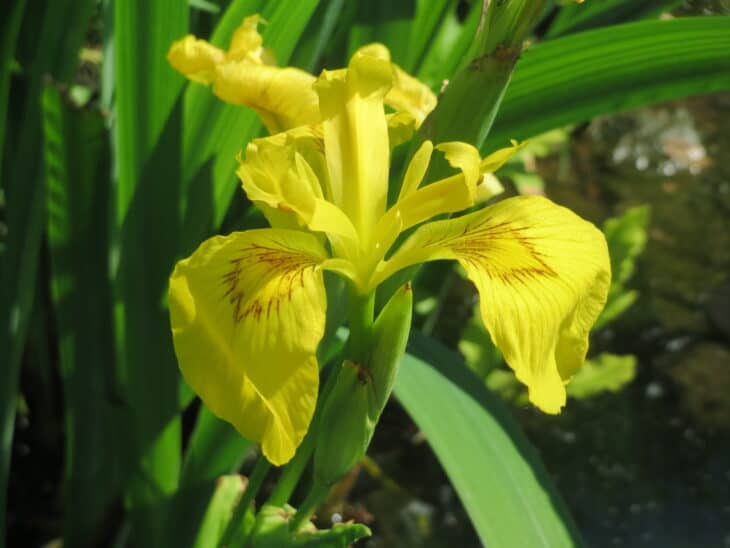
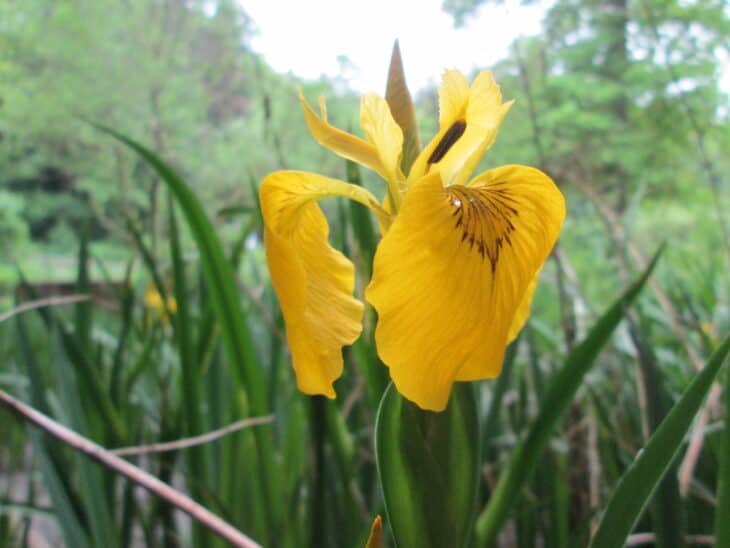
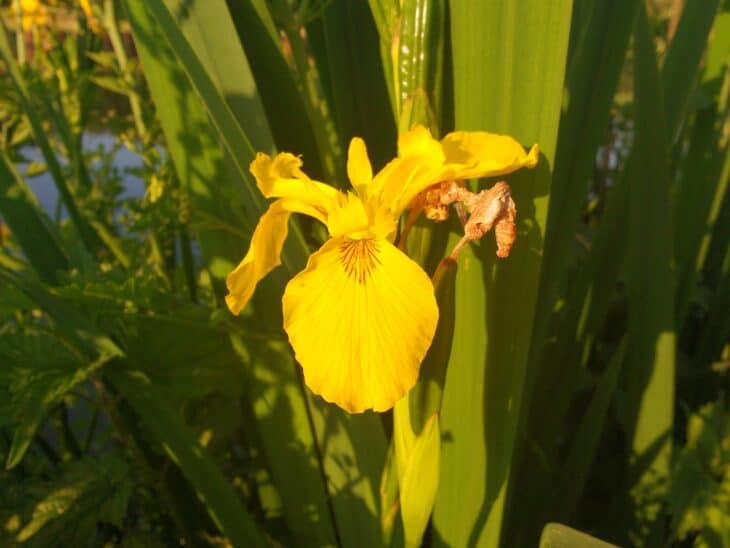
- Showy bright yellow flowers in spring to early summer.
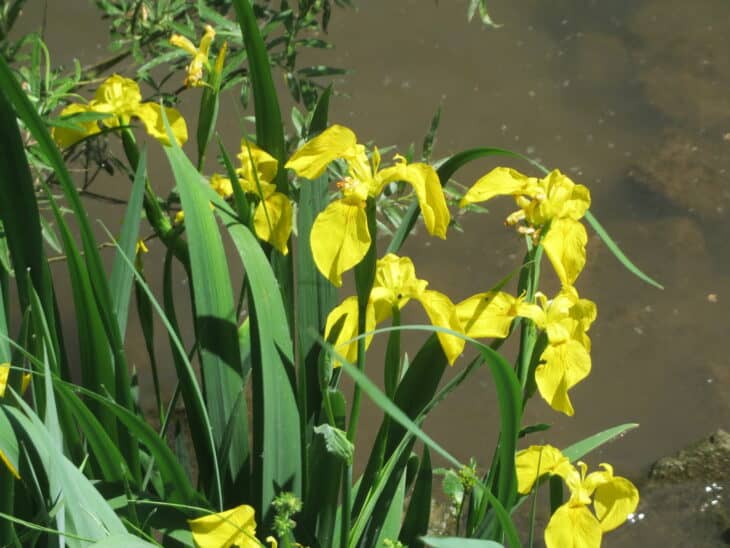
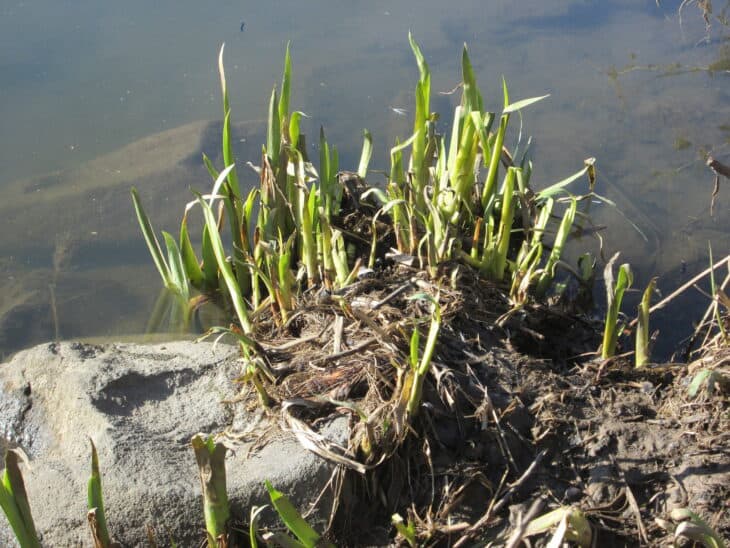
- Spreads by creeping rhizomes and can form dense stands.
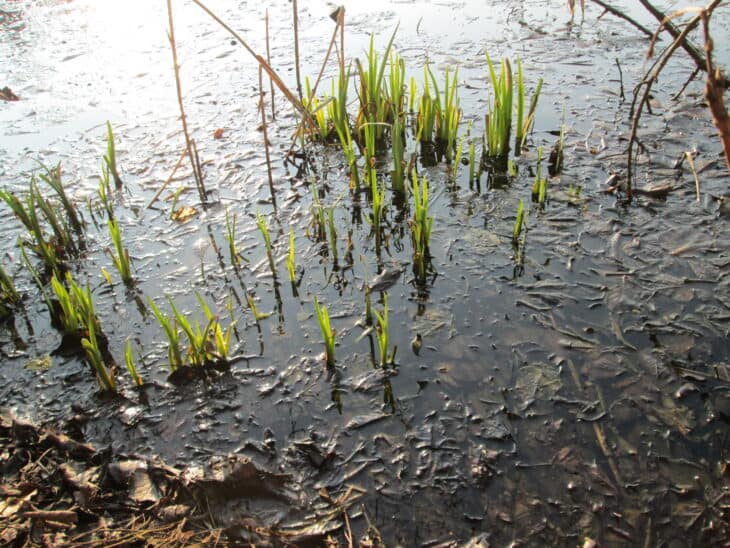
- Tolerates standing water and poorly drained soils.
- Considered invasive in parts of North America and other nonnative regions.
- All plant parts are considered toxic if ingested.
- Prefers full sun to part shade for best flowering.
- Propagated by division of rhizomes and by seed.
Yellow Flag or Yellow Iris is a rhizomatous perennial wetland iris with bright yellow flowers that appear in spring to early summer. It thrives at pond edges and in boggy ground but spreads aggressively and can become invasive in some regions.
Identification and appearance
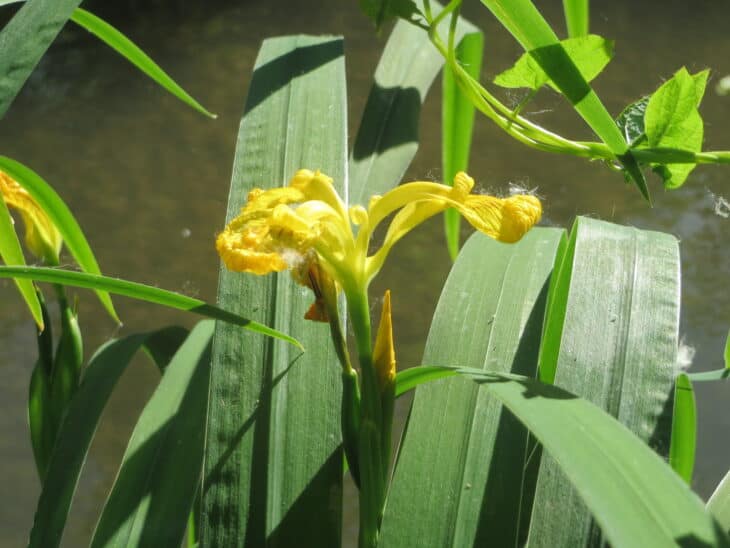
Showy bright yellow flowers appear in spring to early summer. Plants grow about 60 to 120 cm tall and form clumps that expand by creeping rhizomes. Plants can form dense stands in suitable wet sites.
Where to grow and best uses
Use along pond margins drainage ditches and wet borders where soil stays reliably moist. The species tolerates standing water and poorly drained soils so it is useful for shoreline stabilization and mass plantings in wet garden areas. Hardiness range is USDA zones 4 to 9.
Planting and spacing
Plant divisions after lifting or buy established clumps and set them where crowns are at or just below the soil surface. Allow about 30 to 90 cm between plants when establishing a stand to account for clonal spread. Division in late summer after flowering is commonly recommended for propagation and bed renewal.
Light soil and water
Contains plants prefer full sun to part shade and flower best in full sun. They prefer reliably moist to wet soils and tolerate standing water. Drier conditions reduce vigor and flowering.
After flowering and maintenance
Monitor clumps for unwanted spread and lift and divide every few years to refresh plants or to remove excess rhizome. Remove loose fragments of rhizome from soil and do not dump them into natural waterways to avoid accidental spread.
Containment and invasive risk
Yellow Flag is considered invasive in parts of North America and other nonnative regions. It can form dense stands along shorelines and drainage ditches and displace native wetland plants. Do not introduce into natural wetlands without checking local regulations and invasive species lists.
Toxicity
All plant parts are considered toxic if ingested and the sap can cause skin irritation. Keep plants away from livestock feeding areas and prevent pets from chewing foliage. Consult local poison control or extension resources for treatment guidance if ingestion is suspected.
Propagation
Propagate by division of rhizomes for a quick reliable result or by seed where permitted. Dividing in late summer after flowering is a common practice to produce new plants and to control spread.
Frequently asked questions
- How fast does Yellow Flag or Yellow Iris grow?
- It spreads clonally by creeping rhizomes and can form dense stands. Rate of expansion depends on site moisture soil fertility and disturbance.
- Is Yellow Flag invasive?
- Yes it is considered invasive in parts of North America and other regions and can outcompete native wetland plants.
- Can it grow in standing water?
- Yes it tolerates standing water and shallow flooding and is well suited to pond margins and boggy ground.
- Are all parts toxic?
- All parts are regarded as toxic if ingested and sap may irritate skin. Keep away from animals that might graze on it.
- How do I control its spread?
- Remove and dispose of rhizome pieces monitor clumps and divide regularly. Avoid moving fragments into natural waterways.
- When is the best time to divide plants?
- Dividing in late summer after flowering is commonly recommended to produce new plants and to thin crowded clumps.
Gallery
Related Plants


