
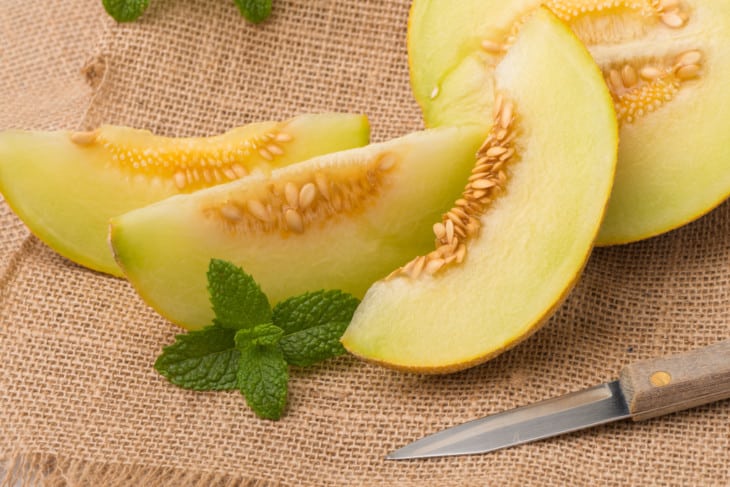
In the U.S., melons are in season in summer. Watermelon and cantaloupe are at their best from June to August, and honeydew peaks a little later, from August into September. Florida starts picking watermelons in late April. You can buy all three year-round, but the winter supply is shipped from Mexico and Central America and is picked before it is fully ripe, so it tends to taste less sweet.
Contents

- When Each Melon Is in Season
- How to Tell When a Melon Is Ripe on the Vine
- How to Pick a Ripe Melon at the Store
- How to Store Melons
When Each Melon Is in Season
| Melon | U.S. season | Peak | Days from seed to harvest |
|---|---|---|---|
| Watermelon | May–September | June–August | 70–100 |
| Cantaloupe (muskmelon) | June–September | July–August | 70–90 |
| Honeydew | July–October | August–September | 80–110 |
| Galia, Canary, Crenshaw | July–October | August–September | 80–110 |
Melons need a long, warm growing season. They are planted after the last frost, when the soil is at least 65°F, and ripen 2 to 3 months later. That is why the home-grown and local-farm season runs from midsummer into early fall in most of the country. In the North, melons ripen in August and September. In the far South, the first watermelons are ready in May.
Most U.S. watermelons come from Florida, Georgia, Texas and California. Most cantaloupes and honeydews come from California and Arizona. From about December to May, supermarkets sell imported melons, mostly from Mexico, Guatemala and Honduras.
Watermelon
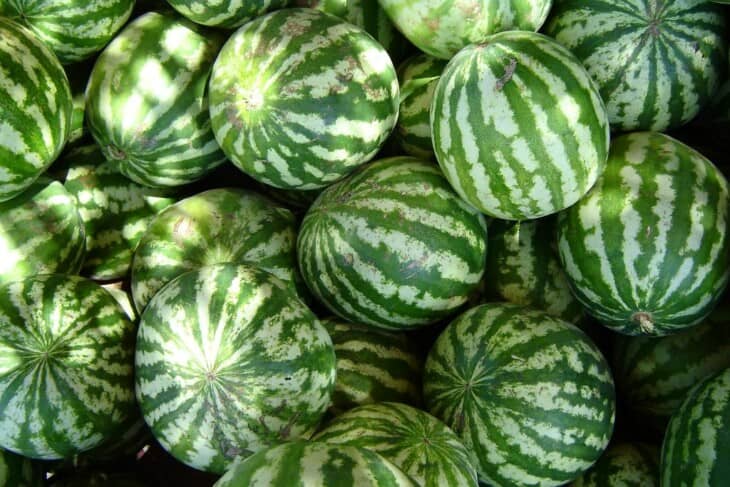
Watermelon season runs from May to September, with the best supply and prices from June through August. Florida harvests first, from late April, followed by Georgia and Texas in early summer and the northern states in August. Seedless watermelons are now the large majority of what stores sell.
Cantaloupe
The American cantaloupe, with its netted rind and orange flesh, is really a muskmelon. It is in season from June to September and tastes best in July and August. Local cantaloupes picked at full ripeness are much sweeter than shipped ones, which are picked a little early so they survive the trip.

Honeydew
Honeydew is a smooth-skinned melon with pale green flesh. It needs a little longer and a little more heat than cantaloupe, so it peaks later, from August into September, and California’s crop runs into October. It keeps longer after harvest than cantaloupe does.

How to Tell When a Melon Is Ripe on the Vine
Melons don’t get any sweeter after they are picked. Cantaloupes soften and smell stronger on the counter, but their sugar is fixed the day they come off the vine. So harvest time matters. Each type shows it differently:
- Watermelon. Check the spot where the melon rests on the ground. It turns from white to a creamy or buttery yellow when the melon is ripe. The curly tendril on the vine next to the stem turns brown and dry, and the rind loses its shine. Thumping is not reliable. Cut the stem with pruners, about 2 inches from the fruit. Most watermelons ripen about 35 to 45 days after the flower is pollinated.
- Cantaloupe. A ripe cantaloupe “slips”: the stem cracks all the way around and the melon comes off the vine with a light push of your thumb. The rind between the netting turns from green to tan or yellow, and the melon smells sweet at the blossom end. If you have to pull hard, it isn’t ready.
- Honeydew. Honeydews don’t slip. When they are ripe, the rind changes from greenish white to creamy yellow and feels smooth and slightly waxy, and the blossom end gives a little when pressed. Cut the stem instead of pulling.
How to Pick a Ripe Melon at the Store
- Watermelon: choose one that feels heavy for its size, with a yellow ground spot and a dull, not glossy, rind. A white or pale green ground spot means it was picked too early.
- Cantaloupe: look for raised, well-defined netting over a tan or golden rind, a sweet smell at the stem end, and a smooth, sunken scar where the stem slipped off. A torn stem means it was cut early.
- Honeydew: pick one with a creamy yellow, slightly sticky rind that feels heavy and gives slightly at the blossom end. Pure white or green honeydews are underripe.
How to Store Melons
- Whole melons: keep whole watermelon and honeydew at room temperature for up to about a week, or in a cool spot for longer. Put a whole ripe cantaloupe in the fridge and use it within 5 days.
- Wash before cutting: scrub the rind under running water before you slice any melon, especially cantaloupe. The knife can carry bacteria such as Listeria and Salmonella from the rind into the flesh, and cantaloupes have caused several major U.S. outbreaks.
- Cut melon: refrigerate cut melon in a covered container within 2 hours and eat it within 3 to 5 days.
- Freezing: cubed melon freezes well for smoothies and sorbets, but it turns soft when thawed.
For other fruit, see when oranges are in season.

