
Key Facts
- Distinctive silvery white bracts surround small blue thistle like flower heads.
- Typically grown as a biennial or short lived perennial.
- Attractive to bees and other pollinators.
- Works well for summer borders and dried flower arrangements.
- Prefers full sun and well drained soil.
- Tolerates poor to average soil fertility.
- Can self seed in favorable sites.
- Architectural plant with spiky texture.
Miss Willmott’s Ghost (Eryngium giganteum) is a striking spiky perennial often grown as a biennial for its silvery bracts and small blue, thistle like flower heads. It brings architectural texture to summer borders and dries well for arrangements, while tolerating poorer soils as long as drainage is good.
Identification
Distinctive silvery white bracts form a halo around compact blue flower heads and give a ghostly appearance at bloom time. Plants reach about 60 to 90 cm tall and spread roughly 45 to 60 cm, with stiff spiky stems and a low rosette habit in the first year when treated as a biennial.
Where to grow and best uses
Grow in full sun for best flowering on well drained soil, neutral to alkaline when available. It suits summer borders, pollinator mixes and dried flower beds, and it performs in poor to average fertility rather than rich, waterlogged ground. It is generally hardy in temperate gardens within an estimated USDA range of 5 to 8.
Planting time and spacing
Miss Willmott’s Ghost is usually started from seed and sown the season before the desired display so plants form a rosette then flower the following summer. Space plants about 45 to 60 cm apart to allow airflow and the upright habit to show, and position where the spiky stems will be visible behind lower border plants.
Watering and soil
Provide well drained soil and avoid sites that stay wet, because poor drainage encourages crown rot and shortens plant longevity. It tolerates poor to average fertility so feed lightly if soil is very poor. Water newly sown or planted stock regularly until established then reduce frequency to avoid prolonged wet conditions.
After flowering and maintenance
Flower stems make excellent dried arrangements so consider leaving some seedheads to dry in place. Remove spent flower heads if you want to prevent self seeding, because plants can naturalize where conditions suit them. Expect short lived perennial or biennial performance and plan replacements in mixed borders accordingly.
Propagation and controlling spread
Seed is the main propagation method and plants commonly self seed in favorable sites, which helps naturalize stands. Division or basal cuttings are reported but success varies by cultivar and climate, so treat divisions as occasional. To control spread remove seedheads before ripening and compost them away from beds where you do not want volunteers.
Frequently asked questions
- How fast does Miss Willmott’s Ghost grow?
- Plants usually form a leafy rosette in the first season then produce flowering stems the following summer, reaching about 60 to 90 cm at bloom.
- When does it flower?
- Flowering typically occurs in summer, often from June to August in the Northern Hemisphere, with timing varying by local climate.
- Can it self seed and become a problem?
- Yes it can self seed in favorable sites, which helps naturalize but may require seedhead removal if you want to limit volunteers.
- What soil is best?
- Well drained soil that is neutral to slightly alkaline when possible, with poor to average fertility preferred over heavy wet ground.
- Is division a reliable way to propagate?
- Division or basal cuttings are sometimes used but reports vary, so seed remains the primary and most reliable method.
Related Plants


Mentioned In (1)
Plants
6 Plants That Look Like Thistle
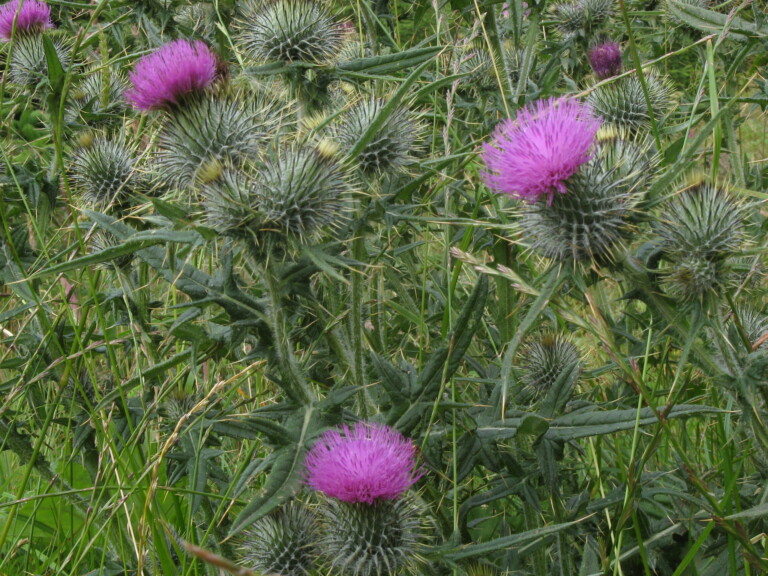
Thistles are quite pretty flowering plants that are common in most gardens and can sprout without warning and without planting…