Few shrubs stop a gardener in their tracks the way a camellia in full bloom can. Glossy dark leaves, perfectly formed flowers, blooming in the middle of winter when almost nothing else dares. Once you have one in your garden, you will want more.
Contents
The camellia genus contains over 300 species native to East Asia, but a handful of key types do the real work in the home garden. Some bloom in autumn while others push through late winter and into spring. Some thrive in full sun while others belong in dappled shade, and some fit neatly into a small garden while others grow to the scale of a small tree.
All camellias prefer slightly acidic, well-drained soil with a pH of 6.0 to 6.5, and most do best with some shelter from harsh winds and afternoon sun. They are generally hardy across USDA Zones 7 to 10, depending on species. With the right selection, a well-planned garden can carry camellia color from October right through to May.
This guide covers the six best types for the home garden, from the most widely cultivated species in the world to a dual-purpose plant that also happens to make excellent tea. Choosing well means reliable color, year after year, with very little effort.
1. Japanese Camellia (Camellia japonica)
Read our guide to Japanese Camellia
Japanese Camellia
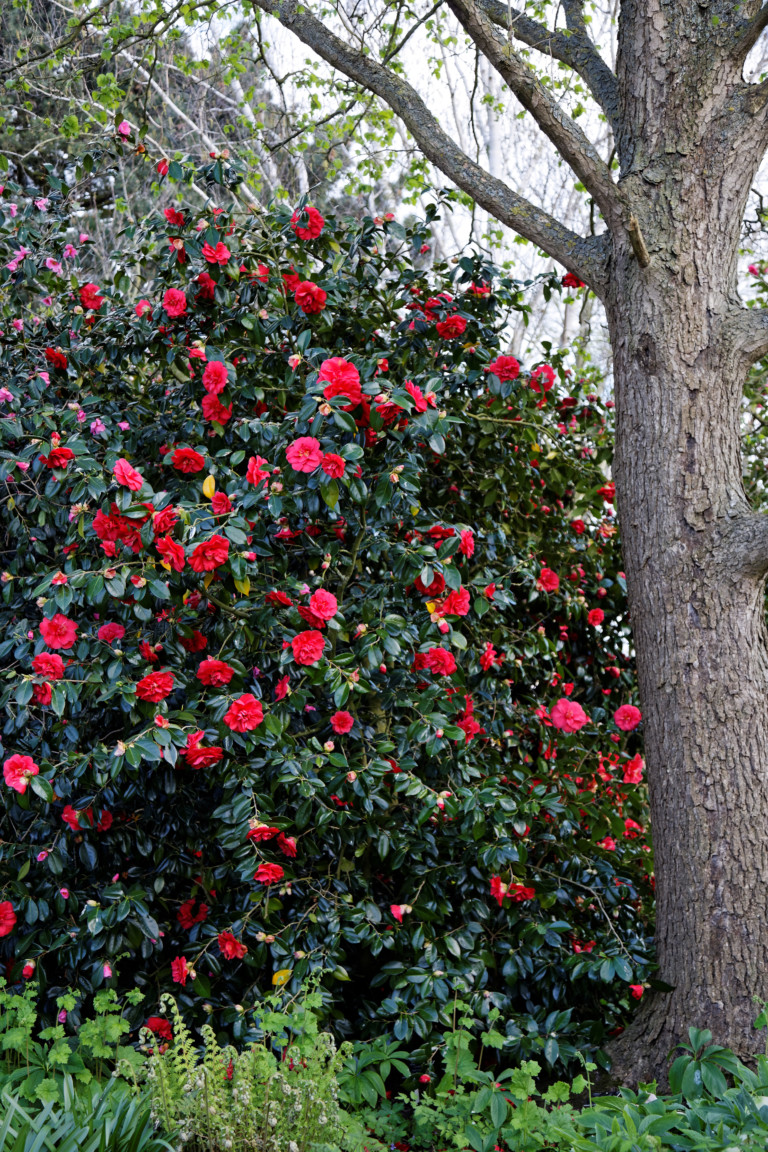
Japanese Camellia is an evergreen shrub known for glossy foliage and large winter to spring flowers. It prefers acidic, well drained soil and part shade and is hardy in many temperate gardens.
Read our guide to Japanese CamelliaThe Japanese camellia is the queen of the genus, and for good reason. With more than 30,000 named cultivars, no other species comes close for sheer variety of flower form, color, or season. Whether you want a miniature blossom in pale shell pink or a showstopping formal double in deep crimson, there is a Camellia japonica for it.
Bloom season runs from late winter through early spring, typically December to April depending on variety and climate. Flowers range from 1.5 inches (4 cm) for miniature types up to 5 inches (12 cm) across in larger cultivars. The plant grows as a substantial shrub or small tree, reaching 6 to 12 feet (1.8 to 3.7 m) in most garden lifetimes.
Japanese camellia thrives in partial shade, particularly in hotter climates where afternoon sun will bleach the blooms and scorch the leaves. It prefers organically rich, well-drained, acidic soil and dislikes waterlogging at the root. Good cultivars to try include ‘Kramer’s Supreme’ for fragrant red blooms and ‘Pink Perfection,’ a delicate shell-pink double that has been a garden favorite since the nineteenth century.
2. Sasanqua Camellia (Camellia sasanqua)
Read our guide to Sasanqua Camellias
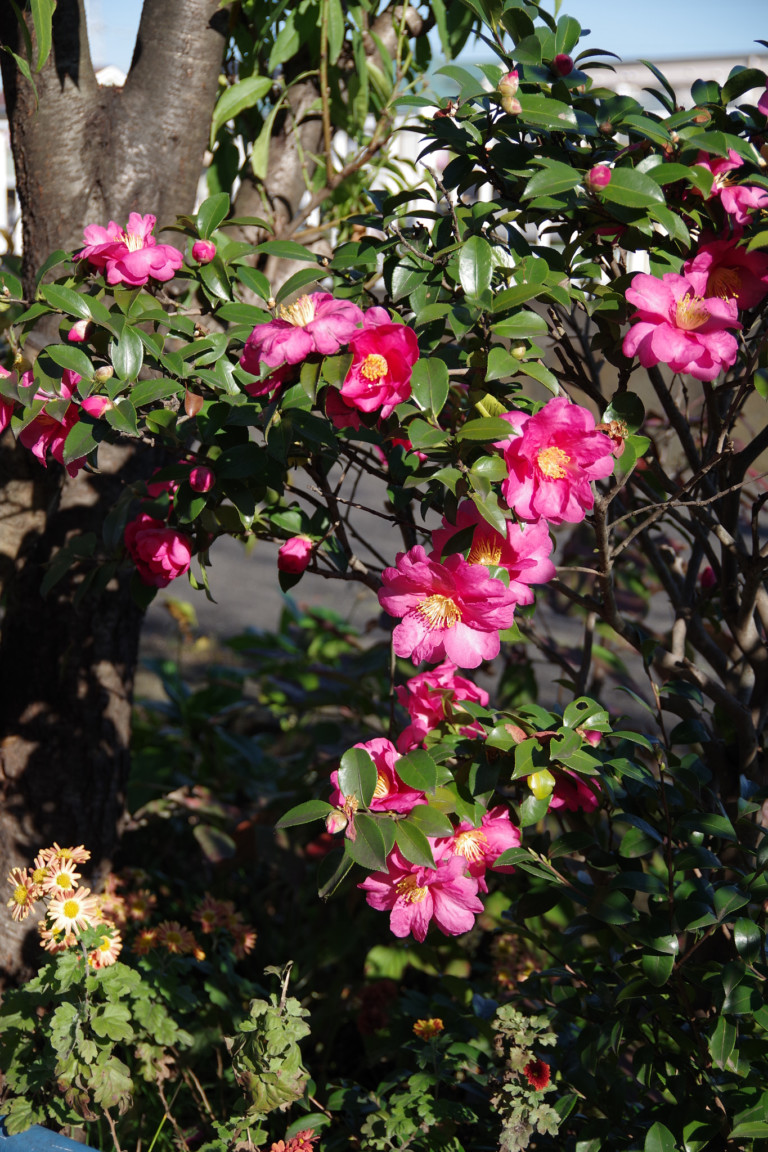
Sasanqua Camellia
Sasanqua Camellias are evergreen shrubs with glossy leaves and autumn into early winter flowers, best in acidic well drained soil and morning sun with afternoon shade.
Read our guide to Sasanqua CamelliasThe sasanqua camellia has one major advantage over nearly every other type. It blooms in autumn. While the rest of the garden is winding down, C. sasanqua is coming into its own, producing clusters of flowers from October through to December or January.
Smaller leaves and a compact growth habit make sasanqua well suited to hedging, espalier training, and container growing. It is considerably more sun-tolerant than C. japonica, handling nearly full sun in all but the hottest climates. It also shows stronger drought and disease resistance, making it one of the most practical camellias you can plant.
‘Yuletide’ is one of the most popular varieties, with bright red single blooms and golden stamens that appear just in time for the Christmas season. ‘Kanjiro’ offers deep rose-pink semi-double flowers and grows into a handsome upright shrub suited to screening. ‘October Magic® White Shi Shi™’ is a reliable white-flowered option for gardeners in Zones 7 to 9 looking for autumn color without the red.
3. Williams Hybrid Camellia (Camellia × williamsii)
Read our guide to Williams Hybrid Camellia
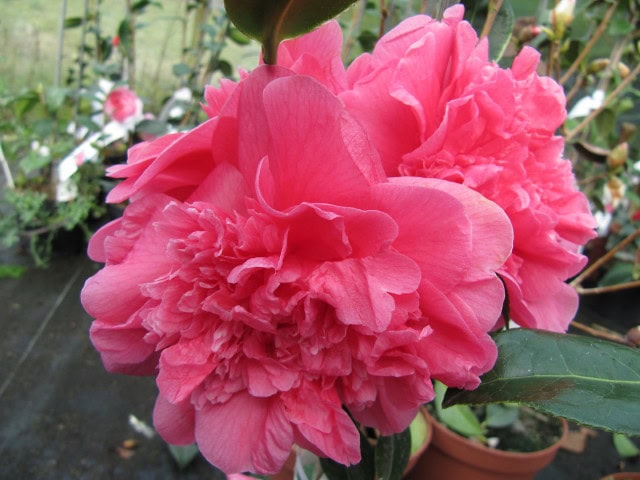
Williams Hybrid Camellia
Evergreen hybrid camellia with late winter to spring blooms. Prefers acidic, humus rich soil and part shade.
Read our guide to Williams Hybrid CamelliaDeveloped in 1923 at Caerhays Castle in Cornwall from a cross between C. japonica and C. saluenensis, the Williams hybrid was bred with the garden in mind from the very beginning. It is widely considered the most reliable camellia you can grow. It earns that reputation through exceptional hardiness and a flowering season that can last four to five months.
The standout feature of C. × williamsii is that spent flowers drop cleanly from the plant rather than browning on the stem as japonicas tend to do. This self-cleaning habit keeps the shrub looking tidy throughout the season without any deadheading. It is particularly well suited to UK gardens and cooler climates where C. japonica can struggle.
‘Anticipation’ offers deep rose peony-form blooms up to 6 inches (15 cm) wide and is one of the most decorated camellias in cultivation. ‘Debbie’ produces prolific rose-pink flowers from January to March, while ‘Les Jury’ delivers rich crimson-red formal double blooms over the same mid-season window. All three hold multiple Royal Horticultural Society Awards of Garden Merit.
4. Yunnan Camellia (Camellia reticulata)
Read our guide to Yunnan Camellia
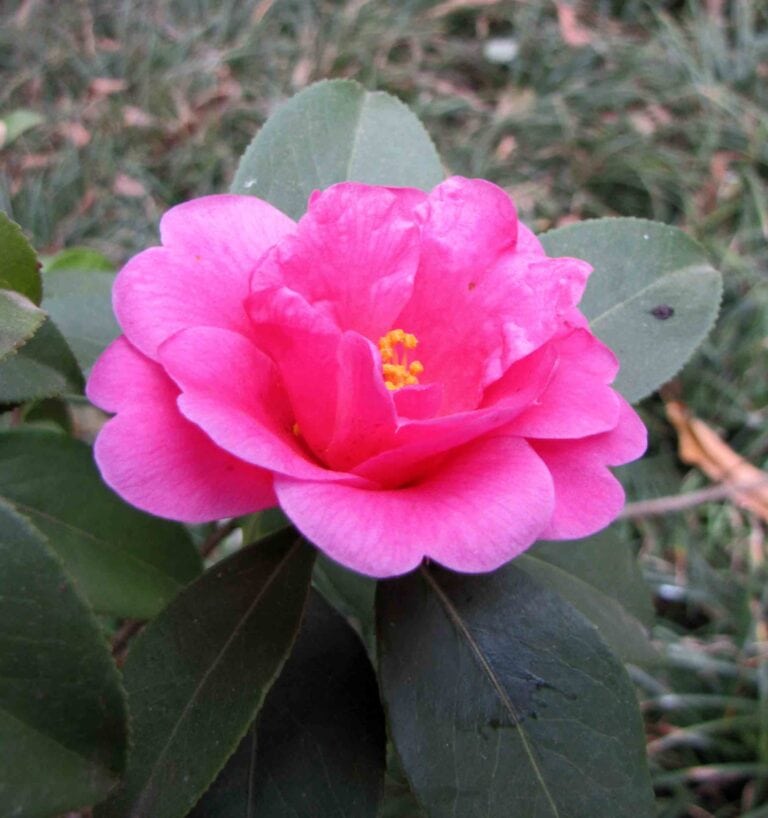
Yunnan Camellia
Yunnan Camellia is an evergreen shrub or small tree prized for large late winter to spring flowers. It prefers acidic, humus rich soil and part shade.
Read our guide to Yunnan CamelliaIf dramatic scale is what you are after, no other camellia comes close to Camellia reticulata. Known as the Yunnan camellia after the Chinese province it originates from, this species produces the largest blooms in the entire genus. Hybrid cultivars regularly reach 6 to 10 inches (15 to 25 cm) across, and the largest recorded specimens have measured over 11 inches (28 cm).
Blooms appear in late winter to spring, typically March through May in the northern hemisphere. They come in shades of soft to deep pink, with semi-double to peony forms and a distinctive net-veined texture to the petals. Unlike most camellias, C. reticulata benefits from more sun, producing denser growth and better foliage in brighter positions.
This is the least frost-hardy of the six types, performing best in mild coastal climates and suited to USDA Zones 8 to 10. In marginal climates it can be grown against a warm south-facing wall with good results. The extraordinary blooms make the extra care worthwhile for any gardener who can provide the right conditions.
5. Tea Camellia (Camellia sinensis)
Read our guide to Tea Camellia
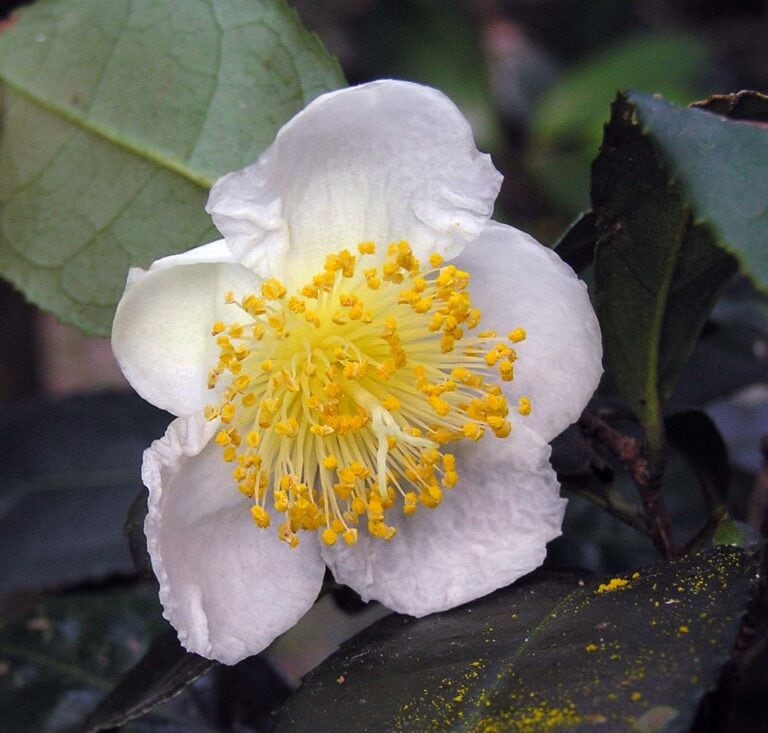
Tea Camellia
Tea Camellia is the species grown for tea leaves, preferring acidic rich soil, filtered sun and regular moisture, and is commonly propagated by seed or cuttings.
Read our guide to Tea CamelliaCamellia sinensis is the plant behind every cup of white, green, black, and oolong tea in the world. That makes it the most useful camellia you can grow, yet it is seriously underrated as a garden ornamental. The foliage is dense, dark green, and glossy throughout the year, giving it excellent structure as a hedge or screening shrub.
Delicate white flowers with bright yellow centres appear in autumn, when most other shrubs have nothing to offer, and they carry a light fragrance that draws bees and butterflies. The plant is naturally compact, reaching around 6 feet (1.8 m) tall and 5 feet (1.5 m) wide, and it responds well to regular trimming. It is hardy across USDA Zones 7 to 10 and shares the same acidic soil preferences as all other camellias.
For gardeners interested in harvesting their own leaves, young shoots can be picked from late spring through summer and processed at home into green or white tea. The flavor varies with soil, climate, and picking time, but the experience of growing and brewing your own is genuinely rewarding. No other plant in this list offers that combination of ornamental value and practical harvest.
6. Winter Camellia (Camellia hiemalis)
Read our guide to Winter Camellia
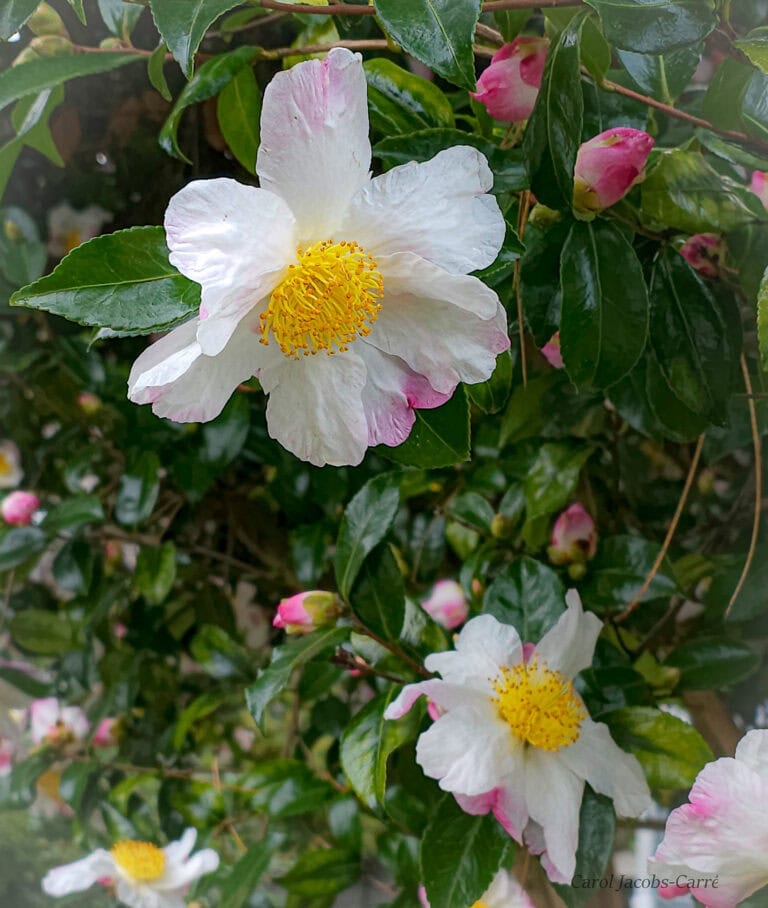
Winter Camellia
Winter Camellia is an evergreen shrub prized for cold season blooms and glossy foliage. It prefers an acid well drained site with partial shade and shelter from wind.
Read our guide to Winter CamelliaCamellia hiemalis is a natural hybrid between C. japonica and C. sasanqua, and it inherits the best qualities of both parents. Compact, dense, and reliably evergreen, it is particularly well suited to smaller gardens and container growing. Blooms arrive from October through December, making it one of the earliest-flowering camellias in the garden.
Flower forms range from single to semi-double, in colors from white through to deep pink-red. The glossy evergreen foliage remains attractive throughout the year, even when the plant is not in flower. It is hardier and more adaptable than its japonica parent, tolerating a wider range of growing conditions without complaint.
The most sought-after variety is ‘Shishigashira,’ which produces deep pink-red semi-double to double flowers against particularly handsome foliage. It works equally well as an informal hedge or a single specimen plant and requires virtually no maintenance beyond a light trim after flowering. For gardeners who want reliable autumn color in a small footprint, C. hiemalis is one of the best choices available.