
Key Facts
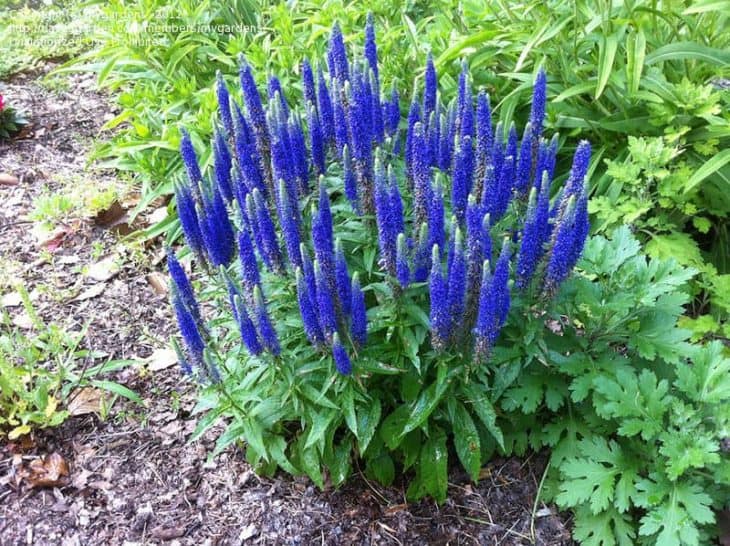
- Herbaceous perennial with upright spires of small tubular flowers.
- Attractive to bees and other pollinators.
- Works well in mixed borders and cottage garden plantings.
- Prefers reliably moist but well drained soil.
- Flowers in summer, often midsummer into late summer.
- Easily propagated by division or softwood cuttings.
- Can form clumps and may self seed in favorable sites.
Veronica Speedwell (Veronica longifolia) is a clump forming perennial prized for upright spikes of small tubular flowers and strong appeal to bees and other pollinators. It fits mixed borders and cottage beds where summer color is wanted, performing best in full sun to part shade with well drained soil.
Identification
Veronica longifolia produces upright spires of small tubular flowers on herbaceous stems that rise from a clumping crown. Mature plants commonly reach about 18 to 36 inches tall and form clumps roughly 12 to 24 inches wide, with size varying by cultivar and site fertility.
Best uses and where to grow
This species works well at the back of mixed borders, in cottage garden plantings and pollinator patches where vertical summer blooms add structure. Plant where consistent moisture and good drainage are available, avoiding chronically wet sites that reduce vigor or cause crown problems.
Planting time and spacing
Divide and plant Veronica Speedwell in spring or fall for best establishment, with divisions most reliable for quick results. Space clumps about 12 to 24 inches apart to allow mature spread and airflow. Exact spacing depends on cultivar and how quickly you want beds to fill in.
Soil and light
Choose fertile, well drained garden soil that stays reliably moist but is not waterlogged. A neutral to slightly alkaline pH is generally acceptable. Flowering is strongest in full sun, while light afternoon shade can be tolerated in hotter climates without serious loss of blooms.
Watering and expected effects
Keep soil consistently moist during the growing season to support steady flowering and healthy clump growth. Allowing the soil to become waterlogged or remain soggy invites poor performance and crown rot. Visible signs of stress include reduced flowering and flopping stems in dry or waterlogged conditions.
After-flowering care and maintenance
Cutting back spent flower spikes keeps clumps tidy and can improve appearance after bloom. Divide overcrowded clumps in spring or fall to rejuvenate plants and maintain vigor. Routine removal of dead foliage and a light top dressing of compost in spring supports healthy regrowth.
Controlling spread and naturalizing
Veronica Speedwell forms clumps and can self seed in favorable sites, widening beds over time. If self-seeding is undesirable, remove spent seedheads before they ripen and divide clumps periodically. Monitor new seedlings and thin or transplant them to manage naturalizing behavior.
Propagation
Propagate by division in spring or fall for the quickest, most reliable results. Basal softwood cuttings taken in spring also root readily and seed can be used where variation is acceptable. Division rejuvenates older clumps and controls spread while supplying plants for new beds.
Frequently asked questions
- How fast does Veronica Speedwell grow?
- Growth rate varies by cultivar and site, but established plants commonly form noticeable clumps and reach typical height within a season. Clump spread increases over multiple seasons unless checked by division or seed removal.
- When does Veronica Speedwell bloom?
- Blooms appear in summer, often from midsummer into late summer, with exact months varying by climate and hemisphere.
- Is Veronica Speedwell hardy?
- It is typically reported as hardy to USDA zones 3 to 8, with plants dying back in cold winters and resprouting from the crown in spring. Local microclimates and cultivars may vary.
- Does it attract pollinators?
- Yes. The upright spires and tubular flowers are attractive to bees and other pollinators, making it a good choice for wildlife friendly borders.
- How do I propagate Veronica Speedwell?
- Divide clumps in spring or fall for quickest results, take basal softwood cuttings in spring, or grow from seed when variation is acceptable.
Gallery
Related Plants


Mentioned In (2)

Plants
10 Plants That Look Like Salvia
Salvia (Lamiaceae) is a large genus with more than 1000 species of shrubs, herbs, annuals, and perennials. Most salvia plants…
Plants
9 Plants That Look Like Snapdragons
Snapdragons have been a staple in cottage gardens for centuries. They are excellent plants for filling in color in a…