The plants that look most like snapdragons are their relatives in the plantain family: angelonia (summer snapdragon), toadflax and spurred snapdragon (Linaria), climbing snapdragon, penstemon and foxglove. All have tubular, two-lipped flowers, and most bloom on upright spikes. Turtlehead, obedient plant and monkey flower have similar “mouth” flowers, and delphinium, larkspur, lupine and speedwell have the same tall spikes of color. If you want the snapdragon look through a hot summer, grow angelonia. It is the one that keeps flowering in heat, when snapdragons stop.
Contents
- Snapdragon Relatives With Similar Flowers
- Angelonia (Summer Snapdragon) (Angelonia angustifolia)
- Spurred Snapdragon (Linaria maroccana)
- Butter-and-Eggs and Dalmatian Toadflax (Don’t Plant) (Linaria vulgaris and L. dalmatica)
- Climbing Snapdragon (Maurandya scandens)
- Penstemon (Beardtongue) (Penstemon spp.)
- Foxglove (Digitalis purpurea)
- Speedwell (Veronica spicata and V. longifolia)
- Other Plants That Look Like Snapdragons
- Snapdragon or a Lookalike? Choosing for Your Garden
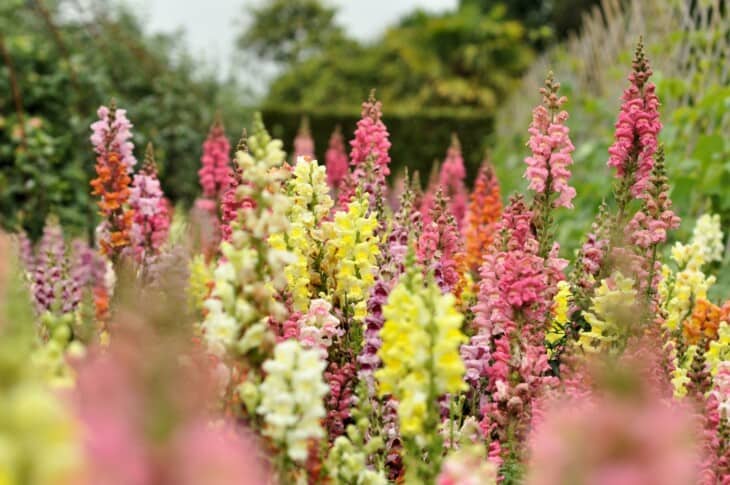
Snapdragons (Antirrhinum majus) are native to the Mediterranean. The name comes from the flower: squeeze the sides and the two “lips” open like a dragon’s mouth, then snap shut. Only heavy bumblebees are strong enough to push them open and reach the nectar. The flowers come in almost every color except true blue, on spikes from 6 inches tall in dwarf varieties to 3 or 4 feet in tall cutting types. Snapdragons are short-lived perennials, hardy in zones 7 to 10, but nearly everyone grows them as cool-season annuals. They bloom best in spring and fall and slow down in summer heat.
- Snapdragon Relatives With Similar Flowers
- Other Plants That Look Like Snapdragons
- Snapdragon or a Lookalike? Choosing for Your Garden
| Plant | Botanical name | Flower colors | Height | Life cycle |
|---|---|---|---|---|
| Angelonia (Summer Snapdragon) | Angelonia angustifolia | Purple, pink, white, bicolor | 1–2 ft | Tender perennial, grown as an annual |
| Spurred Snapdragon | Linaria maroccana | Purple, pink, red, yellow, white | 8–18 in | Annual |
| Butter-and-Eggs and Dalmatian Toadflax (Don’t Plant) | Linaria vulgaris and L. dalmatica | Yellow with an orange lip | 1–3 ft | Perennial weed |
| Climbing Snapdragon | Maurandya scandens | Purple, violet, pink, white | Vine, 6–10 ft | Tender perennial, grown as an annual |
| Penstemon (Beardtongue) | Penstemon spp. | Blue, purple, pink, red, white | 1–4 ft (most) | Perennial, zones 3–9 depending on species |
| Foxglove | Digitalis purpurea | Purple, pink, white, apricot | 3–5 ft | Biennial or short-lived perennial, zones 4–8 |
| Speedwell | Veronica spicata and V. longifolia | Blue, purple, pink, white | 1–3 ft | Perennial, zones 3–8 |
| Turtlehead | Chelone spp. | Pink or white | 2–3 ft | Perennial, zones 3–8 |
| Obedient Plant | Physostegia virginiana | Pink, lavender, white | 2–4 ft | Perennial, zones 3–9 |
| Monkey Flower | Erythranthe and Diplacus spp. | Yellow, orange, red, pink | 1–3 ft | Annual or perennial, depending on species |
| Delphinium and Larkspur | Delphinium spp. and Consolida ajacis | Blue, purple, pink, white | Larkspur 1–4 ft; delphinium 3–6 ft | Larkspur annual; delphinium perennial, zones 3–7 |
| Lupine | Lupinus spp. | Blue, purple, pink, red, yellow, white | 2–4 ft | Perennial, zones 4–8 |
Snapdragon Relatives With Similar Flowers
Angelonia (Summer Snapdragon) (Angelonia angustifolia)
Read our guide to Angelonia (Summer Snapdragon)

Angelonia is called summer snapdragon because it looks like a small snapdragon and keeps flowering straight through hot, humid summers, when real snapdragons stall. It has upright spikes of small, open, two-lipped flowers in purple, lavender, pink, white and bicolors. Some varieties have a light scent that people compare to grape soda or apples. It comes from Mexico and the West Indies, is hardy only in zones 9 to 11 and is grown as an annual elsewhere. It needs full sun, handles drought once established and doesn’t need deadheading.
Spurred Snapdragon (Linaria maroccana)

Spurred snapdragon, also called Moroccan toadflax or baby snapdragon, is a quick, easy annual from Morocco with slender spikes of tiny snapdragon-like flowers, each with a small spur at the back. ‘Fairy Bouquet’ is a popular mix of pinks, purples, yellows and whites, usually with a yellow spot on the lip. Sow it directly in the garden in early spring. It prefers cool weather and fades in summer heat, like snapdragons.
Butter-and-Eggs and Dalmatian Toadflax (Don’t Plant) (Linaria vulgaris and L. dalmatica)

Butter-and-eggs, or common toadflax, is a wild relative of snapdragon with spikes of yellow flowers that each have an orange patch on the lip and a long spur. It looks just like a small yellow snapdragon. Dalmatian toadflax (shown) is a taller cousin with broader, bluish, clasping leaves. Both came from Europe and Asia and spread by seed and creeping roots into roadsides, pastures and rangeland. They are noxious weeds in many western states and Canadian provinces. Don’t plant them, and don’t include them in wildflower seed mixes.
Climbing Snapdragon (Maurandya scandens)

Climbing snapdragon, also sold as Asarina scandens, is a slender vine from Mexico with tubular, snapdragon-like flowers in purple, violet, pink or white from summer until frost. It climbs by twisting its leaf stalks around a support, so give it a trellis, obelisk or string to grow on. It is hardy only in zones 9 to 11 and is usually grown from seed as an annual. It works well in hanging baskets and window boxes.
Penstemon (Beardtongue) (Penstemon spp.)
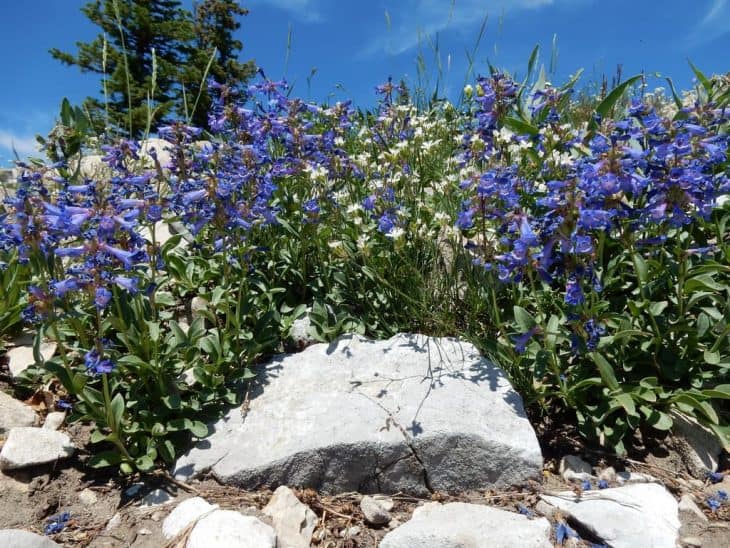
Penstemons are a large group of North American wildflowers with spikes of tubular flowers. Each flower has a sterile, often hairy stamen lying in its throat, the “beard” in beardtongue. There are about 250 species, from low alpine plants to western species more than 6 feet tall, and most do best in full sun and fast-draining, even rocky, soil. Red species such as firecracker penstemon are hummingbird favorites. Foxglove beardtongue (Penstemon digitalis) and ‘Husker Red’ are some of the easiest in ordinary garden soil in the East.
Foxglove (Digitalis purpurea)

Foxgloves have tall, stately spikes of drooping, tube-shaped flowers, often speckled inside to guide bees in. In the first year, common foxglove forms a rosette of large, soft, gray-green leaves. It flowers in the second summer, often reseeds, and then dies. It does well in partial shade. All parts of foxglove are very poisonous to people and pets, because they contain cardiac glycosides that affect the heart, so wear gloves when handling it and keep it away from vegetable gardens.
Speedwell (Veronica spicata and V. longifolia)

Spike speedwell and long-leaf speedwell form clumps of narrow, toothed leaves with slender, pointed spikes of tiny flowers in summer. They don’t have the snapdragon’s lipped flowers, but they have the same upright spike shape in blue, violet, pink or white, and they bloom for a long time if you cut off the finished spikes. They are hardy, need full sun and are loved by bees and butterflies.
Other Plants That Look Like Snapdragons
Turtlehead (Chelone spp.)
Turtleheads are native perennials of wet meadows and stream banks in eastern North America. In late summer and fall they have tight spikes of hooded, two-lipped flowers that look like a snapdragon, or like a turtle’s head with its mouth open. White turtlehead (Chelone glabra) and pink turtlehead (C. lyonii) grow well in moist soil and partial shade, where snapdragons won’t. Bumblebees crawl inside the flowers, and white turtlehead is the host plant of the Baltimore checkerspot butterfly.
Obedient Plant (Physostegia virginiana)
Obedient plant is a native perennial in the mint family with neat, four-sided spikes of pink, lavender or white, tubular flowers that look very like snapdragons. Its name comes from the way the flowers stay put when you push them sideways on the stem. It blooms from mid-summer into fall and makes a good cut flower. It spreads quickly by underground runners in rich, moist soil, so choose a clump-forming variety such as ‘Miss Manners’ if space is limited.
Monkey Flower (Erythranthe and Diplacus spp.)

Monkey flowers have wide, two-lipped flowers, often spotted in the throat, that people say look like a grinning monkey’s face. They were all once grouped as Mimulus. Yellow seep monkey flower (Erythranthe guttata, shown) grows in wet ground in western North America. Bedding monkey flowers are grown as annuals in shade and damp soil. Sticky monkey flower (Diplacus aurantiacus) is a drought-tolerant shrub from California and Oregon with orange flowers. The flowers are about 1 to 2 inches long.
Delphinium and Larkspur (Delphinium spp. and Consolida ajacis)

Delphiniums have tall, dense spikes of spurred flowers, famous for their true blues. Larkspur is the annual version, easier to grow from seed in cool weather, with a looser spike and ferny leaves. Their flowers are open, not lipped like a snapdragon’s, but the spikes fill the same role in a border or a vase. Delphiniums need cool summers, rich soil and staking. All parts of both plants are poisonous, especially the seeds and young growth, and larkspur is a leading cause of cattle poisoning on western rangeland.
Lupine (Lupinus spp.)

Garden lupines have thick spikes packed with pea-like flowers in almost every color, above clumps of hand-shaped leaves. They bloom in late spring and early summer, a little before most snapdragons. They like cool summers and well-drained, slightly acidic soil and dislike heat and humidity. The seeds are poisonous. Native lupines, such as wild lupine in the East and many western species, are important host plants for butterflies.
Snapdragon or a Lookalike? Choosing for Your Garden
- Hot summers: choose angelonia. Snapdragons and spurred snapdragons stop flowering in heat.
- Wet, shady spots: turtlehead and monkey flower.
- Dry, sunny, rocky gardens: penstemon.
- Tall spikes for the back of a border: foxglove, delphinium or lupine, all of which are poisonous.
- Fences and trellises: climbing snapdragon.
- For bees and hummingbirds: penstemon, turtlehead, foxglove and speedwell.
- Avoid: butter-and-eggs and Dalmatian toadflax, which are invasive.
See also plants that look like hollyhocks.