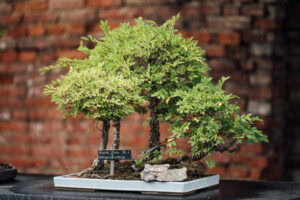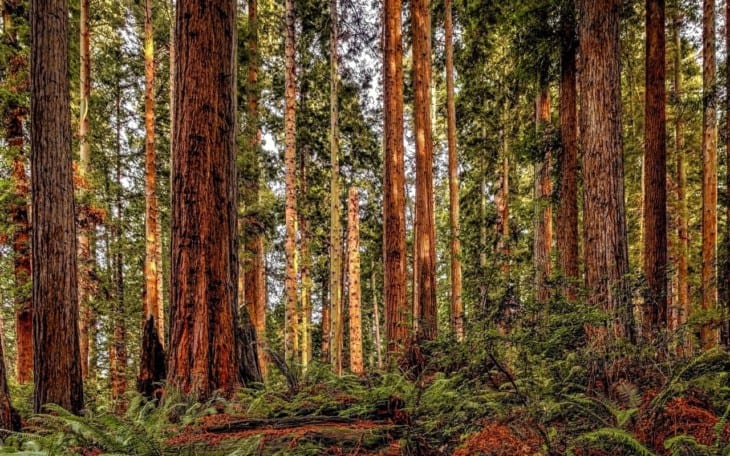
The United States is home to some of the most magnificent trees on Earth. From towering coast redwoods in California to ancient bristlecone pines in Nevada, these living giants represent centuries—and sometimes millennia—of growth. This list showcases 25 of America’s biggest trees, ranked primarily by height, though some earn their place through exceptional girth, age, or overall presence.
Contents
- 25. Elephant’s Foot (Beaucarnea recurvata) — Berylwood Tree Farm (Somis, California) — 20 ft
- 24. Great Basin Bristlecone Pine (Pinus longaeva) — Humboldt-Toiyabe National Forest (Nevada) — 50 ft
- 23. California Bay Laurel (Umbellularia californica) — Gold Beach, Oregon — 82 ft
- 22. Bald Cypress (Taxodium distichum) — St. Francisville, Louisiana — 90 ft
- 21. Flowering Dogwood (Cornus florida) — Clarke County, Georgia — 67 ft
- 20. Bennett Juniper (Western/Grand Juniper; Juniperus occidentalis / J. grandis) — 78 ft
- 19. Canyon Live Oak (Quercus chrysolepis) — San Bernardino, California — 95 ft
- 18. American Tulip Tree (Liriodendron tulipifera) — Chesapeake City, Virginia — 98 ft
- 17. Fremont Cottonwood (Populus fremontii) — Skull Valley, Arizona — 98 ft
- 16. Monterey Cypress (Cupressus macrocarpa) — Pescadero, San Mateo County, California — 101 ft
- 15. Water Tupelo (Nyssa aquatica) — Greensville, Virginia — 108 ft
- 14. Bigleaf Maple (Acer macrophyllum) — Lane County, Oregon — 119 ft
- 13. American Sycamore (Platanus occidentalis) — Chester Springs, Pennsylvania — 120 ft
- 12. La Ceiba de Peñuelas (Kapok; Ceiba pentandra) — Peñuelas, Puerto Rico — 131 ft
- 11. Tasmanian Blue Gum (Eucalyptus globulus) — Mattole Road, Petrolia, Humboldt County, California — 141 ft
- 10. Valley Oak (Quercus lobata) — Covelo, California — 154 ft
- 9. The Studhorse Tree (California Incense-Cedar; Calocedrus decurrens) — 156 ft
- 8. Kalaloch Redcedar (Western redcedar; Thuja plicata) — 178 ft
- 7. Quinault Lake Spruce (Sitka Spruce; Picea sitchensis) — 191 ft
- 6. Big Tree (Lawson’s Cypress; Chamaecyparis lawsoniana) — 231 ft
- 5. Tioga Tower (Sugar Pine; Pinus lambertiana) — 274 ft
- 4. Super Colossus (Coast Redwood; Sequoia sempervirens) — 277 ft
- 3. Lake Quinault Douglas-fir (Coast Douglas-fir; Pseudotsuga menziesii) — 293.7 ft
- 2. Doerner Fir (Coast Douglas-fir; Pseudotsuga menziesii) — 327 ft
- 1. General Sherman Tree (Giant Sequoia; Sequoiadendron giganteum) — Sequoia National Park (California) — 274.9 ft
Most of these record-holders are found on the West Coast, particularly in California, Oregon, and Washington, where climate and terrain create ideal conditions for monumental growth. However, impressive specimens also thrive in the South and East. Many are documented national or state champion trees, tracked by organizations like American Forests and the National Register of Champion Trees.
The measurements below reflect the most current verified data available as of 2026. Heights and circumferences can change over time due to storm damage, growth, or remeasurement. Locations are provided when publicly accessible, though some trees remain undisclosed to protect them from damage.
25. Elephant’s Foot (Beaucarnea recurvata) — Berylwood Tree Farm (Somis, California) — 20 ft

This tree earns its spot not through height but through its extraordinary base, which swells dramatically as it approaches the ground—resembling an elephant’s foot. Native to Mexico, Beaucarnea recurvata stores water in its massive trunk, an adaptation to arid climates. The specimen at Berylwood Tree Farm in Ventura County is exceptionally wide at the base, making it a curiosity among California’s planted ornamental trees.
24. Great Basin Bristlecone Pine (Pinus longaeva) — Humboldt-Toiyabe National Forest (Nevada) — 50 ft
Read our guide to Bristlecone Pine
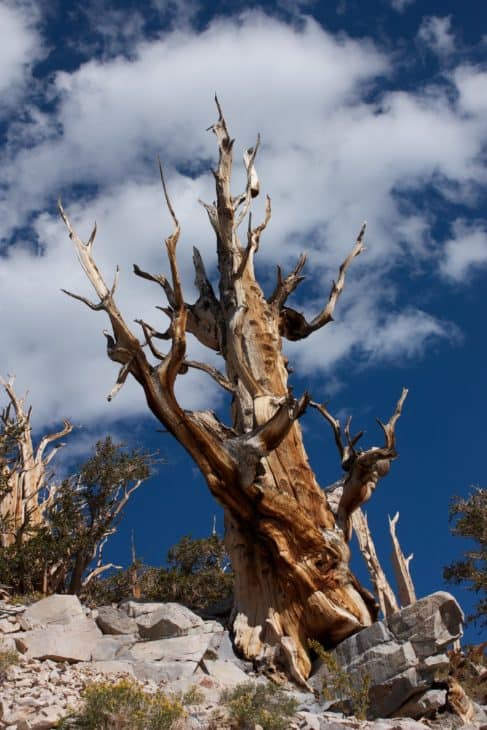
Great Basin bristlecone pines are among the oldest living organisms on Earth, with some individuals exceeding 5,000 years. This champion tree in Humboldt-Toiyabe National Forest stands about 50 feet tall with a girth of approximately 37 feet. Its twisted, weathered trunk and sparse foliage reflect millennia of survival in harsh, high-elevation conditions. The species thrives in rocky, alkaline soils above 9,000 feet, where few other trees can compete.
23. California Bay Laurel (Umbellularia californica) — Gold Beach, Oregon — 82 ft

This evergreen aromatic tree near Gold Beach, Oregon, is one of the largest California bay laurels on record. With a girth of approximately 39 feet, it has a partially hollow center and has sustained damage from storms in recent years. Part of the crown has split and fallen, allowing more accurate measurements of its dimensions. Typical specimens reach only 70 feet in height and 25 feet in width, making this tree a notable outlier for the species.
22. Bald Cypress (Taxodium distichum) — St. Francisville, Louisiana — 90 ft
Read our guide to Bald Cypress

Standing about 90 feet tall with a circumference near 59 feet, this bald cypress grows in the swampy terrain near St. Francisville, Louisiana, roughly two hours north of New Orleans. Located off the Island of Cat, access can be challenging due to flooding and difficult swamp conditions. Bald cypresses are deciduous conifers adapted to waterlogged soils, and their flared, buttressed bases help stabilize them in soft ground.
21. Flowering Dogwood (Cornus florida) — Clarke County, Georgia — 67 ft
Read our guide to Flowering Dogwood

Flowering dogwoods are beloved for their spring blooms—white, pink, or red bracts that surround small flowers. Native to the eastern United States, they typically grow to about 35 feet, making the 67-foot specimen in Clarke County, Georgia, exceptional. This tree’s size and health make it a state champion and a striking example of how favorable conditions can push a species beyond its typical dimensions.
20. Bennett Juniper (Western/Grand Juniper; Juniperus occidentalis / J. grandis) — 78 ft
Read our guide to Western Juniper

The Bennett Juniper, located in Stanislaus National Forest in Tuolumne County, California, is the largest juniper tree in the United States. Standing 78 feet tall, it is estimated to be around 3,000 years old, though some earlier claims suggested up to 6,000 years. The Save the Redwoods League owns the land where it stands. The tree’s gnarled, weathered appearance and immense girth make it a pilgrimage site for tree enthusiasts.
19. Canyon Live Oak (Quercus chrysolepis) — San Bernardino, California — 95 ft
Read our guide to Canyon Live Oak

This evergreen oak, with its graceful horizontal branches, reaches 95 feet—close to the upper limit for the species, which seldom exceeds 100 feet. Canyon live oaks are native to the mountains of California and the Southwest, thriving in rocky canyons and slopes. The San Bernardino specimen showcases the species’ potential for size in ideal conditions, with deep green foliage and a broad, spreading crown.
18. American Tulip Tree (Liriodendron tulipifera) — Chesapeake City, Virginia — 98 ft

Located behind Blackwater Road in Chesapeake City, Virginia, this American tulip tree (also called yellow poplar) stands 98 feet tall with a diameter at breast height of approximately 32 feet. It is the current national champion for the species. Tulip trees are fast-growing hardwoods prized for their tulip-shaped flowers and tall, straight trunks.
17. Fremont Cottonwood (Populus fremontii) — Skull Valley, Arizona — 98 ft
Read our guide to Fremont Cottonwood

This Fremont cottonwood, planted in 1917, stands 98 feet tall with a circumference of 46 feet. Located on Old Road North just north of Skull Valley village in Arizona, it is easily visible from the road. Fremont cottonwoods are riparian trees native to the Southwest, often found along streams and washes. This specimen’s longevity and size are testament to careful planting and favorable growing conditions.
16. Monterey Cypress (Cupressus macrocarpa) — Pescadero, San Mateo County, California — 101 ft

Located just off Highway 1 in Pescadero, San Mateo County, this Monterey cypress stands 101 feet tall with a crown spread of 111 feet and a circumference of 50 feet. It is listed on both the National Register of Champion Trees and the California Big Tree Registry. Cables visible in some branches are part of preservation efforts to support the tree’s aging limbs. Monterey cypress is native to a small coastal area of California and is prized for its picturesque, wind-sculpted form.
15. Water Tupelo (Nyssa aquatica) — Greensville, Virginia — 108 ft

This water tupelo in Greensville, Virginia, stands 108 feet tall with a circumference of 463 inches (about 38.5 feet) and a crown spread of 53 feet. Last measured in 2017, it is both a National Champion and Virginia Champion tree. Located approximately 2.8 miles upriver from the State Route 625 bridge (Creek Road), the tree features a large burl on its lower trunk but remains healthy. Water tupelos are native to southeastern swamps and floodplains.
14. Bigleaf Maple (Acer macrophyllum) — Lane County, Oregon — 119 ft
Read our guide to Bigleaf Maple

Bigleaf maples typically grow to about 65 feet, so this 119-foot specimen in Lane County, Oregon, is remarkable. With a crown spread of 91 feet and a diameter at breast height of approximately 12 feet, it is the current national champion for the species. Bigleaf maples are native to the Pacific Coast and are named for their enormous leaves, which can exceed 12 inches across.
13. American Sycamore (Platanus occidentalis) — Chester Springs, Pennsylvania — 120 ft
Read our guide to American Sycamore

This American sycamore in Chester Springs, Pennsylvania, stands 120 feet tall with a girth of approximately 30 feet. Estimated to be around 320 years old (with a margin of about 40 years based on 2021 assessments), this tree is a living link to early American history. Sycamores are known for their distinctive mottled bark, which peels to reveal white, tan, and greenish patches.
12. La Ceiba de Peñuelas (Kapok; Ceiba pentandra) — Peñuelas, Puerto Rico — 131 ft

La Ceiba de Peñuelas is a 300- to 400-year-old kapok tree located in a 51-acre park in Puerto Rico. Standing 131 feet tall, it is famous for its enormous buttress roots that spread across the ground like giant serpents. The tree was severely damaged by Hurricanes Irma and Maria in 2017 but has since shown remarkable recovery. Its sprawling branches extend far from the trunk, some nearly touching the ground.
11. Tasmanian Blue Gum (Eucalyptus globulus) — Mattole Road, Petrolia, Humboldt County, California — 141 ft

This Tasmanian blue gum stands 141 feet tall with a crown spread of 126 feet and a circumference of 49 feet. It is located in Petrolia Table Cemetery, a small cemetery nearly dominated by the tree’s presence. The species was introduced to California in the 19th century and has naturalized in coastal areas. There is a colorful story that this tree once deflated actor Clint Eastwood’s claim that a eucalyptus in his yard was the tallest in the United States.
10. Valley Oak (Quercus lobata) — Covelo, California — 154 ft

Valley oaks can live up to 600 years and are the largest of California’s native oaks. This 154-foot specimen in Covelo showcases the species’ stately form, with alligator-like bark and deeply lobed green leaves. The tree’s branches spread elegantly, sometimes hosting mistletoe. Valley oaks are endemic to California’s interior valleys and foothills.
9. The Studhorse Tree (California Incense-Cedar; Calocedrus decurrens) — 156 ft

The Studhorse Tree has a diameter at breast height of approximately 13 feet. Some believe it was originally two separate trees that fused at the base, and the twin trunks separate at around 13 feet above ground. Climbing to the fork reveals a spectacular view of the surrounding landscape. The tree’s age is difficult to determine precisely, but it is thought to be exceptionally old. California incense-cedar is native to the Sierra Nevada and Cascade ranges.
8. Kalaloch Redcedar (Western redcedar; Thuja plicata) — 178 ft

Located in Olympic National Park, Jefferson County, Washington, the Kalaloch Redcedar stands 178 feet tall. In 2014, a storm knocked down roughly half the tree, but the remaining portion still stands. Estimated to be between 1,370 and 1,770 years old, it had a girth of about 61 feet when measured at 4.5 feet above ground. Western redcedar is a culturally significant tree for Pacific Northwest indigenous peoples and is prized for its rot-resistant wood.
7. Quinault Lake Spruce (Sitka Spruce; Picea sitchensis) — 191 ft
Read our guide to Sitka Spruce

Located in Olympic State Forest, Washington, the Quinault Lake Spruce stands 191 feet tall and is the largest Sitka spruce in the world. With a circumference of nearly 59 feet, it is estimated to be around 1,000 years old. Its tall, graceful form and immense size make it a must-see for anyone who appreciates ancient trees. Sitka spruce is the largest species of spruce and is native to the Pacific coast from Alaska to northern California.
6. Big Tree (Lawson’s Cypress; Chamaecyparis lawsoniana) — 231 ft

Lawson’s cypress (also called Port Orford cedar) typically grows to around 200 feet with trunk diameters of four to nine feet. Trees can live up to 600 years and are found primarily in southern Oregon and northern California, often at elevations around 5,000 feet. The Big Tree, standing 231 feet tall, is an exceptional specimen with beautiful blue-green foliage. The species’ seeds can float on water, aiding in dispersal along streams.
5. Tioga Tower (Sugar Pine; Pinus lambertiana) — 274 ft

Discovered in 2015, the Tioga Tower is the tallest known sugar pine in the world at 274 feet. It is located somewhere in the Sierra Nevada Mountains of Mariposa County, California, but its exact location is kept secret to protect it. At 4.5 feet above ground, its circumference is approximately 24 feet. Sugar pines are the tallest species of pine and produce the longest cones of any conifer, sometimes exceeding 20 inches.
4. Super Colossus (Coast Redwood; Sequoia sempervirens) — 277 ft

Super Colossus is a coast redwood located in Prairie Creek Redwoods State Park, approximately 250 miles north of San Francisco. Standing 277 feet tall and nearly 30 feet wide, it has a distinctive hollow burl that engulfs two other redwood trunks, giving it an unusual and massive appearance. Its sheer size and unique form make it one of the most impressive trees in California.
3. Lake Quinault Douglas-fir (Coast Douglas-fir; Pseudotsuga menziesii) — 293.7 ft

Located in Olympic National Forest near Lake Quinault, Washington, this coast Douglas-fir stands approximately 293.7 feet tall with a circumference of 581 inches (about 48.4 feet) and a crown spread of just over 66 feet. Designated as the species champion in 2018, it is one of the tallest known Douglas-firs in the United States. Coast Douglas-firs are among the most important timber trees in North America and can live over 1,000 years.
2. Doerner Fir (Coast Douglas-fir; Pseudotsuga menziesii) — 327 ft

Named after a longtime Bureau of Land Management employee, the Doerner Fir stands 327 feet tall in a BLM forest in Coos County, Oregon. It is one of the tallest non-redwood trees in the world, roughly equivalent in height to the Centurion eucalyptus in southern Tasmania. Previously known as the Brummitt Fir after its drainage, this tree represents the upper limit of Douglas-fir growth and is a testament to the rich Pacific Northwest forest ecosystem.
1. General Sherman Tree (Giant Sequoia; Sequoiadendron giganteum) — Sequoia National Park (California) — 274.9 ft
Read our guide to Giant Sequoia

The General Sherman Tree stands in Sequoia National Park’s Giant Forest in Tulare County, California. At 274.9 feet tall, it is not the tallest tree on this list, but it holds the distinction of being the largest tree by volume on Earth. Estimated to be between 2,200 and 2,700 years old, the tree has a trunk volume exceeding 52, and the largest branch on this tree is a full seven feet in diameter. The estimated mass (wet) is thought to be more than 2,100 short tons, and the tree is often called the largest living single-stem tree on the planet.