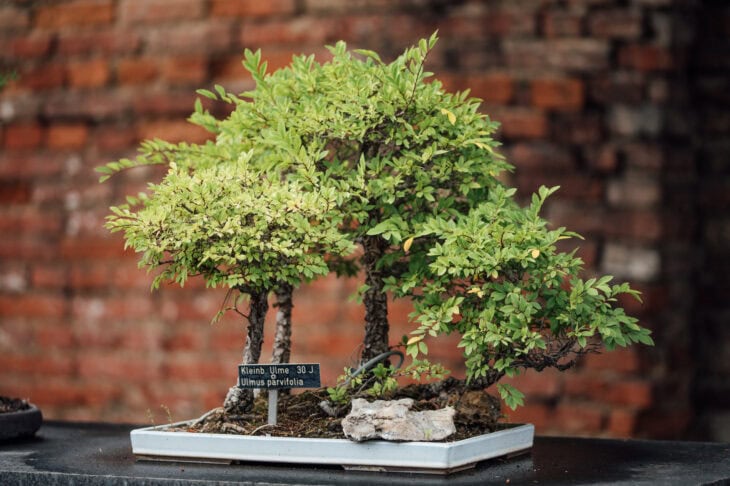
Bonsai doesn’t demand a master’s touch to thrive. Some species forgive missed waterings, tolerate low light, and actually improve when you prune them wrong.
Contents
- 1. Ficus (Ficus retusa, Ficus benjamina ‘Ginseng’)
- 2. Chinese Elm (Ulmus parvifolia)
- 3. Dwarf Jade (Portulacaria afra)
- 4. Jade (Crassula ovata)
- 5. Hawaiian Umbrella (Schefflera arboricola)
- 6. Juniper (Juniperus procumbens, Juniperus horizontalis)
- 7. Japanese Maple (Acer palmatum)
- 8. Sweet Plum (Sageretia theezans)
Bonsai is an ancient horticultural art originating in East Asia (particularly Japan and China) that focuses on cultivating miniature trees in containers through pruning, wiring, and shaping. Unlike many hobbies, bonsai doesn’t require years of experience to produce rewarding results. The secret lies in choosing a species that bounces back from mistakes.
Beginner-friendly bonsai species are typically tropical, subtropical, or hardy temperate trees that tolerate inconsistent watering and recover quickly from minor pruning errors. Tropical species like Ficus and Chinese elm thrive indoors year-round and can forgive lapses in attention. Temperate species like Juniper and Japanese maple must be grown outdoors but reward patient care with stunning seasonal displays.
Indoor bonsai species require warm conditions around 55 to 75 degrees Fahrenheit (13 to 24 degrees Celsius), bright indirect light, and weekly to twice-weekly watering. Outdoor species need year-round exposure and seasonal dormancy to develop properly over time. The difference between success and frustration often comes down to choosing the right species for your environment rather than perfecting technique.
This guide covers eight types, starting with the most resilient indoor species and progressing to outdoor varieties that reward a bit more attention. Each one has proven itself across countless gardens and homes.
1. Ficus (Ficus retusa, Ficus benjamina ‘Ginseng’)
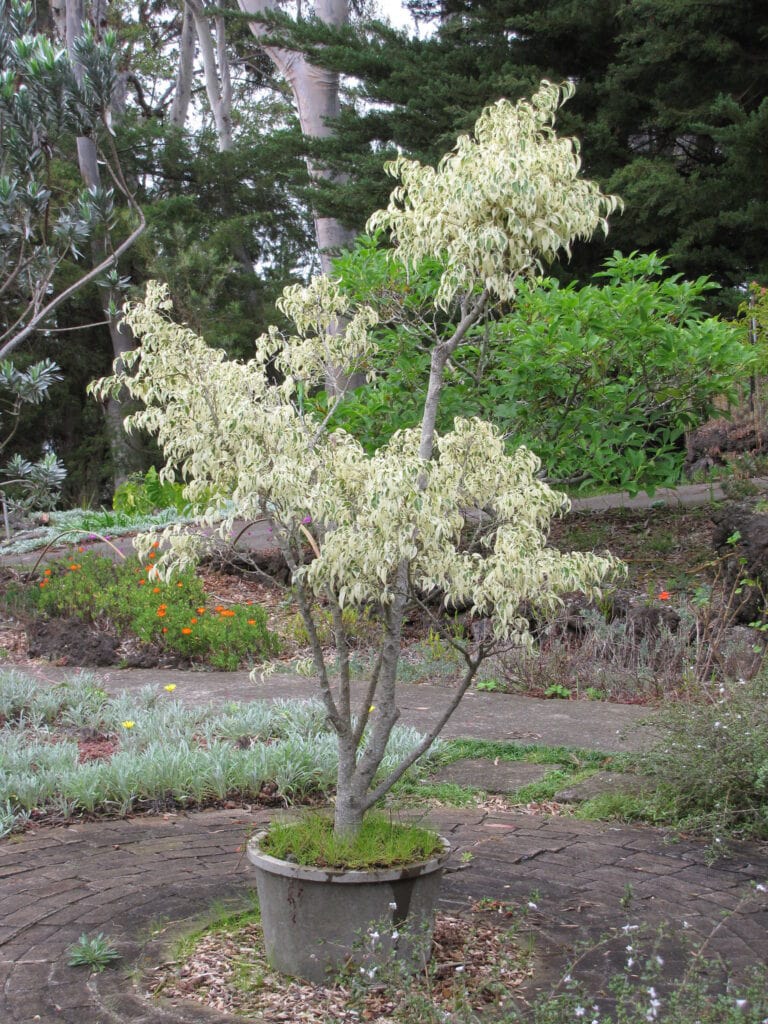
Weeping Fig
Weeping Fig is an evergreen tree grown as a houseplant or outdoor specimen in frost free climates. It prefers bright filtered light, regular moisture, and well drained soil.
Read our guide to Weeping Fig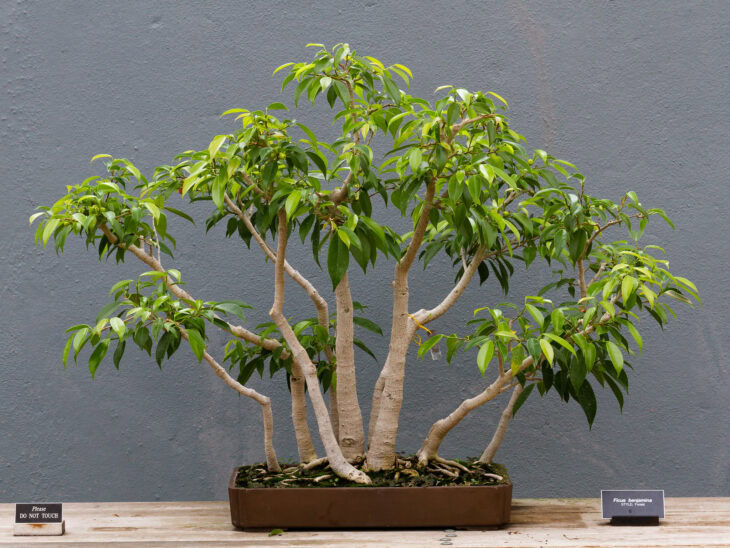
The Ficus is the most popular indoor bonsai for absolute beginners, and for good reason. It forgives inconsistent watering better than nearly any other species, bouncing back from weeks of neglect as though nothing happened. The plant’s elegant foliage, naturally fine branching, and ability to tolerate variable indoor light make it remarkably forgiving of the mistakes all new growers make.
Ficus species don’t bloom indoors, but their ornamental foliage is decorative year-round. Plants stay compact when pruned, typically growing 6 to 12 inches (15 to 30 centimeters) tall as styled bonsai, though larger specimens in bigger containers can reach 3 feet (90 centimeters). The Ginseng cultivar is particularly popular because its swollen trunk base and aerial roots create character almost instantly.
Keep your Ficus in bright indirect light and water whenever the soil surface feels dry. Tropical origins mean it cannot tolerate frost. It thrives in normal household temperatures between 55 to 75 degrees Fahrenheit (13 to 24 degrees Celsius) year-round. Feed it lightly during the growing season and prune whenever branches exceed 6 to 8 leaves to maintain shape.
2. Chinese Elm (Ulmus parvifolia)
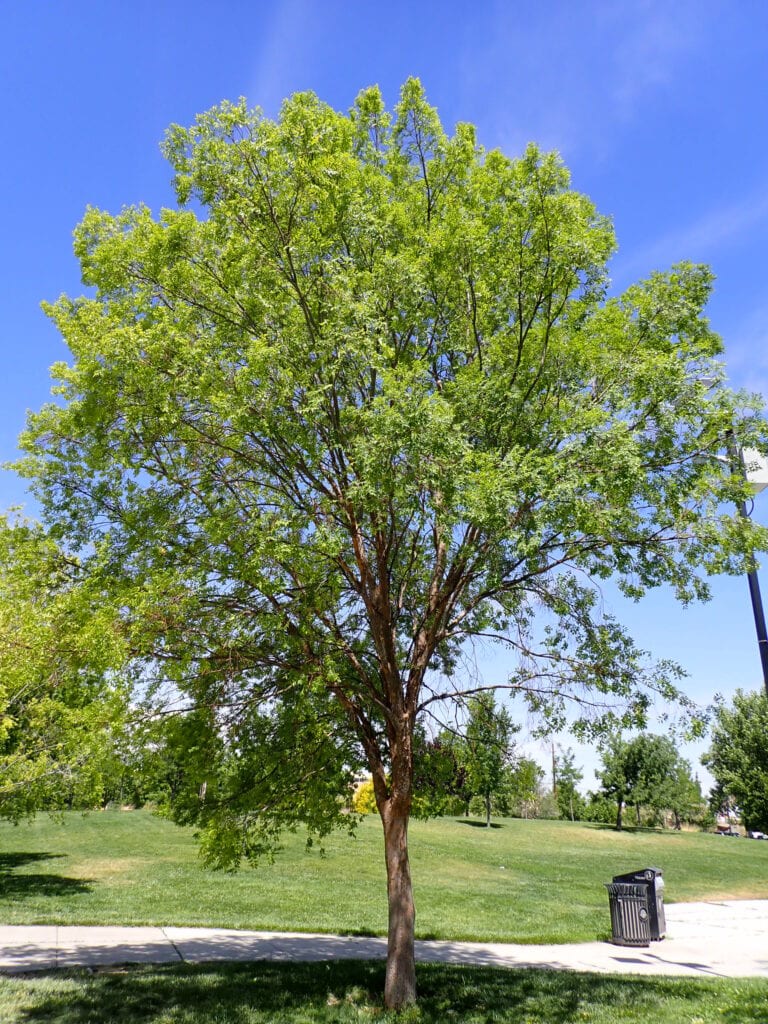
Chinese Elm
Chinese Elm is a small to medium ornamental tree prized for its peeling bark and tolerance of urban conditions. It suits street, shade and bonsai uses and adapts to a range of soils when drainage is adequate.
Read our guide to Chinese Elm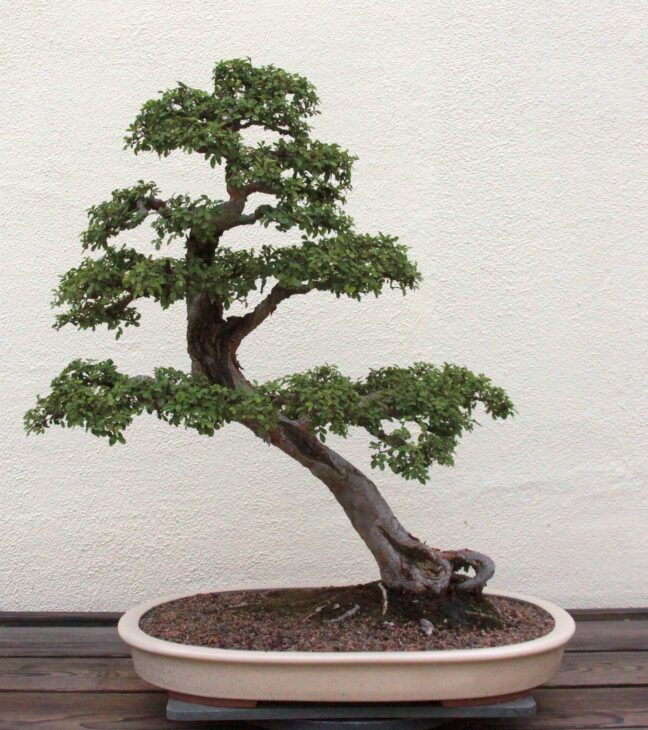
Chinese elm is prized by bonsai beginners for how vigorously it responds to pruning. Fast growth means you’ll see results from your training techniques within weeks, making it ideal for learning how to shape a bonsai. The species tolerates occasional lapses in care and recovers quickly from pruning mistakes that might damage other species.
This deciduous elm produces tiny, inconspicuous yellow-green flowers in fall but is grown for its elegant small foliage and responsive branching rather than flowers. Mature bonsai typically reach 6 to 18 inches (15 to 45 centimeters) tall, and the species naturally develops fine ramification with regular pruning. The cultivar ‘Seiju’ produces miniature leaves and grows more slowly, making it suited to very small pots.
Chinese elm adapts to both indoor and outdoor growing but prefers bright conditions. It tolerates temperatures as low as 40 degrees Fahrenheit (4 degrees Celsius) and as warm as 70 degrees Fahrenheit (21 degrees Celsius), making it a bridge species for gardeners transitioning between seasons. Well-draining bonsai soil, regular misting, and consistent feeding during growth produce the best results. The species’ responsiveness makes it an excellent choice for learning fundamental styling skills.
3. Dwarf Jade (Portulacaria afra)
Dwarf Jade
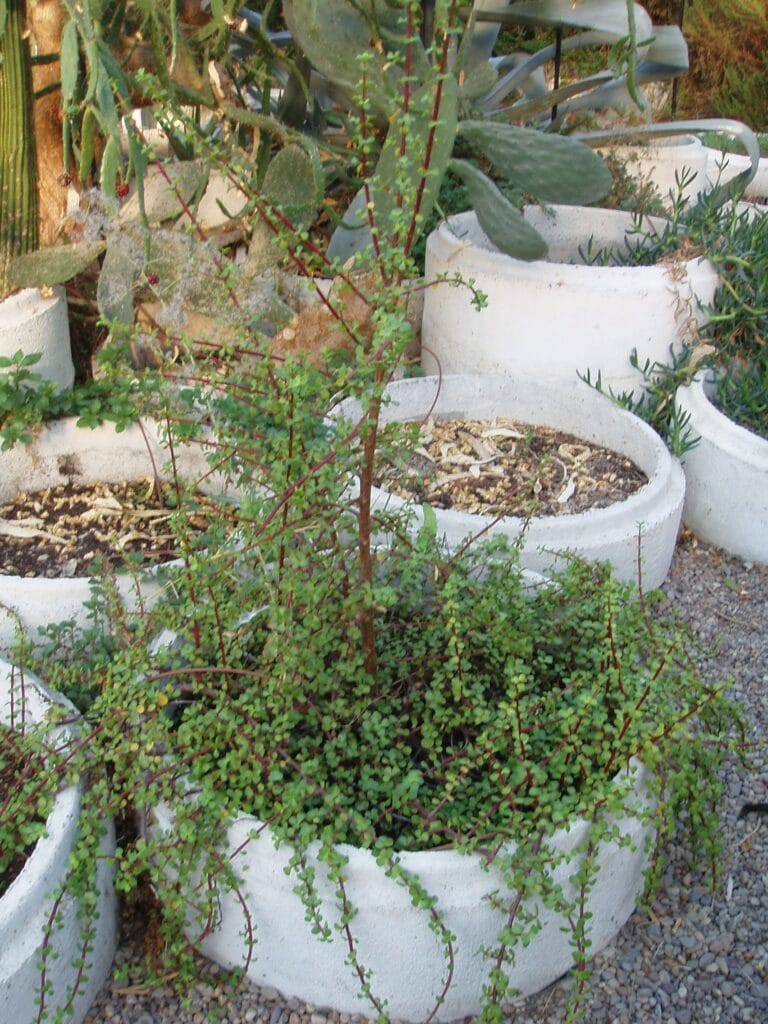
Dwarf Jade is a succulent shrub with fleshy leaves used as a container plant, bonsai, low hedge or groundcover in warm climates.
Read our guide to Dwarf Jade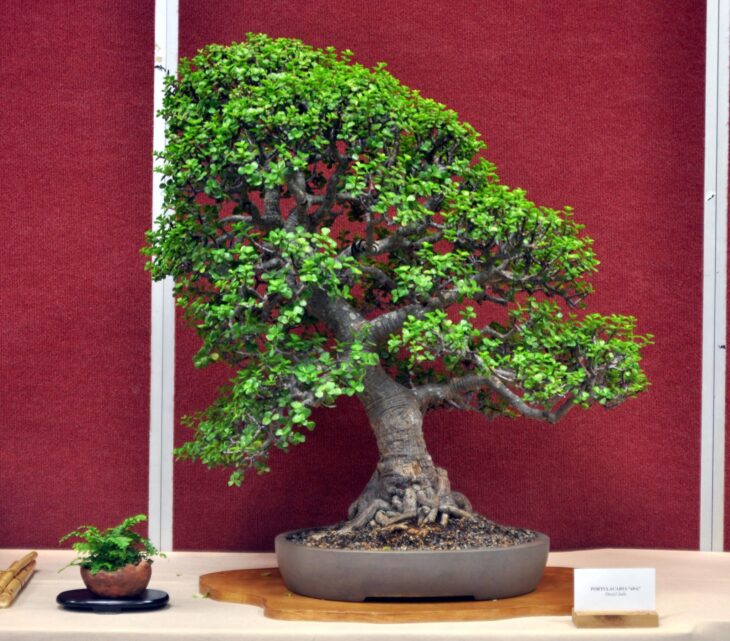
If you forget to water your plants, the Dwarf jade is your species. This succulent stores water in its thick, woody trunk and fleshy leaves, surviving weeks without irrigation where most bonsai would perish. For busy growers or anyone learning to read their plants’ water needs, this resilience is invaluable.
Dwarf jade produces tiny pink or white flowers in spring if conditions are ideal, though indoor specimens rarely flower. The plant’s compact growth and naturally small leaves create an attractive miniature form without excessive pruning effort. Styled bonsai typically grow 6 to 12 inches (15 to 30 centimeters) tall, and plants can live for decades in containers with minimal intervention.
Place your Dwarf jade in bright light, ideally 4 or more hours daily, and let the soil dry completely between waterings. Use gritty, fast-draining soil amended with extra perlite or coarse sand. Feed sparingly. The species thrives in warm conditions around 50 to 70 degrees Fahrenheit (10 to 21 degrees Celsius) and cannot tolerate frost. Its drought tolerance makes it nearly impossible to kill through neglect, making it perfect for learning other bonsai fundamentals without worrying about watering precision.
4. Jade (Crassula ovata)

Jade
Jade is a popular succulent grown as a houseplant and outdoors in frost free climates. It prefers bright light, well drained soil, and sparse watering to avoid root rot.
Read our guide to JadeJade plants are often overlooked in bonsai, yet they offer something many species don’t. They can be shaped effectively using pruning alone, without wiring, making them ideal if you’re hesitant about wire techniques. Thick leaves and stems tolerate significant neglect and infrequent watering, giving you room to focus on learning one skill at a time.
Mature jade plants produce delicate pink or white star-shaped flowers in winter to early spring, though young bonsai may take years to bloom. The plant’s compact growth and natural form suit container cultivation perfectly. Specimens typically grow 8 to 15 inches (20 to 38 centimeters) tall as bonsai, and cultivars like ‘Gollum’ with its distinctive tubular, red-tipped leaves offer visual variety within the species.
Jade requires bright light, ideally 6 or more hours of full sun daily, to develop compact growth and good color. Use well-draining cactus or succulent soil and water sparingly. Keep temperatures between 50 to 70 degrees Fahrenheit (10 to 21 degrees Celsius). Since the species stores water in its foliage, overwatering is the primary threat. Its tolerance for pruning-only styling makes it a smart choice if you want to master basics without immediately tackling wiring techniques.
5. Hawaiian Umbrella (Schefflera arboricola)
Read our guide to Hawaiian Umbrella
Hawaiian Umbrella
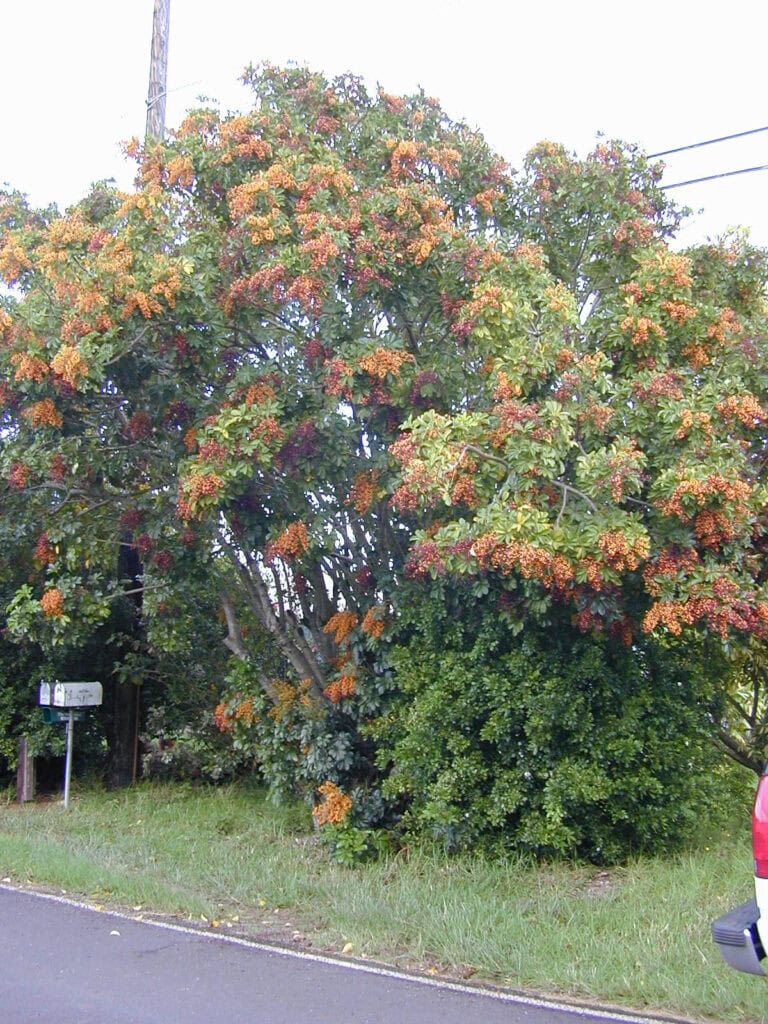
Hawaiian Umbrella is an evergreen shrub often grown indoors for its glossy umbrella like leaf clusters. Prefers bright indirect light, well drained soil, and roots readily from cuttings.
Read our guide to Hawaiian Umbrella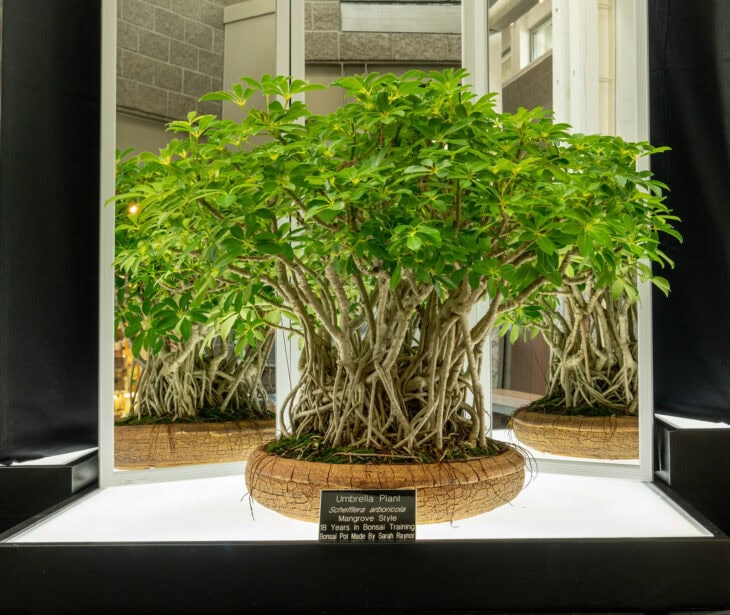
The Hawaiian umbrella stands out for a single invaluable trait. It tolerates low-light conditions exceptionally well, thriving where many bonsai simply decline. If your home or office lacks abundant natural light, this species opens the door to bonsai cultivation in spaces other types cannot survive.
Hawaiian umbrella produces small clusters of yellow to orange-red flowers in late spring and summer, though blooming indoors is rare. The plant’s naturally compact growth and small leaves create a refined bonsai form with minimal styling effort. Specimens typically reach 8 to 16 inches (20 to 40 centimeters) tall, and the species grows vigorously enough to recover quickly from pruning mistakes. The cultivar ‘Compacta’ produces even tighter, more compact growth.
Place your Hawaiian umbrella in bright indirect light, though it tolerates areas with only a few hours of indirect light per day, a rare quality in bonsai species. Temperatures between 60 to 75 degrees Fahrenheit (15 to 24 degrees Celsius) are ideal. Water moderately and feed regularly during growth. Maintain slightly acidic soil with good drainage. If your growing space is consistently dim, this species gives you the best chance of success.
6. Juniper (Juniperus procumbens, Juniperus horizontalis)

Creeping Juniper
Creeping Juniper is a low evergreen groundcover used for rock gardens, slopes and mass planting. It tolerates poor dry soils and favors full sun and good drainage.
Read our guide to Creeping JuniperJuniper is the quintessential beginner’s outdoor bonsai. It’s nearly impossible to kill through neglect, tolerating infrequent watering, variable weather, and minor pruning mistakes that would damage less resilient species. Cultivated for centuries as bonsai, the Juniper’s natural form and growth habit suit miniaturization perfectly.
Junipers don’t bloom. Instead, they’re prized for their fine-textured, feathery evergreen foliage in green to blue-gray tones depending on cultivar. The species naturally develops the spreading, sculptural forms that make iconic bonsai photographs. Specimens typically grow 6 to 18 inches (15 to 45 centimeters) tall, with the prostrate growth habit of dwarf cultivars like ‘Nana’ fitting naturally into shallow bonsai containers. Some cultivars develop attractive deadwood features over time, adding character.
Juniper must be grown outdoors year-round in full sun. Plant it in well-draining bonsai soil and water whenever the surface feels dry, but never let the soil become waterlogged. The species thrives in USDA hardiness zones 4 to 9 depending on cultivar, tolerating winter freezing that would kill tropical species. Its combination of hardiness and low maintenance makes it the ideal first outdoor bonsai for any beginning grower.
7. Japanese Maple (Acer palmatum)
Read our guide to Japanese Maple

Japanese Maple
Japanese Maple is a small deciduous tree prized for delicate leaves and brilliant fall color. It prefers moist, well drained soil and some protection from hot afternoon sun.
Read our guide to Japanese Maple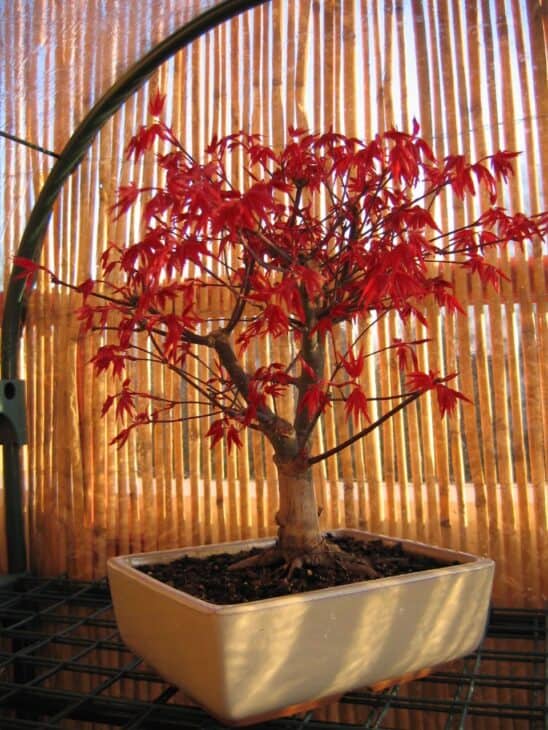
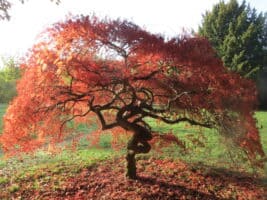
Japanese maple represents the aspirational goal for many bonsai enthusiasts. Its spectacular seasonal color progression from spring green to brilliant fall reds, oranges, and yellows provides drama no tropical species can match. Growing and styling a Japanese maple is a rewarding challenge that teaches patience and seasonal awareness.
Japanese maples produce tiny red flowers in spring that signal the season’s change, though the flowers themselves are inconspicuous. The species is celebrated for its natural branching habit, which suits bonsai styling with minimal intervention. Bonsai specimens typically grow 6 to 24 inches (15 to 60 centimeters) tall, and cultivars like ‘Dissectum’ with deeply cut, feathery leaves offer variety within the species. The most famous cultivars include ‘Bloodgood’ for deep red summer foliage and ‘Katsura’ for golden-orange tones.
Japanese maple must be grown outdoors in USDA hardiness zones 5 to 8, where it experiences seasonal dormancy essential for long-term health. Place it where morning sun warms the foliage but afternoon shade protects from harsh heat. Use well-draining soil slightly acidic in character, around pH 5.5 to 6.5. Consistent moisture is crucial, as the species dislikes dry conditions. Repot every two years to manage its vigorous root growth. Though requiring more skill than tropical types, the seasonal reward justifies the attention.
8. Sweet Plum (Sageretia theezans)
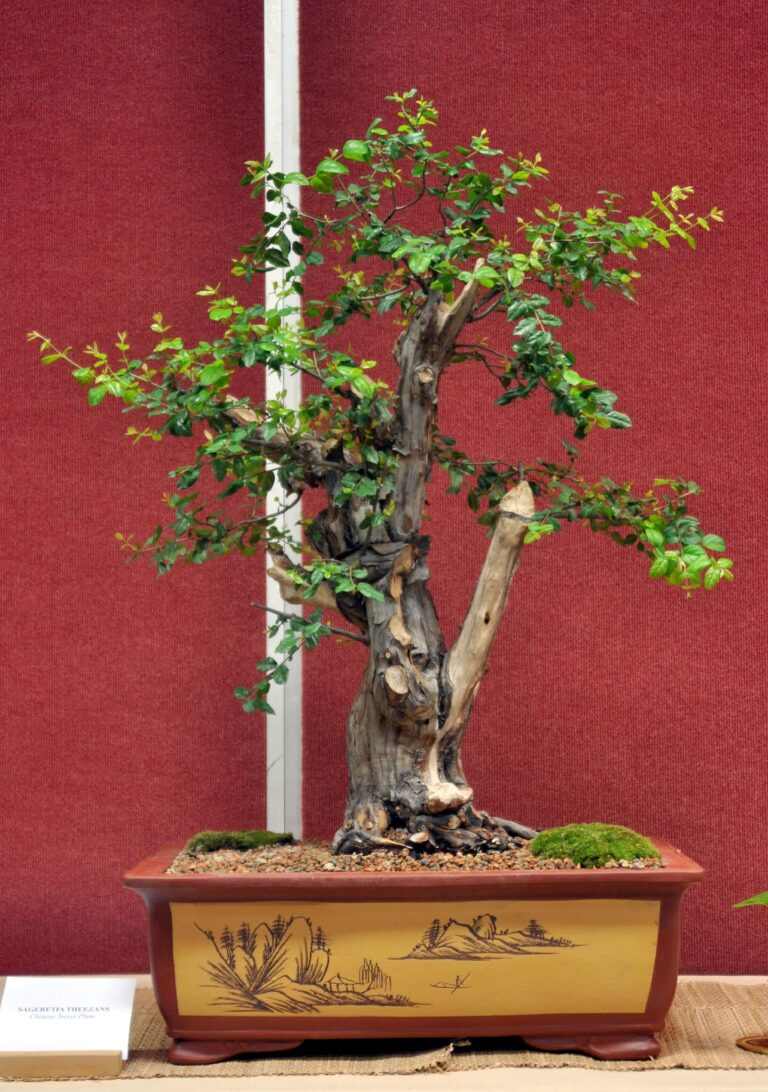
Sweet Plum
Sweet Plum is an evergreen ornamental shrub with glossy foliage and small plum like fruits. It prefers well drained soil and full sun to part shade and is often used as a specimen or bonsai.
Read our guide to Sweet PlumSweet plum offers something different from the species covered so far. Its small white flowers carry a delicate fragrance, and the flowers are followed by tiny decorative berries that add seasonal interest beyond foliage and form. For growers seeking character and detail beyond basic greenery, this species rewards careful observation.
Sweet plum produces its flowers and fruit in spring and early summer from existing branches, making careful pruning timing important. The species develops naturally small leaves that create fine ramification with minimal intervention, allowing you to see results from your styling without years of patient pruning. Specimens typically grow 6 to 12 inches (15 to 30 centimeters) tall. Its slower growth compared to other beginner species suits patient gardeners who prefer quality over speed.
Sweet plum is tropical and prefers warm temperatures between 55 to 75 degrees Fahrenheit (13 to 24 degrees Celsius) year-round. Position it in bright indirect light, 4 or more hours daily, but protect from harsh afternoon sun. Use well-draining bonsai soil slightly acidic in character, around pH 6 to 7. Regular misting improves health and supports flowering and fruiting. While less widely available than the species above, its unique combination of foliage, fragrance, flowers, and fruit makes it a rewarding choice for growers ready to move beyond purely foliage-focused bonsai.