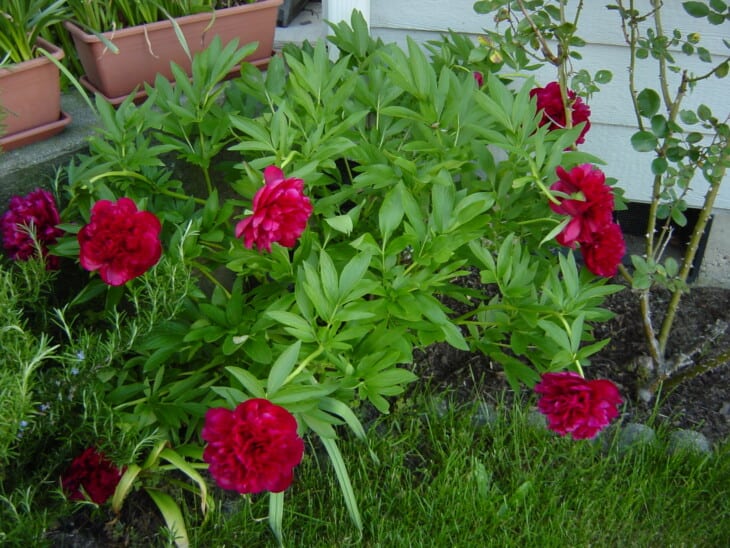
Peonies are a garden treasure, famous for their luxurious, multi-petaled blooms that unfurl in late spring. But their bloom season is heartbreakingly short—often just two to three weeks. If you’re captivated by the romance of ruffled, voluminous flowers and want to extend that look throughout the growing season, there are several stunning alternatives and companion plants that capture the peony aesthetic.
Contents
This guide covers seven plants that share peonies’ signature full, layered blooms, lush textures, and garden-worthy charm. Whether you’re looking to fill in before or after peony season, add variety to your borders, or simply expand your options for cut flowers, these peony lookalikes deliver beauty, versatility, and year-round interest.
1. Buttercup (Ranunculus)

Ranunculus, commonly known as Persian buttercup, is one of the most peony-like flowers you can grow. Its tightly packed, tissue-thin petals spiral outward in a rosette form, creating the same romantic, ruffled effect that makes peonies so beloved. Florists often use ranunculus as a peony substitute in spring arrangements.
These tuberous perennials bloom in early to mid-spring and are available in a stunning range of colors—cream, peach, coral, pink, red, burgundy, yellow, and orange. The most widely grown types are cultivars of Ranunculus asiaticus, prized for their long vase life and showy blooms.
Ranunculus grows 12 to 18 inches tall with delicate, fern-like foliage. They are cool-season bloomers that perform best in regions with mild winters and long, cool springs (USDA zones 8–10 as perennials; elsewhere grown as annuals or lifted after bloom). Plant the claw-like tubers in fall or early spring in well-draining soil and full sun to partial shade. They’re excellent for borders, containers, and cutting gardens.
2. Camellia
Read our guide to Japanese Camellia
Read our guide to Yunnan Camellia
Read our guide to Sasanqua Camellias

Camellias are broadleaf evergreen shrubs that produce some of the most peony-like blooms in the plant world. In fact, camellia flower forms are officially classified into types including “peony form,” which features a dense dome of overlapping petals with a mix of stamens and petals at the center—strikingly similar to a double peony.
These shrubs bloom from fall through early spring depending on the species, filling the garden with color during the off-season when peonies are dormant. Flowers come in white, pink, red, and variegated combinations, often with a glossy, waxy texture.
Camellias thrive in USDA zones 7 to 9 (some varieties to zone 6) and prefer partial shade, acidic soil, and consistent moisture. They grow 6 to 12 feet tall depending on variety and pruning, making them ideal as specimen plants, hedges, or backdrops in woodland or cottage-style gardens. Once established, camellias are long-lived and relatively low-maintenance.
Related: 9 Plants Similar to Camellia
3. Garden Roses

Certain types of garden roses—particularly English roses (bred by David Austin) and old-fashioned cabbage roses—are famous for their peony-like blooms. These roses feature deeply cupped, quartered, or rosette-shaped flowers with dozens of soft, ruffled petals that create a lush, romantic look.
English roses combine the full-petaled charm and fragrance of old garden roses with the repeat-blooming habit and color range of modern roses. Varieties like ‘Constance Spry,’ ‘Gertrude Jekyll,’ and ‘Lady of Shalott’ are especially peony-esque. Colors span soft pastels to rich apricots, corals, and deep crimsons.
Most garden roses suited to this style grow 3 to 6 feet tall and are hardy in USDA zones 5 to 9. They need full sun (at least 6 hours daily), fertile well-draining soil, regular watering, and annual pruning. When grown well, they bloom profusely from late spring into fall, offering months of peony-style beauty. Plant them along pathways, in mixed borders, or near patios to enjoy their often-intense fragrance.
4. Carnations (Dianthus caryophyllus)

Carnations are often overlooked in the garden, but their frilled, densely layered petals and full, rounded shape make them surprisingly good peony mimics—especially in double-flowered varieties. They’ve been cultivated for over 2,000 years and come in nearly every color except true blue, including whites, pinks, reds, purples, yellows, and bicolors.
There are two main garden types: border carnations (compact, 12–24 inches, with smaller blooms) and perpetual-flowering carnations (taller, greenhouse types). For peony-like garden impact, choose double border carnations with their clove-scented, ruffled blooms that appear in early summer and often rebloom in fall.
Carnations are hardy perennials in USDA zones 5 to 9 (or grown as annuals elsewhere). They prefer full sun, well-draining alkaline to neutral soil, and moderate water. Their silvery-blue foliage adds textural contrast, and the blooms are long-lasting both in the garden and as cut flowers.
Related: Are Carnations Poisonous?
5. Lisianthus

Lisianthus (Eustoma grandiflorum) is a favorite in the floral industry precisely because its double forms look so much like small peonies. The blooms feature satiny, ruffled petals arranged in rosette or cup shapes, and they’re available in elegant shades of white, cream, pink, lavender, purple, yellow, and bicolors.
Lisianthus is a tender perennial native to the southern United States and Mexico, typically grown as an annual or greenhouse cut flower in most climates. It grows 18 to 30 inches tall with slender stems and blue-green foliage. The blooms are exceptionally long-lasting in bouquets.
Lisianthus has a reputation for being finicky—it dislikes transplanting, needs consistent moisture without waterlogging, and prefers cool nights with warm days. It’s perennial in USDA zones 8 to 10 but more commonly started from seed or purchased as transplants for summer bloom. Plant in full sun to partial shade in rich, well-draining soil. Dwarf varieties work well in containers; taller types are stunning in cutting gardens and borders.
6. Double Tulips

Double tulips are often marketed as “peony-flowered tulips” for good reason—their blooms are packed with multiple layers of petals that create a full, rounded, peony-like silhouette. These spring bulbs deliver bold color and charm to beds, borders, and containers.
Double tulips are divided into two bloom-time groups: double early tulips (blooming early to mid-spring, 10–12 inches tall) and double late tulips (blooming late spring, 14–18 inches tall). Popular varieties include ‘Angelique’ (soft pink), ‘Ice Cream’ (white and magenta), and ‘Mount Tacoma’ (pure white).
Like all tulips, they’re hardy bulbs (USDA zones 3–7, sometimes to zone 8 with pre-chilling) that need a cold dormancy period. Plant bulbs in fall in well-draining soil and full sun. Double tulips are heavier than singles, so they can flop in wind or rain—consider sheltered spots or support stakes. Their blooms are stunning in spring gardens and cut arrangements, and they pair beautifully with forget-me-nots, violas, and spring-flowering shrubs.
Related: 6 Plants That Look Like Tulip Leaves
7. Dahlias

Dahlias are one of the most celebrated peony lookalikes, especially the “peony-flowered” and “dinner plate” dahlia types. Peony-flowered dahlias feature open centers surrounded by multiple layers of broad, slightly twisted petals, closely resembling semi-double peonies. Dinner plate dahlias, meanwhile, produce enormous blooms (often 8–12 inches across) with tightly packed petals in a stunning range of colors—pink, coral, red, burgundy, orange, yellow, white, and purple.
Dahlias are tuberous perennials that bloom from midsummer through fall, providing peony-style drama during the heat of summer when peonies are long finished. They grow 3 to 5 feet tall (sometimes taller) and thrive in USDA zones 8 to 11 as perennials; in colder zones, tubers must be lifted and stored for winter.
Plant dahlias in full sun and rich, well-draining soil after the last frost. Stake tall varieties early to support heavy blooms. Deadhead spent flowers to encourage continuous blooming. Dahlias are spectacular in borders, cutting gardens, and as late-season focal points. Their ability to produce dozens of blooms per plant makes them invaluable for gardeners seeking a long season of peony-like flowers.
Final Thoughts
If you love the lush, romantic look of peonies but want more variety, extended bloom times, or alternatives suited to different climates and seasons, these seven plants deliver. From the spring charm of ranunculus and double tulips to the summer abundance of dahlias and repeat-blooming garden roses, each offers its own take on the peony’s signature fullness and elegance.
Consider combining several of these peony lookalikes in your garden to create a succession of bloom from early spring through fall. With thoughtful selection and placement, you can enjoy months of ruffled, voluminous flowers that capture the magic of peonies—without being limited to their brief season.