
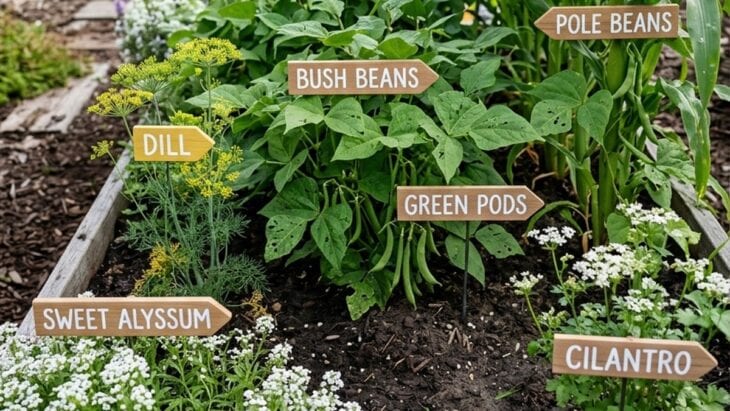
Mexican bean beetles can strip green bean leaves to lace and cost a badly hit crop 20 to 50 percent of its yield (Cornell), and the companions usually recommended against them have a weak record. What companion planting does well for beans is more modest: living supports for pole beans, flowers that feed aphid predators, and a marigold trick for nematode-prone soil.
Companion planting means growing different plants close together so one helps the other. For green beans (Phaseolus vulgaris) the evidence is thinner than most lists suggest. A 1980 Virginia field trial of seven border plants found none that gave snap beans a net benefit.
What does hold up: corn gives pole beans a living trellis, flowers like sweet alyssum and dill draw aphid-eating insects, and French marigolds can reduce root-knot nematodes when grown as a bed before beans. For beetles, floating row covers are the better defense, and beans can stay covered all season because they self-pollinate.
Pick companions that share the bean’s conditions: soil at least 60°F (16°C) at 4 inches (10 cm) deep, a pH of 5.8 to 6.5, full sun, and a best growing range of 65 to 85°F (18 to 29°C). Clemson Extension notes that blossoms can drop when heat tops 90°F (32°C).
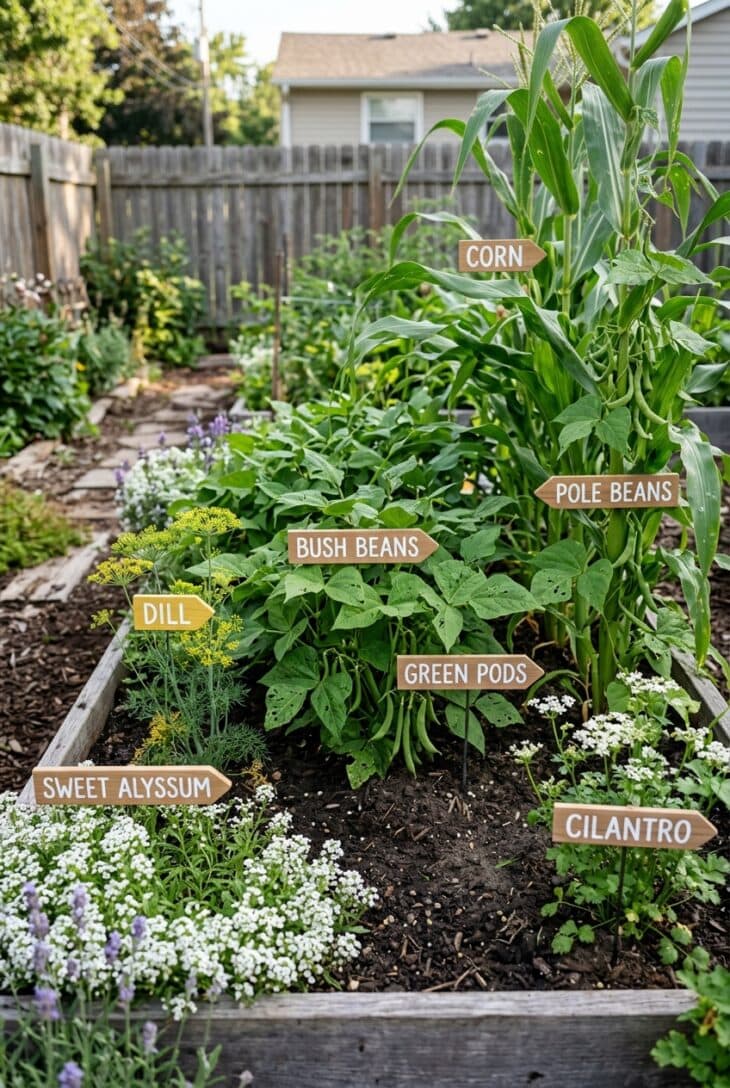
Best companion plants for green beans
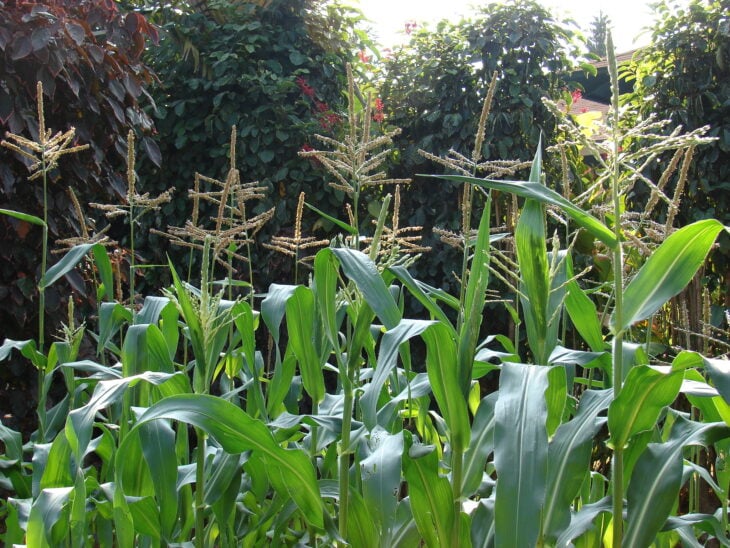
Corn (Zea mays)
What it helps with
Corn stalks give pole beans a living trellis, so the beans climb without a built structure.
Why it works with green beans
Pole beans twine up the corn, a pairing used for centuries in the “three sisters” system. In a field study, maize and bean plantings out-yielded the same crops grown alone on a land-equivalent basis, which the authors credit to different root foraging patterns.
Planting notes
Sow corn first. When it is 4 to 6 inches (10 to 15 cm) tall, plant 3 to 4 pole bean seeds in a circle about 6 inches (15 cm) from it, as WVU Extension describes. Both need soil of at least 60°F (16°C), so sow after your last frost, and use pole beans because bush types do not climb.
Possible drawback or limit
A land-equivalent gain means the whole planting out-yields separate plots, not that each crop does better. Extension guides also say beans feed the corn nitrogen, but a pot study found beans in mixtures fixed little until about week eight, so treat that claim as unproven.
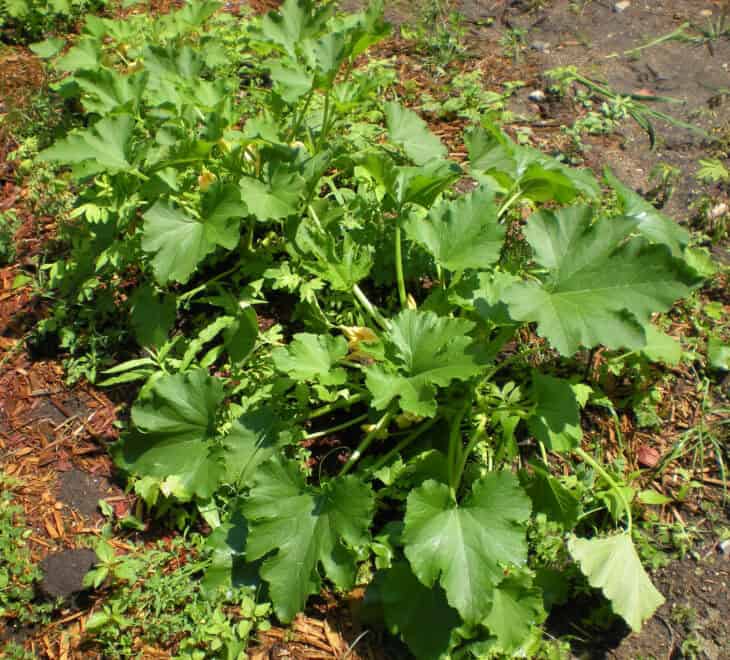
Squash (Cucurbita spp.)
What it helps with
Squash vines act as a living mulch, shading the soil around the corn and beans.
Why it works with green beans
WVU Extension says the vines shade the soil and slow moisture loss, and the University of Delaware adds that the large leaves suppress weeds. The full corn, bean and squash planting also out-yielded single-crop plots on a land-equivalent basis.
Planting notes
In the WVU method, you plant four squash seeds around the outside of the corn and bean mound at about the same time as the beans. Squash needs the same warm soil as beans, at least 60°F (16°C), so wait until after your last frost date.
Possible drawback or limit
The yield figures describe the combined harvest from the whole planting, so a bean row inside a three sisters mound is not guaranteed to out-yield a bean row of its own. No bean-specific yield data turned up.
Sweet alyssum (Lobularia maritima)
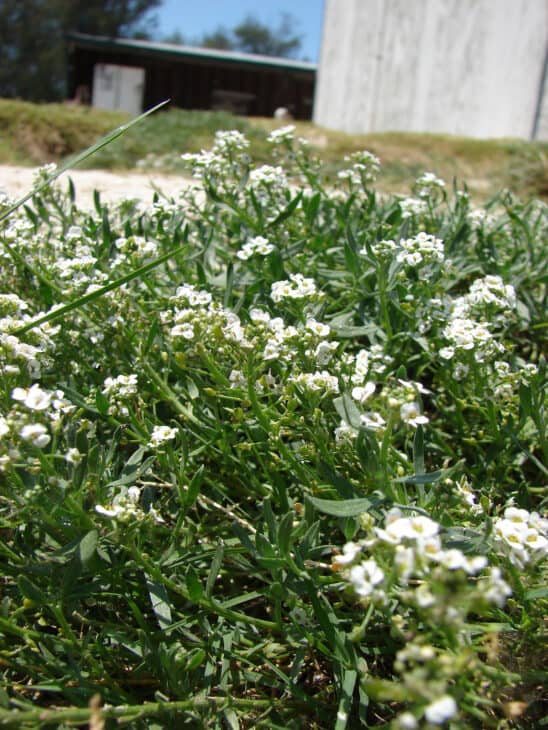
What it helps with
Sweet alyssum draws aphid-eating hoverflies to the bean bed.
Why it works with green beans
Adult hoverflies feed on nectar and pollen, and the females lay eggs near aphid colonies so the larvae eat the aphids, according to the University of Delaware. In alyssum flower strips in lettuce fields, 14 of 16 hoverfly species identified were aphid feeders (study). Whether the strips actually lowered aphid numbers is still unconfirmed.
Planting notes
Plant it along the bed edge and at the ends of bean rows so it is in flower while aphids build up. Sow it when you sow the beans.
Possible drawback or limit
The hoverfly research comes from lettuce, not beans, and predators may not travel to where they are needed. Clemson Extension also says natural enemies usually control bean aphids on their own once the weather warms, so alyssum may add little in a year with few aphids.
Dill (Anethum graveolens)
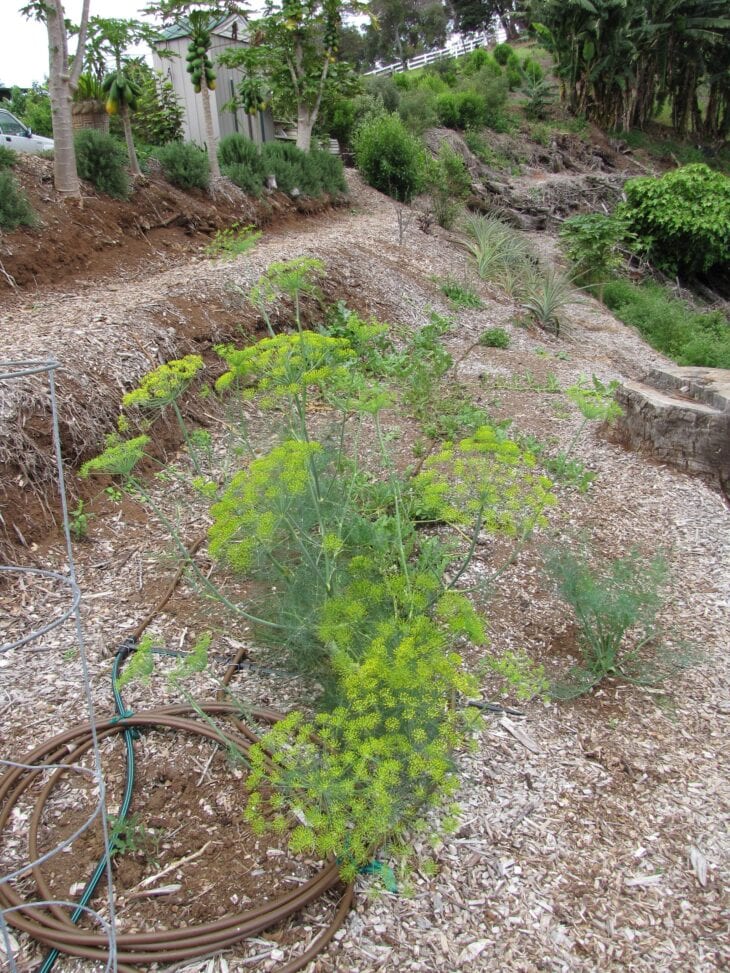
What it helps with
Dill flowers feed aphid predators such as hoverflies, lacewings and ladybugs.
Why it works with green beans
The University of Delaware lists dill among the herbs that attract natural enemies, and says lacewings and ladybird beetles are drawn to flowers and keep aphids in check. Clemson Extension adds that ladybugs are important natural controls of spider mites, another bean pest.
Planting notes
Plant dill along the bed edge or at the end of the bean rows, and let it flower, because the flowers are what feed the insects. It works the same way in a pollinator garden, so a few plants can serve both beds.
Possible drawback or limit
Dill is supported as an insectary herb in general but has not been tested on beans. The University of Delaware also warns that more predators in a bed do not always mean fewer pests on the crop.
Cilantro (Coriandrum sativum)
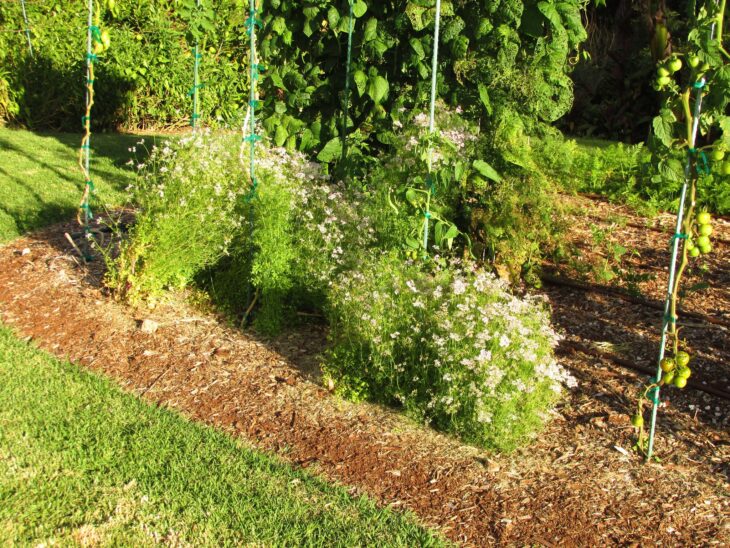
What it helps with
Cilantro flowers feed the same aphid predators as dill, and the plant stays short enough to tuck between bush beans.
Why it works with green beans
The University of Delaware lists coriander among the herbs that attract natural enemies. The mechanism and the caveats are the same as for dill: the flowers feed beneficial insects, but this is general gardener practice, not a bean trial.
Planting notes
Plant it between bean rows or along the bed edge, and let some plants bolt and flower. Cilantro runs to flower quickly in heat, so in warm climates resow every few weeks.
Possible drawback or limit
A cilantro plant you keep harvesting never flowers, so it feeds no insects. Leave a few plants alone for the flowers.
French marigold (Tagetes patula)
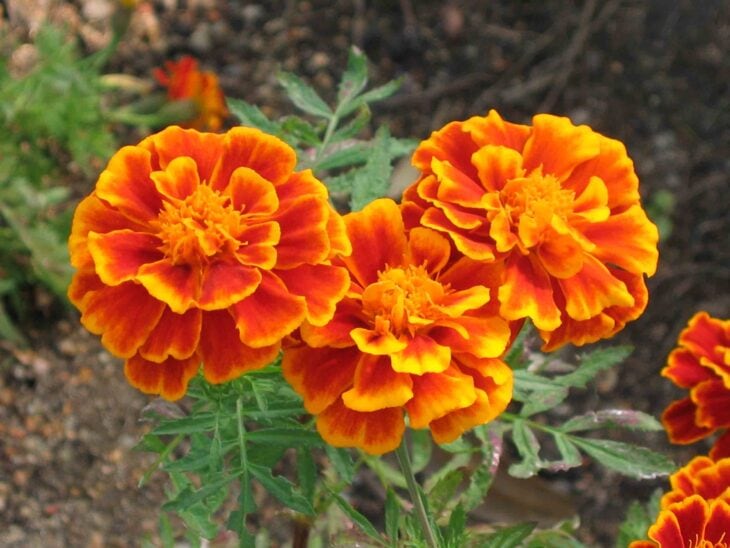
What it helps with
French marigolds reduce root-knot nematodes in the soil when grown as a solid planting before the beans.
Why it works with green beans
The University of Florida (UF/IFAS) reports that French and African marigolds suppress root-knot nematodes when planted no more than 7 inches (18 cm) apart, grown for at least two months on the same site, and worked into the soil. This is documented, but it works only against root-knot species and does not eradicate them.
Planting notes
Grow marigolds as a block in the bed where beans will go next, then dig them under before sowing. French cultivars named as resistant include ‘Single Gold’, ‘Tangerine’, ‘Goldie’ and ‘Dwarf Primrose’, while Signet marigolds are fully susceptible. The two months of growth also pushes your bean sowing later, which may help beans escape peak beetle damage (Clemson).
Possible drawback or limit
As a border, French marigold has a poor record. In the 1980 Virginia trial, bordered beans had fewer Mexican bean beetles, but an allelopathic response of the beans to the marigold overshadowed the gain. The University of Florida also found that mixing marigolds with susceptible crops had no effect on nematodes.
Nasturtium (Tropaeolum majus)
What it helps with
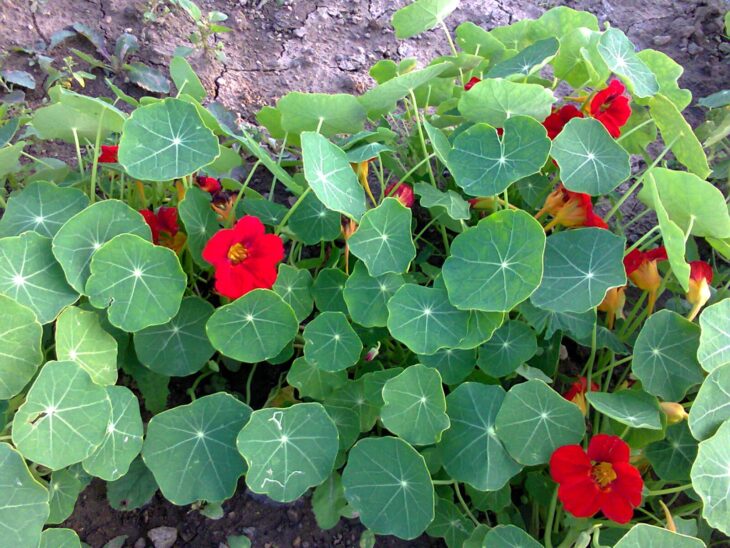
Gardeners use nasturtium as a sacrificial plant that aphids settle on instead of the beans.
Why it works with green beans
Gardeners widely report that aphids prefer nasturtium, but no trial confirming it on beans turned up. The University of Delaware does list nasturtium among annuals that support beneficial insects.
Planting notes
Plant it around the bed perimeter. If aphids pile up on it, cut off the infested stems and throw them away rather than letting the colony spread to the beans.
Possible drawback or limit
In the 1980 Virginia trial, garden nasturtium borders did not reduce Mexican bean beetles or corn earworm on snap beans. A nasturtium covered in aphids can also become a source of them if you leave it unchecked.
Potatoes (Solanum tuberosum)
What it helps with
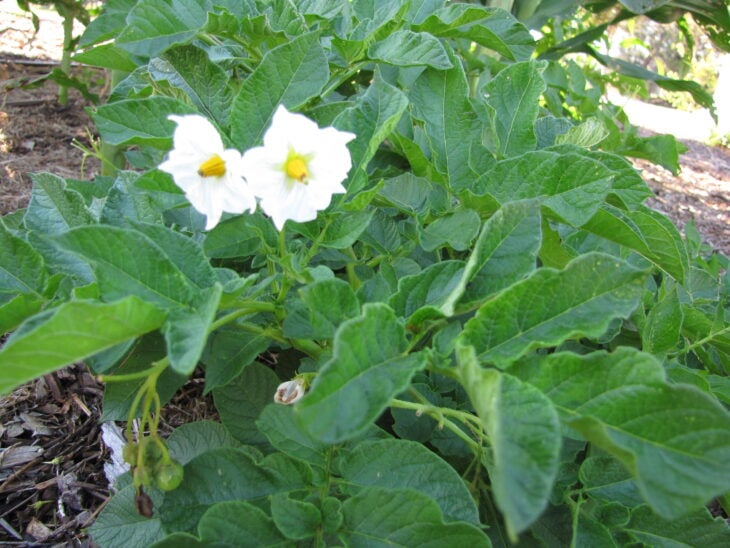
Gardeners alternate bean and potato rows in the belief that each crop deters the other’s beetle.
Why it works with green beans
This is gardener tradition. WVU Extension lists beans as a companion for potatoes, and Virginia Tech lists potatoes as a companion for bush beans, but neither gives a mechanism and no trial turned up.
Planting notes
Alternate rows of bush beans and potatoes, sowing the beans once the soil reaches 60°F (16°C). WVU lists squash, cucumbers and tomatoes as poor potato neighbors, so keep those out of that row.
Possible drawback or limit
Treat the pairing as harmless but unproven. The Virginia field trial did not test potatoes, so there is no data on whether it reduces bean beetles.
Summer savory (Satureja hortensis)
What it helps with
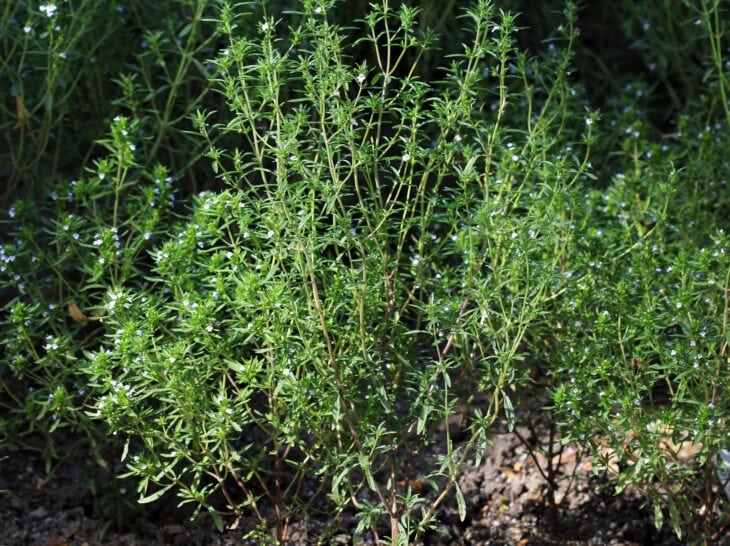
Summer savory is the traditional “bean herb”, said to deter bean pests.
Why it works with green beans
Virginia Tech lists it as a companion for both bush and pole beans, but the one field trial found showed no effect on Mexican bean beetles.
Planting notes
Grow it for the kitchen, where it pairs well with beans, rather than for pest control. It is a warm-season annual, so it shares the beans’ timing.
Possible drawback or limit
In the 1980 Virginia trial, corn earworm occurred significantly more often on beans bordered by summer savory. That makes it a poor choice as a pest-control border.
Plants to avoid with green beans
Onions (Allium cepa) are listed by WVU Extension as stunting the growth of beans, and Virginia Tech lists onion as a plant to avoid near both bush and pole beans. Neither source explains the mechanism or cites a trial, so this is extension-reported rather than experimentally proven. Giving onions their own bed costs nothing.
Garlic (Allium sativum) appears on the same avoid lists from WVU Extension and Virginia Tech, and Virginia Tech adds leeks. As with onions, no mechanism or trial is given. Keep alliums out of the bean bed as a precaution.
Beets (Beta vulgaris) are listed by Virginia Tech as incompatible with pole beans. The source gives no reason and no trial turned up, so this is low-confidence. If you grow pole beans, put the beets in a different bed.
Sunflowers (Helianthus annuus) are also listed by Virginia Tech as incompatible with pole beans, again without a stated reason. This is low-confidence. If you grow pole beans, keep sunflowers out of that bed to be safe.
Gladiolus (Gladiolus spp.) is listed by WVU Extension alongside onion and garlic as a plant not to put next to beans. It is the only source found, and no mechanism is given, so this is low-confidence. Plant gladiolus in the flower border rather than the vegetable bed.

.jpg)

