
Carrot rust fly maggots tunnel through the root, leaving rusty channels that invite soft rot, and chemical control is generally unreliable. Companion planting offers a few real options, plus a long list of pairings with nothing behind them.
Contents
Companion planting means growing different plants close together so one helps the other. For carrots (Daucus carota), the pests that matter vary by region: carrot rust fly and carrot weevil in northern guides, root-knot nematodes and wireworms in Florida’s, and leafhoppers that spread aster yellows in several states.
Companions can offer a few things: onions and aromatic herbs cut carrot pests in field trials, flowers feed ladybugs and hoverflies, radishes mark slow rows, and French marigolds can reduce root-knot nematodes before planting. For rust fly, the stronger defense is a floating row cover put on right after sowing with the edges buried in soil (WSU).
Match companions to carrots’ conditions: germination at 55 to 75°F (13 to 24°C), best growth at 60 to 65°F (16 to 18°C), and deep, loose soil with a pH of 6.0 to 6.5. Carrots tolerate frost, so sow as soon as the soil can be worked in spring (Illinois Extension). In heavy or rocky soil, try a raised bed.
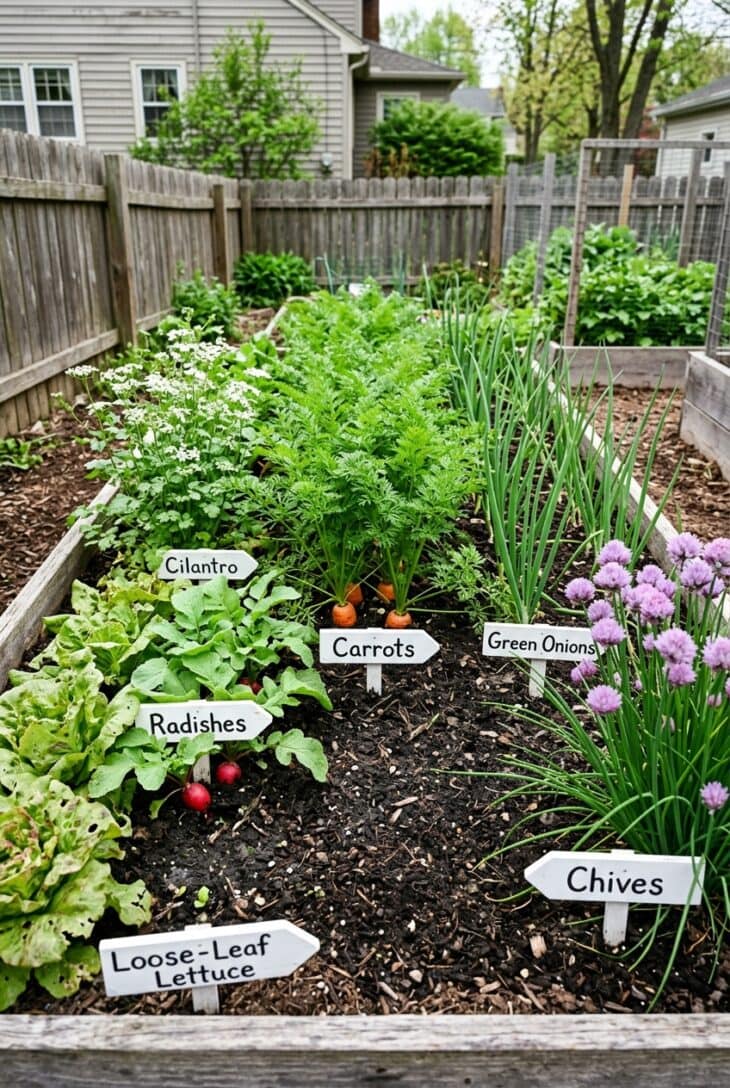
Best companion plants for carrots
Onions (Allium cepa)
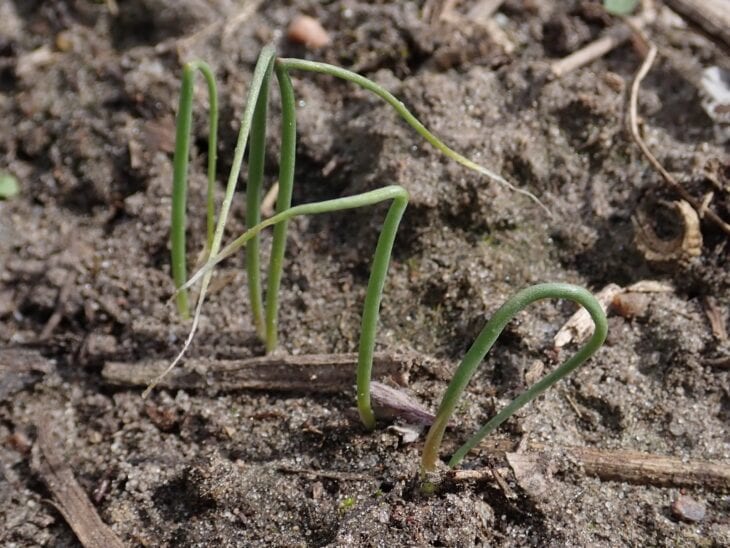
What it helps with
Onions grown between carrot rows reduced carrot rust fly attack in a field trial.
Why it works with carrots
In a 1984 British trial, carrots mixed with onions suffered less carrot rust fly attack than carrots grown alone, and the onions had fewer onion thrips too. The authors concluded that onion scent probably disrupts the flies’ search for carrots. The effect was strongest with young onions and faded once they began to bulb.
Planting notes
Sow a row of onions between your carrot rows early in the season. Because the benefit fades as onions bulb, pull some as green onions and sow a fresh row every few weeks so some are always young.
Possible drawback or limit
The UMass vegetable guide also lists onion intercropping as a rust fly control, but the only trial found was run in Britain. Leeks (Allium ampeloprasum) share the onion family, but only bulb onions were tested.
Chives (Allium schoenoprasum)
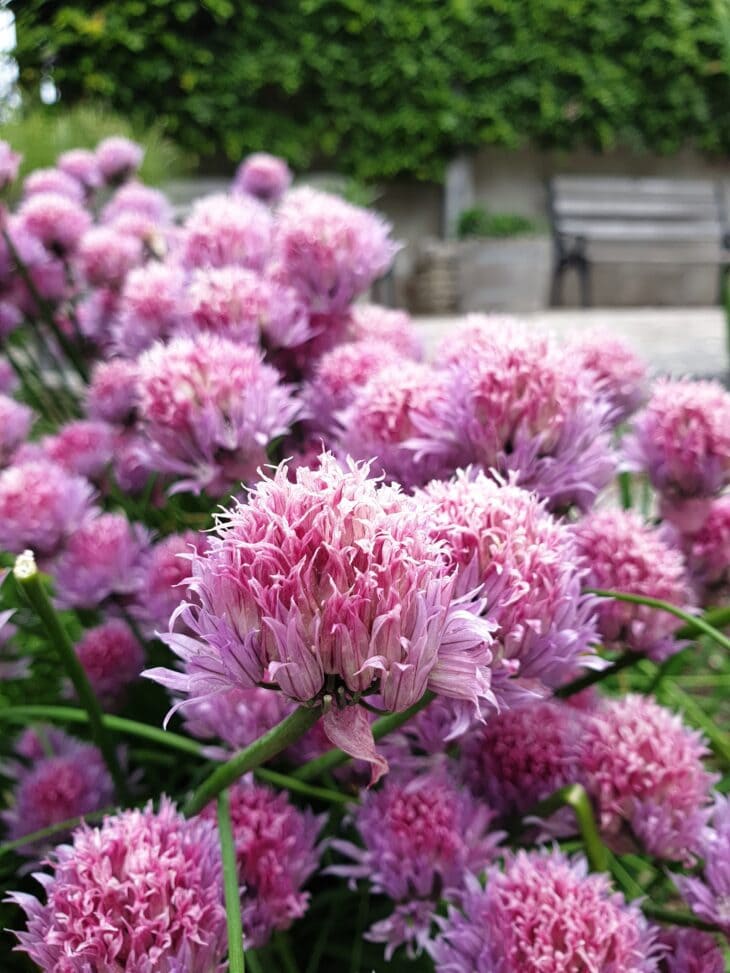
What it helps with
Chives are listed by extension as a carrot companion that can distract carrot rust fly.
Why it works with carrots
Oregon State‘s herb chart says chives enhance carrots and can repel or distract the carrot rust fly. No trial on chives and carrots turned up, so this is extension tradition, with the onion trial as the nearest evidence. Their flowers also feed small predators and parasitoids (Delaware).
Planting notes
Plant chives at the bed edge rather than in a row you will rotate, since they are perennial. Let some flower, because the blooms are what small beneficial insects feed on.
Possible drawback or limit
The evidence is weaker than for onions: a chart entry, not a trial. Chives also stay put when you move carrots to a new bed, and Rutgers advises rotating carrots after 3 years.
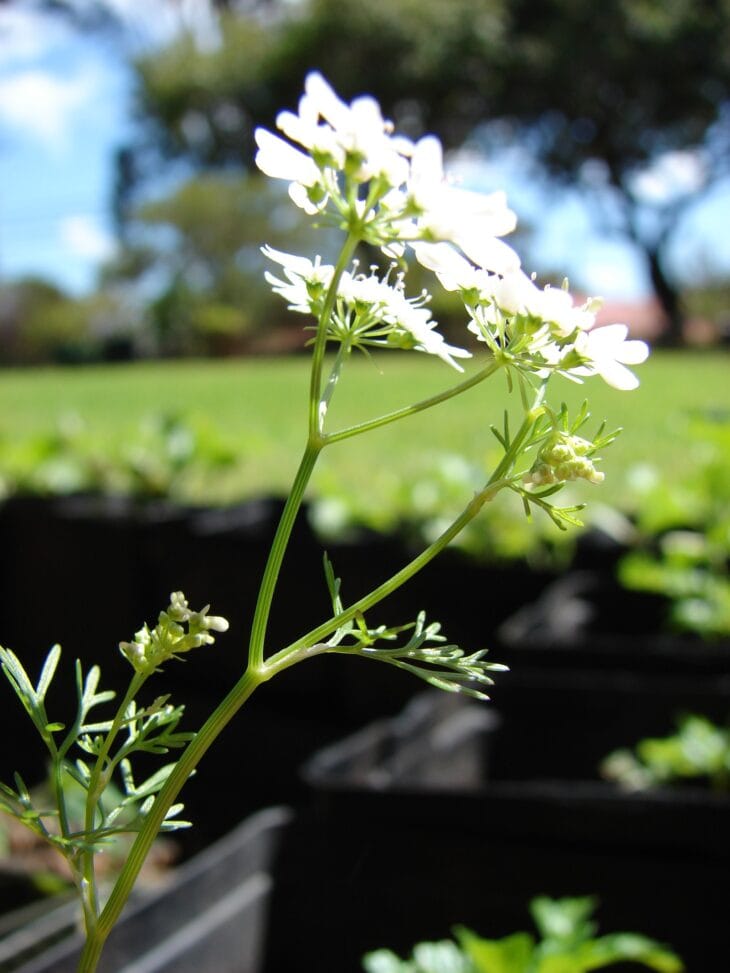
Cilantro (Coriandrum sativum)
What it helps with
In a Polish trial, carrots grown with cilantro had fewer aphids and carrot psyllids and more ladybugs and hoverflies.
Why it works with carrots
Over two seasons, researchers in Poland found that carrots intercropped with coriander or summer savory had fewer rust fly damaged roots, fewer aphids and fewer carrot psyllids. The most ladybugs and hoverflies were on the coriander plots. Flowers feed predators, but Delaware cautions that more natural enemies do not always mean fewer pests.
Planting notes
Sow cilantro in or beside the carrot bed and let it bolt, since the flowers (the plant is then called coriander) are what the insects visit. Cilantro runs to flower quickly in heat, so sow a second batch a few weeks later to keep blooms coming.
Possible drawback or limit
This is one study over two seasons, and its abstract reports the herbs together on most pests. Cilantro also belongs to the carrot family, which WSU says rust fly larvae attack, so it could give the fly another place to lay eggs.
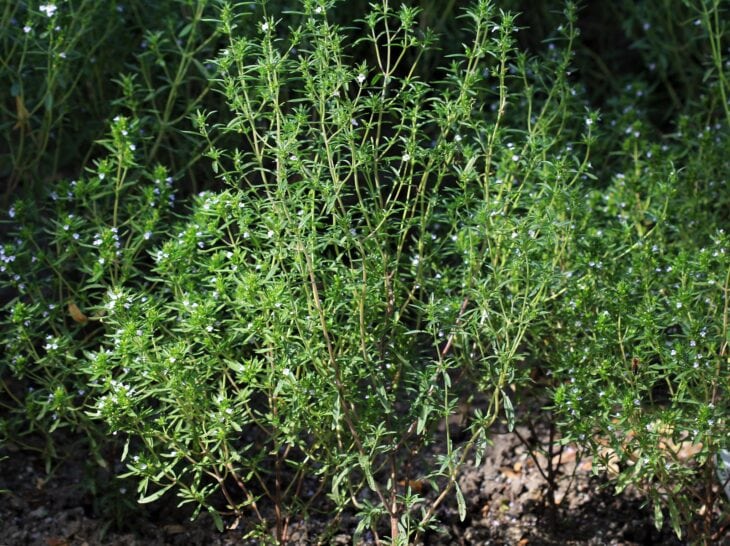
Summer savory (Satureja hortensis)
What it helps with
Carrots grown with summer savory had the fewest rust fly damaged roots in the same Polish trial.
Why it works with carrots
The researchers found the lowest number of damaged roots in the combination with summer savory. The abstract gives no mechanism, so the reason is unknown. Aphids and carrot psyllids were also lower on intercropped plots.
Planting notes
Summer savory is a warm-season annual, so set it out after the last spring frost, when early-sown carrots are already up. The abstract gives no spacing or row layout, so work out your own and leave room for the carrots.
Possible drawback or limit
This is one trial from Poland, with no US result to back it. Treat savory as an experiment alongside a row cover, not a replacement for one.
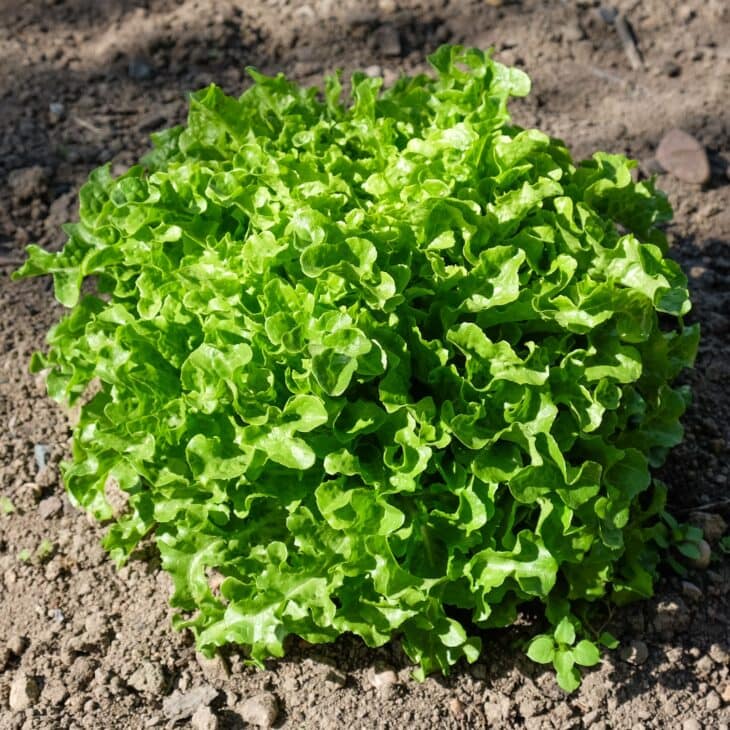
Lettuce (Lactuca sativa)
What it helps with
Lettuce fills the gaps between slow-growing carrots and is cut before they need the room.
Why it works with carrots
WVU Extension advises interplanting smaller cool-season crops such as lettuce between larger, slow-growing vegetables, and lists carrot among lettuce’s companions. UC IPM says carrots may be intercropped with lettuce. This is a space and timing argument, not pest control, and no trial turned up.
Planting notes
Sow lettuce between carrot rows or in the gaps while the carrots are small, and harvest it first. Both are cool-season crops, so they can go in together in early spring.
Possible drawback or limit
Lettuce bolts in summer heat, which ends the pairing. Virginia Tech‘s table also lists onions, leeks and chives as incompatible with lettuce, so keep those alliums in a different part of the bed.
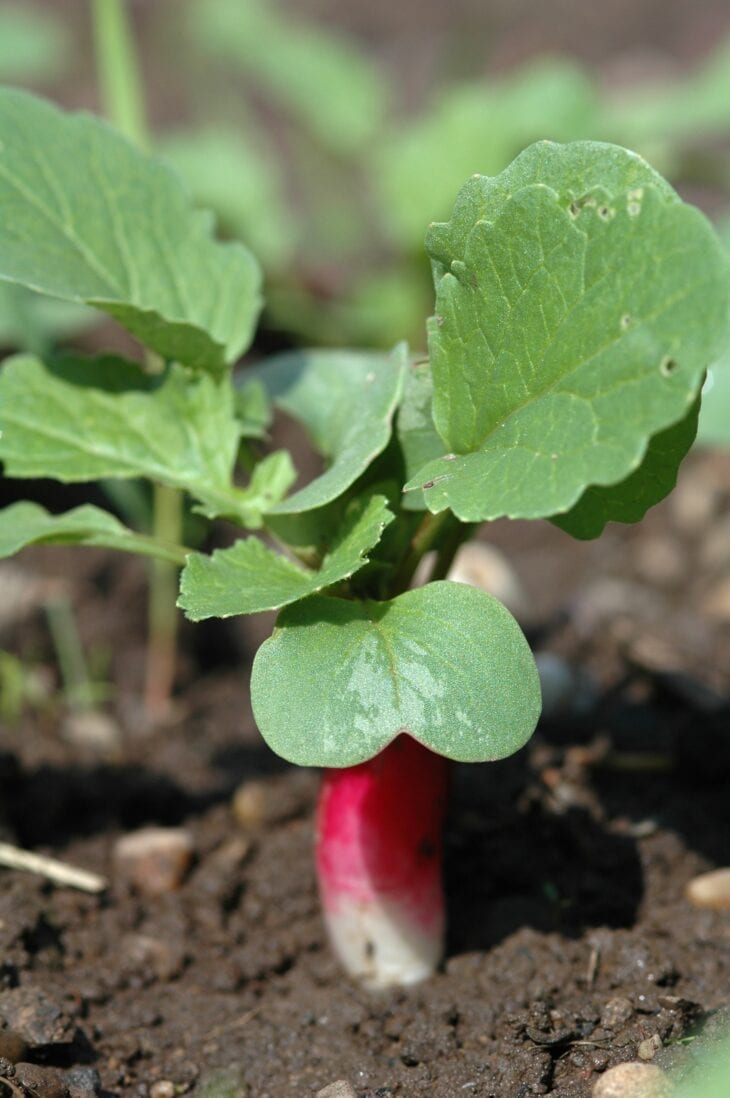
Radish (Raphanus sativus)
What it helps with
Radishes sprout quickly and mark the carrot row while the carrots are still invisible.
Why it works with carrots
Carrot seed can take two weeks or more to emerge, so Illinois Extension suggests one radish seed every 6 to 12 inches (15 to 30 cm) to mark the row. Iowa State adds that the quick radish seedlings help prevent soil crusting that can block carrot germination.
Planting notes
Sow the radish seeds in the same row as the carrots, then pull the radishes about 21 to 30 days after sowing (Clemson). That clears the row before the carrots need the space.
Possible drawback or limit
This is a convenience, not a yield booster: UF/IFAS notes that carrots spaced on their own give better results, and Virginia Tech’s table lists radish as incompatible with carrots. Keep the radishes sparse so they do not crowd the seedlings.
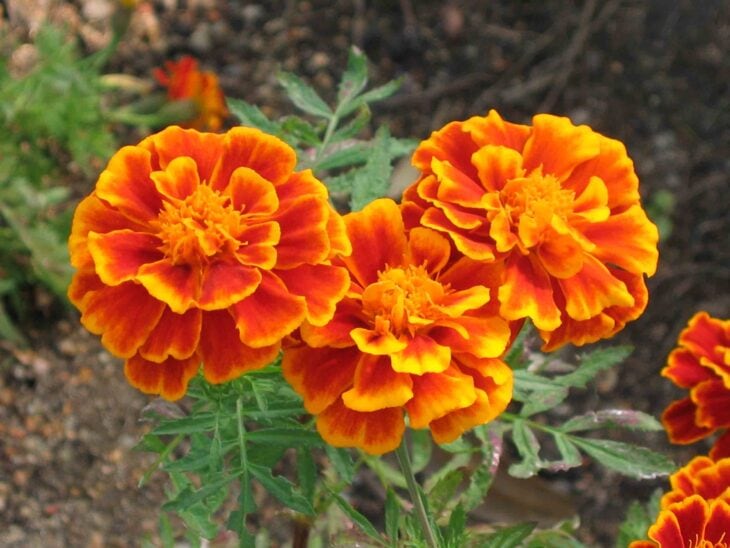
French marigold (Tagetes patula)
What it helps with
French marigolds grown before carrots reduce the root-knot nematodes that fork and distort roots.
Why it works with carrots
UF/IFAS reports that marigolds suppress root-knot and lesion nematodes when grown as a dense planting and worked into the soil like a green manure. Root-knot nematodes feed on the carrot root tip and cause forked, distorted roots (UF/IFAS Gardening Solutions). The publication does not name carrots, so this applies a documented marigold effect to a carrot problem.
Planting notes
Plant a solid block of French marigolds no more than 7 inches (18 cm) apart in the bed where carrots will go, at least two months before sowing, then chop them into the soil. UF/IFAS names resistant varieties including ‘Single Gold’ and ‘Tangerine’. The timing suits fall carrots in warm climates, after a summer of marigolds.
Possible drawback or limit
Marigolds planted between crops do nothing for nematodes: UF/IFAS found intercropping did not reduce them. Marigolds also raise stubby-root, spiral, sting and awl nematodes, so they only suit root-knot problems.
Plants to avoid with carrots
Parsnip (Pastinaca sativa) is listed as incompatible with carrots by Virginia Tech, and the documented reason is shared pests. Parsnip is a carrot rust fly host (PNW handbook), so growing both gives the fly more to find. Plant parsnips in a separate bed.
Celery (Apium graveolens) and parsley (Petroselinum crispum) are also rust fly hosts, and UC IPM advises eliminating them as infestation sources. The same program says carrots may be intercropped with parsley, so extension advice conflicts. If you have had rust fly before, keep both away from the carrots.
Dill (Anethum graveolens) is on Virginia Tech’s list of plants incompatible with carrots, and Clemson says it can stunt them and cross-pollinate with them. Neither gives a mechanism or research, so treat both claims as untested. Seed Savers Exchange names wild carrot, not dill, as the cross-pollination risk.
Wild carrot (Daucus carota), or Queen Anne’s lace, is the same species as the garden carrot and cross-pollinates with it. That matters only to seed savers, who need 800 feet to 1/2 mile (245 to 800 m) of isolation in the second year. Pull volunteer carrots near the bed too, since they can host the rust fly.


.jpg)


