The plants that look most like impatiens, and that do the same job in a shady bed, are New Guinea impatiens and SunPatiens, wax begonias, torenia, browallia, coleus and fuchsia. In sun, annual vinca is the closest match of all: flat, five-petaled flowers with a contrasting eye, on a mounding plant that blooms all summer. The plants genuinely mistaken for impatiens in the wild are its own relatives, garden balsam, jewelweed and Himalayan balsam, all of which have the same hooked, spurred flower and exploding seed pods.
Contents
- Shade Alternatives That Look Like Impatiens
- New Guinea Impatiens (Impatiens hawkeri)
- SunPatiens (Impatiens hybrids)
- Wax Begonia (Begonia semperflorens-cultorum)
- Tuberous Begonia (Begonia × tuberhybrida)
- Torenia (Wishbone Flower) (Torenia fournieri)
- Browallia (Amethyst Flower) (Browallia speciosa)
- Coleus (Coleus scutellarioides)
- Fuchsia (Fuchsia hybrids)
- Sun Alternatives With a Similar Look
- Wild Impatiens Relatives
- What Happened to Bedding Impatiens
- How to Recognize a True Impatiens
Most people arrive at this question because of impatiens downy mildew, a water mold that appeared in North American gardens in 2011 and destroyed bedding impatiens for a decade. It attacks only Impatiens walleriana and its wild relatives, not New Guinea impatiens or any of the other plants here. Breeders have since released resistant walleriana series, so ordinary impatiens are back in garden centers, but the disease persists in soil and the alternatives are still worth knowing.

- Shade Alternatives That Look Like Impatiens
- Sun Alternatives With a Similar Look
- Wild Impatiens Relatives
- What Happened to Bedding Impatiens
- How to Recognize a True Impatiens
| Plant | Botanical name | Light | Looks like impatiens because | How to tell it apart |
|---|---|---|---|---|
| New Guinea Impatiens | Impatiens hawkeri | Part sun to part shade | It is an impatiens: the same flat, spurred flowers | Fewer, much larger flowers; bigger, often bronze or variegated leaves |
| SunPatiens | Impatiens hybrids | Full sun to part shade | A vigorous interspecific impatiens with the same flower shape | Much larger plants, 1–3 ft tall and wide, that take full sun |
| Wax Begonia | Begonia semperflorens-cultorum | Sun or shade | Low mounds smothered in small flat flowers all summer | Thick, waxy, rounded leaves; separate male and female flowers with a winged seed pod |
| Tuberous Begonia | Begonia × tuberhybrida | Part to full shade | Masses of bright color in deep shade | Flowers 2–4 in across, often double and rose-like; grows from a tuber |
| Torenia (Wishbone Flower) | Torenia fournieri | Part to full shade | Low mounds of two-lipped flowers with a contrasting throat | Trumpet-shaped flowers with a yellow blotch and two stamens fused into a wishbone |
| Browallia (Amethyst Flower) | Browallia speciosa | Part to full shade | Star-shaped blue or white flowers over soft green leaves | True blue flowers, which no impatiens produces |
| Coleus | Coleus scutellarioides | Shade to part sun | Fills the same shady bed with the same mounding habit | Grown for leaves, not flowers; square stems and spikes of tiny blue flowers |
| Fuchsia | Fuchsia hybrids | Part to full shade, cool | The same shade-and-moisture niche, in baskets | Dangling, two-tone, skirted flowers with long stamens |
| Annual Vinca (Madagascar Periwinkle) | Catharanthus roseus | Full sun | Flat, five-petaled flowers with a contrasting eye, over glossy leaves | Thicker, glossier leaves; thrives in heat and drought |
| Petunia | Petunia × atkinsiana | Full sun | Continuous mounds or cascades of bright bedding color | Wide trumpet-shaped flowers and sticky, fuzzy leaves |
| Zonal Geranium | Pelargonium × hortorum | Full sun to part shade | Rounded, mounding plants covered in colored flower clusters | Flowers in domed clusters on long stalks; scented, round, zoned leaves |
| Garden Phlox | Phlox paniculata | Full sun to part shade | Masses of flat, five-petaled flowers in the same colors | A hardy perennial 3–4 ft tall with flowers in large domed heads |
| Garden Balsam | Impatiens balsamina | Sun to part shade | A true impatiens with the same spurred flowers and exploding pods | Flowers held tight against a stiff upright stem, not on stalks above the leaves |
| Jewelweed (Spotted Touch-Me-Not) | Impatiens capensis | Part shade, wet ground | A native impatiens: the same hooked, spurred flower | Orange flowers spotted with red-brown, dangling on thread-like stalks |
| Himalayan Balsam | Impatiens glandulifera | Sun to part shade, damp ground | A giant impatiens with the same flower shape | 6–10 ft tall, with pink helmet-shaped flowers and red stems |
| Periwinkle | Vinca minor | Shade to part sun | Flat, five-petaled blue flowers over glossy leaves in shade | A woody evergreen groundcover that spreads by rooting runners |
Shade Alternatives That Look Like Impatiens
New Guinea Impatiens (Impatiens hawkeri)

New Guinea impatiens are the closest thing to bedding impatiens because they are impatiens, collected in New Guinea in the 1970s and bred into the plants sold today. Their flowers are 2 to 3 inches across rather than an inch, and there are fewer of them, over larger leaves that are often bronze, burgundy or yellow-veined. They are resistant to impatiens downy mildew and take more sun than I. walleriana, but they need steady moisture and sulk in dry heat.
SunPatiens (Impatiens hybrids)
SunPatiens are interspecific hybrids developed by Sakata, crossing New Guinea impatiens with other species to get sun and heat tolerance. They are the best choice if you want an impatiens in a bed that gets afternoon sun, and one plant fills a space that would take three bedding impatiens. They are also resistant to downy mildew. Read the tag: Compact, Spreading and Vigorous series differ hugely in final size, and Vigorous types reach 3 feet.
Wax Begonia (Begonia semperflorens-cultorum)

Wax begonias are the standard replacement for bedding impatiens and arguably the easier plant. They form neat 6- to 12-inch mounds of glossy green or bronze leaves covered in small pink, red or white flowers from spring to frost, they tolerate both shade and full sun, and they shrug off the dry spells that make impatiens collapse. Bronze-leaved varieties take more sun than green-leaved ones. They are frost-tender annuals in most of the country.
Tuberous Begonia (Begonia × tuberhybrida)
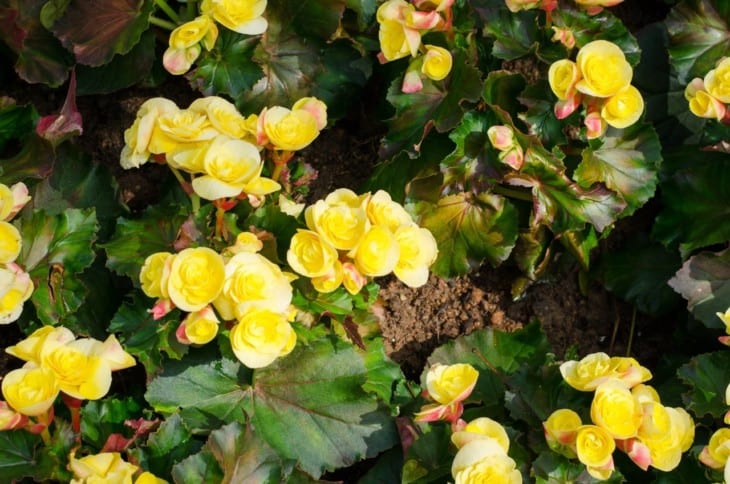
Tuberous begonias give the richest color of any shade annual: 2- to 4-inch flowers in apricot, scarlet, yellow and white, many of them double and rose-like, on plants 8 to 18 inches tall. They grow from flattened tubers that can be lifted and stored over winter. They need cool, humid, bright shade with good air movement, they rot in soggy soil, and they will not perform in hot, dry Southern summers the way impatiens do.
Torenia (Wishbone Flower) (Torenia fournieri)
Torenia is the best like-for-like substitute for bedding impatiens in real shade, and it is under-planted. It makes an 8- to 12-inch mound covered in inch-wide flowers of purple, blue, pink, white or yellow, each with a contrasting throat, from early summer to frost. It genuinely likes heat and humidity, unlike impatiens, and trailing series such as Summer Wave are excellent in baskets. Pinch it once when young to keep it dense.
Browallia (Amethyst Flower) (Browallia speciosa)
Browallia is worth seeking out for one reason: it is the only shade annual here with a true violet-blue flower, and impatiens has nothing like it. Plants reach 10 to 18 inches, with slightly sticky leaves and star-shaped inch-wide flowers, and they bloom continuously in part to full shade without deadheading. It is in the nightshade family, so keep it away from pets that chew plants. Start it early indoors; it is slow from seed.
Coleus (Coleus scutellarioides)
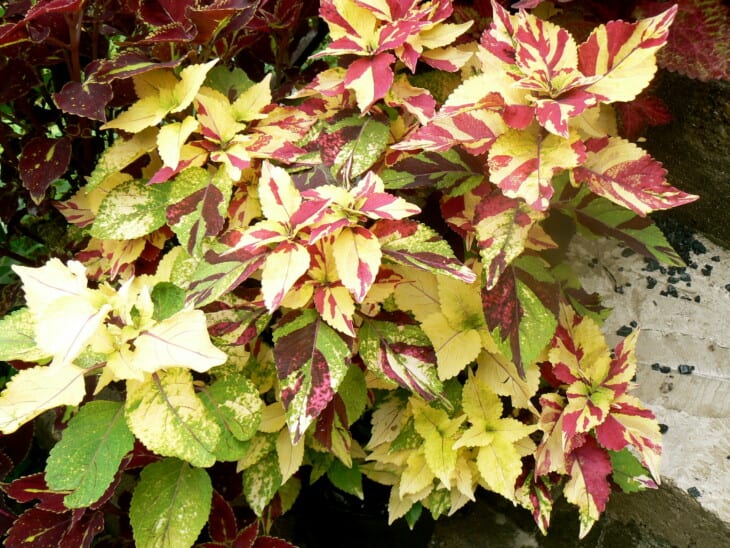
Coleus solves the shade-color problem without flowers at all, which is why designers reach for it. Its leaves come in lime, burgundy, chartreuse, salmon, near-black and every pattern in between, and modern sun coleus take full sun in most of the country. Pinch out the flower spikes when they appear, because flowering weakens the plant. It roots in a glass of water in a week, so one plant becomes a bed. It is toxic to cats and dogs.
Fuchsia (Fuchsia hybrids)

Fuchsias hang their flowers like earrings, with four flared sepals above a skirt of petals and long dangling stamens, in pink, purple, red and white. They want exactly what impatiens want, moist soil and shade, plus one thing impatiens do not mind and fuchsias cannot bear: they stop flowering above about 80°F. In hot-summer regions they are a spring and fall plant. Hummingbirds work them constantly. Hardy fuchsias such as F. magellanica survive winters in zones 6 to 7.
Sun Alternatives With a Similar Look
Annual Vinca (Madagascar Periwinkle) (Catharanthus roseus)

Annual vinca is the plant most often mistaken for impatiens at a glance, and it is the one to plant where impatiens fail: in full sun, in heat, in dry soil. It grows 6 to 18 inches, with glossy dark green leaves and inch-wide flowers in white, pink, magenta, red or apricot, almost always with a darker eye. Its one rule is drainage: it rots quickly in wet, cold, heavy soil, so plant it after the ground has warmed. All parts are toxic to people and pets.
Petunia (Petunia × atkinsiana)

Petunias cover the same ground as impatiens in a sunny bed or basket, but the flower is a wide funnel rather than a flat disc, and the leaves and stems are noticeably sticky to the touch. Trailing Wave and Supertunia types flower all season without deadheading; older grandiflora types need it and turn to mush in rain. They need at least six hours of sun and regular feeding, since they are heavy feeders in containers.
Zonal Geranium (Pelargonium × hortorum)

Zonal geraniums, which are pelargoniums and not true geraniums, hold their flowers in rounded heads on stalks well above the leaves, rather than scattered among them as impatiens do. Their round, scalloped leaves usually carry a dark horseshoe zone and smell pungent when brushed. They tolerate drought far better than impatiens and flower best when slightly potbound. Deadhead by snapping the whole flower stalk off at its base.
Garden Phlox (Phlox paniculata)

Garden phlox is the perennial version of the effect: 3- to 4-foot stems topped in midsummer with domed heads of fragrant, flat, five-petaled flowers in pink, magenta, white and lavender. It is hardy in zones 4 to 8 and lives for decades. Powdery mildew is its weakness, so buy resistant cultivars such as ‘David’ or ‘Jeana’, give it full sun and air movement, and thin the stems in spring. Butterflies and hummingbirds work it heavily.
Wild Impatiens Relatives
Garden Balsam (Impatiens balsamina)
Garden balsam is the old-fashioned cottage impatiens, grown since the 16th century, with camellia-like double flowers pressed close against a thick, upright 1- to 2-foot stem. It self-seeds freely and comes back year after year, and it is the plant that gave impatiens the name touch-me-not, because its ripe pods burst at a touch. It is susceptible to the same downy mildew as bedding impatiens.
Jewelweed (Spotted Touch-Me-Not) (Impatiens capensis)

Jewelweed is North America’s native impatiens, an annual 2 to 5 feet tall in wet woods, ditches and stream edges from Newfoundland to Texas. Its orange, red-spotted flowers hang from thin stalks like earrings, hummingbirds feed at them, and the succulent stems hold water droplets that look like silver beads underwater, hence the name. Pale jewelweed, I. pallida, is the yellow-flowered species. The long-standing folk use of crushed stems against poison ivy has not held up in controlled trials.
Himalayan Balsam (Impatiens glandulifera)
Himalayan balsam is the one to recognize and report. It is a 6- to 10-foot annual impatiens from the western Himalaya, with hollow reddish stems and pink “policeman’s helmet” flowers, and it has become one of the worst riverside invasives in Britain, Europe, Canada and the northern United States. It forms dense stands that shade out everything else, then dies back in winter and leaves bare banks to erode. Pull it before it seeds; each plant throws thousands of seeds up to 20 feet.
Periwinkle (Vinca minor)

Periwinkle is the plant people mean when they say “vinca” and then find it is not the bedding annual. It is a trailing evergreen groundcover 4 to 6 inches tall, with paired glossy leaves and flat, pinwheel-shaped blue-violet flowers in spring. It grows in dry shade where nothing else will, which is also the problem: it is invasive in woodlands across much of North America, escaping gardens and smothering the forest floor. Choose a native groundcover such as wild ginger or foamflower instead.
What Happened to Bedding Impatiens
- The disease: impatiens downy mildew, Plasmopara obducens, a water mold, not a true fungus. It reached North American gardens in 2011 and wiped out bedding impatiens in a single season in many regions.
- The symptoms: leaves turn pale and curl down, a fine white fuzz appears on the undersides, and within days the whole plant drops its leaves and collapses to bare stems. There is no cure once a garden plant is infected.
- What it attacks: only Impatiens walleriana, garden balsam and the wild jewelweeds. New Guinea impatiens, SunPatiens, begonias, torenia, coleus and everything else here are safe.
- It persists in soil. Resting spores survive winter, so do not replant walleriana impatiens where the disease has struck, even years later.
- Resistant varieties exist now. The Beacon and Imara XDR series are bred for resistance and perform well; they are not immune, so still give them air movement and avoid overhead watering late in the day.
- Pull and bag infected plants, do not compost them, and clean up fallen leaves.
How to Recognize a True Impatiens
- Look for the spur. Every impatiens flower has a slender nectar spur curving back behind it. No begonia, vinca or torenia has one.
- Squeeze a ripe seed pod. A swollen green impatiens pod bursts and coils when touched, flinging seed several feet. That reflex is what the genus is named for.
- Check the stems. Impatiens stems are translucent, succulent and snap cleanly, and any piece will root in water in a few days.
- Count the petals carefully. An impatiens flower looks five-petaled but is built from five petals with four of them fused into two side pairs, which is why the flower is not quite symmetrical.
- Begonias give themselves away with lopsided leaves, separate male and female flowers on the same plant, and a three-winged seed capsule.
For more shade planting ideas, see our lists of plants that look like begonias and our guide to double impatiens.