Boxwood (Buxus) is a slow-growing broadleaf evergreen with small, glossy, oval leaves and young stems that are square in cross-section. The species most US gardeners meet are common boxwood (Buxus sempervirens), littleleaf boxwood (Buxus microphylla) and Korean boxwood (Buxus sinica var. insularis), which together span Zones 4b–9.
Contents
That range, plus easy clipping and deer resistance, is why boxwood anchors so many hedges and foundation beds. It is also why its problems sting: boxwood blight and the box tree moth have turned a low-fuss shrub into one that needs watching across much of the East.
Facts here are tied to the species, because common, littleleaf and Korean boxwood differ in hardiness, size and disease response. Whether boxwood is worth planting depends on where you garden and which cultivar you buy.
Pros Of Boxwood Shrubs
Boxwood Keeps Its Green Through Winter
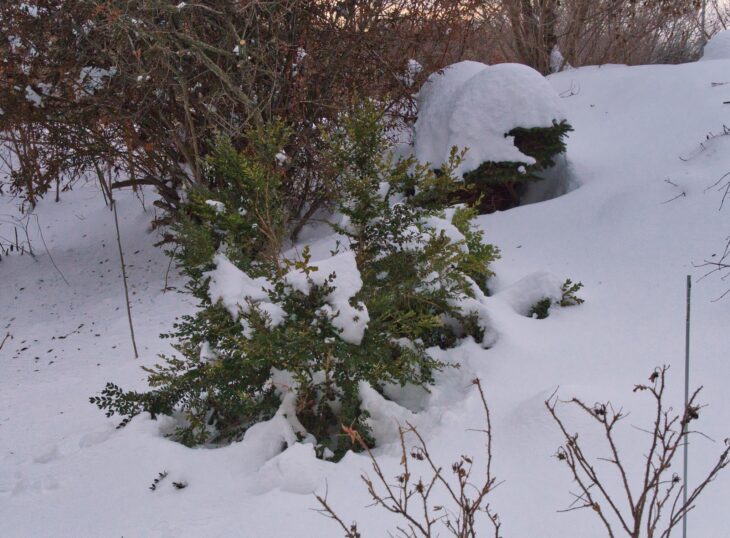
Boxwood is a broadleaf evergreen, so its glossy leaves stay on the shrub while the rest of the border goes bare. NC State lists common boxwood (Buxus sempervirens) as providing winter interest, and it suits a winter garden.
Color shifts in hard cold: Korean boxwood foliage can turn bronzy in colder winters, and the cultivar ‘Wintergreen’ is noted for better winter color in northern climates. It is a good fit for gardeners who want structure in a winter border, and our list of winter plants for outside pairs well with it.
Boxwood Clips Into Formal Hedges and Topiary
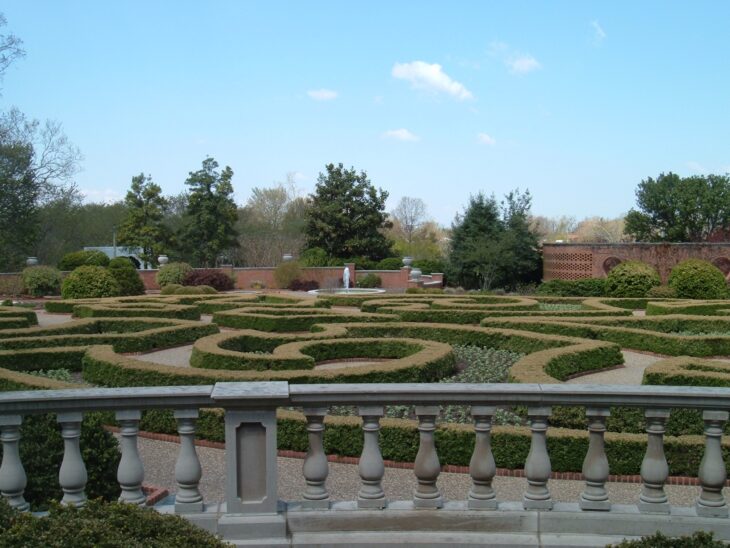
NC State lists common boxwood for topiary, mixed beds, vertical accents and narrow hedges. Littleleaf boxwood has the smallest leaves of all the boxwoods, which makes a densely packed surface that is easily shaped into a medium-size hedge, topiary or bonsai, and it prunes exceptionally well.
Hold off pruning until the risk of a late spring frost has passed, and avoid cutting late in summer. This is the pro for knot gardens, low path edging and anyone who wants a clipped line that holds its shape.
Slow Growth Keeps Boxwood Compact
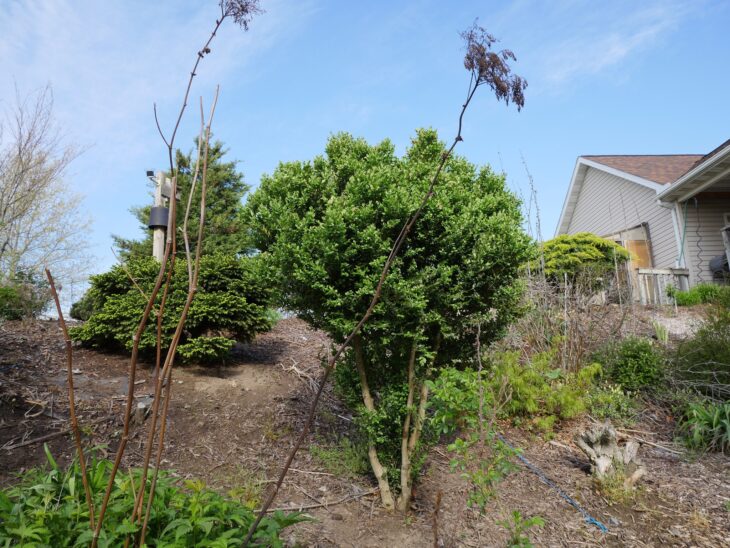
NC State rates growth as slow for common, littleleaf and Korean boxwood. Size varies widely by cultivar: littleleaf boxwood is listed at 3 to 4 feet (0.9 to 1.2 m) tall, while common boxwood ranges from 5 to 20 feet (1.5 to 6 m).
A slow shrub does not outgrow a bed in a few seasons, which suits small yards and foundation plantings. Pick a cultivar sized for the spot, and thin common boxwood once a year so light and air reach the center.
Deer and Rabbits Usually Leave Boxwood Alone
NC State lists common boxwood and littleleaf boxwood as resistant to both deer and rabbits, and Korean boxwood as resistant to deer. That makes boxwood a practical hedge where browsing wrecks other shrubs.
Resistant is not proof, so treat the rating as odds rather than a guarantee. Net or fence young plants if browsing pressure is heavy.
Boxwood Adapts to Many Soils, Light Levels and Zones
NC State says common boxwood adapts to a wide range of light and soil conditions, from full sun to partial shade and from clay to sand. Littleleaf boxwood is typically quite drought tolerant once established.
Common boxwood is listed for Zones 5–8, littleleaf for Zones 6–9 and Korean boxwood for Zones 4b–9. The roots are shallow, so avoid planting too deep and mulch with a few inches (7 to 10 cm) of organic material.
Cons Of Boxwood Shrubs
Boxwood Blight Can Wipe Out a Planting
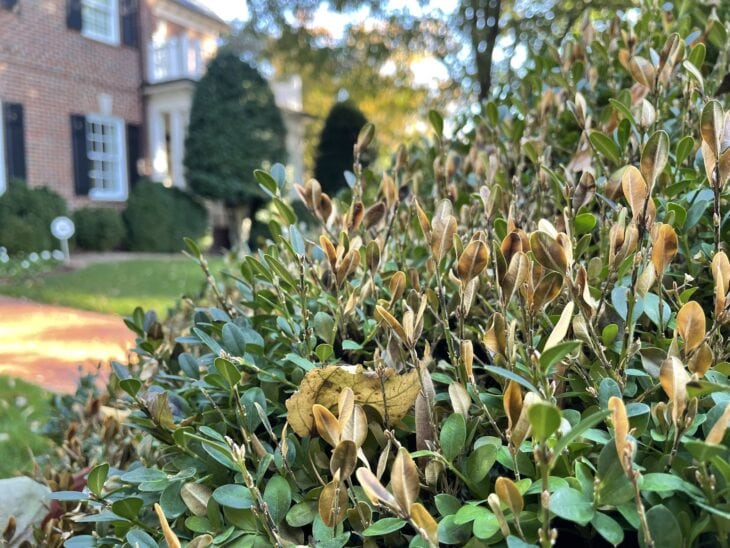
Boxwood blight is caused by the fungus Calonectria pseudonaviculata. It was first detected in the US in 2011 and now affects most eastern states plus California, Oregon and Washington (Morton Arboretum).
Symptoms are brown leaf spots that enlarge and merge, black streaks or cankers on the stems, and fast leaf drop. Spores spread in splashing water, on tools and clothing, and on infected nursery plants, and the fungus can survive in debris or soil for at least 5 to 6 years without a host (UConn).
Infected plants cannot be saved. UConn advises removing symptomatic plants and any within 10 feet (3 m), double-bagging them for the trash or burying them 2 feet (60 cm) deep, and never composting them. Buy only plants with no leaf spots or stem lesions, and hold new boxwood apart for at least a month before planting.
No boxwood is immune, but some cultivars show only minor symptoms. Trials listed by Virginia Tech rate littleleaf ‘Winter Gem’, ‘Green Beauty’ and ‘Northern Emerald’ and Korean ‘Nana’ and ‘Franklin’s Gem’ as resistant or tolerant, and put classic English boxwood (Buxus sempervirens ‘Suffruticosa’) among the very susceptible.
Box Tree Moth Caterpillars Can Strip a Shrub
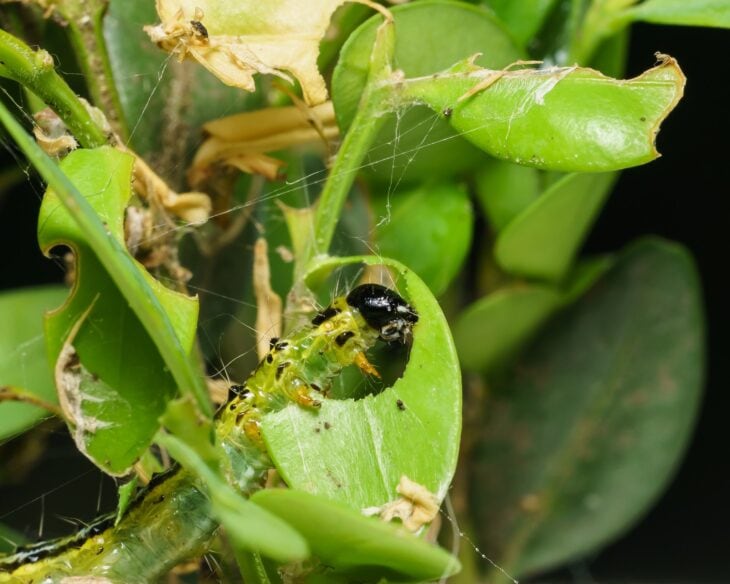
Box tree moth (Cydalima perspectalis) is an invasive Asian pest first found in the US in 2021, in New York. Its caterpillars can completely defoliate boxwood, then feed on the bark and eventually kill the plant, and heavy infestations can strip a shrub within 10 days (New Jersey).
Penn State lists confirmed finds in Connecticut, New York, South Carolina, Michigan, Ohio, Massachusetts, Delaware, Maryland, West Virginia and Pennsylvania. New Jersey quarantined Cape May County in June 2026, which restricts moving boxwood plants and debris out of the county.
Check shrubs often for caterpillars and webbing, and report suspected cases to your state agriculture department. Penn State says Btk (Bacillus thuringiensis var. kurstaki) has shown effectiveness and targets larvae specifically, while broad-spectrum insecticides also kill beneficial insects, so follow the label either way.
Winter Wind and Sun Burn Boxwood Foliage
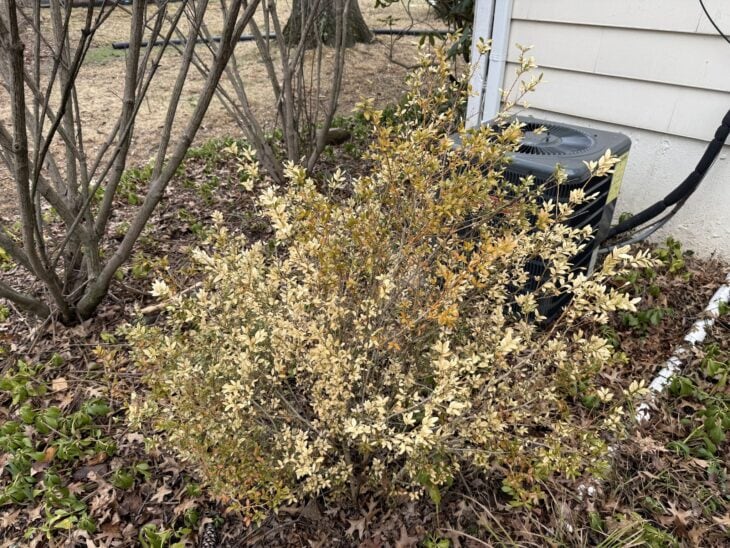
Winter wind and full winter sun dehydrate boxwood leaves and cause bronzing, and salt spray makes the discoloration worse (NC State). The Connecticut Agricultural Experiment Station describes winter injury as grayish-green or brown leaves with dead twigs after late-winter cold and drying winds.
Plant where wind and winter sun are limited, brush off heavy snow, and skip late-season fertilizer so new growth can harden off. The same station notes that bronzed plants usually grow out of the trouble.
Boxwood Attracts Several Common Pests
The Connecticut station lists boxwood leafminer (whitish spots and blistered leaves, with larvae feeding between the leaf layers), boxwood psyllid (cupped new leaves) and mites (blanched or silvery foliage, worse in hot, dry seasons). Volutella blight causes late-summer dieback with pink spore masses, and heavy oystershell scale can kill branches or whole shrubs.
Insecticidal soap in late May targets psyllids, and horticultural oil or soap can be used on mites. Follow the product label and weigh the pollinator risk of any insecticide. Cultivar matters for leafminer too: Virginia’s table rates ‘Winter Gem’, ‘Nana’ and ‘Franklin’s Gem’ very resistant and ‘Green Beauty’ and ‘Northern Emerald’ somewhat susceptible.
Boxwood Is Toxic to Pets and the Foliage Has an Odor
The ASPCA lists boxwood as toxic to dogs, cats and horses because of its alkaloids. Dogs and cats mainly get vomiting and diarrhea, while horses can suffer colic, diarrhea, respiratory failure and seizures.
NC State rates the toxicity severity low, and notes that contact with the sap can irritate skin in common and littleleaf boxwood. Some people also find the foliage malodorous. Keep boxwood away from pastures and dogs that chew shrubs, and wear gloves when pruning.
Is Boxwood Right For You?
Boxwood suits gardeners in Zones 5–8 (Zones 6–9 for littleleaf) who have a spot in full sun to partial shade, well-drained soil and some shelter from winter wind. It is at its best as a clipped hedge, low edging or an evergreen anchor, away from box tree moth quarantine areas or with a plan to scout for the pest.
Think twice if blight has already killed boxwood on your property, since the fungus can persist in debris and soil for 5 to 6 years. It is also a poor fit on a windy, salted roadside, in a quarantine area where you will not monitor the shrubs, or around horses and dogs that chew plants.
Inkberry holly (Ilex glabra) is a native evergreen that reaches 5 to 10 feet (1.5 to 3 m) tall, grows slowly and is listed as resistant to deer and rabbits, though it spreads by suckers.
Japanese holly (Ilex crenata) has small, shiny leaves and a dense, rounded habit in Zones 5–8, but it may struggle in the heat and humidity of the southern US. Penn State also suggests holly as a replacement where box tree moth has killed boxwood.
Frequently Asked Questions
Is boxwood poisonous to dogs?
Yes. The ASPCA lists boxwood (Buxus) as toxic to dogs, cats and horses, and the main signs in dogs are vomiting and diarrhea. NC State rates the severity low, but call your vet or the ASPCA Animal Poison Control Center at (888) 426-4435 if your dog eats it.
What is the best boxwood for a hedge?
It depends on your climate and disease pressure. Littleleaf boxwood has the smallest leaves and prunes exceptionally well, and where blight is a worry, Virginia’s resistant list includes ‘Green Beauty’, ‘Northern Emerald’, ‘Winter Gem’, ‘Nana’ and ‘Franklin’s Gem’. Classic English boxwood (‘Suffruticosa’) was very susceptible in trials.
How do I know if my boxwood has blight?
Look for brown leaf spots that enlarge and join, black streaks or cankers on the stems, and fast leaf drop, often starting low on the plant. White spore masses can show up in humid weather. Contact your state extension service or plant diagnostic clinic before pruning or moving the plant.
Will deer eat boxwood?
NC State lists common and littleleaf boxwood as resistant to deer and rabbits. Resistant does not mean proof, so a hungry herd may still sample a shrub, especially a young one.