
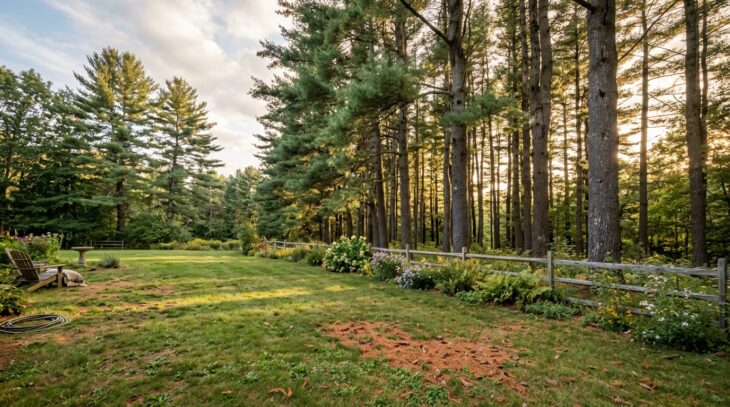
Pines (genus Pinus) are needled evergreens that range from dwarf mugo pines of 2 to 5 feet (60 to 150 cm) to ponderosa pines of up to 125 feet (38 m). Depending on the species, they grow in USDA Zones 2 to 9.
That range is why this is not a simple yes or no. Most pines want full sun, 6 or more hours a day, and well-drained soil, but the pros and cons change with the species: Austrian pine tolerates salt and drought yet is vulnerable to pine wilt.
This article covers pines for US yards and names the species each point applies to, so you can pick one that keeps the pros and dodges the cons.
Pros Of Pine Trees
Pines Give Fast Evergreen Screening All Year

Several common pines grow fast. NC State lists eastern white pine (Pinus strobus), Scots pine (Pinus sylvestris) and loblolly pine (Pinus taeda) as rapid growers, and loblolly has the most rapid growth rate of any pine.
Because the needles stay on all year, the screen works in winter too. NC State calls loblolly good for fast screening when young and easy to transplant from a container, and calls Japanese black pine (Pinus thunbergii) a dense plant that makes a great screen.
This suits owners of larger lots who want a year-round privacy screen along a property line. Eastern white pine reaches 50 to 80 feet (15 to 24 m) tall and 20 to 40 feet (6 to 12 m) wide, so plan for the room.
Many Pines Thrive in Poor, Dry or Salty Soil
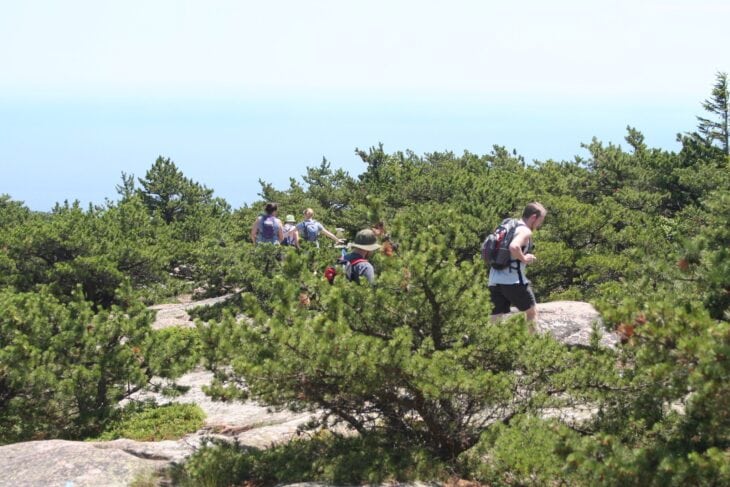
NC State says most pines are highly drought-tolerant once established. Scots pine tolerates poor soil, dry sites and urban conditions, and pitch pine (Pinus rigida) grows in poor, dry, rocky soil and tolerates salt.
Austrian pine (Pinus nigra) tolerates clay, urban pollution, salt and drought once established, and Japanese black pine is used to reclaim coastal dunes. Eastern white pine is the exception: it is intolerant of salt, air pollution and alkaline soil.
That makes pines a strong match for sandy, rocky or lean soil, road-salt exposure and coastal sites, where many other trees struggle. Match the species to your region, though: Scots pine dislikes the heat and humidity of the Southeast.
Native Pines Feed and Shelter Wildlife
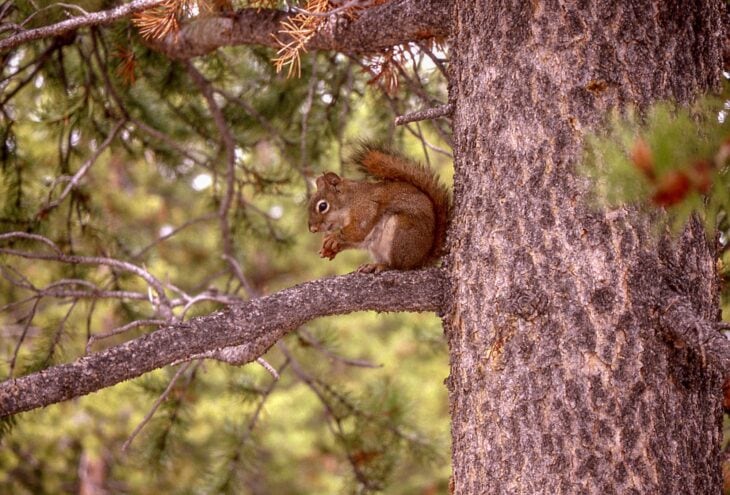
Eastern white pine seeds are favored by black bears, rabbits, red squirrels and many birds, and the tree shelters many birds and small mammals, according to NC State. Eastern white and loblolly pines also support Imperial Moth (Eacles imperialis) larvae, and loblolly supports the Eastern Pine Elfin butterfly (Callophrys niphon).
Longleaf pine (Pinus palustris) is home to the endangered red-cockaded woodpecker, which excavates cavities in living trees. NC State’s wildlife notes for the non-native Austrian and Japanese black pines list only Imperial Moth larvae, a thinner record than the natives.
This pro suits gardeners building a native planting or a wildlife garden in Zones 3 to 9 who have room for a large tree.
Fallen Pine Needles Make Free Mulch
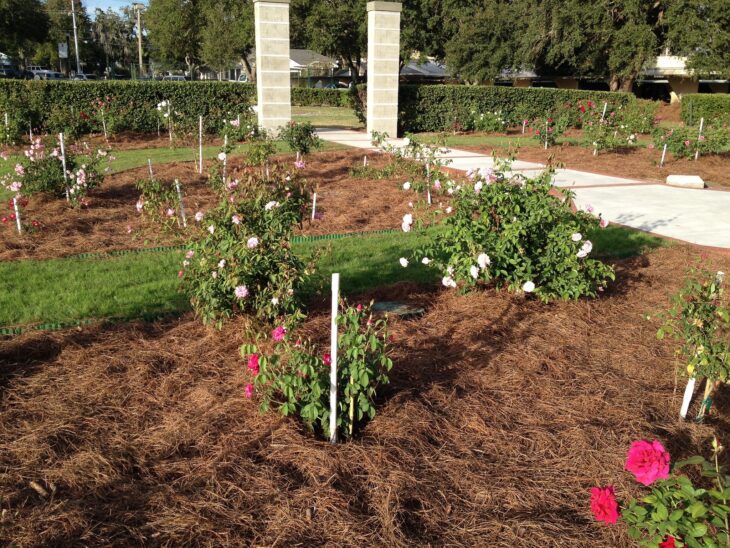
Pine needles mulch beds like any other organic mulch. UNH Extension says they conserve moisture, suppress weeds, add nutrients, moderate soil temperature, stay loose, resist washout on slopes and last longer than other organic mulches.
The worry that needles acidify soil is a myth. A 2 to 3 inch (5 to 8 cm) layer of pine mulch will not change soil pH enough to measure, and soil under pines is often acidic because pines often grow where the soil is already acidic and well-drained.
This is best for gardeners who already rake a lot of needles, and for anyone mulching a slope.
Pines Come in Sizes and Zones for Almost Any Yard
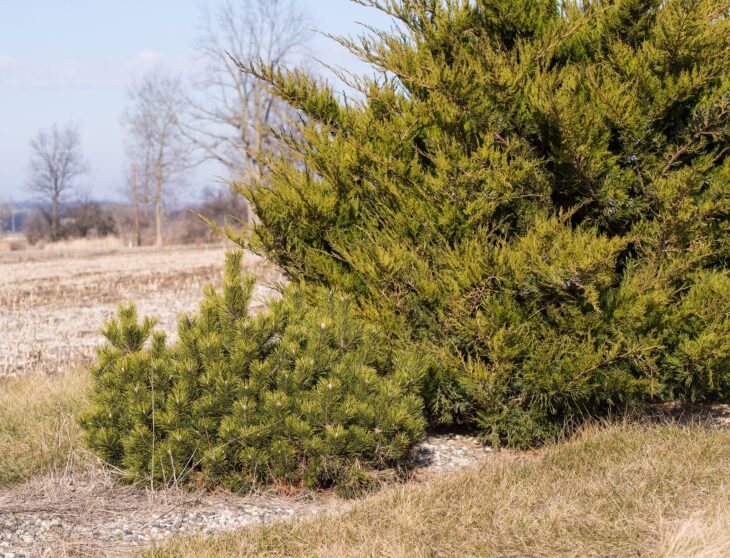
Across the group, pines cover USDA Zones 2 to 9. Scots pine and mugo pine (Pinus mugo) are listed for Zones 2 to 7, eastern white pine for Zones 3 to 8, loblolly pine for Zones 6 to 9 and longleaf pine for Zones 7 to 9.
Size varies even more. Mugo pine grows as a shrub or a tree up to 25 feet (7.5 m), and dwarf cultivars average 2 to 5 feet (60 to 150 cm) tall with an outward spread. NC State lists dwarf mugo for foundations, walkways and containers.
Mugo pine grows slowly and prefers cool summers, so it suits small yards in cold climates better than hot ones.
Cons Of Pine Trees
Needles, Cones and Resin Make a Mess

NC State says the shed needles, resin and cones of pines can be messy and a nuisance. It also warns against planting pines next to places where cars are parked, because the resin damages car finishes.
Eastern white pine (Pinus strobus) drops its oldest inner needles every fall. They turn gold-yellow, hang on for about 7 to 10 days and then fall, which University of Illinois Extension says is normal when it happens evenly across the whole tree.
Longleaf pine (Pinus palustris) has the largest cones of any eastern pine, 6 to 15 inches (15 to 38 cm) long, and its fallen needle shoots can be a litter problem.
Keep pines away from driveways, patios and parking spots, and rake the needles into beds as mulch. Needle drop at other times of year, on the outer needles or in patches across the tree is not normal and can point to disease.
Diplodia Tip Blight Deforms Austrian, Scots and Mugo Pines
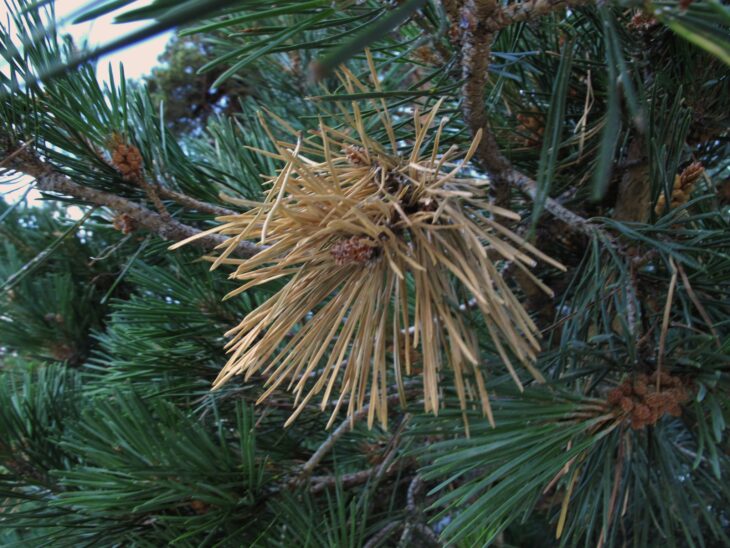
Diplodia tip blight is a fungal disease that browns the needles on new shoots and then kills the shoots. Penn State Extension names Austrian pine (Pinus nigra), Scots pine (Pinus sylvestris), mugo pine (Pinus mugo), red pine (Pinus resinosa) and other 2- and 3-needled pines as the most vulnerable.
The damage builds as trees mature and is most problematic at 20 to 30 years of age. NC State also lists Dothistroma needle blight for Austrian pine, and says Japanese black pine (Pinus thunbergii) tends to develop fungal diseases once it reaches about 20 years.
Penn State says fungicide works only when sprayed at bud break and again 2 weeks later, covering the whole crown, so follow the product label. Remove infected branches, disinfect pruning tools between cuts and skip high-nitrogen fertilizer.
Eastern white pine has five needles per bundle, so it falls outside the 2- and 3-needled group Penn State lists, though it has problems of its own (see below).
Pine Wilt Can Kill Scots and Austrian Pines Fast
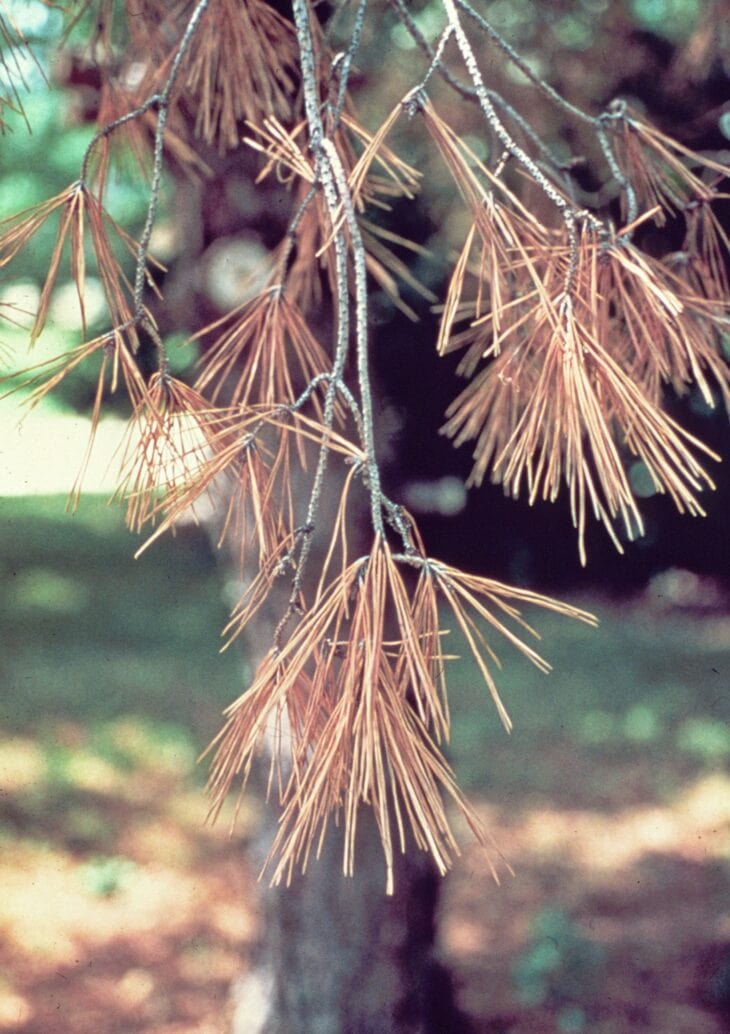
Pine wilt is caused by the pinewood nematode, which Missouri Botanical Garden calls endemic throughout the eastern half of the US. Scots pine is the most commonly affected host, and Austrian, Japanese black, Japanese red, jack, mugo and longleaf pines are also vulnerable.
Infected trees often die so quickly that the brown needles stay clinging to the twigs. Locally destructive outbreaks have hit landscape and forest plantings of non-native pines in Missouri and Illinois.
Remove an infected tree quickly to break the nematode’s life cycle, and burn or bury the wood instead of chipping it for mulch. A better plan is to plant a more resistant pine: Missouri Botanical Garden lists Virginia, shortleaf pine, loblolly and eastern white pine.
White Pine Blister Rust Is Usually Fatal to Eastern White Pine
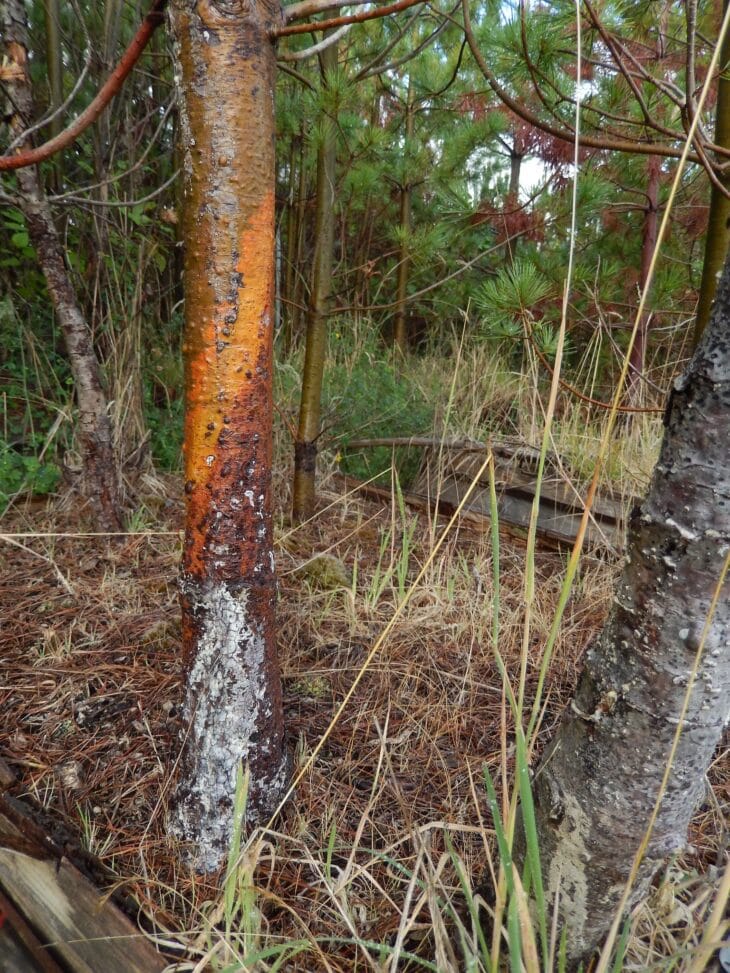
White pine blister rust affects both eastern and western white pine, and NC State says it is usually fatal. It causes cankers that usually girdle branches and the trunk, killing the lower branches first.
The fungus needs currants or gooseberries (Ribes) to complete its life cycle, and spores from infected Ribes reach nearby white pines only a few hundred yards (a few hundred meters) away. NC State also lists white pine weevil, bark beetles, shoot borer and sawflies among the insect problems of eastern white pine.
Do not plant white pines near currants or gooseberries. Prune off lower branches before symptoms come within 6 inches (15 cm) of the trunk, and remove a tree if symptoms develop near the trunk.
Tall Pines Break in Storms and Need Room
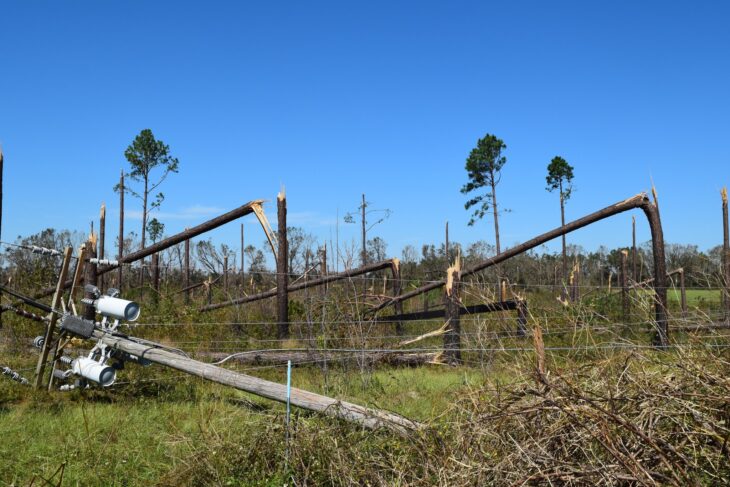
NC State lists eastern white pine and loblolly pine as susceptible to wind damage. UF/IFAS lists loblolly among the least wind-resistant species, with slash pine (Pinus elliottii) and longleaf pine in the medium range.
Loblolly reaches 60 to 90 feet (18 to 27 m). NC State advises planting it away from the house, and says a house built among existing loblolly pines is not recommended because of the fire hazard.
Keep tall pines well away from houses, driveways and power lines. Limber pine (Pinus flexilis, Zones 4 to 7) has flexible branches that NC State says are not as prone to storm damage as other pines.
Pruning or removing a tall pine near a structure or power line is a job for a certified arborist.
Are Pine Trees Right For You?
Pines suit gardeners with a large lot, full sun and well-drained soil who want an evergreen screen or a wildlife planting. Match the species to the region: eastern white pine for Zones 3 to 8, loblolly for Zones 6 to 9 and Scots or mugo pine for Zones 2 to 7.
In a small yard, a dwarf mugo pine fills the role at 2 to 5 feet (60 to 150 cm).
Skip pines if a house, power line or driveway sits within falling distance of a tall tree, or if you park cars where the resin and needles would land. In the eastern half of the US, think twice about Scots, Austrian and Japanese black pine because of pine wilt, and keep eastern white pine away from currants and gooseberries.
If a pine is not the right fit, eastern redcedar (Juniperus virginiana) covers Zones 2 to 9 and has the best drought resistance of any conifer native to the eastern US, though NC State flags it as weedy and poisonous to humans.
American arborvitae (Thuja occidentalis) is narrower at 10 to 15 feet (3 to 4.5 m) wide and suits moist sites, but ice and snow can break its stems.
Blue spruce (Picea pungens) handles Zones 2 to 7 and is listed by Missouri Botanical Garden as resistant to pine wilt, but it cannot tolerate heat and humidity.
Frequently Asked Questions
What are the downsides of having a pine tree?
The main downsides are mess, disease and size. Needles, cones and resin make a mess, and resin can damage car finishes. Disease depends on the species (tip blight and pine wilt for Austrian, Scots and mugo pines, blister rust for eastern white pine), and tall pines are susceptible to wind damage.
Do pine trees make soil acidic?
Not in any way you can measure. Soil near pines is often acidic because pines often grow where the soil is already acidic, and UNH Extension says even a 2 to 3 inch (5 to 8 cm) layer of needle mulch will not change soil pH enough to measure. Grass and flowers struggle under pines because of shallow roots and heavy shade.
Are pine trees dangerous to plant near a house?
They can be. Loblolly pine reaches 60 to 90 feet (18 to 27 m), NC State advises planting it away from the house, and UF/IFAS lists it among the least wind-resistant pines. Keep tall pines well away from structures and power lines, and call a certified arborist for any work on a large tree.
What is the fastest growing pine tree?
NC State lists loblolly pine (Pinus taeda) as having the most rapid growth rate of all pines, for Zones 6 to 9. Eastern white pine (Zones 3 to 8) and Scots pine (Zones 2 to 7) are also listed as rapid growers. Fast growth does not mean tough, since loblolly is among the least wind-resistant pines.

.jpg)
.jpg)
.jpg)
.jpg)