Italian cypress is an evergreen, very narrow, fast-growing tree that needs almost no pruning, handles heat and drought once established and lives for centuries. Its downsides are that it only suits warm, dry-summer climates (zones 7 to 10), is prone to canker diseases, root rot and spider mites in the wrong conditions, can lean or break apart in wind and snow, grows much taller than many people expect, and its pollen is a common allergen. It is at its best in hot, sunny gardens with well-drained soil, planted in rows or as a vertical accent.
Contents
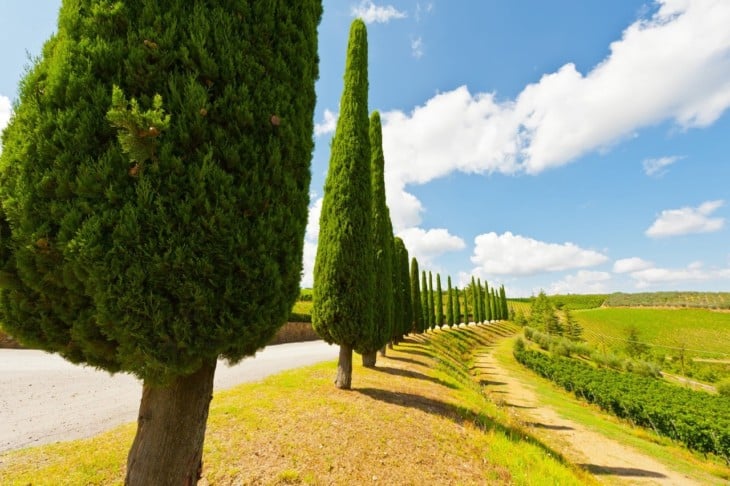
Italian cypress (Cupressus sempervirens) is also called Mediterranean, Tuscan or pencil cypress. Despite the name, it is native to the eastern Mediterranean and Iran, and it has been planted around Italy for thousands of years. Wild trees are often broad and spreading. The narrow, column-shaped trees seen in gardens and lining Tuscan roads are the form called ‘Stricta’ or ‘Fastigiata’, and garden varieties such as ‘Tiny Tower’ stay smaller. In gardens they usually grow 40 to 60 feet tall and only 3 to 6 feet wide.

- Pros of Italian Cypress Trees
- Cons of Italian Cypress Trees
- Is an Italian Cypress Right for Your Garden?
| Pros | Cons |
|---|---|
| Evergreen, with color all year | Only for warm climates with dry summers |
| Very narrow; fits tight spaces | Prone to canker and root rot |
| Drought tolerant once established | Spider mites and bagworms |
| Fast growing | Grows taller than many people expect |
| Long-lived | Can lean, split or topple in wind and snow |
| Resists fire better than most conifers | Pollen is a common allergen |
| Low maintenance and deer resistant |
Pros of Italian Cypress Trees
1. Evergreen Structure All Year
Italian cypress keeps its dense, dark green, scale-like foliage all year, so it gives the garden a strong shape and color even in winter. Its small, round cones turn from green to gray-brown as they ripen. The dense foliage also gives birds shelter and nesting sites.
2. A Very Narrow Shape That Fits Tight Spaces
The columnar form grows straight up, with branches held close to the trunk, so a 40-foot tree may be only 3 to 6 feet wide. That makes it useful where there is no room for a spreading tree: along driveways and property lines, between houses, beside a gate or door, or as a tall vertical accent in a formal garden. Planted in a row about 3 to 5 feet apart, the trees make a tall, narrow screen.
3. Drought and Heat Tolerant
Once established, usually after two or three years of regular watering, Italian cypress needs little water and handles long, hot, dry summers. Its small, scale-like leaves have a thick waxy coat and lose little water. It grows in poor, rocky soil as long as it drains well, which makes it a staple of Mediterranean-style and water-wise gardens in California, Arizona and Texas.
4. Fast Growth
In full sun with good drainage, young Italian cypresses often grow 2 to 3 feet a year, so a row of small trees becomes a tall screen in just a few years. Growth slows as the trees mature.
5. A Very Long Life
Italian cypress is one of the longest-lived trees in cultivation. Healthy garden trees can live for well over a century, and some ancient cypresses in Italy and Iran are estimated to be more than 1,000 years old. The Cypress of Abarkuh in Iran is thought to be several thousand years old.
6. Better Fire Resistance Than Most Conifers
Italian cypress leaves hold a lot of water, and the dense layer of fallen leaves underneath stays moist and burns poorly. In a 2012 wildfire near Valencia, Spain, researchers found that only about 1 percent of the cypresses in a test plantation burned, while the surrounding pines and oaks were destroyed. Cypress plantings have since been studied as green firebreaks in Spain and Italy. Still, no tree is fireproof, and a cypress full of dead, dry foliage can burn fiercely. In wildfire-prone areas, keep them well watered, clean out dead material and don’t plant them right against the house.
7. Low Maintenance and Deer Resistant
Italian cypress keeps its narrow shape on its own and doesn’t need pruning, apart from removing any dead branches. Its tough, aromatic foliage is rarely browsed by deer or rabbits.
Cons of Italian Cypress Trees

1. It Only Suits Warm, Dry-Summer Climates
Italian cypress is hardy in zones 7 to 10 and does best where summers are hot and dry and winters are mild. Cold winters can burn or kill the foliage, and in cool, wet or humid climates it grows slowly and suffers from disease. It needs full sun and fast-draining soil. It will not tolerate heavy, wet clay or sprinklers soaking its roots every day.
2. Canker and Root Rot
The most serious disease is cypress canker, caused by Seiridium fungi. It kills branches or whole sections of the tree, which turn reddish-brown, often with oozing resin on the bark. It has killed large numbers of cypresses in the Mediterranean and California. There is no cure: cut out infected branches with disinfected tools, or remove badly infected trees before they spread it. In soggy or overwatered soil, Phytophthora root rot causes the whole tree to yellow and die quickly. Good drainage and watering deeply but infrequently prevent most problems.
3. Spider Mites and Bagworms
In hot, dusty conditions, spider mites feed on the foliage and make it look bronzed and dull, starting on the inside of the tree. Bagworm caterpillars build small bags from bits of foliage and can strip a tree if they aren’t picked off or treated. Hosing the foliage in summer helps keep mites down.
4. It Grows Taller Than Many People Expect
A small nursery plant can reach 40 to 60 feet, and old trees can top 80 feet. Planted next to a single-story house, under power lines or in a small garden, it can soon look out of scale. Topping ruins the natural shape, so if you want a shorter tree, choose a compact variety such as ‘Tiny Tower’, which stays about 20 to 25 feet tall.
5. Wind and Snow Damage
Tall, narrow cypresses with shallow roots can lean or blow over in strong winds, especially in wet soil. Heavy snow or ice can bend the branches outward, splaying the column open, and they often don’t spring back. In snowy areas, some gardeners wrap the trees loosely with soft ties in winter.
6. Its Pollen Is a Common Allergen
Italian cypress releases large amounts of pollen in late winter and early spring. In the Mediterranean, cypress pollen is one of the most common causes of hay fever at that time of year. If someone in your household is allergic, avoid planting a row of them near the house.
Is an Italian Cypress Right for Your Garden?
- Plant one if you live in zone 7 to 10 with hot, dry summers, have full sun and well-drained soil, and need a tall, narrow evergreen for a row, screen or accent.
- Choose something else if your summers are humid or your soil is heavy clay, your winters bring heavy snow or ice, or you need a short or wide screen.
- Plant with care: set trees at the same depth they grew in the pot, water deeply every week or two for the first couple of summers, then only in long dry spells, and keep lawn sprinklers off the roots.
For narrow evergreens that suit colder or wetter climates, see our list of trees similar to Italian cypress.