
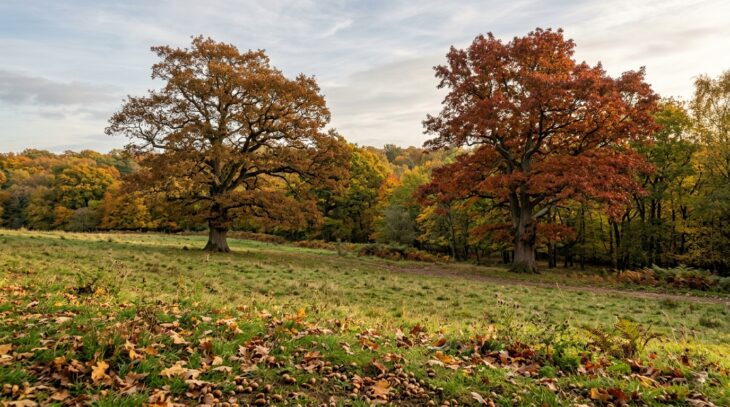
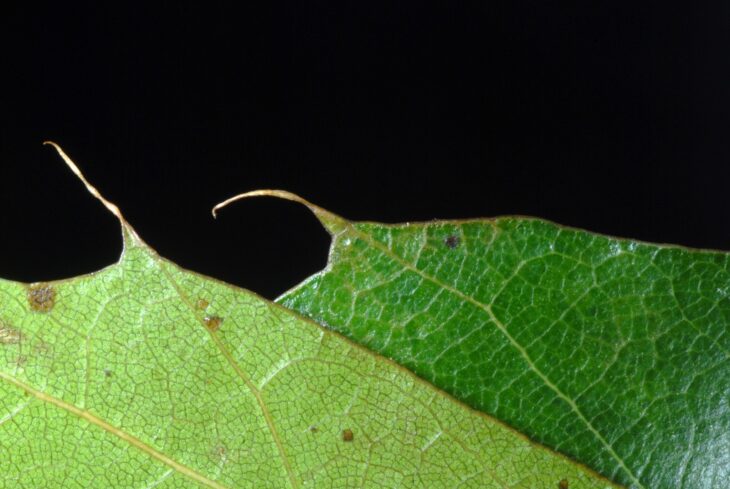
To identify an oak by its leaf, look at the tips of the lobes first. Rounded lobes with no bristles mean a white oak; pointed lobes that end in a tiny hair-like bristle mean a red oak.
Contents
- How to Use This Guide
- Red Oak vs White Oak Leaves
- Oaks With Rounded Lobes (White Oak Group)
- Oaks With Wavy or Toothed Edges
- Oaks With Pointed, Bristle-Tipped Lobes (Red Oak Group)
- Oaks With Narrow or Unlobed Leaves
- Leaves That Look Like Oak Leaves
- How to Identify an Oak in Winter
- Frequently Asked Questions
- Sources
That one test splits the oaks of the eastern US into two groups. After that, the depth of the gaps between the lobes (the sinuses), the leaf’s overall outline and the color of its underside narrow it down to the species.
Not every oak has lobes. Willow, water, shingle and live oaks have narrow or spoon-shaped leaves, so they get their own section below.
How to Use This Guide
This guide covers 18 oaks common in the eastern and central US, grouped by leaf shape so you can start from the leaf in your hand. Western oaks, such as the Garry oak of the Pacific Northwest, are not included.
Check several leaves from the same tree, because one tree can carry different shapes. Black oak, for example, has deeper gaps between the lobes on leaves in the sun than on leaves in the shade, and southern red oak grows two distinct leaf types.
Some trees will not match any description. Oaks cross easily, and the Missouri Department of Conservation counts more than 30 oak hybrids recorded in that state alone.
| Oak | Botanical name | Group | Key leaf feature | Leaf length | Zones |
|---|---|---|---|---|---|
| White oak | Quercus alba | White | 5–9 even, rounded lobes; whitish underside | 4–9 in | 3–9 |
| Bur oak | Quercus macrocarpa | White | Two middle gaps almost cut the leaf in half | 6–12 in | 3–8 |
| Post oak | Quercus stellata | White | Large square middle lobes form a cross | 3–8 in | 5–9 |
| Overcup oak | Quercus lyrata | White | Deep, irregular rounded lobes; wedge-shaped base | 6–8 in | 5–9 |
| Swamp white oak | Quercus bicolor | No bristles | Shallow lobes and coarse teeth; silvery underside | 3–7 in | 4–8 |
| Chestnut oak | Quercus montana | No bristles | Oval with wavy, rounded teeth | 4–8 in | 4–8 |
| Chinkapin oak | Quercus muehlenbergii | White | Evenly toothed edge, pointed tip | 4–8 in | 3–7 |
| Swamp chestnut oak | Quercus michauxii | No bristles | Wavy, round-toothed edge; fuzzy underside | Up to 9 in | 4–9 |
| Northern red oak | Quercus rubra | Red | 7–11 lobes; gaps less than halfway to the center | About 7 in | 4–8 |
| Black oak | Quercus velutina | Red | 5–7 lobes; hairy buds; gaps vary with sun | 3–9 in | 3–9 |
| Pin oak | Quercus palustris | Red | 5 lobes; deep U-shaped gaps | About 5 in | 4–8 |
| Scarlet oak | Quercus coccinea | Red | 7 lobes; deep C-shaped gaps | 3–7 in | 4–9 |
| Shumard oak | Quercus shumardii | Red | 2–4 pairs of lobes; gaps half to three-quarters deep | Up to 7 in | 5–9 |
| Southern red oak | Quercus falcata | Red | Long end lobe; U-shaped base | 5–9 in | 6–9 |
| Willow oak | Quercus phellos | Red | Narrow and smooth, like a willow leaf | 4–5 in | 5–9 |
| Water oak | Quercus nigra | Red | Spoon-shaped, widest near the tip | 2–4 in | 6–9 |
| Shingle oak | Quercus imbricaria | Red | Unlobed, lance-shaped, one bristle at the tip | 3–6 in | 4–8 |
| Live oak | Quercus virginiana | Evergreen | Thick, smooth-edged, gray and hairy below | 2–5 in | 8–10 |
Red Oak vs White Oak Leaves
The two groups differ in more than their leaves. According to the Missouri Department of Conservation, white oak acorns mature in one year and are less bitter, while red oak acorns take two years to mature and are bitter with tannin.
On the leaf itself, look closely at the very end of each lobe. A red oak lobe finishes in a fine bristle, like the close-up above, while a white oak lobe simply rounds off.
Oaks With Rounded Lobes (White Oak Group)
1. White Oak (Quercus alba)
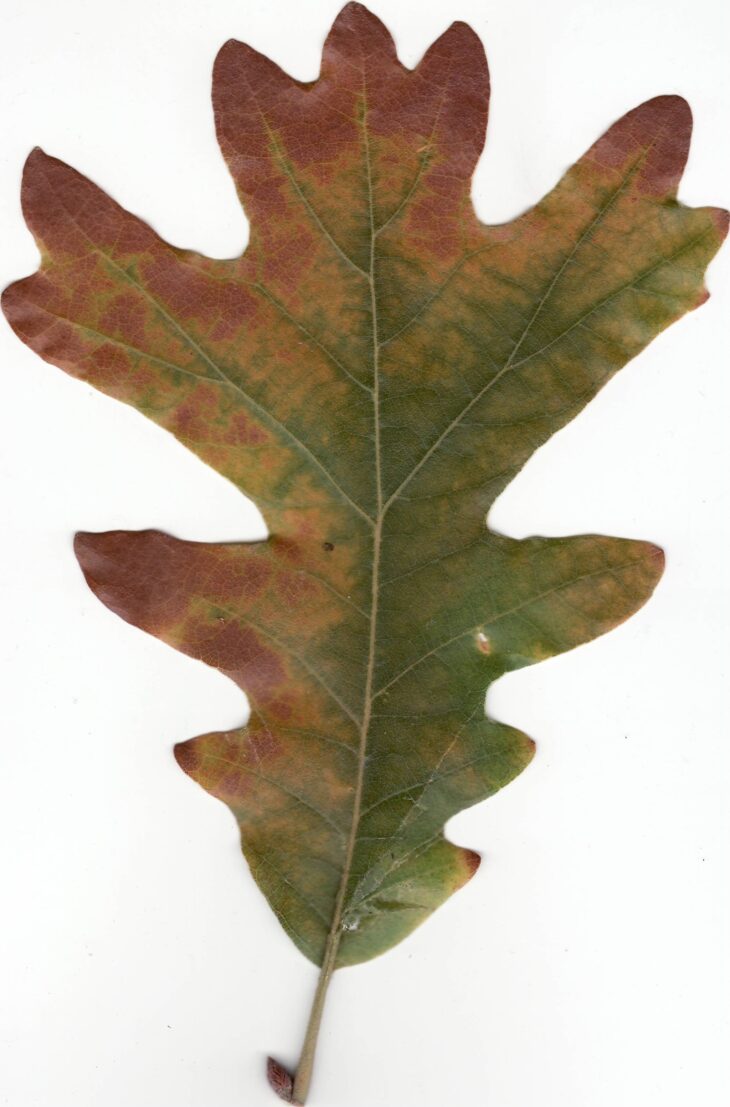
Leaf: 4 to 9 inches (10 to 23 cm) long, with 5 to 9 rounded, even lobes and no bristles · Underside: whitish · Zones: 3–9
White oak is the reference point for the whole group: finger-like lobes with rounded ends, fairly even in size, and a pale, whitish underside. The gaps between the lobes vary, and some reach almost to the center vein.
Its fall color comes late and runs from purplish brown to reddish brown, and a few leaves often hang on into winter. The acorns sit in a shallow, warty cap that covers a quarter to a third of the nut.
2. Bur Oak (Quercus macrocarpa)
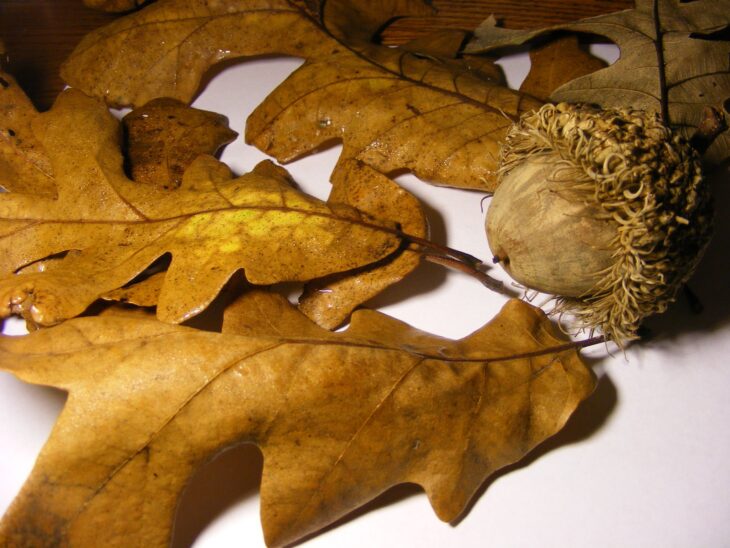
Leaf: 6 to 12 inches (15 to 30 cm) long, leathery, with 5 to 7 deep rounded lobes · Underside: grayish green and finely fuzzy · Zones: 3–8
Bur oak has the largest leaves of any oak in this guide, and one feature gives it away: the two middle gaps cut almost to the center vein, nearly dividing the leaf in two.
If there are acorns, you can be sure. They are up to 1.5 inches (4 cm) across, in a cup with a shaggy, fringed rim that NC State Extension compares to a chestnut bur.
3. Post Oak (Quercus stellata)
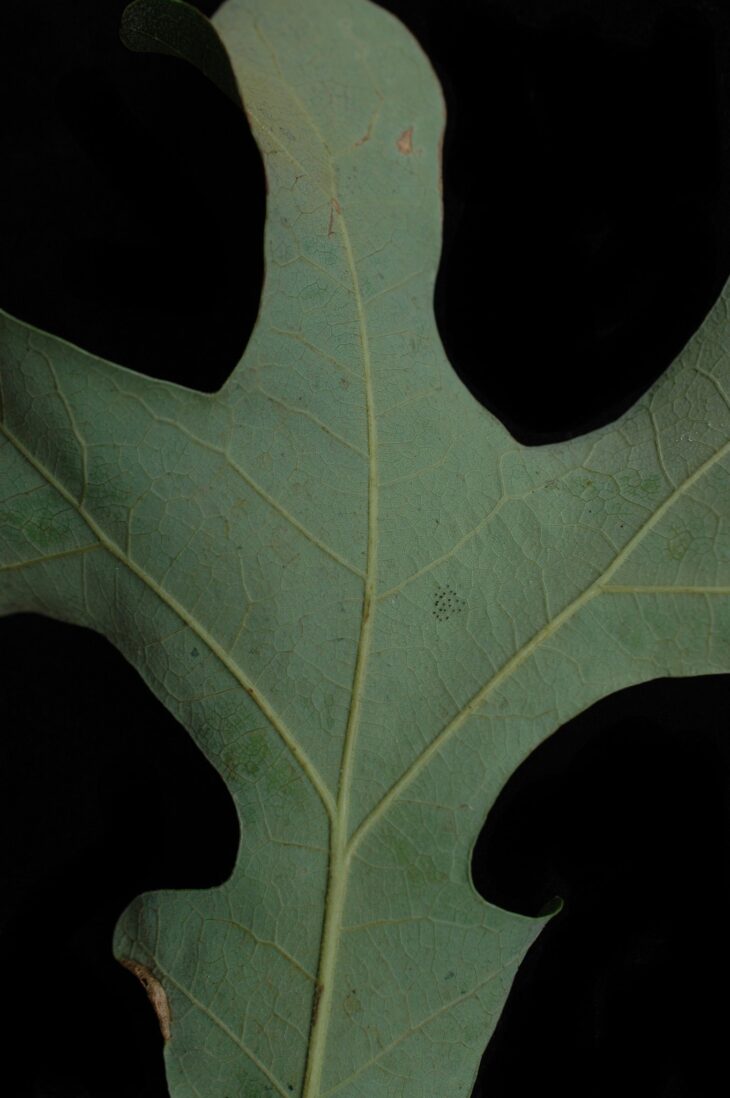
Leaf: 3 to 8 inches (8 to 20 cm) long, thick and leathery · Underside: pale and hairy · Zones: 5–9
Post oak leaves look like a cross. The two middle lobes are much larger and squarer than the others, so the leaf reads as a Maltese cross or a stubby plus sign.
The leaf feels leathery, and the Vanderbilt tree key notes star-shaped hairs on the surface. The underside is pale and hairy.
4. Overcup Oak (Quercus lyrata)
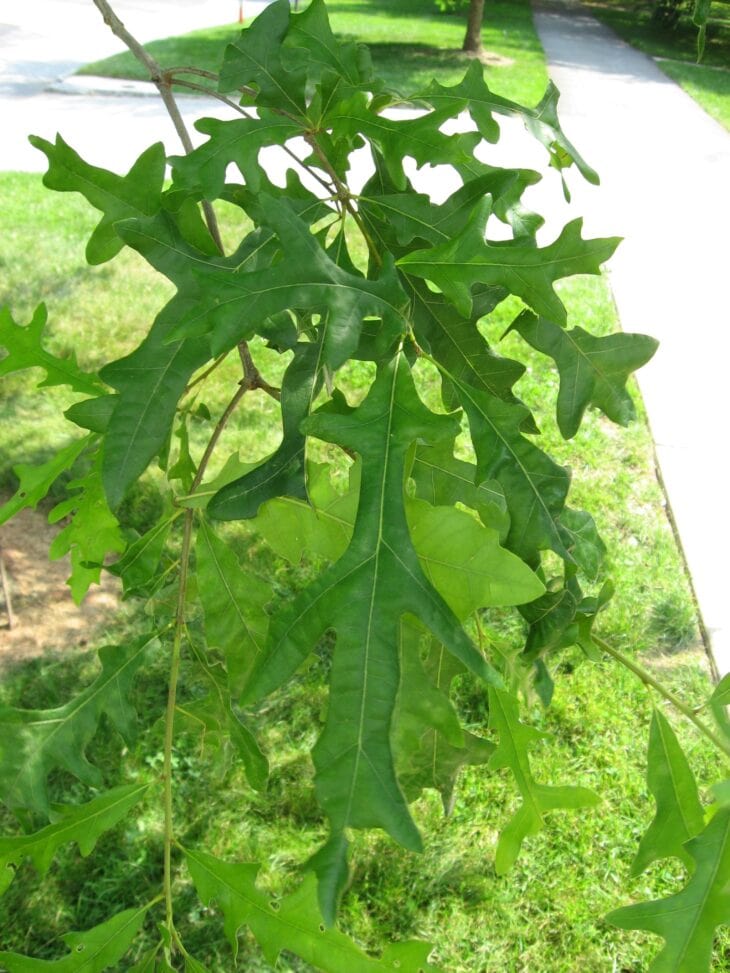
Leaf: 6 to 8 inches (15 to 20 cm) long, wedge-shaped at the base, with 5 to 9 deep rounded lobes · Underside: gray-green and hairy · Zones: 5–9
Overcup oak grows on flood-prone coastal plains of the Southeast. Its leaves have deep, rounded lobes and a wedge-shaped base, and they can look a lot like bur oak.
The acorn settles it. NC State notes its cup encloses two-thirds to almost all of the nut, which gives the tree its name, while a bur oak cup has a fringed rim and covers less.
Oaks With Wavy or Toothed Edges
These four oaks have no deep lobes, just a wavy or toothed edge, and none has bristle tips. Two of them are named for chestnuts, whose toothed leaves they resemble.
5. Swamp White Oak (Quercus bicolor)
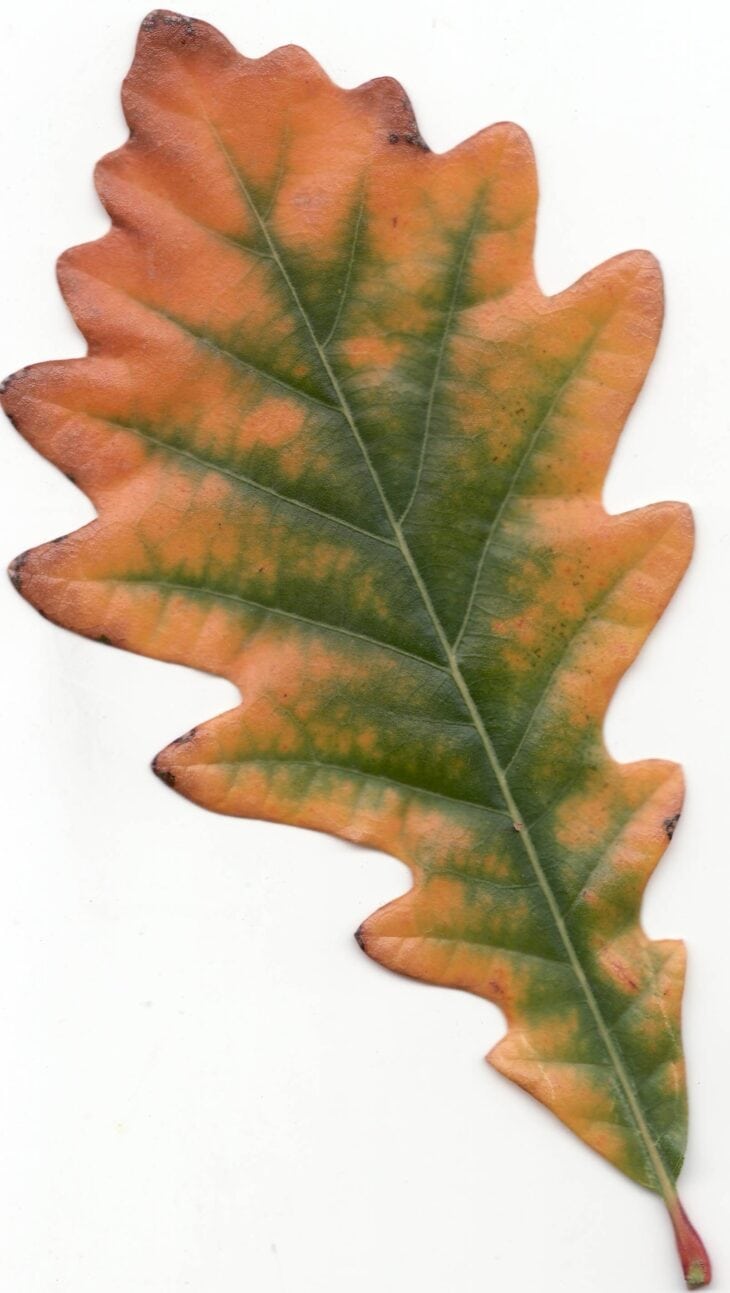
Leaf: 3 to 7 inches (8 to 18 cm) long, shallowly lobed with 6 to 10 pairs of coarse teeth · Underside: white to silver and felty · Zones: 4–8
Swamp white oak is named for its two-tone leaf: glossy green on top and white to silvery underneath, which flashes when the wind turns the leaves over. The edge is wavy with coarse, rounded teeth rather than true lobes.
Its acorns often come in groups of two to four on long stalks.
6. Chestnut Oak (Quercus montana)
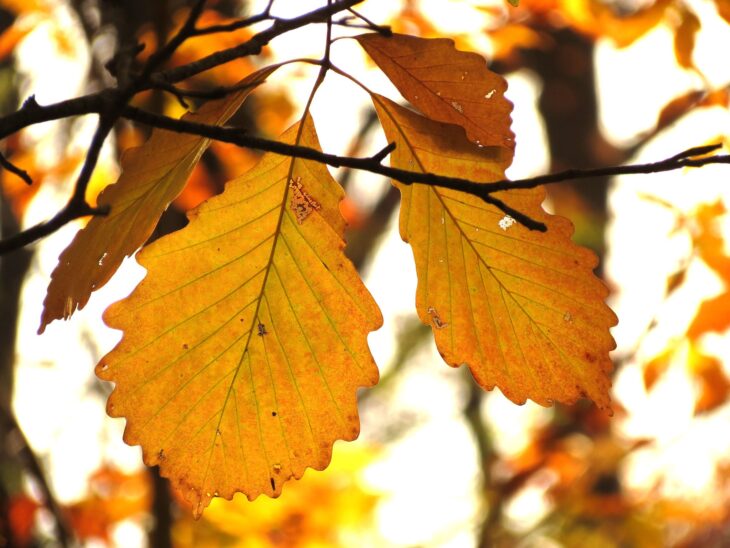
Leaf: 4 to 8 inches (10 to 20 cm) long, oval with a pointed tip, coarsely toothed · Underside: gray-green and hairy · Zones: 4–8
Chestnut oak leaves are oval with large, rounded teeth along the edge, like a scalloped border. Some descriptions call them shallowly lobed.
NC State describes it on ridgetops and in poor, dry, rocky soil, which helps separate it from swamp chestnut oak. Its acorns are large, 1 to 1.5 inches (2.5 to 4 cm) long.
7. Chinkapin Oak (Quercus muehlenbergii)
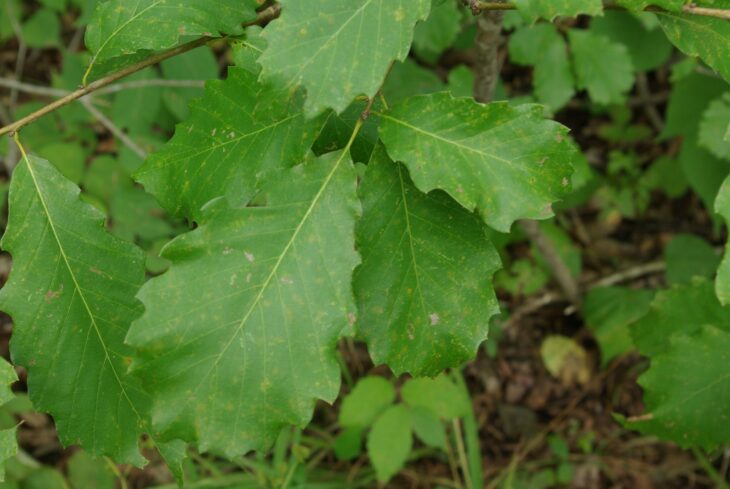
Leaf: 4 to 8 inches (10 to 20 cm) long, shiny, with small teeth or lobes and a pointed tip · Underside: dull, sometimes with white hairs · Zones: 3–7
Chinkapin oak is a white oak whose leaves have a regular row of small, sharp-looking teeth, tidier and finer than chestnut oak’s rounded scallops. The teeth have no bristles.
Habitat helps: NC State notes it often grows on limestone outcrops and rocky uplands.
8. Swamp Chestnut Oak (Quercus michauxii)
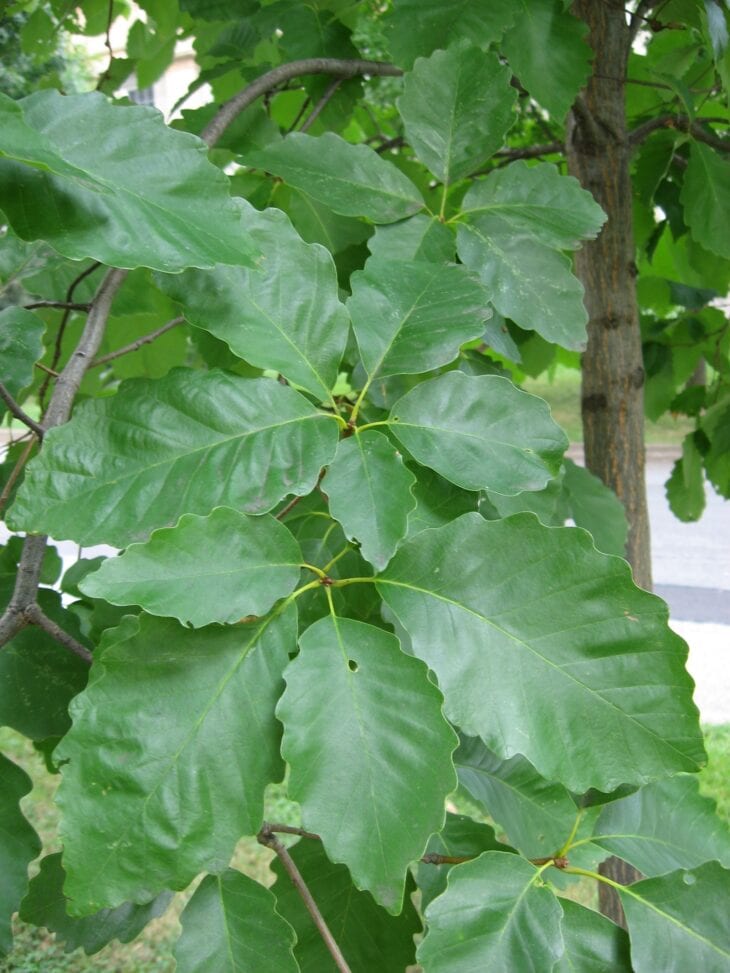
Leaf: up to 9 inches (23 cm) long, oval, with a wavy edge of rounded teeth · Underside: gray-green and fuzzy · Zones: 4–9
Swamp chestnut oak has large, oval leaves with a wavy, round-toothed edge and a soft, fuzzy underside. It is the bottomland counterpart of chestnut oak, and the leaves are hard to tell apart.
Use the site: NC State places swamp chestnut oak in swampy areas and low woodlands of the southeastern coastal plain, while chestnut oak grows on dry, rocky ridges.
Oaks With Pointed, Bristle-Tipped Lobes (Red Oak Group)
9. Northern Red Oak (Quercus rubra)
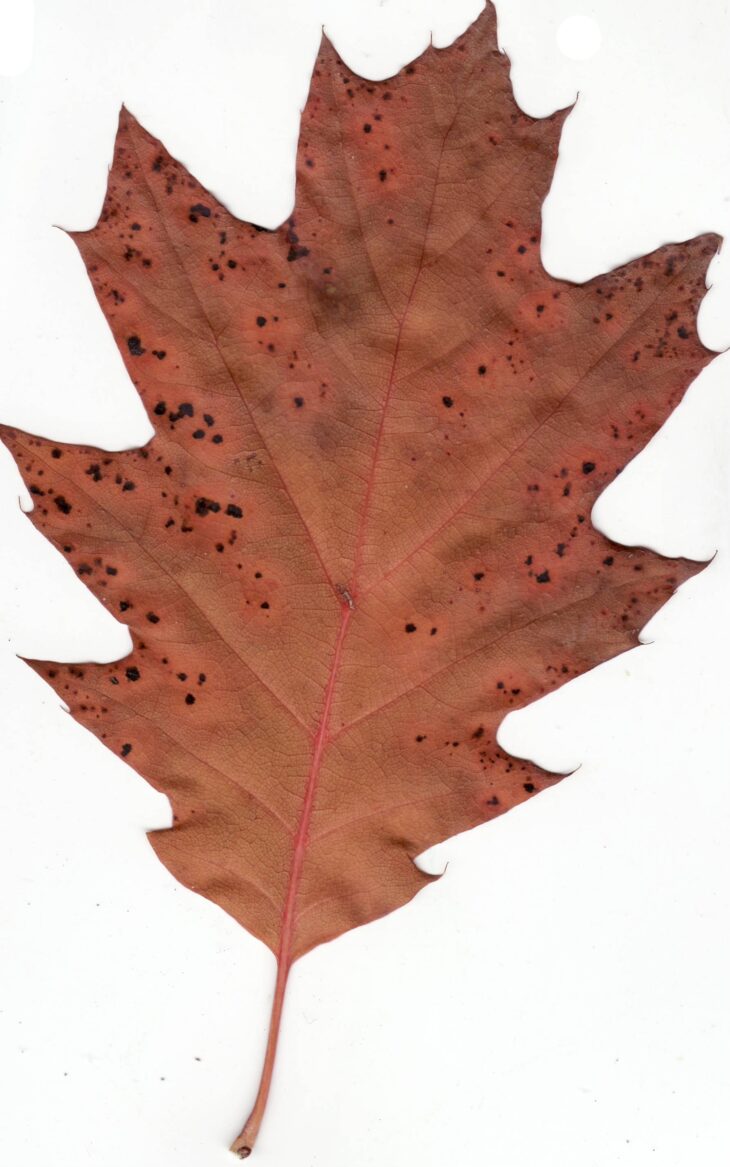
Leaf: about 7 inches (18 cm) long, with 7 to 11 lobes · Underside: dull, light green with tufts of hair in the vein angles · Zones: 4–8
The key to northern red oak is how shallow its gaps are. They cut less than halfway to the center vein, so the leaf looks broad and solid, with short, bristle-tipped lobes around the edge.
That separates it from pin, scarlet and Shumard oaks, whose gaps run much deeper. Fall color is usually brownish red to scarlet.
10. Black Oak (Quercus velutina)
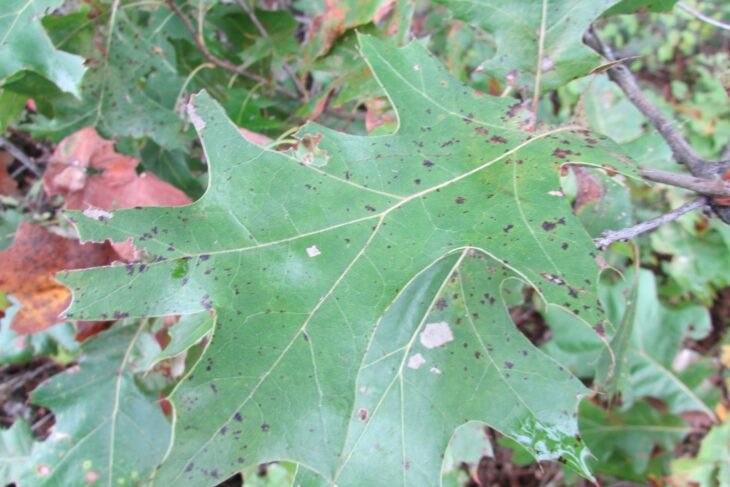
Leaf: 3 to 9 inches (8 to 23 cm) long, with 5 to 7 pointed, bristle-tipped lobes · Underside: paler, often with hairs · Zones: 3–9
Black oak is the one most often confused with northern red oak, and the two hybridize. Its leaves vary a lot: sun leaves have deep gaps, shade leaves shallow ones.
Check the buds and the underside. The Vanderbilt tree key describes large buds covered in thick blond hair and a yellowish fuzz under the leaf. NC State adds that the inner bark is yellow.
11. Pin Oak (Quercus palustris)

Leaf: about 5 inches (13 cm) long, glossy, with 5 bristle-tipped lobes · Underside: the same green as the top, with small tan tufts in the vein angles · Zones: 4–8
Pin oak has small, deeply cut leaves: the gaps are U-shaped and reach close to the center vein, leaving narrow lobes. Young trees hold their dead leaves through winter.
Its acorns are small, a quarter to half an inch (6 to 13 mm) long, in a thin, shallow cap. That cap is the quickest way to tell it from scarlet oak.
12. Scarlet Oak (Quercus coccinea)
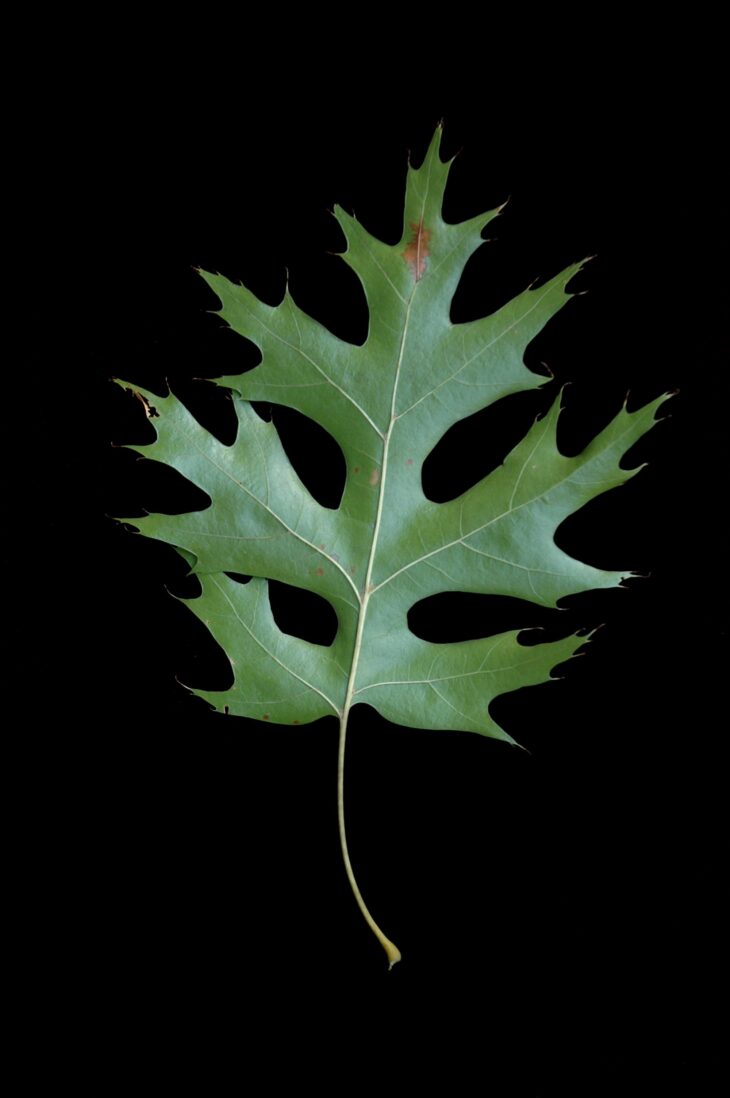
Leaf: 3 to 7 inches (8 to 18 cm) long, glossy, with 7 bristle-tipped lobes · Underside: paler · Zones: 4–9
Scarlet oak and pin oak are the classic pair of lookalikes. NC State gives the difference: scarlet oak’s gaps are C-shaped, curving round like the letter C, while pin oak’s are U-shaped.
The acorn is clearer still. Scarlet oak’s sits half-hidden in a deep, bowl-shaped cap, and the exposed tip often shows faint concentric rings. Its fall color is a late, brilliant scarlet.
13. Shumard Oak (Quercus shumardii)
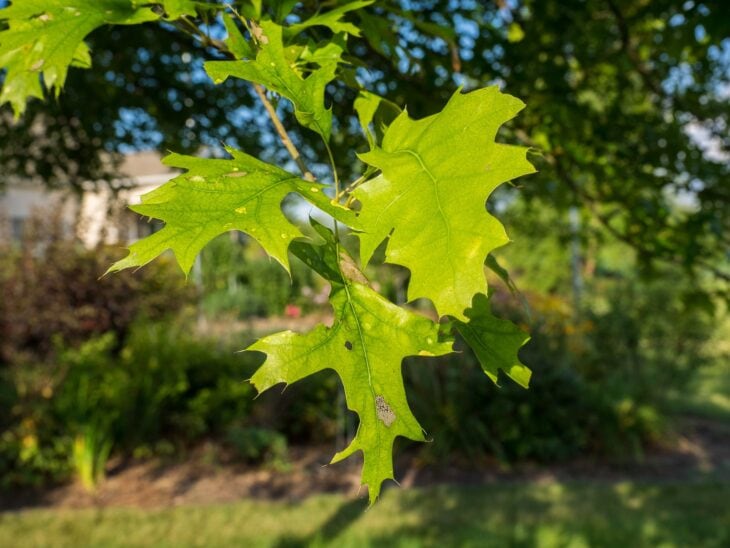
Leaf: up to 7 inches (18 cm) long, shiny, with 2 to 4 pairs of pointed, bristle-tipped lobes · Underside: pale green with tufts of hair · Zones: 5–9
Shumard oak sits between northern red oak and pin oak. Its gaps run half to three-quarters of the way to the center vein, much deeper than northern red oak’s.
Its shiny leaves turn red in fall.
14. Southern Red Oak (Quercus falcata)
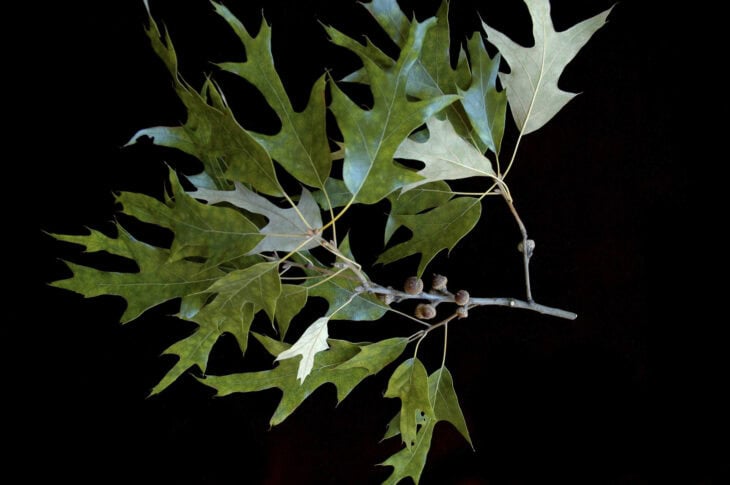
Leaf: 5 to 9 inches (13 to 23 cm) long, in two forms · Underside: paler · Zones: 6–9
Southern red oak is easy once you know it grows two kinds of leaf on one tree. One has 3 to 5 irregular, bristle-tipped lobes, with the end lobe longest and a rounded, U-shaped base. The other is pear-shaped with 3 short lobes near the tip.
That long end lobe is the giveaway.
Oaks With Narrow or Unlobed Leaves
15. Willow Oak (Quercus phellos)
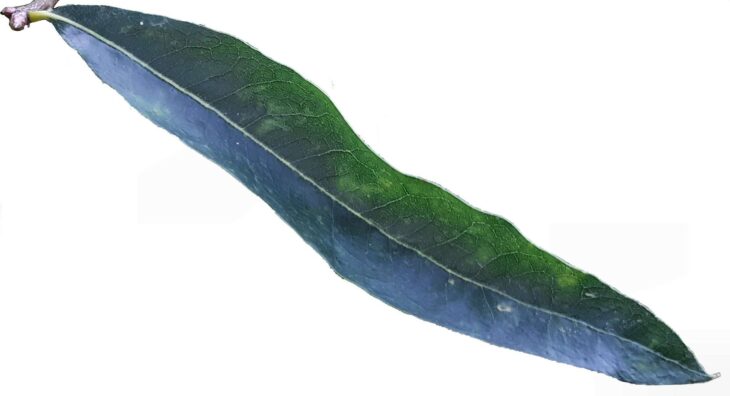
Leaf: 4 to 5 inches (10 to 13 cm) long and about 1 inch (2.5 cm) wide, smooth-edged · Tip: a single bristle · Zones: 5–9
Willow oak leaves look nothing like the classic oak leaf: they are long, narrow and smooth-edged, exactly like a willow’s. The tiny bristle at the tip marks it as a red oak.
Acorns are the easiest confirmation. They are small, about half an inch (13 mm) long, in a scaly cap, and no willow ever makes an acorn.
16. Water Oak (Quercus nigra)
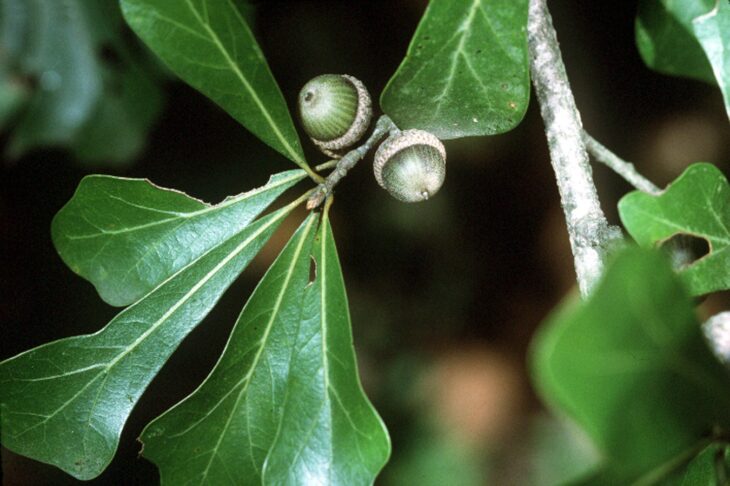
Leaf: 2 to 4 inches (5 to 10 cm) long, spoon-shaped, widest near the tip · Tip: none, or 3 shallow lobes · Zones: 6–9
Water oak leaves are narrow at the base and broaden toward the tip, like a spoon. The tip may be smooth or have up to three shallow lobes, with or without bristles, and the color is bluish green.
They vary more than almost any other oak, even on one tree. NC State notes that in the Deep South the leaves can hang on through winter, and that water oak wood is weaker than red or white oak.
17. Shingle Oak (Quercus imbricaria)

Leaf: 3 to 6 inches (8 to 15 cm) long and up to 2 inches (5 cm) wide, glossy, unlobed · Tip: a single bristle · Zones: 4–8
Shingle oak has broad, lance-shaped leaves with a smooth or slightly wavy edge and one bristle at the tip. They are wider than willow oak leaves and do not widen toward the tip like water oak.
The leaves often stay on the tree into winter, and the acorns take two years to ripen, both red oak traits.
18. Live Oak (Quercus virginiana)
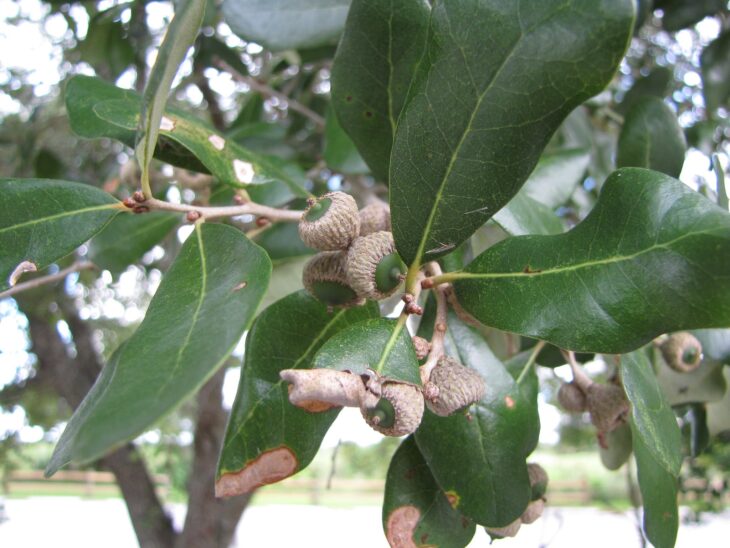
Leaf: 2 to 5 inches (5 to 13 cm) long, thick and leathery · Underside: pale with gray hairs · Zones: 8–10
Live oak is the evergreen oak of the Atlantic and Gulf coasts. Its leaves are small, thick, shiny on top and grayish and hairy underneath.
The edges are usually smooth, but young trees and new shoots can have toothed or spiny leaves, which confuses people. NC State notes it is not a true evergreen: it keeps each year’s leaves until the new ones come out in spring.
Leaves That Look Like Oak Leaves
Oakleaf hydrangea (Hydrangea quercifolia). Its big, 3- to 7-lobed leaves are named for their resemblance to oak. But it is a shrub, and its leaves grow in opposite pairs, while oak leaves alternate along the stem.
For more shrubs in that family, see our guide to plants that look like hydrangeas.
Chestnuts (Castanea). Chinese chestnut has long, coarsely toothed leaves that resemble chestnut and chinkapin oak. Its nuts grow inside spiny burs rather than acorn cups.
Sawtooth oak (Quercus acutissima). This one is a real oak that looks like a chestnut, with narrow leaves ending each vein in a bristle-tipped tooth. It is an Asian species that NC State reports is invading eastern forests, so do not plant it.
How to Identify an Oak in Winter
With the leaves down, look at the twig ends. The Missouri Department of Conservation says that, after the acorn, the best identifying feature of an oak is the cluster of buds at the tip of each twig.
Then look for leftovers. Many oaks keep dead leaves on their lower branches through winter, especially young pin, northern red and shingle oaks, and fallen leaves and acorn caps under the tree can take you back to the tables above.
You may also find round growths on the twigs or leaves. Those are galls, not fruit; our guide to balls on oak trees explains what causes them.
Frequently Asked Questions
How do I tell what type of oak tree I have?
Start with the lobe tips: rounded tips mean the white oak group, bristle tips mean the red oak group. Then compare the depth of the gaps, the leaf outline and the underside with the table above, and check an acorn if you can find one.
How can I tell if a tree is an oak tree?
Acorns are the surest sign, since only oaks make them. Without acorns, look for alternate leaves and a cluster of buds at the tip of each twig, which the Missouri Department of Conservation calls the best identifying feature after the acorn.
What tree has leaves that look like oak leaves?
Oakleaf hydrangea has lobed leaves very like an oak’s, but it is a shrub with leaves in opposite pairs. Chestnuts have toothed leaves similar to chestnut oak, and sawtooth oak, an invasive Asian oak, has chestnut-like leaves.
What is the difference between red oak and white oak leaves?
Red oak leaves have pointed lobes that end in a tiny bristle; white oak leaves have rounded lobes with no bristles. Red oak acorns also take two years to mature and white oak acorns one.
Why do some oak leaves look different on the same tree?
Leaves in the sun are often more deeply cut than leaves in the shade, as in black oak, and some species, like southern red oak, grow two leaf forms. Oaks also hybridize, so check several leaves before deciding.
If you are trying to name the oaks in a particular state, our state tree guides, such as the trees of North Carolina, include each state’s common oaks.
Sources
- Missouri Department of Conservation: Oaks field guide
- Vanderbilt University BioImages: Oak illustrated key
- NC State Extension Gardener Plant Toolbox: species pages for white oak, scarlet oak, pin oak, southern red oak and the other oaks listed, plus oakleaf hydrangea and sawtooth oak





.jpg)

