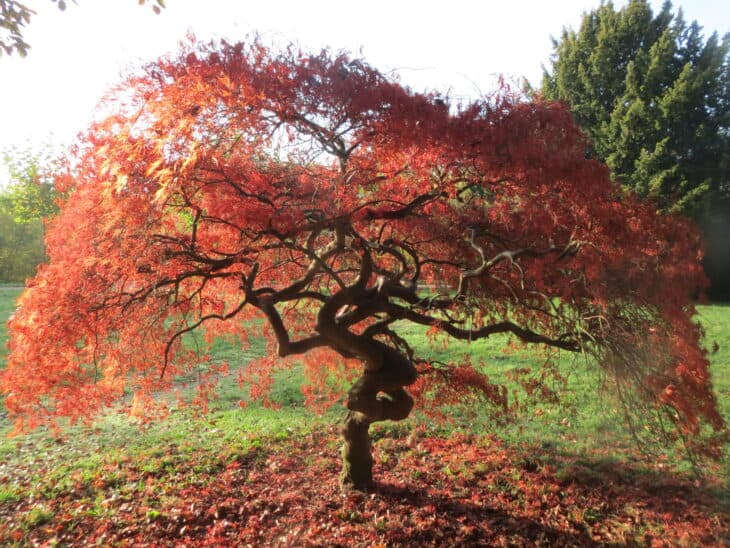
Japanese maple (Acer palmatum) is one of the most widely planted ornamental trees in the world, and for good reason. Native to Japan, Korea, and China, it has been cultivated for centuries and now exists in over 1,000 named cultivars that span every size category, from 3-foot (0.9m) dwarf mounds to 25-foot (7.5m) specimen trees.
Contents
The species is defined by its palmate leaves divided into 5 to 9 pointed lobes, with foliage that ranges from lime-green to deep burgundy to near-black depending on cultivar. Fall color is one of the best of any ornamental tree in temperate climates.
Deciding whether to plant one comes down to matching the right cultivar to the right site. Japanese maple rewards gardeners who understand its preferences — afternoon shade in warm zones, acidic well-drained soil, consistent moisture — and frustrates those who plant it in the wrong conditions. The pros are genuine and significant; so are the cons. This article works through both so you can decide whether it is right for your garden.

Japanese Maple
Japanese Maple is a small deciduous tree prized for delicate leaves and brilliant fall color. It prefers moist, well drained soil and some protection from hot afternoon sun.
Read our guide to Japanese MaplePros Of Japanese Maple Trees
Japanese Maples Deliver Exceptional Ornamental Value in Every Season
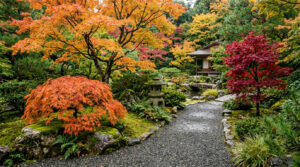
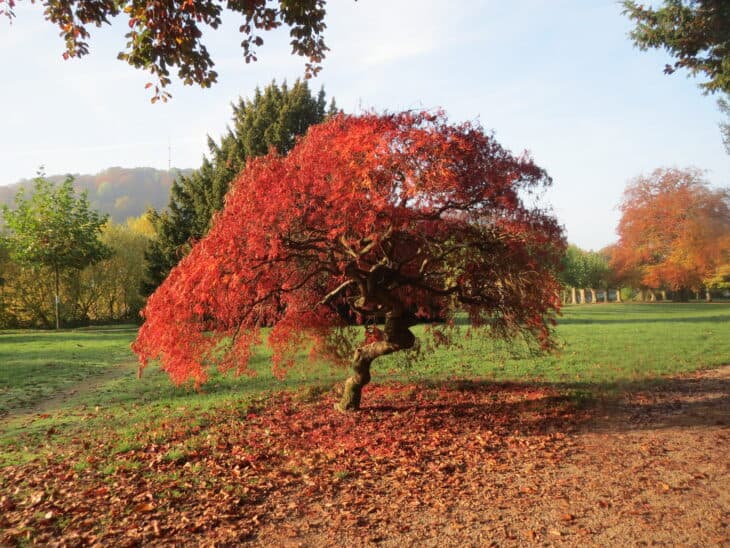
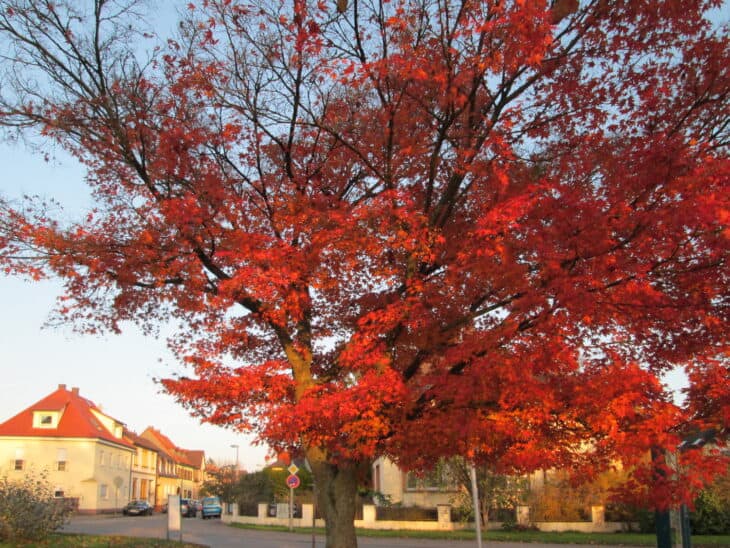
Japanese maple earns its reputation as one of the finest ornamental trees available because it contributes something visually impressive across most of the year. Spring foliage emerges in shades of lime-green, coral-pink, or deep burgundy depending on cultivar — the new growth is often as showy as a flower. In summer the layered canopy provides clean structure and color. Autumn delivers fall color among the richest of any ornamental tree in temperate gardens, with reds, oranges, and golds that outperform most alternatives. In winter, the refined, horizontally layered branching structure remains a garden focal point long after the leaves drop.
The cultivar range allows you to choose the season you most want to emphasize. ‘Bloodgood’ holds deep burgundy-red foliage all summer and turns brilliant scarlet in fall. ‘Sango-kaku’ (Coral Bark maple) provides green summer foliage, brilliant yellow fall color, and coral-red winter bark that glows in low winter light. ‘Osakazuki’ is widely regarded as producing the most intense scarlet fall color of any Japanese maple. Gardeners who want a true four-season specimen for a focal planting will rarely find a better single choice.
The Cultivar Range Fits Every Garden Size From Patio Container to Large Specimen
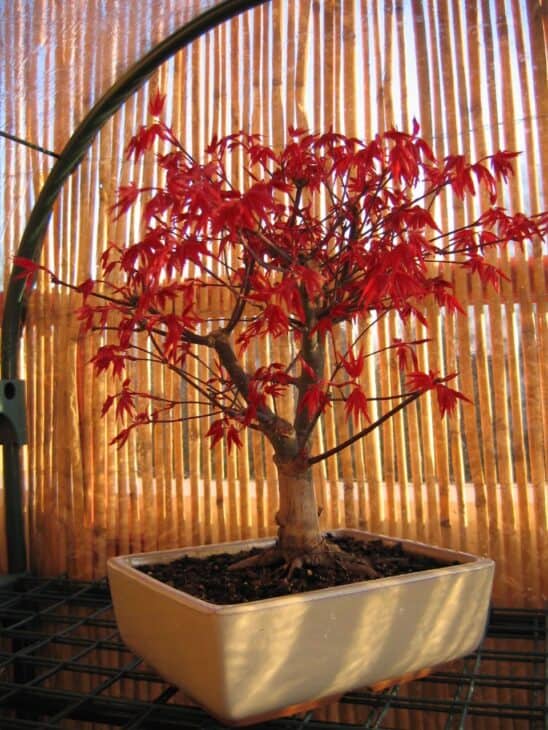
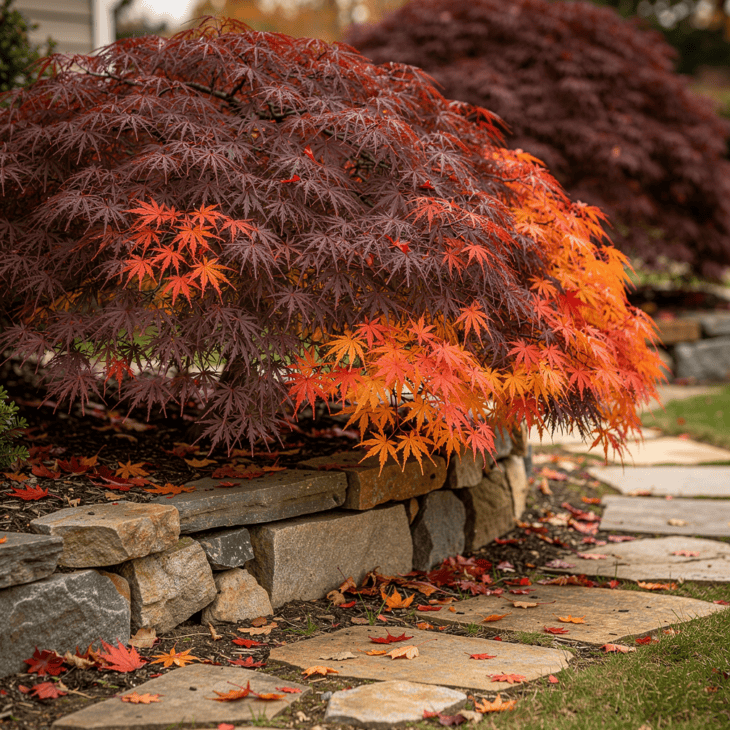
With over 1,000 named cultivars of Acer palmatum available in commerce, Japanese maple is one of the most size-diverse ornamental trees available. Dwarf mounding cultivars like ‘Shaina’ and ‘Kotohime’ reach 3 to 5 feet (0.9 to 1.5m) at maturity and function as permanent container subjects. Weeping dissectum types like ‘Crimson Queen’ and ‘Waterfall’ reach 6 to 10 feet (1.8 to 3m) with a spread that often exceeds their height. Standard upright types like ‘Bloodgood’ and ‘Emperor I’ grow 15 to 20 feet (4.5 to 6m). This breadth means that almost regardless of garden size, design intent, or site constraints, a cultivar exists to fit the situation — a flexibility that very few ornamental trees can match.
This size range is especially valuable for urban and suburban gardeners. Many compact Japanese maple cultivars grow excellently in large containers (20 to 30 gallons or more) for years, making them accessible to patio and balcony gardeners with no ground planting at all. For homeowners with small front yards who want a genuine specimen tree without the footprint of a full-sized ornamental, weeping and dwarf forms often provide the perfect answer.
Japanese Maples Are Largely Pest- and Disease-Free in the Right Site
Japanese maples are relatively free of serious pest and disease problems when sited correctly. There is no equivalent of dogwood anthracnose or fireblight threatening an established, well-placed Japanese maple. Aphids appear on new growth in spring but rarely cause lasting damage. Verticillium wilt (Verticillium spp.) can occasionally affect stressed or newly transplanted specimens in heavy clay with poor drainage, but established trees in appropriate soil are seldom affected. The most common problem that resembles a pest or disease — leaf scorch — is a cultural issue caused by too much sun or too little water, not a pathogen, and it is entirely preventable with correct siting.
This relative freedom from disease makes Japanese maple an attractive choice for gardeners who are fatigued by the spray schedule and disease management that other premium ornamentals require. Compared to flowering dogwood, which faces serious anthracnose risk in humid eastern gardens, Japanese maple in a good site is largely trouble-free for its entire lifespan.
Non-Invasive Roots and Refined Scale Make It Ideal for Small Urban Gardens
Japanese maple’s root system is not aggressive toward foundations, pipes, or paving — a meaningful distinction from willows, silver maples, and other fast-growing alternatives that become structural liabilities near built surfaces. Combined with the availability of genuinely compact cultivars and a graceful, refined branch structure, this makes Japanese maple one of the best-suited ornamental trees for small urban and suburban gardens, courtyard plantings, and foundation borders where a large-scale tree would be impractical or damaging.
For front yard planting strips and city gardens with limited soil volume, compact Japanese maple cultivars are among the most reliably successful choices. The combination of manageable mature size and non-aggressive roots also makes them compatible with proximity to structures in a way that many other ornamental trees are not — an important practical advantage in gardens where space between the tree and the house is limited.
Cons Of Japanese Maple Trees
Leaf Scorch Is a Recurring Problem in Hot, Sunny, or Wind-Exposed Sites
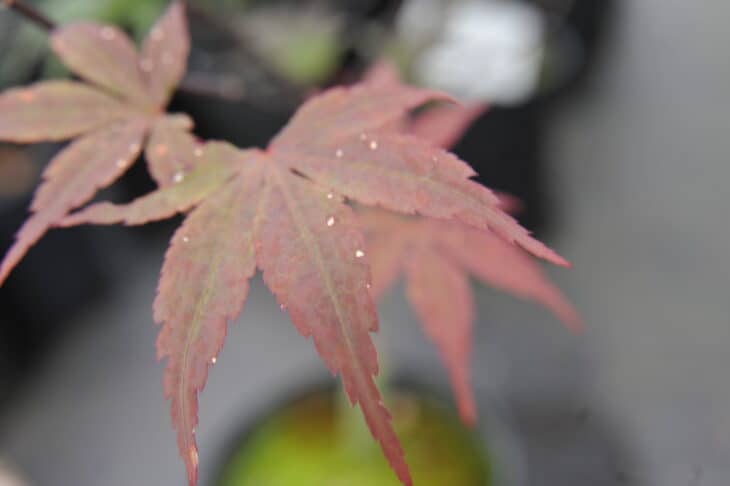
Japanese maple leaves are relatively thin and sensitive to heat, direct afternoon sun, and desiccating wind. In Zones 7 to 9, red-leaved cultivars and finely dissected weeping types are particularly prone to leaf scorch — brown, crispy margins that spread inward from the leaf edges during hot, dry summers. Scorch does not kill the tree, but it degrades the ornamental quality that is the entire reason for growing it. A leaf-scorched Japanese maple in August is a significantly less attractive specimen than the same tree in a better-sited location. This is the single most common source of disappointment for new Japanese maple growers in the South and anywhere with hot, dry summers or reflected heat from paving.
In Zones 7 to 9, site the tree to receive morning sun and afternoon shade, avoiding south- or west-facing walls that trap radiant heat. Mulch deeply — 3 to 4 inches (7.5 to 10cm) — and irrigate consistently during hot spells, since drought stress amplifies sun scorch significantly. Heat-tolerant cultivars such as ‘Bloodgood’, ‘Emperor I’, and ‘Tamukeyama’ handle warmer conditions better than finely cut dissectum types. In Zones 5 to 6, this is much less of a concern, and full sun is generally tolerated well.
Slow Growth Means a Long Wait Before the Tree Reaches Its Full Potential
Japanese maples grow slowly to moderately: 12 to 24 inches (30 to 60cm) per year for upright standard types in good conditions, and only 6 to 12 inches (15 to 30cm) per year for weeping dissectum cultivars. A weeping Japanese maple purchased at 2 feet (60cm) in a 3-gallon container will take 10 to 15 years to reach 5 to 6 feet (1.5 to 1.8m). A standard ‘Bloodgood’ purchased at 5 feet (1.5m) may take 8 to 10 years to reach its mature 15 feet (4.5m). For gardeners accustomed to the growth pace of larger maple trees, this slowness can be a genuine frustration, especially in a new garden where scale and presence are needed quickly.
The most effective workaround is to buy larger at the outset. A 5 to 6 foot (1.5 to 1.8m) balled-and-burlapped or large-container specimen is considerably closer to its final visual impact than a nursery-pot plant, though the price difference is substantial. Upright cultivars establish height somewhat faster than weeping types. Planting faster-establishing companions around a young Japanese maple while it matures is a practical approach that most experienced gardeners use.
Soil and Moisture Requirements Rule It Out for Alkaline or Drought-Prone Sites
Japanese maple has genuine soil requirements that must be met for long-term health: moist, well-drained, slightly acidic soil at pH 5.5 to 6.5, with good organic content. It is not tolerant of drought, heavy clay with poor drainage, or alkaline soil above pH 7.0. In alkaline conditions, leaves turn yellow from iron chlorosis and the tree declines noticeably. In wet or compacted clay, root rot is a real risk. In dry soils or during drought, the tree drops leaves early, colors poorly in fall, and grows significantly more slowly than it should. These requirements make Japanese maple genuinely unsuitable for large parts of the western US where soils are naturally alkaline.
Amending the planting hole with acidic organic matter — pine bark fines, composted leaf mold — helps, as does heavy mulching and consistent irrigation in the first 3 years. Test soil pH before planting; if it reads above 7.0, either commit to ongoing acidification or grow in containers with managed acidic potting mix, which sidesteps the soil chemistry problem entirely. For gardeners who cannot reliably provide consistent summer moisture, the leaf scorch and early defoliation that follow drought stress are difficult to manage.
Late Spring Frosts Can Blacken and Kill the Emerging Foliage
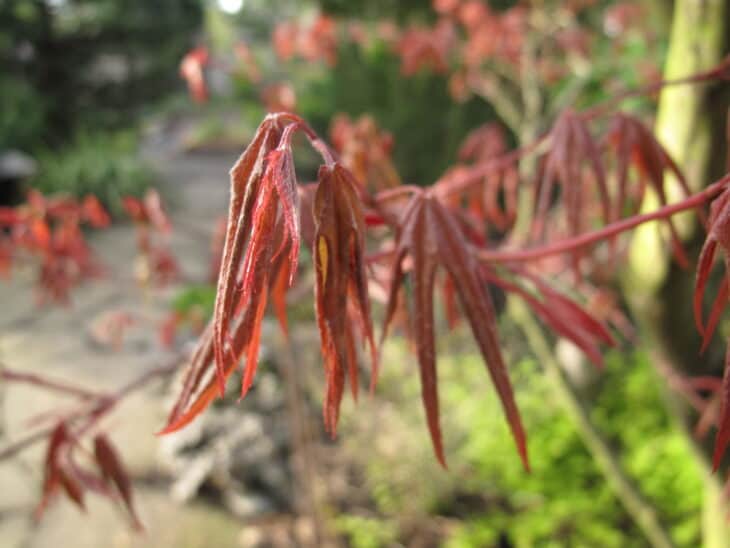
Japanese maple leaves emerge in early spring in colors that are often among the most attractive of the year — and this early emergence makes them vulnerable to late frosts. A freeze below 28°F (-2°C) after leaves have opened can blacken and kill the entire first flush of foliage, leaving the tree bare and unattractive. The tree itself is typically unharmed and will push a second flush of leaves within 3 to 4 weeks, but this second flush is usually less colorful, less vigorous, and smaller than the first. In years with late or recurring frosts, this cycle can repeat multiple times in Zone 5 to 6 frost pockets and low-lying gardens where cold air settles.
Planting in a slightly sheltered location — a north- or northeast-facing slope that delays bud break by a few days — reduces frost exposure. Floating row cover applied on nights when hard frost is forecast after bud break can protect a small specimen effectively. For large established specimens, no practical workaround exists: frost damage is an accepted risk, and in most years it is a minor or single-occurrence event rather than a recurring problem. Gardeners in confirmed Zone 5 to 6 frost pockets should expect this to happen occasionally and factor it in when choosing whether to invest in a premium specimen.
Is Japanese Maple Right For You?
Japanese maple is an excellent choice for gardeners in Zones 5 to 9 who have a spot with morning sun and afternoon shade in warmer climates, well-drained slightly acidic soil, space appropriate to the chosen cultivar’s mature size, and the patience to let a slow-growing tree develop over a decade or more. It performs best as a specimen or focal point planting where its layered structure and foliage can be appreciated from multiple angles and across seasons. Gardeners who invest in correct siting, good soil preparation, and consistent moisture during the first few years of establishment will find Japanese maple one of the most rewarding ornamentals they have ever grown. The cultivar diversity is genuinely extraordinary, and it is hard to overstate how much variation is available.
Japanese maple is a poor fit if you have alkaline soil and are unwilling to amend at planting or grow in containers. It is also a poor fit for consistently hot, full-sun, or reflected-heat sites in Zones 7 to 9 where afternoon shade cannot be provided. If you need quick landscape impact within 3 to 5 years, the slow growth of most Japanese maple cultivars will disappoint compared to faster alternatives. Gardeners in confirmed Zone 5 to 6 frost pockets should expect occasional spring frost damage to emerging foliage, and those who cannot reliably provide summer irrigation in dry climates will struggle with leaf scorch and early defoliation.
If Japanese maple does not fit your site, there are strong alternatives depending on what you want from it. For four-season interest in a faster-growing, lower-maintenance native tree, serviceberry (Amelanchier laevis) works across Zones 3 to 8 with less demanding soil and moisture needs. For spectacular fall color in a compact native shrub, fothergilla (Fothergilla major) delivers orange, red, and yellow simultaneously in Zones 4 to 8 without the siting complexity. For a premium deciduous tree with a similar multi-season appeal (summer flowers, fall color, and striking exfoliating bark), stewartia (Stewartia pseudocamellia) is a long-lived and structurally sound option in Zones 5 to 8 — and there are more trees similar to Japanese maple worth considering if none of these fit exactly.
Frequently Asked Questions
Where Is the Best Place to Plant a Japanese Maple?
The ideal location provides morning sun with afternoon shade in Zones 7 to 9, or full sun in Zones 5 to 6 where summer heat is less intense. Moist, slightly acidic, well-drained soil is essential: avoid low spots where water collects and south- or west-facing walls that trap reflected afternoon heat. In Zone 5, shelter from cold, desiccating winter winds reduces windburn on exposed branch tips. A spot viewed from multiple angles — a lawn specimen, a courtyard focal point, or at the end of a garden path — lets you fully appreciate the tree’s year-round structure and color.
How Fast Do Japanese Maple Trees Grow?
Growth rate depends heavily on cultivar type. Upright standard cultivars like ‘Bloodgood’ and ‘Emperor I’ typically add 12 to 24 inches (30 to 60cm) per year in good conditions. Weeping dissectum cultivars grow more slowly at 6 to 12 inches (15 to 30cm) per year. Dwarf cultivars grow even more slowly at 3 to 6 inches (7.5 to 15cm) per year. All Japanese maples slow considerably as they approach mature size. Adequate moisture, slightly acidic soil, and some protection from afternoon heat in warm zones are the key factors for maximizing early growth rate.
Why Are the Leaves on My Japanese Maple Turning Brown?
Brown, crispy leaf margins in summer almost always indicate too much sun, reflected heat, or insufficient moisture — not disease. This is the most common Japanese maple problem in Zones 7 to 9, and it is a cultural issue rather than a pathogen. If the whole tree browns in spring after a cold snap, that is frost damage to newly emerged leaves; the tree will re-flush within 3 to 4 weeks. In most cases, summer browning is resolved by adding afternoon shade, irrigating more consistently, and mulching 3 to 4 inches (7.5 to 10cm) deep to conserve soil moisture and moderate root-zone temperature.
Can Japanese Maple Trees Grow in Containers?
Yes — Japanese maple is one of the best ornamental trees for long-term container culture. Compact and dwarf cultivars are natural choices, but upright cultivars can also thrive in large containers (20 to 30 gallons or larger) for many years with proper care. Use an acidic, well-draining potting mix with added pine bark or perlite. Container-grown Japanese maples dry out faster than in-ground trees and need more frequent watering in summer. In Zone 6 and colder, move containers to a sheltered but unheated space in winter: container roots freeze far more easily than in-ground roots, and hard freezes can kill an otherwise healthy potted specimen.