Marigolds have a reputation as the garden’s bodyguard, yet they have their own troubles: spider mites, slugs and powdery mildew.
Contents
Companion planting means growing different plants close together so each gets something from the other. For marigolds (Tagetes), the useful question runs both ways: which neighbors keep marigolds healthy, and what do marigolds actually do for them? The second answer is smaller than most garden lore suggests.
Marigolds do suppress root-knot nematodes, but only when grown as a dense crop at least 2 months before a vegetable (UF/IFAS). Interplanting them among vegetables does not do the job. The companions below earn their place by attracting beneficial insects, adding pollinator flowers, or in one case, slowing whiteflies on tomatoes.
The simplest rule for choosing neighbors is to match marigolds’ needs: full sun with 6 or more hours a day, well-drained soil with a pH of 5.5 to 7.0, and about 1 inch (2.5 cm) of water a week, letting the soil dry a little between waterings (Clemson). French and signet types need 8 to 10 inches (20 to 25 cm) between plants, and African types 12 inches (30 cm) or more.
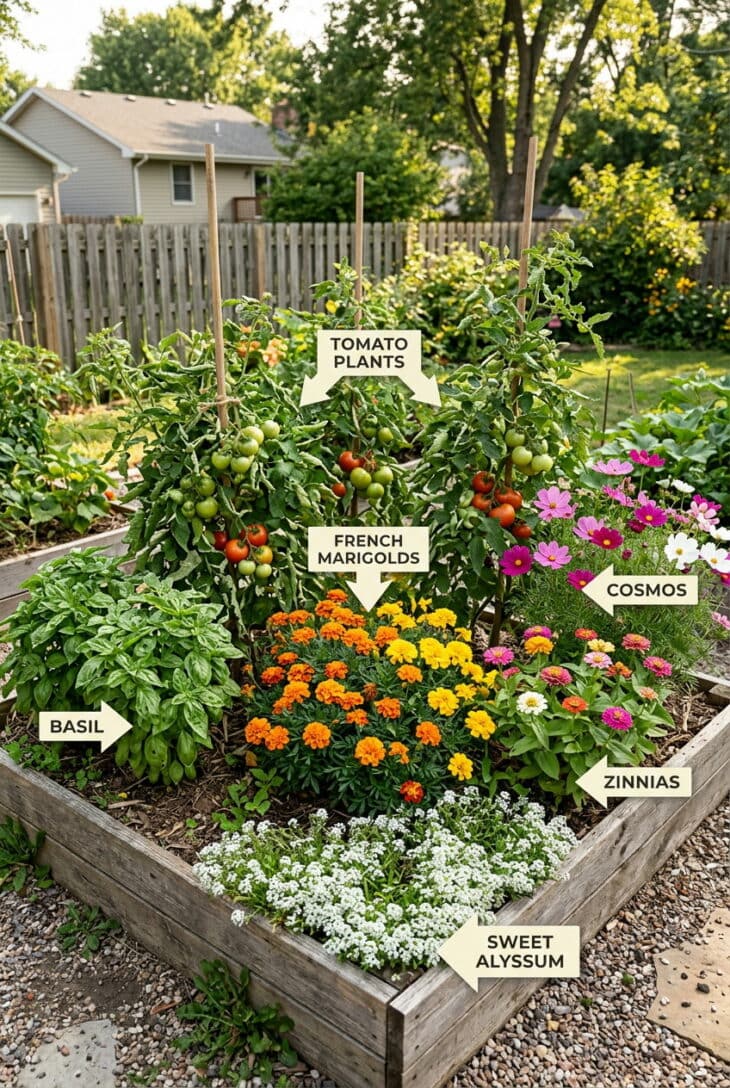
Best companion plants for marigolds
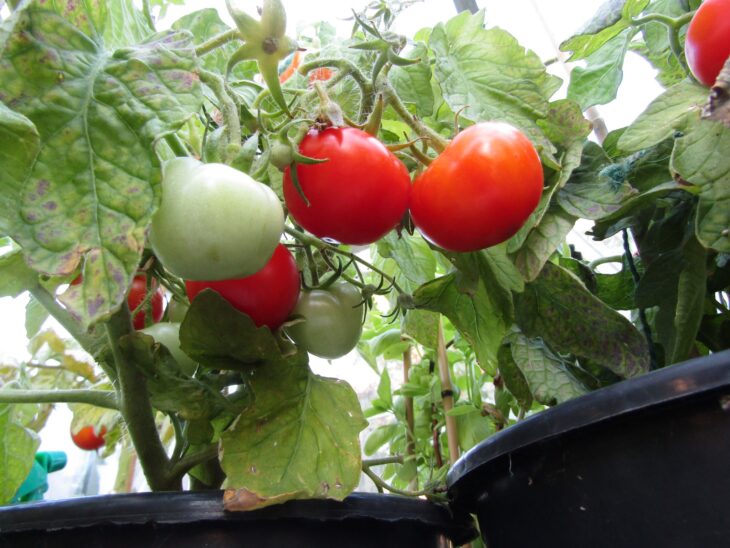
Tomatoes (Solanum lycopersicum)
What it helps with
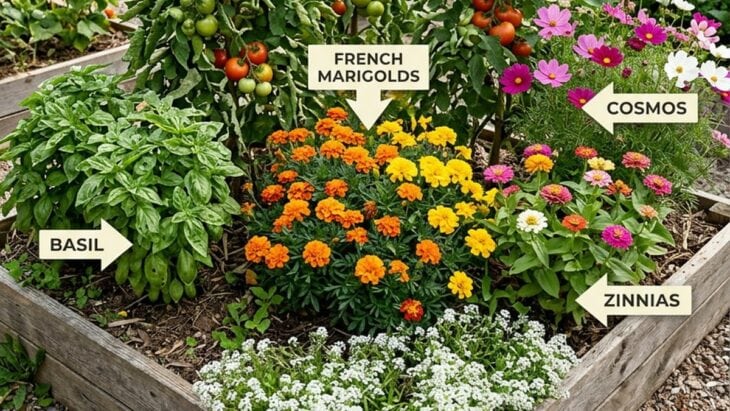
French marigolds slowed whitefly build-up on tomatoes in one glasshouse trial.
Why it works with marigolds
In a UK glasshouse trial (PLOS ONE), French marigolds grown among tomatoes from the start significantly reduced whitefly numbers. The researchers traced the effect to limonene, a scent compound in the flowers. Marigolds added after whiteflies had already built up did little.
Planting notes
Set French marigolds between and around tomato seedlings at transplanting, spacing the marigolds 8 to 10 inches (20 to 25 cm) apart. Both plants want full sun and warm weather, so they share a bed without timing conflicts. See our guide to companion plants for tomatoes for more pairings.
Possible drawback or limit
The trial was in a glasshouse and tested only French marigolds, not African types, so results outdoors may differ. Clemson also lists tomato spotted wilt virus among marigold diseases, so remove any plant that looks virus-infected.
Basil (Ocimum basilicum)
What it helps with
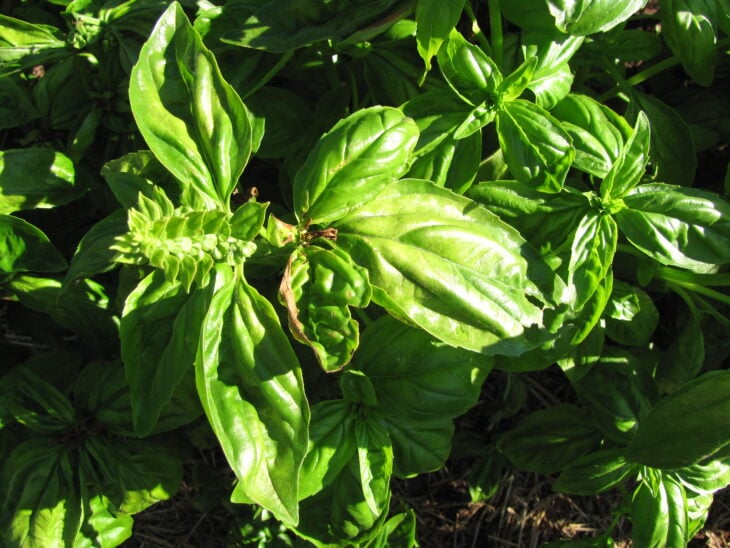
Basil and marigolds together reduced thrips on tomatoes in studies cited by Mississippi State Extension.
Why it works with marigolds
Mississippi State reports that basil and marigolds together reduced thrip populations in greenhouse and field tomatoes, though it does not name the studies. Gardeners also say the strong scents of both plants confuse pests, which is tradition rather than tested fact.
Planting notes
Basil grows 4 inches to 3 feet (10 cm to 90 cm) tall depending on the variety, so tuck it in the gaps between marigolds in full sun. Plant it after your last frost date, since both are tender warm-season annuals. Our companion plants for basil guide covers the herb from the other side.
Possible drawback or limit
Basil likes evenly moist soil, while marigolds do better when the soil dries a little between waterings. Water the basil at its own roots and leave the marigolds a little drier.
Cosmos (Cosmos bipinnatus)
What it helps with
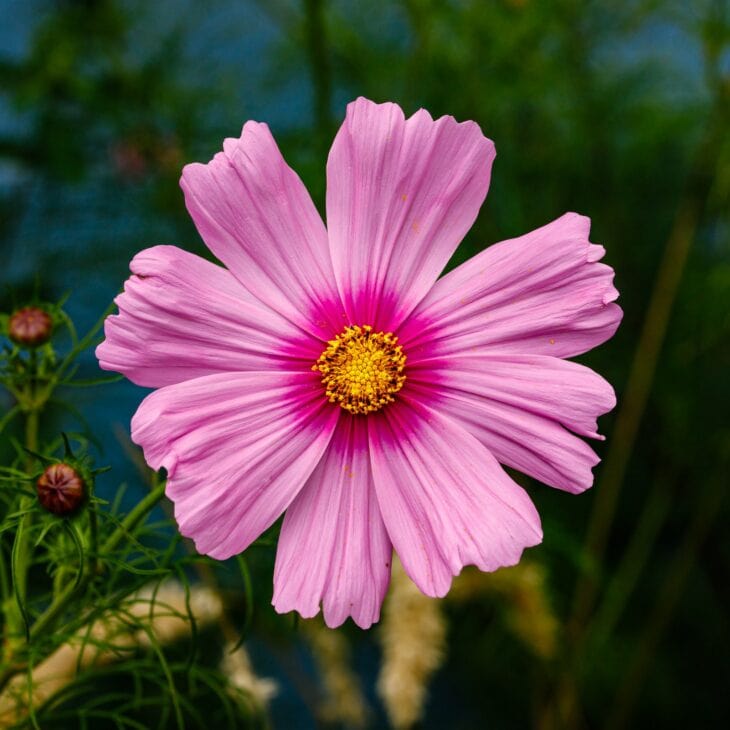
Cosmos draws hoverflies, which marigolds do poorly on their own.
Why it works with marigolds
In a field comparison of 16 flowering plants in Iran (Guilan study), French marigold got fewer hoverfly visits than fennel, chamomile, yarrow and lavender at one site, while cosmos, petunia and chamomile were among the most visited at the other. Hoverfly larvae eat aphids. The study counted visits and did not test whether aphids declined.
Planting notes
Cosmos grows 2 to 4 feet (60 to 120 cm) tall and 2 to 3 feet (60 to 90 cm) wide, so plant it behind or beside low marigolds. It thrives in poor, well-drained soil and handles drought once established.
Possible drawback or limit
NC State lists stem canker, powdery mildew and gray mold for cosmos, and tall plants may need staking. Cosmos also reseeds readily, so expect volunteers next year.
Zinnias (Zinnia elegans)
What it helps with
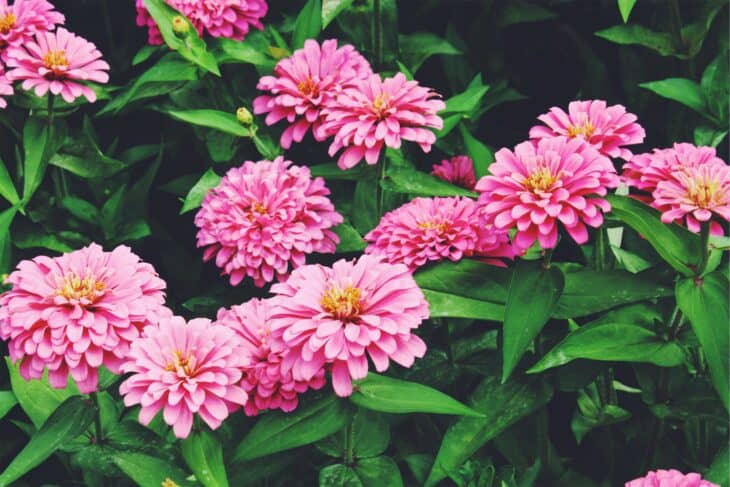
Zinnias share marigolds’ sun and drainage needs and add flowers that bees and butterflies visit.
Why it works with marigolds
NC State describes zinnias as full-sun plants for well-drained soil that is occasionally dry, which is the same recipe marigolds follow. They attract bees, butterflies and hummingbirds, adding a pollinator draw that does not depend on marigold flowers. No pest-control effect is documented, so grow them for the shared conditions and the blooms.
Planting notes
Zinnias range from 6 inches to 3 feet (15 to 90 cm) tall, so match the height to your marigolds. Allow 12 inches to 3 feet (30 to 90 cm) between zinnias, depending on the cultivar. Our pollinator garden ideas show more ways to build a bed around them.
Possible drawback or limit
Zinnias are prone to powdery mildew, leaf spots and root rots, especially in shade or damp conditions. Planting them too close to marigolds reduces airflow for both.
Sweet alyssum (Lobularia maritima)
What it helps with
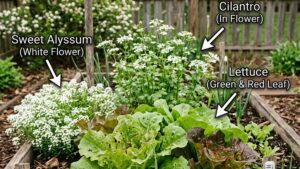
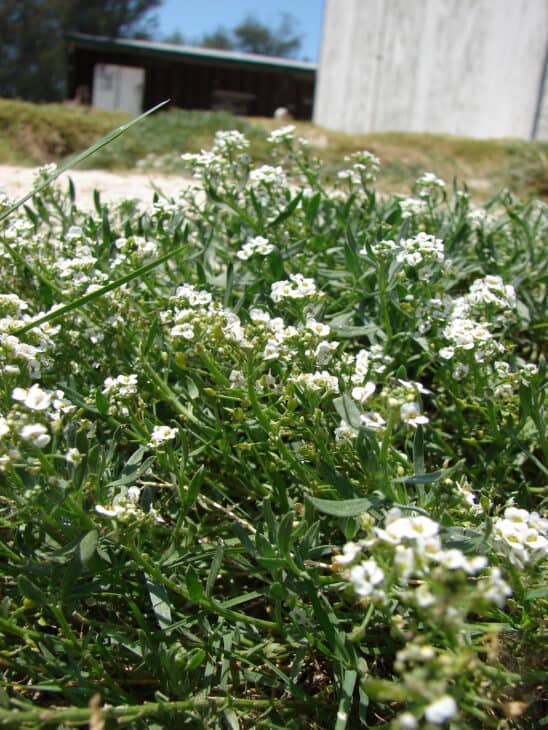
Sweet alyssum draws ladybugs and hoverflies, which eat aphids.
Why it works with marigolds
Iowa State says alyssum attracts ladybugs and hoverflies, and an adult ladybug can eat as many as 50 aphids a day. The page offers no trial data, so treat it as a sensible bet rather than a guarantee.
Planting notes
Alyssum stays 3 to 9 inches (7.5 to 23 cm) tall, which makes it a neat edging along the front of a marigold bed. It blooms from spring through fall in full sun to partial shade.
Possible drawback or limit
Alyssum prefers moist but well-drained soil, and newer hybrids are less drought tolerant than older cultivars. In very hot summers, bloom can thin out.
Nasturtiums (Tropaeolum majus)
What it helps with
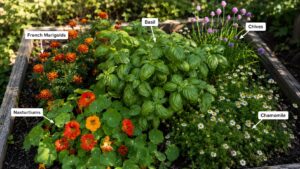
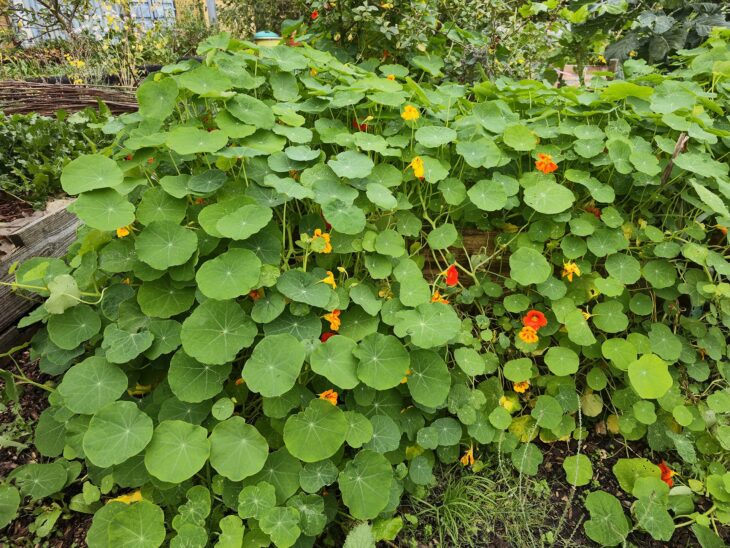
Nasturtiums thrive in the same lean, sunny conditions and fill the ground around marigolds.
Why it works with marigolds
NC State says nasturtiums grow best in poor to average, well-drained soil in full sun, and that fertilizer boosts foliage at the cost of flowers. Both plants are drought tolerant once established, so they can share a bed without rich feeding. Pest claims are mixed: Illinois Extension quotes Rutgers saying nasturtiums are not a pest deterrent.
Planting notes
Choose dwarf bushy types, about 12 inches (30 cm) tall and 2 feet (60 cm) wide, for a marigold bed. Climbing types reach 10 feet (3 m) and need a trellis.
Possible drawback or limit
Aphids and whiteflies feed on nasturtiums themselves, and the plant self-seeds. Give it afternoon shade in hot summers.
Plants to avoid with marigolds
No documented harm between marigolds and other garden plants turned up in the sources for this article. The plants below are poor neighbors because their conditions clash.
Impatiens (Impatiens walleriana) are shade and moisture plants, preferring dappled sun to partial shade. Marigolds need at least 6 hours of sun, and Clemson lists impatiens necrotic spot virus among marigold diseases.
Hostas (Hosta) grow in dappled sun to deep shade, so the two never want the same spot. Slugs are a listed marigold pest, and marigolds do poorly in shade and damp.
Sunflowers (Helianthus annuus) can reach 10 feet (3 m), and their shade works against low marigolds. Penn State notes marigolds are prone to powdery mildew in wet, shaded conditions, so keep tall plants on the north side of the bed.