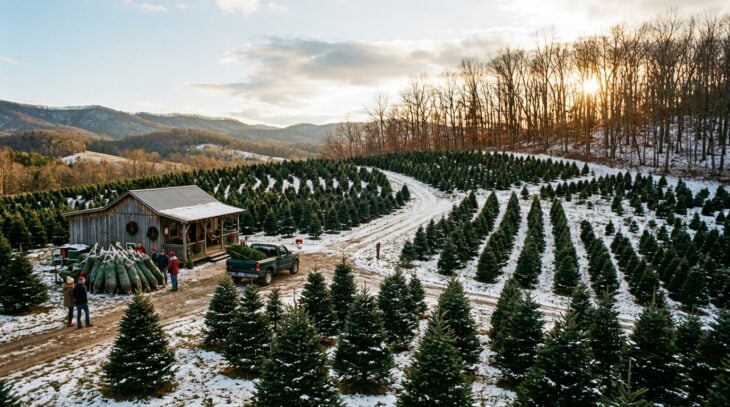
Balsam fir and Fraser fir give you the classic Christmas tree smell. The Farmers’ Almanac calls balsam fir the most fragrant, and extension sources describe a strong, spicy, resinous scent. Fraser fir was the best liked in the one peer-reviewed consumer panel we found that compared several firs.
Contents
- How We Ranked These Trees
- 1. Balsam Fir (Abies balsamea): The Benchmark Scent
- 2. Fraser Fir (Abies fraseri): The Crowd Favorite
- 3. Canaan Fir (Abies balsamea var. phanerolepis): A Balsam Variety That Looks Like Fraser
- 4. Grand Fir (Abies grandis): Rich Balsam Scent From the West
- 5. Douglas Fir (Pseudotsuga menziesii): Sweet and Citrusy, Not a True Fir
- 6. White Fir (Abies concolor): The Strongest and Most Divisive
- 7. Arizona Cypress (Cupressus arizonica): Citrus Scent Where Firs Struggle
- 8. Scotch Pine (Pinus sylvestris): Clean Pine Scent That Lasts
- Popular Christmas Trees That Do Not Earn a Place
- Strong Scent Is Not the Same as a Good Scent
- What Makes a Christmas Tree Smell
- How to Keep the Scent Going
- Allergies and Pets Around a Fragrant Tree
- Frequently Asked Questions
Grand fir (rich balsam scent), Douglas fir and white fir (citrus) come next. Noble fir, which is often pitched as fragrant, ranked last in that panel (study).
The smell comes from terpenes in the tree’s resin, and warmth releases them, so how you choose and keep the tree matters almost as much as the species.
How We Ranked These Trees
Every tree here is sold as a cut Christmas tree in the US and has a documented scent from an extension service, a university study or a forestry specialist. We ranked them by how strong and how pleasant that scent is reported to be, and we noted needle retention, because a tree that sheds early is not worth the money.
One caveat shapes the ranking. The only peer-reviewed consumer panel we found tested five firs (Fraser, noble, Nordmann, Trojan and white) and did not include balsam, grand, Douglas or Canaan fir. For those, the rank rests on how consistently extension and forestry sources describe the scent, so treat it as informed judgment, not a measurement.
We left out several popular trees on purpose, and the section after the list explains why. If you are identifying a tree by needles and shape rather than by smell, our Christmas tree lookalike guide covers that.
| Tree | Botanical name | Zones if planted | Landscape size | Light | Scent |
|---|---|---|---|---|---|
| Balsam fir | Abies balsamea | 3–7 | 40–70 ft (12–21 m) | Full sun to part shade | Strong, spicy-resinous |
| Fraser fir | Abies fraseri | 4–7 | 30–55 ft (9–17 m) | Full sun to part shade | Sweet, clean, classic |
| Canaan fir | Abies balsamea var. phanerolepis | 3–6 | 40–55 ft (12–17 m) | Full sun to part shade | Highly fragrant |
| Grand fir | Abies grandis | 4–6 | 130–230 ft (40–70 m) | Full sun to part shade | Rich balsam |
| Douglas fir | Pseudotsuga menziesii | 4–6 | 40–80 ft (12–24.5 m) | Full sun | Sweet, citrusy |
| White fir | Abies concolor | 3–7 | 30–70 ft (9–21 m) | Full sun to part shade | Strong citrus, divisive |
| Arizona cypress | Cupressus arizonica | 7–11 | 40–60 ft (12–18 m) | Full sun | Citrus-like |
| Scotch pine | Pinus sylvestris | 2–7 | 30–60 ft (9–18 m) | Full sun | Clean pine |
Zones and sizes describe a living tree planted in the ground. Most people buy these as cut trees, but the sizes are worth knowing before anyone plants a live one.
1. Balsam Fir (Abies balsamea): The Benchmark Scent

Zones: 3–7 · Size: 40 to 70 feet (12 to 21 m) tall, 15 to 25 feet (4.5 to 7.5 m) wide · Light: full sun to part shade · Soil: moist, well-drained, acidic
Balsam fir is named for the resin in its bark and cones, and it carries the balsam scent many people associate with the season. NC State describes a strong balsam fragrance when the needles are crushed, and Penn State calls it spicy and resinous.
The shape is narrower than most evergreens, which suits tight spaces, but the branches are soft and flexible and may not hold heavy ornaments (Cornell).
Caveat: extension sources rate its needle retention as good, yet the Farmers’ Almanac says it dries out quickly, so keep the stand full. As a landscape tree it is not suited to Southeast heat and humidity.
2. Fraser Fir (Abies fraseri): The Crowd Favorite

Zones: 4–7 · Size: 30 to 55 feet (9 to 17 m) tall, 10 to 25 feet (3 to 7.5 m) wide · Light: full sun to part shade · Soil: moist, well-drained, acidic loam
Fraser fir has the strongest evidence behind it. It scored 7.4 on a 9-point liking scale, ahead of every other fir tested (5.7 to 6.6), and people described it as sweet, clean, nutmeg-like and “Christmassy.”
NC State lists a pleasing aroma and excellent needle retention, and its strong branches carry heavy ornaments. It is also milder than white fir in the same study (58 versus 71 on a 100-point intensity scale), so liked does not mean loudest.
Caveat: the panel was 100 people in one Florida city, so it is a strong signal and not a verdict. Balsam fir was not in it, so we cannot say which of the two wins.
3. Canaan Fir (Abies balsamea var. phanerolepis): A Balsam Variety That Looks Like Fraser
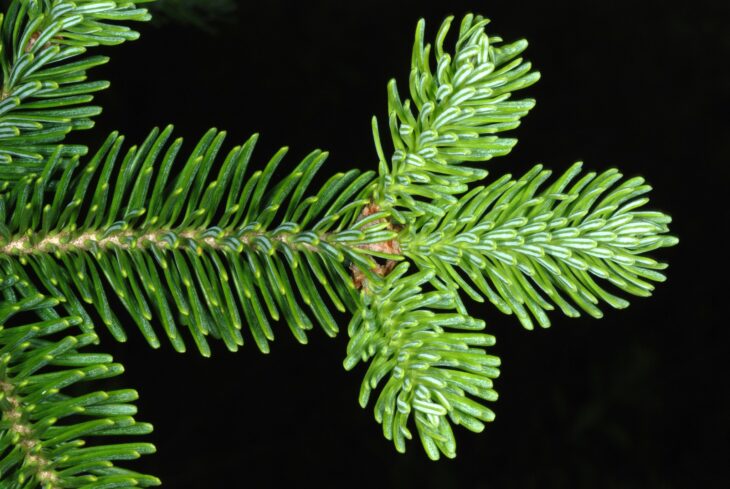
Zones: 3–6 · Size: 40 to 55 feet (12 to 17 m) tall, 20 to 25 feet (6 to 7.5 m) wide · Light: full sun to part shade · Soil: acidic and moist; tolerates wet soil better than other firs
Canaan fir is a variety of balsam fir, and NC State describes its needles as highly fragrant. Cornell calls it very similar to Fraser fir, and growers like its high resistance to root rot.
Caveat: we found no study that compared its scent with Fraser or balsam fir. Claims that it smells stronger than Fraser come from sellers, not research.
4. Grand Fir (Abies grandis): Rich Balsam Scent From the West
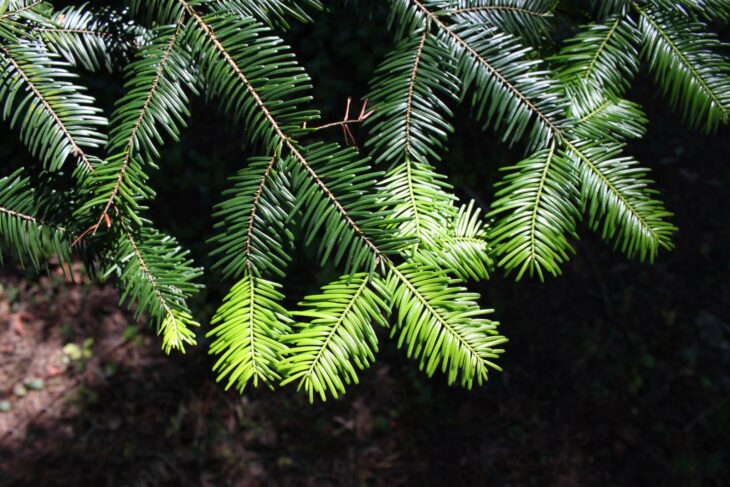
Zones: 4–6 · Size: 130 to 230 feet (40 to 70 m) tall, 20 to 26 feet (6 to 8 m) wide · Light: full sun to part shade · Soil: clay, loam or sand with good drainage
A Washington State University forestry specialist says grand fir “smells like Christmas,” with a rich balsam scent many people associate with the season (WSU). The National Christmas Tree Association calls it known for strong fragrance.
Caveat: it is a minor Christmas tree species in Washington and Oregon and a major one in inland Idaho and Montana, so it is hard to find fresh elsewhere. The coastal variety is one of the tallest firs in the world, so a living one does not belong in a yard.
5. Douglas Fir (Pseudotsuga menziesii): Sweet and Citrusy, Not a True Fir

Zones: 4–6 · Size: 40 to 80 feet (12 to 24.5 m) tall and 12 to 20 feet (3.5 to 6 m) wide when cultivated · Light: full sun · Soil: moist, well-drained, acidic to neutral
Penn State describes a sweet citrusy scent and good needle retention, and NC State notes the needles are fragrant when bruised or crushed. The needles are soft and shiny green, which makes it easy to handle.
Caveat: the WSU specialist prefers true firs over Douglas fir for scent and longevity, so expect a milder smell than balsam or grand fir. Cornell advises buying it freshly cut and keeping it watered.
6. White Fir (Abies concolor): The Strongest and Most Divisive

Zones: 3–7 · Size: 30 to 70 feet (9 to 21 m) tall, 15 to 30 feet (4.5 to 9 m) wide · Light: full sun to part shade · Soil: moist, well-drained; handles heat and drought better than most firs
White fir had the highest aroma intensity in the panel (71 out of 100) and was most often called citrusy or fruity. Cornell says some liken the crushed needles to grapefruit, and Oregon State describes a pleasant citrus smell. NC State rates its needle retention as good.
Caveat: its liking score (6.3) trailed Fraser’s (7.4), and a few panelists described it as “disinfectant” or “sweaty socks.” Cornell also notes it can occasionally provoke allergies, so crush a needle and sniff before you buy.
7. Arizona Cypress (Cupressus arizonica): Citrus Scent Where Firs Struggle
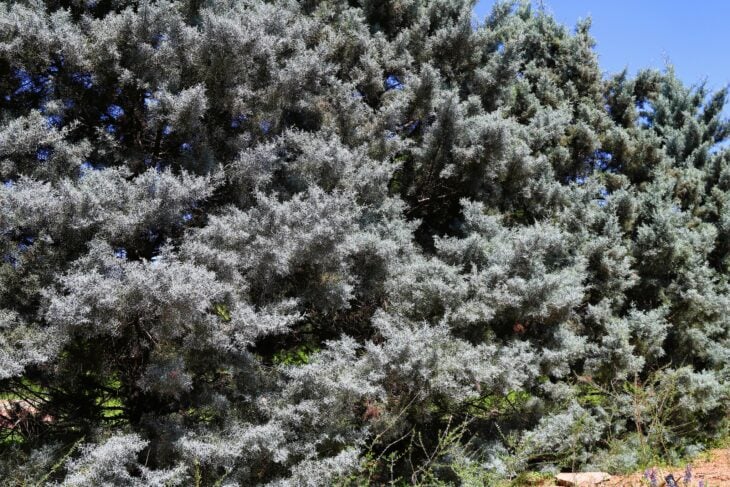
Zones: 7–11 · Size: 40 to 60 feet (12 to 18 m) tall, 15 to 20 feet (4.5 to 6 m) wide · Light: full sun · Soil: well-drained; drought and heat tolerant
NC State reports that the ‘Carolina Sapphire’ Arizona cypress has a distinct citrus-like fragrance when displayed, with silvery-blue to teal foliage. It tolerates summer heat, which Fraser and balsam fir do not, so it suits warm regions in Zones 7 to 11.
Caveat: the fragrance claim is for that cultivar, not every Arizona cypress. NC State also notes the branch structure does not readily accommodate ornaments inside the tree, so plan on a light, outer-branch look.
8. Scotch Pine (Pinus sylvestris): Clean Pine Scent That Lasts
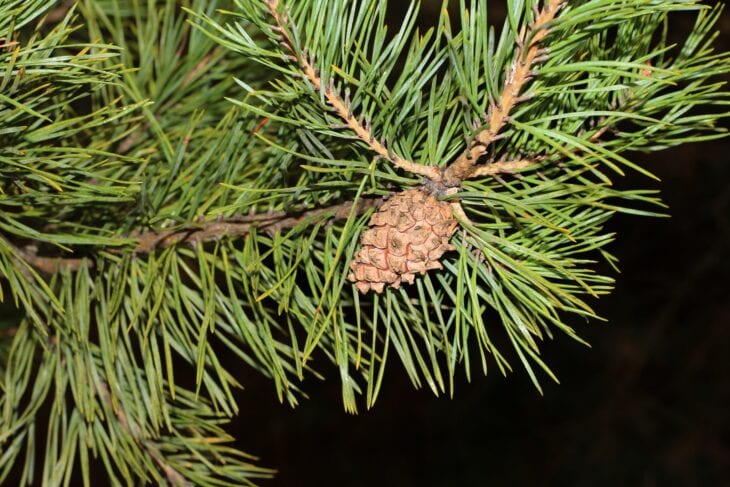
Zones: 2–7 · Size: 30 to 60 feet (9 to 18 m) tall, 30 to 40 feet (9 to 12 m) wide · Light: full sun · Soil: well-drained, acidic; tolerates poor soil
Penn State describes a clean pine fragrance and a good reputation for needle retention, and Purdue says it does not drop needles easily. It is the pick if you want a pine smell that holds up through a long season.
Caveat: the scent is pine-forward rather than the sweet, resinous fir smell, and the needles are sharp enough that the Farmers’ Almanac suggests gloves.
Popular Christmas Trees That Do Not Earn a Place
Several trees show up on every “fragrant” list and do not pass the test. Here is what the evidence says about each.
- Noble fir (Abies procera): it ranked last in the consumer panel (5.7 of 9), where some panelists described it as “astringent,” “herbal” or “dirt,” and the WSU specialist says its fragrance is not as strong as grand fir. It has excellent needle retention (Oregon State) and sturdy branches, so buy it for looks, not scent.
- Nordmann fir (Abies nordmanniana): it landed in the middle of the panel (6.6), with some calling it “woodsy and piney” and others “plastic.” Its needle retention is high overall, with some poor individual trees (Oregon State).
- Colorado blue spruce (Picea pungens): NC State says it gives off only a resinous odor when crushed, and the needles are very sharp.
- Eastern white pine (Pinus strobus): sources disagree. NC State says very little aroma, while Cornell and Penn State describe a pine-like scent.
- Leyland cypress and eastern redcedar: both dry out quickly after cutting (NC State), and NC State lists no aroma for either. For the landscape side of Leyland, see the Leyland pros and cons.
Strong Scent Is Not the Same as a Good Scent
It is easy to assume the most intense tree smells best. The panel says otherwise: white fir was the most intense, yet Fraser fir was liked far more.
Preference is personal, and so is the tree. An NC State researcher notes that even different trees within one species can have different aroma profiles (NC State).
So rub a needle between your fingers before you buy, and trust your nose over a ranking.
What Makes a Christmas Tree Smell
Trees make oleoresin, a sap-like substance that defends them against pests. Indoors, warmth makes the terpenes in it evaporate (NC State).
Pinene gives the fresh woodsy note, limonene the citrus, myrcene a thyme-like note, camphene camphor and phellandrene mint. That blend differs by species, which is why a Fraser, a white fir and a Douglas fir smell different.
How to Keep the Scent Going
Start with freshness. Needles should be flexible and stay attached when you tug them, and if more than 12 hours have passed since the tree was cut, saw off a disk about 1/4 inch (6 mm) thick from the base.
Give it water: 1 quart (0.95 L) per inch (2.5 cm) of trunk diameter, and at least 1 gallon (3.8 L) for most trees. A cut tree drinks a lot in the first week, so refill daily (Penn State).
There is a trade-off. Warmth is what releases the scent, and heat is also what dries a tree out, so keep it away from fireplaces, heaters, vents and direct sun. A cooler room slows drying and lowers water use.
Allergies and Pets Around a Fragrant Tree
The terpenes that make a tree smell good can sometimes cause an allergic reaction when touched or smelled, and cut trees can carry about 50 types of mold (UCLA Health). Shaking the tree outside, rinsing it with a hose and vacuuming it can help.
For pets, the ASPCA warns that tree water is a breeding ground for bacteria that could cause nausea, diarrhea or an upset stomach, and says to anchor the tree so it cannot tip (ASPCA). Covering the stand keeps pets away from the water.
Frequently Asked Questions
Which Christmas tree has the nicest smell?
Fraser fir was the most liked tree in the consumer panel, described as sweet, clean and classic. Balsam fir is the traditional favorite, with a strong, spicy-resinous scent, but it was not part of that study.
Which Christmas tree is the most fragrant?
The Farmers’ Almanac calls balsam fir the most fragrant of the popular varieties, and extension sources describe its scent as strong. Grand fir is also reported to have a strong fragrance, and in the panel white fir had the highest measured intensity.
How do I make my house smell like a real Christmas tree?
Buy a fragrant species such as balsam, Fraser or grand fir, make a fresh cut if the tree has sat for 12 hours, and keep the stand full. Place it in a cool room away from heat sources, because warmth releases the scent but also dries the tree.
What is the best Christmas tree scent to buy?
It depends on the smell you want. Fraser fir is sweet and clean, balsam fir is spicy and resinous, white fir, Douglas fir and Arizona cypress lean citrus, and Scotch pine smells like clean pine.
Which Christmas trees smell like citrus or oranges?
Cornell says some liken white fir’s crushed needles to grapefruit, Douglas fir is described as sweet and citrusy, and the ‘Carolina Sapphire’ Arizona cypress has a citrus-like fragrance. We found no source describing any Christmas tree as smelling specifically of oranges, though limonene is one of the citrus-smelling terpenes in conifer resin.
Which fragrant Christmas tree suits a small room?
Balsam fir is narrower than most evergreens, and Cornell recommends it for tight spaces. Its branches are soft, so keep ornaments light.