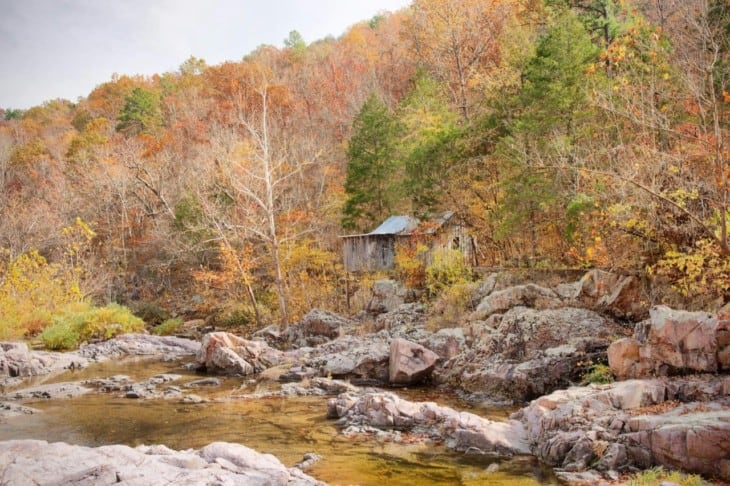
About a third of Missouri is forest, and most of it is oak-hickory forest: white oak, post oak, black oak and hickories cover the Ozark hills in the south, mixed with shortleaf pine, Missouri’s only native pine. Along the big rivers, bottomland forests of cottonwood, sycamore, silver maple and pin oak take over, and bald cypress and sweetgum grow in the swamps of the Bootheel. Eastern red cedar is the tree you’ll see most along roads and in old pastures, and the flowering dogwood, Missouri’s state tree, lights up the forest edges every April.
Contents
- Oaks, Hickories and Other Upland Trees
- White Oak (Quercus alba)
- Post Oak (Quercus stellata)
- Black Oak (Quercus velutina)
- Northern Red Oak (Quercus rubra)
- Bur Oak (Quercus macrocarpa)
- Shagbark Hickory (Carya ovata)
- Black Walnut (Juglans nigra)
- Shortleaf Pine (Pinus echinata)
- Eastern Red Cedar (Juniperus virginiana)
- Sugar Maple (Acer saccharum)
- Black Cherry (Prunus serotina)
- Black Gum (Blackgum, Black Tupelo) (Nyssa sylvatica)
- White Ash (Fraxinus americana)
- Bottomland and Riverside Trees
- Pin Oak (Quercus palustris)
- Eastern Cottonwood (Populus deltoides)
- American Sycamore (Platanus occidentalis)
- Silver Maple (Acer saccharinum)
- Boxelder (Acer negundo)
- Black Willow (Salix nigra)
- River Birch (Betula nigra)
- American Elm (Ulmus americana)
- Hackberry (Celtis occidentalis)
- Sweetgum (Liquidambar styraciflua)
- Bald Cypress (Taxodium distichum)
- Honey Locust (Gleditsia triacanthos)
- Small and Understory Trees
- Three Invasive Trees Not to Plant
- Choosing a Tree for a Missouri Yard
This guide covers 31 common native trees, grouped by where they grow, and three invasive trees that you shouldn’t plant.
- Oaks, Hickories and Other Upland Trees
- Bottomland and Riverside Trees
- Small and Understory Trees
- Three Invasive Trees Not to Plant
- Choosing a Tree for a Missouri Yard
| Tree | Botanical name | Native to MO | Where you’ll see it |
|---|---|---|---|
| White Oak | Quercus alba | Yes | Upland forests statewide, especially the Ozarks |
| Post Oak | Quercus stellata | Yes | Dry, rocky ridges and glades |
| Black Oak | Quercus velutina | Yes | Dry upland forests, especially the Ozarks |
| Northern Red Oak | Quercus rubra | Yes | Moist slopes and ravines; yards and parks |
| Bur Oak | Quercus macrocarpa | Yes | Northern Missouri, river valleys, old prairies |
| Shagbark Hickory | Carya ovata | Yes | Upland and bottomland forests statewide |
| Black Walnut | Juglans nigra | Yes | Bottomlands, fence rows and farm woodlots statewide |
| Shortleaf Pine | Pinus echinata | Yes | Ozark ridges in southern Missouri |
| Eastern Red Cedar | Juniperus virginiana | Yes | Old fields, pastures, roadsides and glades statewide |
| Sugar Maple | Acer saccharum | Yes | Moist, north-facing slopes and ravines; yards |
| Black Cherry | Prunus serotina | Yes | Woodland edges, fence rows, old fields |
| Black Gum (Blackgum, Black Tupelo) | Nyssa sylvatica | Yes | Upland and lowland forests, mostly in the south |
| White Ash | Fraxinus americana | Yes | Upland forests; formerly streets |
| Pin Oak | Quercus palustris | Yes | Wet bottomlands in the north and east; yards and streets |
| Eastern Cottonwood | Populus deltoides | Yes | Riverbanks, sandbars and floodplains statewide |
| American Sycamore | Platanus occidentalis | Yes | Stream and river banks statewide |
| Silver Maple | Acer saccharinum | Yes | Riverbanks and floodplains; older yards and streets |
| Boxelder | Acer negundo | Yes | Riverbanks, bottomlands, disturbed ground statewide |
| Black Willow | Salix nigra | Yes | Riverbanks, sandbars, pond and lake edges |
| River Birch | Betula nigra | Yes | Stream banks; very popular in yards |
| American Elm | Ulmus americana | Yes | Bottomlands, fence rows, towns |
| Hackberry | Celtis occidentalis | Yes | Bottomlands, fence rows, towns statewide |
| Sweetgum | Liquidambar styraciflua | Yes | Southeast Missouri and the Bootheel; planted statewide |
| Bald Cypress | Taxodium distichum | Yes | Swamps of the Bootheel; planted statewide |
| Honey Locust | Gleditsia triacanthos | Yes | Bottomlands, pastures, old fields; streets (thornless forms) |
| Flowering Dogwood | Cornus florida | Yes | Forest edges and understory, especially the Ozarks; yards |
| Eastern Redbud | Cercis canadensis | Yes | Woodland edges, roadsides, bluffs; yards statewide |
| Common Persimmon | Diospyros virginiana | Yes | Old fields, fence rows, woodland edges |
| Pawpaw | Asimina triloba | Yes | Shady, moist bottomlands and ravines |
| Sassafras | Sassafras albidum | Yes | Old fields, woodland edges, fence rows |
| Red Mulberry | Morus rubra | Yes | Bottomlands, woodland edges, fence rows |
| Callery Pear (Bradford Pear) | Pyrus calleryana | No (invasive, from China) | Streets, subdivisions, highway edges, old fields |
| Russian Olive | Elaeagnus angustifolia | No (invasive, from Asia) | Roadsides, pastures, stream banks |
| Common Buckthorn | Rhamnus cathartica | No (invasive, from Europe) | Woodland understories, fence rows, especially in the north |
Oaks, Hickories and Other Upland Trees
These trees make up the forests of the Ozarks and the wooded hills north of the Missouri River.
White Oak (Quercus alba)

White oak is one of the most abundant trees in Missouri’s forests and one of its most valuable. It grows 60 to 100 feet tall, with light gray, flaky bark and leaves that have 7 to 9 rounded lobes. Its sweet acorns are a top food for deer, turkeys and squirrels. White oak wood is watertight, which is why it is the wood of choice for bourbon and wine barrels, and several Missouri cooperages make barrels from Ozark white oak.
Post Oak (Quercus stellata)

Post oak grows on the driest, poorest sites in the Ozarks: rocky ridges, glade edges and old savannas. It is a slow-growing, often gnarled tree, 40 to 60 feet tall. Its leathery leaves are easy to recognize: two large, square side lobes make them look like a cross. The wood is dense and rot-resistant and was widely used for fence posts and railroad ties, which gave the tree its name.
Black Oak (Quercus velutina)

Black oak is a common tree of dry ridges and slopes, 50 to 80 feet tall, with dark, blocky bark. Its shiny leaves have 5 to 7 bristle-tipped lobes. The quickest ID is to scratch through the bark on a twig or small branch: the inner bark is bright yellow-orange, and it was once used to make a yellow dye. Black oak is a member of the red oak group, so its acorns take two years to ripen.
Northern Red Oak (Quercus rubra)

Northern red oak grows on moister slopes and in ravines than black oak. It reaches 60 to 80 feet, with leaves that have 7 to 11 pointed, bristle-tipped lobes, and bark with flat-topped ridges that look like ski tracks running down the trunk. It grows fast for an oak, handles city conditions and turns russet to red in fall, so it is also a popular shade tree.
Bur Oak (Quercus macrocarpa)

Bur oak has the largest acorns of any North American oak, up to 2 inches long, half covered by a cap with a shaggy, fringed edge. It is a massive, wide-spreading tree, 70 to 90 feet tall, with thick, corky bark that let it survive the prairie fires of northern Missouri. The most famous tree in the state is a bur oak: the “Big Tree” near McBaine, in Boone County, which is estimated to be more than 300 years old.
Shagbark Hickory (Carya ovata)

Shagbark hickory is easy to spot by its bark, which peels off in long, curling strips, as if the trunk needs a shave. It grows 60 to 80 feet tall, with leaves of five leaflets that turn golden yellow in fall. Its sweet nuts are eaten by people and wildlife. The wood is very hard and shock-resistant, and it is used for tool handles and for smoking meat. Missouri has several other native hickories, including mockernut, bitternut and black hickory.
Black Walnut (Juglans nigra)

Missouri produces more wild black walnuts than any other state, and the world’s largest black walnut processor is in Stockton, in southwest Missouri. The tree grows 70 to 90 feet tall, with long leaves of 15 to 23 leaflets and round green husks that stain your hands black. Its dark wood is one of the most valuable hardwoods in North America. The roots release juglone, which stunts tomatoes, peppers and many other garden plants growing near it.
Shortleaf Pine (Pinus echinata)
Read our guide to Shortleaf Pine
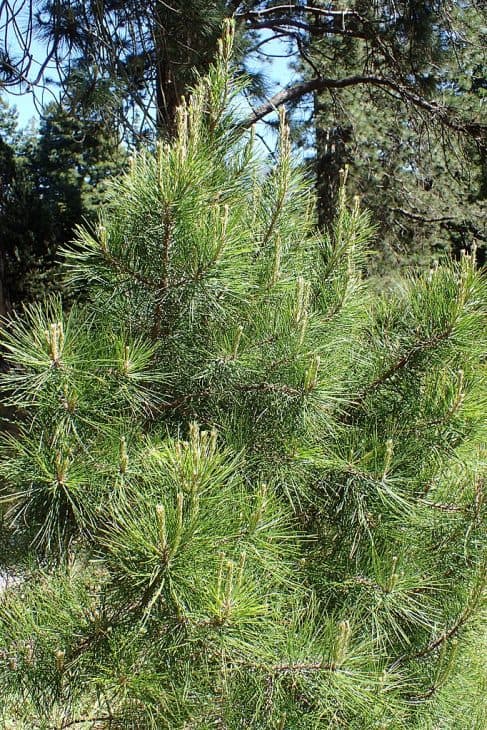
Shortleaf pine is Missouri’s only native pine. Before the logging boom of the late 1800s and early 1900s, it covered millions of acres of the Ozarks, and big restoration projects are now bringing it back. It grows 50 to 100 feet tall, with needles 3 to 5 inches long in bundles of two or three, and small cones with a prickle on each scale. Its thick, plated bark protects it from fire, and young trees can resprout from the base after a fire. Eastern white pine, often seen in Missouri yards and windbreaks, is planted, not native.
Eastern Red Cedar (Juniperus virginiana)

Eastern red cedar is the dense, cone-shaped evergreen that fills Missouri’s abandoned pastures, fence rows and roadsides. It grows 30 to 50 feet tall, with tiny scale-like leaves, shreddy reddish bark and blue, berry-like cones that feed cedar waxwings and many other birds. It is a juniper, not a true cedar. Without the wildfires that once kept it in check, it has spread into prairies and glades, and it is also a common source of fall and winter allergies.
Sugar Maple (Acer saccharum)
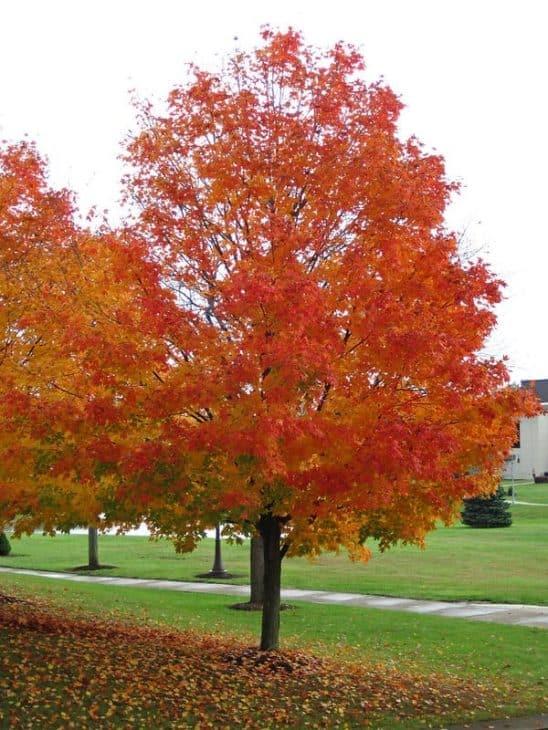
In Missouri, sugar maple grows wild on cool, moist, north-facing slopes, bluffs and ravines, especially in the eastern Ozarks and along the big rivers. It grows 60 to 80 feet tall, with five-lobed leaves that turn yellow, orange and scarlet in fall. Its sap can be boiled into maple syrup, though Missouri’s warm winters give a shorter sugaring season than in the Northeast. It is also one of the most popular shade trees planted in the state.
Black Cherry (Prunus serotina)

Black cherry is the largest native cherry, growing 50 to 80 feet tall, with dark bark that breaks into small, curved plates, like burnt potato chips. It has hanging clusters of small white flowers in spring and small, dark purple cherries in late summer that birds love. The wilted leaves, twigs and seeds contain compounds that release cyanide, so cattle and horses can be poisoned by wilted branches after storms.
Black Gum (Blackgum, Black Tupelo) (Nyssa sylvatica)

Black gum is a medium-sized tree, 40 to 60 feet tall, with glossy, oval leaves that turn one of the brightest scarlet colors of any Missouri tree in fall, often as early as September. It has small, blue-black fruits that are eaten by birds and bears, and its bark breaks into small blocks like alligator skin. Its wood is so twisted and interlocked that it is almost impossible to split.
White Ash (Fraxinus americana)

White ash is a tall forest tree, 50 to 80 feet, with leaves of 5 to 9 leaflets that turn yellow to purple in fall, and bark with diamond-shaped ridges. Missouri also has green ash, which grows in bottomlands, and the rarer blue ash of rocky limestone sites. The emerald ash borer, first found in Missouri in 2008, kills nearly every untreated ash tree within a few years. Don’t plant new ash trees, and have large ash trees near your home treated or removed.
Bottomland and Riverside Trees
These trees grow along Missouri’s rivers and streams, in the floodplains of the Missouri and Mississippi and in the swamps of the Bootheel.
Pin Oak (Quercus palustris)

Pin oak grows wild on poorly drained bottomlands and flats, mostly in northern and eastern Missouri, and it is also one of the most planted yard and street trees in the state. It reaches 50 to 70 feet, with a pyramid shape: the upper branches point up, the middle ones straight out and the lower ones droop down. Its leaves are deeply cut into 5 to 7 bristle-tipped lobes. In the alkaline soils of much of Missouri, planted pin oaks often turn yellow from iron chlorosis.
Eastern Cottonwood (Populus deltoides)
Read our guide to Eastern Cottonwood

Eastern cottonwood is one of the fastest-growing trees in North America and one of the largest in Missouri, often reaching 80 to 100 feet. It has triangular, coarsely toothed leaves on flattened stalks that make them rattle in the wind, and thick, deeply furrowed gray bark. In late spring, female trees release huge amounts of cottony seeds that drift like snow along the rivers.
American Sycamore (Platanus occidentalis)

The sycamore is easy to spot along almost any Missouri stream: its upper bark peels off in patches, leaving the branches smooth and bright white. It grows 70 to 100 feet tall, with large, maple-like leaves up to 10 inches wide, and round seed balls that hang on through winter. It has the thickest trunk of any native hardwood in the eastern US, and old trees are often hollow.
Silver Maple (Acer saccharinum)

Silver maple grows wild on riverbanks and floodplains and was planted in countless yards and along streets in St. Louis and Kansas City because it grows very fast. It reaches 50 to 80 feet. Its leaves are deeply cut into five lobes, with silvery-white undersides that flash in the wind. The downsides: its wood is weak and breaks in ice storms, and its shallow roots lift sidewalks and invade sewer pipes.
Boxelder (Acer negundo)
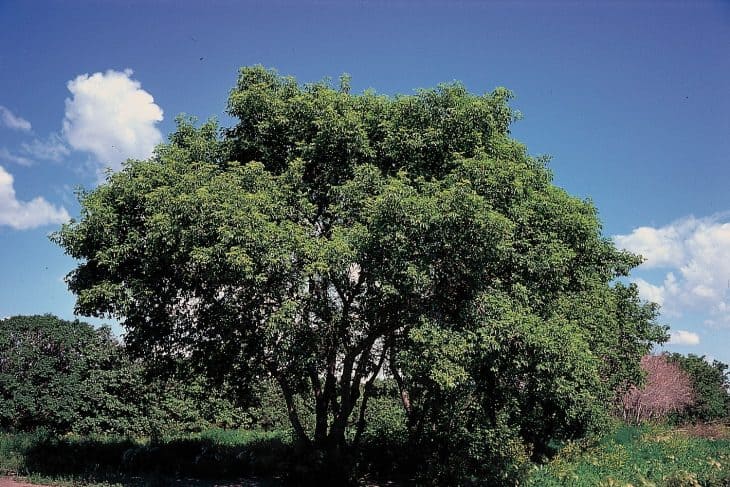
Boxelder is a maple, but it doesn’t look like one: its leaves are divided into three to five leaflets, like poison ivy or ash. It is a fast-growing, often scraggly tree, 30 to 50 feet tall, with green twigs, and it grows on riverbanks, in vacant lots and along fence rows across Missouri. Female trees carry hanging clusters of winged seeds that attract boxelder bugs, the red-and-black insects that cluster on sunny walls in fall.
Black Willow (Salix nigra)

Black willow is Missouri’s largest native willow, usually 30 to 60 feet tall, often with several leaning trunks. It has long, narrow, finely toothed leaves and dark, deeply furrowed bark. It grows right at the water’s edge, and its roots help hold riverbanks together. In spring it has fuzzy yellow catkins that are an early source of pollen for bees. The weeping willow planted around ponds is a different, Asian species.
River Birch (Betula nigra)
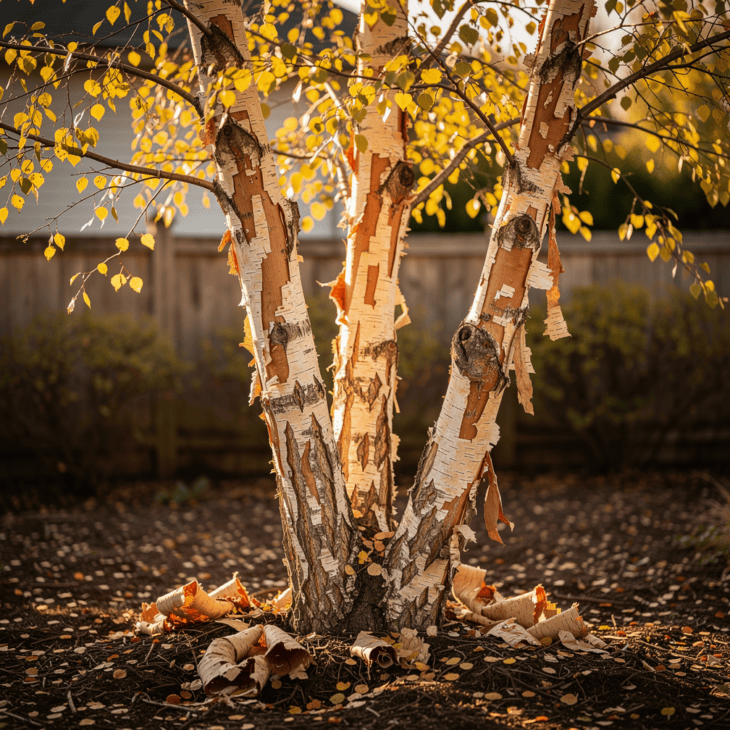
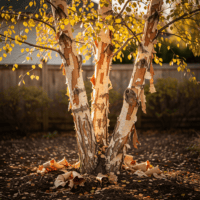
River birch is the only birch native to Missouri. In the wild it grows along streams and rivers, and it is one of the most popular yard trees in the state because it tolerates heat, wet soil and clay. It usually grows 40 to 70 feet tall, often with several trunks. Its bark peels in papery, curling sheets of salmon, cinnamon and cream. Unlike white-barked birches, it resists the bronze birch borer.
American Elm (Ulmus americana)

American elm once lined the streets of almost every Missouri town, with vase-shaped trunks that arched over the road. Dutch elm disease, a fungus spread by bark beetles, killed most large elms from the 1930s on, but the species is still common as a young tree in bottomlands and fence rows. It grows 60 to 80 feet tall, with lopsided, double-toothed leaves. Missouri also has slippery elm and winged elm.
Hackberry (Celtis occidentalis)

Hackberry is a tough, common tree of bottomlands, fence rows and city lots, 40 to 60 feet tall. The bark is gray with odd corky ridges and warts. The leaves are lopsided at the base, and they often have small bumps (nipple galls) made by tiny insects, which are harmless. Its small, purple fruits are sweet and are eaten by many birds through the winter. Sugarberry, a close relative, grows in the Bootheel.
Sweetgum (Liquidambar styraciflua)

Sweetgum is native to southeast Missouri, where it grows in bottomland forests. It is also planted as a yard and street tree further north. It grows 60 to 80 feet tall, with star-shaped leaves of five pointed lobes that turn yellow, red and purple in fall. Its spiky, round seed balls, known as gumballs, are a nuisance on lawns and sidewalks. Some nurseries sell fruitless cultivars.
Bald Cypress (Taxodium distichum)

Bald cypress grows wild in the swamps and sloughs of southeast Missouri, including Mingo National Wildlife Refuge, where trees have knobby “knees” sticking out of the water around their bases. It is a conifer that drops its soft, feathery needles in fall after they turn rusty orange, hence the name “bald”. It grows 50 to 100 feet tall and can live for centuries. It also grows well in ordinary, well-drained yards, which surprises many people.
Honey Locust (Gleditsia triacanthos)
Read our guide to Honey Locust

Wild honey locust trees are covered in fierce, branched thorns up to 8 inches long, and they spread quickly into pastures and old fields. The tree grows 50 to 80 feet tall, with fine, feathery leaves of many small leaflets and long, twisted seed pods with a sweet pulp. The thornless, podless cultivars are among the most common street and parking-lot trees in Missouri cities because their light shade lets grass grow underneath.
Small and Understory Trees
Flowering Dogwood (Cornus florida)

The flowering dogwood has been Missouri’s state tree since 1955. It is a small tree, 15 to 30 feet tall, that blooms in April, before its leaves come out. What look like four large white petals are actually bracts around a small cluster of true flowers. In fall it has glossy red berries and red-purple leaves. It grows best in part shade and well-drained, acidic soil, and struggles in full sun on hot, dry sites.
Eastern Redbud (Cercis canadensis)

Eastern redbud is the small tree that turns Missouri’s roadsides and woodland edges pink-purple in late March and April, blooming together with the dogwood. It grows 20 to 30 feet tall. The small pea-like flowers grow right on the bare branches and even on the trunk, and they are followed by heart-shaped leaves and flat, brown seed pods. The flowers are edible and add color to salads.
Common Persimmon (Diospyros virginiana)

Common persimmon is a small to medium tree, 30 to 60 feet tall, with thick, dark bark broken into small square blocks. Its round, orange fruits, about an inch across, ripen in fall. Unripe persimmons are so astringent they make your mouth pucker. Only fruit that is completely soft, usually after it falls from the tree, is sweet enough to eat. Missouri folklore says cutting open a persimmon seed and seeing a spoon, fork or knife shape predicts the kind of winter ahead.
Pawpaw (Asimina triloba)

The pawpaw has the largest edible fruit of any tree native to North America. The greenish-yellow fruits are 3 to 6 inches long and ripen in September. Their soft, custardy flesh tastes like a mix of banana and mango. It is a small tree, 15 to 30 feet tall, with large, drooping, tropical-looking leaves, and it often grows in clonal patches in shady bottomlands. You need two genetically different trees for good fruit set.
Sassafras (Sassafras albidum)

Sassafras is easy to recognize because it has three different leaf shapes on the same tree: oval, mitten-shaped and three-lobed. Its twigs and leaves smell spicy and citrusy when crushed. It grows 30 to 60 feet tall, often in thickets, and turns orange, red and purple in fall. The root bark was once used to flavor root beer, but its main oil, safrole, was banned as a food additive in 1960 because it causes cancer in lab animals. Dried and ground leaves are still used as filé powder in gumbo.
Red Mulberry (Morus rubra)

Red mulberry is a native tree, 30 to 50 feet tall, with large, toothed leaves that can be heart-shaped or have two or three lobes. Its dark purple, blackberry-like fruits ripen in June and July and are sweet and edible, but they stain sidewalks, cars and patios. Most mulberry trees in Missouri towns are now white mulberry, an Asian species that hybridizes with the native red mulberry and threatens it.
Three Invasive Trees Not to Plant
Callery Pear (Bradford Pear) (Pyrus calleryana)

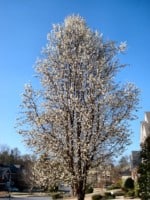
Callery pear, sold as ‘Bradford’ and other cultivars, was planted all over Missouri for its white spring flowers, which smell unpleasant. Different cultivars cross-pollinate, and birds spread the small fruits, so it now forms dense, thorny thickets along highways, in old fields and in glades. The trees are also weak: their tight branch angles make them split apart in storms after 15 to 20 years. Missouri has held buyback events where you can trade a callery pear for a free native tree. Plant serviceberry, redbud or dogwood instead.
Russian Olive (Elaeagnus angustifolia)
Read our guide to Russian Olive

Russian olive is a thorny shrub or small tree, 12 to 25 feet tall, with narrow, silvery leaves and small, fragrant yellow flowers in spring. It was planted for windbreaks, wildlife cover and erosion control. Birds spread its small, olive-like fruits into pastures, prairies and stream banks, where it crowds out native plants. Autumn olive, a close relative, is an even bigger problem in Missouri.
Common Buckthorn (Rhamnus cathartica)

Common buckthorn is a shrub or small tree, up to 20 to 25 feet tall, with dark, oval, finely toothed leaves that stay green long into fall, and small black berries that act as a laxative when birds eat them. It was planted as a hedge and now invades woodlands in northern Missouri, where it shades out native wildflowers and tree seedlings. A thorn often grows at the tip of its twigs.
Choosing a Tree for a Missouri Yard
- Check your soil: much of Missouri has alkaline or clay soil. Pin oak, river birch and sweetgum can turn yellow in alkaline soil, while bur oak, hackberry, Kentucky coffeetree and redbud handle it well.
- Go native when you can: white oak, shumard oak, black gum, American hornbeam, serviceberry and pawpaw are tough, native choices that support far more wildlife than imported trees.
- Give big trees room: oaks, sycamores and walnuts grow into huge trees. Plant them at least 20 feet from your house and away from power lines.
- Buy seedlings cheaply: the Missouri Department of Conservation sells low-cost native tree seedlings every year from the George O. White State Forest Nursery.
Related: Spring Flowering Trees · Most Common Trees in Iowa · Most Common Trees in Tennessee