Many plants have finely divided, feathery leaves that look like fern fronds but are not ferns. In the garden, the most common are astilbe, asparagus fern, bleeding heart, yarrow and sweet fern. Among trees, mimosa, jacaranda, royal poinciana, honey locust and sumac have compound leaves that look like fronds. The easy test is flowers and seeds: true ferns never flower. They reproduce from spores, which form in small brown dots or stripes on the underside of the fronds.
Contents
- Garden Plants With Fern-Like Leaves
- Trees With Fern-Like Leaves
- Mimosa (Silk Tree) (Albizia julibrissin)
- Thornless Honey Locust (Gleditsia triacanthos var. inermis)
- Jacaranda (Jacaranda mimosifolia)
- Royal Poinciana (Flame Tree) (Delonix regia)
- Staghorn Sumac (Rhus typhina)
- Fern Tree (Filicium decipiens)
- Fern Pine (Afrocarpus gracilior)
- Fern-Leaf Wattle (Acacia filicifolia)
- Wild Plants With Fern-Like Leaves (Be Careful)
- How to Tell a True Fern From a Lookalike
Several fern lookalikes are poisonous. Poison hemlock, a deadly weed, has lacy, fern-like leaves, and sago palm is highly toxic to dogs. Don’t taste or pick a feathery-leaved plant you can’t identify. And if you like the look of ferns but think they’re too fussy, many hardy ferns are actually easy to grow in moist shade. The plants below give the same texture in places where ferns won’t grow, such as full sun or dry soil.
- Garden Plants With Fern-Like Leaves
- Trees With Fern-Like Leaves
- Wild Plants With Fern-Like Leaves (Be Careful)
- How to Tell a True Fern From a Lookalike
| Plant | Botanical name | Type | How to tell it’s not a fern |
|---|---|---|---|
| Astilbe | Astilbe spp. | Perennial, 1–4 ft | Feathery flower plumes in summer |
| Asparagus Fern | Asparagus setaceus, A. densiflorus | Perennial / houseplant | Tiny white flowers and red berries; small spines |
| Fringed Bleeding Heart | Dicentra eximia | Perennial, 1–1.5 ft | Pink heart-shaped flowers from spring to fall |
| Yarrow | Achillea millefolium | Perennial, 1–3 ft | Flat flower clusters; grows in full sun and dry soil |
| Sweet Fern | Comptonia peregrina | Shrub, 2–4 ft | Woody stems; fragrant leaves; catkins |
| Sago Palm | Cycas revoluta | Cycad, 3–10 ft | Stiff, glossy fronds from a woody trunk; cones; toxic |
| Mimosa (Silk Tree) | Albizia julibrissin | Tree, 20–35 ft | Pink powder-puff flowers and flat seed pods; invasive |
| Thornless Honey Locust | Gleditsia triacanthos var. inermis | Tree, 30–70 ft | Woody tree; long twisted pods |
| Jacaranda | Jacaranda mimosifolia | Tree, 25–40 ft | Purple-blue trumpet flowers |
| Royal Poinciana (Flame Tree) | Delonix regia | Tree, 30–40 ft | Scarlet flowers; pods up to 2 ft long |
| Staghorn Sumac | Rhus typhina | Shrub or small tree, 15–25 ft | Fuzzy red fruit clusters; velvety branches |
| Fern Tree | Filicium decipiens | Tree, 20–30 ft | Glossy leaflets on a winged leaf stalk; tropical only |
| Fern Pine | Afrocarpus gracilior | Conifer, 20–50 ft | Evergreen conifer with narrow, drooping leaves |
| Fern-Leaf Wattle | Acacia filicifolia | Shrub or tree, 10–25 ft | Yellow puffball flowers |
| Poison Hemlock | Conium maculatum | Biennial, 3–8 ft | Smooth stems with purple blotches; white umbrella flowers; deadly |
| Queen Anne’s Lace (Wild Carrot) | Daucus carota | Biennial, 1–4 ft | Hairy stems; lacy white flower head often with one dark center flower |
| Common Tansy | Tanacetum vulgare | Perennial, 2–5 ft | Yellow button flowers; strong smell; toxic |
Garden Plants With Fern-Like Leaves
Astilbe (Astilbe spp.)

Astilbe is the classic fern substitute for shade gardens. Its leaves are divided into toothed leaflets and look like a broad-leaved fern, often with bronze or reddish new growth. In early to mid-summer it sends up feathery plumes of pink, red, lavender or white flowers, which no fern does. Astilbe grows 1 to 4 feet tall depending on the variety and is hardy in zones 3 to 8. It likes partial shade and soil that stays moist. It sulks and browns in dry soil, just like most ferns, and the two make good companions.
Asparagus Fern (Asparagus setaceus, A. densiflorus)
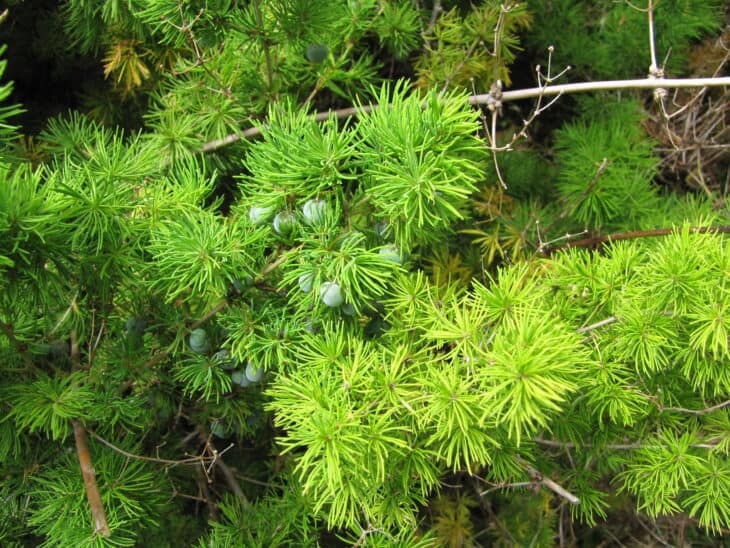
Despite its name, asparagus fern is related to edible asparagus, not to ferns. The feathery “leaves” are really tiny needle-like stems. Lace fern (A. setaceus) has flat, lacy sprays, and foxtail and Sprenger’s asparagus (A. densiflorus) have fluffy, arching plumes. It is grown as a houseplant or outdoors in zones 9 to 11. It has small white flowers followed by red berries, and many stems have small hooked spines. The berries are mildly toxic to pets. In Florida and Hawaii it escapes into natural areas, so grow it in pots there.
Fringed Bleeding Heart (Dicentra eximia)

Fringed bleeding heart is a native perennial of the Appalachians with soft, blue-green leaves cut into fine, lacy segments. Out of flower it looks very much like a fern. From spring into fall it carries arching stems of pink heart-shaped flowers. It grows 12 to 18 inches tall in part shade and is hardy in zones 3 to 9. The larger old-fashioned bleeding heart (Lamprocapnos spectabilis) has coarser leaves and dies back in summer. Bleeding hearts are mildly toxic if eaten.
Yarrow (Achillea millefolium)

Yarrow’s leaves are divided into so many tiny segments that the species name, millefolium, means “thousand leaves”. They look like small, soft fern fronds and have a strong, spicy smell when crushed. Unlike ferns, yarrow wants full sun and handles drought well. It carries flat clusters of small white, pink, yellow or red flowers through summer. It is native across the Northern Hemisphere, including most of North America, and is hardy in zones 3 to 9.
Sweet Fern (Comptonia peregrina)

Sweet fern is a small native shrub of eastern North America. Its long, narrow leaves have deep, rounded notches along both edges, so they look like a single fern frond. It is actually related to bayberry, and it has woody stems and small catkins instead of spores. The leaves smell sweet and spicy when crushed. Sweet fern grows 2 to 4 feet tall in poor, sandy, acidic soil and full sun. It fixes its own nitrogen, so it is useful on dry banks and road cuts where little else grows.
Sago Palm (Cycas revoluta)
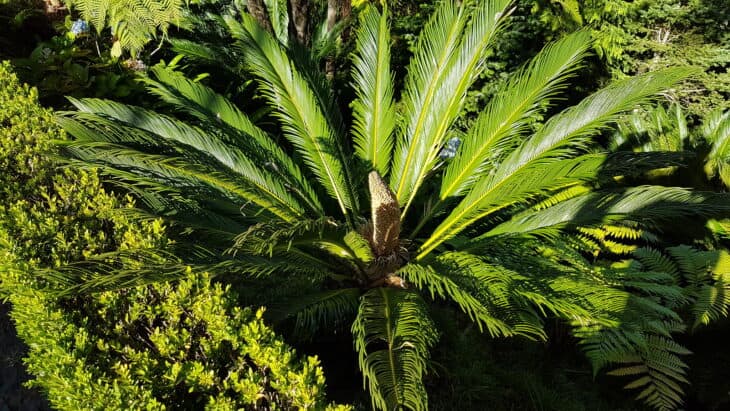
Sago palm is neither a palm nor a fern. It is a cycad, an ancient group of seed plants, and its stiff, glossy fronds look like a tree fern’s. The difference is that it produces cones, and each frond is tough and leathery, with sharp-tipped leaflets. It grows slowly, 3 to 10 feet tall, outdoors in zones 8 to 11 or as a houseplant. All parts are poisonous, especially the seeds. Eating it causes liver failure in dogs, and it is often fatal.
Trees With Fern-Like Leaves
These trees have compound leaves, divided once or twice into many small leaflets. That gives them a fine, lacy, fern-like texture.
Mimosa (Silk Tree) (Albizia julibrissin)

Mimosa has twice-divided leaves with hundreds of tiny leaflets that fold up at night. It is probably the tree people most often describe as having “fern leaves”. In summer it is covered in fluffy pink flowers, followed by flat, bean-like pods. It is native to Asia, and across the Southeast it is invasive: it seeds heavily into woods and roadsides. Don’t plant it. Honey locust gives a similar lacy look without spreading.
Thornless Honey Locust (Gleditsia triacanthos var. inermis)
Read our guide to Thornless Honey Locust
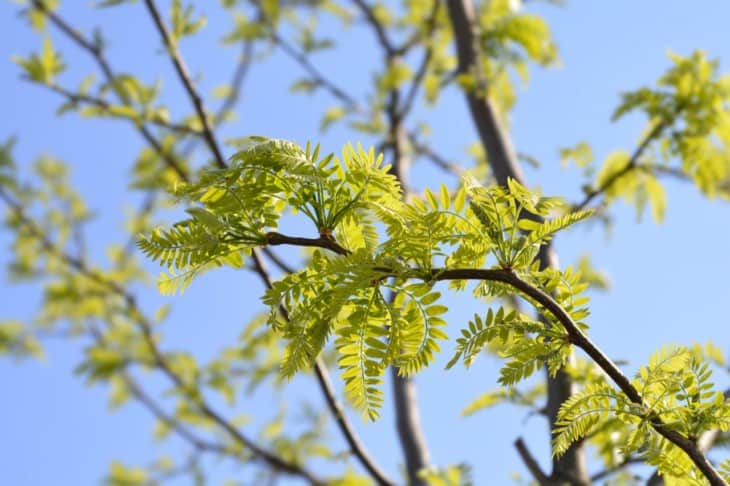
Honey locust is a native tree of the central and eastern U.S. Its leaves are divided into many small, oval leaflets, which give it a light, fern-like canopy that casts only dappled shade. The wild form has large branched thorns and long, twisted brown pods. The thornless, mostly seedless cultivars such as ‘Shademaster’ and ‘Skyline’ are among the most common street trees in North America. It is hardy in zones 3 to 8 and tolerates salt, drought and compacted soil.
Jacaranda (Jacaranda mimosifolia)
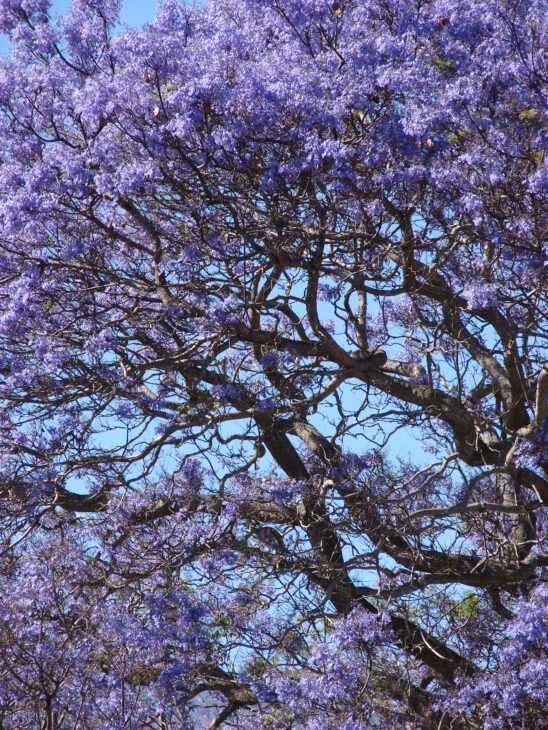
Jacaranda is a South American tree whose twice-divided leaves look like large, soft fern fronds. In late spring it is covered in purple-blue trumpet-shaped flowers, famous in Los Angeles, Phoenix and South Africa. It grows 25 to 40 feet tall and only in frost-free or nearly frost-free climates, zones 9b to 11. Its round, flat seed pods and the fallen flowers make it a messy tree over patios and cars.
Royal Poinciana (Flame Tree) (Delonix regia)

Royal poinciana is a spreading tree from Madagascar, grown throughout the tropics and in South Florida, zones 10 to 12. Its fern-like, twice-divided leaves create a wide umbrella of light shade. In early summer the tree is covered in scarlet to orange-red flowers. Each has 5 petals, one of them larger and streaked with white or yellow. They are followed by flat, woody pods up to 2 feet long.
Staghorn Sumac (Rhus typhina)

Staghorn sumac has long leaves divided into 11 to 31 toothed leaflets, which look like a big fern frond. Its thick branches are covered in velvety hair, like a deer’s antlers in velvet. In late summer it carries upright, cone-shaped clusters of fuzzy red berries, and in fall the leaves turn brilliant orange and red. It is native to eastern North America and spreads by suckers into thickets. Staghorn sumac is not poisonous. Poison sumac is a different plant, with white berries hanging in loose clusters, and it grows in swamps (see our sumac guide).
Fern Tree (Filicium decipiens)

Often sold as Japanese fern tree, Filicium decipiens is not from Japan at all. It is native to East Africa, Madagascar, India and Sri Lanka. It forms a dense, rounded tree 20 to 30 feet tall with glossy, dark green leaves divided into narrow leaflets along a winged stalk. It is grown as a street and shade tree in South Florida and other frost-free areas, zones 10 to 11, and it has small white flowers and dark fruits.
Fern Pine (Afrocarpus gracilior)

Fern pine, long sold as Podocarpus gracilior, is an evergreen conifer from East Africa. Its narrow, soft leaves, 2 to 4 inches long, hang from drooping branches, which gives the tree a soft, feathery look. It grows 20 to 50 feet tall and is a common hedge and street tree in Southern California and Florida, zones 9 to 11. It takes full sun and some drought, unlike ferns.
Fern-Leaf Wattle (Acacia filicifolia)

This acacia from eastern Australia has twice-divided leaves with very fine leaflets, hence the name filicifolia, “fern-leaved”. In late winter and spring it has masses of fluffy yellow flowers. It needs a mild, frost-free climate and full sun, and it grows fast in well-drained soil.
Wild Plants With Fern-Like Leaves (Be Careful)
Several wild plants in the carrot family have lacy, fern-like leaves in their first year, before they flower. Some of them are among the most poisonous plants in North America.
Poison Hemlock (Conium maculatum)
Read our guide to Poison Hemlock
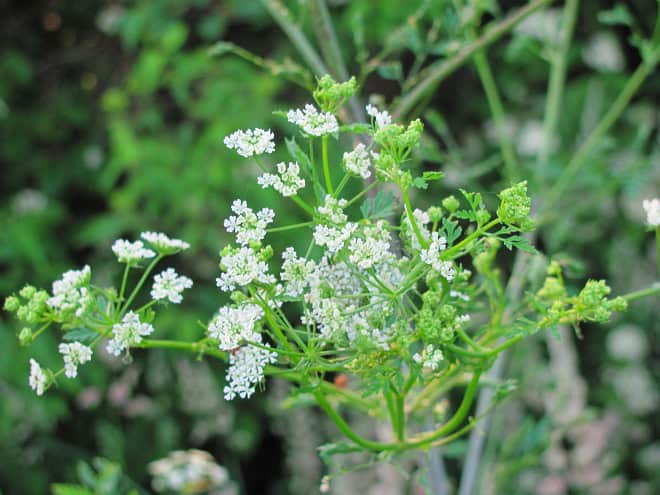
Poison hemlock’s first-year rosette of glossy, finely divided leaves looks like a fern or parsley. In its second year it grows 3 to 8 feet tall, with hollow, hairless stems covered in purple spots or blotches, and flat clusters of small white flowers. The crushed leaves smell musty or mousy. Every part is deadly if eaten, and handling it can irritate the skin. It is an invasive weed across the U.S., along roadsides, ditches and field edges. Pull it wearing gloves, or call your county extension office.
Queen Anne’s Lace (Wild Carrot) (Daucus carota)
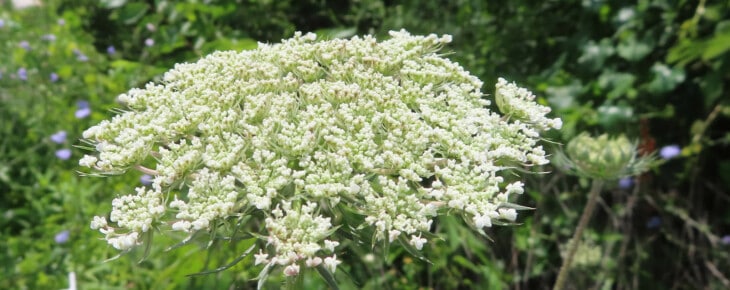
Queen Anne’s lace has feathery, carrot-like leaves that look like a small fern in its first year. It is the wild ancestor of the garden carrot and smells like carrot when you crush it. Tell it from poison hemlock by the stem: wild carrot stems are hairy and green, without purple blotches. Its flat white flower heads often have a single dark purple flower in the center. It is a European weed now common across North America. Because the two are easy to confuse, don’t eat wild carrot unless you are completely sure of the identification.
Common Tansy (Tanacetum vulgare)

Tansy has dark green leaves divided into toothed, fern-like segments. In late summer it carries flat clusters of bright yellow, button-shaped flowers with no petals. The whole plant has a strong, camphor-like smell. It is a European herb that is now a noxious weed in many northern and western states, and it is toxic to people and livestock if eaten in quantity.
How to Tell a True Fern From a Lookalike
- Flowers, berries, seeds or cones mean it’s not a fern. Ferns reproduce from spores only.
- Look under the fronds. Most fertile fern fronds have rows of small brown or rust-colored dots (sori) or stripes on the underside. Some ferns, such as ostrich and cinnamon fern, produce separate brown spore fronds instead.
- Look for fiddleheads. New fern fronds unroll from tight coils in spring. Lookalikes simply grow new leaves.
- Woody stems or a trunk mean a shrub or tree. The one exception is tree ferns, such as Dicksonia and Cyathea, grown in mild climates.
- Smell a crushed leaf. Carrot, spicy or musty smells point to carrot-family plants, yarrow, tansy or sweet fern, not a fern.
- Be careful with anything lacy in a ditch or field edge. Poison hemlock and water hemlock are deadly and look like ferns before they flower.