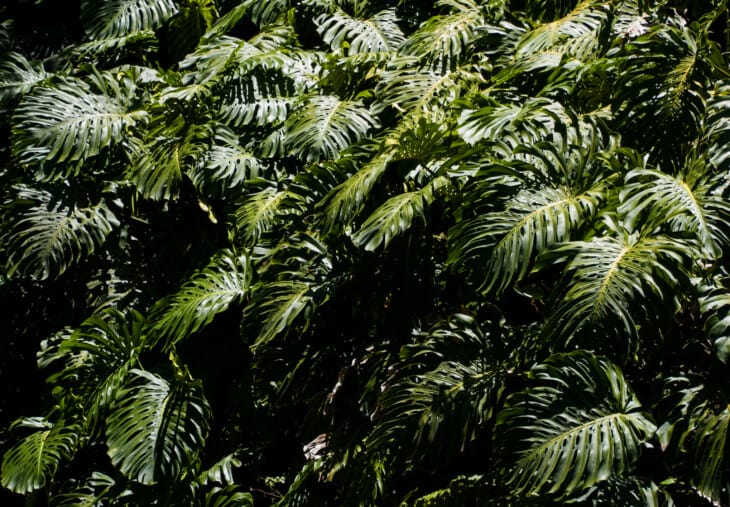
Monsteras live up to their name, with oversized, dramatic leaves that instantly read “tropical.” They’re a standout houseplant for homes and offices, adding a jungle look even in small spaces. The Monstera genus includes roughly 50–60 species, though only a handful are commonly grown indoors.
Contents
A few Monstera species are especially popular as houseplants. The one most people recognize is Monstera deliciosa, sometimes called the Mexican breadfruit plant.
Monsteras are members of the Araceae (arum) family. They’re native to tropical forests from southern Mexico into Central America, where they climb and sprawl beneath the canopy. In that filtered light, they evolved large leaves to capture more sun while growing up trees for support.
Monstera’s big, glossy leaves develop splits and openings called fenestrations. Those “holes” are why it’s often called the Swiss cheese plant. Mature Monstera deliciosa can also produce a sweet, scaly fruit that’s sometimes compared to a blend of pineapple, banana, and mango when fully ripe.
Monstera fruit can be eaten when it is completely ripe, but the rest of the plant contains calcium oxalate crystals that are irritating and toxic if chewed. Exposure can cause intense mouth and throat burning, drooling, and stomach upset. Symptoms are usually self-limiting, but medical advice is recommended for children, pets, or severe reactions.
Monsteras have thick stems and aerial roots that help them climb and stabilize. These roots may grow into the potting mix for moisture, or attach to supports like a moss pole, plank, or nearby tree in outdoor settings.
1. Split-leaf Philodendron (Philodendron bipinnatifidum)

Split-leaf philodendron
Split-leaf philodendron is a tropical evergreen prized for its large deeply lobed leaves. It is usually grown indoors in cooler climates and outdoors where winters are frost free.
Read our guide to Split-leaf philodendronPhilodendron bipinnatifidum is commonly called split-leaf philodendron or tree philodendron. Like Monstera, it’s in the Araceae family and is native to tropical regions of South America. Because both plants have large, deeply cut leaves, this philodendron is frequently mistaken for Monstera in houseplant collections.
It produces very large, deeply lobed leaves that explain the common name. The upper surface is usually glossy green, with a lighter underside. As the plant matures, the leaves become bigger and the cuts deepen, though they don’t form the same “window” holes typical of Monstera.
It’s popular indoors, and it can also grow outdoors in frost-free climates in bright shade or dappled light. Hot, direct sun can scorch and dry the leaves, especially in low humidity. Tree philodendron prefers moderate to high humidity, so occasional misting or using a humidifier can help in dry indoor environments.
All parts of philodendrons contain calcium oxalate crystals that can cause strong burning and irritation if eaten. This is important to keep in mind in homes with small children or pets that may chew foliage.
2. Elephant’s Ear (Colocasia esculenta)
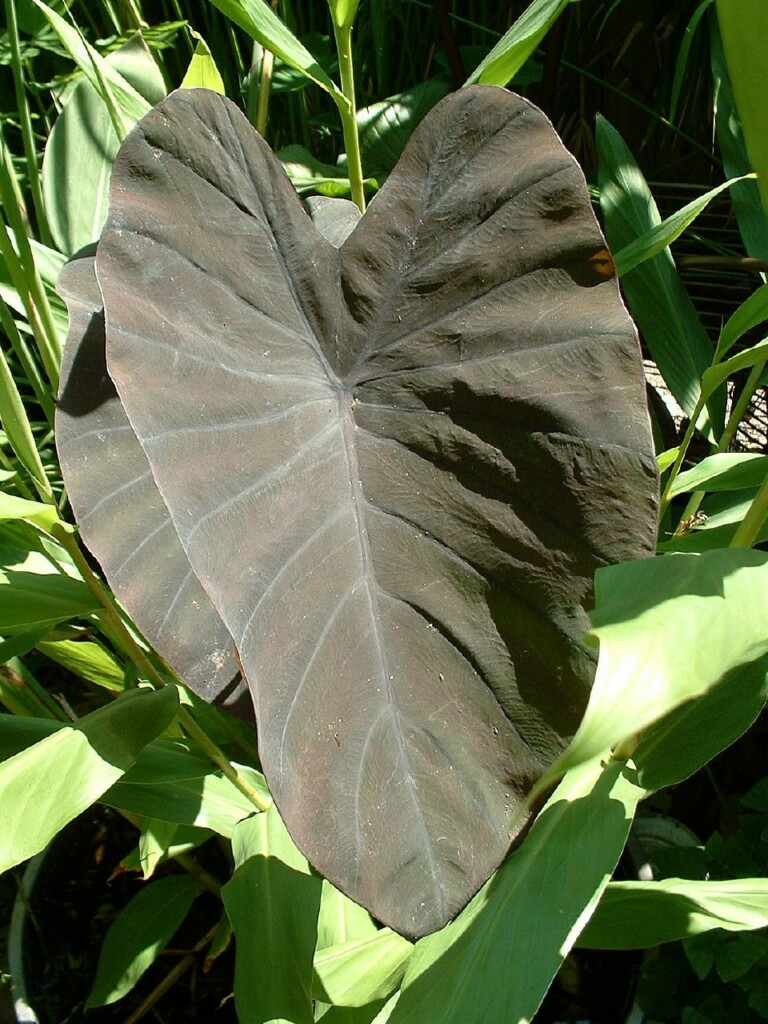
Black Elephant Ear
Black Elephant Ear is grown for dramatic almost black, heart shaped leaves and prefers rich, consistently moist soil. It is propagated by dividing tubers and performs well in containers and pond edges.
Read our guide to Black Elephant EarElephant’s ear (Colocasia esculenta) is another plant that can give a Monstera-like tropical look. It’s also called taro, cocoyam, or amadumbe, depending on the region. Native to Southeast Asia, it’s now grown worldwide, and its corms are an important food crop in many countries.
Elephant’s ear plants have very large, heart-shaped leaves with bold veining that resembles an elephant’s ear. Leaves commonly reach 2–3 feet long in good conditions, and some varieties get larger. The foliage sits atop long, fleshy petioles that arise from an underground corm (tuber) that is edible when properly prepared.
Elephant’s ear can be grown outdoors in bright shade to filtered sun, or as a bold indoor specimen with enough light and warmth. It is not frost tolerant and performs best in warm, humid conditions. Most types are green, but many modern cultivars offer near-black, purple, maroon, or patterned leaves.
All parts of Colocasia esculenta contain calcium oxalates when raw. The corms and leaves are traditionally eaten after thorough cooking, which reduces the irritation. Some cultures also use the plant in folk remedies, but for home use it’s safest to treat it primarily as an ornamental or food plant and avoid applying sap to skin.
3. Giant Bird Of Paradise (Strelitzia nicolai)
Read our guide to Giant Bird Of Paradise

Giant Bird Of Paradise
Large evergreen ornamental with banana like foliage and white and blue bird like flowers. Suited to frost free landscapes and protected plantings in milder climates.
Read our guide to Giant Bird Of ParadiseThe giant bird of paradise is in the Strelitziaceae family, with the botanical name Strelitzia nicolai. It’s also called white bird of paradise or Natal wild banana. Native to southern Africa, it grows quickly in warm climates and is widely used as a landscape and indoor statement plant. Keep in mind it’s considered toxic if ingested, so use care around children and pets.
Strelitzia nicolai can resemble Monstera because of its enormous, paddle-like leaves that create a lush, architectural look. Individual leaves may reach several feet long, typically in shades from gray-green to deep green. Outdoors, it can produce striking white flowers that attract wildlife, but flowering is uncommon for plants kept indoors.
White bird of paradise can be grown indoors in bright light or outdoors in warm regions. It prefers rich, well-draining soil and does well in full sun to partial sun once established. Keep the soil evenly moist but not soggy, since poor drainage can lead to root rot and fungal issues; avoid heavy clay or persistent overwatering. Protect it from frost and prolonged cold snaps.
4. Paper Plant (Fatsia japonica)
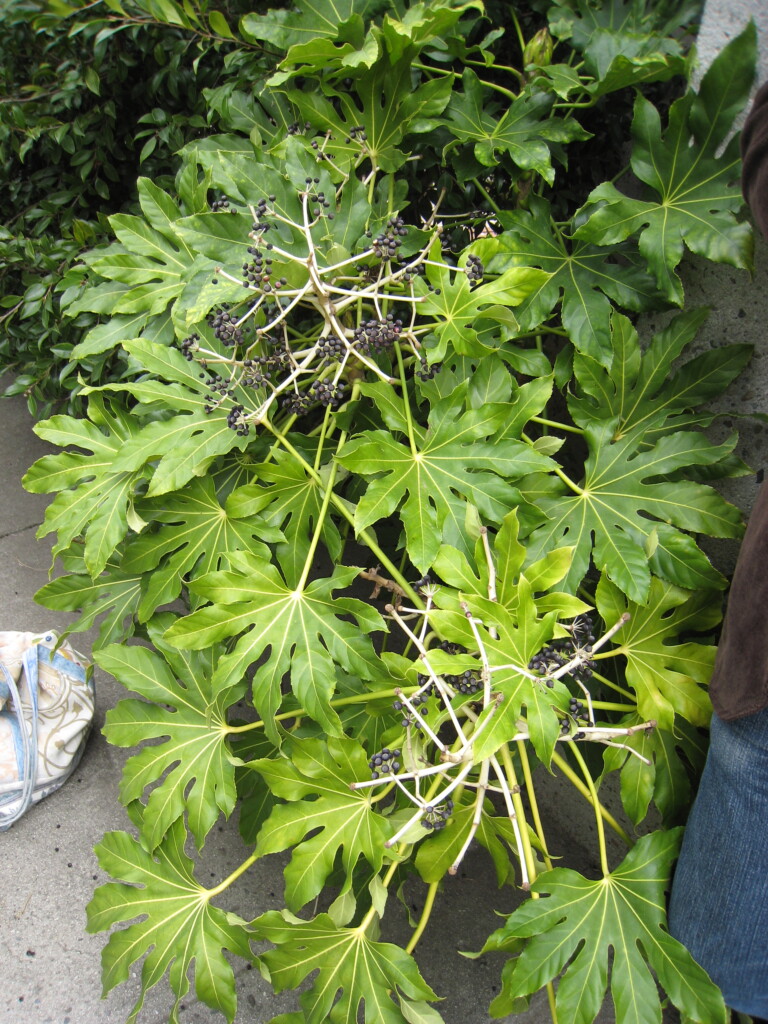
Paper Plant
Fatsia japonica the paper plant is an evergreen shrub prized for large glossy palmate leaves and late autumn flowers, used in shade gardens, containers and as a cool indoor specimen.
Read our guide to Paper PlantThe paper plant (Fatsia japonica), also known as Japanese aralia, is an evergreen shrub grown as an ornamental outdoors and as a large-leaf houseplant. It’s valued for its bold foliage and tolerance of lower light. While it handles shade well, it can also take some sun in mild climates, especially with regular moisture.
Its large, glossy leaves create a Monstera-like tropical feel and are typically divided into 7–9 lobes. The palmate shape is often compared to an outstretched hand. Leaf veins can appear lighter green to yellowish depending on light and cultivar. It produces small white flowers in clusters followed by dark berries, and it adapts to many soils as long as drainage is decent.
Fatsia japonica often reaches around 4–6 feet indoors with time and can grow taller outdoors in suitable climates. It prefers mild, humid conditions but can tolerate light frosts once established. Cold can damage the leaves, yet the plant often resprouts in spring if the roots are not severely frozen.
5. Fiddle Leaf Fig (Ficus lyrata)
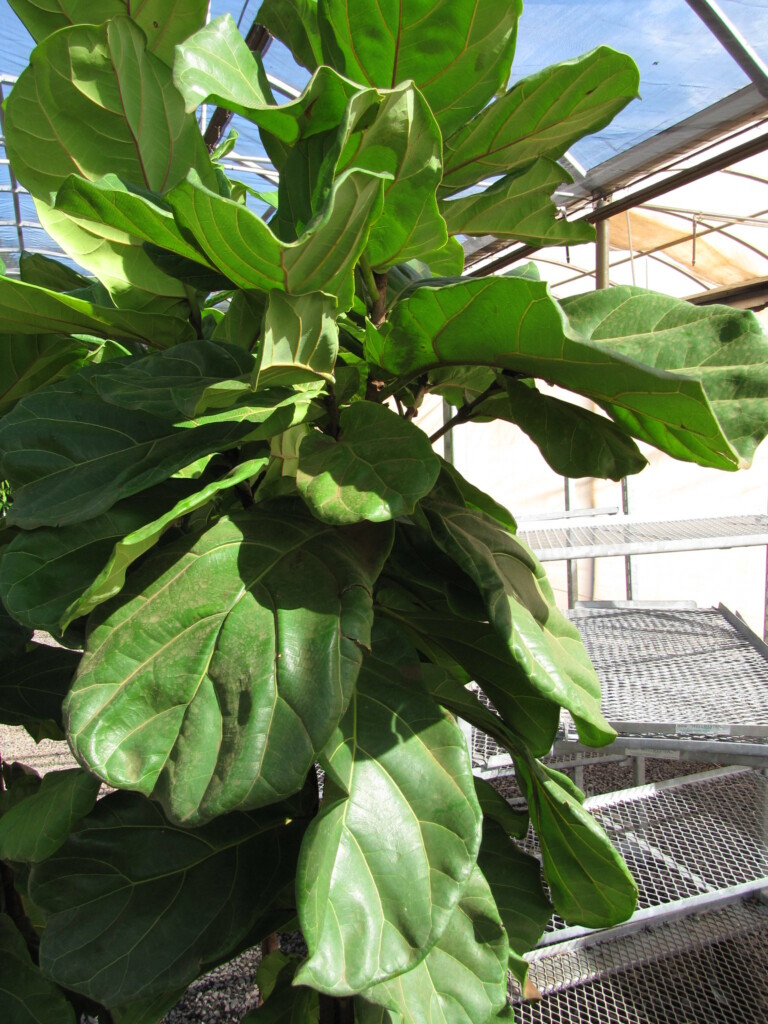
Fiddle Leaf Fig Bambino
Fiddle Leaf Fig Bambino is a compact Ficus lyrata cultivar prized for large glossy leaves and a small footprint. It needs bright filtered light, well drained soil, and cautious watering.
Read our guide to Fiddle Leaf Fig BambinoThe fiddle-leaf fig (Ficus lyrata) is in the Moraceae family, the same group as mulberries and edible figs. It’s native to tropical West Africa. In 2026, it remains a popular indoor tree in temperate areas and an outdoor landscape plant in tropical to subtropical regions.
Ficus lyrata is known for its large, violin-shaped leaves with prominent veining that can echo Monstera’s bold, graphic look. Indoors it commonly reaches 5–10 feet with good light and consistent care, though growth rate varies by conditions. Outdoors in warm climates it can become a substantial tree, sometimes 40–50 feet tall.
Fiddle-leaf figs are evergreen, but indoors they need bright light to keep dense growth and avoid leaf drop. Rotate the plant periodically so it grows evenly rather than leaning toward the window. Wiping dust from the leaves helps them photosynthesize more efficiently and can also make it easier to spot pests early.
6. Velvet Alocasia (Alocasia Amazonica Frydek)
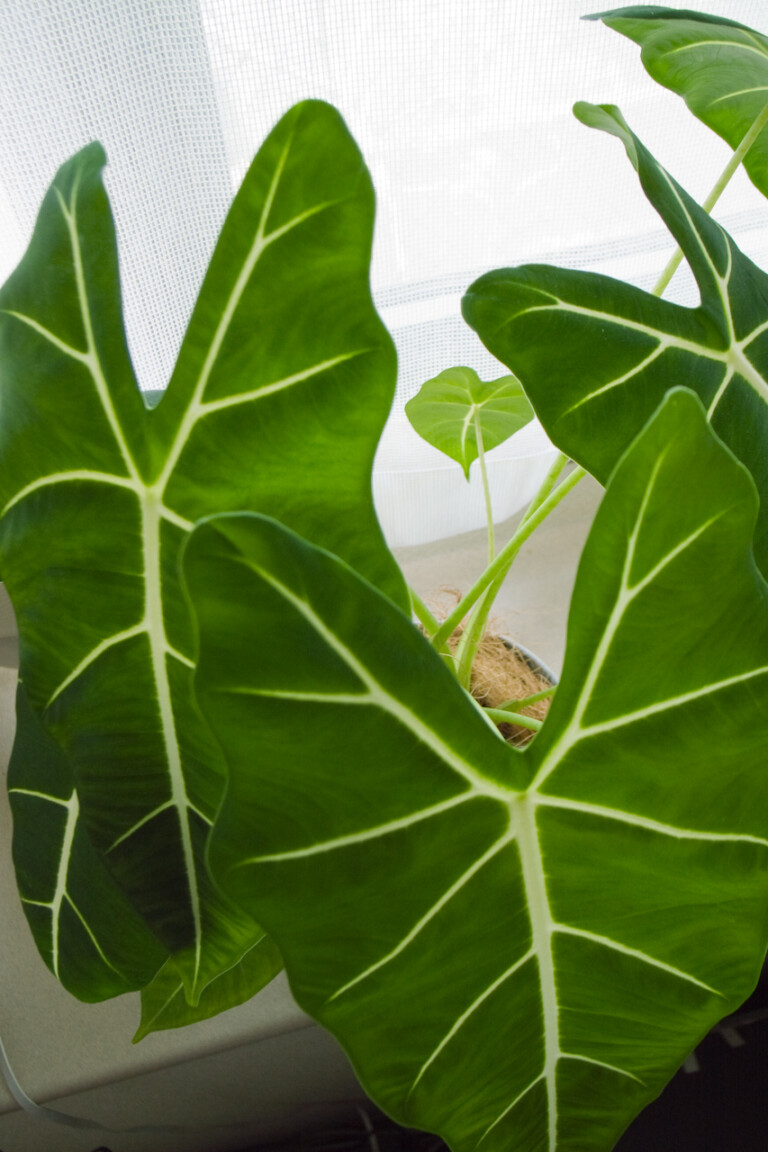
Green Velvet Alocasia
Green Velvet Alocasia is a tropical aroid grown for bold foliage and commonly kept as a houseplant. It prefers bright indirect light, high humidity, and evenly moist, well draining soil.
Read our guide to Green Velvet AlocasiaAlocasia frydek is commonly called green velvet alocasia and is sometimes grouped with “elephant ear” plants. It’s grown primarily for its dramatic foliage and has remained a favorite indoor plant in recent years. Native to the Philippines, it does best indoors in warm conditions, roughly 65–85°F, away from drafts.
Velvet alocasia has dark green, heart-shaped leaves with a velvety texture and high-contrast white veins. It may produce a small, calla-like bloom, but flowers are not the main attraction. The leaf shape and bold veining can resemble young Monstera leaves before fenestrations develop.
It grows best in bright, indirect light with moderate to high humidity. Outdoors, it should be placed in partial shade in warm, frost-free climates. Use a chunky, well-draining mix and water thoroughly, then allow excess to drain so the roots don’t sit in soggy soil.
These plants perform best with humidity above about 50%, but they can decline quickly if the potting mix stays waterlogged. Water when the top couple of inches of the mix feel dry, then drain the saucer. Rigid watering schedules often lead to overwatering, especially in lower light or cooler seasons.