
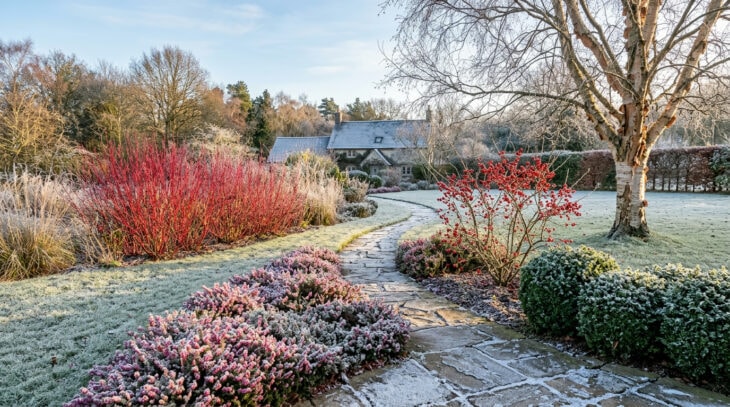
The best winter plants for outside are the ones that do something while the rest of the yard is bare: hellebores and witch hazel flower, winterberry holly holds red berries, red twig dogwood and paperbark maple show off their bark, and boxwood and dwarf spruce keep the structure green.
Contents
- How We Chose These Plants
- Plants That Flower in Winter
- Cool-Season Color for Beds and Pots
- Shrubs With Winter Berries
- Trees and Shrubs With Colorful Bark and Stems
- Evergreens and Winter Structure
- Winter Plants for Pots
- Do Anti-Desiccant Sprays Protect Evergreens in Winter?
- Winter Plants to Avoid
- Frequently Asked Questions
- Sources
Which ones work for you depends on your USDA zone. Witch hazel and winterberry handle Zone 4 winters, while sasanqua camellia and winter jasmine belong in the milder South, so every entry below lists its zones.
If you are planting in pots rather than the ground, skip to the section on winter plants for pots first. Container roots freeze much harder than roots in the ground, which changes the list.
How We Chose These Plants
Every plant here gives you something to look at outdoors between December and February: flowers, berries, colorful bark or stems, or evergreen shape. Each one is hardy outdoors in at least part of the US, and the facts come from university extension services and the Missouri Botanical Garden.
Two common winter shrubs are missing on purpose. Nandina and burning bush both look good in winter, but both are invasive in parts of the country, so they are in the “plants to avoid” section instead.
| Plant | Botanical name | Zones | Size | Light | Winter feature |
|---|---|---|---|---|---|
| Lenten rose | Helleborus × hybridus | 4–9 | 1–2 ft | Part to full shade | Flowers late winter |
| Christmas rose | Helleborus niger | 3–8 | 9–12 in | Part to full shade | White flowers midwinter |
| Witch hazel | Hamamelis × intermedia | 4–9 | 15–20 ft | Sun to part shade | Fragrant flowers Jan–Mar |
| Winter jasmine | Jasminum nudiflorum | 6–10 | 4 ft (vine 10–15 ft) | Sun to part shade | Yellow flowers Jan–Feb |
| Snowdrops | Galanthus nivalis | 3–9 | 4–10 in | Sun to part shade | White flowers late winter |
| Winter aconite | Eranthis hyemalis | 3–7 | 3–6 in | Sun to part shade | Yellow flowers Feb–Mar |
| Winter heath | Erica carnea | 5–7 | 6–12 in | Sun to part shade | Pink flowers Jan–Mar |
| Sasanqua camellia | Camellia sasanqua | 7–9 | 6–14 ft | Sun to part shade | Flowers late fall to early winter |
| Pansies and violas | Viola | Cool-season annual | 6–9 in | Sun to part shade | Flowers through mild spells |
| Ornamental kale | Brassica oleracea | Cool-season annual | 1–2 ft | Sun to part shade | Pink, purple or white leaves |
| Winterberry holly | Ilex verticillata | 3–9 | 6–12 ft | Sun to shade | Red berries on bare stems |
| American holly | Ilex opaca | 5–9 | 40–60 ft | Sun to part shade | Evergreen leaves, red berries |
| Wintergreen | Gaultheria procumbens | 3–7 | 4–8 in | Shade | Evergreen leaves, red berries |
| Red twig dogwood | Cornus sericea | 2–7 | 6–9 ft | Sun to part shade | Red stems |
| Coral bark maple | Acer palmatum ‘Sango-kaku’ | 5–8 | 20–25 ft | Sun to part shade | Coral-pink twigs |
| Paperbark maple | Acer griseum | 4–8 | 20–30 ft | Sun to part shade | Peeling cinnamon bark |
| River birch | Betula nigra | 4–9 | 30–70 ft | Sun to part shade | Peeling salmon bark |
| Boxwood | Buxus | 5–8 | Kept small by pruning | Sun to part shade | Evergreen structure |
| Dwarf Alberta spruce | Picea glauca ‘Conica’ | 3–6 | 10–13 ft over decades | Full sun | Evergreen cone shape |
| Coral bells | Heuchera | 3–9 | 6–20 in | Sun or shade by variety | Evergreen to semi-evergreen leaves |
| Switchgrass | Panicum virgatum | 5–9 | 3–7 ft | Full sun | Tan stems and seedheads |
Plants That Flower in Winter
1. Lenten Rose (Helleborus × hybridus)
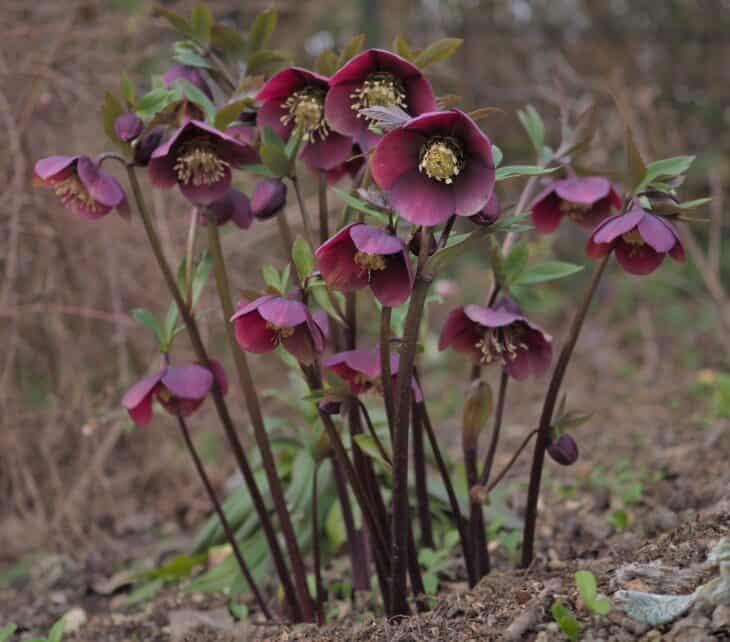
Zones: 4–9 · Size: 1 to 2 feet (30 to 60 cm) tall, up to 2.5 feet (75 cm) wide · Light: part to full shade · Soil: rich, well-drained, neutral to alkaline
Lenten rose is the most reliable winter flower for a shady yard. Its nodding, cup-shaped flowers open in late winter in white, green, pink, purple and near-black, and the leathery leaves stay evergreen.
It is not a rose at all but a member of the buttercup family, and like every hellebore it is poisonous. NC State Extension notes it contains cardiac glycosides, and the ASPCA lists it as toxic to dogs, cats and horses. The upside is that deer and rabbits leave it alone.
Give it shade from bright winter sun, which it dislikes, and soil with plenty of organic matter. NC State rates it low maintenance.
2. Christmas Rose (Helleborus niger)
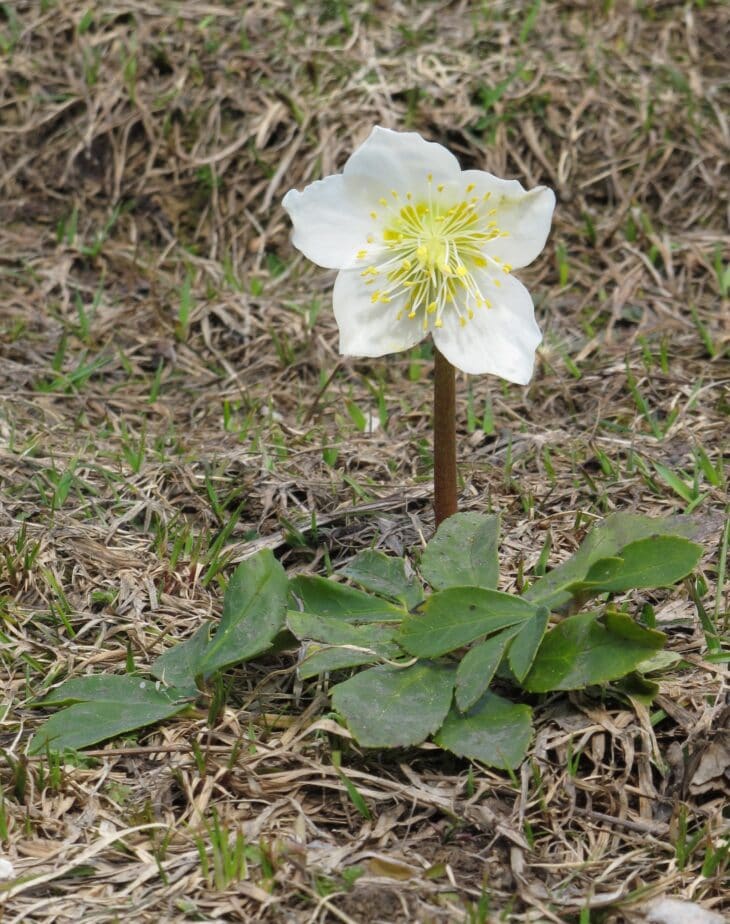
Zones: 3–8 · Size: 9 to 12 inches (23 to 30 cm) tall, 1 to 1.5 feet (30 to 45 cm) wide · Light: part to full shade · Soil: moist, rich in organic matter
Christmas rose is the hardier, smaller hellebore, with pure white flowers about 3 inches (8 cm) across that age to rose. True to its name, it blooms around Christmas in milder regions and waits for early spring where winters are colder.
It shares the Lenten rose’s toxicity (the ASPCA lists it as toxic to dogs, cats and horses), and NC State notes the sap can irritate skin, so wear gloves when you divide it. It is fussier than Lenten rose and dislikes hot summers.
3. Witch Hazel (Hamamelis × intermedia)

Zones: 4–9 · Size: 15 to 20 feet (4.5 to 6 m) tall, 8 to 10 feet (2.5 to 3 m) wide · Light: full sun to part shade · Soil: moist, fertile, acidic
Hybrid witch hazel covers its bare branches in spidery, lightly fragrant flowers from late January to March. NC State notes the flowers open and close with the weather, so they ride out cold snaps.
Flower color runs from yellow to orange and red depending on the cultivar; ‘Arnold Promise’, ‘Jelena’ and ‘Diane’ are widely grown. Plant it where you will walk past it in winter, and give it room, because it spreads wide.
One flaw: some plants hold their dead brown leaves into winter, which hides the flowers. For a native option, Ozark witch hazel (Hamamelis vernalis, Zones 3–8) flowers in late winter too, while common witch hazel (Hamamelis virginiana) blooms from October to December.
4. Winter Jasmine (Jasminum nudiflorum)
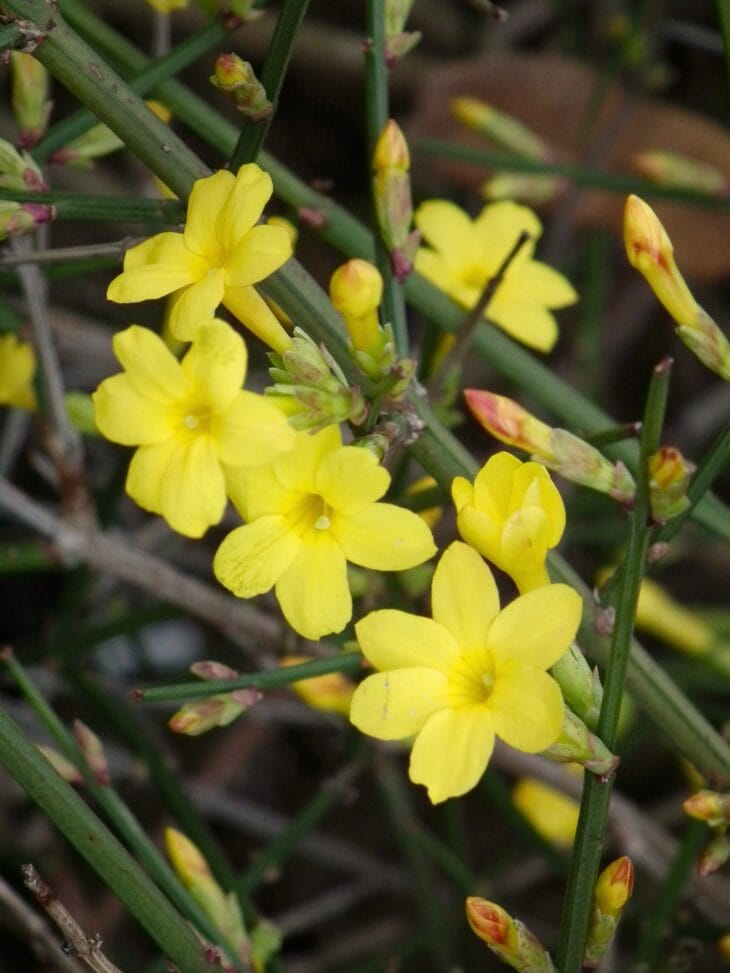
Zones: 6–10 · Size: about 4 feet (1.2 m) as a shrub, 10 to 15 feet (3 to 4.5 m) trained as a vine · Light: full sun to part shade · Soil: adaptable, including poor soil
Winter jasmine opens bright yellow flowers on bare green stems in January and February. Unlike most jasmines, the flowers have no scent.
It is easy to grow and deer leave it alone, but its fast, cane-like growth forms a messy colony if you ignore it. It flowers on last year’s growth, so prune right after it blooms, and cut it hard to renew it. The ASPCA lists jasmine as non-toxic to dogs, cats and horses.
5. Snowdrops (Galanthus nivalis)

Zones: 3–9 · Size: 4 to 10 inches (10 to 25 cm) tall · Light: full sun to part shade · Soil: well-drained, rich in organic matter
Snowdrops are small bulbs whose nodding white flowers, marked with green on the inner petals, come up in late winter, often through snow. They spread by seed and offsets into drifts, so plant them under deciduous trees or shrubs where they can roam.
They do best where winters are properly cold: NC State notes the seeds need a cold spell below 20°F (−7°C), so plants are shorter-lived in warm climates. Deer avoid them, and they tolerate black walnut, but the bulbs are mildly poisonous.
6. Winter Aconite (Eranthis hyemalis)
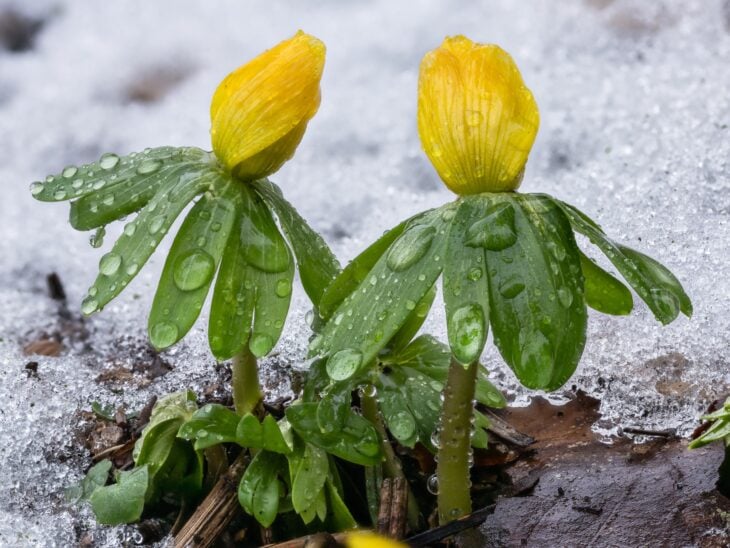
Zones: 3–7 · Size: 3 to 6 inches (8 to 15 cm) tall · Light: full sun to part shade · Soil: moist, well-drained
Winter aconite puts up bright yellow, buttercup-like flowers set in a ruff of green leaves in February and March. Planted with snowdrops, it gives you yellow and white at ground level before almost anything else is awake.
It disappears by late spring, so mark where it is before you dig. Every part of the plant is highly poisonous, according to NC State, so keep it away from areas where children or pets graze.
7. Winter Heath (Erica carnea)
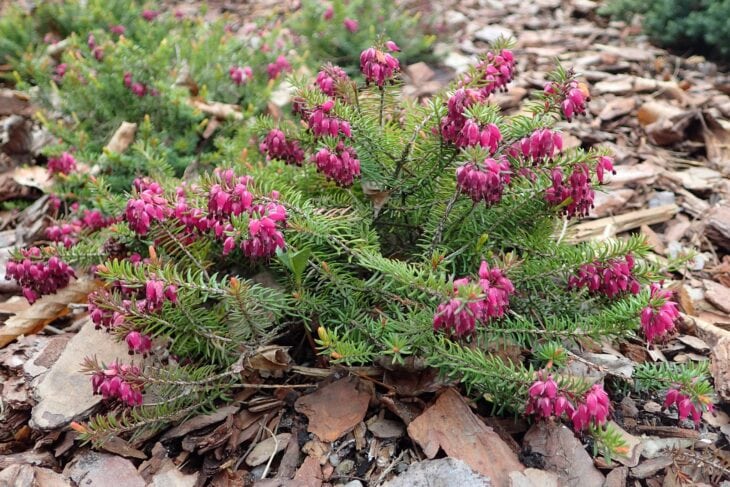
Zones: 5–7 · Size: 6 to 12 inches (15 to 30 cm) tall, spreading 6 to 18 inches (15 to 45 cm) · Light: full sun to part shade · Soil: sandy, acidic, sharply drained
Winter heath is a low evergreen ground cover that flowers pink from January to March, and the Missouri Botanical Garden notes it will bloom under snow in the North. NC State recommends it for slopes, where it forms a dense mat over time.
It needs cool summers and sharp drainage, so avoid heavy clay and do not plant it south of Zone 7. Unlike most heaths, it tolerates slightly alkaline soil. Trim it right after flowering if it needs tidying.
8. Sasanqua Camellia (Camellia sasanqua)
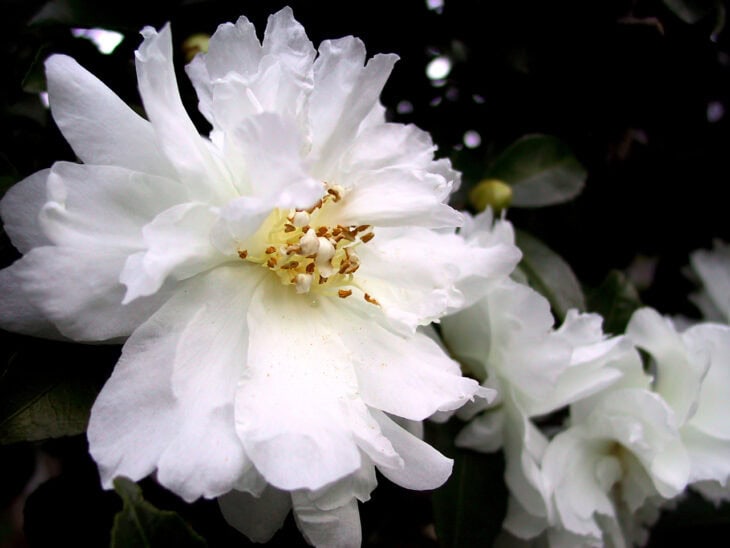
Zones: 7–9 · Size: 6 to 14 feet (1.8 to 4.5 m) tall, 5 to 7 feet (1.5 to 2 m) wide · Light: full sun to part shade · Soil: well-drained, neutral to acidic
In the South, sasanqua camellia bridges late fall and early winter, with fragrant white, pink or red flowers 2 to 3 inches (5 to 8 cm) across against glossy evergreen leaves. It tolerates deer, drought and some salt.
It is only reliable in Zones 7–9, and NC State notes frequent pest and disease problems, so start with healthy plants. Each flower lasts only a few days.
Cool-Season Color for Beds and Pots
9. Pansies and Violas (Viola)

Grown as: a cool-season annual, planted in fall · Size: 6 to 9 inches (15 to 23 cm) tall · Light: full sun to part shade · Soil: moist, well-drained, rich
Pansies are the standard winter flower for pots and bed edges, and they are tougher than they look. University of Georgia Extension says they can survive temperatures in the single digits, freeze solid, and bounce back when the weather warms.
When the air drops below 25°F (−4°C), the leaves wilt and turn gray-green. That is a normal defense, not death, so leave them alone. Violas are smaller-flowered relatives that behave the same way.
Timing matters most. Plant while the soil is between 45°F and 65°F (7°C and 18°C): UGA’s window is September 15 to October 1 in Zones 6b and 7a, October 1 to 15 in Zone 7b, and October 15 to November 1 in Zone 8. Pansies planted into colder soil stay stunted and flower poorly.
10. Ornamental Kale and Cabbage (Brassica oleracea)
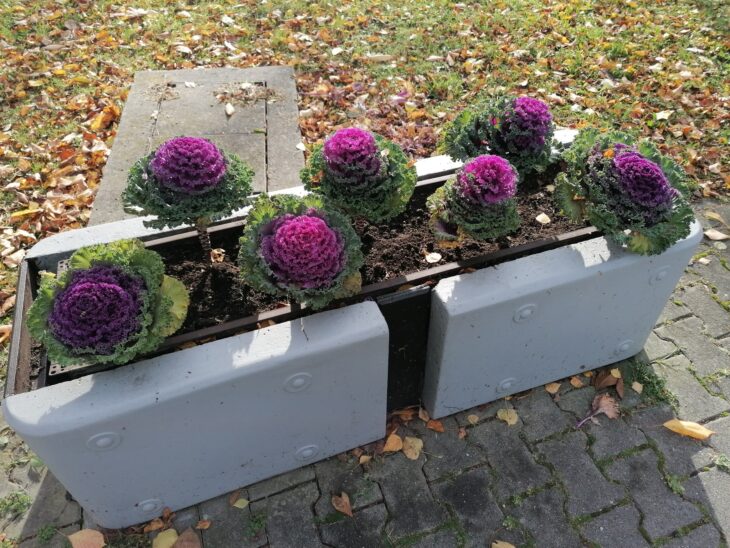
Grown as: a cool-season annual, planted in fall · Size: 1 to 2 feet (30 to 60 cm) tall and wide · Light: full sun to part shade · Soil: moist, well-drained
Ornamental kale and cabbage make rosettes of white, pink or purple leaves, and the color gets stronger as nights drop below 50°F (10°C). NC State rates them cold tolerant to 5°F (−15°C), so a hard frost does not end the display.
Plant transplants as the weather cools in fall, and use them where you want bold shapes: pots by the front door, or a row along a path. They are bred for looks, not flavor, so grow edible kale if you want to eat it.
Shrubs With Winter Berries
11. Winterberry Holly (Ilex verticillata)
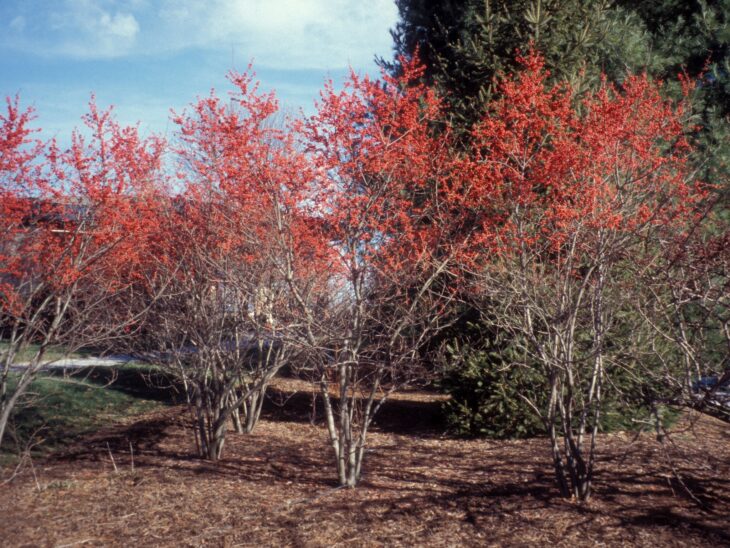
Zones: 3–9 · Size: 6 to 12 feet (1.8 to 3.5 m), compact cultivars 4 to 6 feet (1.2 to 1.8 m) · Light: full sun to shade · Soil: moist, acidic (pH 4.5 to 6.5), tolerates wet ground
Winterberry is a native holly that drops its leaves in fall and leaves its branches covered in red berries into winter. It is one of the best berry shrubs for most of the country, and robins, cedar waxwings and bluebirds eat the fruit.
Only female plants make berries, and they need a male winterberry that flowers at the same time. University of Maryland Extension recommends one male for up to 10 females within 50 feet (15 m): pair early ‘Red Sprite’ with ‘Jim Dandy’, or late ‘Winter Red’ or ‘Sparkleberry’ with ‘Southern Gentleman’.
Neutral to alkaline soil turns the leaves yellow and can kill the plant, so test your soil first. The berries are mildly poisonous to people.
12. American Holly (Ilex opaca)

Zones: 5–9 · Size: 40 to 60 feet (12 to 18 m) tall, 10 to 20 feet (3 to 6 m) wide · Light: full sun to part shade · Soil: moist, neutral to acidic, not limestone
American holly is the native evergreen holly, with spiny dark leaves and red berries on female trees from September into February. It is highly deer resistant and moderately salt tolerant.
Like winterberry, it needs a male and a female for berries. It is a real tree, not a shrub, so give it space. The ASPCA lists holly as toxic to dogs, cats and horses, though of low toxicity.
Several shrubs look confusingly similar; our guide to plants that look like holly shows how to tell them apart.
13. Wintergreen (Gaultheria procumbens)

Zones: 3–7 · Size: 4 to 8 inches (10 to 20 cm) tall, 6 to 12 inches (15 to 30 cm) wide · Light: part to full shade · Soil: moist, acidic
Wintergreen is a native ground cover for shade, with glossy evergreen leaves and red berries from fall. Crush a leaf and it smells of wintergreen.
It wants acidic, woodland-like soil and shade, so it suits the ground under trees, where it tolerates even heavy shade. Space plants 10 to 14 inches (25 to 35 cm) apart for cover.
Trees and Shrubs With Colorful Bark and Stems
14. Red Twig Dogwood (Cornus sericea)
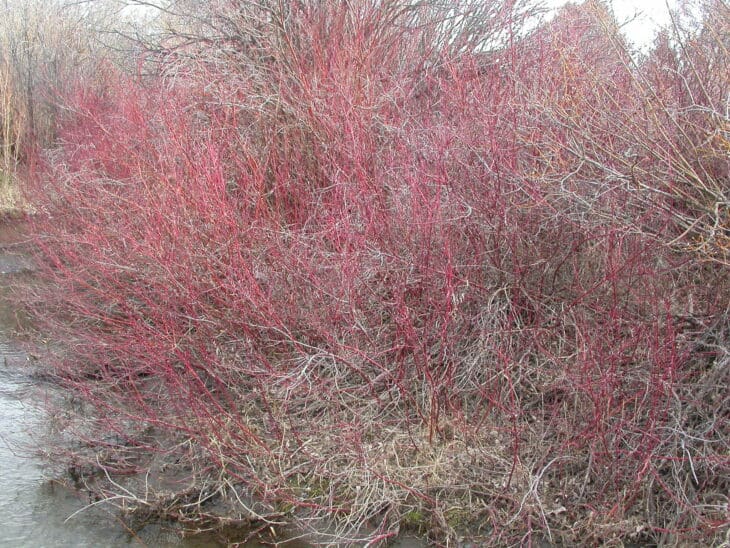
Zones: 2–7 · Size: 6 to 9 feet (1.8 to 2.7 m) tall and wide · Light: full sun to part shade · Soil: adaptable, from wet to dry and clay
Red twig dogwood is a native shrub grown for its bright red stems, which glow against snow once the leaves drop. It takes almost any soil, including soggy spots, and deer leave it alone.
The trick is pruning. The best color is on young stems, so NC State recommends cutting it back hard in early spring. Its zone range (2–7) tells you it wants cold winters, so it is not a plant for the Deep South.
15. Coral Bark Maple (Acer palmatum ‘Sango-kaku’)
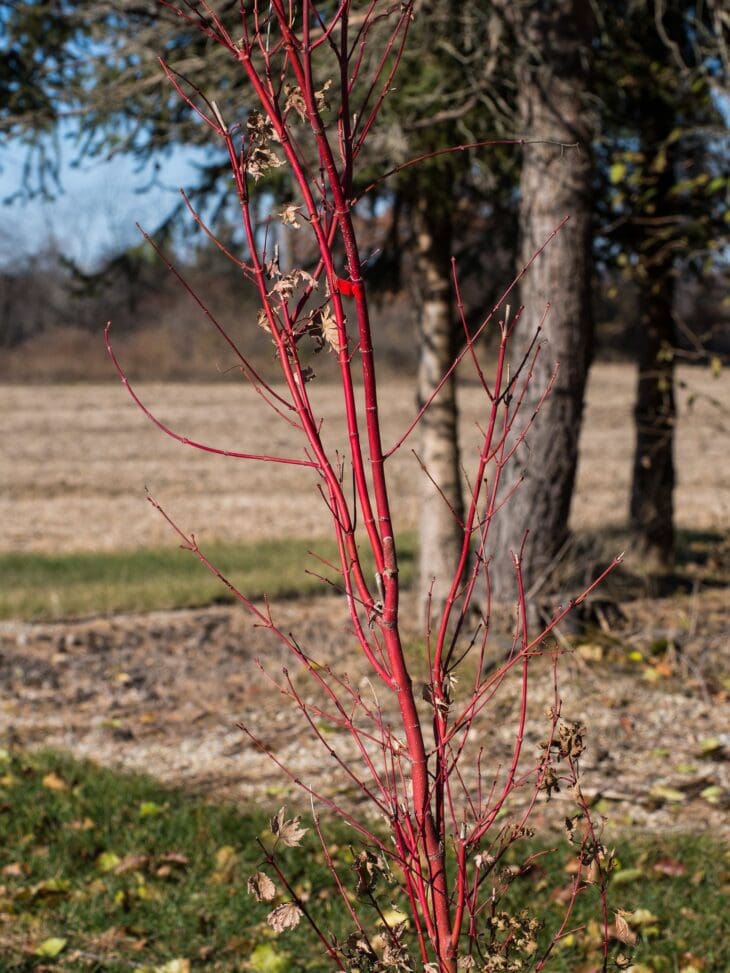
Zones: 5–8 · Size: 20 to 25 feet (6 to 7.5 m) tall, 15 to 20 feet (4.5 to 6 m) wide over time · Light: full sun to part shade · Soil: moist, rich, slightly acidic
‘Sango-kaku’ is an upright Japanese maple whose young twigs turn coral pink in winter. The Missouri Botanical Garden notes the color is strongest on young growth and fades almost completely in summer.
Give it afternoon shade in hot areas and shelter from strong wind. If it needs pruning, do it from late fall to midwinter, because cuts made in spring bleed sap.
16. Paperbark Maple (Acer griseum)
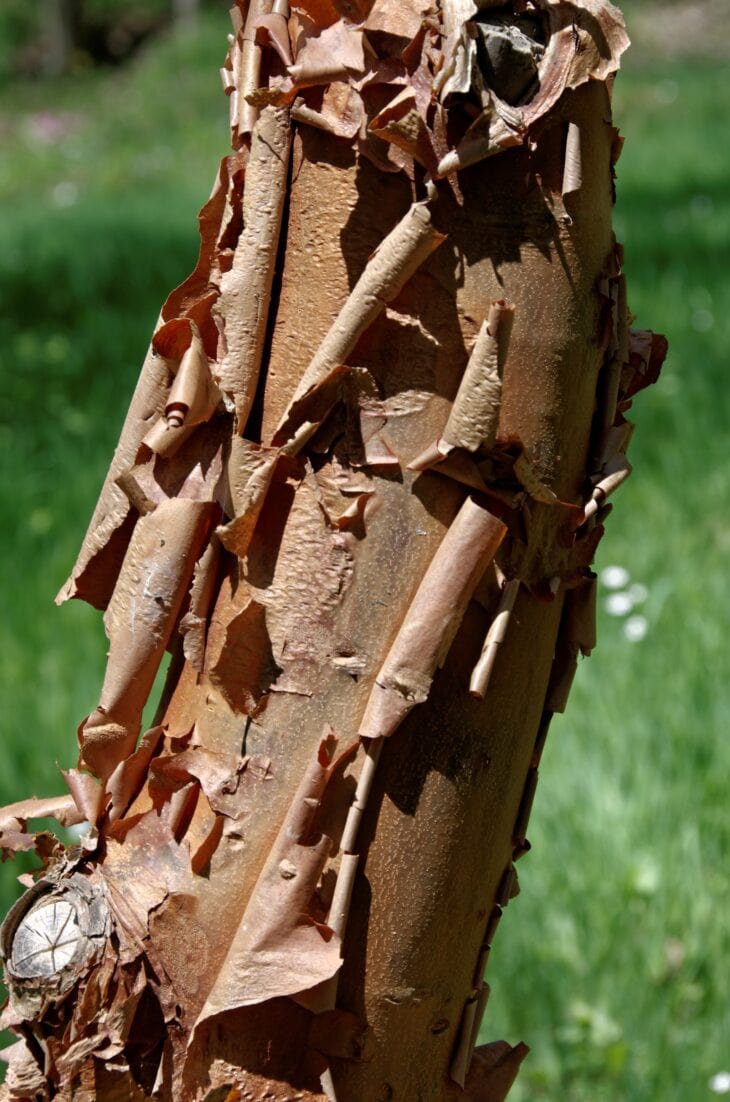
Zones: 4–8 · Size: 20 to 30 feet (6 to 9 m) tall, 15 to 25 feet (4.5 to 7.5 m) wide · Light: full sun to part shade · Soil: moist, well-drained, adaptable
Paperbark maple has purple-brown bark that peels back in thin, papery curls to show rose-brown bark underneath. The curls stay on the trunk, so it looks its best in low winter sun.
It grows slowly into a small tree, which makes it one of the best winter trees for a small yard. Plant it where you can see the trunk from a window.
17. River Birch (Betula nigra)
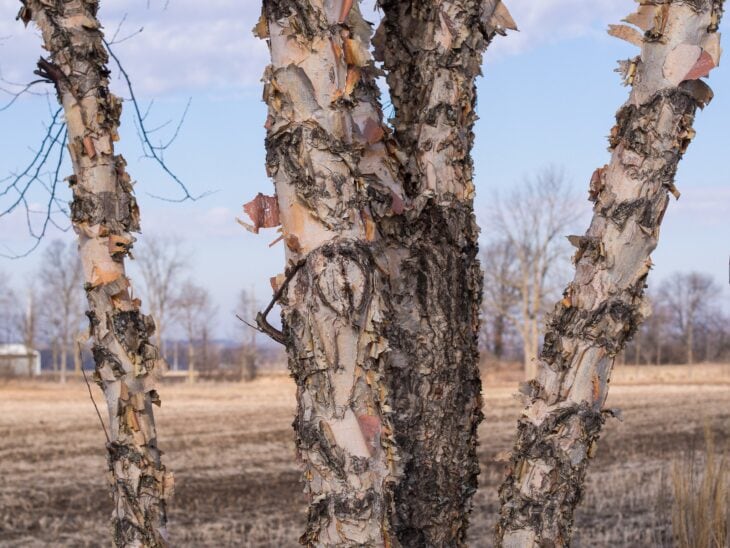
Zones: 4–9 · Size: 30 to 70 feet (9 to 21 m) tall · Light: full sun to part shade · Soil: moist to wet, acidic
River birch is the native birch with salmon-to-cinnamon bark that peels in papery layers all year. NC State calls it the most heat-tolerant birch and the only native birch that does well in the low-elevation South, and it resists the bronze birch borer that kills white birches.
It is a big tree that NC State flags as messy, so keep it away from the house and the driveway. For more on its trade-offs, see our pros and cons of birch trees.
Evergreens and Winter Structure
18. Boxwood (Buxus)
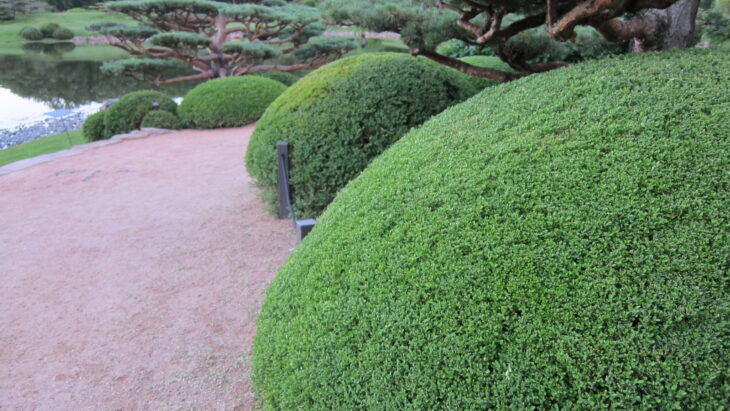
Zones: 5–8 for common boxwood · Size: can reach 15 to 20 feet (4.5 to 6 m) but is easily kept small · Light: full sun to part shade · Soil: well-drained, adaptable
Boxwood gives a winter yard its bones: low hedges, rounded balls and edging that stay green when everything else is bare. Deer and rabbits avoid it, but the ASPCA lists it as toxic to dogs, cats and horses.
The big risk is boxwood blight, which causes leaf spots, rapid browning and leaf drop, with black streaks on the green stems. University of Maryland Extension says no cultivar is immune but the NewGen series, ‘Green Beauty’ and ‘Nana’ resist it, and recommends buying from nurseries in the Boxwood Blight Cleanliness Program.
Boxwood also bronzes in cold, dry winter wind. Plant it out of the wind, away from roof eaves where snow slides off, and keep the soil moist through fall.
19. Dwarf Alberta Spruce (Picea glauca ‘Conica’)

Zones: 3–6 · Size: 10 to 13 feet (3 to 4 m) after many years, growing 2 to 4 inches (5 to 10 cm) a year · Light: full sun · Soil: moist, well-drained
Dwarf Alberta spruce is the dense green cone you see flanking front doors in winter. It is extremely cold hardy and slow growing, and it is often grown in containers and trimmed into topiary shapes.
It hates heat and humidity: the Missouri Botanical Garden says it should not be grown in the eastern US south of Zone 6. Mites are its main problem, and repeated infestations can do serious damage.
20. Coral Bells (Heuchera)

Zones: 3–9 · Size: 6 to 20 inches (15 to 50 cm) · Light: sun or shade, depending on variety · Soil: moist, well-drained, slightly acidic
Coral bells are native perennials grown for their leaves, which come in purple, orange, brown and yellow. Depending on your climate, NC State says the foliage is evergreen to semi-evergreen, so they keep color in pots and bed edges into winter.
They dislike heavy clay and tend to be short-lived, so divide them every 3 to 4 years. Deer and rabbits usually leave them alone.
21. Switchgrass (Panicum virgatum)
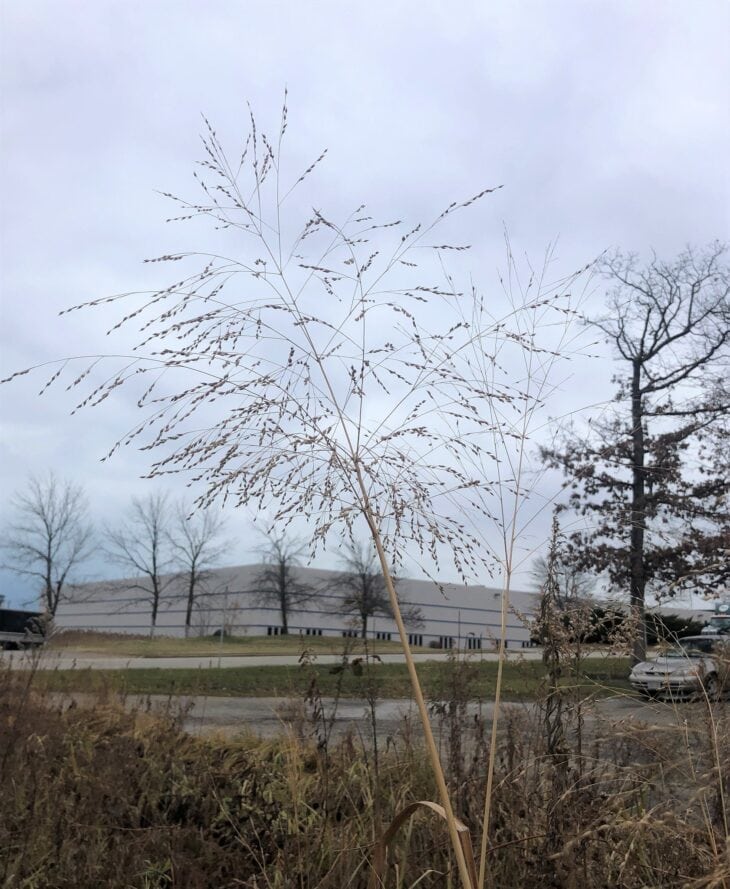
Zones: 5–9 · Size: 3 to 4 feet (0.9 to 1.2 m) of foliage, up to 7 feet (2.1 m) with plumes · Light: full sun · Soil: moist clay to sandy
Switchgrass is a native prairie grass whose leaves fade to light brown and stand through the winter, catching frost and snow. Leave the seedheads on: NC State notes they feed birds and small mammals through the cold months.
Cut it back hard in late winter or early spring, before new growth starts. It tolerates deer, drought and occasional flooding.
Winter Plants for Pots
Potted plants face harder winters than the same plants in the ground, because the roots have no soil around them for insulation. Illinois Extension advises choosing plants rated two zones colder than your own if they will stay outside in pots.
In Zone 6, that means plants hardy to Zone 4. From this list, dwarf Alberta spruce, coral bells, wintergreen, Christmas rose and Lenten rose pass that test, and pansies and ornamental kale fill the gaps as seasonal color.
Use the largest pots you can, and keep the potting mix moist: Illinois Extension notes moist mix freezes more slowly than dry mix, and evergreens keep losing water all winter. For planting combinations, see our container garden ideas.
Do Anti-Desiccant Sprays Protect Evergreens in Winter?
Not reliably. Anti-desiccant sprays are sold to stop winter burn on evergreens, but University of Wisconsin Extension says research shows they either flake off too soon to help or stay on too long into the growing season.
Winter burn happens when sun and wind pull water from the needles while frozen ground stops the roots from replacing it. The fix is water, not spray: give established evergreens about 1 inch (2.5 cm) of water a week, or 2 inches (5 cm) in sandy soil, into mid or late November until the ground freezes.
Winter Plants to Avoid
Nandina (heavenly bamboo). Its red berries look great in winter, but NC State lists it as invasive, and the North Carolina Botanical Garden explains that cedar waxwings gorging on the berries can die from the cyanide they release. Winterberry holly gives you red berries that birds can safely eat.
Burning bush. Its corky winged stems are sold as winter interest, but birds spread its seed into woodlands. It is on New Hampshire’s prohibited list and is invasive in North Carolina. Red twig dogwood or winterberry are better choices.
Frequently Asked Questions
What is a good outdoor winter plant?
For most of the US, winterberry holly (Zones 3–9) and red twig dogwood (Zones 2–7) give the most winter color for the least effort. In shade, Lenten rose (Zones 4–9) flowers in late winter and stays evergreen.
What plants can I grow outside in winter?
Hardy shrubs, trees, bulbs and perennials stay outside all year: witch hazel, snowdrops, hellebores, hollies and colorful-bark trees like paperbark maple all look their best in winter. For fresh color planted in fall, pansies and ornamental kale handle hard frosts.
What is the easiest plant to grow in winter?
Pansies are the easiest winter flowers if you plant them on time, while the soil is still between 45°F and 65°F (7°C and 18°C). For a permanent plant, Lenten rose is low maintenance and ignored by deer and rabbits.
What potted plants can survive winter outside?
Choose plants hardy to two zones colder than yours, because roots in pots freeze harder than roots in the ground. Dwarf Alberta spruce, coral bells and hellebores are good permanent choices, and pansies and ornamental kale work as seasonal color.
Do pansies survive frost?
Yes. University of Georgia Extension says established pansies survive temperatures into the single digits, and their leaves wilt below 25°F (−4°C) as a normal defense before recovering.
Sources
- NC State Extension Gardener Plant Toolbox: Lenten rose, witch hazel, winterberry, red twig dogwood and the other plant entries
- Missouri Botanical Garden Plant Finder: winter heath, ‘Sango-kaku’ maple, dwarf Alberta spruce
- University of Georgia Extension: Success with Pansies in the Winter Landscape
- University of Maryland Extension: Winterberry Holly and Boxwood: Identify and Manage Common Problems
- University of Illinois Extension: Overwintering potted plants
- ASPCA Animal Poison Control toxic and non-toxic plant list


_in_smeltende_sneeuw_16-02-2021._(d.j.b).jpg)


