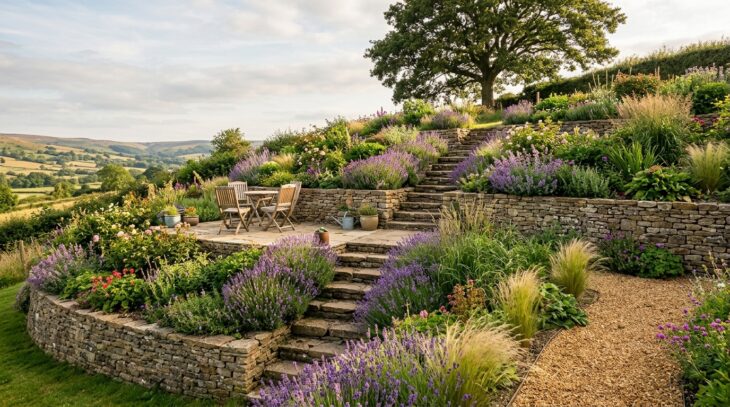
A slope can feel like the problem that rules your whole garden. Water runs off it, mowers slide on it, soil washes down it, and the flat, usable space you actually want never seems to exist. But a hillside is also the one thing a flat plot can never offer: drama, long views, and the chance to build a garden in layers.
Contents
- 01. Terrace the Slope into Level Beds
- 02. Dry-Stone Retaining Walls
- 03. A Flight of Stone Steps
- 04. A Switchback Path That Eases the Gradient
- 05. Ground Cover to Hold a Steep Bank
- 06. A Hillside Rock Garden
- 07. Tiered Timber Decks
- 08. A Cascading Water Feature
- 09. Raised Beds Cut into the Slope
- 10. A Naturalistic Wildflower Bank
- 11. Gabion Retaining Walls
- 12. A Sunken Seating Terrace
- 13. Deep-Rooting Shrubs to Stabilize a Slope
- 14. A Rain Garden and Swale System
- 15. Terraced Lawn Steps
- 16. Cascading Container Displays
- 17. A Woodland Slope Garden
- 18. Sleeper Steps and Edges
- 19. A Slope of Ornamental Grasses
- 20. A Hillside Viewing Deck or Platform
- 21. Crib Walls and Living Retaining Structures
- 22. Mediterranean Terraces with Herbs and Olives
- 23. A Slide, Climbing Wall, or Play Slope for Kids
- 24. Layered Perennial Hillside Borders
- 25. Combine Levels: The Whole Hillside Garden
The ideas here run from major projects to weekend fixes: terracing and retaining walls, stone steps and switchback paths, ground-cover planting that holds a bank together, rock gardens, tiered decks, rain-handling swales, and clever seating that turns the gradient into a feature. There is something for a gentle grassy incline and something for a near-vertical bank, for tight budgets and ambitious ones.
Read through and match the ideas to your slope. Gentle inclines can be planted and softened; steep banks usually need terracing or serious ground cover first. Most sloped gardens end up combining a few of these, so pick the ones that suit your gradient, your budget, and how much of the hill you want to tame.
01. Terrace the Slope into Level Beds
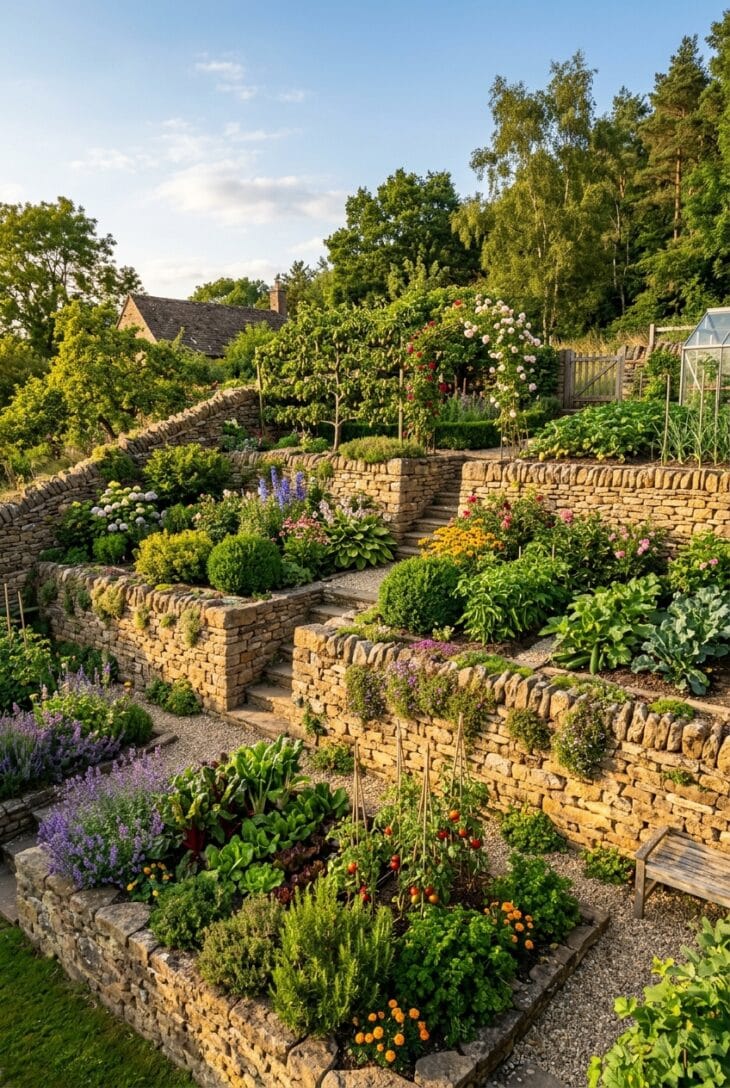
What you see A hillside cut into a flight of level shelves, each held by a low stone wall and brimming with shrubs, perennials, and rows of vegetables. The slope that was once a struggle now climbs in tidy, usable steps, warm stone glowing in the afternoon light. It reads as deliberate and generous, a garden with real depth.
Why it works Terracing is the single most transformative thing you can do to a slope, because it converts unusable gradient into flat, plantable, walkable ground. Level beds stop soil and water washing downhill, make planting and harvesting easy, and turn one awkward angle into several outdoor rooms. It is the backbone that most other slope ideas hang from.
How to get it For walls under about 3ft (90cm) you can often build dry-stone or timber-sleeper retainers yourself; anything higher, or holding back a heavy or wet bank, needs an engineered wall and proper drainage behind it, so get advice. Always lay a gravel backfill and a drainage pipe behind each wall so water pressure can’t push it out. Work down from the top, cutting into the slope and using the spoil to level each terrace. Start with two or three wide terraces rather than many narrow ones.
02. Dry-Stone Retaining Walls
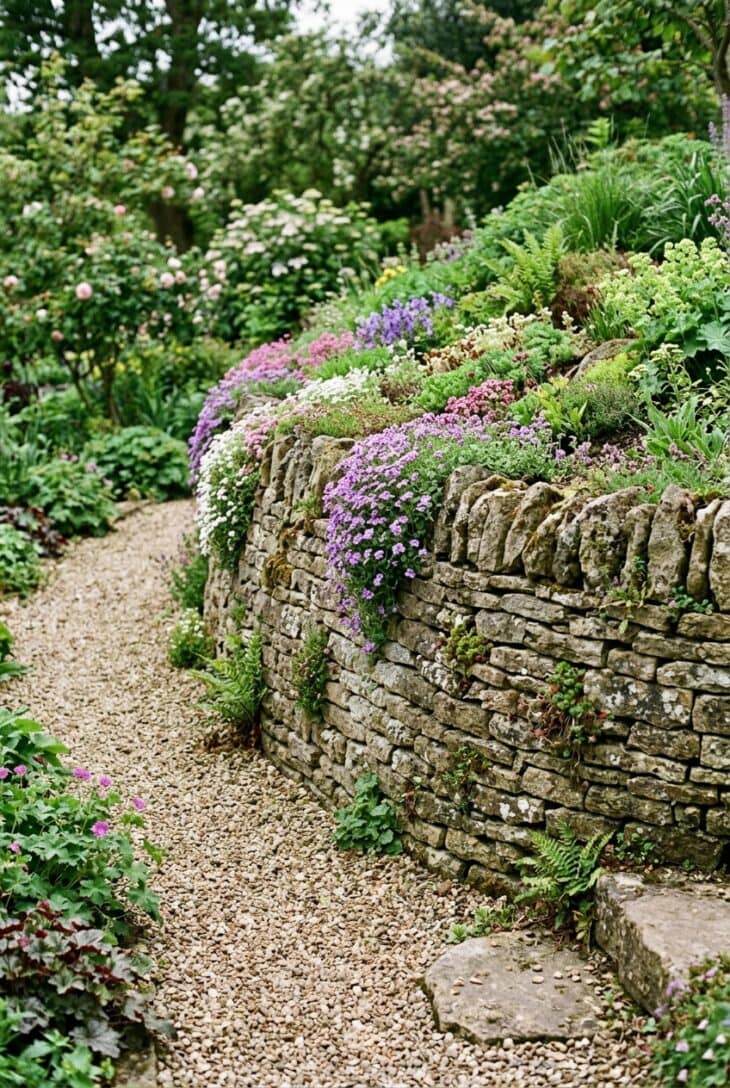
What you see A gently curving wall of weathered local stone, fitted without mortar, holding back a bank of soil and planting. Aubretia and small alpines spill from the gaps between the stones, softening the face into a living surface. A gravel path runs along its foot, and the whole thing looks as if it has always been there.
Why it works A dry-stone wall retains a slope while draining freely through its joints, so water never builds up behind it the way it can behind solid masonry. The crevices double as planting pockets, turning a structural wall into a vertical rock garden. It suits rural and cottage gardens perfectly and, built well, lasts for generations with no mortar to crack.
How to get it Build with a slight backward lean (a “batter”) of about 1in per foot of height, setting the largest stones at the base and packing the back with rubble and gravel for drainage. Keep courses roughly level and stagger the joints like brickwork so nothing lines up. Push soil and small alpines such as aubretia (Aubrieta deltoidea), thyme, and saxifrage into the gaps as you build. For anything over 3ft (90cm), get an experienced waller involved.
03. A Flight of Stone Steps
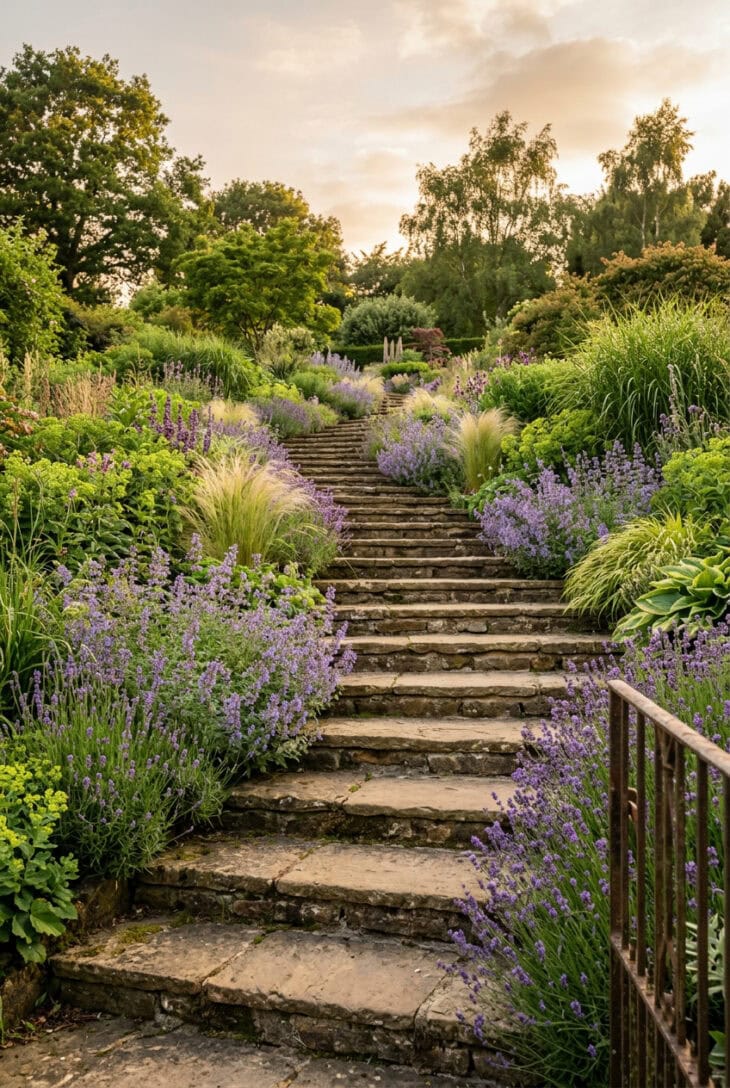
What you see A generous flight of natural stone steps climbing the slope, treads wide and shallow enough to stroll rather than clamber, with lavender, catmint, and grasses spilling over the edges. The steps curve gently as they rise, drawing the eye up the hill. They feel like an invitation to explore the garden’s upper reaches.
Why it works Steps are how you actually use a slope day to day, turning a scramble into a comfortable climb and giving the garden a clear, satisfying route. Made wide and generous, with planting softening the edges, they become a feature in their own right rather than mere access. Gentle, shallow steps also feel far more relaxed than a steep, ladder-like run.
How to get it Aim for deep treads of 15 to 18in (38 to 45cm) and low risers of 5 to 6in (13 to 15cm) so the climb feels easy; the shallower the riser, the more relaxed the ascent. Bed stone or brick steps on a compacted, well-drained base with a slight forward fall so water sheds off. Make them at least 3 to 4ft (90 to 120cm) wide so two can pass and planting can crowd the sides. Break a long run with a level landing to rest the eye and the legs.
04. A Switchback Path That Eases the Gradient
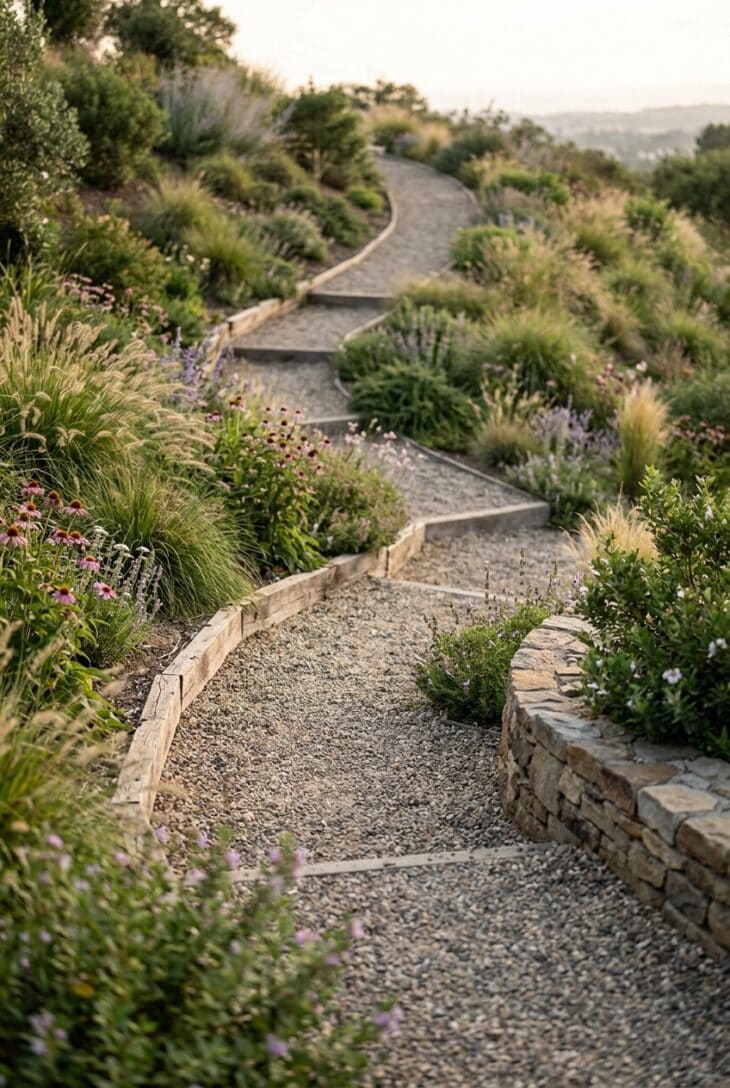
What you see A gravel path that zig-zags up the slope in long, gentle diagonals rather than charging straight at it, easing the climb into something you barely notice. Low edges hold the path in place, and grasses and shrubs crowd each bend so you never see the whole route at once. It curves out of sight near the top, promising more.
Why it works A slope that is too steep for comfortable steps becomes easy on a switchback, because traversing across the gradient cuts the effective steepness dramatically. It also makes the garden feel bigger, since the winding route hides the destination and stretches the journey. For anyone who struggles with steps, a gently graded path is the accessible way up.
How to get it Set out the path to cross the slope at a shallow angle, aiming to keep the gradient under about 1 in 12 if you want it wheel-friendly, using the bends to gain height. Cut into the bank and build a low retaining edge on the downhill side to create a level running surface. Surface it in bound gravel or stone for grip, and plant the bends to disguise the turns. Widen it to at least 3ft (90cm) so it feels like a route, not a goat track.
05. Ground Cover to Hold a Steep Bank
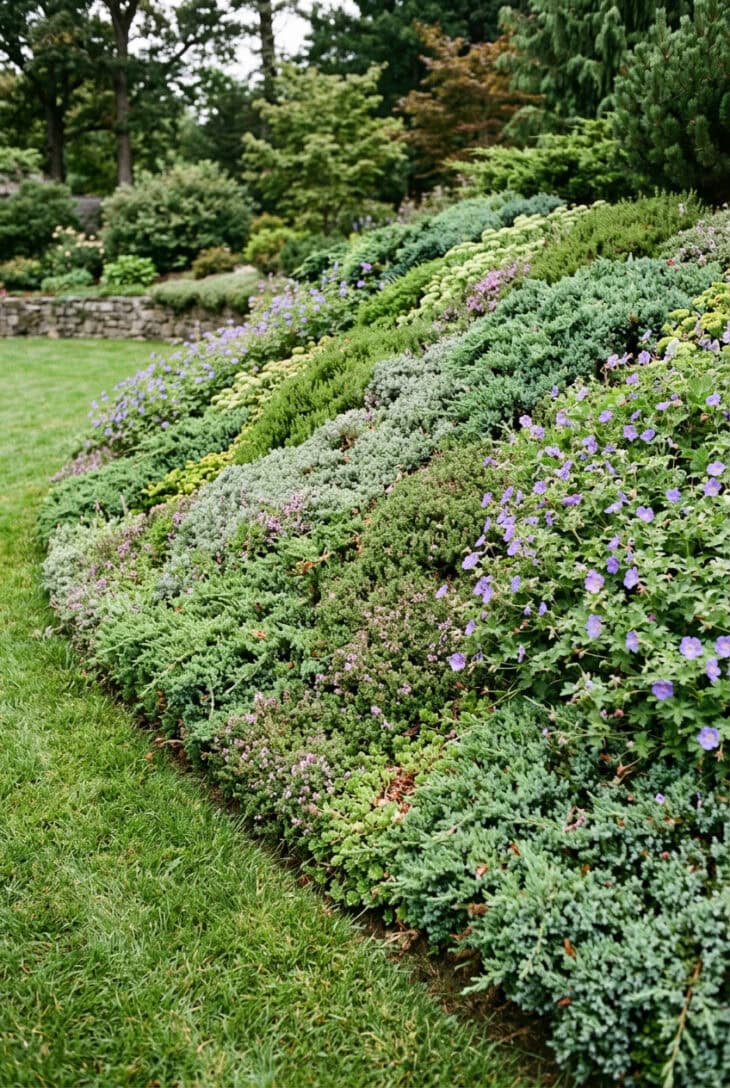
What you see A steep bank knitted together by low, spreading plants: silver-green junipers, creeping thyme, and hardy geraniums woven into a continuous tapestry with not a scrap of bare soil showing. The slope looks settled and green rather than raw and eroding. At its foot, a strip of lawn meets the planting cleanly.
Why it works On a bank too steep to mow or terrace cheaply, dense ground cover is the answer: the mat of roots binds the soil against erosion while the foliage shades out weeds and shrugs off the need for maintenance. Once established, it holds the whole slope with no mowing and little care. It is the classic low-cost fix for a difficult bank.
How to get it Plant vigorous, spreading, deep-rooting species close together: creeping juniper (Juniperus horizontalis), hardy geranium (Geranium ‘Rozanne’), creeping thyme, or bearberry (Arctostaphylos uva-ursi). Plant through a biodegradable erosion-control mat on very steep or bare banks to hold the soil until roots take over. Mulch heavily and water well for the first year while they knit together. Space for fast coverage, and within two seasons the bank looks after itself.
06. A Hillside Rock Garden
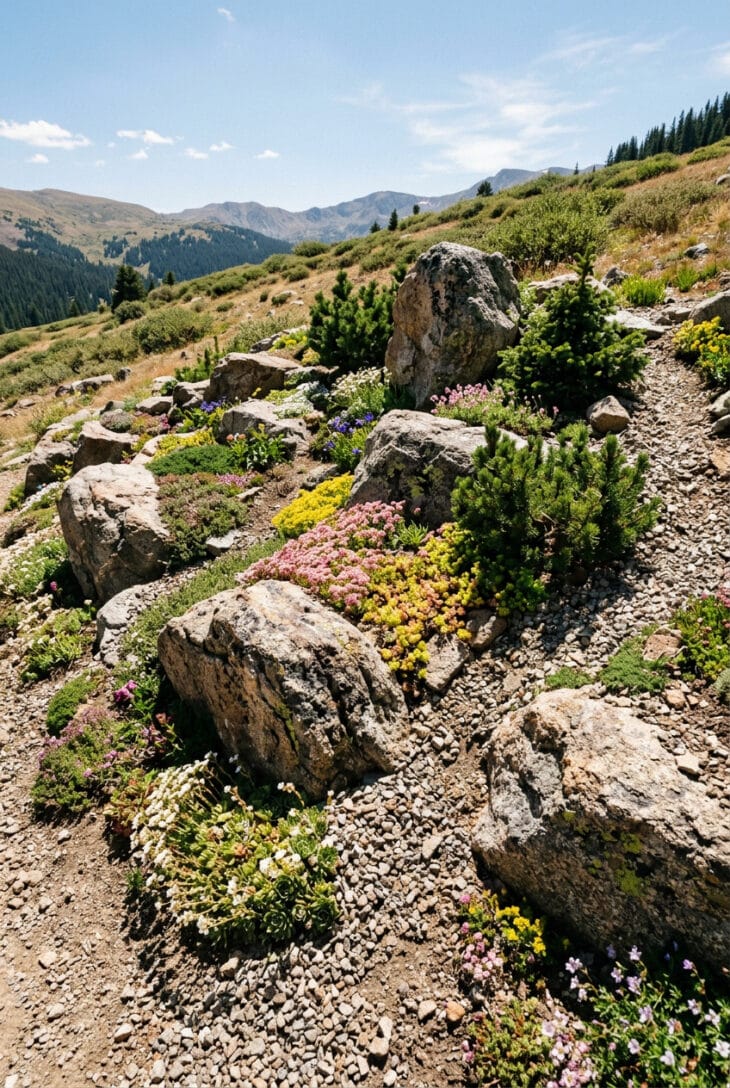
What you see Large weathered boulders bedded into the hillside as if they had surfaced there naturally, with saxifrage, sedum, and dwarf conifers tucked into the pockets between them. Gravel scree flows down the gaps like a dry stream. The whole slope reads as a sunny alpine landscape in miniature.
Why it works A slope is the ideal home for a rock garden, because the gradient gives the sharp drainage alpine plants demand and lets you display each rock and plant at a natural viewing angle. The rocks also do structural work, anchoring the soil and breaking the slope into stable pockets. It turns a drainage problem into the garden’s greatest asset.
How to get it Bury each boulder by at least a third, tilting them back into the slope so they look bedded and shed rain inward to the roots. Use a free-draining gritty soil mix and top with gravel to keep plant collars dry. Plant sun-loving alpines: saxifrage, houseleeks (Sempervivum), creeping sedum, and dwarf conifers, matching them to the aspect. Group rocks of the same stone type with their strata running the same way for a natural look.
07. Tiered Timber Decks
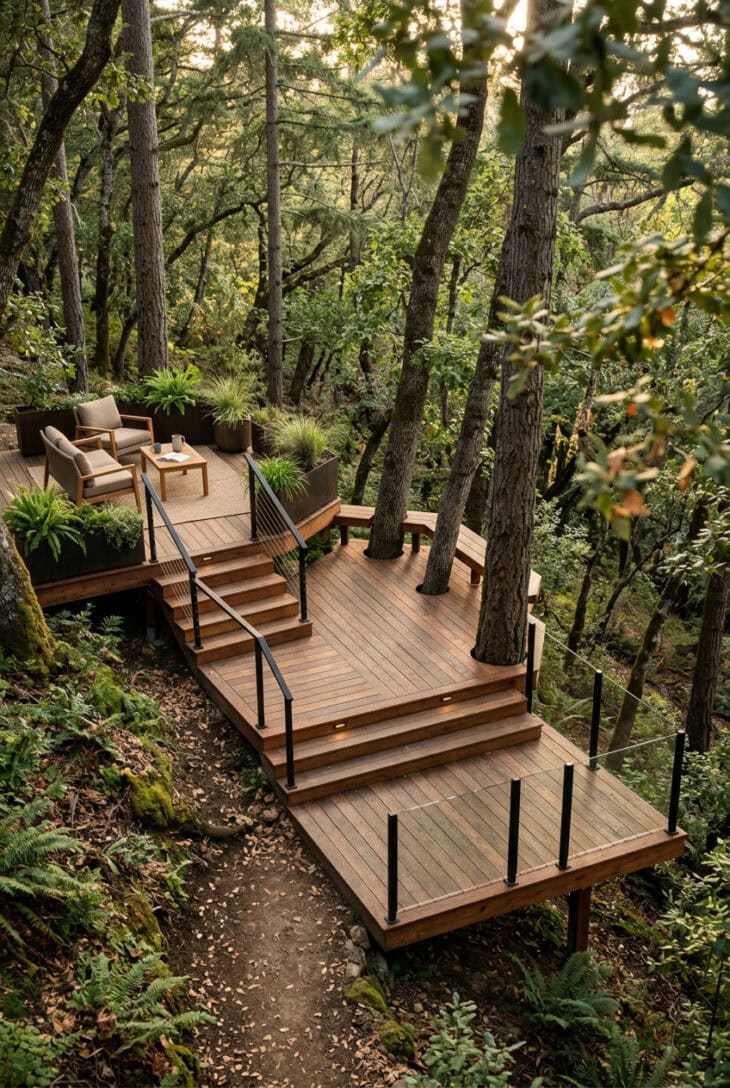
What you see Two or three timber deck platforms stepping down the slope, warm hardwood boards floating out over the fall of the land and linked by short runs of steps. The upper deck holds a table and chairs, the lower one a pair of loungers, each level catching a different view through the trees. It feels like a treehouse grown up.
Why it works Decking is often the smartest way to get flat, usable space on a steep or awkward slope, because it can be built on posts over ground you could never economically excavate and level. Splitting it into tiers follows the gradient gracefully and creates distinct zones for dining, lounging, and views. You gain real living space without moving a mountain of soil.
How to get it Support the decks on posts set in concrete footings dug to firm ground, sizing the frame for the span and the slope, and get structural advice for anything high off the ground. Use a durable hardwood or a quality composite, and fit non-slip strips or grooved boards, as sloped sites stay damp. Link levels with wide, well-lit steps and add a sturdy balustrade wherever there’s a drop. Leave gaps for existing trees to grow through.
08. A Cascading Water Feature
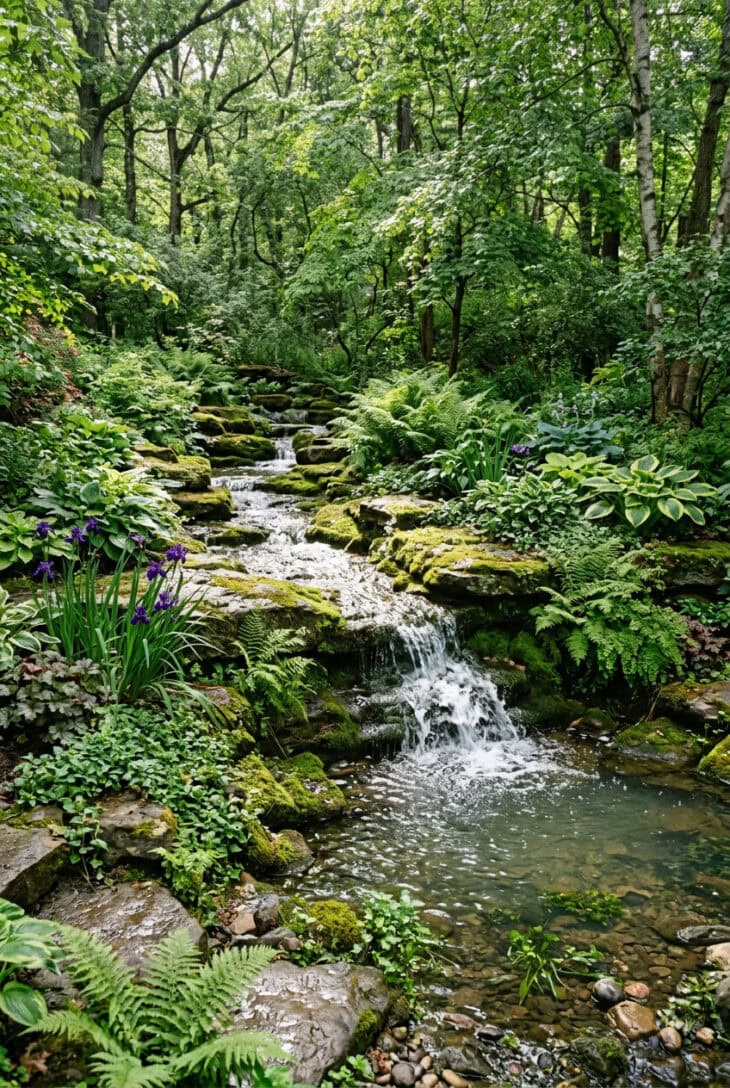
What you see A stream tumbling down the slope over a series of stone ledges into a small pool at the bottom, ferns, hostas, and irises crowding the water’s edge and moss greening the wet rocks. The sound of moving water fills the garden and cool air rises off the pool. The whole descent feels like a natural mountain rill.
Why it works A slope is a gift to a water feature, because gravity does the work a pump would otherwise fake: water genuinely wants to fall, so a cascade looks and sounds completely natural. It uses the gradient rather than fighting it, adds sound and wildlife, and makes a virtue of the height. Few features suit a hillside as perfectly as falling water.
How to get it Build the watercourse as a series of small pools and falls linked by a butyl liner, with a pump at the bottom returning water to a header pool at the top through a hidden pipe. Set stones to overhang each drop so water leaps clear and sounds right. Plant the margins with moisture-lovers such as hostas, ferns, and Iris sibirica. Disguise the liner edges with stone and planting, and fit an appropriately sized pump for the height and flow you want.
09. Raised Beds Cut into the Slope
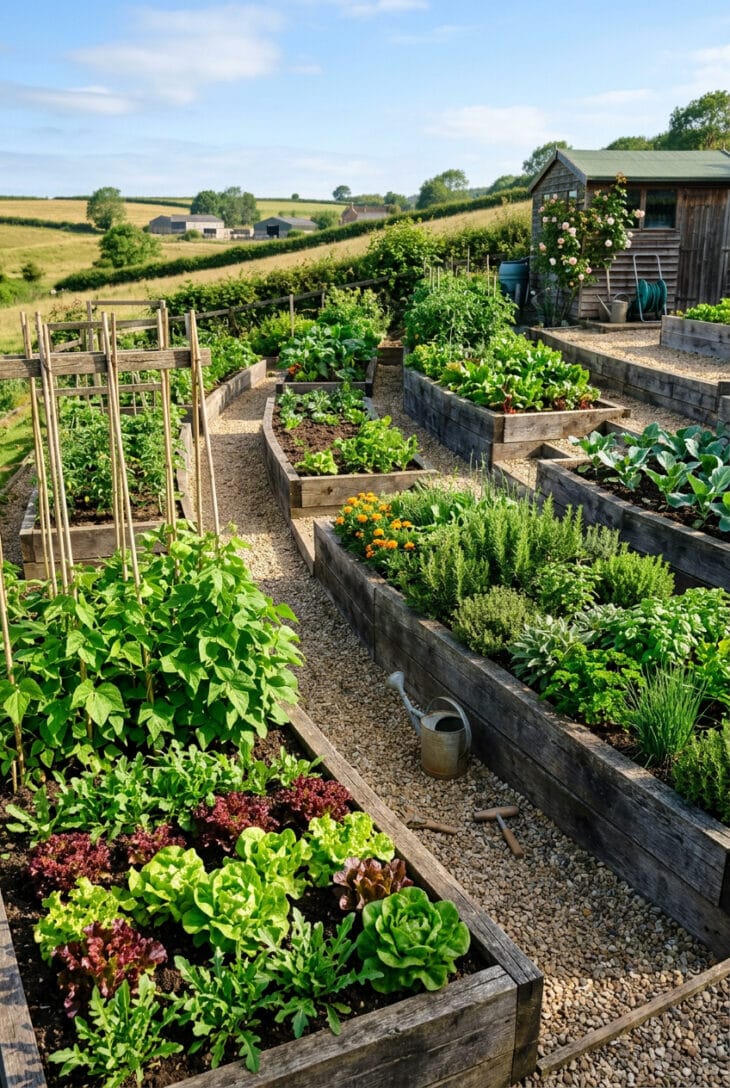
What you see A run of timber raised beds cut level into a gentle slope, each one stepped slightly above the last, brimming with lettuces, climbing beans, and herbs. Narrow gravel paths thread between them, and the whole hillside has become a productive kitchen garden. Everything sits flat and reachable despite the fall of the land.
Why it works Raised beds are a simpler, cheaper way to terrace a modest slope than full retaining walls, and they solve the same core problems: they hold level soil, stop it washing downhill, and put the growing surface at a comfortable height. On a slope they also drain beautifully. For anyone who wants to grow food on a hill, these raised bed designs are the easiest start.
How to get it Set each bed with its downhill side taller than its uphill side so the top of the frame runs level, cutting a little into the bank behind and backfilling to the brim. Build from rot-resistant boards or sleepers at least 10 to 12in (25 to 30cm) high. Keep paths between them level and firm, in gravel or bark, so you’re not working on a slope. Fill with a rich soil and compost mix, and orient the rows across the slope to slow any runoff.
10. A Naturalistic Wildflower Bank
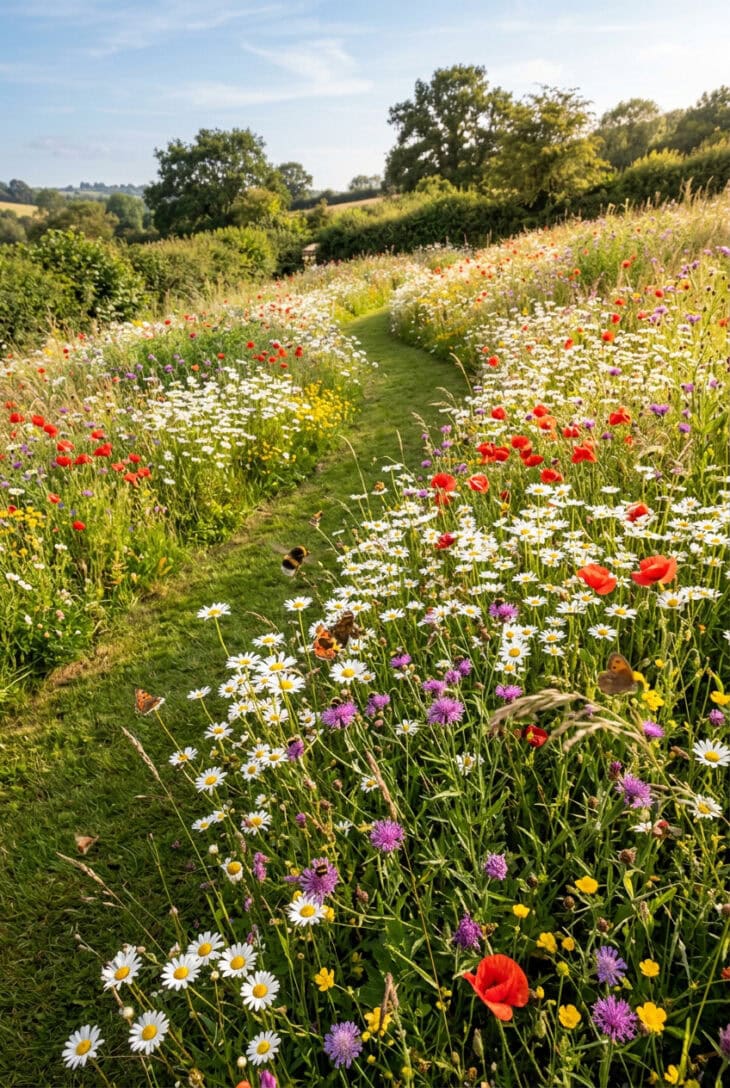
What you see A sunny bank given over to a wildflower meadow: oxeye daisies, red poppies, and knapweed threaded through swaying grasses, with butterflies and bees working the flowers. A single mown path curves through the color, inviting you in. The slope hums with life instead of demanding to be mown.
Why it works A meadow is the perfect answer to a slope that is too steep or too large to mow as lawn: it needs cutting just once or twice a year, its deep roots hold the soil, and it becomes a haven for pollinators. It turns a maintenance headache into the most alive part of the garden. On poor, free-draining slope soil, wildflowers often thrive where grass struggles.
How to get it Sow a wildflower meadow mix suited to your soil in fall or spring onto cleared, raked ground, ideally poor soil, as rich ground favors grasses over flowers. For quicker results on a bank, lay wildflower turf, which also holds the surface immediately. Cut once in late summer after the flowers have set seed, and rake off the clippings to keep fertility low. A mown path through it makes the meadow feel intentional rather than neglected.
11. Gabion Retaining Walls
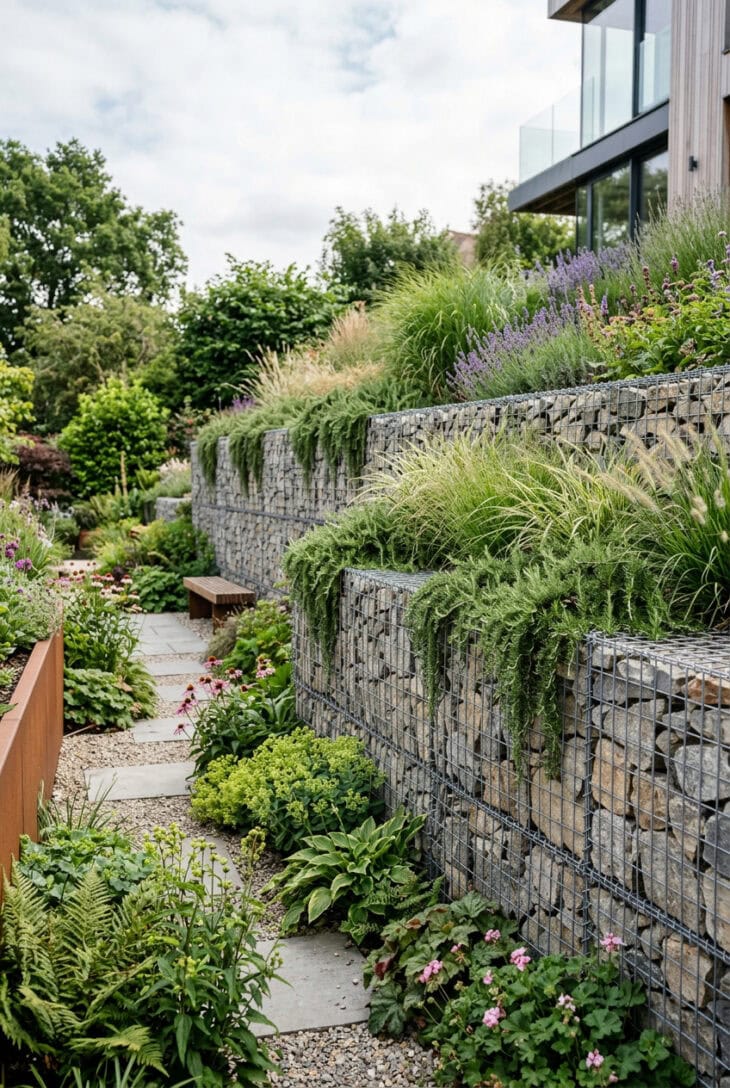
What you see A retaining wall built from stone-filled steel cages stepping up the slope in two clean tiers, its rugged stone texture set against crisp geometric lines. Grasses and trailing rosemary soften the top edge, and a contemporary garden sits on the level below. It looks both industrial and completely at home in the landscape.
Why it works Gabions retain a slope with the strength of stone but far less skill and cost than a mortared wall, and their free-draining structure never builds up the water pressure that topples solid walls. They flex slightly rather than crack, which suits unstable or wet banks. The bold, textured face suits modern gardens and reads as a real landscape feature.
How to get it Set galvanized gabion baskets on a compacted, level footing and fill them by hand with hard, angular stone, packing the visible faces tight and stepping each tier back into the slope for stability. Line the back with a geotextile membrane so soil can’t wash through the stones. Keep individual tiers to around 3ft (90cm) and step them rather than building one tall wall. Plant the tops and bases to blend the structure into the garden.
12. A Sunken Seating Terrace
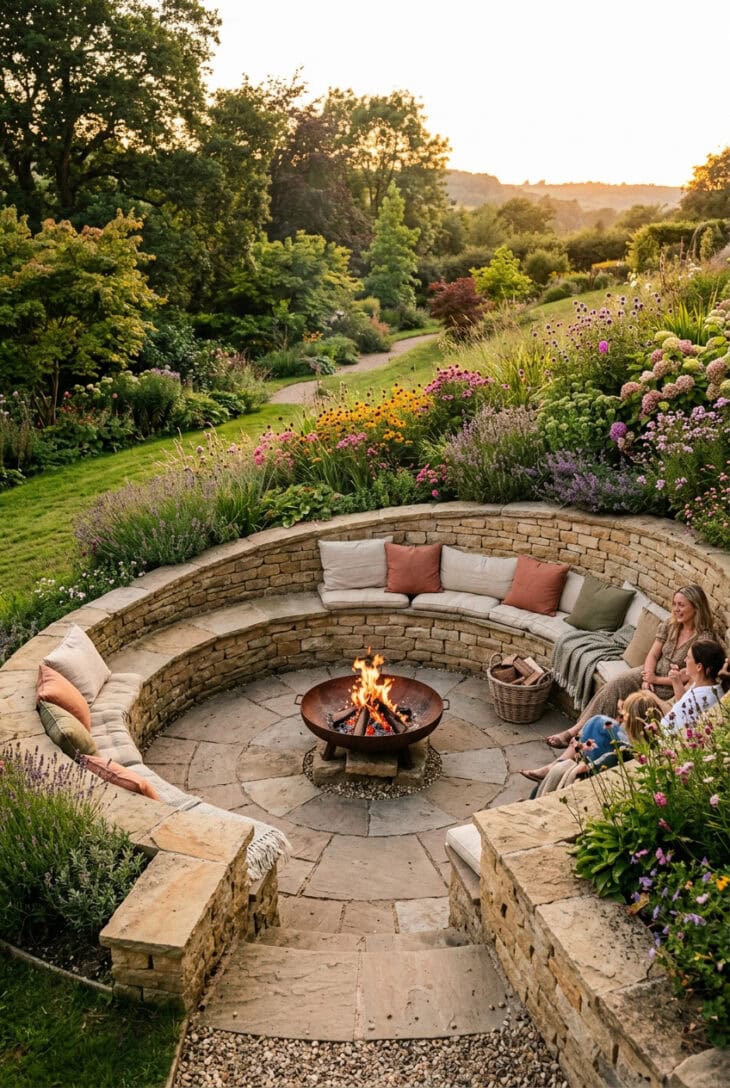
What you see A circular patio carved into the slope, ringed by a low curved wall that doubles as built-in bench seating, with a fire bowl glowing at its center. Planting spills over the retaining wall above, so you sit cupped in the hillside. In the evening light it feels like a sheltered, secret room dug into the garden.
Why it works Cutting a seating area into a slope creates instant shelter and intimacy, because the surrounding banks block wind and enclose the space. The retaining wall does double duty as seating, saving room and money, and the sunken feel makes the spot cozy and private. It turns the very steepness that seemed a problem into a sense of refuge.
How to get it Excavate into the slope to create a level circle, retaining the cut faces with a curved wall of stone, brick, or rendered block built to seat height, around 18in (45cm), where you want bench seating. Ensure water drains away from the sunken area with a channel or soakaway, since low points collect runoff. Pave the floor and top the seat-walls with a comfortable capping and cushions. Plant the banks above so greenery tumbles down around you.
13. Deep-Rooting Shrubs to Stabilize a Slope
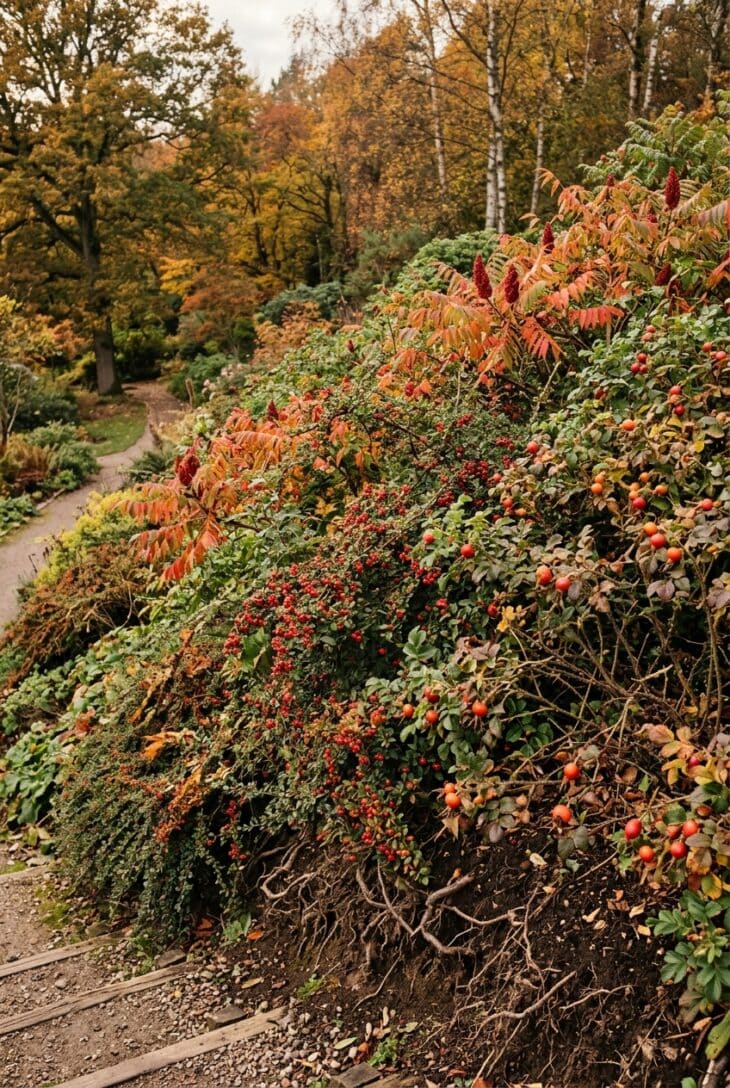
What you see A whole bank clothed in a mass of robust shrubs, spreading cotoneaster studded with berries, feathery sumac, and tough shrub roses, their branches knitting across the slope. The planting is informal and full, covering every inch of the gradient. Beneath the surface, you know their roots are gripping the soil.
Why it works Deep, woody roots are nature’s soil anchors, and a slope planted thickly with strong shrubs is far more stable than bare or grassed ground. The shrubs bind the bank, break the force of heavy rain before it hits the soil, and need almost no maintenance once established. It is a robust, permanent way to hold a slope that would be awkward to build on.
How to get it Choose tough, spreading, deep-rooting shrubs suited to your soil and light: cotoneaster (Cotoneaster dammeri), shrub roses, sumac (Rhus typhina) for dry banks, or dogwood (Cornus) for damper ones. Plant closely and stagger the sumac and its neighbors so the roots interlock and no soil is left exposed. Mulch and water well through the first two years while they establish. Once away, they need only occasional pruning and hold the slope indefinitely.
14. A Rain Garden and Swale System
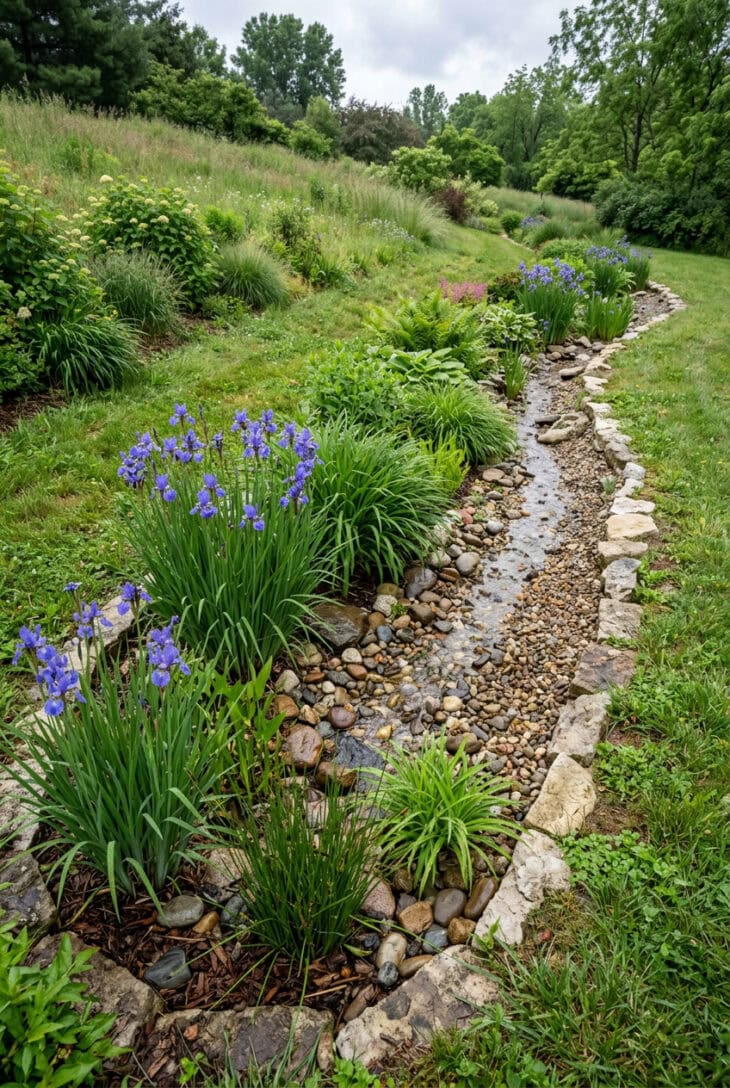
What you see A shallow, planted channel running across the slope, catching rainwater as it races downhill and slowing it to a trickle, its base lined with gravel and edged with irises and rushes. At the bottom, the water gathers in a planted basin that soaks it gently away. After rain the whole system glistens and does its quiet work.
Why it works Slopes shed water fast, and that runoff causes the erosion, sodden bottoms, and washed-out beds that plague hillside gardens. A swale intercepts the flow across the gradient and a rain garden basin holds it where it can soak in, turning a drainage problem into an asset for moisture-loving plants. It protects everything downhill while looking like a border.
How to get it Dig a shallow, level-bottomed swale on the contour, across the slope rather than down it, so it catches and spreads water rather than channeling it. Direct the overflow to a rain garden basin, a shallow planted depression, sited at least 10ft (3m) from the house. Plant both with moisture-tolerant species such as Siberian iris, rushes, and rudbeckia that cope with wet and dry spells. Line the swale base with gravel to slow the flow and prevent scouring.
15. Terraced Lawn Steps
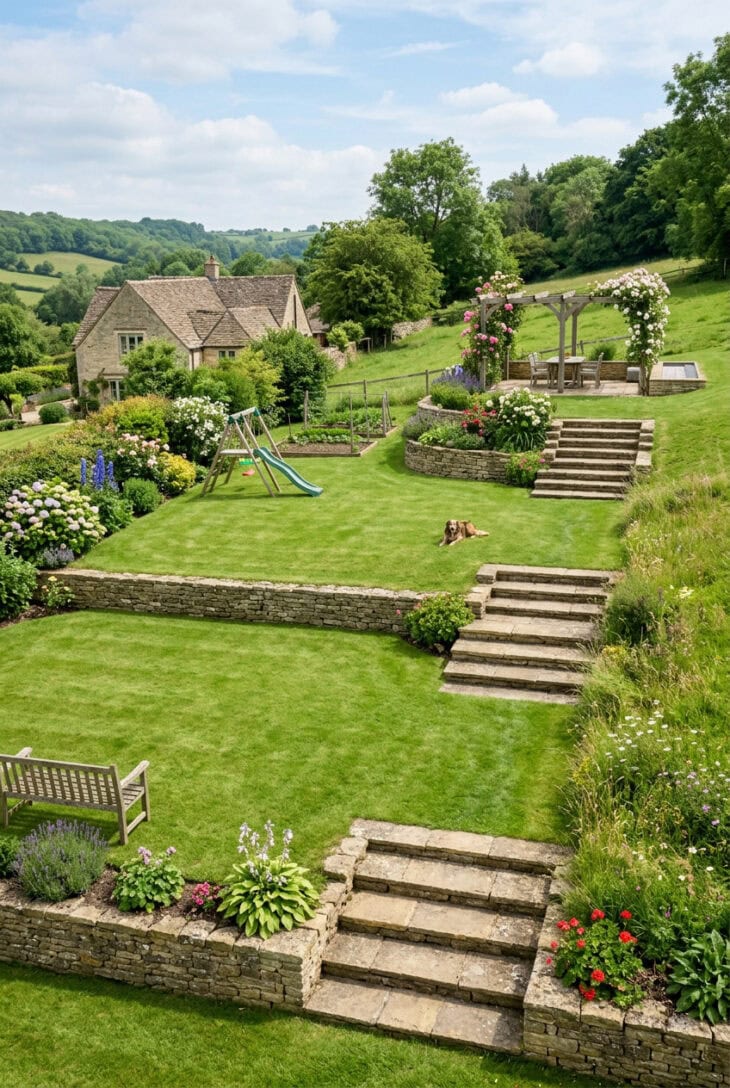
What you see A sloping garden divided into two or three broad, level lawns, each a neat green platform stepping up the hill and linked by wide grassy or stone steps. Low retaining edges hold each level crisp. It is clean, simple, and open, a hillside turned into flat spaces a family can actually use.
Why it works Not every slope needs elaborate planting; sometimes what a family wants is flat, safe grass for children and games, and terracing the lawn delivers exactly that. Level platforms are safe to play and easy to mow, unlike a slope where mowers slip and balls roll away. It keeps the garden open and low-key while solving the gradient.
How to get it Cut the slope into level terraces, retaining each step with a low wall or a turfed bank at no steeper than 45 degrees so it can still be mown or strimmed. Keep the level lawns generous and the linking steps wide and obvious for safety. Lay good drainage under the lawns, as cut-and-fill ground can hold water. Sow or turf with a hard-wearing grass mix, and edge each terrace cleanly to keep the tiers looking deliberate.
16. Cascading Container Displays
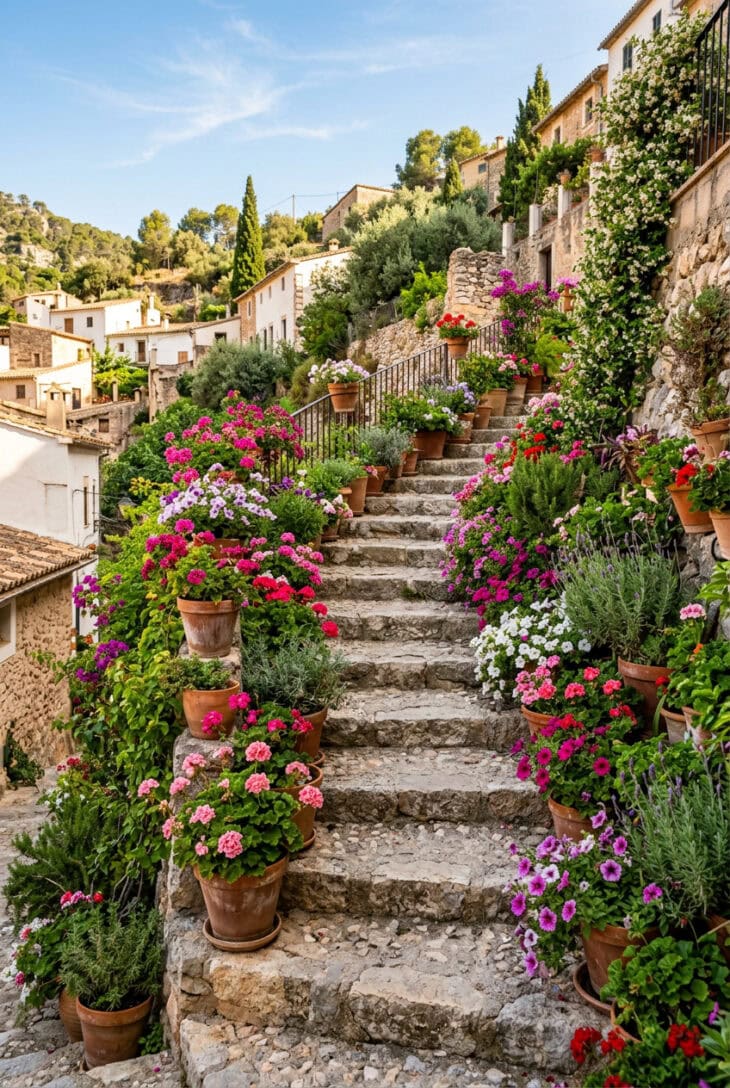
What you see A flight of steps lined at every level with terracotta pots, trailing pelargoniums, petunias, and herbs tumbling down them in a river of color. The slope becomes a staged display, each pot lifted and shown off by the level above. It has the sun-soaked, layered feel of a Mediterranean hillside.
Why it works A slope naturally tiers containers so each is displayed above the last, creating a cascade of color no flat arrangement can match. Pots let you garden a slope with no digging, retaining walls, or soil disturbance, which is ideal for renters, steep steps, or paved terraces. You can move and refresh the display with the seasons, and these container garden ideas suit even the most awkward gradient.
How to get it Group pots in odd numbers and varied heights along the edges of steps and terraces, keeping them clear of the walking line so no one trips. Choose trailing plants that spill downward, such as ivy-leaved pelargoniums, trailing petunias, and creeping herbs, to exaggerate the cascade. Use a soil-based compost so the pots don’t blow over and stand them on pot feet for drainage. On a hot, sunny slope, group thirsty pots for easy watering and consider a drip line.
17. A Woodland Slope Garden
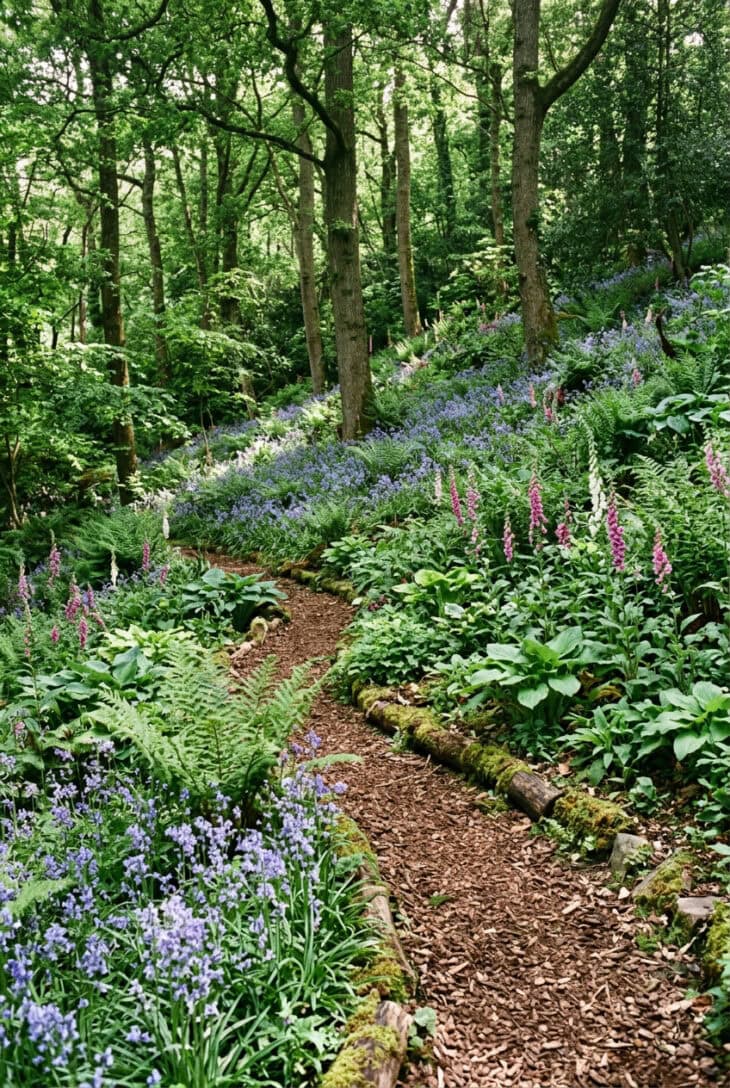
What you see A shady slope beneath tall trees carpeted with ferns, hostas, foxgloves, and drifts of bluebells, a bark path winding gently up through the dappled light. The gradient rolls away in soft layers of green, cool and quiet. It feels less like a garden and more like a fragment of woodland you can walk into.
Why it works A shady, tree-covered slope is one of the hardest sites to plant as anything else, but as a woodland garden it comes into its own: the layered gradient displays shade lovers beautifully and the tree roots already stabilize the bank. Working with the existing conditions rather than against them gives a lush, low-maintenance result. It is the natural answer to a wooded hillside.
How to get it Plant in generous drifts of shade-tolerant woodlanders: ferns, hostas, foxgloves (Digitalis purpurea), epimedium, and spring bulbs like bluebells and wood anemone for early color. Improve the soil with leaf mold and mulch to mimic a forest floor. Wind a soft bark or gravel path up through the planting, using the trees as natural handrails and anchors. Let it look natural, with plants massed rather than dotted, and it will largely look after itself.
18. Sleeper Steps and Edges
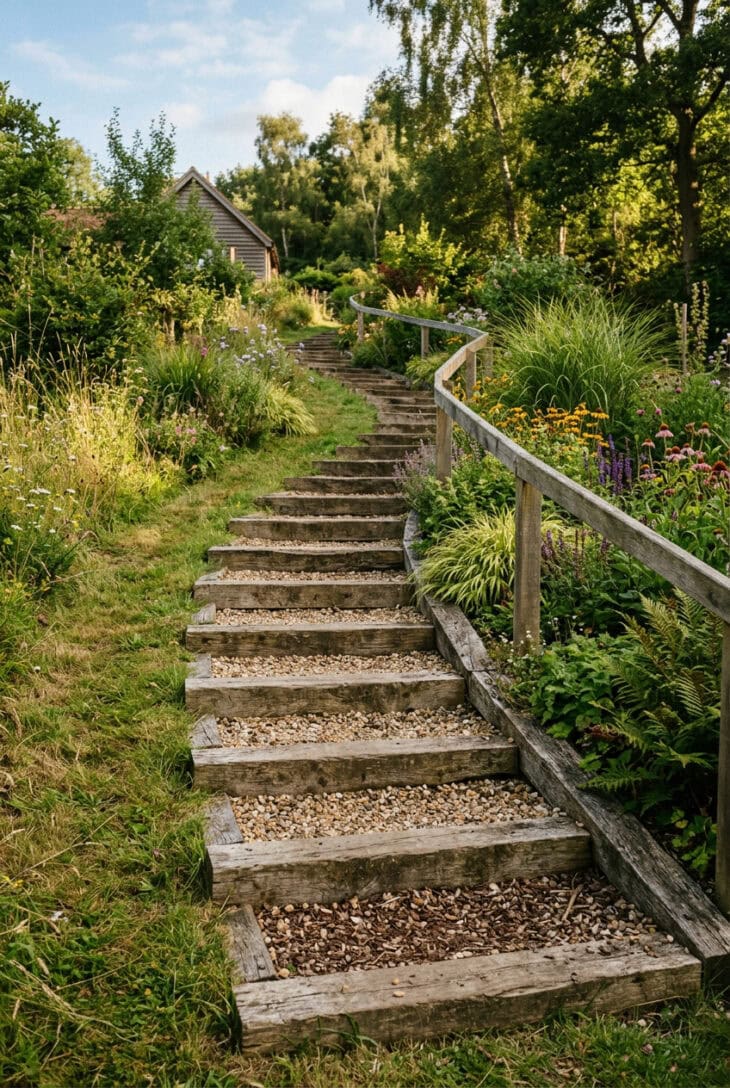
What you see Chunky timber sleepers set into a grassy slope as step risers, their treads filled with gravel or bark, climbing the hill in a solid, rustic run. More sleepers edge the beds alongside, planted with grasses and perennials. It has a sturdy, handmade, country feel, honest and unfussy.
Why it works Sleepers are the most cost-effective way to build solid steps and retaining edges on a slope, since a single chunky timber does the job of many bricks with a fraction of the labor. They handle level changes, edge beds, and form steps all in the same material, giving a cohesive look. Heavy and stable, they suit rustic, cottage, and family gardens.
How to get it Set each sleeper as a riser on a firm, compacted base, pinning it with steel rods or timber stakes driven through into the ground so it can’t shift. Fill the treads behind with compacted gravel or bark for grip and drainage, keeping them level. Use new or reclaimed hardwood sleepers, but avoid old creosote-treated railway ties near edibles or where children play. Stagger and pin edging sleepers the same way to build low retaining walls that match the steps.
19. A Slope of Ornamental Grasses

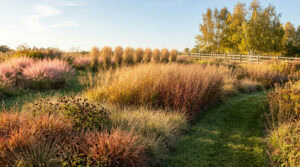
What you see A whole hillside planted in flowing drifts of ornamental grasses, miscanthus, stipa, and calamagrostis rippling down the slope in waves of gold and green. The low sun backlights the plumes, which sway and shimmer with every gust. The slope seems to move, alive with light and sound.
Why it works Grasses are made for slopes: their fibrous roots bind the soil, they thrive on the free drainage a gradient provides, and a hillside shows off their movement and backlit plumes as no flat bed can. Planted in bold drifts they cover a large bank cheaply and need cutting back just once a year. The result is contemporary, naturalistic, and full of life.
How to get it Plant in big, single-species drifts that flow down or across the slope, using maiden grass (Miscanthus sinensis), feather reed grass (Calamagrostis ‘Karl Foerster’), and Mexican feather grass (Stipa tenuissima) for a range of heights and textures. Space them to knit together and bind the soil, mulching well the first year. Cut everything back in late winter before new growth. Mix in a few late perennials like echinacea and rudbeckia for extra color among the grasses.
20. A Hillside Viewing Deck or Platform
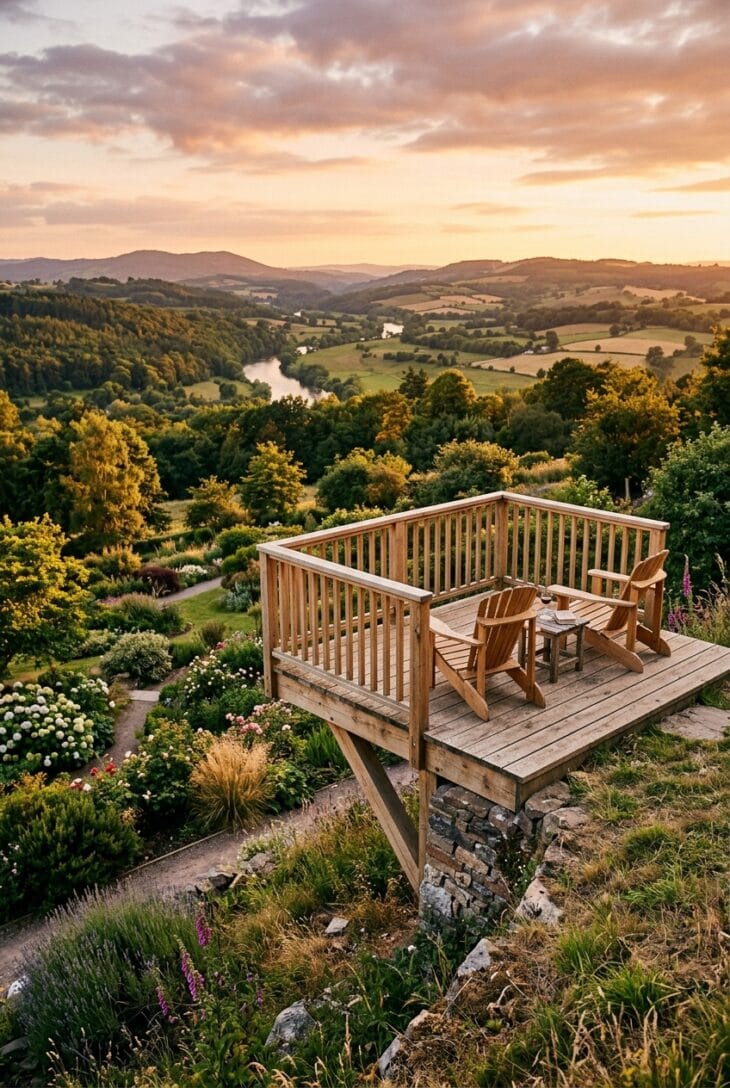
What you see A single timber platform projecting from the top of the slope, out over the garden and the landscape beyond, with a couple of chairs facing the view and a simple railing. It makes the most of the height the slope gives you, lifting you above the planting. From up here the whole garden, and everything past it, opens out.
Why it works The one thing a slope offers that flat gardens cannot is elevation and a view, and a viewing deck cashes that in. Placed at the high point, it turns the gradient into a vantage, giving the best seat in the garden with almost no groundwork beyond the platform itself. It celebrates the slope rather than merely coping with it.
How to get it Site the platform where the outlook is best, usually the top of the slope, and support it on posts set in concrete footings to firm ground, cantilevering it slightly over the fall for that floating feel. Get structural advice for anything raised well off the ground, and fit a secure railing at any drop. Keep it simple: a small deck, a couple of chairs, and nothing to compete with the view. Screen the supports below with planting so the platform appears to float.
21. Crib Walls and Living Retaining Structures
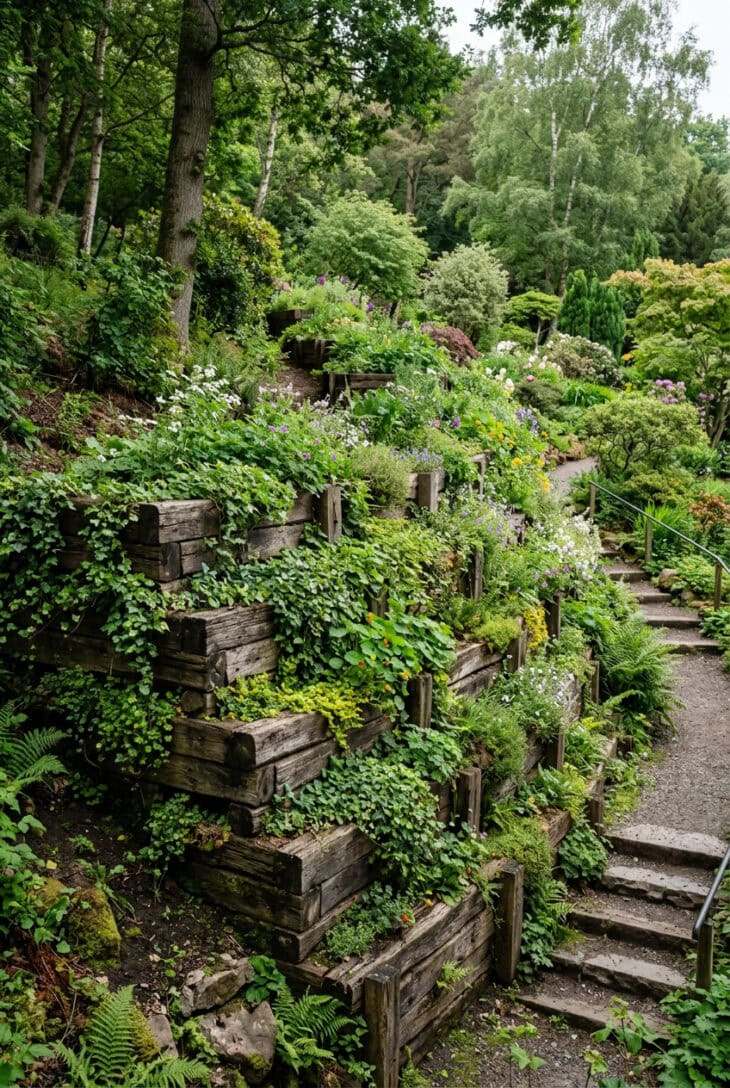
What you see A retaining structure built from interlocking timbers stacked like a log crib, each layer filled with soil and planted so that greenery spills from every level. Trailing and spreading plants have colonized the whole face, softening the engineering into a living, green wall. It holds the slope while looking like planting rather than construction.
Why it works A crib wall retains a steep bank while presenting a plantable, green face instead of a bare hard surface, so it holds the slope and gardens it at once. The open structure drains freely and the plant roots add to the stability over time. It is a softer, more naturalistic alternative to a solid wall on a tall or difficult bank.
How to get it Build the crib from treated timber or a proprietary concrete-crib system, tying it back into the bank and stepping it into the slope as it rises, on a proper engineered footing for anything tall. Fill each layer with good soil and plant as you build, working spreading and trailing species into every level so roots knit the whole face. Choose tough, deep-rooting plants suited to the aspect. For high or load-bearing walls, have the structure designed by an engineer.
22. Mediterranean Terraces with Herbs and Olives
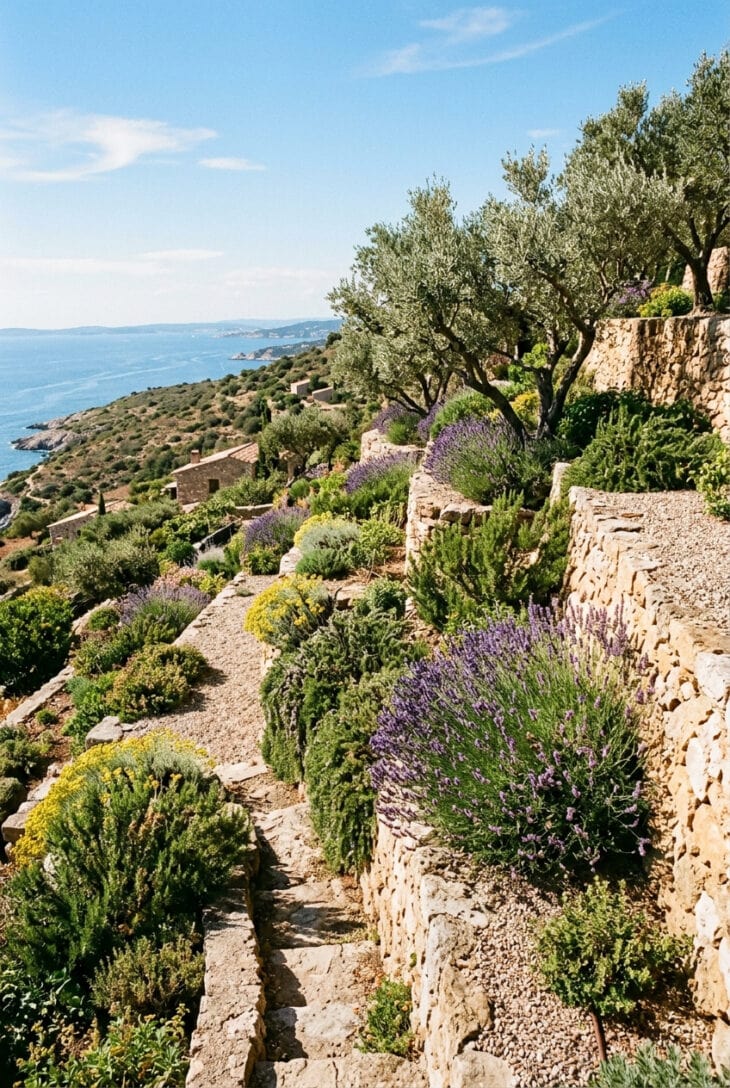
What you see Warm stone terraces stepping up a sun-baked slope, planted with silvery olive trees, lavender, rosemary, and santolina on gravel-topped levels. The air feels dry and aromatic, the planting silver and drought-proof against the pale stone. It has the unmistakable feel of a hillside garden somewhere hot and Mediterranean.
Why it works A sunny, free-draining slope recreates exactly the conditions Mediterranean plants evolved for: sharp drainage, full sun, and lean soil. Terracing gives them the gravelly, well-drained beds they love, and their silver, aromatic foliage suits the sun-baked look. It is a planting style that turns a hot, dry slope, a hard site for many plants, into an easy, fragrant success.
How to get it Top each terrace with a free-draining, gritty soil and a gravel mulch to keep roots dry and reflect heat. Plant drought-tolerant sun-lovers: olive (Olea europaea) where hardy, lavender (Lavandula angustifolia), rosemary, santolina, and cistus. Space them to show off each plant’s shape against the gravel. Water only to establish, then let them fend for themselves. A warm, south-facing slope is the ideal spot to try tender Mediterranean plants.
23. A Slide, Climbing Wall, or Play Slope for Kids
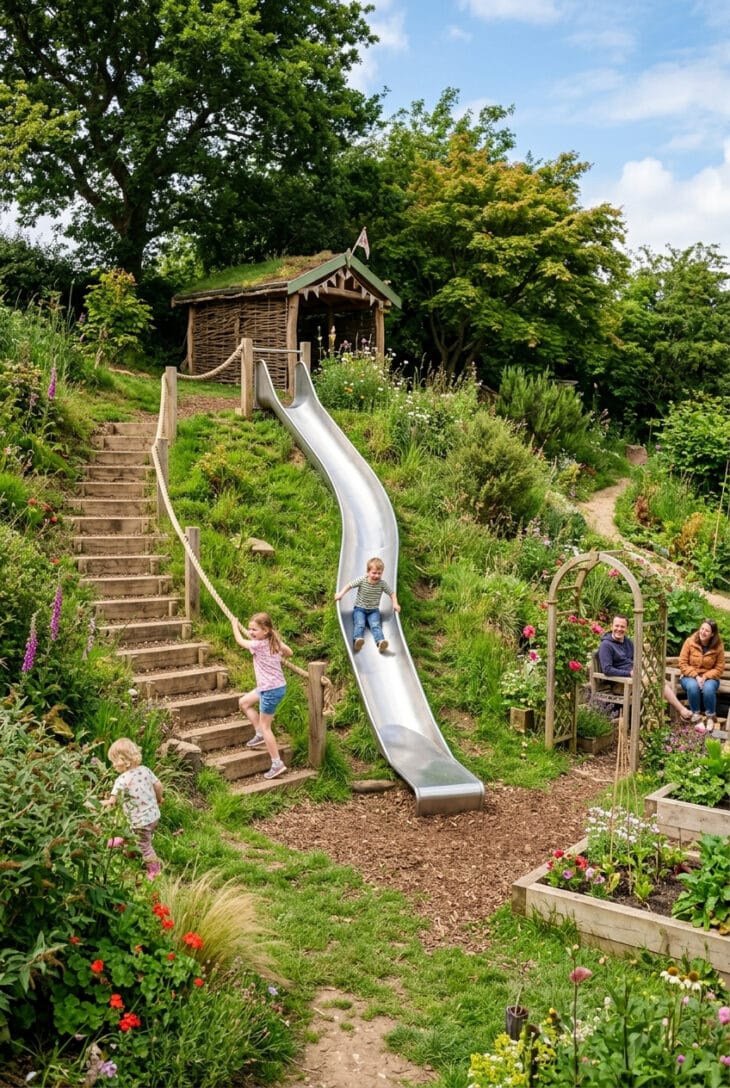
What you see A grassy bank turned into a natural playground: a metal slide set straight into the slope, timber climbing steps and a knotted rope up one side, and a little den tucked at the top. Children scramble up and whizz down where adults saw only an awkward gradient. It is a hillside that has become the best part of the garden for kids.
Why it works A slope is a ready-made adventure playground, and building play into the bank uses the gradient instead of fighting it. A slide needs a slope to work, a climbing rope needs a bank to climb, and the height that frustrates gardeners delights children. It turns the least usable part of the garden into the most fun, often at very little cost.
How to get it Set an embankment slide into the bank so the chute sits just above the grass, bedding it firmly, and add climbing steps, a scramble net, or a rope to one side for the way up. Keep landing areas soft with grass, bark, or play-grade mulch, and make sure the run-off at the bottom is level and clear. Choose robust, weatherproof equipment rated for the drop. A den or lookout at the top gives the climb a destination.
24. Layered Perennial Hillside Borders
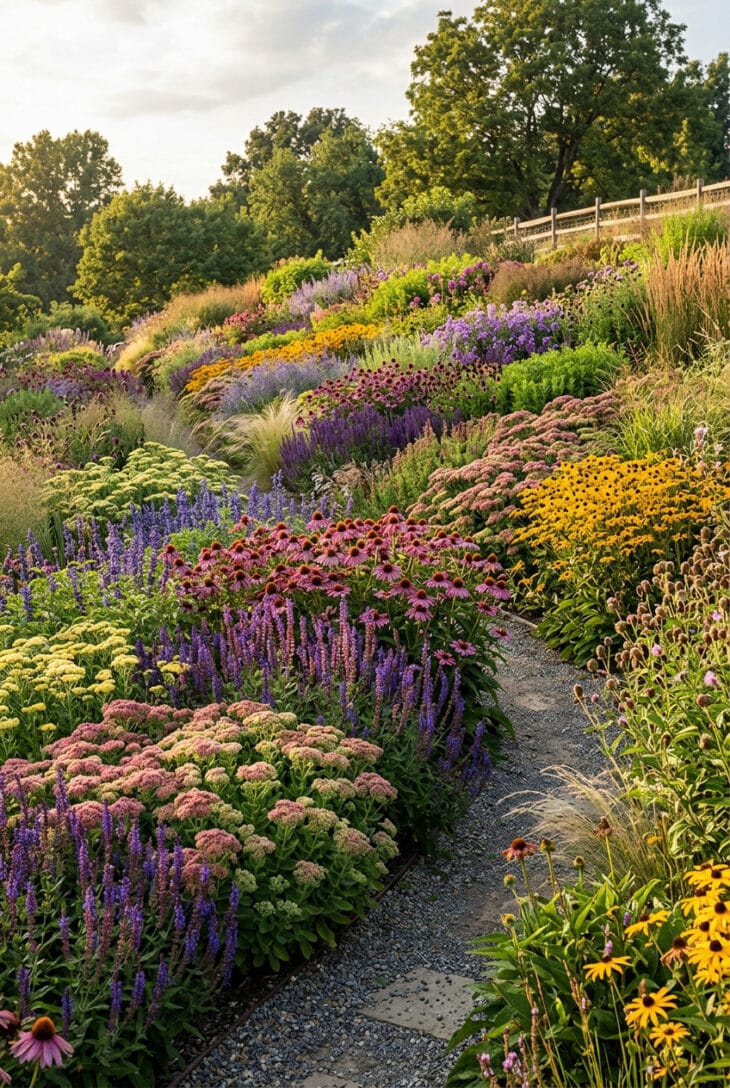
What you see A hillside banked with layered perennial borders that follow the contours, drifts of salvias, echinacea, rudbeckia, sedum, and grasses rising one above another in a rich tapestry of color and texture. Because the ground tilts toward you, every layer is on show at once, like a painting propped up to be seen. The whole slope becomes one deep, painterly border.
Why it works A slope is the perfect stage for perennials, because the tilt presents the planting to you face-on instead of foreshortened, so nothing hides behind anything else. Layering by height up the bank exaggerates that natural amphitheater effect, and deep perennial roots help hold the soil. It gives you the most spectacular border display a garden can offer.
How to get it Plant in bold drifts that run along the contours, grading from taller perennials and grasses higher up to lower, spreading ones at the front, so the whole slope is visible. Choose long-flowering, sturdy perennials such as Salvia nemorosa, echinacea, rudbeckia, and sedum that don’t need staking on a bank. Improve and mulch the soil well, and plant densely to shade out weeds and knit the roots together. Access the planting with steps or hidden stepping stones so you can weed and cut back without sliding.
25. Combine Levels: The Whole Hillside Garden
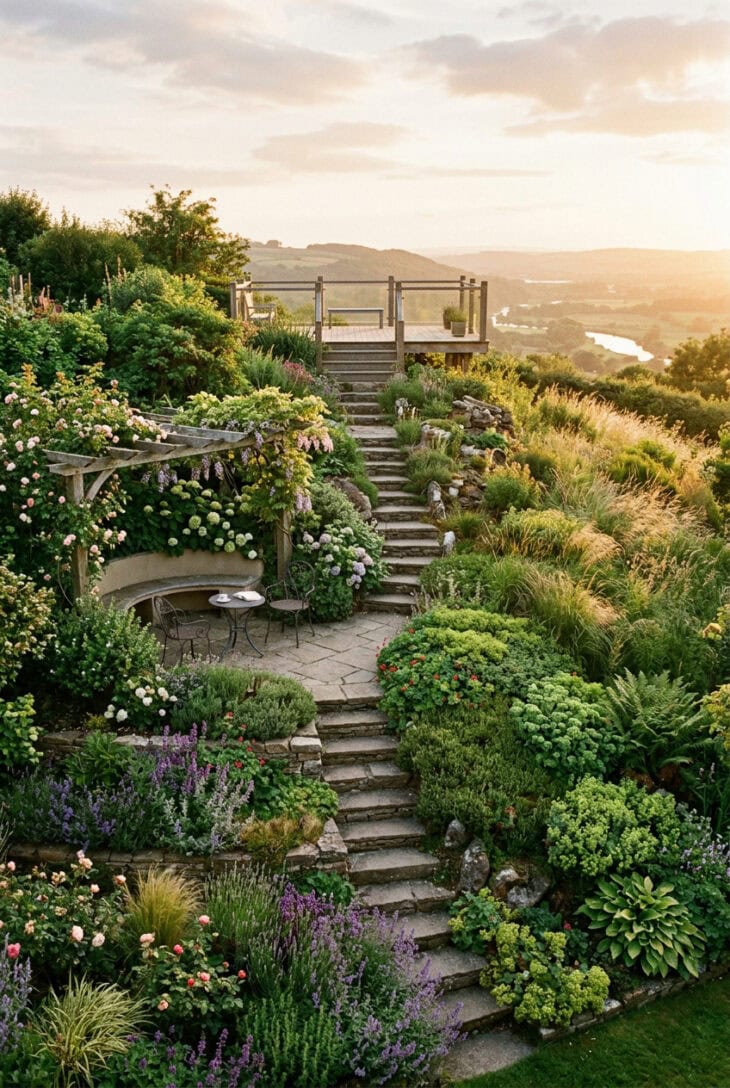
What you see A hillside handled as a whole, not a single problem: terraced beds low down, stone steps climbing through the middle, a seating terrace partway up, ground-cover and grasses clothing the steeper sections, and a viewing deck at the very top. Each part solves a different piece of the slope, and together they read as one cohesive garden. The gradient has become the design.
Why it works No single idea tames a whole slope, because a hillside is really several different sites stacked up: gentle sections that plant easily, steep pitches that need holding, flat spots to sit, and a high point for views. Matching each zone to the right solution, terracing where you can, planting where you can’t, sitting where the view is best, gives a garden that works with the land instead of flattening it. That is what turns a difficult slope into a memorable garden.
How to get it Start by reading the slope: note where it is gentle, where it is steep, where water collects, where the sun and the views are. Assign each zone a job, terraced beds or raised beds for the workable parts, retaining walls or ground cover for the steep parts, a sunken or level terrace for seating, a deck for the view, and link them all with steps and a graded path. Build it in phases over a few seasons, starting with the structural retaining and access, then layer in the planting. Let the finished garden celebrate the slope rather than disguise it.