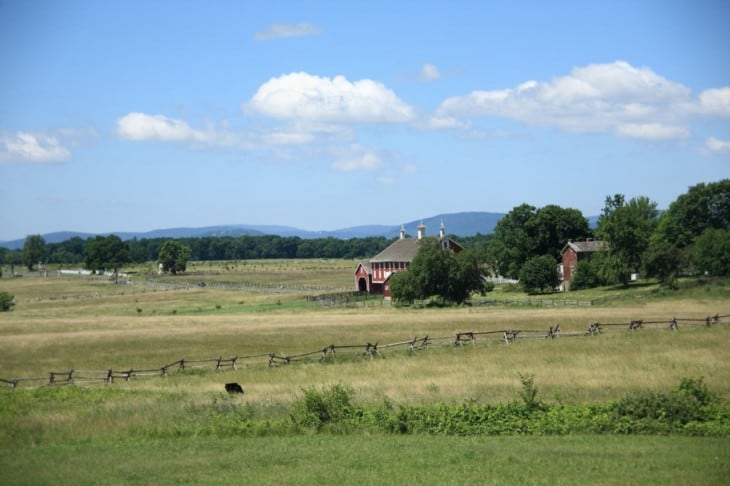
Pennsylvania means “Penn’s Woods”, and the name still fits: close to 60% of the state, about 17 million acres, is forested. Most of it is northern hardwood and oak forest. Red maple is now the most common tree, and the Allegheny Plateau grows some of the finest black cherry timber in the world. The state tree is the eastern hemlock.
Contents
- Common Trees in Pennsylvania
- Red Maple (Acer rubrum)
- Black Cherry (Prunus serotina)
- Eastern Hemlock (Tsuga canadensis)
- White Ash (Fraxinus americana)
- Bigtooth Aspen (Populus grandidentata)
- Quaking Aspen (Populus tremuloides)
- American Beech (Fagus grandifolia)
- Flowering Dogwood (Cornus florida)
- Black Gum (Nyssa sylvatica)
- Hickory (Carya spp.)
- Yellow Birch (Betula alleghaniensis)
- Box Elder (Acer negundo)
- Butternut (Juglans cinerea)
- Eastern Redbud (Cercis canadensis)
- American Sycamore (Platanus occidentalis)
- Serviceberry (Amelanchier arborea)
- Willow (Salix spp.)
- Northern Catalpa (Catalpa speciosa)
- Pine Trees in Pennsylvania
- Invasive Trees to Avoid
This guide covers the trees you are most likely to see in Pennsylvania, the state’s native pines, and two invasive trees that are spreading fast.
| Tree | Botanical name | Group | Native |
|---|---|---|---|
| Red Maple | Acer rubrum | Common | Yes |
| Black Cherry | Prunus serotina | Common | Yes |
| Eastern Hemlock | Tsuga canadensis | Common | Yes |
| White Ash | Fraxinus americana | Common | Yes |
| Bigtooth Aspen | Populus grandidentata | Common | Yes |
| Quaking Aspen | Populus tremuloides | Common | Yes |
| American Beech | Fagus grandifolia | Common | Yes |
| Flowering Dogwood | Cornus florida | Common | Yes |
| Black Gum | Nyssa sylvatica | Common | Yes |
| Hickory | Carya spp. | Common | Yes |
| Yellow Birch | Betula alleghaniensis | Common | Yes |
| Box Elder | Acer negundo | Common | Yes |
| Butternut | Juglans cinerea | Common | Yes |
| Eastern Redbud | Cercis canadensis | Common | Yes |
| American Sycamore | Platanus occidentalis | Common | Yes |
| Serviceberry | Amelanchier arborea | Common | Yes |
| Willow | Salix spp. | Common | Yes |
| Northern Catalpa | Catalpa speciosa | Common | No (naturalized) |
| Eastern White Pine | Pinus strobus | Pine | Yes |
| Virginia Pine | Pinus virginiana | Pine | Yes |
| Pitch Pine | Pinus rigida | Pine | Yes |
| Red Pine | Pinus resinosa | Pine | Yes |
| Table Mountain Pine | Pinus pungens | Pine | Yes |
| Shortleaf Pine | Pinus echinata | Pine | Yes (rare) |
| Tree of Heaven | Ailanthus altissima | Invasive | No |
| Norway Maple | Acer platanoides | Invasive | No |
Common Trees in Pennsylvania
Red Maple (Acer rubrum)

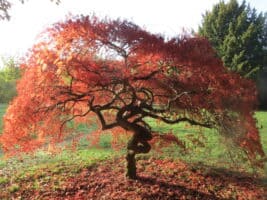
Red maple is the most abundant tree in Pennsylvania’s forests. It grows in almost any soil, from swamps to dry ridges. Red flowers appear in late winter before the leaves, and the fall color is some of the brightest in the state. It is also widely planted along streets and in yards.
Black Cherry (Prunus serotina)

Black cherry is Pennsylvania’s signature timber tree. The Allegheny Plateau in the northwest of the state produces much of the world’s premium cherry wood. Mature bark breaks into dark, curling plates that look like burnt potato chips. White flower clusters in May become small dark cherries eaten by birds. The wilted leaves are toxic to livestock.
Eastern Hemlock (Tsuga canadensis)

Eastern hemlock is Pennsylvania’s state tree. It is a shade-tolerant, long-lived conifer, typically about 100 feet tall, with a few old giants reaching 160 feet, and it keeps streams cool in shaded ravines. Its short, flat needles have two white lines underneath. Since the 1960s the hemlock woolly adelgid has killed hemlocks across the state. Pennsylvania treats priority stands to save them.
White Ash (Fraxinus americana)

White ash was once common across Pennsylvania on rich, moist soils, often growing with sugar maple. It has compound leaves and diamond-patterned bark and is hard to tell apart from green ash. Since 2007 the emerald ash borer has killed most untreated ash trees in the state. Do not plant new ones.
Bigtooth Aspen (Populus grandidentata)

Bigtooth aspen is a fast-growing, short-lived tree that is one of the first to move into cleared or burned land. It gets its name from the coarse teeth on its leaves. It has a straight trunk up to about 80 feet tall and shallow, wide-spreading roots that send up new shoots.
Quaking Aspen (Populus tremuloides)
Read our guide to Quaking Aspen

Quaking aspen grows mainly in northern Pennsylvania and on disturbed sites. Its round leaves sit on flattened stalks, so they tremble in the slightest breeze. The smooth bark is greenish-white, marked with black knots and scars. Like bigtooth aspen, it grows fast and spreads by root suckers.
American Beech (Fagus grandifolia)

American beech is a shade-tolerant tree of rich, well-drained slopes, up to about 100 feet tall. It has smooth, silvery-grey bark and dark green toothed leaves. Beech bark disease and, more recently, beech leaf disease are killing many trees in Pennsylvania.
Flowering Dogwood (Cornus florida)

Flowering dogwood is a small understory tree, about 30 feet tall and often wider than tall. What look like four white petals in spring are bracts around a cluster of tiny flowers. It is native to southern and central Pennsylvania and needs part shade and moist, acidic soil.
Black Gum (Nyssa sylvatica)

Black gum (black tupelo) is a native tree of swamps and dry ridges alike, with branches that stick out at right angles from a straight trunk. Its glossy leaves turn brilliant scarlet in early fall. It is one of the longest-lived hardwoods in the East and can live more than 500 years.
Hickory (Carya spp.)

Pennsylvania has several native hickories, including shagbark, pignut, bitternut and mockernut. They have compound leaves, very hard, shock-resistant wood, and nuts that feed squirrels and other wildlife. Shagbark hickory, with its long, peeling bark strips, is the easiest to recognize.
Yellow Birch (Betula alleghaniensis)

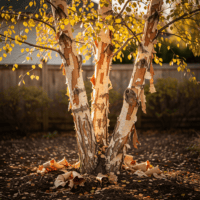
Yellow birch is the largest North American birch. It grows up to about 80 feet and often lives 150 years or more. Its shiny yellow-bronze bark peels in thin curls, and its twigs smell of wintergreen when scratched. It grows in cool, moist northern hardwood forests and is a valuable lumber tree.
Box Elder (Acer negundo)

Box elder is a native maple with compound leaves that look more like ash leaves. It is fast-growing and short-lived, usually about 60 years, and common along rivers and in disturbed ground. It often grows with several trunks. It is considered invasive in parts of Europe, where it was introduced.
Butternut (Juglans cinerea)

Butternut (white walnut) is a native walnut, usually 40 to 60 feet tall, with oily, edible nuts. It is now uncommon: butternut canker, a fungal disease, has killed most wild trees, and it rarely lives past 75 years. Healthy survivors are valuable for breeding disease-resistant trees.
Eastern Redbud (Cercis canadensis)

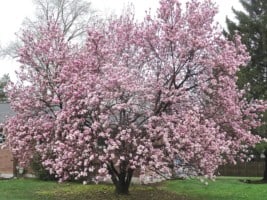
Eastern redbud is a small tree, 20 to 30 feet tall and about as wide, native to southern Pennsylvania. Rosy-pink flowers cover the bare branches in April, before the heart-shaped leaves appear. It often has a short, twisted trunk and spreading branches.
American Sycamore (Platanus occidentalis)

American sycamore grows along rivers and streams and can reach 100 feet or more in deep soils. It is easy to identify by its mottled bark, which flakes off in patches and exposes white and grey-green underneath. It is also planted as an urban shade tree.
Serviceberry (Amelanchier arborea)

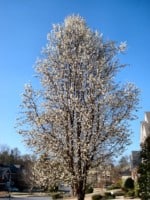
Serviceberry is a small tree, usually around 25 to 40 feet tall, with smooth grey bark. Its white flowers are among the first to bloom in early spring. The small red-purple berries ripen in June and are eaten by birds and people.
Willow (Salix spp.)

Willows grow on wet soils along streams, ponds and wetlands. Black willow is the largest native species in Pennsylvania. Willows have soft, flexible wood and tough, fibrous roots that hold stream banks together, which is why they are used in erosion control.
Northern Catalpa (Catalpa speciosa)
Read our guide to Northern Catalpa

Northern catalpa is native to the central Mississippi valley. It was widely planted in Pennsylvania and now grows wild along roads and streams. It is a fast-growing tree, up to about 60 feet, with very large heart-shaped leaves, showy clusters of white flowers in June, and long, bean-like seed pods.
Pine Trees in Pennsylvania
Pennsylvania has six native pines. Five are “hard” pines with two or three needles per bundle. The exception is eastern white pine, with needles in bundles of five. Pines grow mostly on dry ridges, sandy soils and old farm fields, where they tolerate poor soil better than hardwoods.
Eastern White Pine (Pinus strobus)
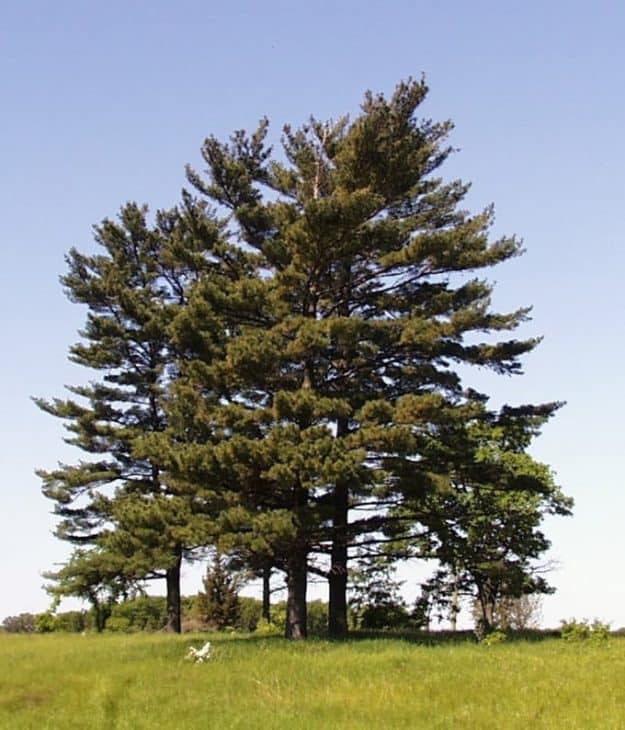
Eastern white pine is the tallest tree in eastern North America. It is typically 80 to 100 feet tall, and old-growth trees at Cook Forest State Park reach more than 180 feet. Its soft blue-green needles grow in bundles of five, and its cones are long and slender. It has long been prized for lumber, from ship masts to barns and furniture.
Virginia Pine (Pinus virginiana)

Virginia pine (scrub pine or Jersey pine) is a small, scraggly pine, usually 30 to 60 feet tall, of dry soils in southern Pennsylvania. Its short, twisted yellow-green needles grow in pairs. It is used for pulpwood, and it is also grown as a Christmas tree in the South.
Pitch Pine (Pinus rigida)
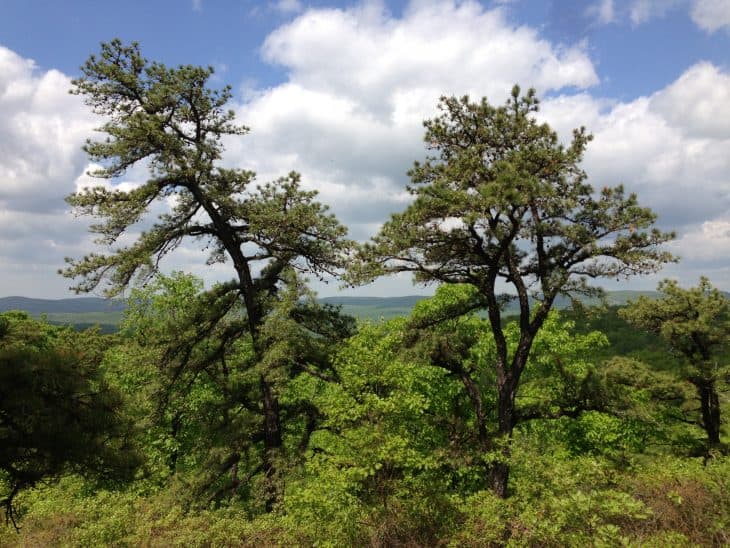
Pitch pine is a small to medium pine, usually 50 to 60 feet tall, with a twisted, irregular crown. Its stiff needles grow in bundles of three. It is one of the few pines that sprouts from its trunk after fire. It grows on the dry ridges and barrens of eastern and central Pennsylvania. Its resin-rich wood was once used for ships and railroad ties.
Red Pine (Pinus resinosa)
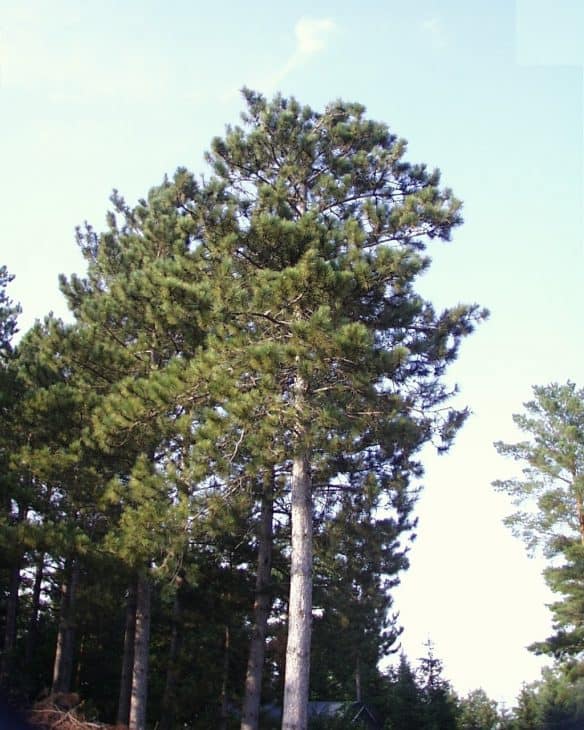
Red pine is a tall, straight pine, usually 60 to 100 feet tall. Its long needles grow in pairs and snap cleanly when bent. The bark is greyish-brown near the base and turns orange-red higher up the trunk. It is native to northern Pennsylvania and was widely planted on reclaimed land.
Table Mountain Pine (Pinus pungens)
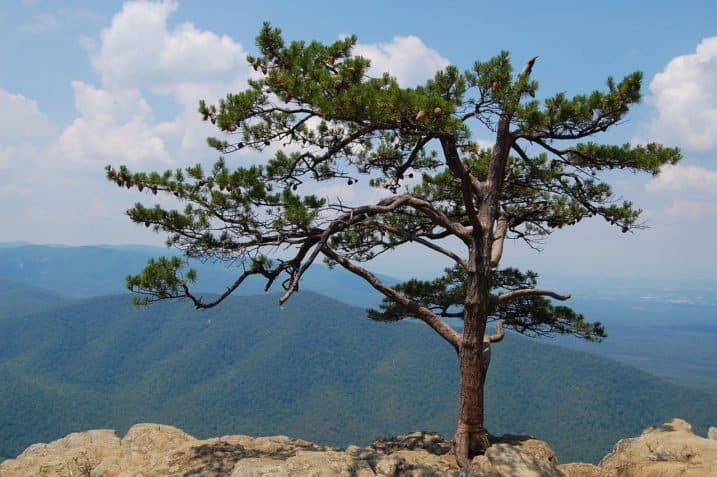
Table mountain pine is an Appalachian endemic of dry, rocky ridges, usually no more than 40 feet tall. Its twisted needles grow in pairs. Its heavy cones carry stout, hooked spines and often stay closed on the tree until a fire opens them.
Shortleaf Pine (Pinus echinata)
Read our guide to Shortleaf Pine
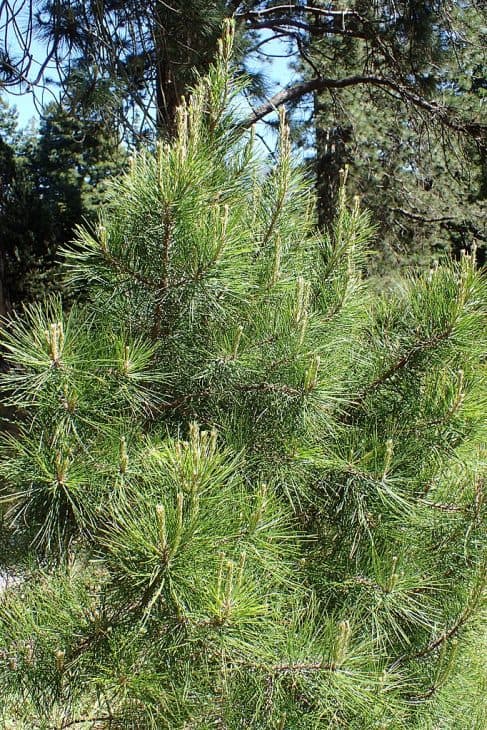
Shortleaf pine reaches the northern edge of its range in southern Pennsylvania, where it is uncommon. Farther south it grows up to 100 feet with a trunk nearly 3 feet across. Its needles grow in bundles of two or three, and its small cones are about 2 inches long with a short prickle on each scale.
Invasive Trees to Avoid
Both of these trees are on Pennsylvania’s invasive plant list and are widely planted or spreading on their own. Don’t plant them.
Tree of Heaven (Ailanthus altissima)

Tree of heaven is from China. It grows extremely fast, sprouts from its roots and fills roadsides, rail lines and vacant lots. It is also the preferred host of the spotted lanternfly, an invasive pest first found in the US in Berks County, Pennsylvania, in 2014. Removing tree of heaven is part of the state’s lanternfly control effort. Cut trees resprout unless the stump or stem is treated with herbicide.
Norway Maple (Acer platanoides)
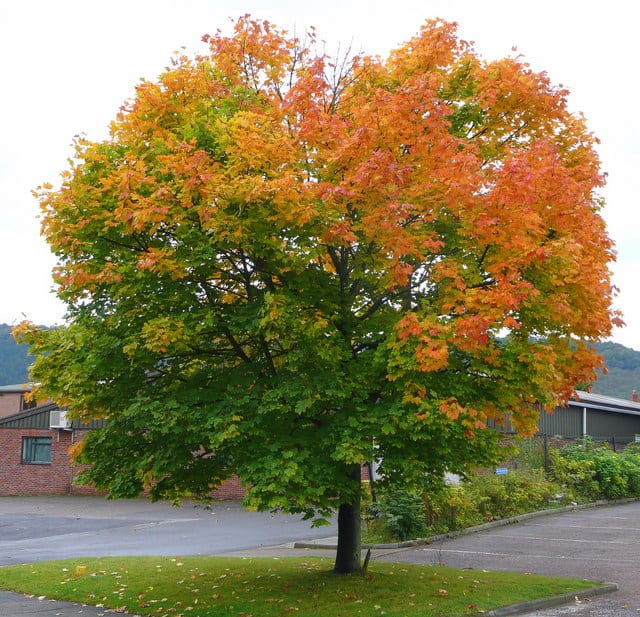
Norway maple is from Europe and was planted along streets for over a century. Its dense shade and shallow roots suppress plants beneath it, and its seedlings crowd out native maples in woodlands. It looks like sugar maple but has milky sap in its leaf stalks. On city streets it usually lives only about 60 years.