The poisonous plants you are most likely to meet in Tennessee are poison ivy, which grows in every county, and poison hemlock, which lines roadsides and fields across Middle Tennessee. The most dangerous to eat are poison hemlock and spotted water hemlock, both of which can kill. Pokeweed, jimsonweed and horsenettle are common in yards, pastures and field edges. In the Smoky Mountains and the Cumberland Plateau, mountain laurel, rhododendrons, false hellebore and doll’s eyes are all poisonous. Wild parsnip and trumpet creeper can burn or irritate skin.
Contents
- Plants That Burn or Irritate Skin
- Wild Plants That Are Poisonous to Eat
- Poison Hemlock (Conium maculatum)
- Spotted Water Hemlock (Cicuta maculata)
- White Snakeroot (Ageratina altissima)
- Jimsonweed (Datura stramonium)
- Pokeweed (Phytolacca americana)
- Mountain Laurel (Kalmia latifolia)
- Rhododendrons and Azaleas (Rhododendron spp.)
- False Hellebore (Veratrum viride)
- Mayapple (Podophyllum peltatum)
- Doll’s Eyes (White Baneberry) (Actaea pachypoda)
- Bloodroot (Sanguinaria canadensis)
- Buckeyes (Aesculus flava, A. glabra and A. pavia)
- Horsenettle (Solanum carolinense)
- Yellow Jessamine (Gelsemium sempervirens)
- Virginia Creeper (Parthenocissus quinquefolia)
- Carolina Sweetshrub (Calycanthus floridus)
- Poisonous Garden and Landscape Plants
- Plants That Mostly Poison Livestock
- What to Do After Contact or Poisoning
If someone has eaten part of a plant, call the Tennessee Poison Center at 1-800-222-1222, which is free and answers around the clock. Call 911 for trouble breathing, seizures or unconsciousness. For pets, call your vet or the ASPCA Animal Poison Control Center at (888) 426-4435.
- Plants That Burn or Irritate Skin
- Wild Plants That Are Poisonous to Eat
- Poisonous Garden and Landscape Plants
- Plants That Mostly Poison Livestock
- What to Do After Contact or Poisoning
| Plant | Botanical name | Toxic part | Main risk |
|---|---|---|---|
| Poison Ivy | Toxicodendron radicans | All parts, including bare winter stems | Itchy, blistering rash (urushiol) |
| Atlantic Poison Oak | Toxicodendron pubescens | All parts | Itchy, blistering rash (urushiol) |
| Poison Sumac | Toxicodendron vernix | All parts | Severe rash, stronger than poison ivy |
| Stinging Nettle and Wood Nettle | Urtica dioica and Laportea canadensis | Stinging hairs on leaves and stems | Burning, itchy welts for a few hours |
| Wild Parsnip | Pastinaca sativa | Sap | Burns and blisters in sunlight |
| Trumpet Creeper (Cow Itch) | Campsis radicans | Leaves and flowers | Itchy rash in sensitive people |
| Poison Hemlock | Conium maculatum | All parts | Paralysis; can be fatal |
| Spotted Water Hemlock | Cicuta maculata | All parts, especially the roots | Violent seizures; often fatal |
| White Snakeroot | Ageratina altissima | All parts | Milk sickness in people; “trembles” in livestock |
| Jimsonweed | Datura stramonium | All parts, especially seeds | Hallucinations, racing heart, high fever; can be fatal |
| Pokeweed | Phytolacca americana | Roots, berries, mature leaves and stems | Vomiting and diarrhea; rarely fatal |
| Mountain Laurel | Kalmia latifolia | All parts, including honey from the flowers | Vomiting, slow heartbeat, low blood pressure |
| Rhododendrons and Azaleas | Rhododendron spp. | All parts, including nectar | Vomiting, slow heartbeat, low blood pressure |
| False Hellebore | Veratrum viride | All parts, especially roots | Vomiting, very slow heartbeat, low blood pressure |
| Mayapple | Podophyllum peltatum | Roots, leaves, stems and unripe fruit | Severe vomiting and diarrhea |
| Doll’s Eyes (White Baneberry) | Actaea pachypoda | All parts, especially the berries | Burning mouth, vomiting; can affect the heart |
| Bloodroot | Sanguinaria canadensis | All parts, especially the rhizome and its red sap | Vomiting; sap burns skin |
| Buckeyes | Aesculus flava, A. glabra and A. pavia | Nuts, young leaves and shoots | Vomiting, weakness, lack of coordination |
| Horsenettle | Solanum carolinense | All parts, especially ripe berries | Vomiting, diarrhea, drowsiness |
| Yellow Jessamine | Gelsemium sempervirens | All parts, including flowers and nectar | Muscle weakness, trouble breathing; can be fatal |
| Virginia Creeper | Parthenocissus quinquefolia | Berries; sap irritates some people’s skin | Stomach upset; rash in sensitive people |
| Carolina Sweetshrub | Calycanthus floridus | Seeds | Seizures (in livestock); a risk to children |
| Japanese Yew | Taxus cuspidata | All parts except the red flesh around the seed | Heart rhythm problems; can be fatal |
| Foxglove | Digitalis purpurea | All parts | Nausea, vomiting, dangerous heart rhythm |
| Lantana | Lantana camara | Leaves and unripe green berries | Vomiting; liver damage in livestock |
| Easter Lily and Other True Lilies | Lilium spp. | All parts, including pollen and vase water | Kidney failure in cats |
| Johnsongrass and Sorghum | Sorghum halepense and S. bicolor | Young, wilted, drought-stressed or frost-damaged plants | Cyanide (prussic acid) poisoning in livestock |
| Hairy Vetch | Vicia villosa | Plants and seeds | Rash, wasting and death in cattle (rare) |
| Common Groundsel and Butterweed | Senecio vulgaris and Packera glabella | All parts | Liver damage in horses and cattle |
Plants That Burn or Irritate Skin
These plants hurt you by touch, not by being eaten. Wear long sleeves, long pants and gloves when clearing brush, weeds or fence lines, and wash your skin and tools afterwards.
Poison Ivy (Toxicodendron radicans)

Poison ivy grows throughout Tennessee, in woods, hedgerows, fence lines, stream banks and yards. It can be a low groundcover, a shrub or a hairy vine climbing high into trees. Look for leaves of three leaflets, with the middle leaflet on a longer stalk. The leaflet edges can be smooth, toothed or lobed, and the leaves are often reddish in spring and turn red, orange or yellow in fall. All parts contain urushiol, an oil that causes an itchy, blistering rash in most people. It sticks to clothes, tools and pets’ fur, and it stays active on bare winter vines. Never burn poison ivy: the smoke can carry urushiol into your lungs.
Atlantic Poison Oak (Toxicodendron pubescens)

Atlantic poison oak is a low, upright shrub, usually 1 to 3 feet tall, that grows in dry, sandy or rocky oak and pine woods. It is much less common in Tennessee than poison ivy, and many plants called poison oak are really poison ivy. Its leaves also have three leaflets, but each leaflet has rounded lobes like a small oak leaf and is fuzzy on both sides. Unlike poison ivy, it doesn’t climb. It contains the same urushiol and causes the same rash. The poison oak of the West Coast is a different species, Toxicodendron diversilobum, and doesn’t grow in Tennessee.
Poison Sumac (Toxicodendron vernix)

Poison sumac is a shrub or small tree, usually 5 to 20 feet tall, that grows only in wet ground such as swamps, bogs and wet woods. It is uncommon in Tennessee. Each leaf has 7 to 13 smooth-edged leaflets on a red stalk, and in fall the plant carries loose, drooping clusters of whitish berries. The harmless sumacs that are common on dry roadsides, such as smooth and winged sumac, have red berries in upright clusters. Poison sumac contains even more urushiol than poison ivy, and its rash is usually worse.
Stinging Nettle and Wood Nettle (Urtica dioica and Laportea canadensis)

Two stinging nettles grow in Tennessee. Stinging nettle is 3 to 7 feet tall, with opposite, coarsely toothed leaves, and grows in moist, rich soil around old farmyards and stream banks. Wood nettle is shorter, with broader leaves arranged alternately, and forms large patches on shady, damp bottomland and along creeks. Both are covered in hollow hairs that inject histamine and other irritants when touched. The sting burns and itches for a few hours and isn’t dangerous. Young leaves of both are edible once cooked, because heat destroys the stinging hairs.
Wild Parsnip (Pastinaca sativa)
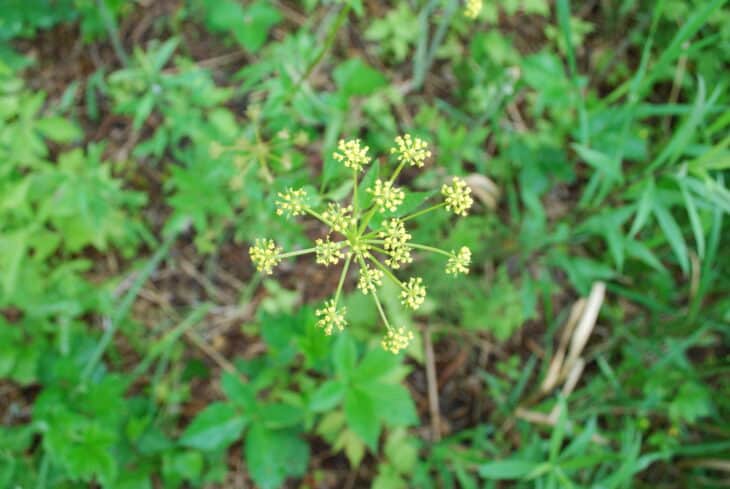
Wild parsnip is the escaped form of the garden parsnip. It grows along roadsides, trails and field edges in parts of Tennessee and is spreading. It is 2 to 5 feet tall, with a grooved stem, leaves made of toothed leaflets and flat clusters of small yellow flowers in late spring and early summer. Its sap makes skin extremely sensitive to sunlight (phytophotodermatitis). Burns and blisters appear a day or two after contact, often as streaks where stems brushed bare legs or arms during mowing or string-trimming, and they can leave brown marks for months.
Trumpet Creeper (Cow Itch) (Campsis radicans)

Trumpet creeper is a native woody vine that climbs fences, poles and trees all over Tennessee. It has leaves divided into 7 to 11 toothed leaflets and clusters of orange-red, trumpet-shaped flowers from June to September that hummingbirds love. It gets its common name, cow itch, because handling the leaves and flowers gives some people an itchy red rash. It isn’t a serious poison if eaten, but it spreads aggressively by roots and seed, so wear gloves when you cut it back.
Wild Plants That Are Poisonous to Eat
These plants are only dangerous if swallowed. The two hemlocks are among the most poisonous plants in North America. Teach children never to eat any wild plant, berry or root without an adult who knows it, and be careful when foraging: several of these grow alongside ramps, poke and other wild greens.
Poison Hemlock (Conium maculatum)
Read our guide to Poison Hemlock

Poison hemlock is a European plant that has spread along roadsides, ditches, stream banks and field edges across Tennessee and is especially common in Middle Tennessee. It is 3 to 8 feet tall, with a smooth, hollow stem covered in purple spots, lacy, fern-like leaves that smell musty when crushed, and umbrella-shaped clusters of small white flowers from May to July. It looks a lot like wild carrot (Queen Anne’s lace), but wild carrot has a hairy stem with no purple blotches. All parts contain coniine, which paralyzes the muscles, including those used for breathing. Wear gloves if you pull it, because the sap can also irritate skin.
Spotted Water Hemlock (Cicuta maculata)
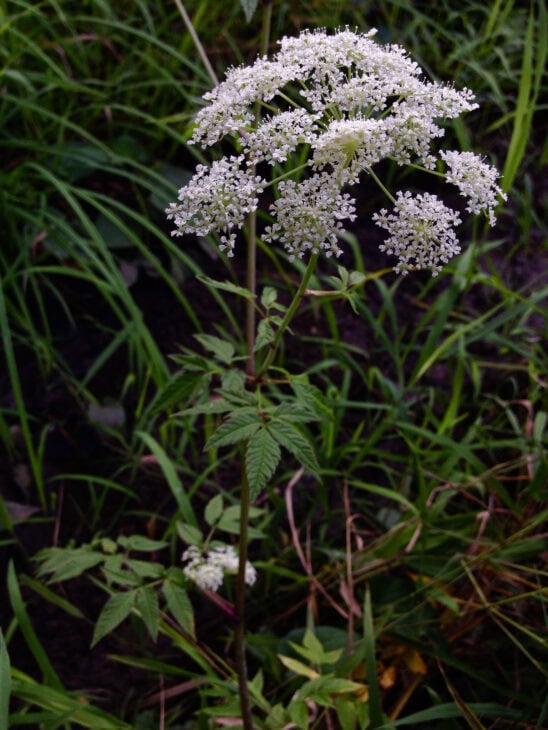
Spotted water hemlock is a native plant of wet ground: marshes, wet meadows, ditches and stream and pond edges throughout Tennessee. It is 3 to 6 feet tall, with a smooth stem often streaked with purple, leaves divided into narrow, toothed leaflets and white, umbrella-shaped flower clusters in summer. The veins of the leaflets end in the notches between the teeth rather than at the tips. It is considered the most poisonous plant in North America. Its thick roots contain cicutoxin, which causes violent seizures within minutes to an hour. A single bite of root can kill an adult, and it also kills cattle in spring pastures.
White Snakeroot (Ageratina altissima)

White snakeroot is a native woodland plant, 1 to 4 feet tall, common in shady woods and along wood edges throughout Tennessee. It has opposite, toothed, heart-shaped to oval leaves and flat clusters of small, fuzzy white flowers from late summer into fall. It contains tremetol. Cattle and goats that eat it develop “trembles”, and people who drank their milk got milk sickness, which killed thousands of settlers in the 1800s, including Abraham Lincoln’s mother. Milk sickness is gone from modern pasteurized, pooled milk, but the plant still poisons horses, cattle and goats.
Jimsonweed (Datura stramonium)

Jimsonweed is a coarse, bad-smelling annual, 2 to 5 feet tall, that grows in barnyards, crop fields, gardens and waste ground. It is probably native to Mexico and has spread throughout the U.S. It has large, toothed leaves, white or pale purple trumpet-shaped flowers 3 to 4 inches long that open in the evening, and spiny, egg-shaped seed pods. All parts contain atropine and scopolamine. Poisonings happen when teenagers take the seeds or tea as a drug, and when children eat the seeds. Symptoms include hallucinations, dilated pupils, dry mouth, a racing heart and fever, and severe cases can be fatal.
Pokeweed (Phytolacca americana)
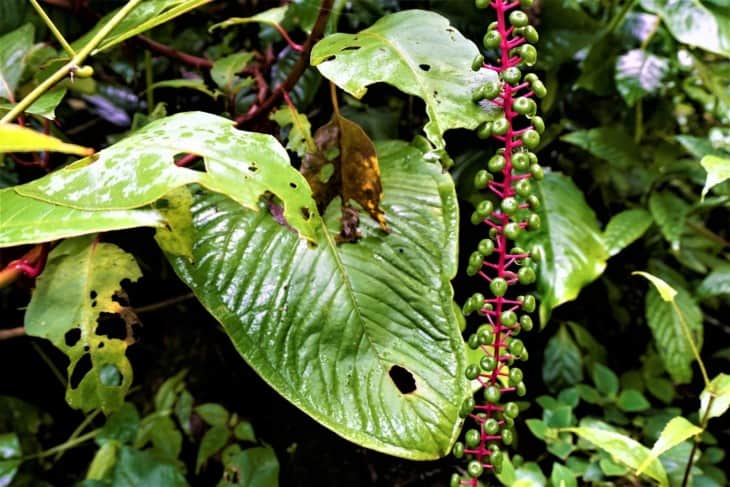
Pokeweed is a native perennial that comes up every year from a large, white taproot in fields, fence rows, woodland edges and yards all over Tennessee. It grows 4 to 10 feet tall, with thick purple-red stems, large leaves and long, drooping clusters of shiny purple-black berries in late summer and fall. The root is the most toxic part, and the berries are dangerous to young children, who are drawn to them. Poke sallet, made from very young spring leaves boiled in several changes of water, is a traditional Tennessee and Appalachian dish, but older leaves and stems, and leaves that aren’t boiled properly, cause severe vomiting and diarrhea. Birds eat the berries without harm.
Mountain Laurel (Kalmia latifolia)

Mountain laurel is a native evergreen shrub, 5 to 15 feet tall, that forms dense thickets in the Smoky Mountains, the Cumberland Plateau and dry woods across East Tennessee. It has glossy, leathery, oval leaves and, in May and June, clusters of white to pink, cup-shaped flowers with little pockets that hold the stamens. All parts contain grayanotoxins, and honey made mainly from its flowers can make people ill. It is a common cause of poisoning in goats, sheep and other livestock that browse it in winter, when little else is green.
Rhododendrons and Azaleas (Rhododendron spp.)

Tennessee’s mountains are famous for their rhododendrons. Catawba rhododendron blooms purple-pink on the balds of Roan Mountain in June, and rosebay rhododendron forms huge thickets along streams in the Smokies. Native flame azaleas and garden azaleas and rhododendrons are just as common in yards. Like mountain laurel, they all contain grayanotoxins. Chewing leaves or flowers causes burning in the mouth, vomiting and, in larger amounts, a slow heartbeat and low blood pressure. Poisonings are most common in goats, sheep and pet dogs and cats.
False Hellebore (Veratrum viride)

False hellebore, also called Indian poke, grows in wet woods, seeps and stream banks at higher elevations in the mountains of East Tennessee. In spring it sends up a thick stem with large, oval, strongly pleated leaves that spiral up the stalk, followed in summer by a tall spike of small green flowers. Foragers sometimes mistake the young shoots for ramps, which grow in the same places. Ramps have two or three smooth, flat leaves from a bulb and smell strongly of onion, while false hellebore leaves are pleated, clasp a central stem and have no onion smell. All parts contain alkaloids that cause vomiting, a very slow heartbeat and a sudden drop in blood pressure.
Mayapple (Podophyllum peltatum)

Mayapple forms large colonies in rich, moist woods throughout Tennessee. Each plant has one or two large, umbrella-like leaves on a stalk about a foot tall, and plants with two leaves have a single white flower in the fork in spring. The flower becomes a green fruit that turns yellow and soft in late summer. Only the fully ripe fruit’s flesh is edible, and even that should be eaten in small amounts without the seeds. The rest of the plant contains podophyllotoxin, which causes severe vomiting and diarrhea.
Doll’s Eyes (White Baneberry) (Actaea pachypoda)

Doll’s eyes is a native woodland plant, 1 to 3 feet tall, found in rich, shady woods in Middle and East Tennessee. It has large leaves divided into toothed leaflets and a cluster of small white flowers in spring. In late summer it produces its unmistakable fruit: white berries with a black dot, like an old doll’s eye, on thick red stalks. The berries are among the most poisonous in eastern North American forests. Eating them causes burning in the mouth, stomach cramps and vomiting, and in larger amounts they can affect the heart.
Bloodroot (Sanguinaria canadensis)

Bloodroot is one of the first wildflowers of spring in Tennessee woods, with a single white flower that opens in March above a folded, lobed leaf. When the stem or root is broken, it bleeds a bright orange-red sap. The sap and rhizome contain sanguinarine, which causes vomiting and fainting if eaten and burns skin. Black salves made from bloodroot, sold online as a cancer cure, have caused severe skin damage and disfigurement.
Buckeyes (Aesculus flava, A. glabra and A. pavia)

Three buckeyes are native to Tennessee. Yellow buckeye is a large tree of the mountain coves, and the Smoky Mountains have some of the largest ever recorded. Ohio buckeye grows in Middle Tennessee woods and red buckeye, a shrub with red flowers in spring, grows in the west and middle of the state. All produce shiny brown nuts in a leathery husk in fall. The nuts look a lot like edible chestnuts, but they contain aesculin and saponins that cause vomiting, weakness and lack of coordination. Cattle and horses are poisoned by eating the young leaves and nuts.
Horsenettle (Solanum carolinense)
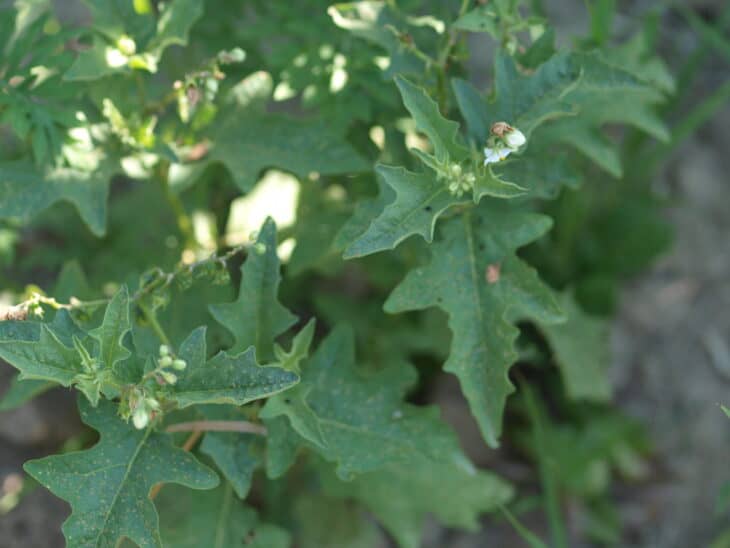
Horsenettle is a native perennial weed of pastures, lawns, gardens and roadsides throughout Tennessee. It grows 1 to 3 feet tall, with wavy-lobed leaves and stems armed with sharp yellow spines, white to pale purple star-shaped flowers from May to September, and round, marble-sized berries that ripen from green to yellow. It is in the nightshade family, and all parts contain solanine. It is a common cause of poisoning in cattle, and the yellow berries can poison children who mistake them for small tomatoes.
Yellow Jessamine (Gelsemium sempervirens)

Yellow jessamine, or Carolina jessamine, is a native evergreen vine of the Southeast that grows wild in southern Tennessee and is planted on fences and trellises across the state. In late winter and early spring it is covered in fragrant, bright yellow, trumpet-shaped flowers. All parts contain gelsemine and related alkaloids that cause muscle weakness, drooping eyelids, trouble breathing and, in severe cases, death. Children have been poisoned by sucking nectar from the flowers, as they would with honeysuckle.
Virginia Creeper (Parthenocissus quinquefolia)

Virginia creeper is a native vine that climbs trees, walls and fences or sprawls on the ground throughout Tennessee. It is often confused with poison ivy, but its leaves have five toothed leaflets, not three. The leaves turn brilliant red in fall, and the vine produces small, blue-black berries on red stalks. The berries contain oxalate crystals and can cause stomach upset and mouth irritation if eaten, and the sap gives some people a mild rash.
Carolina Sweetshrub (Calycanthus floridus)

Carolina sweetshrub, also called Carolina allspice, is a native shrub, 6 to 9 feet tall, found in woods and on stream banks in East and Middle Tennessee and widely planted for its scent. In spring it has maroon-brown, many-petaled flowers that smell like strawberries or pineapple. The flowers turn into leathery, urn-shaped pods full of large brown seeds, which contain calycanthine, a toxin that causes strychnine-like seizures. Cattle have been poisoned by eating the seeds, so keep children away from the pods.
Poisonous Garden and Landscape Plants
Many plants sold in Tennessee garden centers are poisonous. They are safe to grow, but plant them where small children and pets won’t chew them.
Japanese Yew (Taxus cuspidata)

Japanese yew and its hybrid, Taxus × media, are among the most common evergreen shrubs in Tennessee foundation plantings and hedges. They have flat, dark green needles and, on female plants, soft red cups around a single hard seed. All parts except the red flesh contain taxines, which affect the heart. The seeds are poisonous if chewed. Yew clippings are a well-known killer of horses, cattle and goats: a few mouthfuls can be fatal, so never throw hedge trimmings where animals can reach them.
Foxglove (Digitalis purpurea)

Foxglove is a European biennial or short-lived perennial grown in Tennessee gardens. In its first year it makes a rosette of soft, downy leaves, and in its second it sends up a spike 3 to 5 feet tall of bell-shaped flowers in purple, pink or white, spotted inside, in late spring and early summer. All parts contain digitoxin and other cardiac glycosides, the source of the heart drug digitalis. Eating any part can cause nausea, vomiting and a dangerously irregular heartbeat. The rosettes have been mistaken for comfrey leaves.
Lantana (Lantana camara)

Lantana is a tropical shrub from Central and South America and the Caribbean. In Tennessee it is grown as a summer annual, though some varieties survive mild winters in the western and southern parts of the state. It has rough, strong-smelling leaves and clusters of small flowers that change color, from yellow to orange, pink or red, from spring to frost. It is loved by butterflies. The green, unripe berries are the most toxic part and can cause vomiting and diarrhea in children. In livestock, the leaves cause liver damage and severe sunburn.
Easter Lily and Other True Lilies (Lilium spp.)

Easter lilies, tiger lilies, Asiatic and Oriental lilies and daylilies (Hemerocallis) are mostly harmless to people, but they are deadly to cats. Chewing a leaf or petal, licking pollen off their fur or drinking water from the vase can cause kidney failure within a few days. If you have cats, keep these flowers out of the house and take a cat to the vet immediately if it has touched one.
Plants That Mostly Poison Livestock
These plants are a bigger risk to horses, cattle, sheep and goats than to people. Walk pastures before turning animals out, especially after a drought or a frost, when hungry animals eat plants they would usually avoid.
Johnsongrass and Sorghum (Sorghum halepense and S. bicolor)

Johnsongrass is a tall, invasive perennial grass, 3 to 7 feet tall, found in fields, fence rows and roadsides all over Tennessee. It has broad leaves with a white midrib and large, loose, purplish seed heads. It is closely related to grain sorghum and sorghum-sudangrass, which are grown for forage. All of them can build up prussic acid (cyanide) in young regrowth and in plants stressed by drought or frost, and after drought they can also hold high levels of nitrate. Cattle that graze them at the wrong time can die within minutes. Wait at least a week after a killing frost before grazing, and have hay tested for nitrate after a drought.
Hairy Vetch (Vicia villosa)

Hairy vetch is a climbing legume with leaves of many small, paired leaflets ending in tendrils, and one-sided spikes of blue-violet flowers in spring. It is widely planted in Tennessee as a winter cover crop and forage and has escaped along roadsides. Most cattle graze it without trouble, but occasional herds develop hairy vetch toxicosis, with a rash, itching, weight loss and death, and the seeds are toxic to poultry and livestock. It isn’t a risk to people.
Common Groundsel and Butterweed (Senecio vulgaris and Packera glabella)

In April and May, many Tennessee fields turn yellow with butterweed, a native annual 1 to 3 feet tall with hollow stems, deeply lobed leaves and clusters of small yellow daisies. Common groundsel is a smaller European weed of gardens and nurseries, with ragged leaves and yellow flower heads that never open fully and turn into fluffy white seed heads. Both contain pyrrolizidine alkaloids that cause slow, permanent liver damage in horses and cattle, especially when the plants are baled into hay. Animals usually avoid them in pasture.
What to Do After Contact or Poisoning
- Poison ivy, oak or sumac: wash the skin with soap and cool water as soon as possible, ideally within 10 to 30 minutes, and wash clothes, gloves and tools separately. See a doctor if the rash covers a large area or reaches the face, eyes or genitals.
- Wild parsnip sap: wash the skin right away with soap and water and keep it covered from sunlight for at least 48 hours.
- Swallowed any plant on this list: call the Tennessee Poison Center at 1-800-222-1222. Keep a sample or photo of the plant for identification. Don’t wait for symptoms after eating poison hemlock, water hemlock, jimsonweed or yew: call 911.
- Pets and livestock: call your vet or the ASPCA Animal Poison Control Center at (888) 426-4435.
Not on this list: older lists of Tennessee poisonous plants include locoweed and riverhemps, which don’t grow here or are very rare, and oleander, which is rarely planted outdoors in Tennessee because it can’t survive most winters.
Related: Poisonous Plants Guide · Trees of Tennessee · Poisonous Plants in Ohio · Poisonous Plants in Pennsylvania