Spinach growers fight a near-constant battle with leaf miners — tiny larvae that tunnel between the leaf surfaces and ruin entire harvests in a matter of days. The right companion plants pull those pests off your spinach and feed the predators that keep aphid and caterpillar populations from exploding alongside them.
Companion planting is the practice of growing specific plants near each other to improve pest control, attract beneficial insects, build soil, or use garden space more efficiently. For spinach (Spinacia oleracea), it matters because the crop sits in the cross-hairs of several persistent problems: leaf miners that disfigure leaves, aphids that transmit cucumber mosaic virus, slugs that shred seedlings, and downy mildew that thrives in the same cool, damp conditions spinach itself prefers.
The companions that earn their place in a spinach bed fall into a few clear roles. Some are trap crops, drawing leaf miners and flea beetles away from your rows. Others are insectary plants that attract hoverflies, lacewings, and parasitic wasps to feed on aphids and small caterpillars. A few are soil enrichers — legumes that fix nitrogen for this notoriously hungry leafy green — and a handful repel pests directly through pungent scents or root chemistry.
When choosing companions for spinach, pick plants that share spinach’s growing requirements: cool temperatures between 50°F (10°C) and 70°F (21°C), soil pH of 6.5 to 7.0, and full sun to partial shade. A companion that bolts in heat or demands acidic soil will not stay viable long enough to do its job.
Best companion plants for spinach
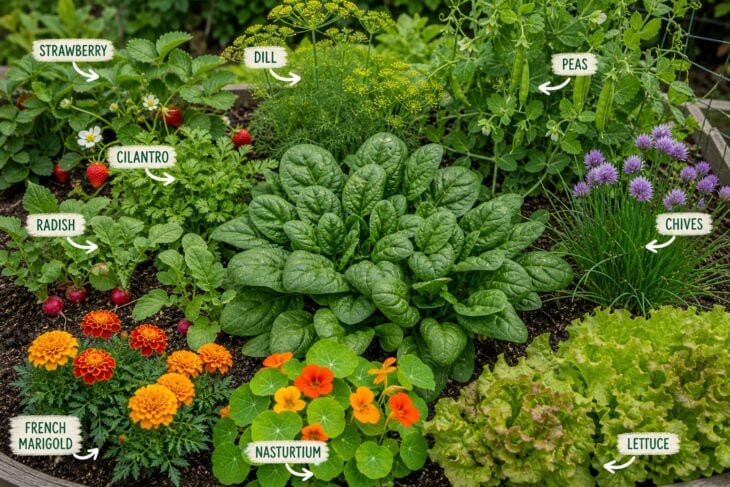
Strawberries (Fragaria × ananassa)
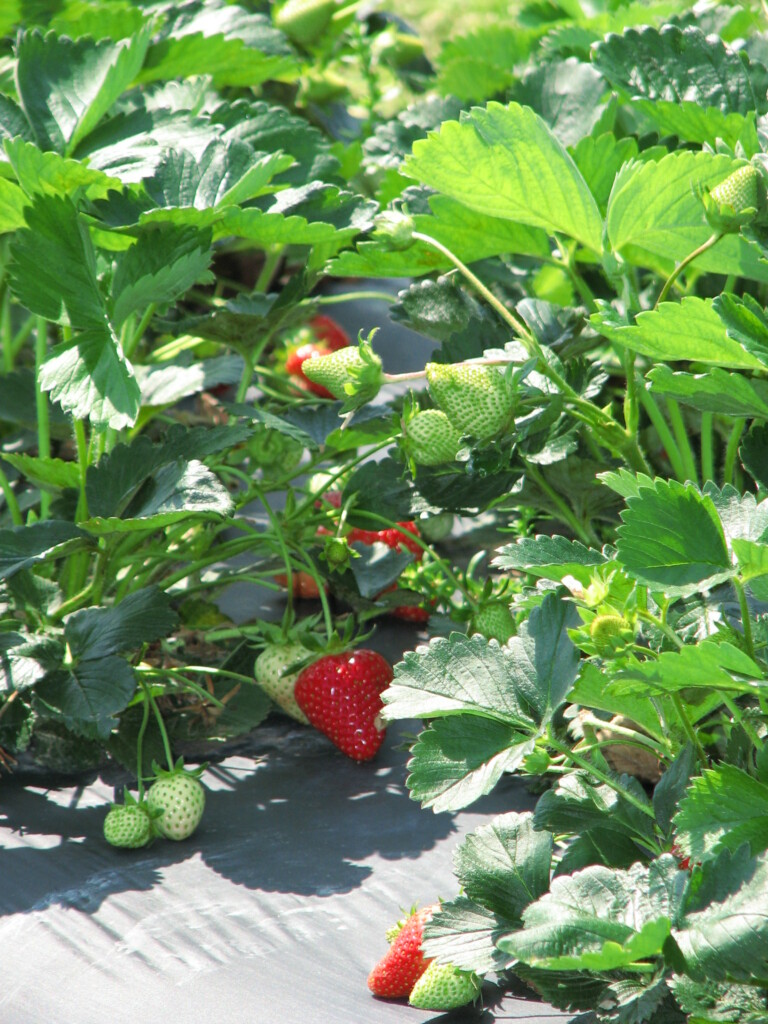
Strawberry
Strawberry is a low growing perennial grown for sweet red fruit. Plants spread by runners and prefer full sun and well drained slightly acidic soil.
Read our guide to StrawberryWhat it helps with
Strawberries and spinach share growing conditions and benefit each other through ground coverage and complementary root systems.
Why it works with spinach
Spinach roots stay shallow while strawberries spread laterally, so the two share a bed without competing heavily for water or nutrients. Both prefer cool weather and a soil pH between 6.5 and 7.0, which keeps growth in sync. Gardeners widely report this pairing produces healthier strawberry plants, with some attributing the effect to saponins released by spinach roots.
Planting notes
Tuck spinach between strawberry plants in early spring while the strawberries are still small, keeping spinach about 6–8 inches (15–20 cm) from each strawberry crown. Harvest spinach completely before the strawberry foliage closes in, typically by late spring. Once strawberries spread, the bed belongs to them.
Possible drawback or limit
The pairing only works for the early-spring window; once strawberries fill in, spinach gets too much shade and competes for moisture.
Radishes (Raphanus sativus)

Radish
Radish is a cool season annual grown for its crisp edible roots and salad greens. It is quick to mature and is usually direct sown in well drained soil and full sun.
Read our guide to RadishWhat it helps with
Radishes serve as a trap crop, drawing leaf miners and flea beetles away from spinach.
Why it works with spinach
The spinach leaf miner also attacks radish foliage, and adults often lay their eggs on radish leaves first when given the choice. This trap-crop behavior is documented in extension service publications. Because radishes mature in 25–30 days — much faster than spinach — infested foliage can be pulled and destroyed before larvae complete their cycle and move on.
Planting notes
Sow radishes in a row 8–12 inches (20–30 cm) outside your spinach bed, or interplant a radish for every 6 inches (15 cm) of spinach row. Watch radish leaves for the telltale silver tunnel marks and pull infested plants whole. Resow radishes every 2–3 weeks to keep the trap fresh.
Possible drawback or limit
The trap only works if you actually pull and destroy infested radish foliage; left in place, the radishes simply become a leaf miner nursery that eventually moves to your spinach.
Peas (Pisum sativum)

Garden Pea
Pea Beans are a cool season edible legume grown for fresh peas or pods. Sow seeds directly into cool, fertile, well drained soil and provide trellis support for vining types.
Read our guide to Pea BeansWhat it helps with
Peas fix atmospheric nitrogen, feeding spinach’s heavy nitrogen demand.
Why it works with spinach
Pea roots host Rhizobium bacteria that convert atmospheric nitrogen into ammonium, a form plants can absorb. The science is well established. Most of that nitrogen becomes available after the pea plants die back, so the strongest effect lands on the next crop in the bed — but peas and spinach also share an identical preference for cool weather, making them efficient bedfellows in early spring.
Planting notes
Plant peas along a trellis on the north or east side of a spinach bed so the vines do not shade spinach during peak growth. Keep spinach about 6 inches (15 cm) from the base of the pea row. When peas finish producing in early summer, cut them at soil level and leave the roots in place to release their stored nitrogen as they decompose.
Possible drawback or limit
Peas only release significant nitrogen once they decompose, so the largest benefit goes to the crop that follows rather than the spinach growing alongside them.
Cilantro (Coriandrum sativum)
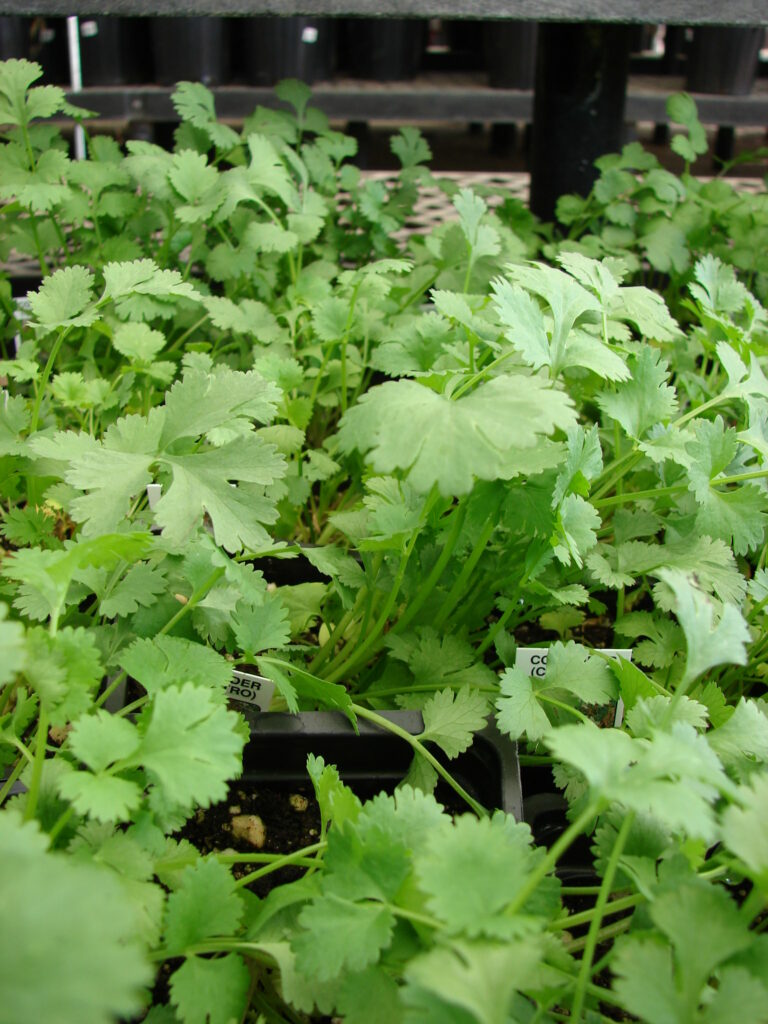
Coriander
Coriander is an annual culinary herb grown for its leaves and seeds. It grows quickly from seed and flowers before producing the spice known as coriander seed.
Read our guide to CorianderWhat it helps with
Cilantro attracts hoverflies, lacewings, and parasitic wasps that prey on spinach aphids.
Why it works with spinach
The small umbel flowers of cilantro provide accessible nectar for hoverflies and parasitic wasps, both of which target aphids — one of spinach’s worst pest pressures, particularly because aphids transmit cucumber mosaic virus to spinach. The role of insectary plants in supporting these predator populations is well documented in integrated pest management research. Cilantro also shares spinach’s cool-weather preference, between 50°F (10°C) and 75°F (24°C).
Planting notes
Plant cilantro along the borders of your spinach bed or in clusters every 18–24 inches (45–60 cm). Allow some plants to bolt and flower — the flowers, not the foliage, are what bring in beneficial insects. Succession-sow every 3–4 weeks to keep blooms in rotation.
Possible drawback or limit
Cilantro bolts quickly in heat and may finish before aphid populations peak; in warmer climates dill is a more reliable substitute later in the season.
Dill (Anethum graveolens)
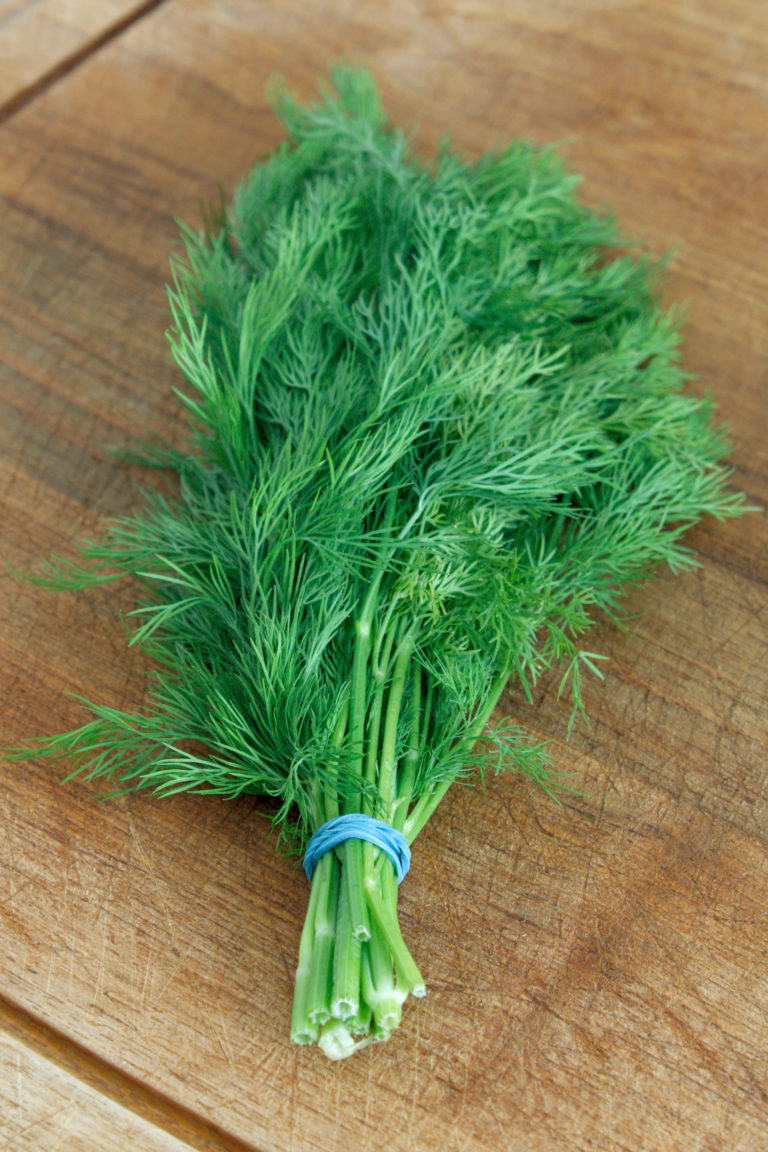
Dill
Dill (Anethum graveolens) is an annual culinary herb grown for its feathery leaves and aromatic seeds. It prefers full sun and well drained soil and is usually grown from seed.
Read our guide to DillWhat it helps with
Dill draws aphid predators and parasitic wasps that protect spinach.
Why it works with spinach
Dill flowers attract the same beneficial insects as cilantro — particularly ladybugs, lacewings, and the tiny parasitic wasps that target aphids and small caterpillars. The insectary value of dill is well established in extension literature. Unlike cilantro, dill tolerates warmer temperatures and stays in flower longer, extending the predator support window into late spring.
Planting notes
Plant dill on the north or east edges of a spinach bed where its mature height of 2–4 feet (60–120 cm) will not shade the crop. Allow the plants to flower fully — that is when they earn their keep. A few plants are usually enough to support a small spinach plot.
Possible drawback or limit
Mature dill is tall enough to shade neighboring spinach if planted on the south side of the bed; placement matters more than quantity.
French Marigold (Tagetes patula)
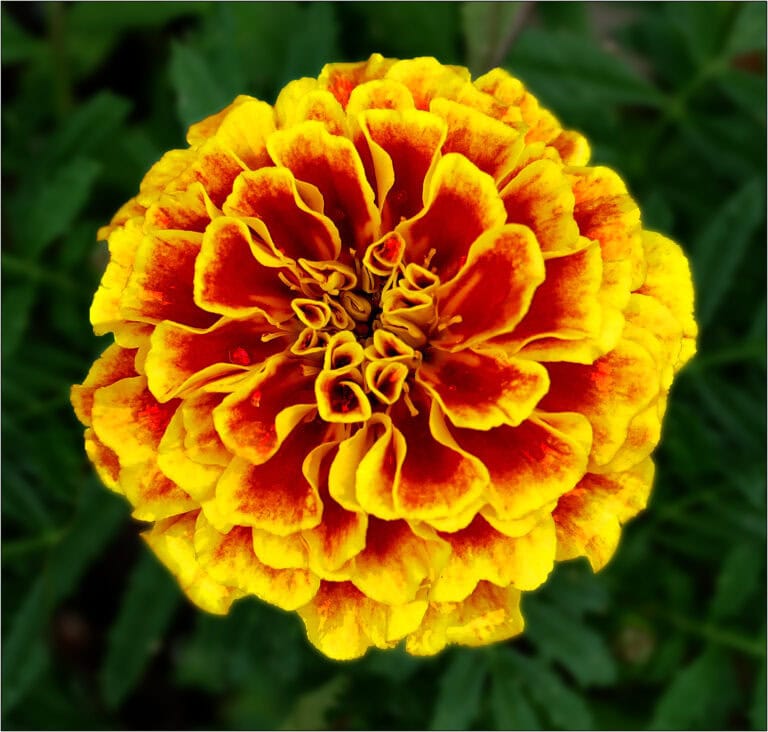
French Marigold
French Marigold Tagetes patula is a compact annual with bright flower heads for beds and containers. It prefers full sun and well drained soil and blooms until frost.
Read our guide to French MarigoldWhat it helps with
French marigolds suppress root-knot and lesion nematodes that can damage spinach roots.
Why it works with spinach
French marigolds release alpha-terthienyl from their roots, a compound toxic to several species of root-knot and lesion nematodes. This is documented in peer-reviewed research, though the strongest effect comes from growing marigolds as a dense cover crop the season before spinach goes in, rather than scattering them as in-season companions. Pest-repellent claims against above-ground insects are largely traditional rather than experimentally confirmed.
Planting notes
For nematode suppression, plant a dense bed of Tagetes patula or Tagetes minuta the prior season in soil where spinach will be grown. As an in-season companion, transplant marigolds 12 inches (30 cm) apart along bed edges once soil has warmed. Avoid Calendula and African marigold types — only the French and signet species produce the active compound.
Possible drawback or limit
The strong nematode-suppressing effect requires a full prior-season cover crop; interplanted marigolds offer only modest, mostly anecdotal benefits during the same season.
Nasturtium (Tropaeolum majus)

Nasturtiums
Nasturtiums are easy to grow ornamental and edible plants available as bush and trailing types. They bloom from late spring until frost and are commonly grown from seed.
Read our guide to NasturtiumsWhat it helps with
Nasturtiums act as a trap crop, pulling aphids away from spinach.
Why it works with spinach
Aphids strongly prefer nasturtium foliage and tend to colonize it first when given the choice. This is widely reported by gardeners and supported in some extension publications, though large controlled studies are limited. The bright flowers also draw pollinators that contribute to overall garden ecosystem balance.
Planting notes
Plant nasturtiums in a ring around a spinach bed or along a single border row, spacing them 10–12 inches (25–30 cm) apart. Monitor for aphid colonies and either prune off heavily infested foliage or knock the colonies back with a strong stream of water. The trap is only useful if you manage the aphids once they concentrate.
Possible drawback or limit
Nasturtiums prefer warmer weather than spinach and may not establish quickly enough in a cool spring to act as a trap during peak spinach growth.
Chives (Allium schoenoprasum)

Chives
Chives are a cold hardy, clump forming perennial herb grown for onion flavored leaves and edible purple flowers. They suit borders, containers, and herb gardens.
Read our guide to ChivesWhat it helps with
Chives repel aphids and some leaf-feeding insects through their pungent sulfur compounds.
Why it works with spinach
The volatile sulfur compounds released by chive foliage interfere with the host-finding behavior of aphids and certain beetles. The repellent effect of Allium species is documented in entomological studies, though the strength varies in field conditions. Chives are perennial and tolerate the same cool conditions spinach prefers, making them a low-maintenance neighbor.
Planting notes
Plant a clump of chives at the corners or along one edge of a spinach bed, keeping them 8–12 inches (20–30 cm) from spinach plants. A single established clump is usually enough scent cover for a small bed. Allow some flowers to develop for added pollinator benefit.
Possible drawback or limit
Chives are perennial and spread over time, so they need a permanent corner of the garden rather than being rotated with annual spinach plantings.
Lettuce (Lactuca sativa)

Lettuce
Lettuce is a cool season annual grown for leaves or heads. Sow in cool weather and keep soil evenly moist for best flavor and slow bolting.
Read our guide to LettuceWhat it helps with
Lettuce shares spinach’s growing requirements and helps shade the soil to slow bolting.
Why it works with spinach
Lettuce and spinach are both shallow-rooted cool-season leafy crops with overlapping temperature, light, and pH preferences. Planted together, they form a dense low canopy that shades the soil, conserves moisture, and keeps the root zone cooler — which delays the bolting that ends spinach harvests. This is more practical wisdom than experimental science, but it is widely confirmed by gardeners.
Planting notes
Alternate rows of lettuce and spinach 8–10 inches (20–25 cm) apart, or interplant individual heads of leaf lettuce among spinach plants. Choose loose-leaf or butterhead types whose foliage will not overpower the spinach. Both can be harvested as cut-and-come-again crops on similar schedules.
Possible drawback or limit
Lettuce and spinach share several pest pressures — particularly slugs and aphids — so any infestation that hits one tends to spread to the other.
Plants to avoid with spinach
Fennel (Foeniculum vulgare) is broadly allelopathic and should be kept well away from spinach. Its roots release compounds that inhibit the growth of many nearby plants, including leafy greens, and this effect is well documented in horticultural literature. Isolate fennel in its own bed entirely.
Potatoes are heavy nitrogen feeders that compete directly with spinach for the same nutrients in the soil, leaving leafy growth thin and pale. They also share vulnerability to several fungal pressures that thrive in damp conditions, increasing disease load when planted side by side. Keep potatoes in a separate bed and rotate spinach into that space only after a clearing crop.
Beets and Swiss chard belong to the same botanical family as spinach and host the spinach leaf miner as a primary pest. Planting them together concentrates leaf miner pressure across a single area and intensifies disease load from shared fungal pathogens. Grow beets and chard in a different bed on a separate rotation.
Sunflowers release allelopathic compounds from their roots that can suppress germination and growth of nearby leafy greens. Their tall canopy also casts heavy shade over a spinach bed, which is too dense even for a partial-shade crop. Give sunflowers a dedicated spot at the far end of the garden.