
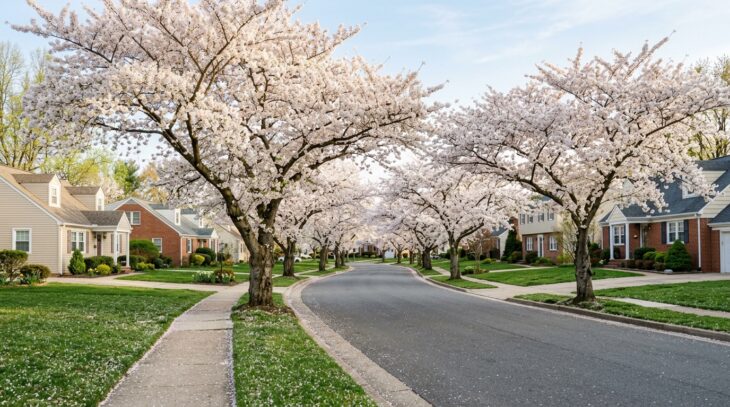
Flowering cherries such as Yoshino (Prunus x yedoensis) and Japanese flowering cherry (Prunus serrulata) are small spring trees that cover bare branches in white or pink blossoms. They grow 15 to 40 feet (4.5 to 12 m) tall depending on the type, and they are rated for Zones 5–8.
Contents
The catch is that they do not last. NC State puts the average life span of Japanese flowering cherry at 15 to 20 years, and even the Brooklyn Botanic Garden’s more generous figure is only 30 to 40 years.
This article covers the ornamental flowering cherries: Yoshino, Japanese flowering cherry (including ‘Kwanzan’) and weeping higan. Fruiting cherries are different trees with different jobs, and our guide to sweet cherry tree varieties covers those.
Pros Of Cherry Trees
Flowering Cherries Deliver One of Spring’s Biggest Blooms

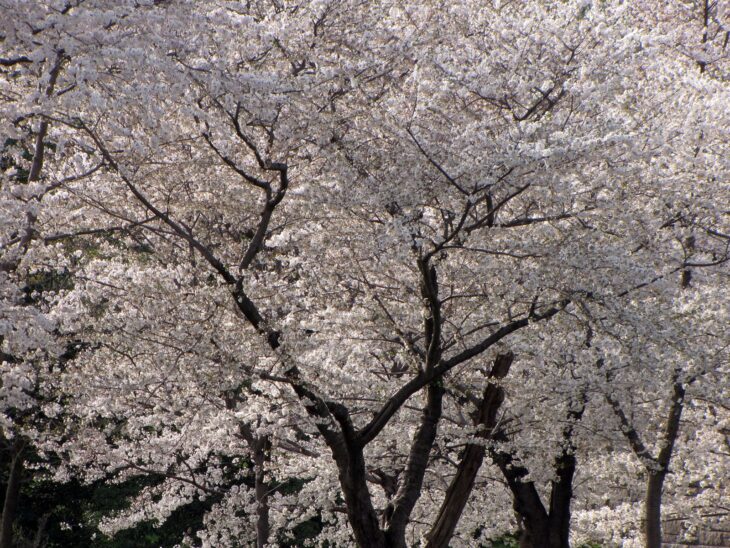
Yoshino cherry opens clusters of white to pale pink flowers with a faint almond scent, and NC State says they last 2 to 3 weeks. ‘Kwanzan’ (Prunus serrulata ‘Kanzan’) goes further, with double pink flowers that carry 20 to 30 petals each.
Expect the peak to be shorter than that, since the Brooklyn Botanic Garden says an individual tree may be in full bloom for only a week or two. It suits a gardener in Zones 5–8 who wants one dramatic focal point in spring.
Cultivars Come in Many Shapes, Sizes and Colors
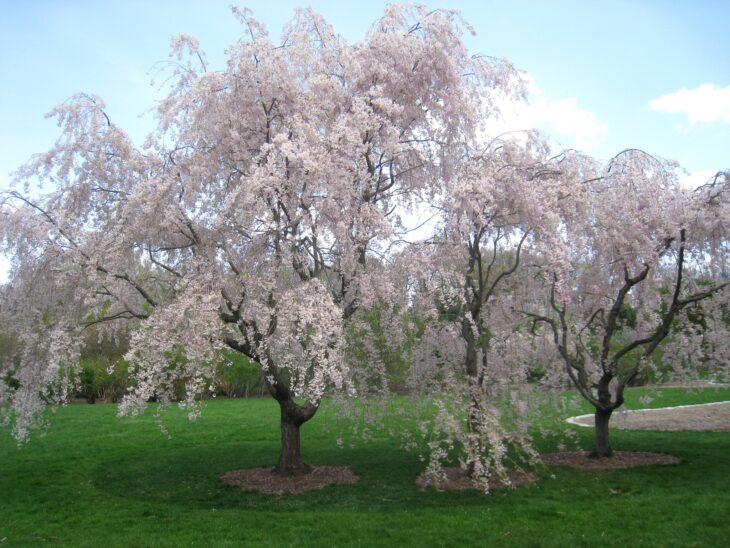
Japanese flowering cherry cultivars range from white to deep pink, from single to double flowers, and from vase-shaped to wide-spreading to weeping. ‘Kwanzan’ is upright and vase-shaped, while weeping higan cherry (Prunus subhirtella ‘Pendula’) has a gently weeping habit.
Sizes vary just as much. Japanese flowering cherry stays at 15 to 25 feet (4.5 to 7.5 m), while Yoshino reaches 30 to 40 feet (9 to 12 m), so check the mature size of the exact cultivar before you choose a spot.
Yoshino Cherry Handles Heat, Humidity and City Conditions

NC State lists Yoshino cherry as resistant to heat, humidity and urban conditions, and calls it the most commonly planted cherry in the Washington, D.C. area. It does not grow too large for a street or lawn tree.
That tolerance is documented for Yoshino specifically. It suits suburban and city yards in Zones 5–8, including humid eastern climates, as long as the soil drains well.
Fast Growth Pays Off Within a Few Seasons
NC State rates Yoshino as a rapid grower, and the University of Connecticut plant database rates weeping higan as fast. Japanese flowering cherry is medium. That is quicker than a slow ornamental such as Kousa dogwood (Cornus kousa), which NC State rates as slow.
Gardeners who want bloom and shade soon get the most from this. It comes with a short lifespan, so plan on replacing the tree one day.
Flowering Cherries Host Butterflies and Feed Birds
Japanese flowering cherry is a larval host plant for the Eastern Tiger Swallowtail (Papilio glaucus), according to NC State, and birds eat its small black fruits. Yoshino also hosts butterfly larvae, and its fruits attract birds.
It is a modest wildlife tree, though. Native black cherry (Prunus serotina) hosts several butterfly species and feeds songbirds, wild turkeys and small mammals, but it grows 60 to 80 feet (18 to 24 m) tall.
Cons Of Cherry Trees
A Short Lifespan Is the Biggest Trade-Off
NC State gives an average life span of 15 to 20 years for Japanese flowering cherry. University of Maryland Extension says ornamental cherries last 20 to 25 years in typical landscapes, and the Brooklyn Botanic Garden says most cultivars live 30 to 40 years.
UMD says anything that stresses a cherry, such as drought, trunk damage or poorly drained soil, invites borers and disease. Avoiding those helps, but plan to replant in a couple of decades.
The Bloom Is Spectacular but Brief
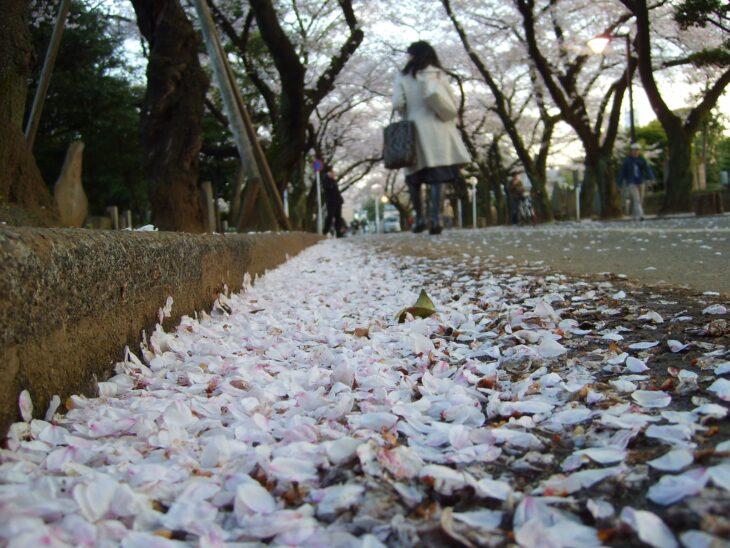
The Brooklyn Botanic Garden says an individual cherry may be in full bloom for only a week or two, depending on the weather. The season runs about a month across cultivars, and the garden reports that bloom is trending earlier each year.
To stretch the show, plant cultivars with different bloom times. The garden says ‘Kanzan’ and ‘Ukon’ are usually the latest to open.
Borers, Cankers and Fungal Diseases Are Common
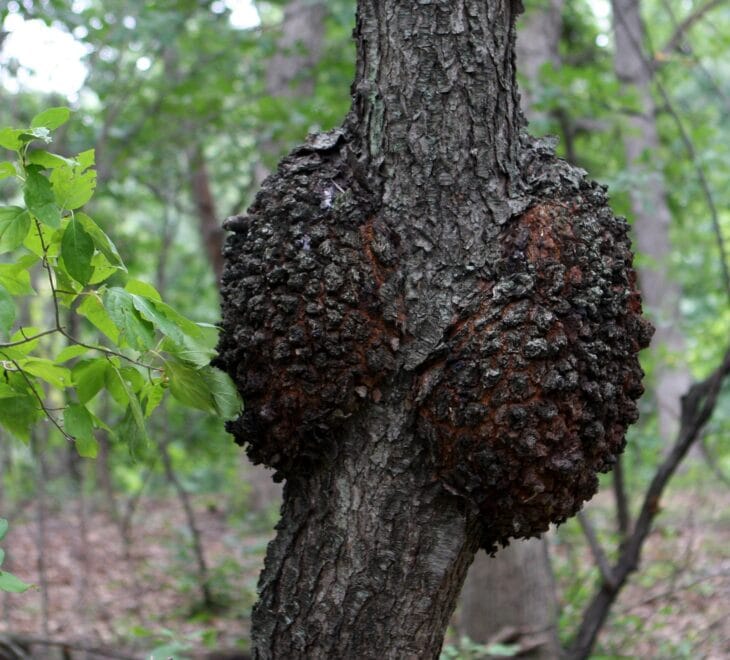
University of Maryland Extension lists peachtree borers, Japanese beetles, scale, black knot, cankers, root rots, cherry shot hole and brown rot among the problems of ornamental cherries. Borer larvae tunnel through the inner bark at or just below the base of the tree, and UMD says one borer can kill a small tree.
Resistant is a relative word. UMD cites ‘Kwanzan’ as a resistant cherry, and the same page says brown rot especially hits that cultivar on its fading flowers.
Give each tree full sun and room for air to move, and prune out black knot below the visible damage. Keep mulch 2 to 3 inches (5 to 7.5 cm) deep and 6 inches (15 cm) from the trunk.
Thin Bark and Weak Wood Make Cherries Easy to Injure
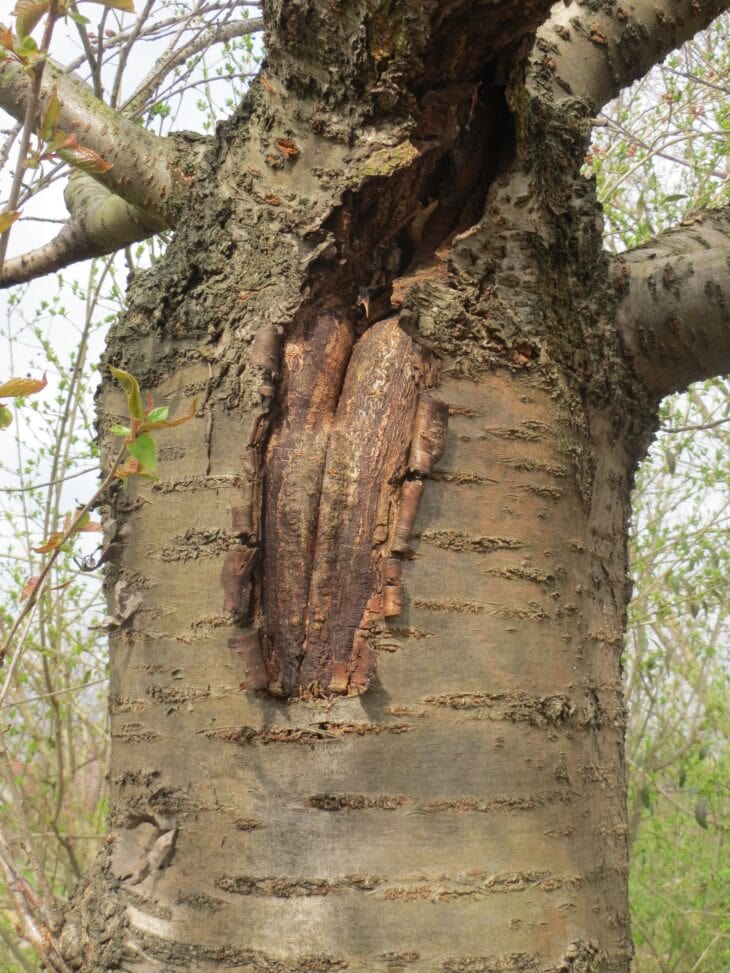
NC State lists weak wood among the problems of Japanese flowering cherry, and says its thin bark is easily damaged and the trunk prone to splitting. University of Maryland Extension adds that cankers enter through lawnmower wounds, frost cracks, hail damage and insect feeding.
Keep mowers and string trimmers well away from the trunk. Weeping cherries add a second weak point: the Brooklyn Botanic Garden says retail trees are weeping higan branches grafted onto a straight cherry trunk cut at 5 feet (1.5 m), which it says often produces weak specimens.
Hardiness and Drainage Limit Where They Succeed
NC State rates both Yoshino and Japanese flowering cherry for Zones 5–8, and says Japanese flowering cherry does not tolerate poorly drained soils. The early-blooming ‘Okame’ cherry is hardy only to Zone 6, according to Oregon State.
Zone 4 and colder, and Zone 9 and warmer, fall outside the documented range. The University of Connecticut says weeping higan survives in the warmer parts of Zone 4. Check drainage before you plant.
Are Cherry Trees Right For You?
Flowering cherries suit a gardener in Zones 5–8 with a sunny, well-drained spot and room for the mature size: 15 to 25 feet (4.5 to 7.5 m) wide for Japanese flowering cherry and up to 50 feet (15 m) for Yoshino.
NC State suggests planting them as a specimen or in small groups on a lawn or near a patio. University of Maryland Extension says not to crowd them, because poor air circulation keeps leaves wet longer.
Skip them if you garden in Zone 4 or colder or in Zone 9 or warmer, if your soil stays wet, or if you want a tree that will outlive you. The leaves, stems and seeds are toxic to dogs, cats and horses, and the ASPCA says wilted material is especially dangerous.
Ornamental cherries will not give you a cherry harvest either. The Brooklyn Botanic Garden says the small fruits that do form are too sour for people. For eating cherries, sour cherry (Prunus cerasus) is self-pollinating and hardy in Zones 3–8, while NC State warns that late frosts damage sweet cherry (Prunus avium) buds.
If you want a different spring tree, Kousa dogwood (Cornus kousa) grows in Zones 5–8, reaches 20 to 30 feet (6 to 9 m) and flowers nearly a month after native dogwoods, with the leaves already out. It grows slowly.
Allegheny serviceberry (Amelanchier laevis) is hardy to Zone 4, and its white spring flowers give way to sweet purple berries that birds eat. NC State also calls it fairly short-lived, so it trades one set of limits for another. Our guide to spring flowering trees sorts more options by color.
Frequently Asked Questions
Are cherry trees good to have in your yard?
Flowering cherries are a good fit in Zones 5–8 with full sun and well-drained soil, where Yoshino and Japanese flowering cherry give weeks of bloom. The trade-offs are a lifespan of roughly 15 to 40 years and regular pest and disease pressure. Most ornamental cultivars bear little fruit, and what they bear is too sour for people.
What are common problems with cherry trees?
University of Maryland Extension lists borers, Japanese beetles, scale, black knot, cankers, root rots, cherry shot hole and brown rot. Most trace back to stress from drought, compacted or poorly drained soil, or trunk wounds. A healthy, correctly planted tree resists them better.
What should you not plant near cherry trees?
The documented risks are not specific neighbors but crowding, which keeps leaves wet and invites disease, and anything that wounds or smothers the trunk. Keep turf and mulch 6 inches (15 cm) back from the trunk, with mulch no deeper than 2 to 3 inches (5 to 7.5 cm).
What is the average lifespan of a cherry tree?
For ornamental flowering cherries, NC State gives an average of 15 to 20 years for Japanese flowering cherry, University of Maryland Extension gives 20 to 25 years, and the Brooklyn Botanic Garden says most cultivars live 30 to 40 years. Its weeping higans planted in 1921 show that a few trees go much longer.
.jpg)


