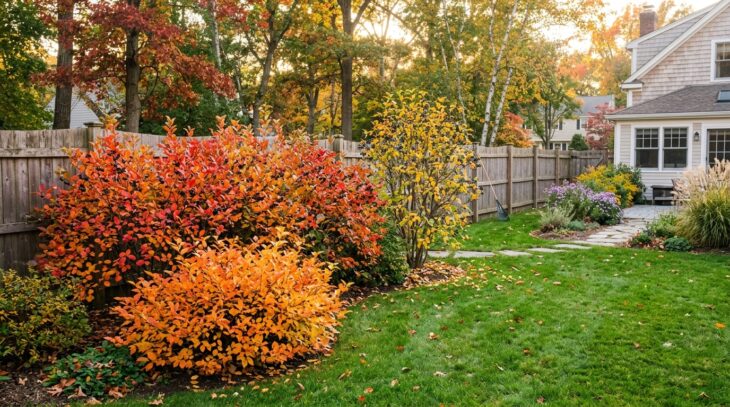
The best native alternatives to burning bush are red chokeberry, dwarf fothergilla and Virginia sweetspire. Red chokeberry comes closest to the red, fothergilla fits small yards, and sweetspire handles wet soil and light shade.
Contents
- Why Replace Burning Bush?
- How We Chose These Shrubs
- 1. Red Chokeberry (Aronia arbutifolia)
- 2. Dwarf Fothergilla (Fothergilla gardenii)
- 3. Virginia Sweetspire (Itea virginica)
- 4. Fragrant Sumac (Rhus aromatica)
- 5. Highbush Blueberry (Vaccinium corymbosum)
- 6. Black Chokeberry (Aronia melanocarpa)
- 7. Arrowwood Viburnum (Viburnum dentatum)
- 8. Possumhaw Viburnum (Viburnum nudum)
- 9. Spicebush (Lindera benzoin)
- 10. Eastern Wahoo (Euonymus atropurpureus)
- What Not to Replace Burning Bush With
- The “Seedless” Burning Bush Is Not a Native Swap
- Frequently Asked Questions
- Should I get rid of my burning bush?
- Why are burning bushes illegal?
- What is the difference between a fire bush and a burning bush?
- What is the difference between eastern wahoo and burning bush?
- Which burning bush alternatives resist deer?
- Is red chokeberry edible?
- What is the best shade alternative to burning bush?
Burning bush (Euonymus alatus) comes from East Asia and is invasive across the eastern and midwestern US. Birds eat the red fruit and spread the seed into woods, where the shrub crowds out native plants.
Not every native shrub turns as red as burning bush, and a few barely turn red at all. The list below is ranked by how close the fall color gets, with the drawbacks included.
Why Replace Burning Bush?
NC State lists burning bush as invasive from Connecticut to South Carolina and west to Wisconsin. It seeds heavily, birds and deer spread the seed, and it can outcompete other plants into a dense grove (NC State).
Phipps Conservatory says it spreads into forests and shades out native shrubs and herbs, and classes it as invasive in Pennsylvania, Maryland and Virginia (Phipps). Illinois Extension notes that several states have banned its sale (Illinois Extension).
Minnesota lists winged burning bush as a Restricted Noxious Weed, with exemptions for only two named seedless cultivars (Minnesota). Our burning bush profile covers the plant itself.
How We Chose These Shrubs
Each shrub is native to the US, is a multi-stemmed shrub that fits the same spot as burning bush, and has real fall interest. We left out native shrubs whose fall color is weak.
Native is a matter of range. Fothergilla and sweetspire are natives of the Southeast, so they are not local natives in every state. Check your state’s native plant list if strict local native planting matters to you.
| Plant | Botanical name | Zones | Size | Light | Fall color |
|---|---|---|---|---|---|
| Red chokeberry | Aronia arbutifolia | 3–9 | 6–12 ft (1.8–3.5 m) | Sun to part shade | Orange-red to purple |
| Dwarf fothergilla | Fothergilla gardenii | 5–8 | 1.5–3 ft (45–90 cm) | Sun to part shade | Orange, yellow, scarlet |
| Virginia sweetspire | Itea virginica | 5–9 | 4–8 ft (1.2–2.5 m) | Sun to part shade | Red, orange, gold |
| Fragrant sumac | Rhus aromatica | 3–9 | 2–6 ft (0.6–1.8 m) | Sun to part shade | Orange, red, reddish-purple |
| Highbush blueberry | Vaccinium corymbosum | 3–8 | 6–12 ft (1.8–3.5 m) | Sun to part shade | Red, yellow, orange, purple |
| Black chokeberry | Aronia melanocarpa | 3–8 | 3–10 ft (0.9–3 m) | Sun to part shade | Wine-red, varies |
| Arrowwood viburnum | Viburnum dentatum | 2–8 | 5–10 ft (1.5–3 m) | Sun to part shade | Yellow to red, variable |
| Possumhaw viburnum | Viburnum nudum | 5–9 | 5–12 ft (1.5–3.5 m) | Sun to part shade | Sometimes reddish-purple |
| Spicebush | Lindera benzoin | 5–9 | 6–15 ft (1.8–4.5 m) | Part shade | Yellow |
| Eastern wahoo | Euonymus atropurpureus | 3–8 | 12–25 ft (3.5–7.5 m) | Sun to part shade | Yellow or red, pink fruit |
1. Red Chokeberry (Aronia arbutifolia)
Zones: 3–9 · Size: 6 to 12 feet (1.8 to 3.5 m) tall, 3 to 5 feet (0.9 to 1.5 m) wide · Light: full sun to part shade · Soil: average to wet, clay or loam, acid to alkaline
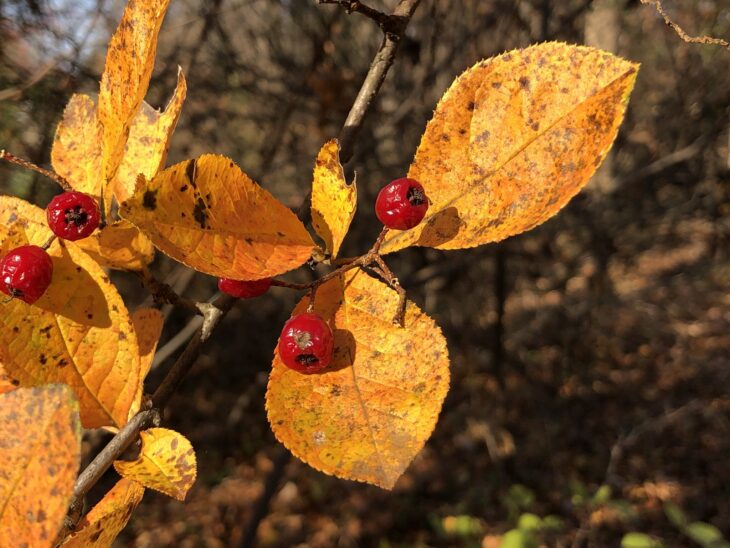
Red chokeberry is the closest match to burning bush for sheer fall color. The leaves turn orangish-red to purple, and glossy red berries hang on through winter for the birds, with reddish-brown bark that peels a little as it ages.
Caveat: it suckers and forms colonies, so pull the suckers if you want a tidy shrub, and it gets leggy with age. The berries are edible but so astringent they can make you choke, which is where the name comes from (NC State).
Cultivar pick: ‘Brilliantissima’ is more compact (6 to 8 feet, or 1.8 to 2.5 m, tall and 3 to 4 feet, or 0.9 to 1.2 m, wide), with glossier leaves, stronger red fall color and more fruit than the species (MBG). Fall color varies, and the photo shows an orange example.
2. Dwarf Fothergilla (Fothergilla gardenii)
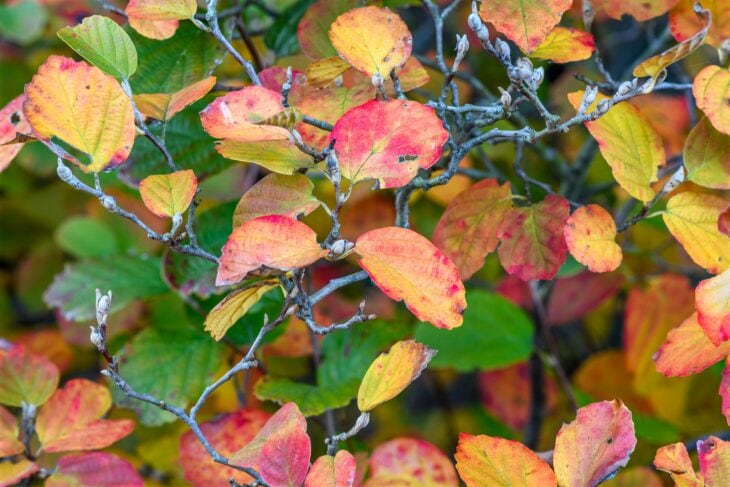
Zones: 5–8 · Size: 1.5 to 3 feet (45 to 90 cm) tall, 2 to 4 feet (60 to 120 cm) wide · Light: full sun to part shade · Soil: moist, acidic, rich in organic matter, well drained
Fothergilla is the small-yard answer. The leaves turn orange, yellow and scarlet in fall, and in spring it has honey-scented white bottlebrush flowers that open before the leaves.
Caveat: it grows slowly, wants acid soil, and it is native to the coastal plain of the Southeast. Suckers can colonize nearby ground if you leave them.
Color is best in full sun, but a little afternoon shade helps in hot, dry summers (MBG). NC State lists it as deer resistant, and the photo shows the genus, not a named species.
3. Virginia Sweetspire (Itea virginica)
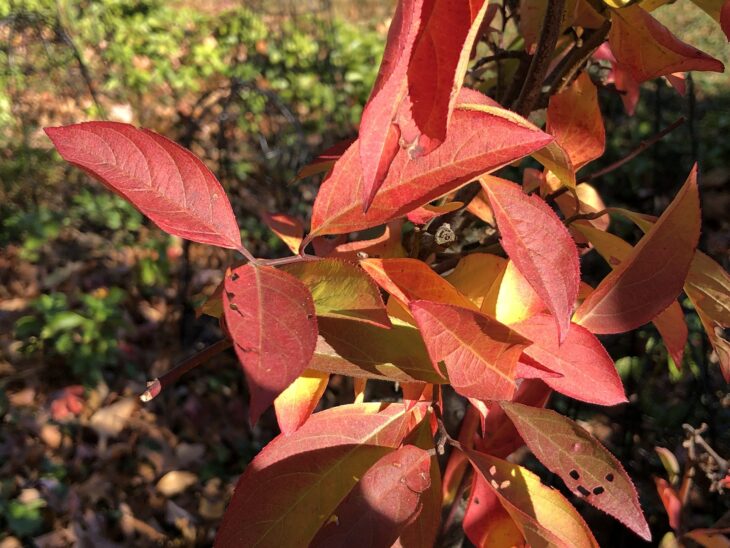
Zones: 5–9 · Size: 4 to 8 feet (1.2 to 2.5 m) tall, 3 to 6 feet (0.9 to 1.8 m) wide · Light: full sun to part shade · Soil: moist to wet, tolerates most soils
Sweetspire gives you two seasons: fragrant white flower spikes 3 to 6 inches (8 to 15 cm) long in late spring, then red, orange and gold leaves that often hang on into early winter. It also tolerates wet soil and light shade.
Caveat: it spreads by root suckers into dense colonies, and NC State lists it as weedy. It is native from New Jersey to Florida and west to Missouri, Louisiana and east Texas, so it is not a local native everywhere (NC State).
Cultivar picks: ‘Henry’s Garnet’ stays at 3 to 4 feet (0.9 to 1.2 m) tall and 4 to 6 feet (1.2 to 1.8 m) wide, with better fall color than the species. ‘Little Henry’ is a dwarf at 1.5 to 2 feet (45 to 60 cm) tall (MBG).
4. Fragrant Sumac (Rhus aromatica)
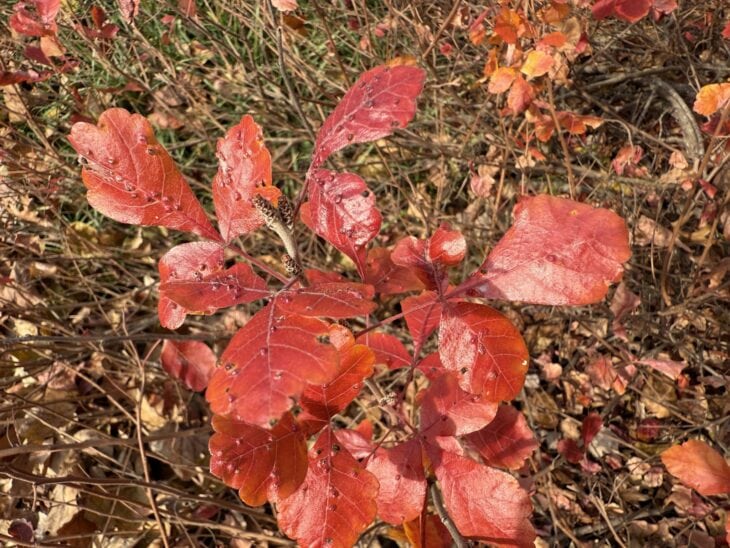
Zones: 3–9 · Size: 2 to 6 feet (0.6 to 1.8 m) tall, 6 to 10 feet (1.8 to 3 m) wide · Light: full sun to part shade · Soil: dry to moist, well drained, clay and rocky soils tolerated
Fragrant sumac is the tough pick for dry slopes and poor soil. The three-part leaves turn orange, red or reddish-purple in fall and smell of lemon when crushed, and female plants carry red berries in late summer.
Caveat: it spreads by root suckers and forms thickets, and NC State lists it as allelopathic. It is smaller and less aggressive than smooth or staghorn sumac, but give it room.
Cultivar pick: ‘Gro-Low’ grows only 1.5 to 2 feet (45 to 60 cm) tall and spreads 6 to 8 feet (1.8 to 2.5 m), which suits a bank or a front edge (MBG). NC State lists the species as resistant to deer, rabbits and drought.
5. Highbush Blueberry (Vaccinium corymbosum)
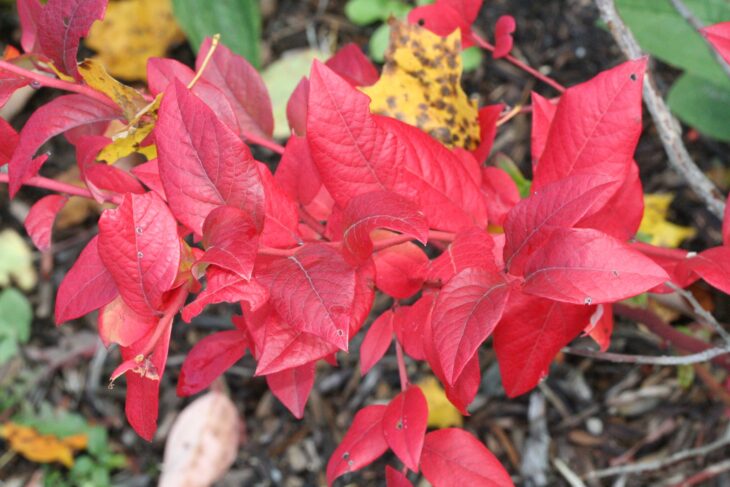
Zones: 3–8 · Size: 6 to 12 feet (1.8 to 3.5 m) tall, 6 to 10 feet (1.8 to 3 m) wide · Light: full sun to part shade · Soil: acidic (pH under 6.0), moist, well drained
Blueberry is the pick if you want to eat something. The fall leaves are a mix of red, yellow, orange and purple, and the fruit ripens from June to mid-September depending on the cultivar.
Caveat: it needs acid soil, and yellowing leaves can mean the pH is too high. NC State lists frequent disease problems, and deer often damage the plants, so fence if deer visit.
Self-fertile plants still set bigger berries when two cultivars that bloom together are planted side by side (NC State).
6. Black Chokeberry (Aronia melanocarpa)
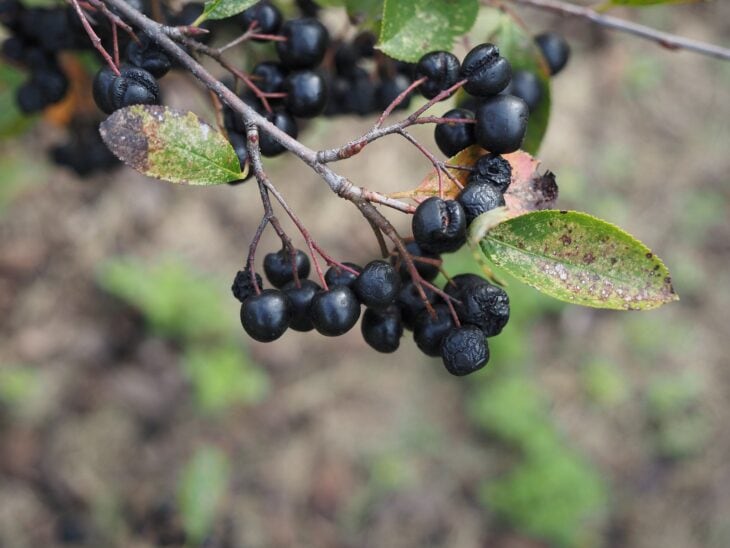
Zones: 3–8 · Size: 3 to 10 feet (0.9 to 3 m) tall, 3 to 6 feet (0.9 to 1.8 m) wide · Light: full sun to part shade · Soil: wet to dry, almost any soil
Black chokeberry is a tough shrub that tolerates both drought and wet soil. The leaves turn wine-red, and the shiny blackish-purple berries ripen in August and September.
Caveat: it spreads freely and suckers profusely, and NC State notes the fall color varies from plant to plant. The berries are edible but very astringent.
To tell the two chokeberries apart, look at the fruit: black chokeberry has black berries, while red chokeberry has red ones. The photo shows the berries, not the fall color.
7. Arrowwood Viburnum (Viburnum dentatum)
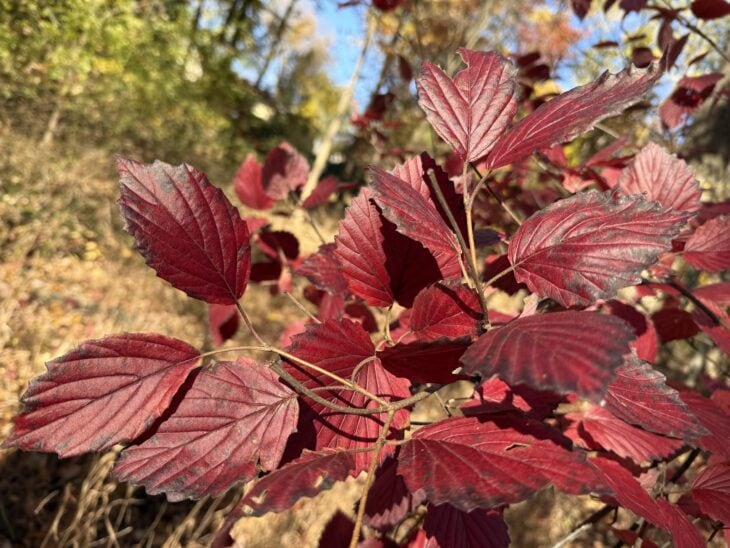
Zones: 2–8 · Size: 5 to 10 feet (1.5 to 3 m) tall, 6 to 10 feet (1.8 to 3 m) wide · Light: full sun to part shade · Soil: moist, well drained, tolerates clay and occasional drought or flooding
Arrowwood is an adaptable shrub with creamy white flower clusters up to 4 inches (10 cm) across in spring and blue-black berries that birds take. It is hardy as far north as Zone 2.
Caveat: fall color is variable, from drab yellow to orange and red, so buy a named selection in person if red matters. You also need more than one genetic strain nearby to get fruit.
NC State lists it as deer resistant (NC State).
8. Possumhaw Viburnum (Viburnum nudum)
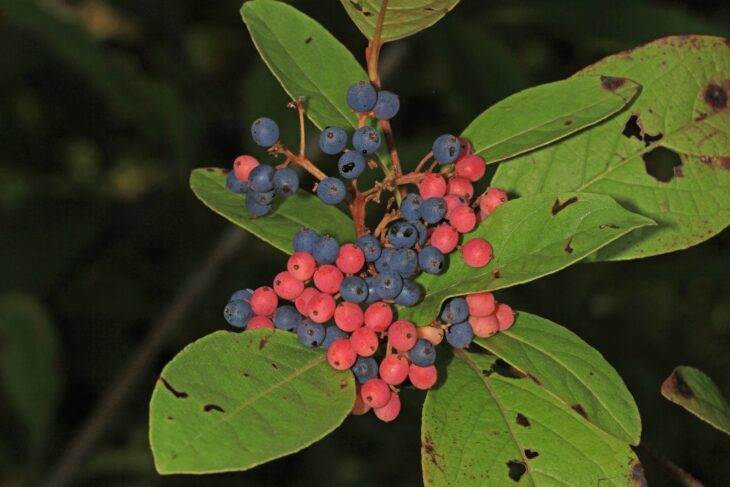
Zones: 5–9 · Size: 5 to 12 feet (1.5 to 3.5 m) tall and wide · Light: full sun to part shade · Soil: acidic, moist, well drained
Possumhaw is a berry shrub first and a fall-color shrub second. The glossy leaves sometimes turn reddish-purple, and the berries ripen in a mix of pink, blue and purplish-black in the same cluster, as the photo shows.
Caveat: the fall color is not reliable, and berry set is best when you plant more than one shrub. White-tailed deer browse the twigs and leaves.
Birds, grouse, turkeys and squirrels eat the fruit, and it is a possible host plant for the spring azure butterfly (NC State).
9. Spicebush (Lindera benzoin)
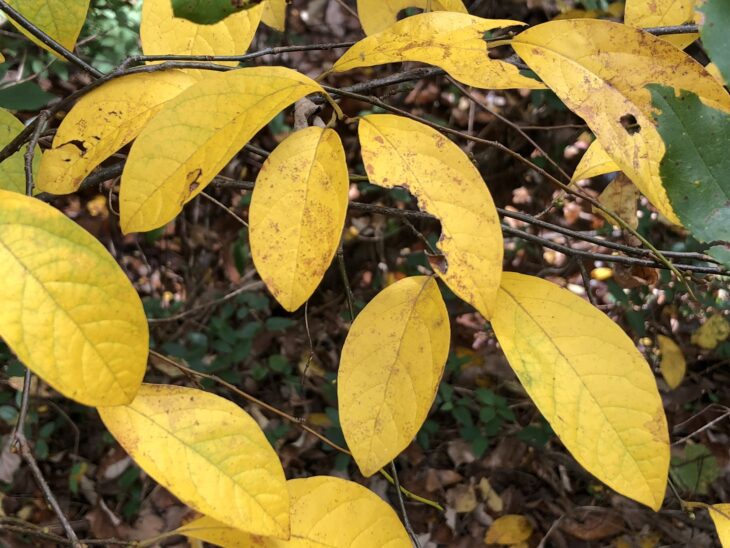
Zones: 5–9 · Size: 6 to 15 feet (1.8 to 4.5 m) tall and wide · Light: part shade · Soil: moist, well drained
Spicebush is the choice for shade, and the one on this list that does not turn red. The leaves turn clear yellow, and crushed leaves and twigs smell spicy.
It hosts the spicebush swallowtail, and songbirds eat the fruit during fall migration. Caveat: male and female flowers are on separate plants, so a female needs a male nearby to set its bright red fruit. Water it more often if you plant it in full sun (NC State).
It suits a woodland edge or a wildlife garden more than a formal border.
10. Eastern Wahoo (Euonymus atropurpureus)
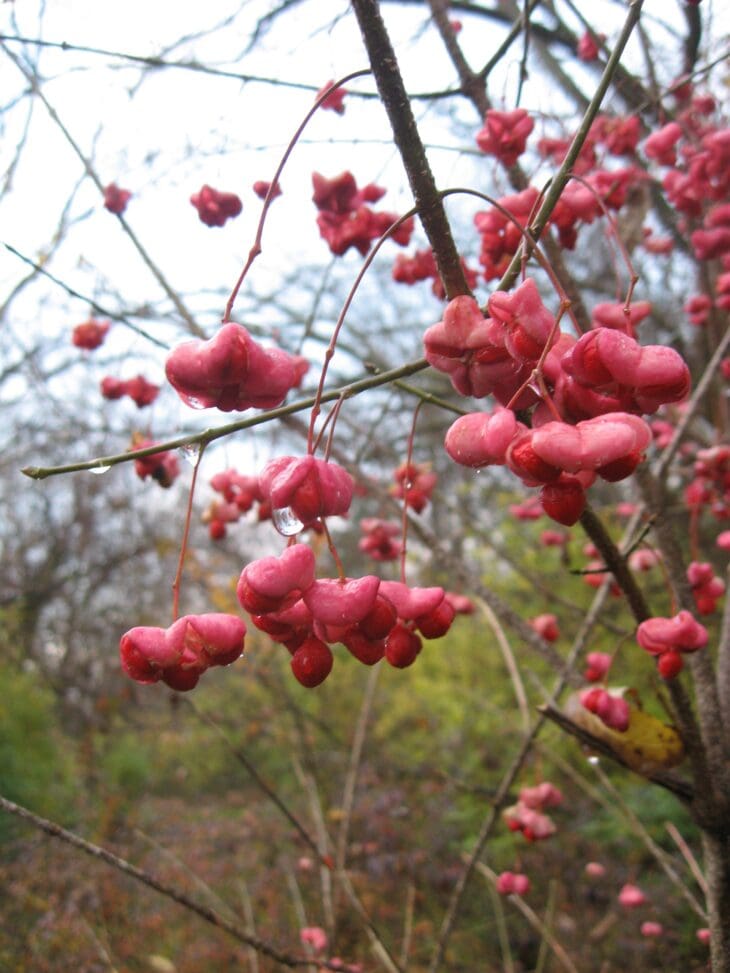
Zones: 3–8 · Size: 12 to 25 feet (3.5 to 7.5 m) tall, 15 to 25 feet (4.5 to 7.5 m) wide · Light: full sun to part shade, prefers dappled shade · Soil: well drained, moist, most soil types
Wahoo is burning bush’s native cousin in the same genus, and its fall show is the fruit: pink lobed capsules that split to show red seeds, over leaves that turn yellow or red. It is a large, rather gangly shrub or small tree, so it suits a woodland edge, not a foundation bed.
Warning: wahoo is toxic. NC State lists the bark and stems as poisonous, with low severity, and the ASPCA lists it as toxic to dogs, cats and horses.
Skip it if children or pets use the yard. It is native to the central and eastern US and relatively rare in North Carolina (NC State).
What Not to Replace Burning Bush With
Japanese barberry is another red-fall shrub, but Minnesota regulates its cultivars as restricted noxious weeds, so it is a poor swap (Minnesota).
Firebush (Hamelia patens) is a different plant. It is native to Florida, grows in Zones 8 to 11, and dies back after freezes even in north Florida (UF/IFAS).
The “Seedless” Burning Bush Is Not a Native Swap
Compact and seedless burning bush cultivars are sold as the fix, and some are exempt from rules. Minnesota exempts only two named cultivars, ‘ZeroSeed’ and ‘NCEA1’ (Fire Ball Seedless), so a compact cultivar is not automatically allowed.
Even where a sterile one is legal, you have swapped one Asian shrub for another. The shrubs above add food and host plants for native wildlife, such as the spicebush swallowtail on spicebush and berries for songbirds on chokeberry and viburnum.
For more fall color beyond shrubs, see our fall garden ideas.
Frequently Asked Questions
Should I get rid of my burning bush?
If it grows near woods, a field or a stream, yes. Birds carry the seed from yards into natural areas, which is how it became invasive. NC State suggests pulling young plants by hand and using a hoe or root-wrenching tool on larger ones.
For bigger infestations, an herbicide can go on the foliage or the cut stump right after cutting. Follow the product label.
Why are burning bushes illegal?
Owning one is not illegal in most places, but selling it is restricted in some states. Minnesota lists it as a Restricted Noxious Weed, and Illinois Extension notes that several states have banned its sale.
Check with your state department of agriculture before you buy or move one.
What is the difference between a fire bush and a burning bush?
They are unrelated plants. Burning bush (Euonymus alatus) is an Asian shrub grown for red fall leaves and is invasive in the East and Midwest, with corky wings on its stems.
Firebush (Hamelia patens) is a Florida native grown for red-orange flowers from late spring to frost, hardy in Zones 8 to 11.
What is the difference between eastern wahoo and burning bush?
They are in the same genus. Wahoo (Euonymus atropurpureus) is native to the central and eastern US, grows 12 to 25 feet (3.5 to 7.5 m) tall, and has green young shoots, while burning bush stems have 2 to 4 prominent corky wings.
Both are toxic if eaten, so keep children and pets away from either one.
Which burning bush alternatives resist deer?
NC State lists dwarf fothergilla, arrowwood viburnum and fragrant sumac as deer resistant, and Virginia sweetspire as moderately resistant. Resistant is not proof, and hungry deer will browse almost anything.
Highbush blueberry and possumhaw are browsed by deer, and burning bush itself is attractive to deer.
Is red chokeberry edible?
NC State says the fruit is edible but so astringent it may cause choking, and it is used in jams and jellies. That applies to a plant you grew and identified yourself.
Never eat a wild berry based on a photo or an article.
What is the best shade alternative to burning bush?
Spicebush grows in part shade and Virginia sweetspire tolerates dappled shade. Dwarf fothergilla also takes dappled light, though flowering and fall color are best in more sun.
Of the three, only sweetspire and fothergilla give red or orange leaves, since spicebush turns yellow.