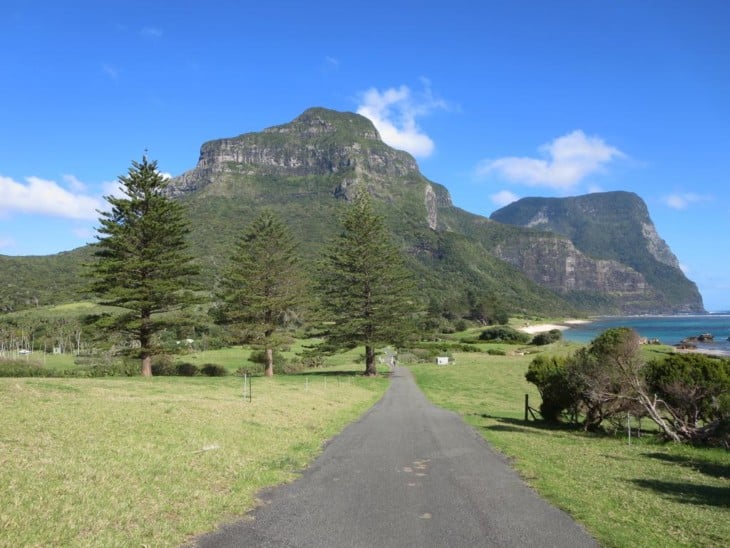
Australia has no native true pines. Every tree in the genus Pinus growing there was brought in, mostly for timber: Monterey (radiata) pine makes up most of the country’s pine plantations, and maritime, slash and Caribbean pine fill the rest. The trees Australians call native “pines” are other conifers: hoop, bunya, Norfolk Island and Wollemi pine are in the ancient araucaria family, while cypress pines and Huon pine come from two more families.
This guide covers both groups: the four planted pines you see in plantations and windbreaks, then the seven native “pines” of rainforests, inland plains and Tasmanian rivers.
| Tree | Botanical name | Native? | Where you’ll see it |
|---|---|---|---|
| Monterey Pine (Radiata Pine) | Pinus radiata | No (California) | Plantations in NSW, Victoria, SA, Tasmania; windbreaks |
| Maritime Pine | Pinus pinaster | No (western Mediterranean) | Plantations near Perth; sandy coastal soils |
| Slash Pine | Pinus elliottii | No (southeastern US) | Queensland and northern NSW plantations |
| Caribbean Pine | Pinus caribaea | No (Central America and the Caribbean) | Coastal Queensland plantations |
| Hoop Pine | Araucaria cunninghamii | Yes | Rainforests of Queensland and northern NSW; plantations |
| Bunya Pine | Araucaria bidwillii | Yes | Bunya Mountains and Blackall Range, Queensland; parks |
| Norfolk Island Pine | Araucaria heterophylla | Yes (Norfolk Island) | Coastal parks and beachfronts across Australia |
| Queensland Kauri | Agathis robusta | Yes | Queensland rainforests and Fraser Island; parks |
| Wollemi Pine | Wollemia nobilis | Yes | Wollemi National Park, NSW (secret site); garden centers |
| White Cypress Pine | Callitris glaucophylla | Yes | Inland NSW, Queensland and Victoria |
| Huon Pine | Lagarostrobos franklinii | Yes | River banks in western and southwestern Tasmania |
Introduced True Pines (Pinus)
True pines have needles in bundles of two to five and woody cones. None are native to Australia, but four are planted on a large scale, and two of them have escaped into bushland.
Monterey Pine (Radiata Pine) (Pinus radiata)

Radiata pine is Australia’s most important timber tree and the pine behind most house framing sold in the country. In the wild it grows only at three small spots on the central California coast and on two Mexican islands, but in Australia’s cooler south it grows faster than almost anywhere else, often more than a meter a year when young. Plantation trees reach 30 to 50 meters. The needles are 10 to 15 cm long and grow in bundles of three, and the lopsided cones can stay closed on the branches for years. Seedlings spread from plantations into nearby bushland, and radiata pine is listed as an environmental weed in several states.
Maritime Pine (Pinus pinaster)

Maritime pine comes from the Atlantic and Mediterranean coasts of Portugal, Spain, France and North Africa. It copes with poor, sandy soil and dry summers, which is why it was planted on a large scale on the sandy plain north of Perth. It grows 20 to 35 meters tall, with stiff, thick needles 15 to 25 cm long in pairs and large, glossy brown cones 10 to 20 cm long. It spreads readily from seed and is a serious environmental weed in Western Australia and South Australia.
Slash Pine (Pinus elliottii)

Slash pine is native to the swampy coastal plains of the southeastern United States, from South Carolina to Louisiana, which is why it is also called swamp pine. In Australia it was planted on the wet, sandy coastal lowlands of southeast Queensland and northern New South Wales. It grows 25 to 30 meters tall, with needles 15 to 25 cm long in bundles of two or three. Much of the newer Queensland plantation stock is a hybrid of slash and Caribbean pine, which grows faster than either parent.
Caribbean Pine (Pinus caribaea)

Caribbean pine grows wild in the lowlands of Central America, western Cuba and the Bahamas. It is a tropical pine, so in Australia it is planted in coastal Queensland, including large plantations near Byfield and on the Sunshine Coast. It grows 20 to 35 meters tall, with needles 15 to 25 cm long, mostly in bundles of three. Queensland foresters cross it with slash pine to combine its fast growth with slash pine’s tolerance for wet ground.
Native “Pines” (Not True Pines)
None of these belong to the genus Pinus. Hoop, bunya, Norfolk Island and Wollemi pine and the Queensland kauri are all in the araucaria family (Araucariaceae), which grew across the world in the age of the dinosaurs and now survives mostly in the Southern Hemisphere. White cypress pine is in the cypress family, and Huon pine is a podocarp.
Hoop Pine (Araucaria cunninghamii)

Hoop pine is named after its bark, which peels in horizontal rings, or hoops, around the trunk. It grows in drier rainforests from northern New South Wales to Cape York, and also in New Guinea. It reaches 30 to 50 meters, occasionally 60, and can live more than 400 years. The young leaves are short, sharp needles, and the branches grow in tufts at the ends, which gives old trees a distinctive layered look. Hoop pine is also grown in plantations in southeast Queensland for plywood and joinery.
Bunya Pine (Araucaria bidwillii)

The bunya pine has a dome-shaped crown and stiff, glossy, very sharp leaves. It grows 30 to 45 meters tall in southeast Queensland, with two small populations further north. It is famous for its cones, which are the size of a football and can weigh up to 10 kg. They fall in summer, which is why parks rope off bunya pines when the cones are ripe. The nuts inside were the center of large Aboriginal gatherings in the Bunya Mountains, and they are still eaten roasted or boiled. They taste a bit like chestnuts.
Norfolk Island Pine (Araucaria heterophylla)

The Norfolk Island pine is native only to Norfolk Island, an Australian territory in the Pacific, 1,400 km east of the mainland. Captain Cook saw the trees when he landed there in 1774. It has perfectly symmetrical tiers of branches and grows 30 to 50 meters tall in the wild. It tolerates salt spray and wind better than almost any other tree, so it lines beachfronts from Manly to Adelaide. Young trees are also sold worldwide as houseplants.
Queensland Kauri (Agathis robusta)

Queensland kauri doesn’t look like a pine at all: it has broad, leathery, flat leaves 5 to 12 cm long rather than needles. It is a massive tree, 30 to 50 meters tall, with a straight, smooth trunk that can be 2 meters thick. It grows in two separate areas: around Maryborough and K’gari (Fraser Island), and in the rainforests of the Atherton Tableland. Its pale, even timber was heavily logged in the 1800s.
Wollemi Pine (Wollemia nobilis)
The Wollemi pine was known only from fossils until a park ranger found living trees in a remote canyon in Wollemi National Park, northwest of Sydney, in 1994. Fewer than 100 adult trees grow in the wild, and their location is kept secret. Firefighters protected them with sprinklers during the 2019–20 bushfires. The bark looks like bubbling chocolate, and the trees can reach 40 meters. To protect the wild population, nurseries propagated the tree and sell it as a garden and pot plant.
White Cypress Pine (Callitris glaucophylla)
White cypress pine is the most widespread native conifer of inland Australia, growing on sandy plains and ridges west of the Great Dividing Range. It is a narrow tree, 15 to 25 meters tall, with tiny scale leaves on thin, drooping twigs and small, round cones that split into six segments. Its timber naturally resists termites, which is why it is used for house frames and floorboards across inland Australia.
Huon Pine (Lagarostrobos franklinii)
Huon pine grows only along rivers and lakes in Tasmania’s wet southwest. It is one of the slowest-growing trees in the world, often adding less than a millimeter of trunk width a year. Single trees can live more than 2,000 years. A stand on Mount Read in western Tasmania, all one genetic individual, is thought to be around 10,000 years old. Its golden, oily timber hardly rots and was prized for boatbuilding. Only fallen or salvaged Huon pine may be used today.
How to Tell Them Apart
- Needles in bundles: needles in groups of two or three, wrapped together at the base, mean a true pine (Pinus). All of these are introduced.
- Symmetrical tiers: a tree with perfectly regular tiers of branches on a straight trunk is almost always a Norfolk Island pine, especially near the coast.
- Dome crown with sharp leaves: a bunya pine. Don’t stand under it in summer.
- Flat, broad leaves: a kauri.
- Tiny scale leaves on thin twigs: a cypress pine (Callitris).
Related: Are Pine Trees Edible? · Trees That Look Like Christmas Trees