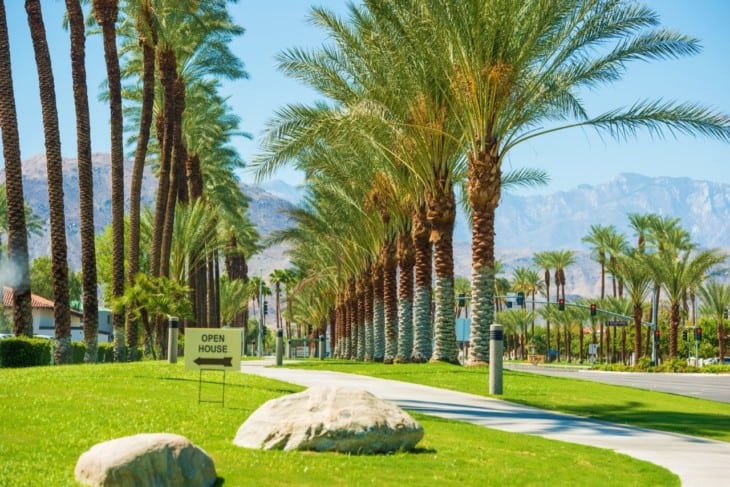
California holds three world records for trees. It has the tallest (a coast redwood called Hyperion, about 380 feet), the largest by volume (the General Sherman giant sequoia) and among the oldest (Great Basin bristlecone pines in the White Mountains, more than 4,800 years old). About a third of the state is forested. Its climate runs from foggy coast to Sierra Nevada snow to the Mojave Desert, so it has more native tree species than most states, and many of them grow nowhere else.
Contents
- Common Trees in California
- Coast Live Oak (Quercus agrifolia)
- Valley Oak (Quercus lobata)
- California Sycamore (Platanus racemosa)
- California Black Walnut (Juglans hindsii)
- Fremont Cottonwood (Populus fremontii)
- Oregon Ash (Fraxinus latifolia)
- Box Elder (Acer negundo)
- White Alder (Alnus rhombifolia)
- California Buckeye (Aesculus californica)
- Willow (Salix spp.)
- Coast Redwood (Sequoia sempervirens)
- Giant Sequoia (Sequoiadendron giganteum)
- Douglas Fir (Pseudotsuga menziesii)
- Santa Lucia Fir (Abies bracteata)
- Vine Maple (Acer circinatum)
- Water Birch (Betula occidentalis)
- Netleaf Hackberry (Celtis reticulata)
- Sargent Cypress (Hesperocyparis sargentii)
- California Nutmeg (Torreya californica)
- California Fan Palm (Washingtonia filifera)
- Joshua Tree (Yucca brevifolia)
- Western Redbud (Cercis occidentalis)
- Pine Trees in California
- Bishop Pine (Pinus muricata)
- Coulter Pine (Pinus coulteri)
- Gray Pine (Pinus sabiniana)
- Great Basin Bristlecone Pine (Pinus longaeva)
- Jeffrey Pine (Pinus jeffreyi)
- Knobcone Pine (Pinus attenuata)
- Lodgepole Pine (Pinus contorta)
- Monterey Pine (Pinus radiata)
- Singleleaf Pinyon (Pinus monophylla)
- Parry Pinyon (Pinus quadrifolia)
- Ponderosa Pine (Pinus ponderosa)
- Sugar Pine (Pinus lambertiana)
- Torrey Pine (Pinus torreyana)
- Western White Pine (Pinus monticola)
This guide covers California’s most common and notable native trees, followed by its native pines. For city trees in Southern California, see our guide to the most common trees in Los Angeles.
| Tree | Botanical name | Group | Native |
|---|---|---|---|
| Coast Live Oak | Quercus agrifolia | Common | Yes |
| Valley Oak | Quercus lobata | Common | Yes |
| California Sycamore | Platanus racemosa | Common | Yes |
| California Black Walnut | Juglans hindsii | Common | Yes (rare in the wild) |
| Fremont Cottonwood | Populus fremontii | Common | Yes |
| Oregon Ash | Fraxinus latifolia | Common | Yes |
| Box Elder | Acer negundo | Common | Yes |
| White Alder | Alnus rhombifolia | Common | Yes |
| California Buckeye | Aesculus californica | Common | Yes |
| Willow | Salix spp. | Common | Yes |
| Coast Redwood | Sequoia sempervirens | Common | Yes |
| Giant Sequoia | Sequoiadendron giganteum | Common | Yes |
| Douglas Fir | Pseudotsuga menziesii | Common | Yes |
| Santa Lucia Fir | Abies bracteata | Common | Yes (rare) |
| Vine Maple | Acer circinatum | Common | Yes |
| Water Birch | Betula occidentalis | Common | Yes |
| Netleaf Hackberry | Celtis reticulata | Common | Yes |
| Sargent Cypress | Hesperocyparis sargentii | Common | Yes |
| California Nutmeg | Torreya californica | Common | Yes |
| California Fan Palm | Washingtonia filifera | Common | Yes |
| Joshua Tree | Yucca brevifolia | Common | Yes |
| Western Redbud | Cercis occidentalis | Common | Yes |
| Bishop Pine | Pinus muricata | Pine | Yes |
| Coulter Pine | Pinus coulteri | Pine | Yes |
| Gray Pine | Pinus sabiniana | Pine | Yes |
| Great Basin Bristlecone Pine | Pinus longaeva | Pine | Yes |
| Jeffrey Pine | Pinus jeffreyi | Pine | Yes |
| Knobcone Pine | Pinus attenuata | Pine | Yes |
| Lodgepole Pine | Pinus contorta | Pine | Yes |
| Monterey Pine | Pinus radiata | Pine | Yes (rare in the wild) |
| Singleleaf Pinyon | Pinus monophylla | Pine | Yes |
| Parry Pinyon | Pinus quadrifolia | Pine | Yes (rare) |
| Ponderosa Pine | Pinus ponderosa | Pine | Yes |
| Sugar Pine | Pinus lambertiana | Pine | Yes |
| Torrey Pine | Pinus torreyana | Pine | Yes (rare) |
| Western White Pine | Pinus monticola | Pine | Yes |
Common Trees in California
Coast Live Oak (Quercus agrifolia)

Coast live oak is the characteristic oak of California’s coast ranges, from Mendocino to Baja California. It is an evergreen with a broad, spreading crown, usually 30 to 80 feet tall. Its holly-like leaves are cupped and spiny-edged. It is threatened in places by sudden oak death, a disease that has killed millions of oaks along the coast since the 1990s.
Valley Oak (Quercus lobata)

Valley oak is found only in California and is the largest oak in North America, often 60 to 100 feet tall with a wide, arching crown and drooping branchlets. It grows in the Central Valley, the foothills and coastal valleys, on deep soils with access to groundwater. Its deeply lobed leaves are velvety underneath. Young trees can grow quickly, several feet a year with water, and old trees live 300 years or more.
California Sycamore (Platanus racemosa)

California sycamore grows along streams and in canyons across much of the state and reaches 40 to 100 feet. It often has several leaning or twisting trunks with patchy white, tan and grey bark. Its large, deeply lobed leaves turn yellow-brown in fall, and its bristly seed balls hang in strings of two to seven.
California Black Walnut (Juglans hindsii)

Northern California black walnut is native to only a few sites in Northern California, but it is common along roads and in the Central Valley. That is because it was widely used as rootstock for commercial English walnut orchards. It grows 30 to 60 feet tall with a single trunk, and its hard, dark wood is used for furniture and gunstocks.
Fremont Cottonwood (Populus fremontii)
Read our guide to Fremont Cottonwood

Fremont cottonwood lines rivers, streams and wetlands in the valleys and deserts. It grows 40 to 80 feet tall, sometimes taller, with a massive trunk. It has triangular, toothed leaves that turn gold in fall and deeply furrowed pale bark. In spring, female trees release their seeds in white cottony tufts.
Oregon Ash (Fraxinus latifolia)

Oregon ash grows in moist soils along streams and in wetlands in Northern and Central California, usually 40 to 80 feet tall. It has compound leaves with 5 to 7 broad leaflets and winged seeds. The flowers are tiny and inconspicuous. It can live about 250 years.
Box Elder (Acer negundo)

Box elder is a native maple of streamsides in the Central Valley and Southern California. It grows 35 to 60 feet tall with a short trunk and bushy crown. It has compound, ash-like leaves and smooth green twigs. It needs water along streams but tolerates dry spells once established.
White Alder (Alnus rhombifolia)

White alder grows along permanent streams from the foothills into the mountains, often 50 to 80 feet tall. It grows fast when young, then slows once it passes about 50 feet. It is one of the best indicators of year-round water in California. Its roots fix nitrogen, and its small cones and catkins feed siskins and other finches.
California Buckeye (Aesculus californica)

California buckeye is a small, often multi-trunked tree, 15 to 40 feet tall, with silvery bark and a rounded crown. It is found only in California. It leafs out early and drops its leaves by midsummer to survive the drought, then stands bare with its large, pear-shaped fruits. The seeds are poisonous, and the nectar is toxic to honeybees, although hummingbirds use it safely.
Willow (Salix spp.)

California has about 30 native willows, from shrubs to trees such as red willow, arroyo willow and Goodding’s black willow. They grow wherever there is water, along streams, springs and wetlands. Most are fast-growing and short-lived, living 50 to 70 years, with narrow leaves and furrowed grey bark.
Coast Redwood (Sequoia sempervirens)

Coast redwood is the tallest tree species on Earth, commonly over 300 feet, and Hyperion reaches about 380 feet. It grows only in the fog belt of the northern and central California coast and a small corner of Oregon. You can see it in Redwood National and State Parks and in Muir Woods. Redwoods live more than 2,000 years. Their roots are shallow, only 6 to 12 feet deep, but they spread wide and intertwine with neighboring trees. Coast redwood and giant sequoia together are California’s state tree.
Giant Sequoia (Sequoiadendron giganteum)

Giant sequoia is the largest tree on Earth by volume. The General Sherman tree is about 275 feet tall and around 100 feet in circumference at its base. Giant sequoias grow only in about 70 groves on the western slope of the Sierra Nevada, including in Sequoia, Kings Canyon and Yosemite national parks. They can live more than 3,000 years. Their thick, spongy bark resists fire, but the severe wildfires of 2020–2021 killed an estimated 13–19% of all large sequoias.
Douglas Fir (Pseudotsuga menziesii)

Douglas fir is the most common conifer in Northern California’s coast ranges and Klamath Mountains, often growing 150 to 250 feet tall. It is not a true fir. You can identify it by its cones, which have three-pointed bracts sticking out between the scales like the back legs and tail of a mouse hiding inside. It is one of the most important timber trees in the West.
Santa Lucia Fir (Abies bracteata)

Santa Lucia fir grows only in the rocky canyons of the Santa Lucia Mountains near Big Sur. It is the rarest fir in North America. It is a slender, spire-shaped tree, 60 to 120 feet tall, with stiff, sharp needles. Its cones are unique, with long, thin bracts that stick out like bristles.
Vine Maple (Acer circinatum)

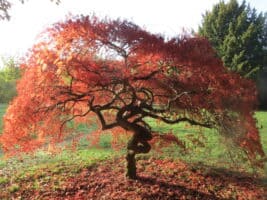
Vine maple is a small, shrubby maple, 10 to 20 feet tall, of moist, shady streamsides in far Northern California. Its slender stems often bend to the ground and root where they touch, which gives it its name. Its round leaves have 7 to 9 lobes and turn orange and red in fall.
Water Birch (Betula occidentalis)

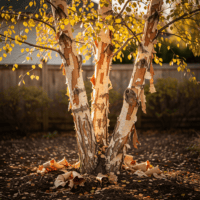
Water birch is a shrubby tree of streamsides in the eastern Sierra and the mountains of Northern California. It is usually 10 to 25 feet tall. It has shiny reddish-brown bark and small, toothed leaves, and it grows in wet, acidic soils in full to part sun.
Netleaf Hackberry (Celtis reticulata)

Netleaf hackberry is a large shrub or small tree, usually 20 to 30 feet, of canyons and washes in Southern California and the eastern deserts. Its rough leaves have a raised net of veins underneath. Its small orange-red berries are eaten by birds.
Sargent Cypress (Hesperocyparis sargentii)

Sargent cypress is a native cypress that grows mainly on serpentine soils in the coast ranges, from Mendocino County to Santa Barbara County. It is often shrubby on poor sites but reaches 30 to 50 feet on better ones. It is drought-tolerant and can bear cones when only 6 years old.
California Nutmeg (Torreya californica)

California nutmeg is a conifer found only in California, in shaded canyons of the coast ranges and the Sierra foothills. It is not a true nutmeg. It grows up to about 70 feet, is pyramidal when young and rounded with age, and has stiff, sharp-tipped needles. Its olive-like seeds look like nutmegs, and the crushed foliage smells pungent, which is why it is also called stinking nutmeg.
California Fan Palm (Washingtonia filifera)

California fan palm is the only palm native to the western US. It grows wild in desert oases of the Colorado Desert, such as the Indian Canyons near Palm Springs, the Coachella Valley Preserve and Anza-Borrego. It reaches 50 to 65 feet with a thick trunk, and its dead fronds form a “skirt”. Most of the tall, skinny palms along Los Angeles streets are the Mexican fan palm instead.
Joshua Tree (Yucca brevifolia)

Joshua tree is a tree-sized yucca found only in the Mojave Desert and best seen in Joshua Tree National Park. It usually grows 15 to 30 feet tall with a trunk up to 3 feet across, and it can live 150 years or more. It feeds and shelters many desert animals, from lizards to birds and insects, and it depends on a single moth species for pollination.
Western Redbud (Cercis occidentalis)
Read our guide to Western Redbud

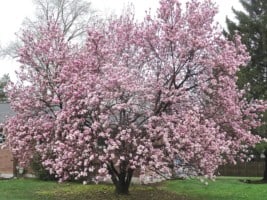
Western redbud is a small, multi-stemmed tree, 10 to 20 feet tall, of dry foothills and canyons in the Sierra Nevada and Coast Ranges. Its bare branches are covered in magenta flowers in early spring. The heart-shaped leaves are blue-green, and flat purple-brown seed pods follow. It is an excellent drought-tolerant garden tree.
Pine Trees in California
California has around 20 native pines, more than any other state, from coastal fog pines to high-mountain giants. The most common and notable are listed below, with where to find them in the state.
Bishop Pine (Pinus muricata)

Bishop pine grows in scattered coastal groves from Humboldt County to Santa Barbara County and on Santa Cruz and Santa Rosa islands. It usually reaches 50 to 80 feet. Its needles, about 4 to 6 inches long, grow in pairs. Its spiny cones often stay closed on the tree until fire opens them. The island populations are sometimes separated as Santa Cruz Island pine.
Coulter Pine (Pinus coulteri)

Coulter pine grows on dry slopes in the Coast Ranges and the mountains of Southern California, usually 40 to 80 feet tall. It has the heaviest cones of any pine: up to 15 inches long and as much as 10 pounds, with hooked scales, which is why they are nicknamed “widowmakers”. Its soft wood is used mostly as firewood.
Gray Pine (Pinus sabiniana)

Gray pine (foothill pine) grows only in California, in the dry foothills around the Central Valley. It usually grows 40 to 80 feet tall, often with a forked, open crown of long, drooping grey-green needles. Its heavy cones are up to 10 inches long, and the large seeds were an important food for California’s Native peoples. The resinous trees are highly flammable.
Great Basin Bristlecone Pine (Pinus longaeva)

Great Basin bristlecone pine grows in California only in the White and Inyo mountains, above 9,000 feet. It includes the oldest known non-clonal trees on Earth: the “Methuselah” tree in the Ancient Bristlecone Pine Forest is more than 4,800 years old. The trees are usually 15 to 50 feet tall and gnarled. Their needles grow in fives and can stay on the tree for up to 45 years.
Jeffrey Pine (Pinus jeffreyi)

Jeffrey pine grows mainly in California’s mountains, especially the eastern Sierra and the Southern California ranges, usually 80 to 130 feet tall. It looks like ponderosa pine, but its cones are larger with inward-pointing prickles (“gentle Jeffrey, prickly ponderosa”). Its bark smells of vanilla or butterscotch.
Knobcone Pine (Pinus attenuata)

Knobcone pine grows on dry, poor soils in the mountains of Oregon and California, usually 25 to 80 feet tall. Its needles grow in threes, and its knobby cones grip the trunk and branches in whorls, staying closed for decades until a fire opens them. Stands often regenerate all at once after a wildfire.
Lodgepole Pine (Pinus contorta)

Lodgepole pine grows in two forms in California. Shore pine is a short, often twisted tree of the northern coast. Sierra lodgepole pine (subspecies murrayana, locally called “tamarack”) is a straight tree, 50 to 100 feet tall, of high Sierra meadow edges. Both have short needles in pairs and small, prickly cones.
Monterey Pine (Pinus radiata)

Monterey pine is native to only three small stands on the central California coast, at Monterey, Cambria and Año Nuevo, and to two Mexican islands. Yet as radiata pine it is the most widely planted pine in the world, grown as a timber tree in New Zealand, Chile and Australia. In the wild it usually reaches 50 to 100 feet. Its needles grow in threes.
Singleleaf Pinyon (Pinus monophylla)

Singleleaf pinyon is the only pine in the world with needles that grow singly rather than in bundles. It grows on the dry eastern slopes of the Sierra Nevada and on the desert mountains, usually 15 to 40 feet tall. Its large, edible pine nuts were a staple food for the Great Basin peoples.
Parry Pinyon (Pinus quadrifolia)

Parry pinyon grows in California only in the mountains of San Diego and Riverside counties, and in Baja California. It usually reaches 15 to 30 feet and has needles in bundles of four, which is unusual for a pine. Its seeds are edible, and it is valued for firewood.
Ponderosa Pine (Pinus ponderosa)

Ponderosa pine is one of the most widespread pines in California’s mountains, commonly 100 to 180 feet tall. The tallest known ponderosa, measured in Oregon in 2011, reached about 268 feet. Mature trees have orange-brown bark in large puzzle-piece plates. The long needles grow in bundles of three, and its cones have outward-pointing prickles.
Sugar Pine (Pinus lambertiana)

Sugar pine is the tallest and most massive pine in the world, reaching over 200 feet with trunks up to 8 feet across, in the Sierra Nevada and the Klamath and Coast ranges. Its cones are the longest of any conifer, often 10 to 20 inches. John Muir called it the “king of the conifers”. Its sweet resin gave it its name.
Torrey Pine (Pinus torreyana)

Torrey pine is the rarest native pine in the US. It grows wild only at Torrey Pines State Natural Reserve near San Diego and on Santa Rosa Island. Wind-shaped trees on the sea bluffs are usually under 50 feet tall. It has long needles in bundles of five and large, heavy cones with big edible seeds.
Western White Pine (Pinus monticola)

Western white pine grows in the Sierra Nevada, the Klamath Mountains and the Cascades, usually 100 to 160 feet tall. Its blue-green needles grow in fives, and it has long, slender cones up to 10 inches. It is closely related to eastern white pine but has larger cones. White pine blister rust has killed many trees.