
Rose aphids crowd the buds every spring, black spot spreads whenever leaves stay wet, and where Japanese beetles are established they chew the blooms. Companion planting can help with only one of those problems, and the evidence is thinner than most rose guides admit.
Contents
Companion planting means growing different plants close together so one helps the other. For roses (Rosa), the main insect pests are aphids, thrips, spider mites and rose slugs, plus Japanese beetles where they are established (Clemson). The main diseases are black spot, powdery mildew and rose rosette, a virus spread by tiny mites that has no cure.
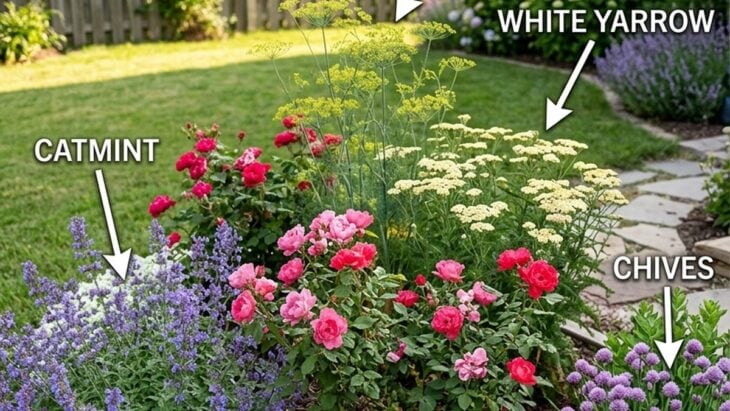
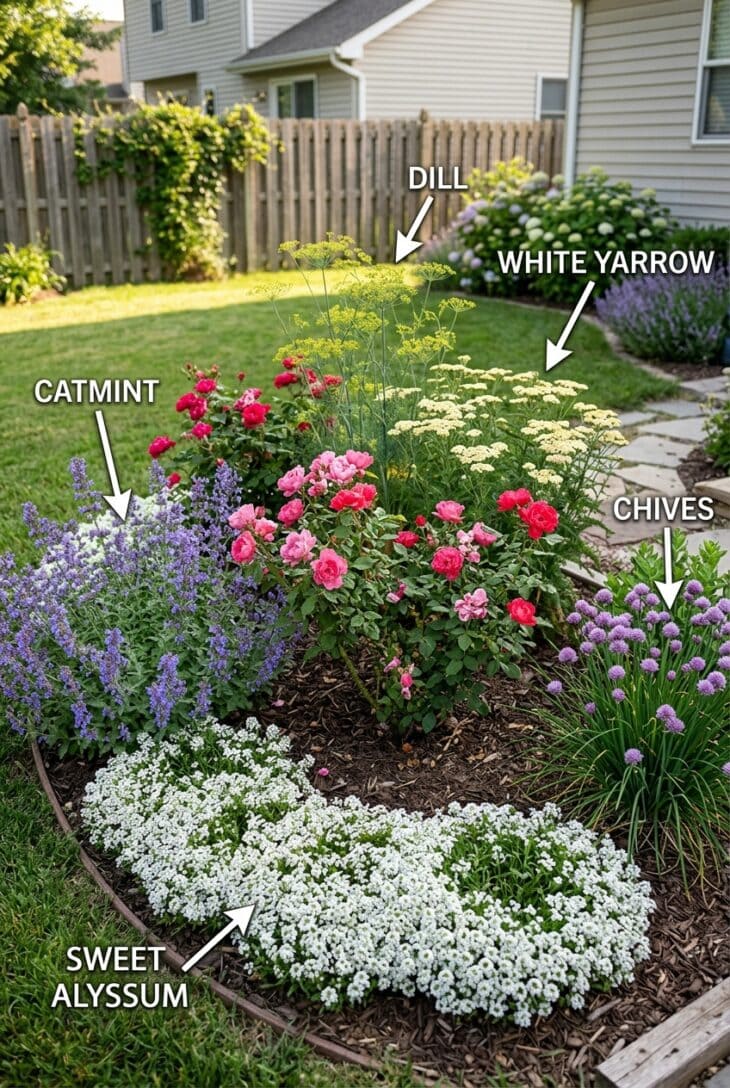
The best-supported companions are small-flowered plants that feed the natural enemies of aphids: sweet alyssum, dill, cilantro and yarrow. Hoverflies, lady beetles and parasitic wasps attack rose aphids, but Delaware Extension cautions that more natural enemies does not always mean fewer pests. None of the sources behind this article tested these plants on roses, and UC IPM notes that low to moderate aphid numbers do little damage.
Choose companions that share the rose’s needs: 6 to 8 hours of direct sun, loose, well-drained soil rich in organic matter, and water at the base, not overhead (Clemson). A Master Gardener guide suggests leaving about 1 foot (30 cm) between a companion and the canes so air keeps moving. Black spot needs leaves wet for more than about 7 hours (UC IPM), and crowding makes that more likely.
Best companion plants for roses
Sweet alyssum (Lobularia maritima)
What it helps with
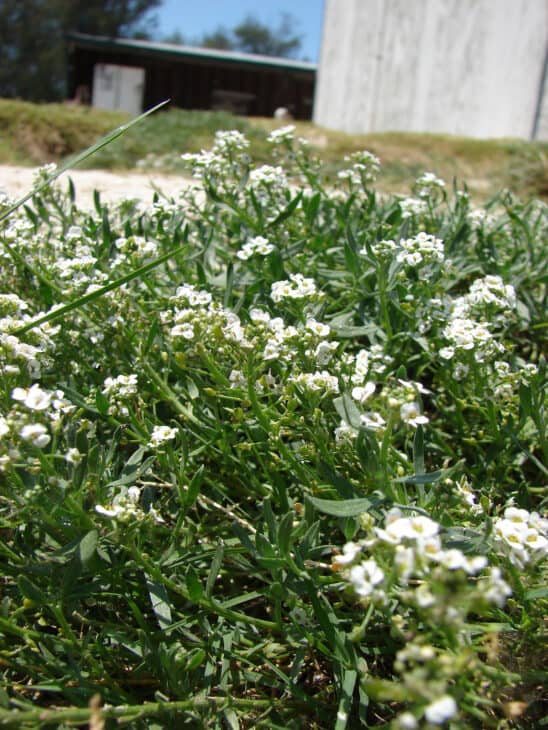
Sweet alyssum’s tiny flowers attract hoverflies and ladybugs, which prey on rose aphids.
Why it works with roses
Iowa State says alyssum draws ladybugs and hoverflies, and an adult ladybug can eat as many as 50 aphids per day. Delaware Extension reports syrphid flies swarming alyssum flowers in spring. Both observations come from crop plantings, not from a trial on roses.
Planting notes
Use alyssum as a low edging 3 to 10 inches (8 to 25 cm) tall, about 1 foot (30 cm) in front of the canes. Broadcast seed on well-amended soil without covering it, because light helps germination, which takes 7 to 20 days. NC State suggests sowing several weeks before your last frost date, and cutting plants back in summer keeps flowers coming.
Possible drawback or limit
Blooms decline in hot summers, and newer cultivars are less drought tolerant than older ones. Attracting predators also does not guarantee fewer aphids.
Yarrow (Achillea millefolium)

What it helps with
Yarrow’s flat flower heads feed beneficial insects and pollinators through the summer.
Why it works with roses
Penn State lists yarrow among perennials that attract and conserve beneficial insects, and advises single flowers over double ones because double flowers offer less pollen and nectar. NC State says yarrow attracts butterflies, bees and other insects. No source ties it to rose pests specifically.
Planting notes
Plant yarrow behind or beside roses in full sun, at least 1 foot (30 cm) from the canes. It grows 1 to 3 feet (30 to 90 cm) tall and up to about 3 feet 10 inches (1.2 m) wide, so give it room. It blooms from June to September, tolerates dry soil and heat, and grows in Zones 3–9.
Possible drawback or limit
That spread can crowd a young rose, so yarrow suits larger shrub roses better than miniatures. The ASPCA lists yarrow as toxic to dogs, cats and horses, causing vomiting, diarrhea and drooling.
Dill (Anethum graveolens)
What it helps with
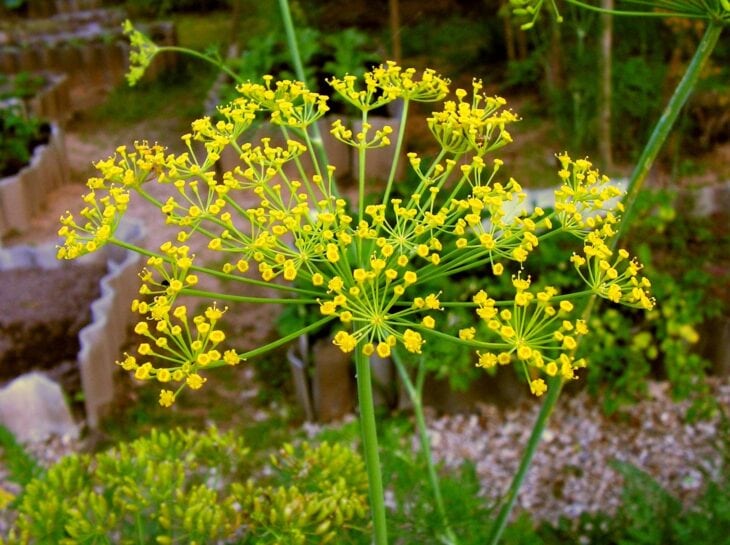
Dill flowers attract hover flies and other beneficial insects.
Why it works with roses
NC State says dill attracts bees, wasps, hover flies and butterflies, and Penn State lists it first among annuals for attracting beneficial insects. UC IPM names syrphid flies, the hover fly family, among the natural enemies of rose aphids. No trial on dill and roses was found.
Planting notes
Dill reaches 2.5 to 5 feet (75 to 150 cm) tall, so plant it behind or between shrub roses, not in front of short ones. Give it full sun and let it flower, since the flowers are what feed the insects. It is an annual, with yellow flowers in midsummer.
Possible drawback or limit
A tall annual can shade a short rose, and roses need 6 to 8 hours of direct sun. Dill is also a host plant for black swallowtail caterpillars, which will eat the foliage.
Cilantro (Coriandrum sativum)
What it helps with
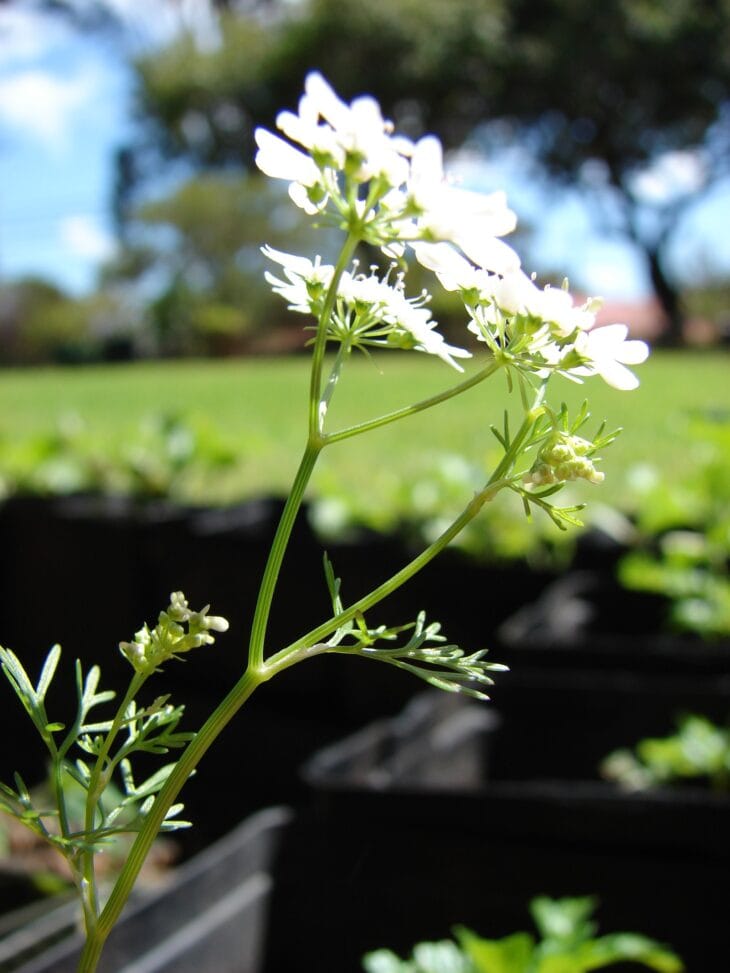
Cilantro that is allowed to flower gives beneficial insects nectar and pollen.
Why it works with roses
Penn State lists coriander among annuals for attracting beneficial insects. Delaware Extension notes that herbs often produce small flowers with exposed nectaries that feed predators and parasitoids. That is the same mechanism as alyssum and dill, and it has not been tested on roses.
Planting notes
Sow cilantro among the roses, about 1 foot (30 cm) from the canes. Plants grow 1 to 2 feet (30 to 60 cm) tall and carry white to pink flower clusters about 2 inches (5 cm) across. Let some plants flower rather than cutting them all for the kitchen.
Possible drawback or limit
NC State classes cilantro as a cool-season crop, so expect it to finish early in hot summers. Alyssum or dill can fill the gap it leaves.
Catmint (Nepeta × faassenii)
What it helps with
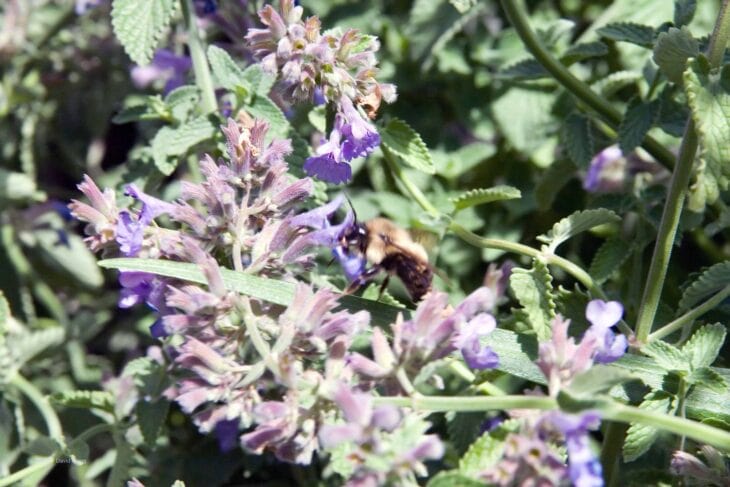
Catmint blooms for months in a color that sets off roses, and its flowers feed pollinators and beneficial insects.
Why it works with roses
NC State says Nepeta attracts pollinators and beneficial insects and flowers from late spring through summer. Shearing the flowers when they fade encourages new growth and a second wave of bloom.
Planting notes
Catmint grows 1.5 to 2 feet (45 to 60 cm) tall and 2 to 3 feet (60 to 90 cm) wide, so plant it at least 1 foot (30 cm) from the canes, in front of or between roses. It needs full sun and good drainage, which matches a well-drained rose bed. It grows in Zones 5–9.
Possible drawback or limit
No pest benefit for roses is documented, so choose it for bloom and nectar. NC State notes that it spreads and can be a bit weedy, and cats find the scent attractive.
Lavender (Lavandula angustifolia)

What it helps with
English lavender adds summer bloom and fragrance beside roses and draws pollinators.
Why it works with roses
NC State tags English lavender as a pollinator and butterfly-friendly plant. One UC Master Gardener who grows lavender, rosemary and sage among her roses says herbs “add interest, attract good insects and look much better than bare ground.” That is one gardener’s experience, not a trial, and no pest effect on roses is documented.
Planting notes
Lavender grows into a mound up to 2 feet (60 cm) tall and 3 feet (90 cm) wide, so plant it at least 1 foot (30 cm) from the canes. It blooms in summer and grows in Zones 5–9. In heavy soil, give it its own raised bed instead of a spot in the rose bed.
Possible drawback or limit
NC State says English lavender “requires perfectly drained soil, preferably on the dry side” and does not like wet feet, which clashes with a deeply watered, mulched rose bed. The ASPCA lists lavender as toxic to dogs, cats and horses, causing nausea and vomiting.
Chives (Allium schoenoprasum)
What it helps with
Gardeners plant chives, and sometimes garlic, near roses to discourage aphids, but the evidence is weak.
Why it works with roses
A Master Gardener sheet says onion and garlic chives are “said to repel aphids,” citing the Farmers’ Almanac, so this is tradition. The one allium companion study found, a lab test of leek against green peach aphids on pepper, was mixed: leek scent cut aphid feeding, but the aphids grew heavier and bred faster.
Planting notes
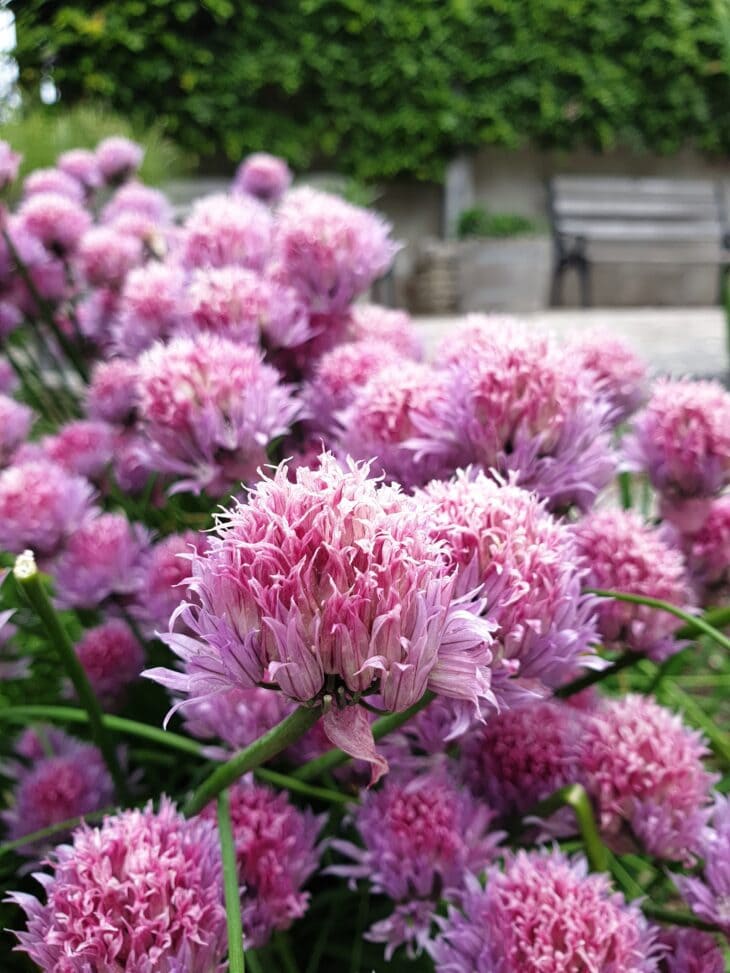
Plant chives in clumps at the bed edge, at least 1 foot (30 cm) from the canes. They grow 1 to 1.5 feet (30 to 45 cm) tall and wide, with purple flowers in spring, and they are perennial in Zones 4–8.
Possible drawback or limit
Treat chives as a pretty edging that pollinators visit, not as an aphid defense. The ASPCA lists both chives and garlic as toxic to dogs, cats and horses.
French marigold (Tagetes patula)
What it helps with
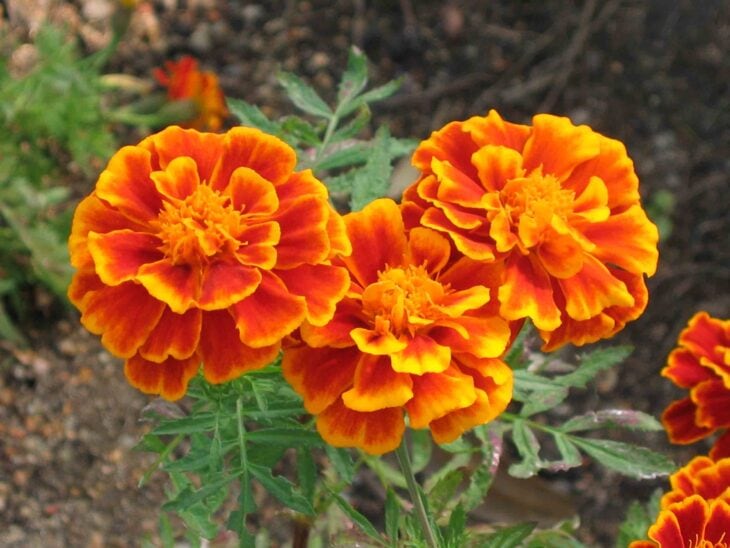
Grown for a season before planting, French marigolds can suppress some root-feeding nematodes in a new rose bed.
Why it works with roses
UF/IFAS says marigolds suppress root-knot and lesion nematodes, and French marigolds work against the widest range. That publication does not mention roses. The rose link is replant disease, where the RHS says the cause is poorly understood, with fungal root diseases and nematodes suspected.
Planting notes
Fill the future rose bed with French marigolds spaced less than 7 inches (18 cm) apart and grow them for at least two months. Then dig them in like a green manure and plant the rose. This is a block planting on an empty bed, not a border beside existing roses.
Possible drawback or limit
Marigolds cannot eradicate nematodes and do not suppress stubby-root, spiral, sting or awl nematodes. None of the sources say they prevent rose replant disease, and the RHS recommends replacing the soil in the planting hole or choosing a new site.
Plants to avoid with roses
Trees and large shrubs Mississippi State says roses cannot tolerate being planted under trees, and Clemson advises keeping them away from fruit trees to avoid shared pests and root competition. Colorado State also warns against places where roses compete with tree or shrub roots for water and nutrients.
Mint (Mentha) and other aggressive spreaders are a poor fit, including garden peppermint. The Oregon State companion chart says to use mints carefully because they are very aggressive. One UC Master Gardener had to move her lemon thyme because it grew too aggressive and too close to her roses.
Tall, dense plantings that shade or crowd roses work against them. Mississippi State says a nearby hedge or fence should not be close enough to shade the bushes, and WSU says to space plantings and prune for airflow. Dill is the companion above most likely to cast shade, so keep it behind the roses.
Another rose (Rosa) planted where a rose just grew can struggle with replant problems. The RHS, a UK source, says they can last at least nine years and recommends replacing the soil or choosing a new site. After rose rosette, UMD says not to put another rose in the same spot.
Zonal geraniums (Pelargonium × hortorum) are often sold as Japanese beetle traps, but nothing shows they protect roses. A 2003 study found beetles paralyzed after eating the flowers, not the leaves. Most recovered in the lab, though paralyzed beetles left in the field for 3 hours did not.
That study did not test whether a geranium planting protects roses. Iowa State recommends handpicking beetles into soapy water and warns that traps may attract more beetles than they catch.






.jpg)

