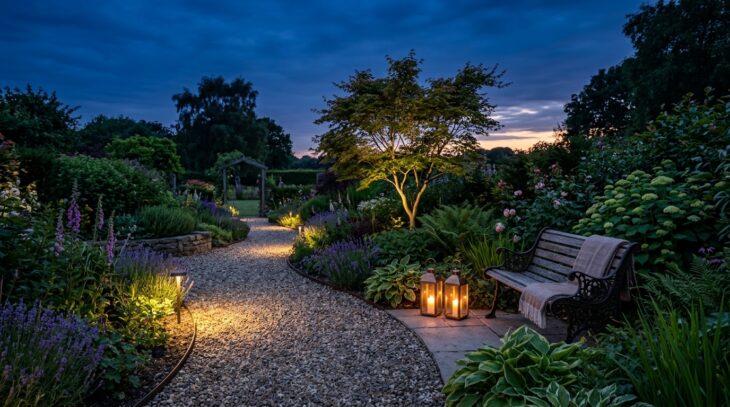
Garden lighting is at its best when you notice the garden, not the fittings. A few well-placed lights can make paths safer, extend a patio into the evening, and turn trees, grasses and water into the parts of the garden you look forward to after sunset.
Contents
- 01. Low Path Lights
- 02. Tree Uplighting
- 03. Recessed Step Lights
- 04. Pergola String Lights
- 05. Lanterns Around a Seating Area
- 06. Wall Wash Lighting
- 07. Downlighting from a Tree
- 08. Solar Stake Lights in Pots
- 09. Light the Front Door Path
- 10. LED Strip Under Bench Seating
- 11. Backlight Ornamental Grasses
- 12. Pendant Light Over Outdoor Dining
- 13. Fairy Lights Through a Small Tree
- 14. Bollard Lights in a Gravel Garden
- 15. Pond Edge Glow
- 16. Lit Garden Arch
- 17. Motion Sensor Utility Light
- 18. Wildlife-Friendly Amber Lighting
- 19. Fire Bowl as Light
- 20. Candle Niches in a Wall
- 21. Shed and Greenhouse Glow
- 22. Fence Shadow Lighting
- 23. Lit Water Bowl
- 24. Lighting for a Small Balcony Garden
- 25. Put Everything on Zones and Timers
The mistake is lighting everything equally. Daylight already does that. Night lighting needs contrast: a lit step, a dark hedge, a glowing trunk, a shadow under a bench, a warm pool of light where people gather. Restraint is what makes it feel expensive.
Use these ideas in layers. Start with safety on steps and paths, add one or two focal points, then light the places where you actually sit. After that, stop and see how the garden feels before adding more.
01. Low Path Lights
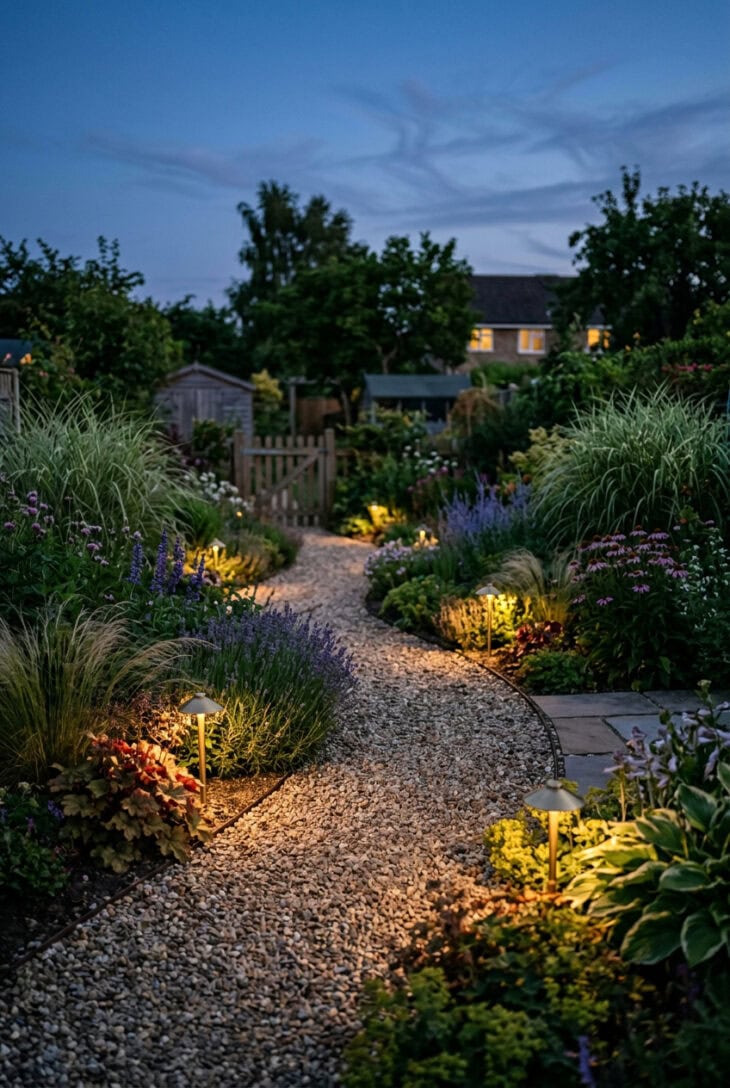
What you see Small lights set low along a path, making warm pools on the gravel while the planting stays mostly in shadow.
Why it works Path lighting is about orientation, not brightness. Low fittings show where to walk without turning the garden into a runway, and they make garden paths usable after dark.
How to get it Space lights farther apart than the box suggests and stagger them rather than placing them in rigid pairs. Choose warm white, shielded fittings so the light falls down, not into your eyes.
02. Tree Uplighting
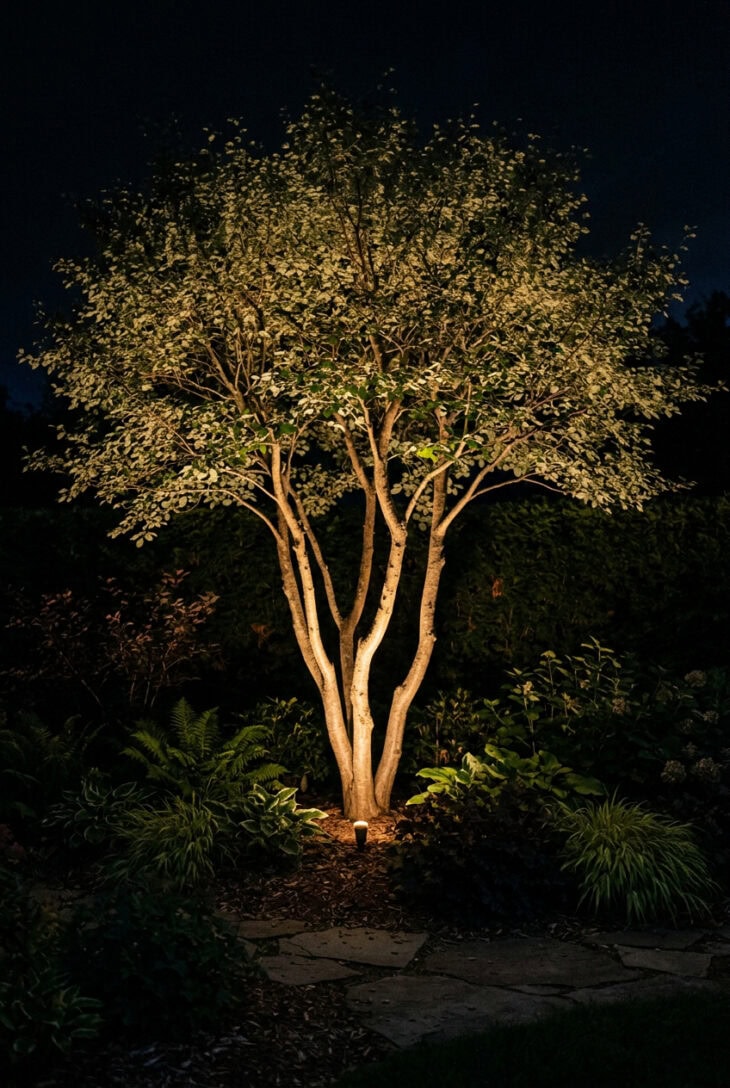
What you see A tree glowing from below, its trunks bright and sculptural while the canopy fades into the night.
Why it works Uplighting gives the garden a focal point after dark. Multi-stem trees, peeling bark and open canopies respond especially well because the light catches structure rather than a solid green mass.
How to get it Place one or two adjustable spike lights close to the trunk, aimed up through the branches. Use narrow beams for trunks and wider beams for canopies, and avoid aiming light beyond the tree into the sky.
03. Recessed Step Lights
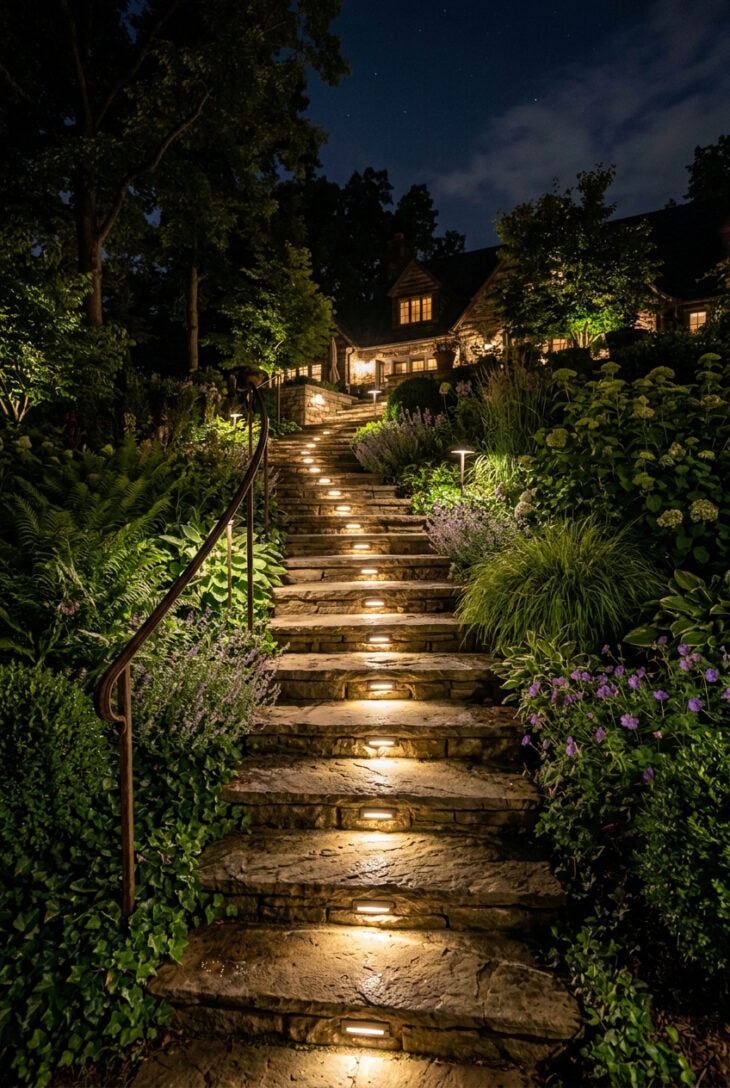
What you see Each step face holds a small light, just enough to reveal the tread below it. The stairs look safer and more architectural.
Why it works Steps need the most reliable lighting in the garden. Lighting the riser avoids glare and shows level changes clearly, which matters more than dramatic effects.
How to get it Plan wiring before the steps are built if possible. Use IP-rated exterior fittings, put every light on the same side or centered consistently, and test the angle at night before fixing covers permanently.
04. Pergola String Lights
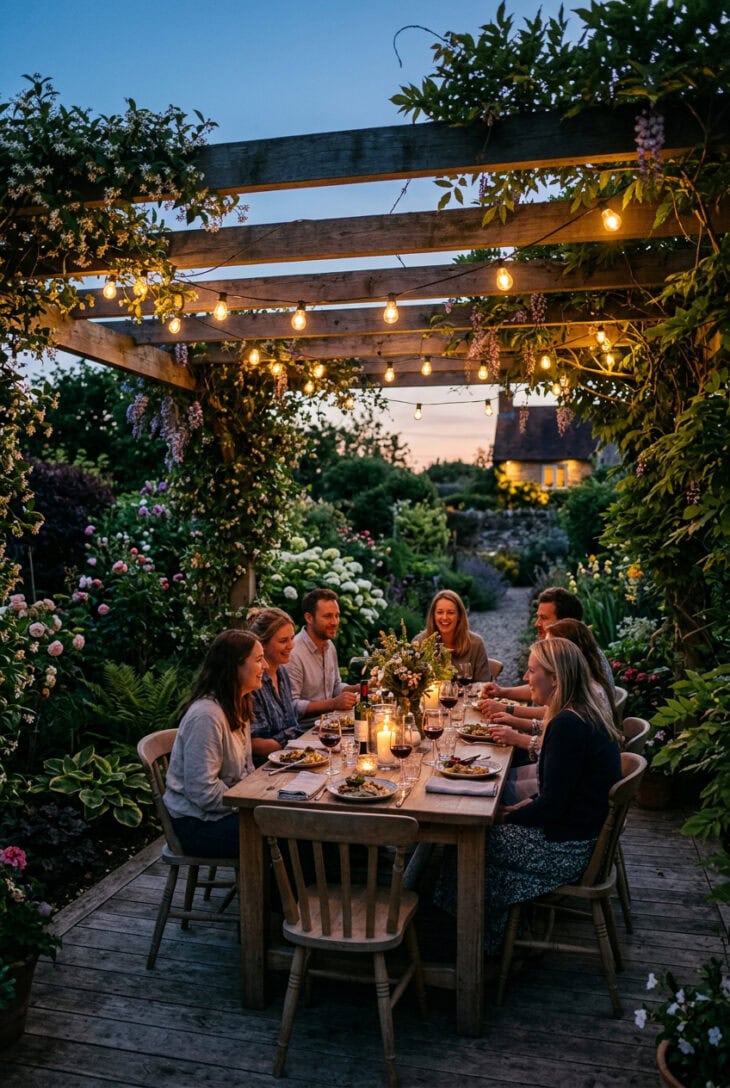
What you see Warm bulbs strung under a pergola, making the dining table feel like an outdoor room.
Why it works String lights are popular because they put light at human height. Under a pergola, they feel contained and intentional instead of temporary.
How to get it Use exterior-rated festoon lights with replaceable bulbs, attach them to the structure rather than plants, and run them on a dimmer if possible. Keep the swag shallow so tall guests do not meet the bulbs.
05. Lanterns Around a Seating Area
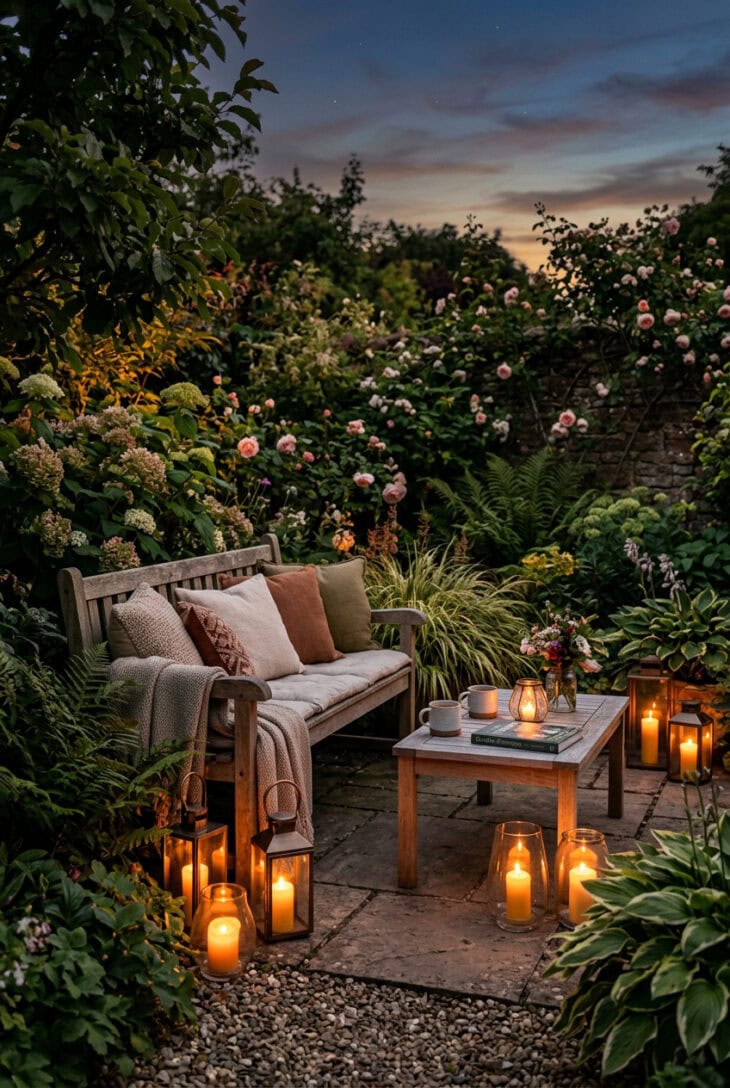
What you see Lanterns gathered near a bench and low table, making a small circle of glow inside the larger dark garden.
Why it works Lanterns make light flexible. They are ideal for renters, small patios and evenings when you want atmosphere without installing a permanent system.
How to get it Mix two or three sizes but keep the finish consistent. Use rechargeable LED candles for everyday use, and real candles only where wind, children, pets and dry planting are not concerns.
06. Wall Wash Lighting
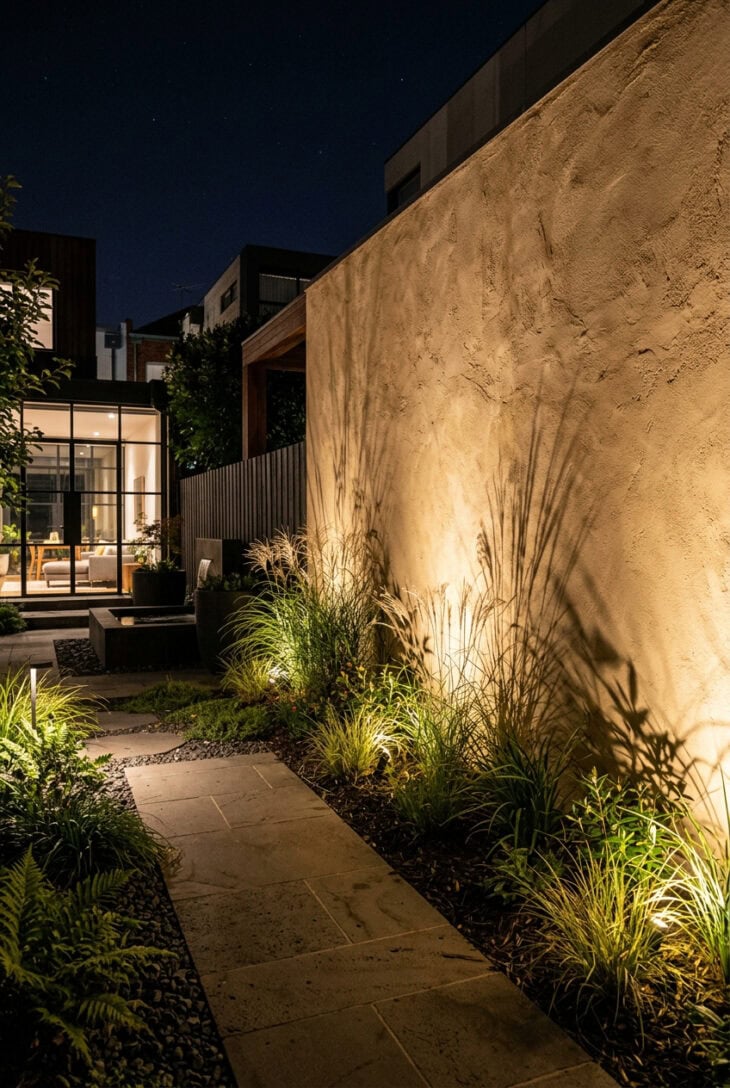
What you see A plain wall turned into a soft glowing backdrop, with plant shadows moving across it.
Why it works Wall washing borrows the wall as a reflector, so the garden gets ambient light without visible glare. It is especially useful in patio garden ideas, courtyards and narrow spaces.
How to get it Place linear or adjustable lights near the base of the wall and aim them up the surface. The rougher the wall texture, the more forgiving the effect; glossy walls show every hotspot.
07. Downlighting from a Tree
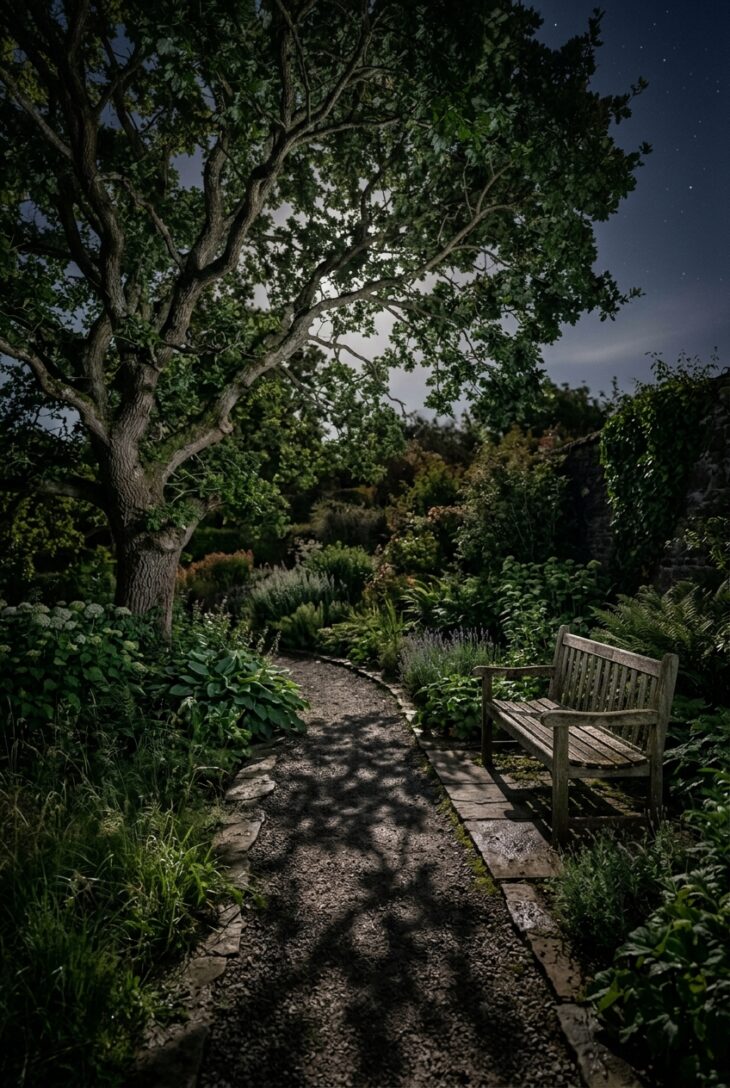
What you see Light falling from above like moonlight, broken by branches into soft dappled shadows on the path.
Why it works Downlighting feels more natural than uplighting because the source is where our brains expect light to come from. It lights the ground while keeping fittings hidden.
How to get it Mount a small fixture high in a sturdy tree and angle it downward through open branches. Leave room for trunk growth and use a professional if the wiring runs above head height.
08. Solar Stake Lights in Pots
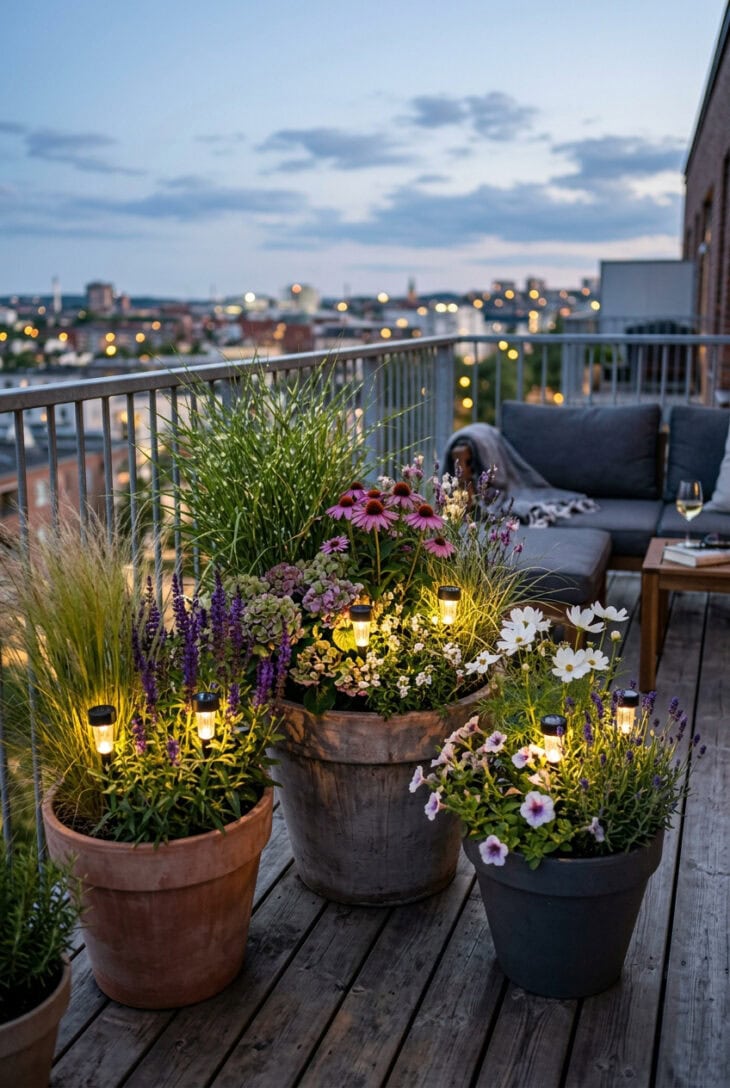
What you see Pots glowing softly from inside the planting, with small stake lights hidden among leaves and grasses.
Why it works Containers are the easiest place to add light without digging or wiring. This suits balconies, rented homes and patio garden ideas where permanent cables are not an option.
How to get it Choose fewer, better solar lights with replaceable batteries and warm LEDs. Put the panel where it gets real sun; a shaded pot will not charge just because the label says solar.
09. Light the Front Door Path
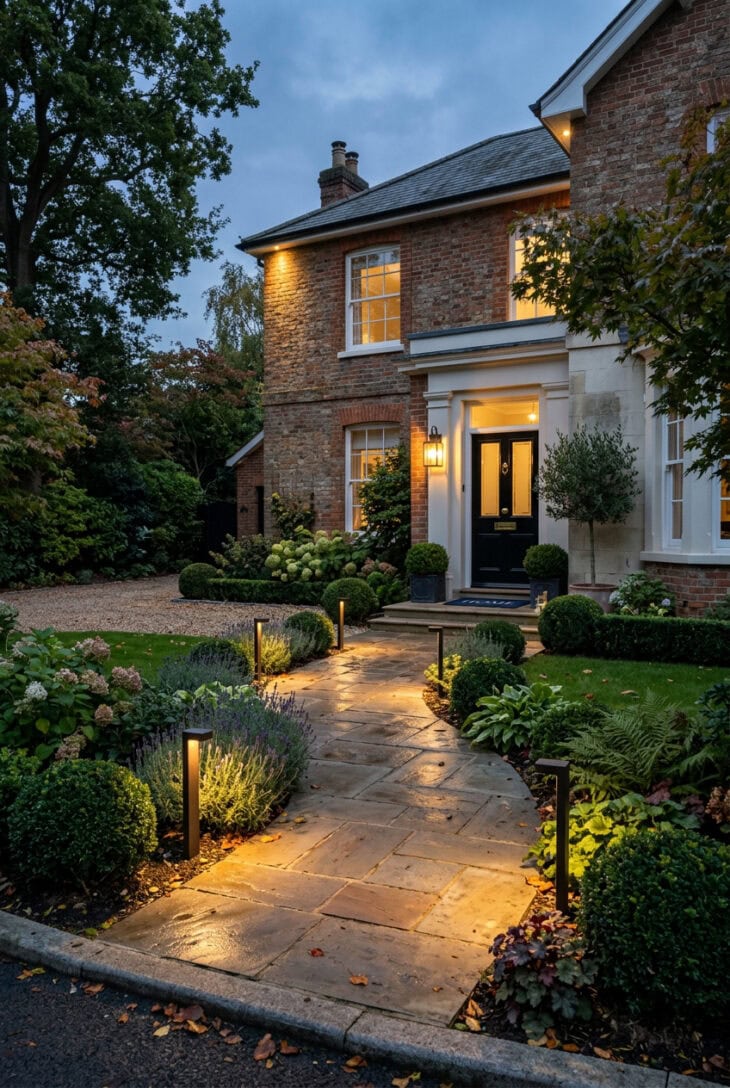
What you see A path to the front door lit in small warm pools, enough to guide visitors without flooding the whole frontage.
Why it works Entrance lighting is both practical and welcoming. It improves curb appeal at the exact time guests arrive and makes a front garden feel cared for.
How to get it Put the brightest light at the door, then use lower path lights only where the route changes direction or level. Avoid cold blue-white fittings; they make planting and brickwork look harsh.
10. LED Strip Under Bench Seating
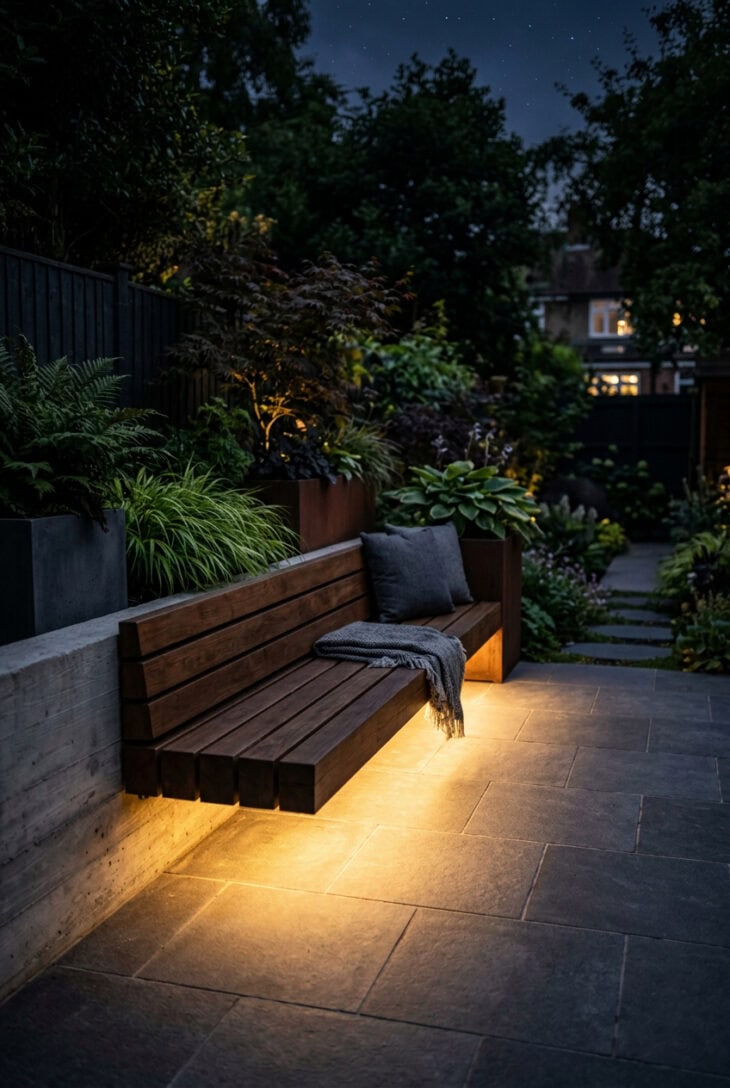
What you see Built-in seating appears to float because a warm line of light glows from underneath it.
Why it works Concealed strip lighting gives enough ambient light to sit and talk without shining in anyone’s face. It is subtle, modern and useful in tight outdoor rooms.
How to get it Use exterior-rated LED tape inside an aluminum channel with a diffuser, fixed where it cannot collect standing water. Put it on a dimmer, because full brightness usually looks commercial.
11. Backlight Ornamental Grasses
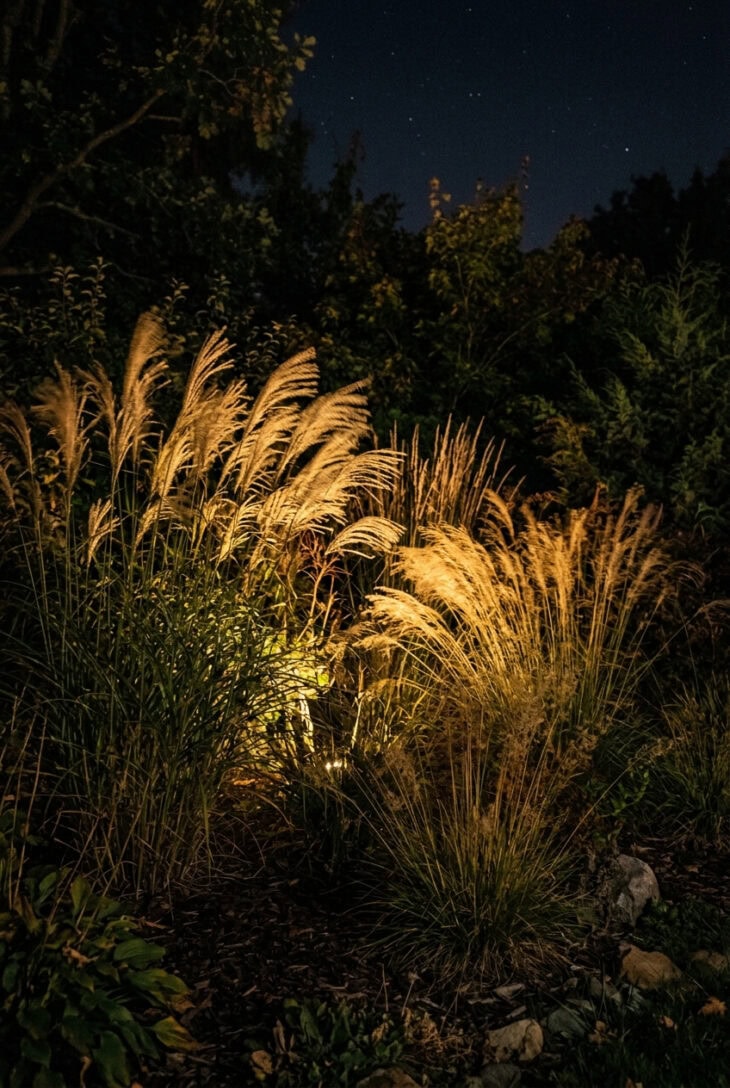
What you see Grass seed heads glowing like gold threads, with the light hidden behind the clump.
Why it works Grasses are made for backlighting. Their fine leaves and plumes catch light around the edges, giving motion and depth after dark.
How to get it Place a small spike light behind or within the planting, aimed back toward the viewing point but shielded by foliage. This works best where the background is dark.
12. Pendant Light Over Outdoor Dining
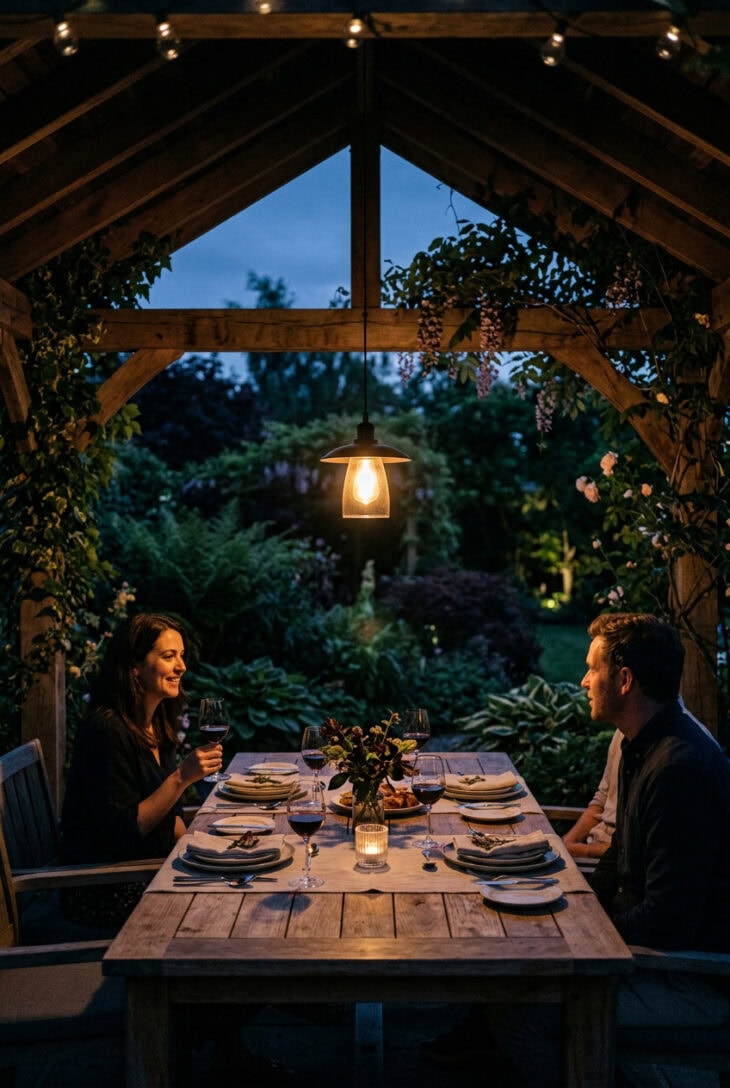
What you see One pendant centered over the table, lighting faces, food and glasses while the garden recedes around it.
Why it works A dining table needs light from above, not from the side. A pendant creates the feeling of a real room outdoors, especially under a roof or pergola.
How to get it Use a damp- or wet-rated exterior pendant depending on exposure, hang it high enough for sightlines, and choose a dimmable bulb. In open gardens, portable rechargeable pendants can give the same effect without fixed wiring.
13. Fairy Lights Through a Small Tree
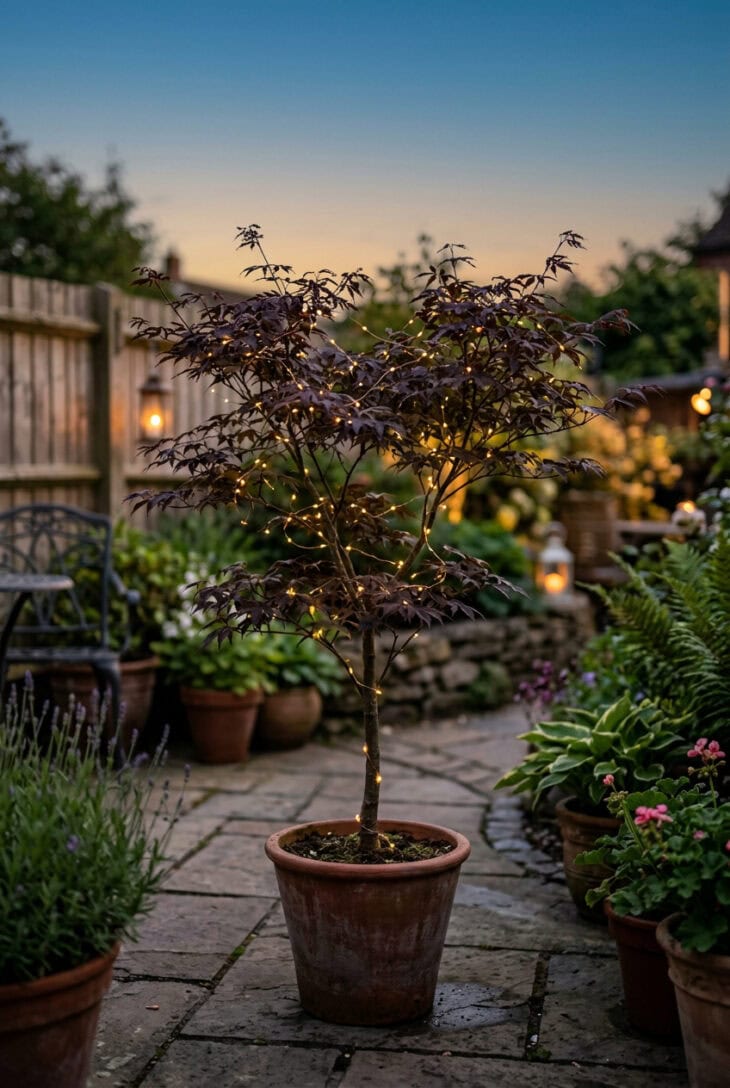
What you see Tiny warm points of light scattered through a small tree, like the branches are holding stars.
Why it works Fairy lights are strongest when used lightly. A single tree gives them shape and restraint, which keeps the effect magical rather than festive.
How to get it Wrap loosely, leave room for branches to grow, and take lights off before they bite into bark. Use warm white micro LEDs and avoid flashing modes in a calm garden.
14. Bollard Lights in a Gravel Garden
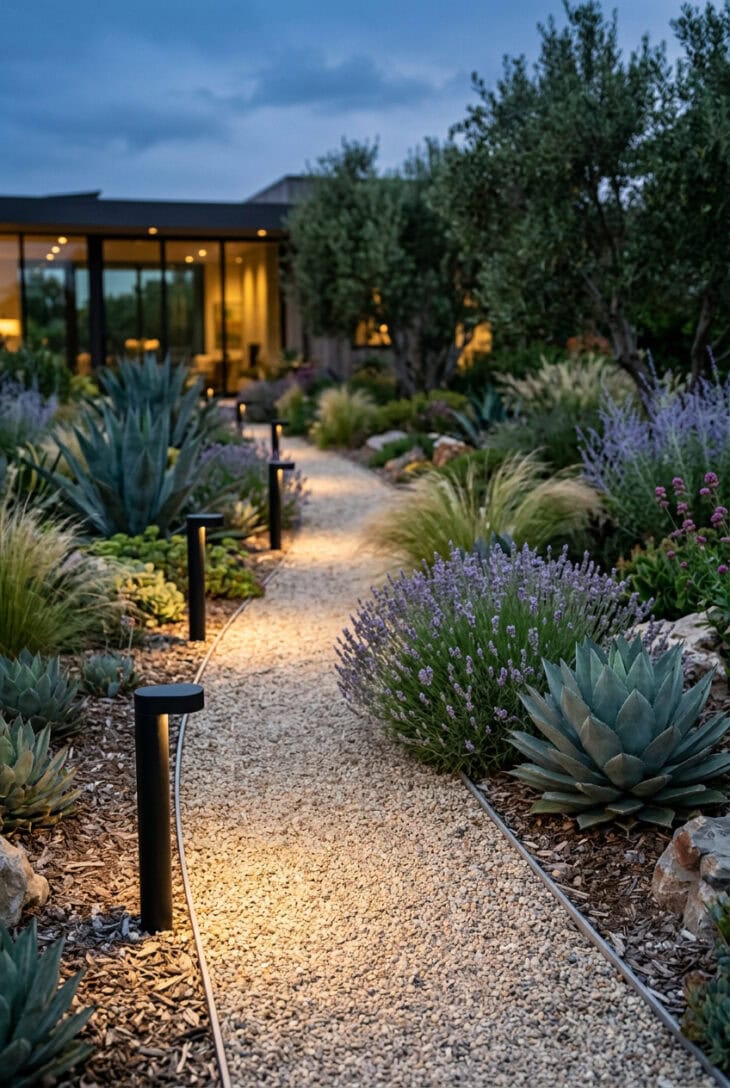
What you see Short black posts standing in gravel, casting neat downward circles among sculptural dry-climate plants.
Why it works Bollards suit open gravel because there is no dense foliage to hide fittings. Their visible rhythm can reinforce a modern or Mediterranean layout.
How to get it Choose shielded bollards, not glowing tubes. Set them where they mark a route or edge, and keep spacing generous so the garden has darkness between pools of light.
15. Pond Edge Glow
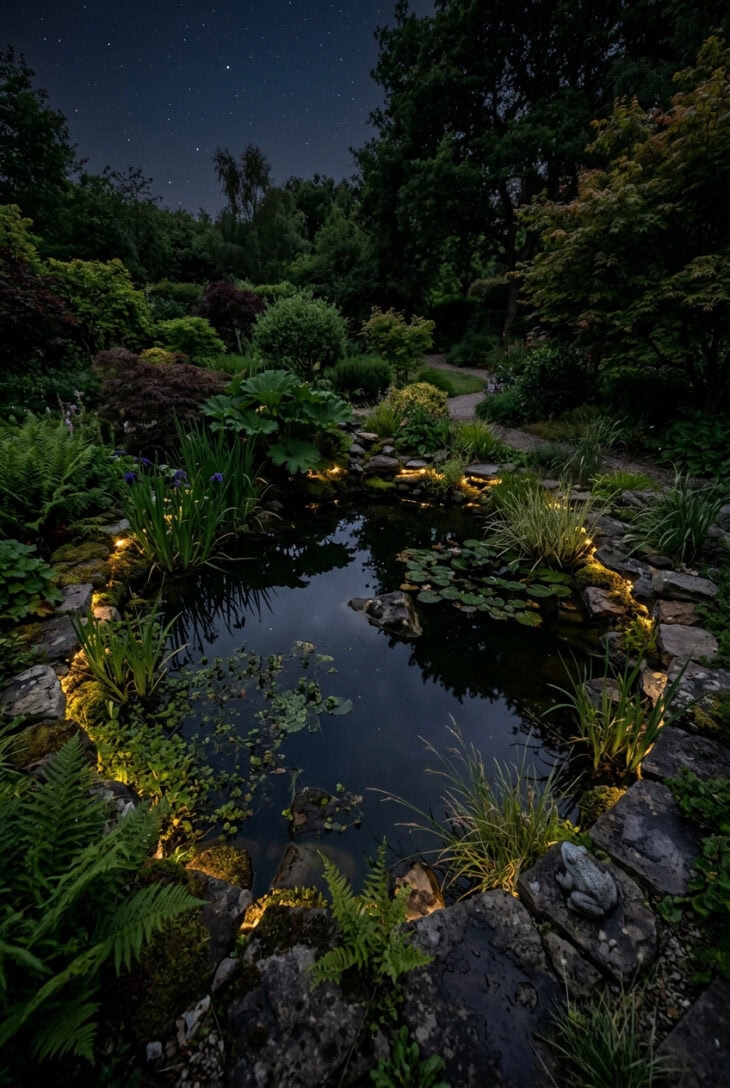
What you see A pond edge softly picked out by hidden lights, with reflections doing most of the work.
Why it works Water doubles light. A little goes a long way, and subtle edge lighting is calmer than bright underwater fixtures that turn a pond into a display tank.
How to get it Use low-voltage waterproof fittings, keep cables protected, and aim lights across water rather than straight up. Leave part of the pond dark for wildlife and visual depth.
16. Lit Garden Arch
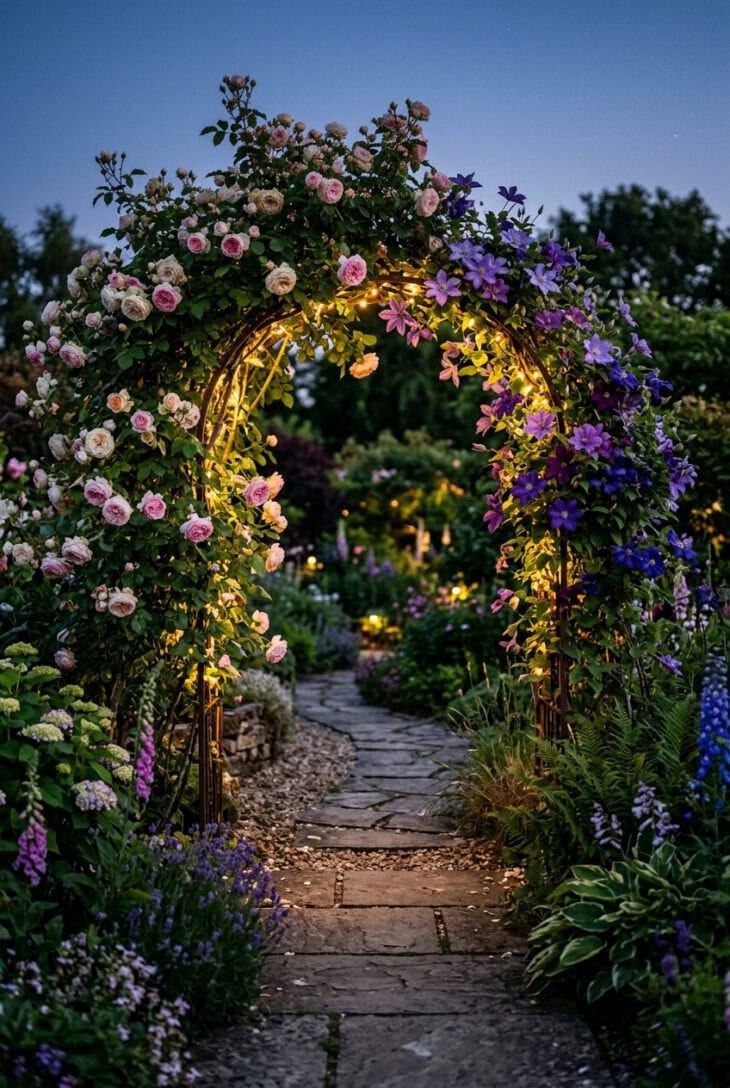
What you see A planted arch glowing at the entrance to another part of the garden, pulling you down the path.
Why it works Lighting an arch creates a destination and a threshold. It is especially effective in long gardens, where one glowing point gives the eye a reason to travel.
How to get it Use two small uplights at the base or a discreet string woven through the structure before climbers get too dense. Keep lights accessible for pruning and replacement.
17. Motion Sensor Utility Light
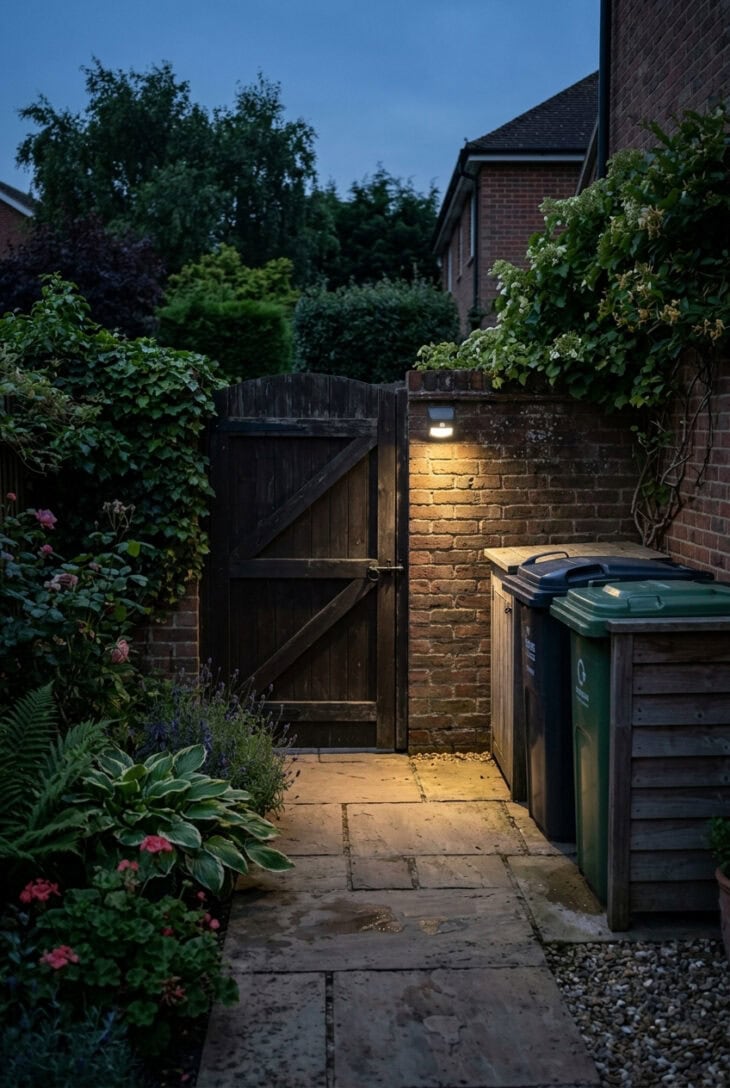
What you see A practical light near a side gate, bright enough for bins, keys and late arrivals, but aimed only at the working area.
Why it works Not every garden light needs romance. Utility lighting prevents trips and makes outdoor chores easier, as long as it is controlled and not blasting the whole plot all evening.
How to get it Choose an adjustable motion sensor, aim it downward, and set the timer short. Warm white is usually enough; security-light brightness is rarely necessary in a domestic garden.
18. Wildlife-Friendly Amber Lighting
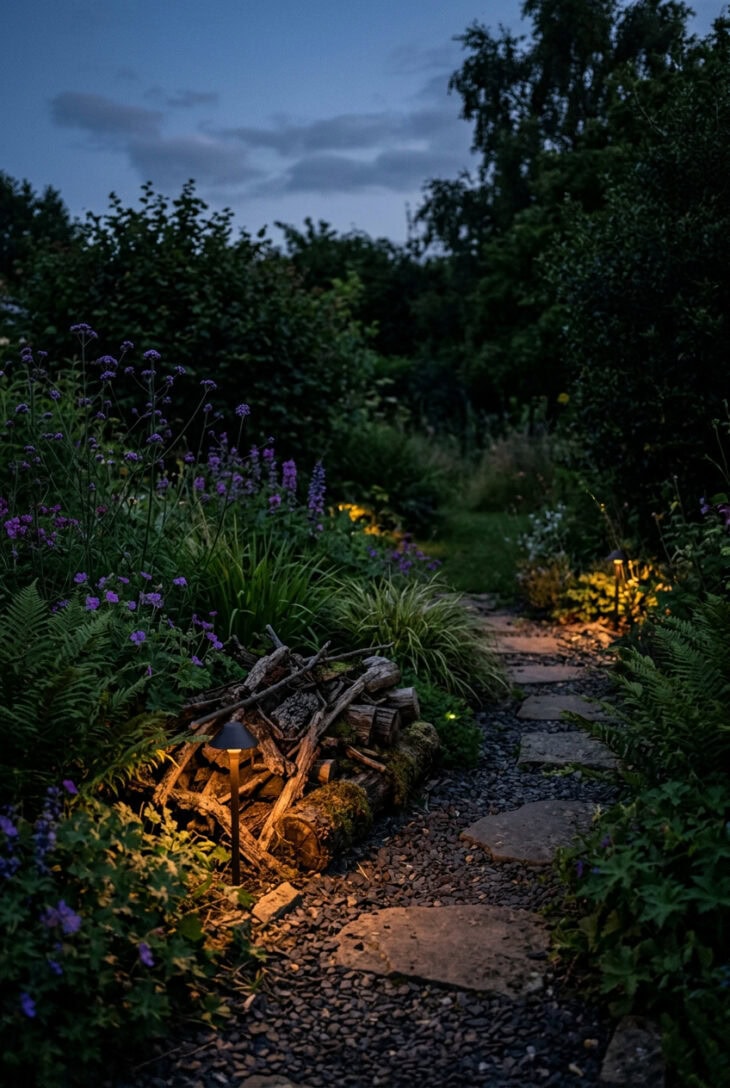
What you see Very low amber lights marking a route while the wildlife corner beyond stays properly dark.
Why it works Darkness is habitat. If you are building wildlife garden ideas, lighting should be warm, low, shielded and used only where people need it.
How to get it Use warm amber LEDs, timers and motion sensors, and leave hedges, ponds and feeding routes unlit. The goal is safe movement for people without removing night from the garden.
19. Fire Bowl as Light
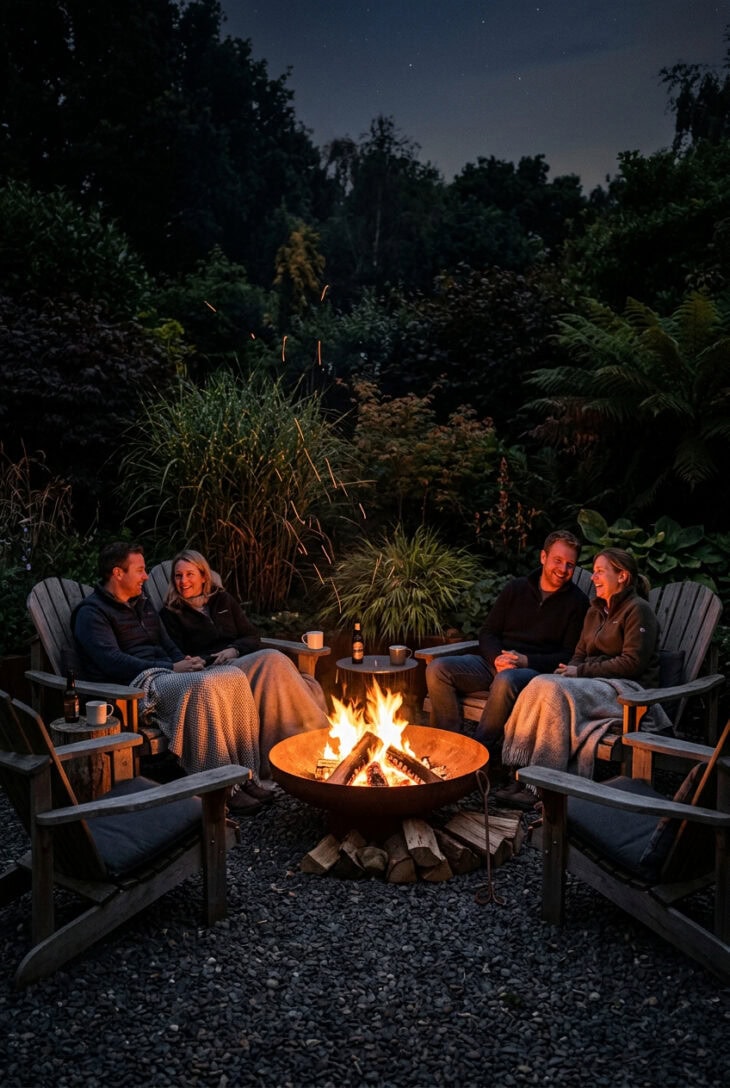
What you see Firelight flickering across chairs, gravel and grasses, with the rest of the garden falling away into darkness.
Why it works Fire gives light, warmth and movement at once. It makes a seating area feel occupied even before anyone sits down.
How to get it Use a fire bowl only on a non-combustible surface with clear space around it. Check local fire rules, keep water nearby, and avoid placing it under trees, pergolas or shade sails.
20. Candle Niches in a Wall
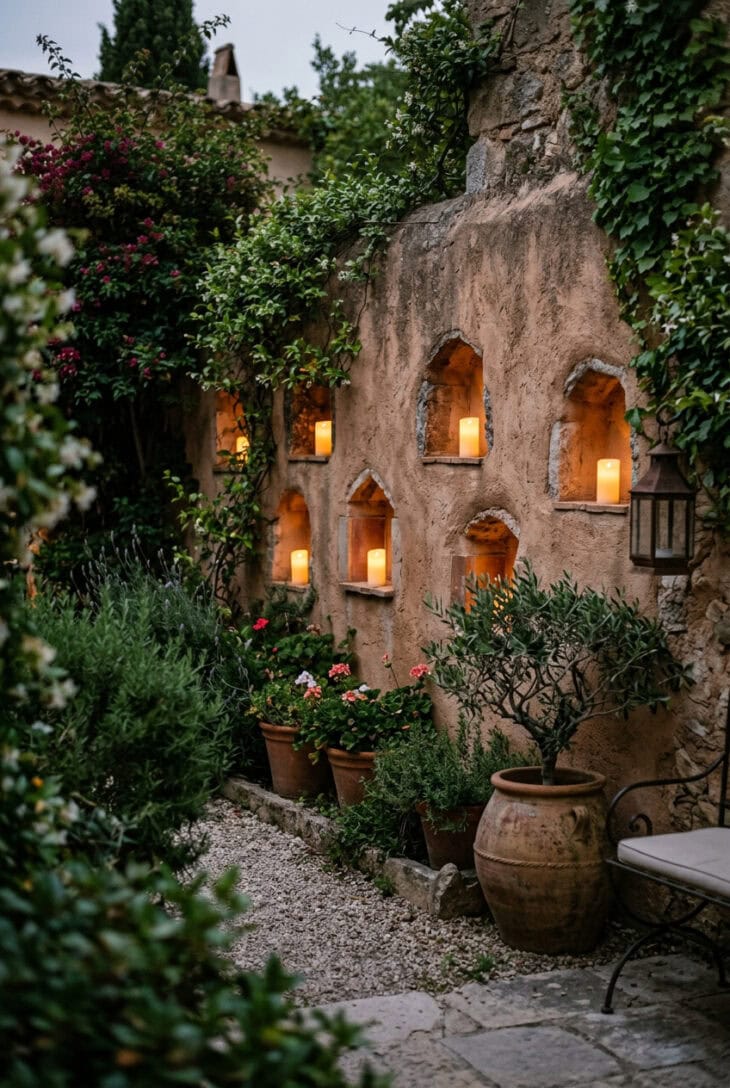
What you see Small glowing niches in a wall, each one holding a candle and throwing a soft halo around itself.
Why it works Niches make light feel built into the garden rather than added afterward. They suit Mediterranean courtyards, outdoor kitchens and sheltered seating corners.
How to get it Build niches where they are sheltered from rain and wind, and use LED candles for everyday reliability. Varying heights looks relaxed; random spacing looks accidental, so mark the wall first.
21. Shed and Greenhouse Glow
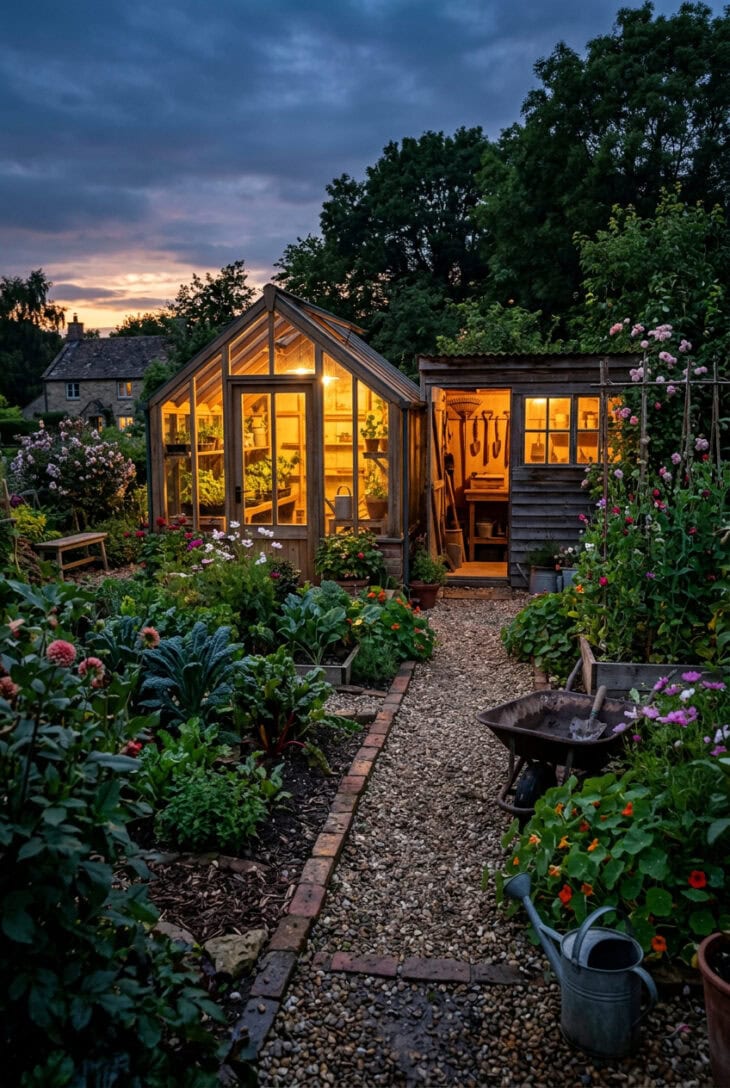
What you see A greenhouse and shed glowing from within, turning the working end of the garden into a destination.
Why it works Internal light makes outbuildings feel inhabited and useful. It also borrows their windows as lanterns, which is more charming than lighting the outside of every wall.
How to get it Fit a simple switched or solar interior light, then let the glazing do the atmosphere. Add one path light outside the door for safety rather than surrounding the building with fittings.
22. Fence Shadow Lighting
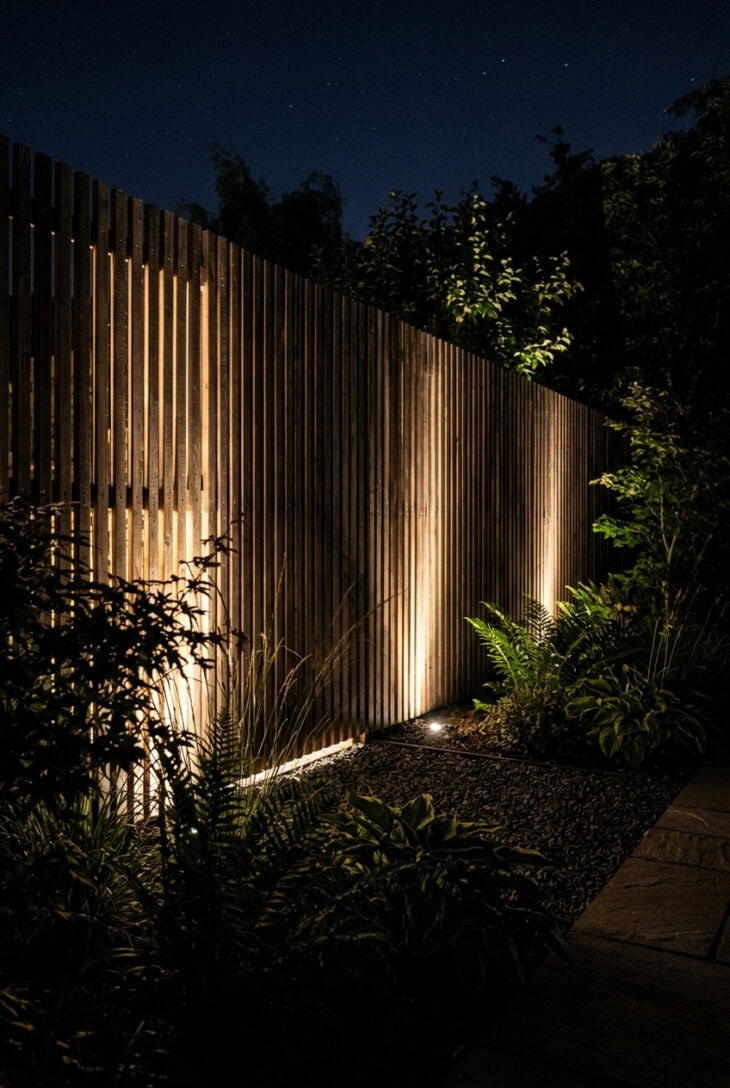
What you see A slatted fence throwing graphic stripes of light and shadow, with planting silhouettes layered in front.
Why it works A fence is a huge surface, so lighting it changes the whole garden. Slats, battens and climbers create shadow patterns that make a plain boundary feel designed.
How to get it Put small shielded lights at the base and aim them up the fence face. This works best with garden fence ideas that have texture; flat panels need softer washing.
23. Lit Water Bowl

What you see A still water bowl catching a soft side light, with the reflection brighter than the fitting itself.
Why it works Small water features do not need dramatic lighting. A shallow angle reveals the surface and lets reflection create the magic.
How to get it Place a low light to one side, not inside the bowl, and shield it behind a stone or plant. Keep the water clean, because night lighting shows debris more than daylight does.
24. Lighting for a Small Balcony Garden
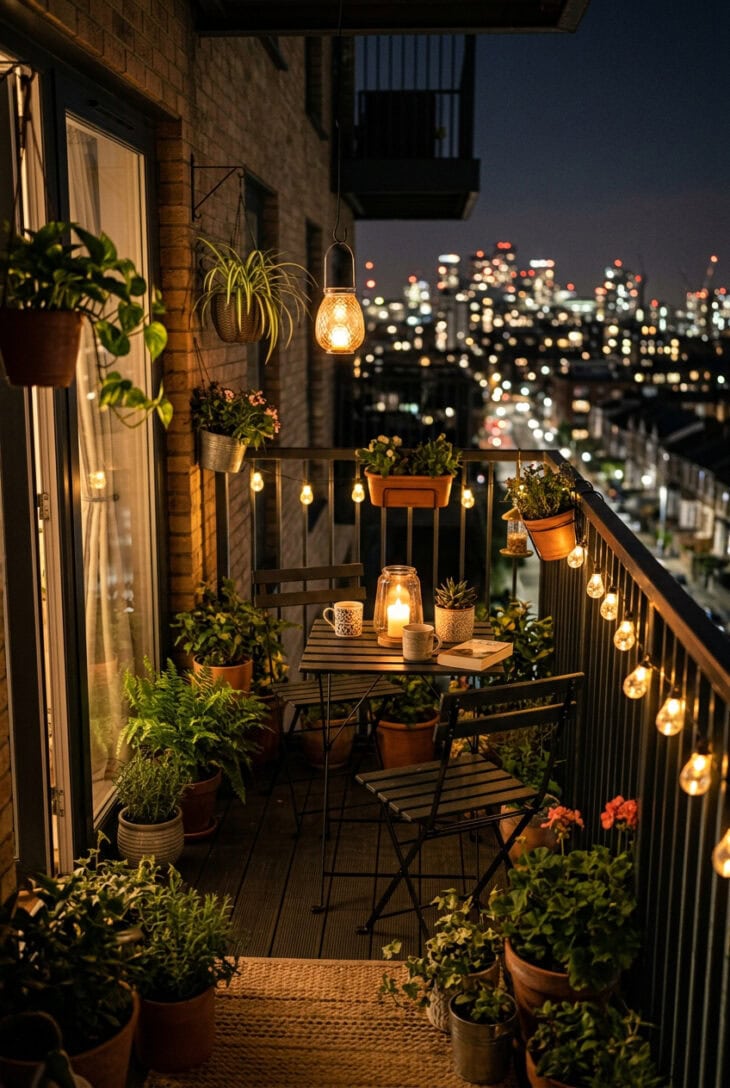
What you see A tiny balcony glowing from rail lights and lanterns, with pots making the edges feel green instead of exposed.
Why it works Balconies need small, reversible lighting. Clip-on, rechargeable and solar options let you create atmosphere without drilling into rented surfaces.
How to get it Keep lights below eye level when seated, secure anything that could blow off, and choose warm low-output fittings. In small garden ideas, glare feels bigger because you are close to every source.
25. Put Everything on Zones and Timers
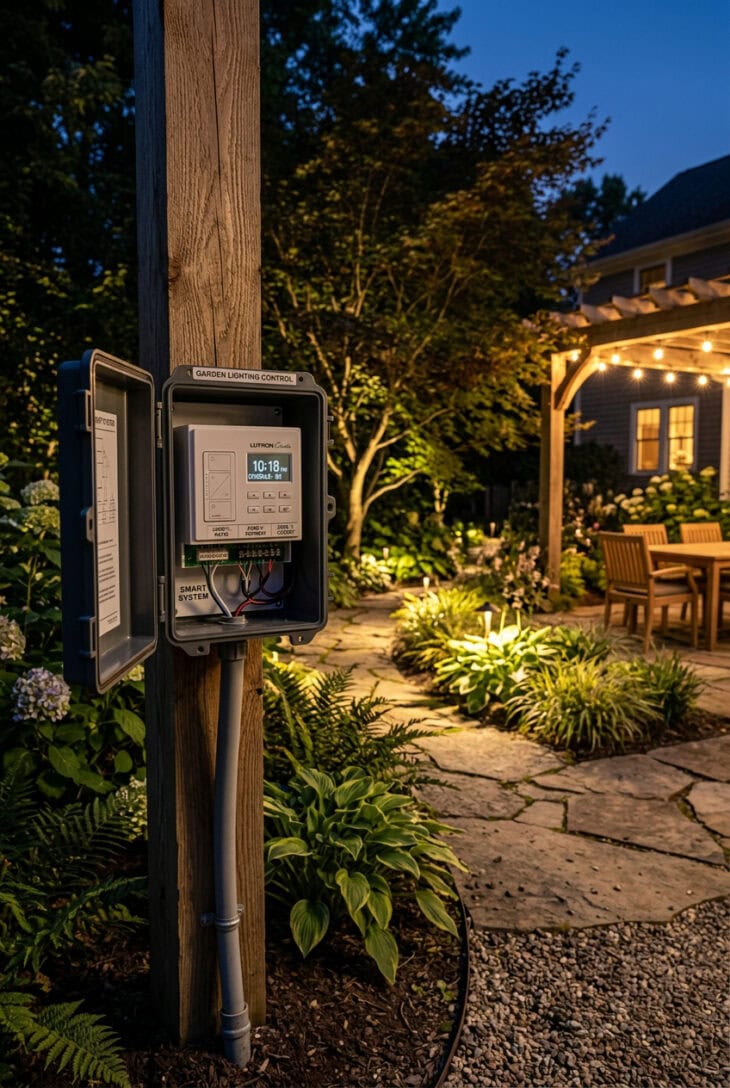
What you see Different parts of the garden glowing independently: path, seating area, tree and utility corner, each controlled separately.
Why it works Control is what makes lighting pleasant. You rarely need every light on at once, and timers stop the garden staying bright all night for no reason.
How to get it Put safety lights, social lights and feature lights on separate circuits or smart outdoor plugs. Set default timers early, then use manual override only when you are actually outside.