Basil bolts faster than almost any other herb in the summer garden, and once it flowers, the leaves turn bitter and aphid pressure spikes. A few strategic companions can slow that race to flower and keep pest populations in check through the season.
Contents
Companion planting for basil means deliberately choosing neighbors that address its specific vulnerabilities: aphids, thrips, spider mites, and downy mildew are the threats that hit basil hardest, and bolting in summer heat shortens its productive window faster than any pest. Companions cannot stop bolting entirely, but the right ones can reduce aphid pressure, attract the beneficial insects that keep pest populations low, and suppress weeds that compete for the moisture basil needs.
The companions in this article work through three main mechanisms: aromatic scent masking that disrupts pest host-finding near basil plants, trap crops that pull aphids onto sacrificial plants at the bed’s edge, and beneficial insect attractors that bring hoverflies and parasitic wasps into the herb garden. Several plants deliver more than one of these effects at once.
When selecting companions, prioritize plants that match basil’s requirements: full sun for at least 6–8 hours per day, temperatures consistently above 65°F (18°C), and soil pH in the 6.0–7.0 range. Basil is killed by frost and stunted by cold soil. Any companion that needs different conditions will either compete for resources or require conflicting care, both of which make the pairing more trouble than it is worth.
Best companion plants for basil
Tomatoes (Solanum lycopersicum)

What it helps with
Tomatoes provide partial afternoon shade that slows basil bolting in hot weather, while basil’s aromatic oils are widely reported to deter aphids and thrips from both crops.
Why it works with basil
Tomato foliage creates a canopy that moderates soil temperature around basil, reducing the heat stress that triggers bolting. Basil’s volatile aromatic compounds — linalool, eugenol, and estragole — are reported by gardeners to mask the scent profile of the tomato bed and deter aphids and spider mites. Some laboratory research supports volatile-based insect deterrence, but field-level evidence for the specific effect on basil or tomatoes is inconsistently demonstrated. The benefit rests substantially on observation and tradition rather than controlled science, but the growing requirements of the two plants are so well matched that the combination is practical regardless.
Planting notes
Plant basil 12–18 inches (30–45 cm) from tomato stems, on the south or east side of the tomato plant to catch morning sun while using tomato canopy for afternoon shade. Both go out after last frost when soil temperatures have reached at least 60°F (15°C). Interplanting basil throughout the tomato bed is common and manageable.
Possible drawback or limit
In cool summers or northern climates where tomato canopy is less dense, basil may receive adequate sun without the shading benefit. The pest deterrence is not reliably sufficient to replace other pest management strategies if aphid or thrips pressure is severe.
Peppers (Capsicum annuum)
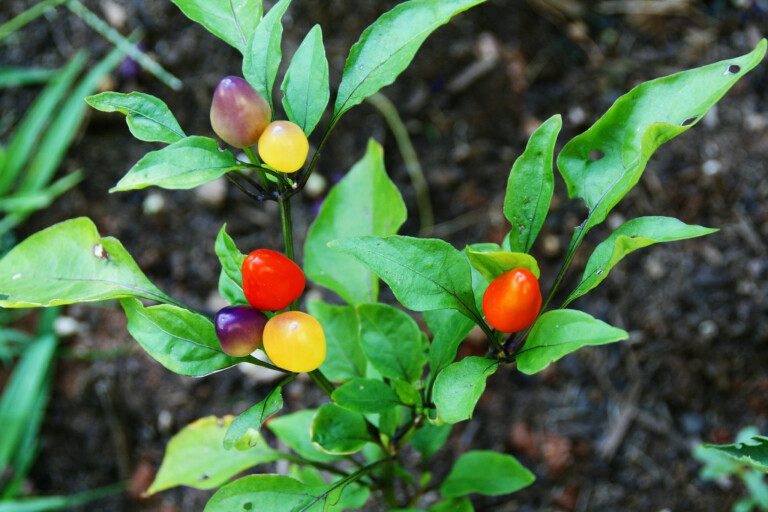
Aurora Pepper
Aurora Pepper is a warm season Capsicum annuum grown for edible and ornamental peppers. Frost sensitive, it is usually treated as an annual where freezes occur.
Read our guide to Aurora PepperWhat it helps with
Basil’s aromatic volatiles are reported to deter aphids and spider mites from nearby pepper plants, and peppers provide a warm microclimate that suits basil’s heat preference.
Why it works with basil
The same aromatic compounds that underpin the tomato-basil pairing — linalool and eugenol — are applied to peppers in the same companion planting tradition. Both basil and peppers share nearly identical temperature and moisture requirements (65–95°F / 18–35°C, full sun, consistent moisture), which makes them natural co-planters from a practical standpoint. The pest deterrence mechanism is based on gardener experience and some laboratory evidence for volatile compounds, not controlled field trials against peppers specifically.
Planting notes
Plant basil 12–18 inches (30–45 cm) from pepper stems, interplanted throughout the bed or along its edges. Use compact basil varieties (Genovese, Greek) between taller pepper plants to avoid basil shading low-growing pepper foliage. Both go out after last frost at the same time.
Possible drawback or limit
As with tomatoes, the pest deterrence benefit is not reliably strong enough to rely on alone. Basil can also grow quickly and bushy, potentially shading shorter pepper seedlings early in the season if not managed.
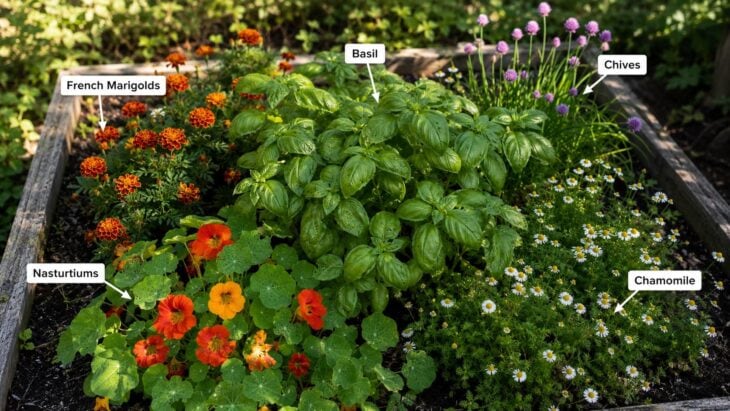
French Marigolds (Tagetes patula)
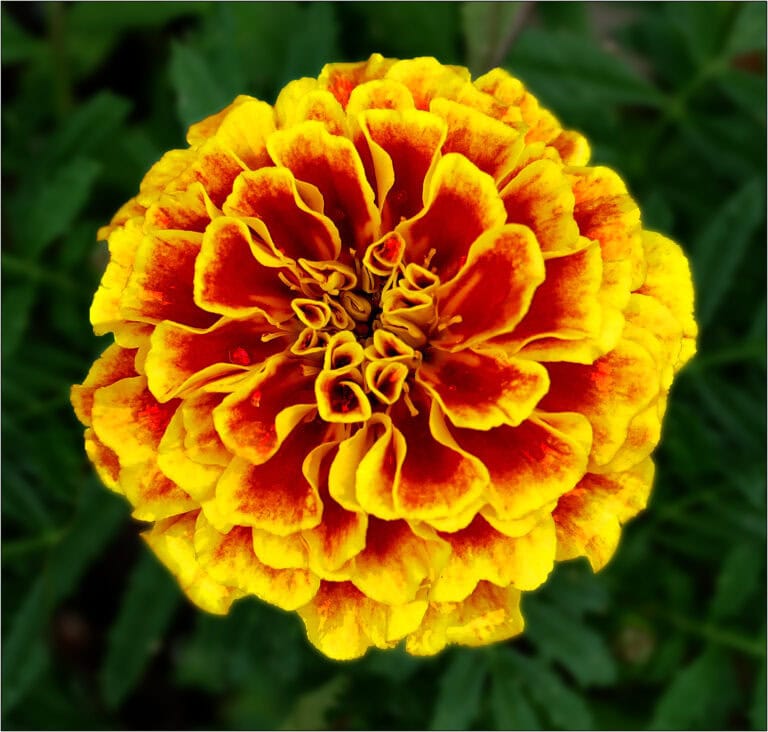
French Marigold
French Marigold Tagetes patula is a compact annual with bright flower heads for beds and containers. It prefers full sun and well drained soil and blooms until frost.
Read our guide to French MarigoldWhat it helps with
French marigolds attract beneficial insects that prey on basil pests including aphids and thrips, and suppress soil nematodes through root compounds.
Why it works with basil
Tagetes patula flowers attract hoverflies and parasitic wasps that prey on aphids and thrips — this is well documented in insectary planting literature. French marigold roots produce alpha-terthienyl and related thiophene compounds that suppress root-knot nematodes (Meloidogyne spp.), which is documented in peer-reviewed research and makes marigolds one of the most evidence-backed companions for any warm-season crop. Some sources also report that marigold volatiles deter whiteflies from nearby plants, but evidence for this specific effect on basil relies on gardener observation rather than controlled study.
Planting notes
Plant French marigolds 12–18 inches (30–45 cm) from basil, as a border around the herb bed or interplanted throughout. Start seeds indoors 4–6 weeks before last frost, or transplant nursery starts at the same time as basil. Choose Tagetes patula specifically for nematode suppression — African marigolds (Tagetes erecta) have less evidence for this effect. For nematode suppression to build up, leave marigold roots in the soil at season end rather than pulling them.
Possible drawback or limit
Marigolds can attract spider mites, which may then move to nearby basil if mite populations build up on the marigolds. Monitor for mite infestations on marigolds during hot, dry periods.
Borage (Borago officinalis)
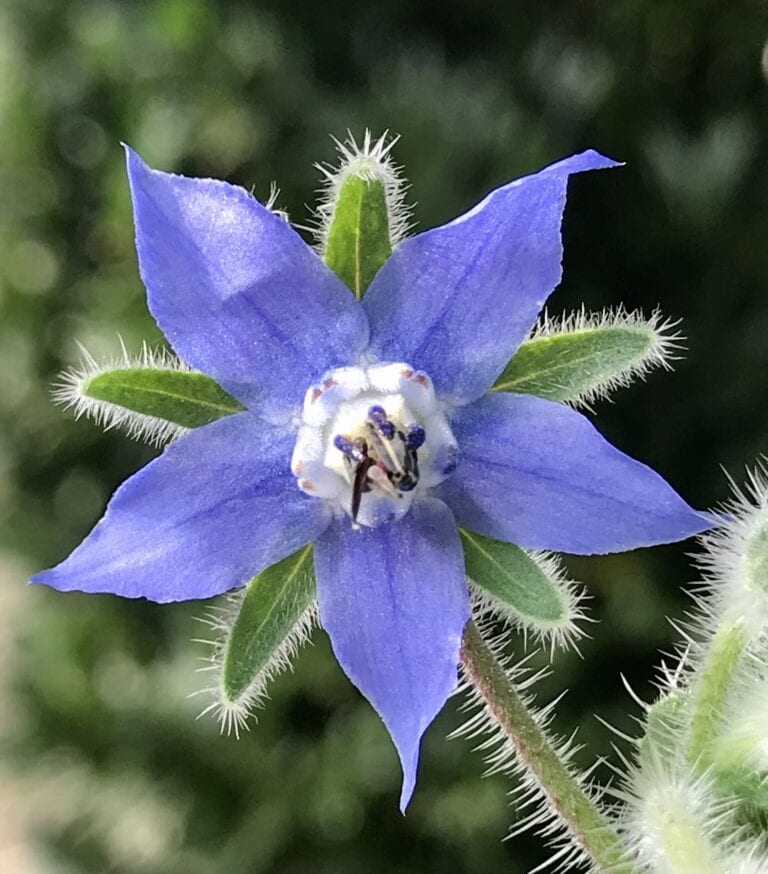
Borage
Borage is a fast growing annual with bright blue star shaped flowers and a cucumber like flavor. Easy from seed and valuable for pollinators.
Read our guide to BorageWhat it helps with
Borage attracts bees and beneficial predatory insects to the herb garden, and is traditionally reported to enhance the growth and essential oil content of nearby herbs including basil.
Why it works with basil
Borage’s continuous bright blue flowers are highly attractive to bumblebees and other pollinators — this is well documented. Hoverflies and predatory beetles attracted by borage prey on aphids and thrips that affect basil. Gardeners widely report improved herb vigor and flavor when borage grows nearby, a claim sometimes called the “physician of the garden” effect in companion planting tradition. No scientific mechanism for this herb-enhancement effect has been established, however, so treat it as a possible bonus rather than a reliable outcome.
Planting notes
Plant borage 18–24 inches (45–60 cm) from basil — it grows large (24–36 inches / 60–90 cm tall and wide) and must not shade the basil. One or two borage plants in or near the herb bed is sufficient. Direct sow after last frost; borage flowers quickly and self-seeds readily, making it a low-maintenance presence that returns each year.
Possible drawback or limit
Borage grows large quickly and can crowd smaller basil plants if positioned too close. The flavor and essential oil enhancement claim, while widely repeated, has no confirmed scientific mechanism — do not rely on it as the primary reason to plant borage near basil.
Oregano (Origanum vulgare)
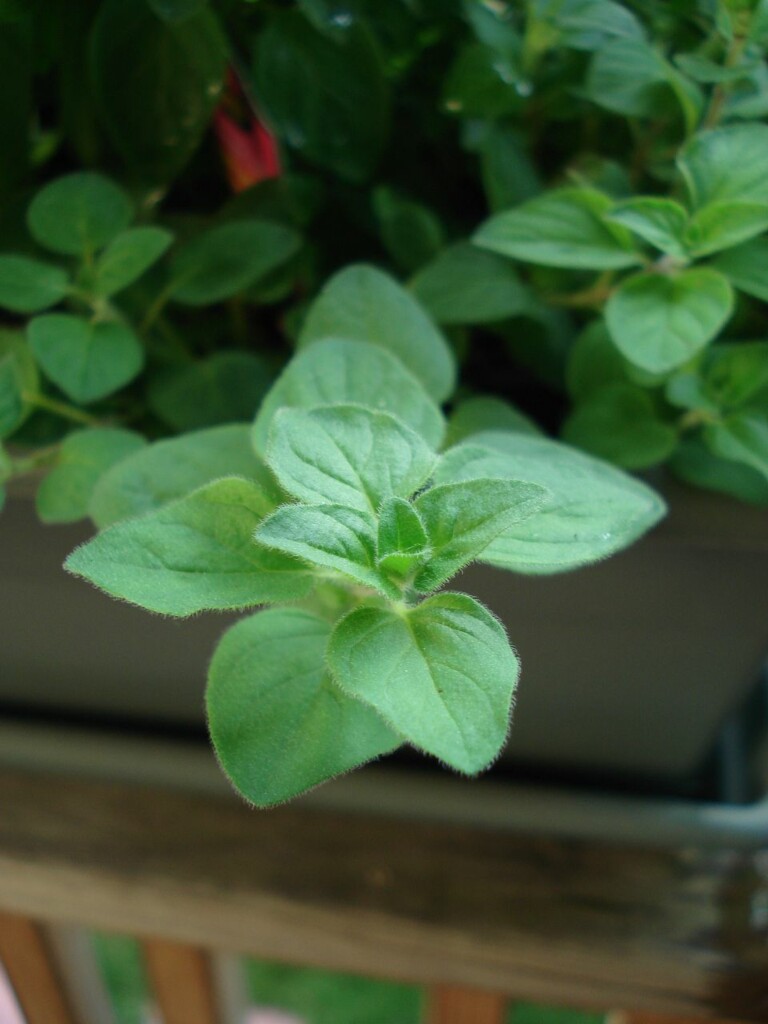
Oregano
Oregano is a fragrant perennial herb with summer purple to pink flowers. It prefers full sun and well drained soil and is easily propagated by seed, cuttings or division.
Read our guide to OreganoWhat it helps with
Oregano’s dense, spreading growth suppresses weeds between basil plants, and its strong aromatic oils may help deter aphids and spider mites in the herb garden.
Why it works with basil
Oregano produces carvacrol and thymol — aromatic compounds documented as insect-repellent in laboratory studies. Some companion planting sources report that grouping strongly aromatic herbs creates an olfactory environment that disrupts pest host-finding, though the field evidence for this effect around basil specifically is limited to gardener observation. Oregano’s low mat-forming growth habit provides effective weed suppression between basil plants, reducing competition for moisture and nutrients.
Planting notes
Plant oregano 8–12 inches (20–30 cm) from basil as a border or living mulch. Oregano is perennial in USDA zones 5–10 and spreads readily — trim it back if it begins to encroach on basil root space. Oregano is considerably more drought-tolerant than basil, so position it where it will receive the same watering schedule without sitting in consistently wet soil.
Possible drawback or limit
Oregano’s drought tolerance creates a practical watering mismatch: basil needs consistent moisture, while oregano in wet conditions can develop root problems. In a bed with mixed irrigation, this tension is the main limitation of the pairing.
Chamomile (Matricaria chamomilla)

German Chamomile
German Chamomile is a fragrant annual herb with small daisy-like flowers used for herbal tea and remedies. It blooms in the warmer months, attracts pollinators and readily self-seeds.
Read our guide to German ChamomileWhat it helps with
Chamomile attracts beneficial insects including hoverflies and parasitic wasps to the herb garden, and is traditionally reported to enhance the growth and essential oil content of nearby herbs including basil.
Why it works with basil
Chamomile flowers attract hoverflies and parasitic wasps effectively — documented for small-flowered composites in insectary planting literature. These beneficial insects prey on or parasitize aphids and thrips, basil’s most common pest pressures. Chamomile is widely called the “physician of the garden” in companion planting tradition, with gardeners reporting improved herb vigor and essential oil intensity in nearby herbs. A proposed mechanism involves calcium accumulation in chamomile tissue releasing into the soil upon decomposition, though this has not been confirmed in controlled studies.
Planting notes
Plant chamomile 8–12 inches (20–30 cm) from basil, allowing it to flower freely rather than harvesting all the blooms. German chamomile (Matricaria chamomilla) is an annual that self-seeds readily; Roman chamomile (Chamaemelum nobile) is perennial in zones 4–9. In hot climates, a second sowing in late spring extends chamomile’s flowering window into peak basil season.
Possible drawback or limit
The herb-enhancement claim rests on tradition rather than controlled evidence. Chamomile may go to seed before peak basil season in very hot climates, reducing its beneficial insect effect during the period when basil needs it most.
Nasturtiums (Tropaeolum majus)

Nasturtiums
Nasturtiums are easy to grow ornamental and edible plants available as bush and trailing types. They bloom from late spring until frost and are commonly grown from seed.
Read our guide to NasturtiumsWhat it helps with
Nasturtiums act as a trap crop for aphids near basil, drawing them away from herb foliage, while their flowers attract predatory hoverflies.
Why it works with basil
Nasturtiums are highly attractive to aphids — particularly the black bean aphid and peach/potato aphid — which colonize nasturtium foliage preferentially over nearby crops. This trap crop effect is well documented in companion planting literature. Nasturtium flowers attract hoverflies that prey on aphids. Gardeners widely report that aphid pressure on nearby crops including basil drops when nasturtiums are present as a perimeter planting.
Planting notes
Plant nasturtiums 12–18 inches (30–45 cm) from basil at the edge of the herb bed. Direct sow after last frost or start indoors a few weeks early. Monitor aphid buildup on nasturtiums: a moderate colony is the trap crop working as intended, but heavy infestations should be removed or knocked off before aphids spread back to the basil.
Possible drawback or limit
Nasturtiums may slow or decline in intense summer heat above 90°F (32°C), which is also when basil pest pressure often peaks. In hot climates, a mid-season succession sowing helps maintain the trap crop effect through the full growing season.
Chives (Allium schoenoprasum)

Chives
Chives are a cold hardy, clump forming perennial herb grown for onion flavored leaves and edible purple flowers. They suit borders, containers, and herb gardens.
Read our guide to ChivesWhat it helps with
Chives repel aphids and spider mites near basil through sulfur-containing volatile compounds, and their flowers attract beneficial insects throughout the growing season.
Why it works with basil
Chives and other alliums produce sulfur compounds including allicin and diallyl disulfide that interfere with aphid host-finding behavior. This is documented in several laboratory studies and is consistent with the broader body of allium companion planting evidence. Spider mites are also reportedly deterred. Chives’ purple flowers attract pollinators and predatory hoverflies during the growing season. As perennials, chives provide consistent season-long coverage without competing significantly with basil for resources.
Planting notes
Plant chives 6–10 inches (15–25 cm) from basil, interplanted throughout the bed or along its edges. Allow chives to flower rather than trimming them back aggressively: the blooms are what attract beneficial insects. Chives can be divided every few years and spread around the herb bed to increase coverage.
Possible drawback or limit
Chives are low-growing and provide a localized deterrence effect. They will not protect basil plants at the far end of a large bed from aphids arriving from a distance — they work best as one component of an integrated companion strategy.
Plants to avoid with basil
Fennel (Foeniculum vulgare) is broadly allelopathic, releasing compounds from its roots and foliage that inhibit the growth of most nearby plants. Basil is among the crops reported to be suppressed by fennel proximity. This allelopathic effect is well documented in horticultural literature. Keep fennel in its own isolated bed, well away from the herb garden.
Sage (Salvia officinalis) is a poor practical companion for basil due to conflicting water needs more than any documented allelopathic effect. Sage thrives in well-drained, drier soil while basil needs consistent moisture. Sharing a bed means either basil gets too little water or sage sits in conditions that promote root problems. Some gardening sources also cite aromatic incompatibility between the two herbs, but the watering conflict is the stronger and more defensible reason to keep them in separate beds.
Thyme (Thymus vulgaris) presents the same practical conflict as sage: it prefers drier, more alkaline conditions than basil. Adequate moisture for basil risks crown rot for thyme; keeping the soil drier for thyme stresses basil. The two herbs are best grown in separate containers or beds with independently managed watering, even though they are otherwise compatible in flavor and use.