
A well-planted flower bed is the quickest way to turn a flat, green yard into a garden. It is where color, scent and life arrive — a pool of bloom that draws the eye, feeds the bees, and changes with every passing week of the season.
Contents
- 01. Carve Out an Island Bed in the Lawn
- 02. Build a Raised Flower Bed
- 03. A Foundation Bed Along the House
- 04. A Flower Bed Around a Tree
- 05. A Long Border Bed Along a Fence
- 06. A Corner Flower Bed
- 07. A Curved, Kidney-Shaped Bed
- 08. A Flower Bed Along a Path
- 09. A Tiered Bed on a Slope
- 10. A Hot-Color Flower Bed
- 11. A Cool Pastel Flower Bed
- 12. A White Moon Garden Bed
- 13. A Single-Color Statement Bed
- 14. A Perennial Flower Bed
- 15. An Annual Bedding Display
- 16. A Mixed Perennial-and-Annual Bed
- 17. A Spring Bulb Bed
- 18. A Dedicated Rose Bed
- 19. A Cottage-Style Flower Bed
- 20. A Prairie-Style Naturalistic Bed
- 21. A Pollinator Flower Bed
- 22. A Cut Flower Bed
- 23. A Shade Flower Bed
- 24. A Dry Gravel Flower Bed
- 25. A Fragrant Flower Bed
- 26. A Four-Season Interest Bed
- 27. Edge the Bed Crisply
- 28. Layer the Bed by Height
- 29. A Mailbox or Lamppost Bed
- 30. A Low-Maintenance Flower Bed
The 30 ideas below cover the whole subject: where to put a bed and what shape to make it, how to plan its colors and seasons, and which plants to fill it with. There are beds for sun and shade, for tiny corners and sweeping lawns, for one-and-done perennials and ever-changing annuals, and for every style from cottage froth to clean modern drifts.
Read straight through to plan a bed from scratch, or scroll and pick the ideas that fit your yard. Each one explains what you are looking at, why it works, and exactly how to make it happen.
01. Carve Out an Island Bed in the Lawn
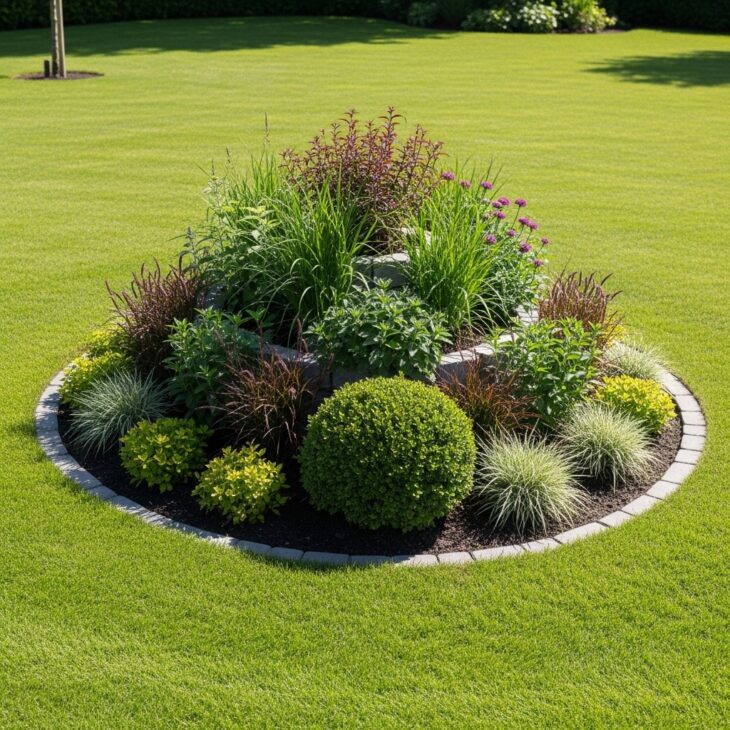
What you see An island bed floats in the middle of the lawn, seen and enjoyed from every side. Planted with a tiered mix of grasses, perennials and a small shrub rising at the center, it turns an empty stretch of grass into a centerpiece with real presence.
Why it works Because you walk all the way around an island bed, it breaks up a flat lawn and gives the garden a focal point and a sense of depth. It is also the most flexible kind of bed, planted tallest in the middle and lower toward the edges so it reads well from any angle. A single island bed can transform an otherwise featureless yard.
How to get it Mark out a generous, simple shape — an oval or a soft teardrop — with a hosepipe, and make it bigger than feels natural, as island beds shrink visually in open lawn. Plant in tiers, with height at the center grading down to low edging plants all around. Strip the turf, dig in plenty of compost, and mulch to suppress weeds. Keep the lawn edge crisp, since a clean line is what makes an island bed look deliberate rather than accidental.
02. Build a Raised Flower Bed
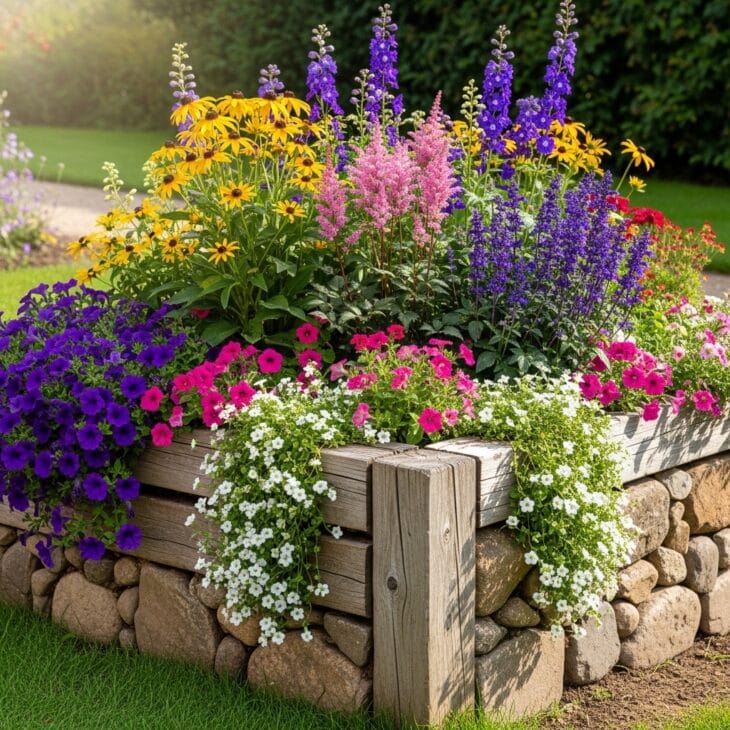
What you see Raising a flower bed lifts the blooms closer to eye level and gives the planting instant structure. Built from timber, brick or stone and filled with perennials and trailing plants spilling over the edge, a raised bed brings the flowers up to where you can really see and smell them.
Why it works A raised bed lets you control the soil completely, which is a gift on poor, heavy or stony ground, and the better drainage suits many flowers. The height also saves your back when planting and weeding, and the walls give a crisp, contained edge that always looks tidy. It is the perfect answer where the existing soil is difficult.
How to get it Build the bed from a material that suits your house and garden, and keep it narrow enough — no more than 4ft (120cm) if reached from one side — to tend without treading on the soil. Fill it with a rich mix of quality topsoil and compost, and include trailing plants at the front edge to soften the walls. For more on construction and layout, see our raised bed garden ideas. Top up the soil and mulch each spring as the level settles.
03. A Foundation Bed Along the House
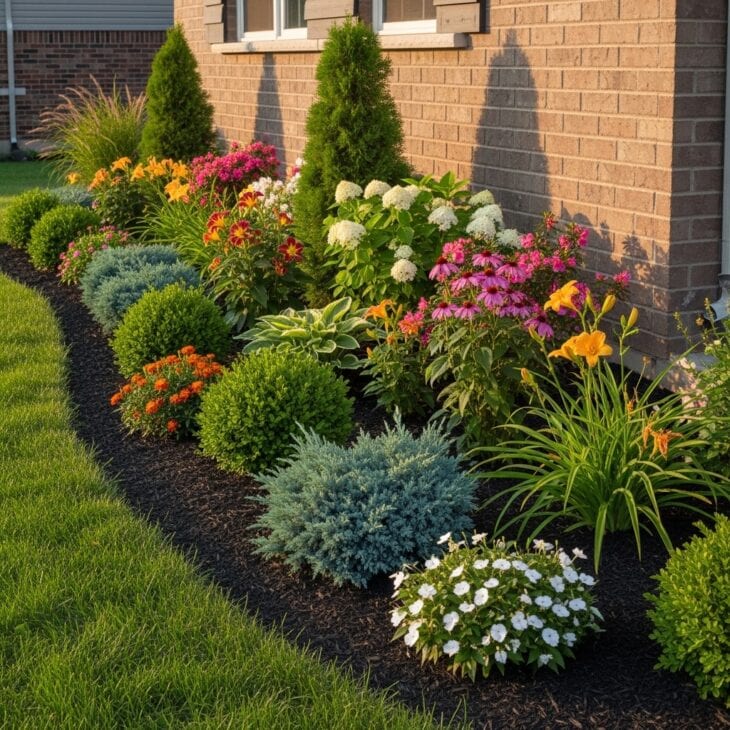
What you see A foundation bed runs along the base of the house, softening the hard line where the wall meets the ground. Planted with a mix of shrubs, perennials and seasonal flowers, it settles the building into its surroundings and gives the front of the home a welcoming, finished look.
Why it works The strip against the house is often bare and unloved, yet it is one of the most visible beds you have, framing the entrance and seen by everyone who arrives. Planting it disguises ugly foundations, utility boxes and the join between house and yard. A good foundation bed lifts the whole curb appeal of a property — see our front garden ideas for more on the approach.
How to get it Keep the bed in proportion to the house — generous enough not to look mean, usually at least 3 to 4ft (90 to 120cm) deep. Anchor the corners and either side of the door with evergreen structure, then fill between with perennials and flowers for changing color. Avoid planting too close to the wall, where the soil is dry and the rain shadow falls, and keep tall shrubs clear of windows. Mulch well, since these beds often bake against a sunny wall.
04. A Flower Bed Around a Tree
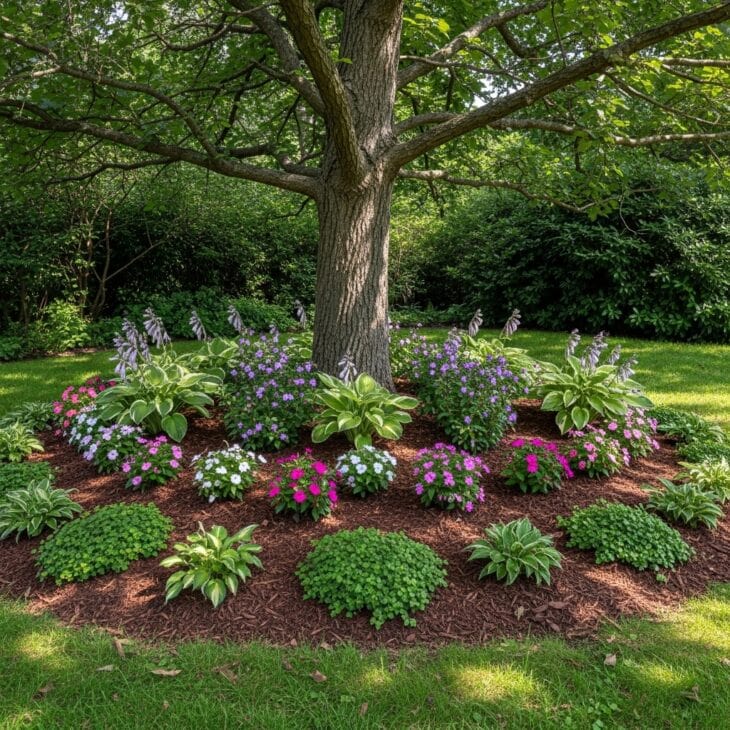
What you see The bare, shady ground under a tree, where grass struggles to grow, is the perfect place for a flower bed. A ring of shade-tolerant flowers and ground cover circling the trunk turns a patchy, awkward spot into a lush green collar of planting.
Why it works An under-tree bed solves the eternal problem of thin grass and exposed roots, while protecting the trunk from mower damage. It makes use of difficult dry shade, and a planted ring gives a lone tree a finished, intentional base. The dappled light suits a whole palette of woodland-edge flowers that would scorch in the open.
How to get it Never pile soil against the trunk or over the roots — instead, plant small, shade-tolerant plants into the existing soil between the roots, and mulch lightly around them. Choose tough customers for dry shade: hardy geraniums, hostas, ferns and spring bulbs that flower before the canopy fills in. Water well through the first season, as the tree competes hard for moisture and the soil under a canopy stays dry.
05. A Long Border Bed Along a Fence
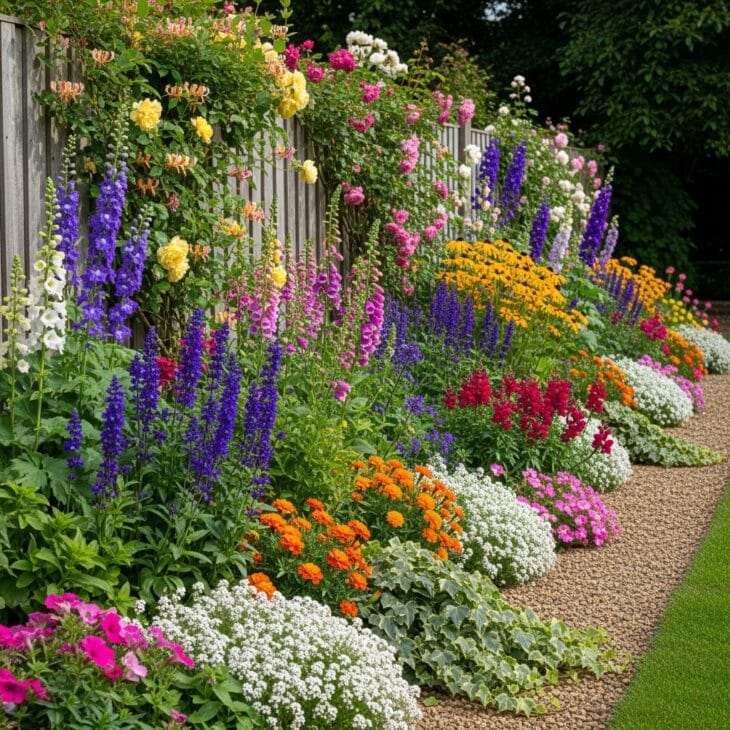
What you see The classic flower bed runs the length of a fence or boundary wall as a deep, layered border. Climbers clothe the fence behind, tall perennials rise in front, and the planting steps down to the front edge — a long ribbon of color that draws the eye down the garden.
Why it works A border along the boundary uses space that is often wasted and hides the fence behind a wall of flowers. Depth is everything: a generous bed has room for the layers that give a planting its richness, while a thin strip can only hold a single line of plants. Backed by a fence, it has a built-in support for climbers and a backdrop that shows the flowers off.
How to get it Make the bed as deep as you can, ideally 4 to 6ft (120 to 180cm), to fit three layers of planting. Use the fence for climbers, plant tall perennials and grasses behind shorter ones, and repeat a few key plants along the length to tie it together. Improve the soil and mulch annually. Our dedicated garden border ideas go deep on planting combinations for exactly this kind of bed.
06. A Corner Flower Bed
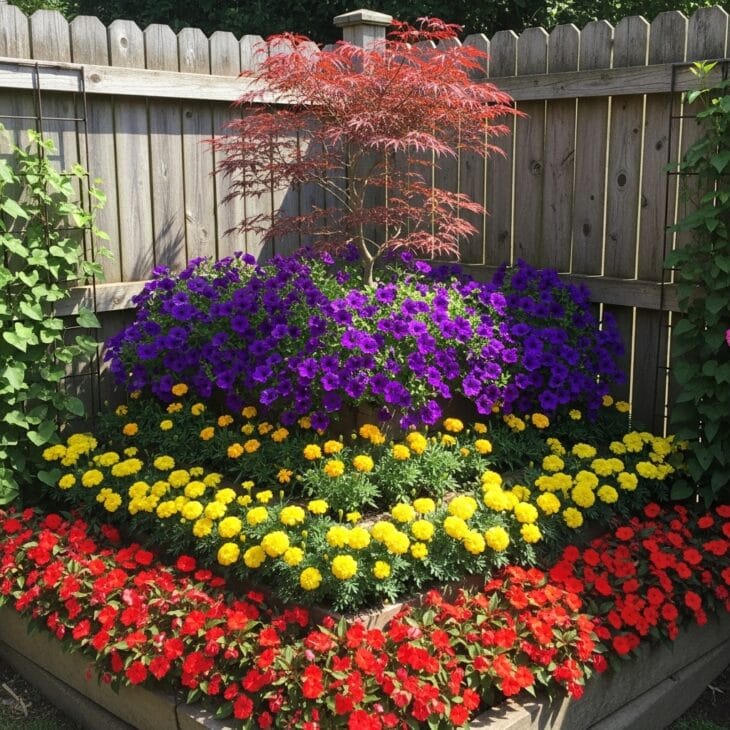
What you see The corner where two fences meet is dead space crying out for a flower bed. A triangular bed tucked into the angle, with height at the back point grading down to flowers at the front, fills an awkward corner with color and rounds off the garden.
Why it works Corners are easy to overlook, yet a planted one softens the hard right angle of the fences and adds depth to the garden’s edges. The two-sided backdrop makes a natural frame for a small tree or a tall, structural plant. Filling the corner also draws the eye outward and makes the whole space feel larger and more considered.
How to get it Round off the front of the bed with a gentle curve rather than a sharp triangle, which is easier to plant and to mow around. Place a small tree, a tall grass or an obelisk of climbers at the back point for height, then layer perennials and flowers forward. Make sure you can still reach the back to tend it, leaving access or stepping stones if the bed is deep. Mulch and keep the curved front edge crisp.
07. A Curved, Kidney-Shaped Bed
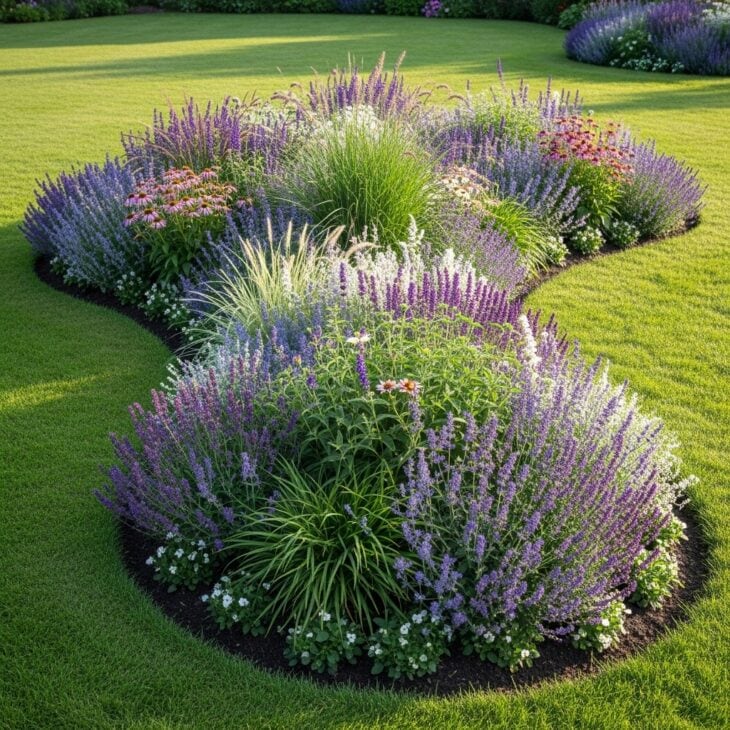
What you see A kidney-shaped bed brings soft, flowing curves to a garden of straight lines. Its gentle, sweeping edges look natural and relaxed, and the curve creates a sense of movement that draws you along its length, planted with billowing perennials and grasses.
Why it works Curved beds feel more organic and less rigid than rectangular ones, echoing the way plants actually grow. A flowing edge is also more interesting to the eye, revealing the planting gradually as the curve turns. The shape suits informal, naturalistic gardens beautifully and softens the boxy geometry of fences and lawns.
How to get it Lay out the curve with a hosepipe and live with it for a day or two before cutting, adjusting until the line flows smoothly with no awkward kinks. Keep the curves bold and simple — shallow, fussy wiggles look contrived and are hard to mow around. Plant in drifts that follow the curve, and finish with a clean cut edge. A generous, confident curve always reads better than a timid one.
08. A Flower Bed Along a Path
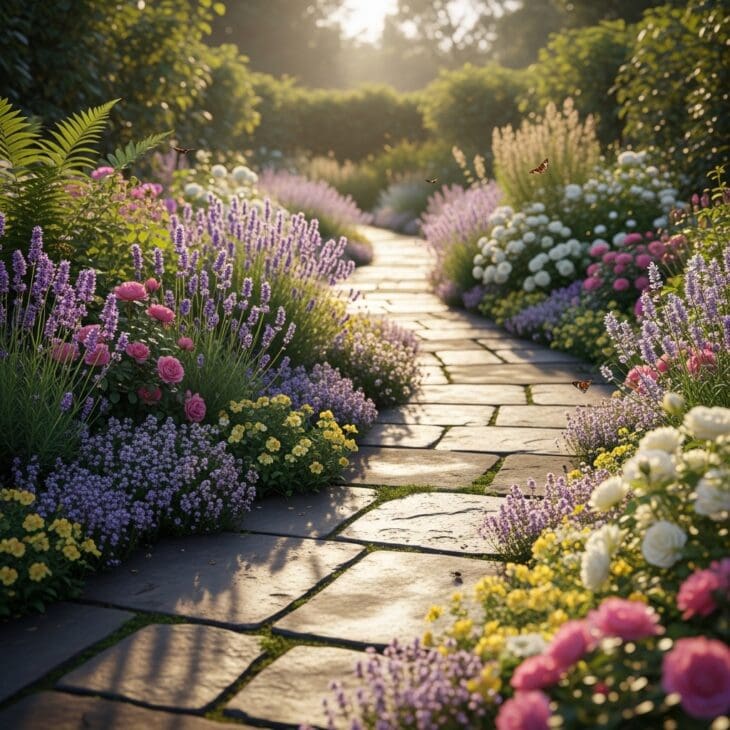
What you see A flower bed running along a path turns a simple walk into an experience. Planting that spills onto the paving and brushes against you as you pass, with fragrant, low flowers at the edge, lines the route with color and scent and leads the eye onward.
Why it works Beds beside a path are seen up close and at walking pace, so every detail counts — this is the place for fragrance, fine textures and flowers you want to look at closely. Planting that softens the path edges makes the walk feel generous and immersive rather than a bare strip of paving. It is one of the most rewarding places in the garden to plant.
How to get it Choose plants that tolerate a little spilling and the odd brush of a passing leg, and weight the planting toward scent — lavender, catmint (Nepeta) and pinks (Dianthus) all release fragrance when touched. Keep the very front low so the path stays clear and safe, with taller plants set back. Repeat plants down both sides to lead the eye and create rhythm. Let a few self-seeders colonize the path edge for a soft, settled look.
09. A Tiered Bed on a Slope
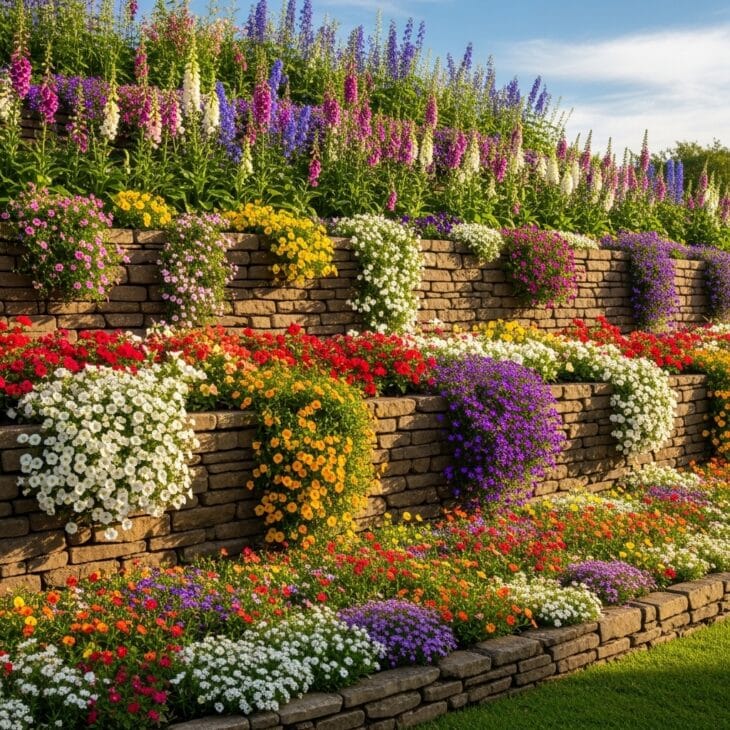
What you see A slope is a chance to build a flower bed you can see all at once. Terraced into tiers held by low retaining walls, or simply planted up the bank, a sloping bed becomes a hillside of bloom, each level on display above the one below.
Why it works A slope naturally presents its planting to you like a tilted stage, so nothing hides behind anything else. Terracing turns an awkward, erosion-prone bank into stable, plantable ground, and the retaining walls add structure and extra planting pockets. Cascading plants tumbling over each tier soften the walls and knit the levels together.
How to get it For a gentle slope, deep-rooted plants and a good mulch may hold the soil without terracing; for a steeper bank, build low retaining walls to create level beds. Plant trailing and spreading plants to cascade over the edges and bind the soil, with upright plants behind. Water carefully, as slopes shed water fast and the top dries first — a soaker hose or careful mulching helps. Keep access in mind so every tier can be tended.
10. A Hot-Color Flower Bed
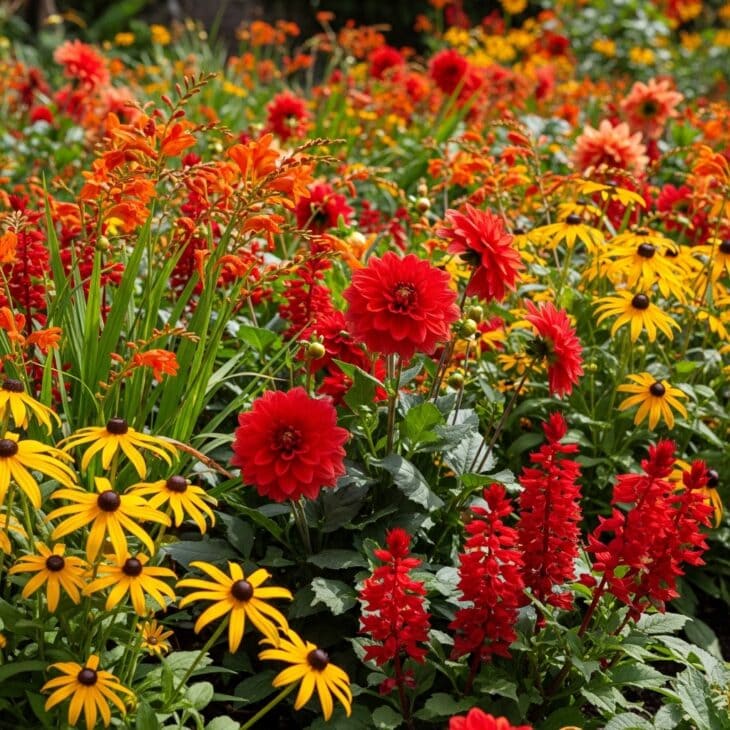
What you see A hot-color bed blazes with red, orange and gold. Scarlet dahlias, fiery crocosmia, golden black-eyed Susan (Rudbeckia) and red salvia burn together in full sun, building to a crescendo in late summer when the colors seem to glow with the season’s heat.
Why it works Hot colors are full of energy and read clearly from a distance, carrying across the garden where soft pastels fade. This palette also peaks in late summer, filling the gap when many spring and early-summer beds are fading. A hot bed is a bold, joyful statement that thrives in the sunniest spot you have.
How to get it Build the bed in full sun, where hot colors sing rather than muddy. Combine dahlias, crocosmia, Rudbeckia, Helenium and red or orange salvia, with a few dark-leaved plants to deepen the drama. Deadhead relentlessly to keep the long season going, and stake taller dahlias. A touch of acid green or deep purple foliage stops the heat becoming overwhelming and makes the colors pop even more.
11. A Cool Pastel Flower Bed
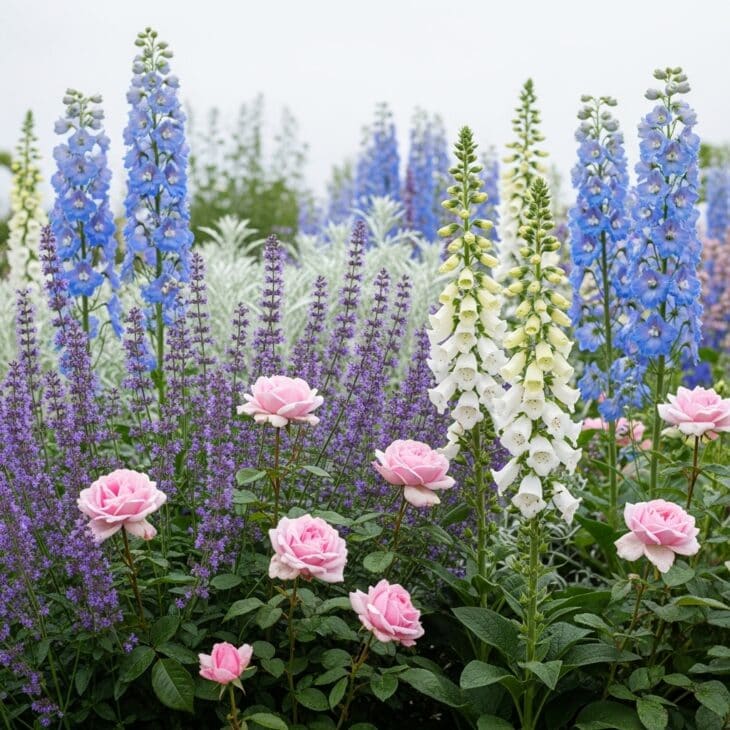
What you see A pastel bed soothes where a hot one excites. Pale pink roses, lilac catmint, powder-blue delphiniums and white foxgloves (Digitalis purpurea), threaded with silver foliage, blend into a gentle, romantic haze that is easy on the eye.
Why it works Soft colors harmonize naturally, so a pastel bed feels calm and cohesive even when packed with different plants. The palette is especially lovely in the soft light of morning and evening, when pale flowers seem to glow. Silver and grey foliage acts as the peacemaker, separating and uniting the colors at once.
How to get it Keep to pinks, lilacs, blues and whites, and weave silver-leaved plants like artemisia or lamb’s ears (Stachys byzantina) through to tie it together. Reliable performers include roses, catmint, delphiniums, hardy geraniums and white foxgloves. Repeat two or three key plants to create rhythm. Weight the white flowers toward seating you use in the evening, since they hold the light longest as dusk falls.
12. A White Moon Garden Bed
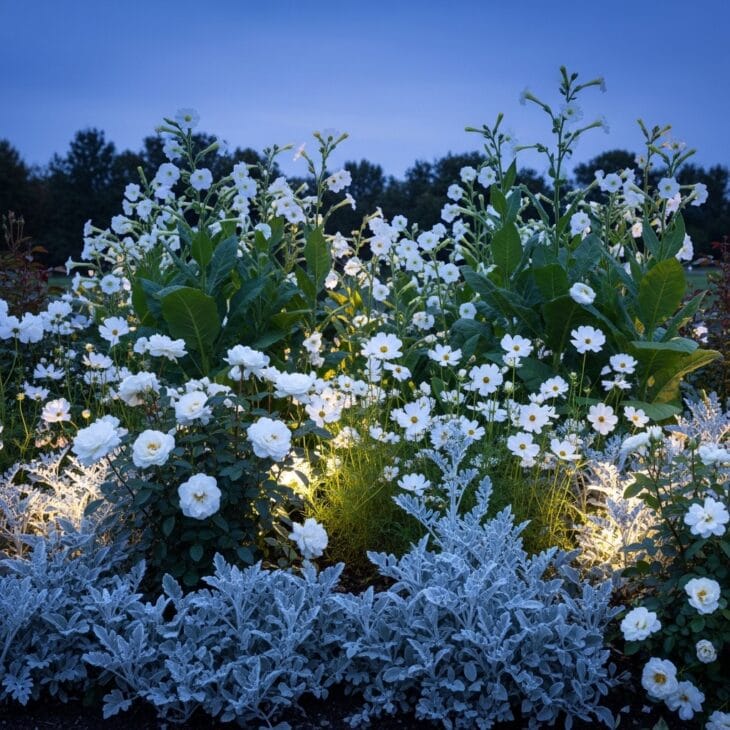
What you see A moon garden bed is planted entirely in white and silver to glow after dark. As daylight fades, white roses, cosmos, tobacco plants (Nicotiana) and silver foliage seem to shine in the dusk, coming into their own just as colored flowers disappear into the gloom.
Why it works White flowers reflect what little light there is, so a moon bed is magical in the evening — exactly when many people are home to enjoy the garden. Many white, night-scented flowers also release their strongest perfume after dark and draw in moths, adding scent and movement. It is a bed designed for the hours most gardens are ignored.
How to get it Plant only white and cream flowers, backed by silver and pale variegated foliage that glows in low light. Include night-scented performers — tobacco plants, night-scented stock (Matthiola longipetala) and jasmine — near a path or seat. Site the bed where you sit or walk in the evening, ideally where moonlight reaches it. Pure white reads most strongly at dusk, so choose clean whites over creams for the best glow.
13. A Single-Color Statement Bed
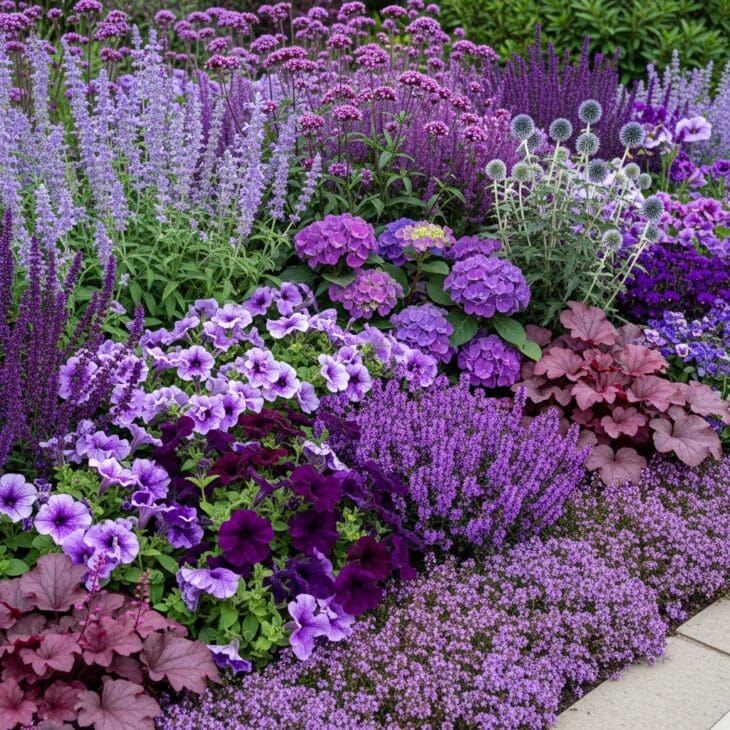
What you see Planting a whole bed in a single color is a striking, sophisticated move. A bed in every shade of purple — from pale lavender to deep violet — across different plants and textures reads as one bold, unified statement rather than a mix of competing hues.
Why it works A single-color bed has impact and elegance, and limiting the palette lets the eye appreciate the variety of plant shapes and textures without distraction. It looks deliberately designed, which is exactly the effect a confident flower bed wants. Working in shades of one color also makes choosing plants surprisingly easy.
How to get it Pick one color and gather plants across its full range of tints and shades, using foliage as well as flower to add depth. Vary the plant shapes and textures — spires, daisies, umbels, grasses — so the bed has plenty of interest despite the single color. Choose a succession of plants in your color so the scheme holds through the seasons. Purple, blue and white are the easiest single-color beds to fill; pure red is the hardest.
14. A Perennial Flower Bed
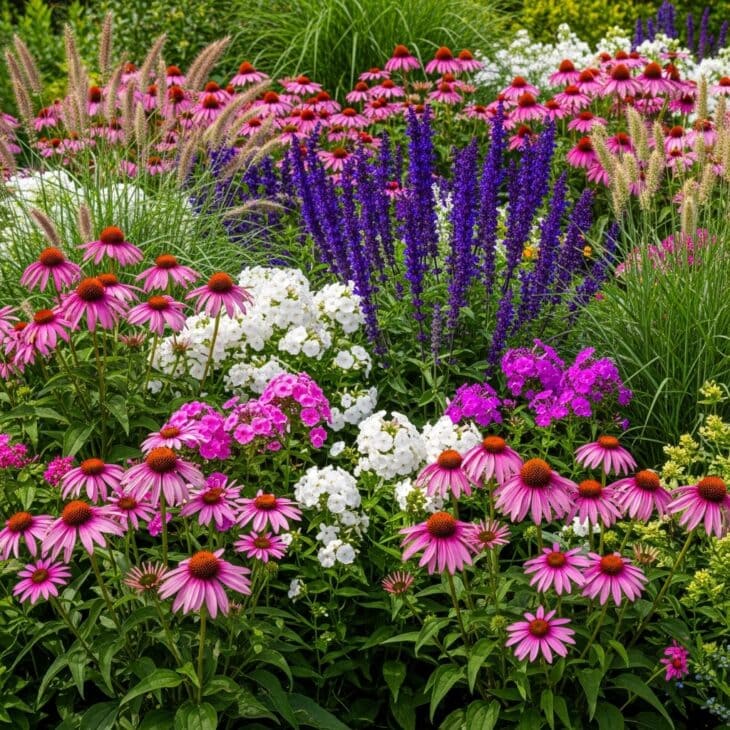
What you see A perennial bed is the gift that keeps on giving, returning bigger and better every year. Packed with coneflowers (Echinacea), salvia, phlox and ornamental grasses, it rewards a single planting with years of flower and steadily fills out into a lush, established bed.
Why it works Unlike annuals, which you replant every year, perennials come back from the same roots season after season, so a perennial bed is the most economical and sustainable way to fill a flower bed long-term. They knit together over time into a settled, naturalistic planting. With the right choices, you can have something in bloom from spring to fall.
How to get it Choose perennials with staggered flowering times so the bed is never bare, and mix in some that flower for months, like coneflower, salvia and hardy geraniums. Plant in groups of three or five for impact, leaving room for each to spread. Cut back and divide congested clumps every few years to keep them vigorous, and leave seedheads standing over winter for structure and birds. The bed will look better each year as it matures.
15. An Annual Bedding Display
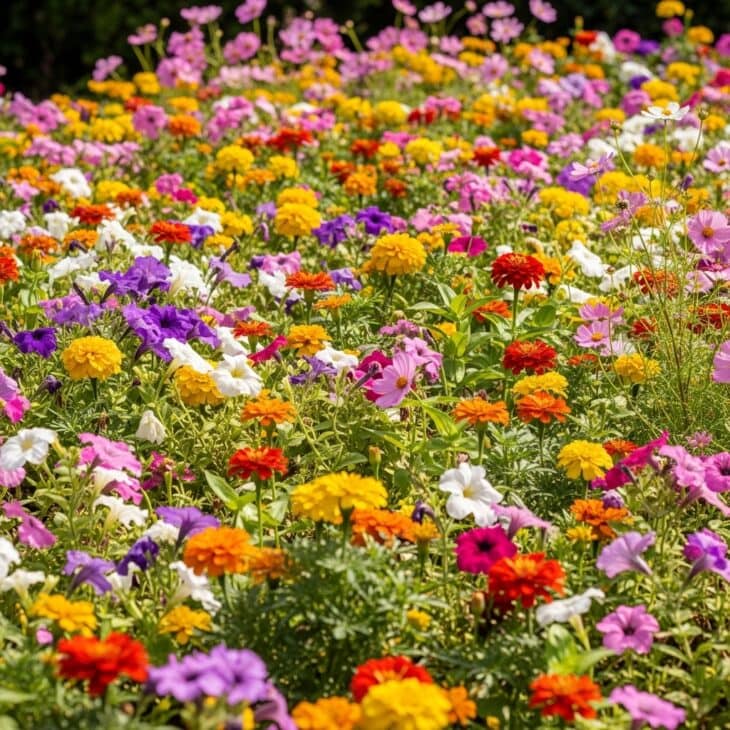
What you see For sheer, nonstop color, nothing beats a bed of annuals. Petunias, marigolds, zinnias and cosmos packed in tightly bloom their hearts out from early summer to the first frost, giving a longer, more intense show of flower than almost anything else.
Why it works Annuals are bred to flower continuously, pouring all their energy into bloom in a single season. That makes an annual bed the most reliable way to guarantee months of solid color, and it lets you completely reinvent the look every year. It is also a great way to fill a new bed cheaply while perennials establish.
How to get it Wait until the frost has passed, then plant annuals densely for instant, gap-free color. Enrich the soil first, as annuals are hungry, and feed through summer with a high-potash liquid feed. Deadhead regularly, or choose self-cleaning varieties, to keep the flowers coming. Sow some hardy annuals like cosmos and nigella directly where they are to flower for an easy, inexpensive bed.
16. A Mixed Perennial-and-Annual Bed
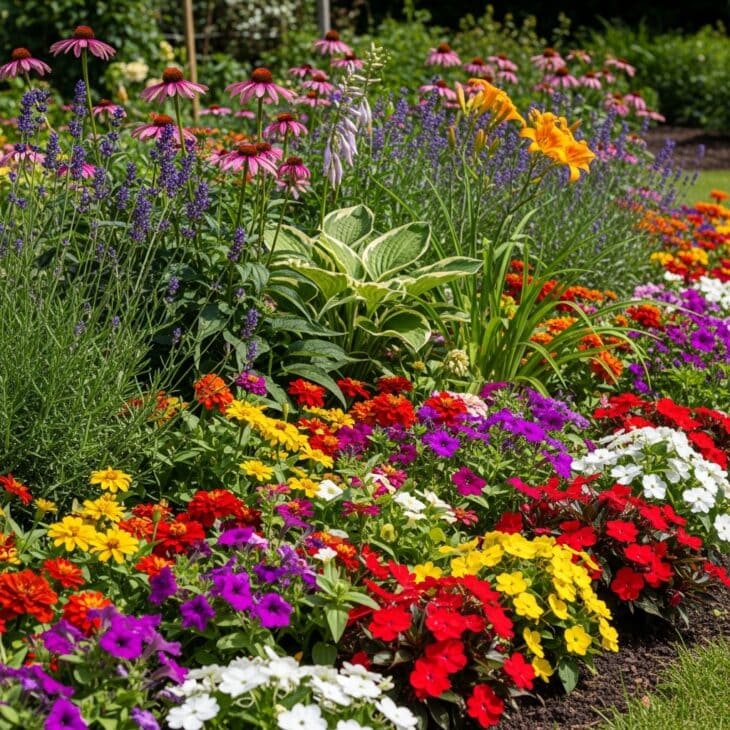
What you see The best of both worlds is a mixed bed, where reliable perennials form the backbone and pockets of annuals fill the gaps with extra color. The perennials give structure and return each year, while the annuals plug any bare spots and keep the bloom going non-stop.
Why it works A mixed planting gives you the permanence and economy of perennials plus the long, reliable color of annuals, with none of the weaknesses of either alone. The annuals cover the inevitable gaps as perennials come and go, and let you tweak the color scheme each year. It is how most experienced gardeners actually plant a flower bed.
How to get it Plant the perennial framework first, leaving deliberate gaps, then drop in annuals each spring to fill and to refresh the colors. Use annuals to extend the season at both ends and to bridge the lull between perennial flushes. Keep a nursery corner or some pots of annuals coming on to slot in as earlier flowers fade. Over time, you will learn where the reliable gaps are and plant for them.
17. A Spring Bulb Bed
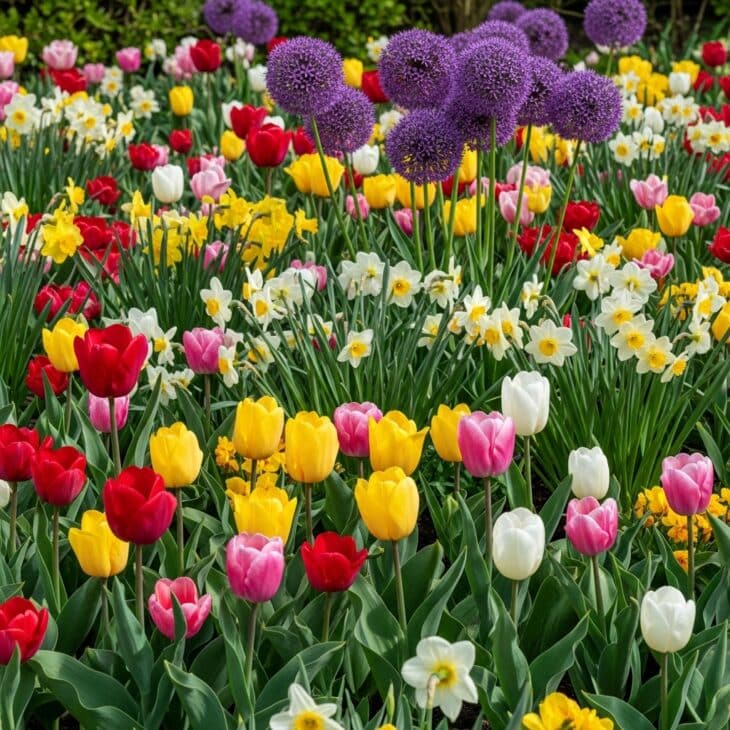
What you see A bed of spring bulbs gives the garden its first big hit of color after winter. Drifts of daffodils, tulips and globe-headed alliums burst into bloom weeks before the summer perennials wake, carrying the bed through the hungry gap of early spring.
Why it works Bulbs are cheap, easy and spectacularly generous, packing a lot of color into a small effort. Planted among later perennials, they occupy the bed twice over, flowering and dying back just as their neighbors fill out to hide the fading leaves. Few things lift the spirits like the first bulbs of the year.
How to get it Plant bulbs in fall, in bold groups rather than thin lines, at about three times their own depth. Combine early daffodils (Narcissus), mid-season tulips and later alliums for a long succession. Tuck them between perennials whose emerging foliage will hide the dying bulb leaves, and resist cutting that foliage until it yellows. Treat tulips as short-lived in heavy soil and replant fresh, while daffodils and alliums settle in and multiply.
18. A Dedicated Rose Bed
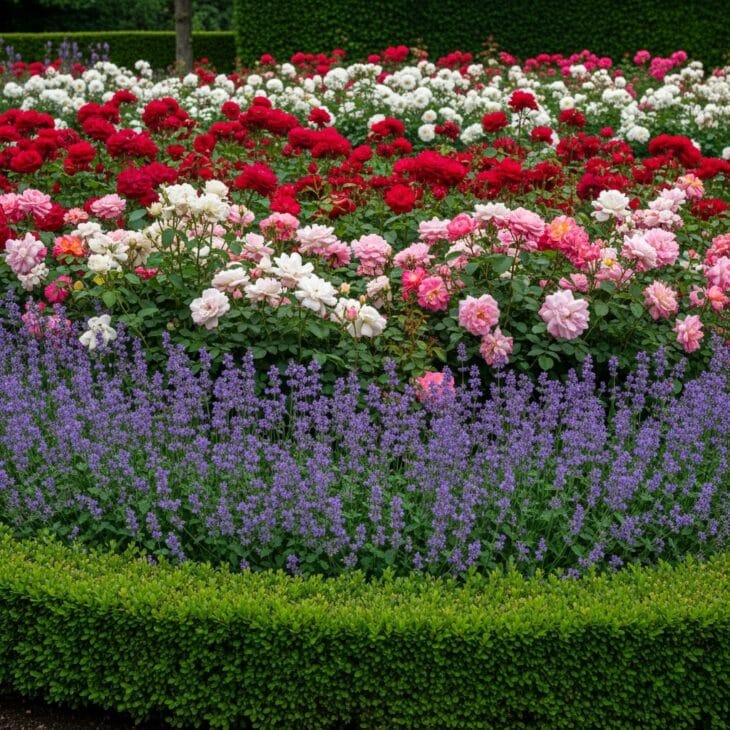
What you see A dedicated rose bed is pure romance. Repeat-flowering roses massed together and underplanted with lavender and catmint, perhaps ringed by a low clipped hedge, fill the air with scent and the bed with bloom from early summer to fall.
Why it works Grouping roses in their own bed lets you give them the rich soil, sun and care they want, and makes feeding, spraying and pruning straightforward. Underplanting with lavender and hardy geraniums hides the roses’ bare legs, deters some pests, and extends the season of interest. A well-kept rose bed is one of the most rewarding and fragrant features a garden can have.
How to get it Choose healthy, repeat-flowering roses suited to your climate, and give them an open, sunny spot with rich, well-drained soil. Space them for good airflow to reduce disease, and underplant with lavender (Lavandula angustifolia), catmint or hardy geraniums to clothe the base. Feed in spring and midsummer, deadhead through the season, and prune in late winter. Avoid replanting new roses where old ones grew, to sidestep rose replant disease.
19. A Cottage-Style Flower Bed
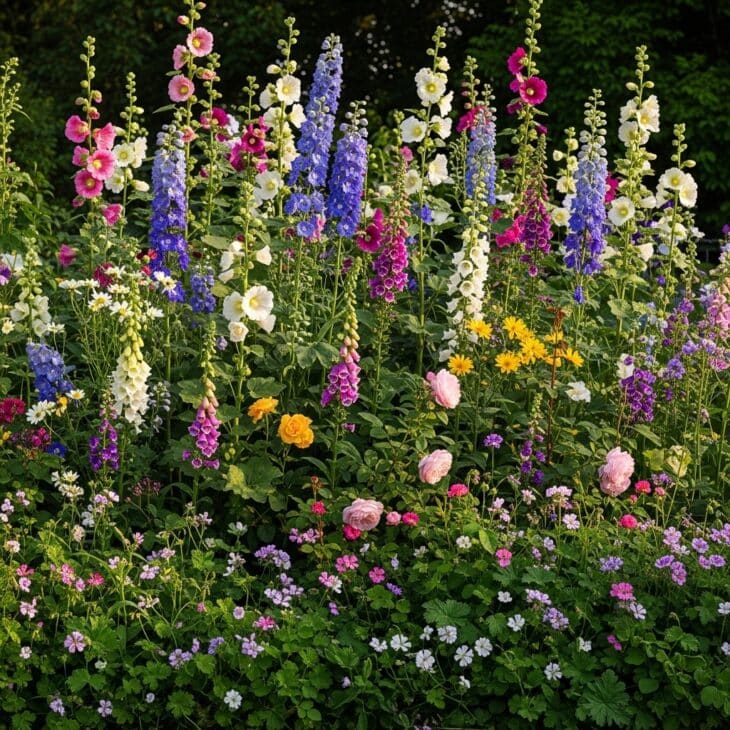
What you see The cottage-style bed is the most romantic of all: packed wall to wall with flowers in a happy, informal tangle. Hollyhocks (Alcea rosea) and delphiniums rise behind roses, foxgloves and hardy geraniums, with self-seeders weaving everything together and no bare soil in sight.
Why it works A cottage bed embraces abundance and a little controlled chaos, which makes it forgiving and full of charm. Densely packed planting also shades out weeds and supports a wealth of pollinators. The relaxed, overflowing look is the opposite of fussy and suits almost any informal garden — see our full cottage garden ideas for the complete approach.
How to get it Plant generously and close, mixing heights, shapes and colors with abandon — spires, daisies, froth and self-seeders all jumbled together. Include classic cottage plants like hollyhocks, delphiniums, foxgloves, roses and hardy geraniums, and let annuals such as cosmos and nigella seed around. Stake the tall plants early, and accept that informality is the point. Each year the bed will reinvent itself a little as the self-seeders shift around.
20. A Prairie-Style Naturalistic Bed
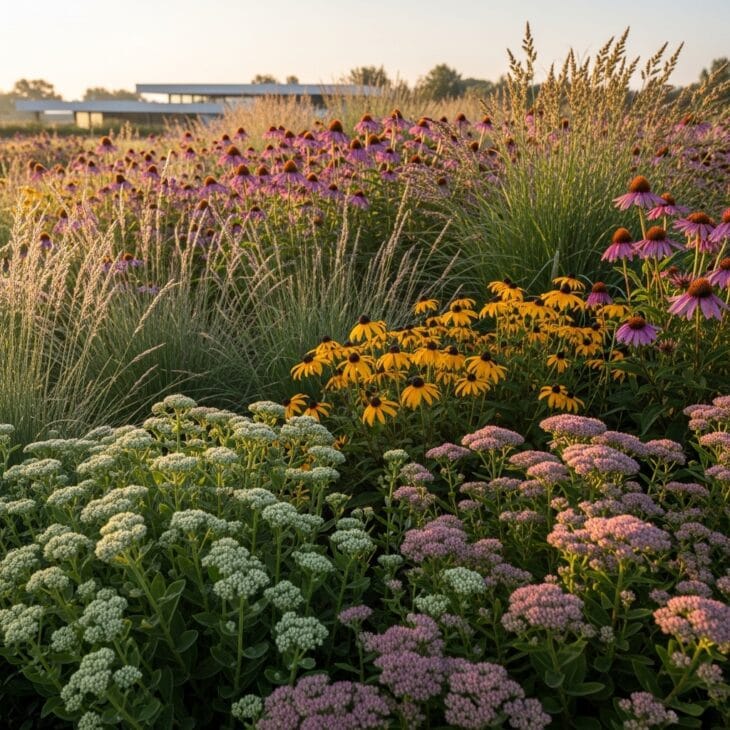
What you see A prairie-style bed weaves perennials and grasses into a soft, naturalistic tapestry. Drifts of coneflowers, black-eyed Susan and flat-headed sedum mingle with airy grasses that sway and catch the light, building to a long, mature peak in late summer and fall.
Why it works This loose, meadowy style is contemporary, wildlife-friendly and relatively low-maintenance once established, relying on tough, self-supporting plants. The grasses add movement and a long season of interest, looking good well into winter as seedheads catch the frost. It is a refreshing, modern alternative to tightly packed traditional bedding.
How to get it Plant in generous, repeating drifts that intermingle rather than sit in blocks, mixing perennials such as coneflower, Rudbeckia, Sedum and achillea with grasses like Stipa or Calamagrostis. Choose tough, self-supporting plants that do not need staking, and plant fairly densely to crowd out weeds. Leave everything standing over winter for structure and wildlife, then cut the whole bed down in late winter before new growth begins.
21. A Pollinator Flower Bed
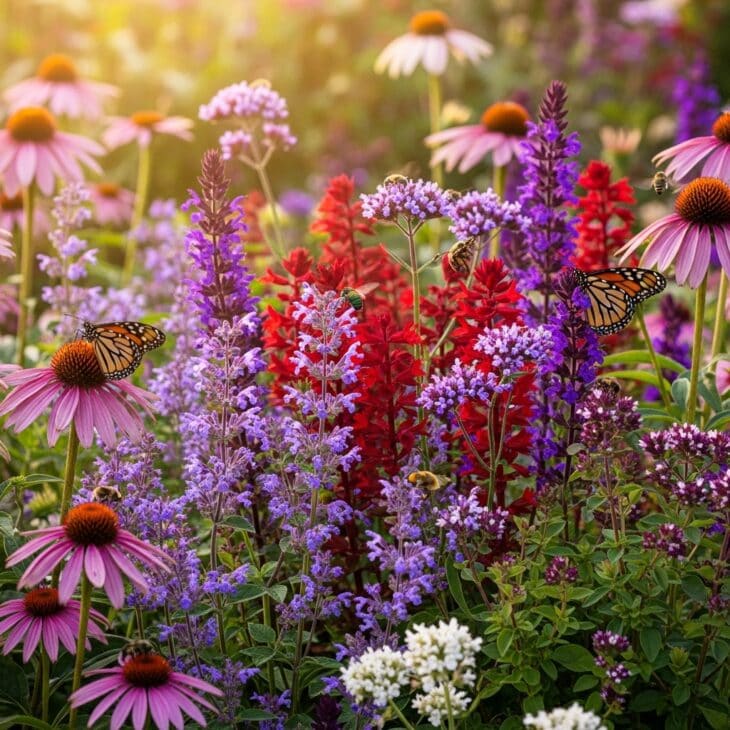
What you see A bed planted for pollinators is never still. Bees, butterflies and hoverflies work the open faces of coneflowers (Echinacea), salvia, catmint and oregano from morning to dusk, so the planting hums with life all season long.
Why it works With wild habitat shrinking, a pollinator bed is a genuine help to local insect life, and it makes the garden far more alive and absorbing to watch. Single, open flowers let insects reach the nectar that double blooms hide, and a long succession of flowering keeps the food coming. A buzzing bed is the sign of a healthy garden.
How to get it Choose single-flowered, nectar-rich plants and aim for something in bloom in every month from spring to fall. Plant in generous drifts so insects can forage efficiently, and weave in herbs like oregano, thyme and marjoram, which bees adore once they flower. Avoid pesticides entirely, and leave seedheads standing over winter for food and shelter. Even a small pollinator bed makes a real difference to the bees and butterflies nearby.
22. A Cut Flower Bed
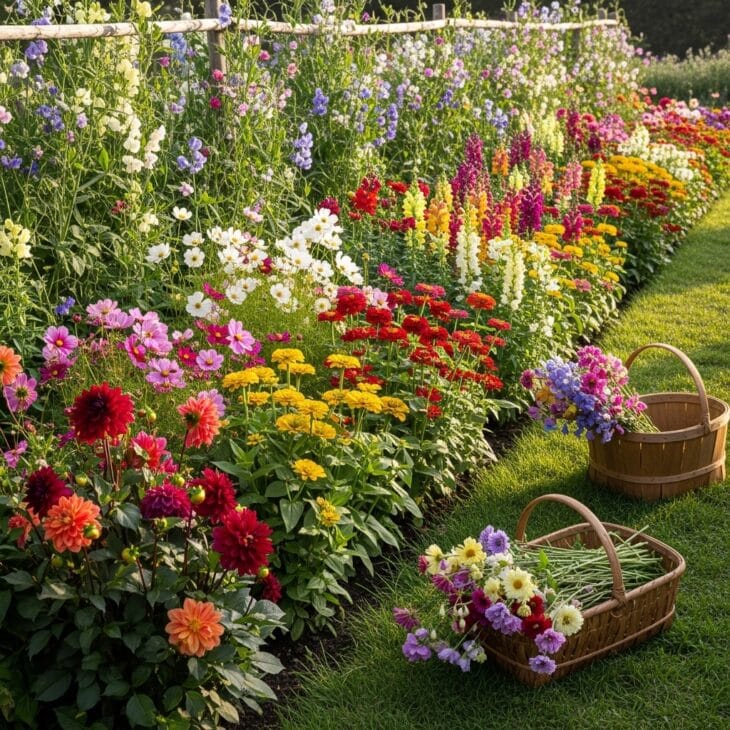
What you see A cut flower bed lets you fill the house with bouquets all summer without ever robbing the display beds. Rows of dahlias, cosmos, zinnias, sweet peas and snapdragons grow purely to be picked, so you can cut armfuls guilt-free.
Why it works Growing flowers specifically for cutting means you never have to choose between a full vase and a full bed. Planted in rows like a small crop, they are easy to tend, pick and replace, and many flower more the more you cut. It is one of the most generous and joyful things a flower bed can give you.
How to get it Site the bed in full sun and good soil, and grow proven cut-and-come-again flowers: cosmos, zinnias, dahlias, sweet peas and cornflowers all keep producing if you keep picking. Plant in straightforward rows for easy access, and support tall plants with netting before they need it. Pick in the cool of the morning, plunge stems straight into water, and deadhead anything you miss so the plants keep flowering.
23. A Shade Flower Bed
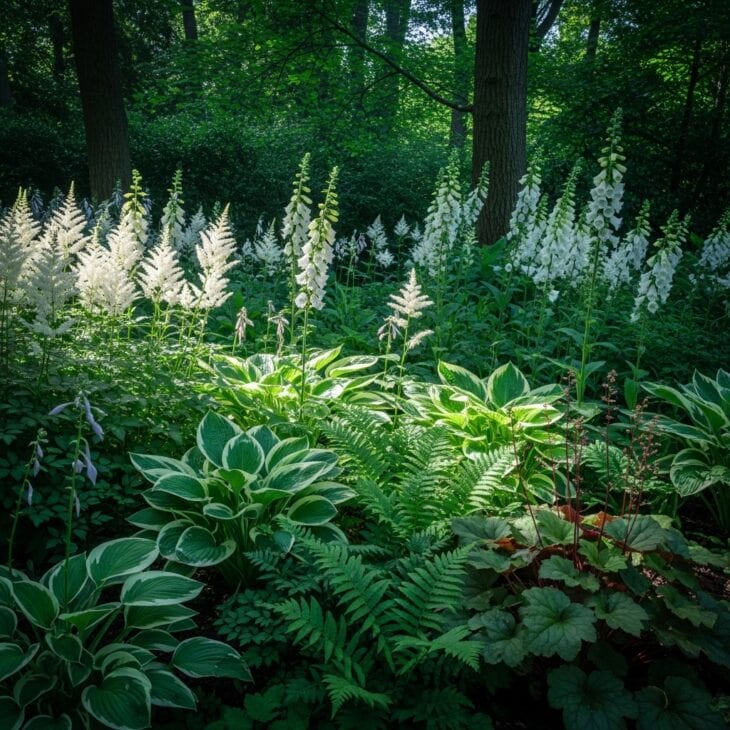
What you see A shady spot is no barrier to a beautiful flower bed — it just calls for a different palette. Plumes of white astilbe, foxgloves, and the bold leaves of hostas, ferns and heuchera fill a shade bed with cool greens, silvers and whites that seem to glow in the low light.
Why it works Many lovely flowers and foliage plants positively prefer shade, so a shady bed is an opportunity rather than a problem. Pale flowers and variegated leaves light up dim corners, drawing the eye into spots that would otherwise feel dead. Leaning on foliage shape and texture as much as flower gives a long, sophisticated season of interest.
How to get it Improve the soil with plenty of compost and leaf mould first, since dry shade is the real challenge, not shade itself. Choose proven shade-lovers — astilbe, foxgloves, hostas, ferns, heuchera and hardy geraniums — and use white and pale flowers to lift the gloom. Keep the bed mulched and watered, especially under hungry tree roots. Our shade garden ideas have a much fuller palette to choose from.
24. A Dry Gravel Flower Bed
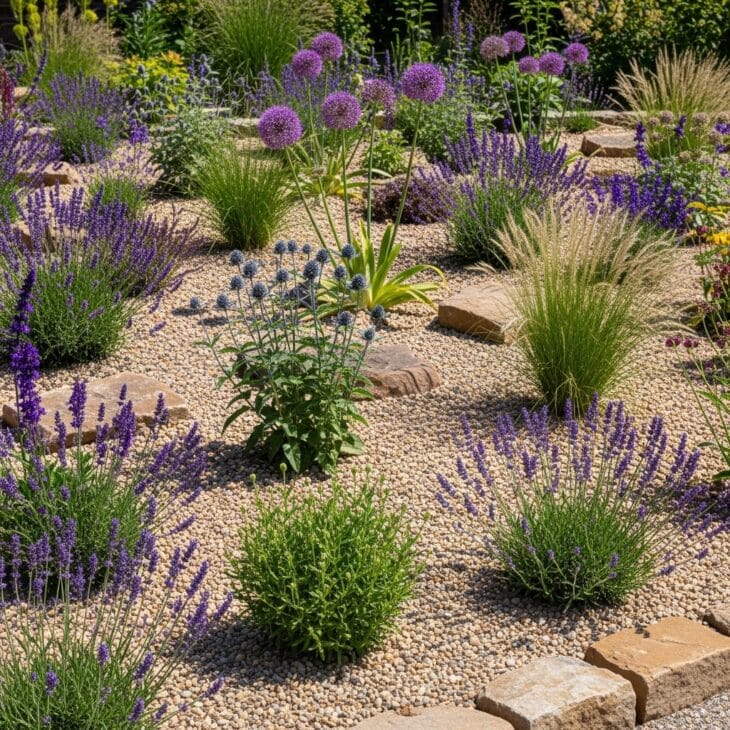
What you see A hot, dry spot where the soil bakes and flowers wilt is perfect for a gravel bed. Drought-tolerant plants grow straight from the stone — lavender, salvia, sea holly (Eryngium), alliums and grasses — thriving on the heat and the sharp drainage with barely any watering.
Why it works Rather than fighting a difficult dry bed, a gravel garden works with it, turning a problem area into a low-maintenance, water-wise feature. The gravel acts as a mulch that locks in what moisture there is and suppresses weeds, while the plants that love these conditions are tough and largely self-sufficient. As summers grow hotter and drier, it is an increasingly sensible way to plant a bed.
How to get it Improve heavy soil with plenty of grit first, since these plants hate winter wet, then lay a deep gravel mulch over the top. Choose sun-lovers that relish poor, dry ground: lavender, Salvia, Eryngium, Verbascum, alliums and ornamental grasses. Plant through the gravel into the soil below and water only until established. Space plants to show off their shapes and let a few self-seed into the gravel for a natural look. It is one of the most low-maintenance beds you can plant.
25. A Fragrant Flower Bed
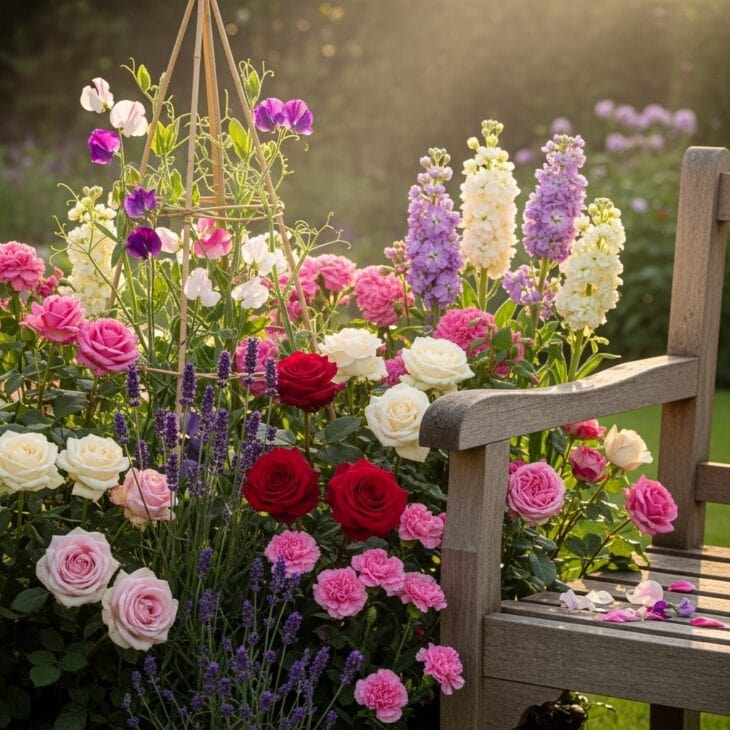
What you see A flower bed should be as much about scent as sight. Roses, lavender, clove-scented pinks (Dianthus), stocks and sweet peas planted near a seat or path fill the air with old-fashioned perfume, especially in the warmth of a summer evening.
Why it works Fragrance is the most evocative and nostalgic part of a garden, and it is exactly the quality modern bred-for-looks flowers so often lack. A bed planted deliberately for scent brings a whole extra dimension to the garden and rewards you most in the cool of the evening. Many fragrant flowers also draw in bees, butterflies and moths.
How to get it Site fragrant beds where you linger — beside a seat, a door or a path — rather than in some far corner. Choose plants known for scent: roses, lavender, pinks, stocks, sweet peas and phlox, plus night-scented stock for the evening. Favor older varieties, since breeding for size and color has stripped the perfume from many modern strains. Combine flowers that peak at different times so the bed stays fragrant for as long as possible.
26. A Four-Season Interest Bed
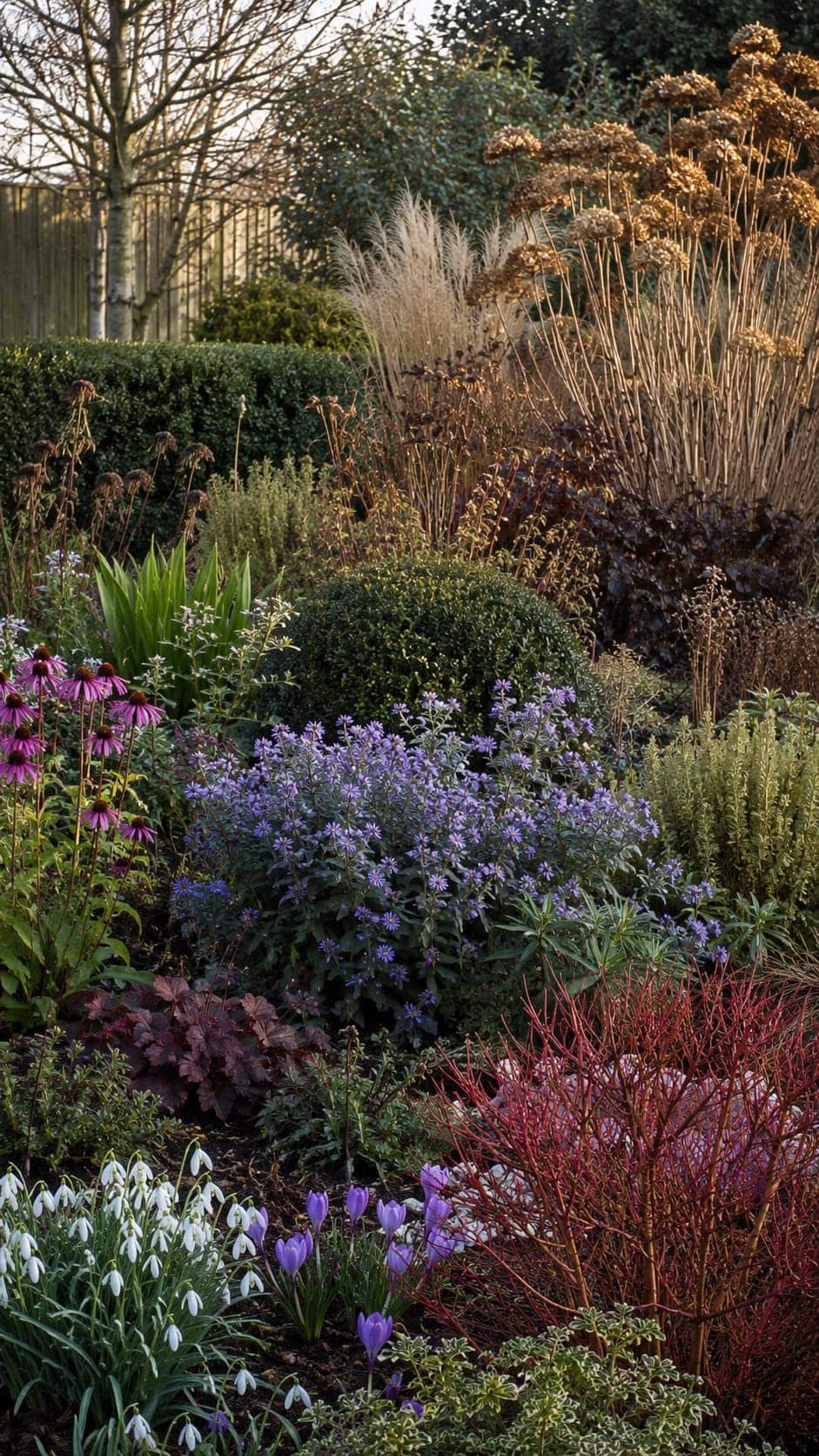
What you see The best flower beds look good in every season, not just at the height of summer. A four-season bed combines evergreen structure, spring bulbs, summer perennials and winter seedheads and stems, so there is always something to catch the eye whatever the month.
Why it works Many beds peak for a few weeks and then sit dull or bare, but a little planning keeps a bed earning its place all year. Evergreen anchors and good “bones” hold the design together in the lean months, while a succession of flowers keeps the color changing. Thinking across all twelve months is what separates a thoughtful flower bed from a fleeting summer flourish.
How to get it Start with a backbone of evergreen shrubs or grasses for year-round structure, then layer in spring bulbs, summer and fall perennials, and plants with winter interest — colored stems, berries, or seedheads that stand through the cold. Resist cutting everything down in fall, as faded grasses and seedheads look beautiful in frost and feed the birds. Aim for at least one thing of interest in every season as you choose plants.
27. Edge the Bed Crisply
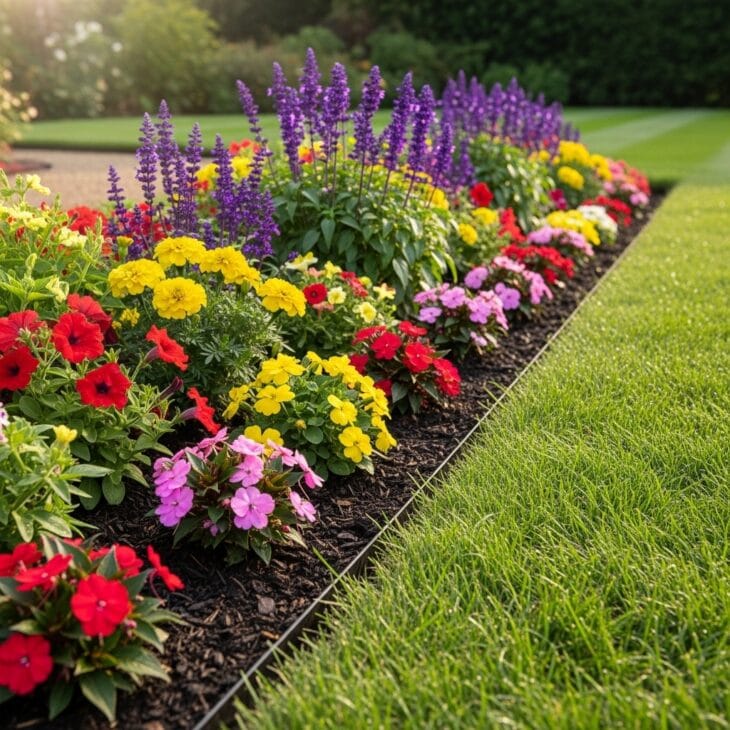
What you see Often the biggest improvement to a flower bed is simply a crisp edge. A clean, cut line between bed and lawn frames the planting and makes the whole thing look cared for — the flowers can be as relaxed as you like as long as the edge is sharp.
Why it works A defined edge is the cheapest, fastest way to make a bed look intentional and well-kept, containing loose planting so it reads as deliberate rather than overgrown. It also keeps grass from creeping into the bed and makes mowing easier. That neat line is the detail that makes an ordinary flower bed look designed.
How to get it Cut a clean edge with a half-moon edging iron along a line marked with a hosepipe for curves or a plank for straight runs. To keep it sharp with less effort, install a permanent edge — flush steel edging, a brick mowing strip or timber — set just below mower height so you can mow right over it. Recut or trim the edges every few weeks in the growing season. Keep the bed’s shape simple and bold, as fussy outlines are hard to maintain.
28. Layer the Bed by Height
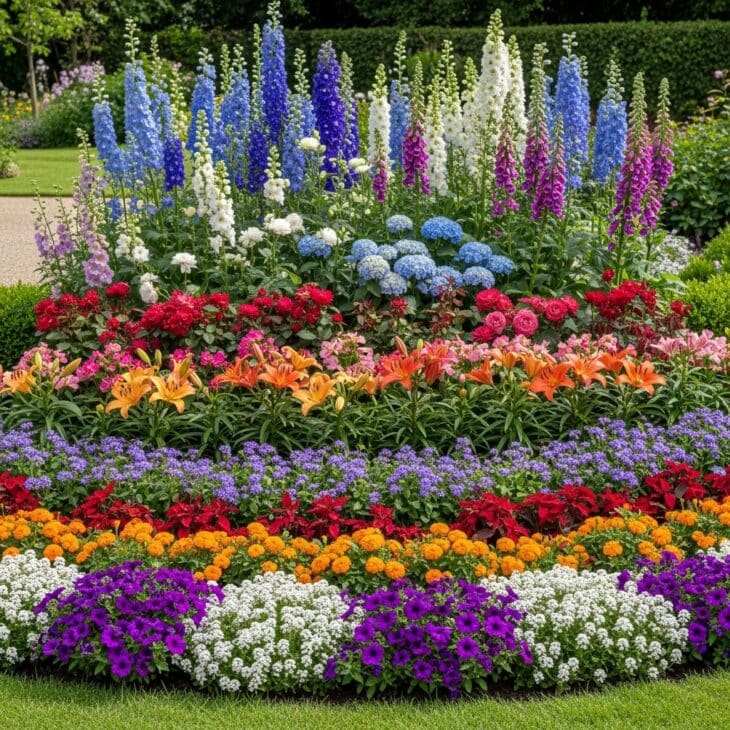
What you see The single most important rule for a flower bed against a wall or fence is to layer by height: tall plants at the back, medium in the middle, and low plants at the front. Arranged this way, every plant is visible and the bed reads as one generous, tiered wave of bloom.
Why it works Layering by height stops taller plants hiding shorter ones and gives the bed depth and structure, so an abundant planting looks composed rather than chaotic. It is the difference between a bed where everything is seen and one where half the flowers vanish behind their neighbors. For an island bed, the same logic applies with the tallest plants in the center.
How to get it Place tall plants like delphiniums, hollyhocks and grasses at the back, mid-height perennials such as salvia and coneflower in the middle, and low edging plants like hardy geraniums and catmint at the front. Let the layers overlap and mingle a little so the transitions look natural, not stepped. Allow for how tall each plant will actually get, and break the “rules” occasionally with a tall, see-through plant near the front for a touch of drama.
29. A Mailbox or Lamppost Bed
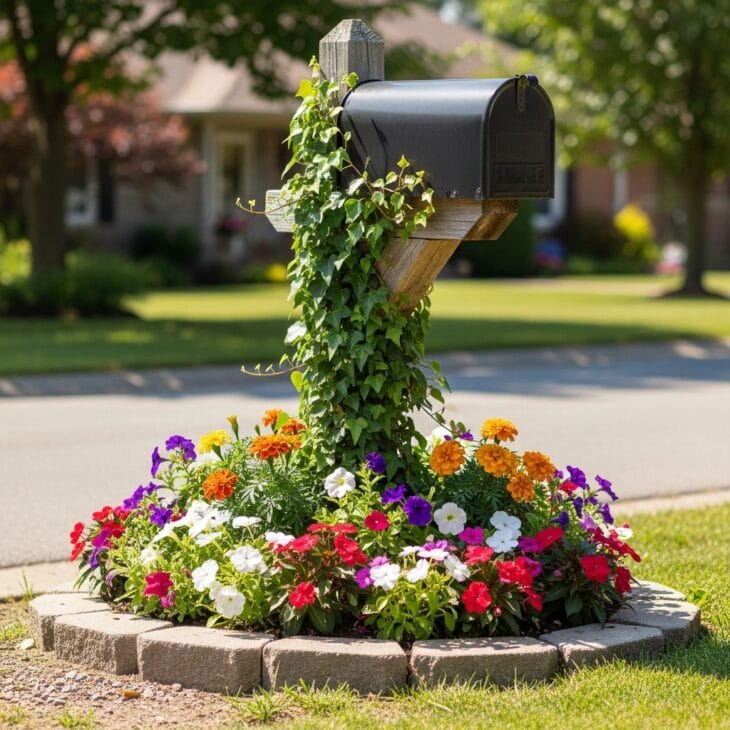
What you see A small bed around the base of a mailbox or lamppost is a tiny project with outsized charm. Brimming with colorful flowers and perhaps a climber twining up the post, it turns a purely functional fixture into a cheerful little focal point by the drive.
Why it works These little beds soften a hard, lonely post and add a welcoming splash of color right where visitors arrive. Being small, they are quick and cheap to plant and easy to keep looking good. A planted mailbox is one of those small details that signals a loved and tended garden from the street.
How to get it Keep the bed in proportion to the post — a circle two or three feet across is usually plenty — and choose tough, drought-tolerant plants, since these beds are often hot, exposed and easy to forget to water. A climber like clematis or a climbing rose can soften the post, with low flowers around the base. Avoid anything that will block sightlines for drivers. Mulch well to keep moisture in and weeds down in this exposed spot.
30. A Low-Maintenance Flower Bed
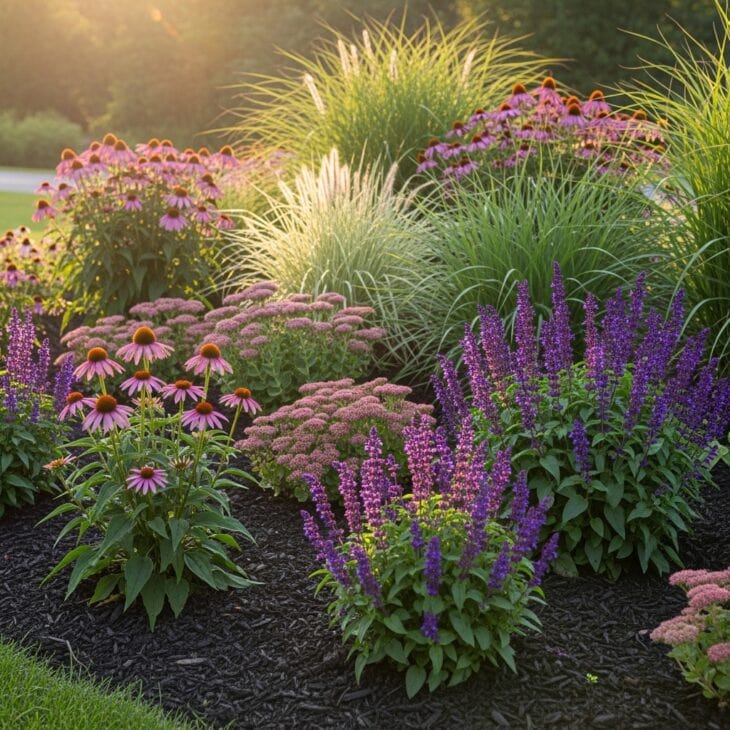
What you see A flower bed does not have to be hard work. Built from tough, reliable perennials and grasses planted in generous drifts and topped with mulch, a low-maintenance bed looks full and good for most of the year while asking very little of you.
Why it works The secret to an easy bed is choosing the right plants for your conditions, so they thrive without coddling, and planting them densely so they crowd out weeds. Long-flowering, self-supporting perennials need no staking and little deadheading, while a good mulch keeps moisture in and weeds down. Done well, a flower bed can be both beautiful and genuinely undemanding.
How to get it Match plants to your soil and aspect rather than fighting them, and lean on tough, drought-tolerant perennials and grasses that look after themselves. Plant closely to shade out weeds, and mulch generously every spring to cut watering and weeding. Avoid thirsty, high-maintenance annuals and anything that needs staking or constant deadheading. For many more easy-care ideas, see our low-maintenance garden ideas.