
Plant a perennial once and it rewards you for years, dying back each winter and rising again every spring a little larger than before. That is the quiet magic of a perennial garden: you do the work at the start, and the color keeps coming back on its own.
Contents
- 01. Classic Herbaceous Border
- 02. Long-Blooming Coneflower Drift
- 03. Grasses and Perennials Prairie
- 04. Shady Perennial Corner
- 05. Cottage Perennial Mix
- 06. Hot Border of Fiery Perennials
- 07. Cool Blue and White Border
- 08. Pollinator Perennial Patch
- 09. Drought-Tolerant Gravel Perennials
- 10. Perennial Ground Cover Carpet
- 11. Peony Bed
- 12. Daylily Bank
- 13. Late-Season Sedum Border
- 14. Fern and Woodland Perennials
- 15. Salvia and Catmint Ribbon
- 16. Perennial Cutting Border
- 17. Evergreen Perennial Structure
- 18. Ornamental Grass Feature
- 19. Hardy Geranium Underplanting
- 20. Cottage Spires of Lupins and Delphiniums
- 21. Low Perennial Edging Ribbon
- 22. Rain Garden Perennials
- 23. Silver and Grey Foliage Border
- 24. Hellebore Winter Bed
- 25. Alpine Perennial Rockery
- 26. Perennial Container Display
- 27. Astilbe and Moisture-Lovers
- 28. Black-Eyed Susan Block
- 29. Fragrant Perennial Border
- 30. Four-Season Island Bed
The ideas below run right across the range: classic herbaceous borders and loose prairie plantings, shady woodland corners and baking gravel beds, tall spires and low carpets, flowers for cutting and foliage for structure. There is something here for full sun and deep shade, for wet ground and dry, for a first small bed and a sweeping mixed border.
Read through and pick the ideas that fit your soil, your light, and the season you most want to fill. Perennials mix generously, so most of these combine into one another, and even a single well-chosen group will come back to greet you year after year.
01. Classic Herbaceous Border
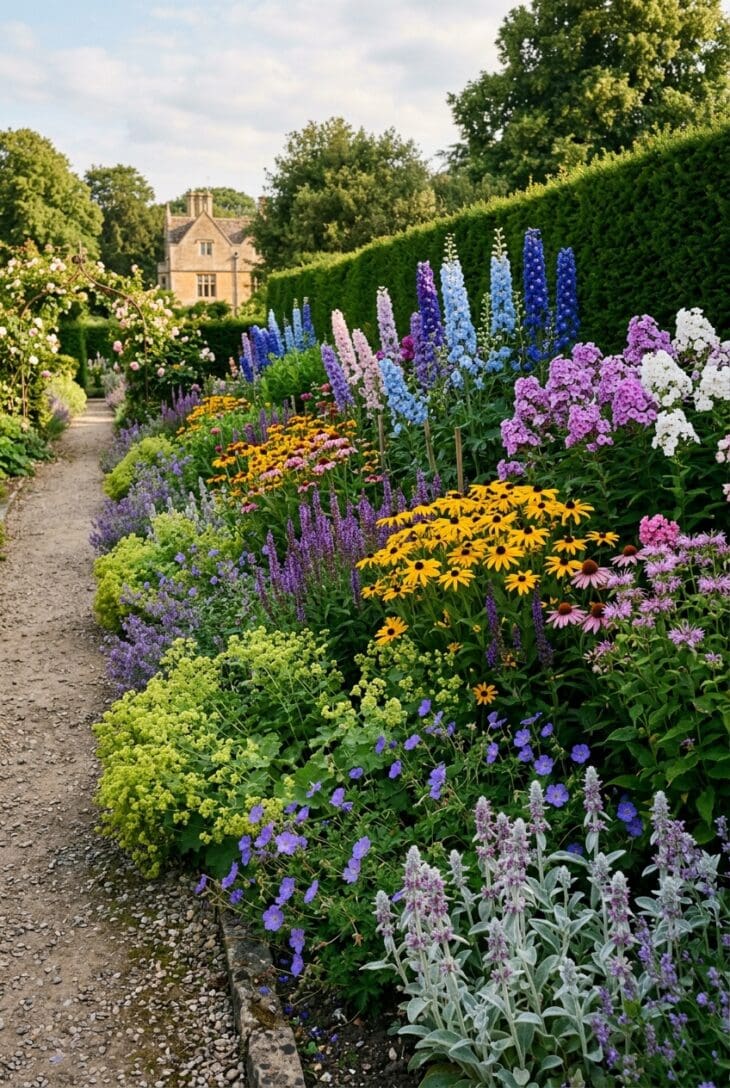
What you see A deep border layered like a grandstand: tall blue delphiniums and pink phlox at the back, golden rudbeckia and purple salvia through the middle, hardy geraniums and lime-green alchemilla frothing at the front, all set against a dark clipped hedge. Nothing is hidden, and the whole bed reads as one rolling wave of flower.
Why it works The classic herbaceous border is built in tiers so every plant is visible, tallest behind and shortest in front, which is why it has anchored gardens for over a century. Grouping perennials in generous drifts rather than dotting them about gives blocks of color that carry from a distance and flow into each other.
How to get it Give the bed at least 4ft (120cm) of depth so you have room for three tiers, and improve the soil with plenty of compost before planting. Set perennials in odd-numbered groups of three or five, spacing them roughly 18in (45cm) apart, and choose a succession that flowers from June to September. Stake the tall growers early, cut everything back in late autumn or leave the seedheads for winter, and lift and divide congested clumps every three or four years. It is the foundation that most other garden border ideas build on.
02. Long-Blooming Coneflower Drift

What you see A wide sweep of purple coneflowers standing shoulder to shoulder, hundreds of pink-purple daisies with burnished orange centers held rigid on straight stems, bees moving steadily across the cones. The drift hums and glows through the hottest weeks of summer.
Why it works Coneflower (Echinacea purpurea) is one of the longest-flowering, toughest perennials you can grow, blooming for weeks on end and shrugging off heat and drought. Planted in a single-variety drift it delivers real impact, then holds its seedheads into winter to feed finches and give the frosty border structure.
How to get it Plant coneflowers (Echinacea purpurea) in full sun in well-drained soil, spacing them 15 to 18in (38 to 45cm) apart in a bold group of seven or more. Deadhead the early flowers to prolong the display, then stop in late summer and let the last cones stand for the birds. Divide clumps every few years to keep them vigorous, and leave the stems up over winter rather than tidying them away.
03. Grasses and Perennials Prairie

What you see Tall feathery grasses catching the light and swaying above drifts of rudbeckia, coneflower, sedum and salvia, the whole planting moving as one in the evening breeze. Low golden sun rakes through the seedheads and turns the grasses to spun light.
Why it works Weaving ornamental grasses through flowering perennials, the naturalistic style made famous by designers like Piet Oudolf, gives a border movement, transparency and a long season that peaks in autumn. The grasses tie everything together, soften bold flowers, and carry the planting right through winter as bleached, frost-catching stems.
How to get it Choose airy, well-behaved grasses such as moor grass (Molinia caerulea) or feather reed grass (Calamagrostis ‘Karl Foerster’) and repeat them through the bed at regular intervals to knit it together. Interplant with long-season, sun-loving perennials: coneflower, rudbeckia, sedum, salvia and yarrow, set at matrix spacing so plants merge. Cut the whole scheme down once in late winter, just before the new growth appears, and otherwise leave it standing for the frost.
04. Shady Perennial Corner
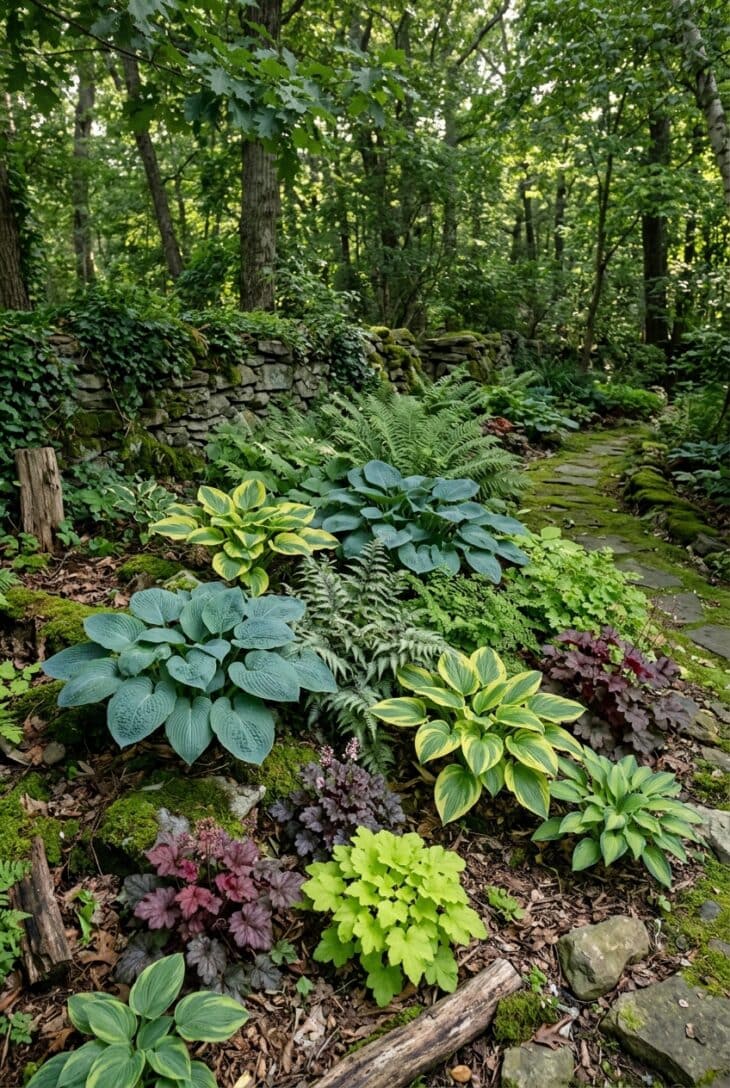
What you see A cool corner under the trees layered in foliage: broad blue and gold hostas, arching ferns and ruffled heuchera in wine and lime, all in soft dappled light. There is barely a flower, and the play of leaf shape and shade carries it entirely.
Why it works Shade defeats most flowering perennials, but a whole tribe of foliage plants thrives in it, so the difficult corner becomes the lushest, most restful part of the garden. Contrasting leaf sizes and colors, big and glaucous against fine and feathery, gives a shade bed all the richness a sunny border gets from bloom.
How to get it Improve the soil with leaf mould so it holds moisture, then plant hostas for bulk, hardy ferns for height and coral bells (Heuchera sanguinea) for foliage color, with a few astilbe or foxglove for flower. Keep the bed mulched and watered until established, and set out slug defenses early since hostas are a favorite target. It is one of the most rewarding shade garden ideas for a spot that gets little direct sun.
05. Cottage Perennial Mix
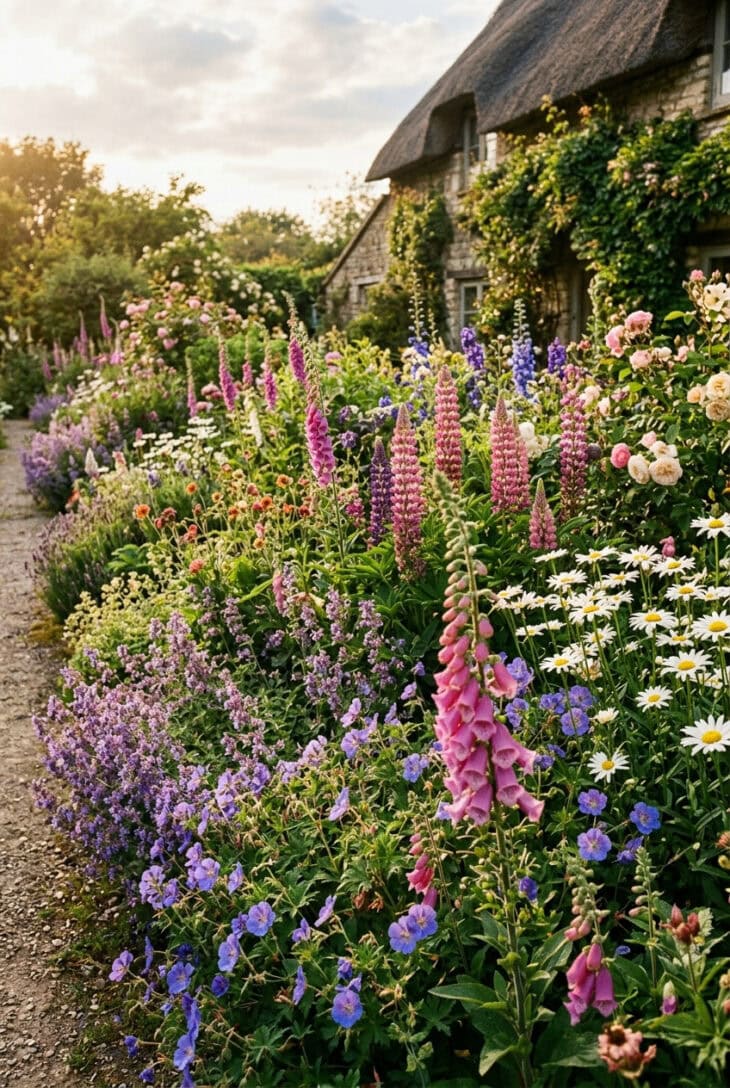
What you see A border packed to bursting in cheerful disorder: spires of pink and purple foxgloves, sprawling hardy geraniums, hazy blue catmint, upright lupins and white shasta daisies all elbowing for room with no bare soil in sight. It looks artless, though it is anything but.
Why it works The cottage style leans on generous, self-seeding perennials that mingle freely, so the planting looks abundant and relaxed while quietly filling every gap that weeds would otherwise take. Letting plants seed around and lean on each other gives that romantic, lived-in fullness that a tidy scheme never quite achieves.
How to get it Plant close and layered, mixing foxglove (Digitalis purpurea), hardy geranium, catmint (Nepeta mussinii), lupin and shasta daisy so heights overlap. Let a few reliable self-seeders drop their seed rather than deadheading everything, and edit out the seedlings you do not want in spring. Keep it from collapsing into chaos with a little discreet staking, and lift and split the vigorous clumps every few years. For more of this look, see our full run of cottage garden ideas.
06. Hot Border of Fiery Perennials
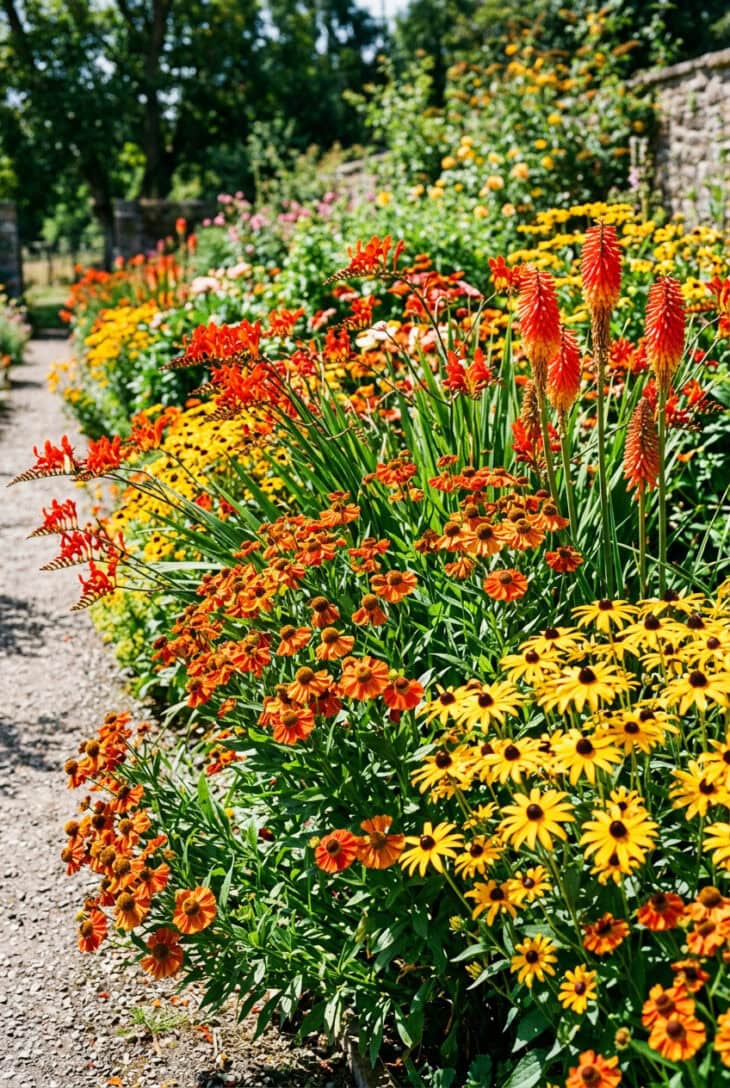
What you see A border turned up to full volume: arching sprays of red crocosmia, torch-like red hot pokers, burnt-orange heleniums and golden rudbeckia blazing together in the midday sun. The whole bed feels warm to look at.
Why it works A limited palette of reds, oranges and yellows reads as deliberate and energetic where a scattering of every color can look busy. Hot shades advance toward the eye and hold their own in bright sun that would bleach out pastels, so the border stays vivid even at noon.
How to get it Site it in the sunniest spot and combine crocosmia (Crocosmia ‘Lucifer’), red hot poker (Kniphofia), helenium and rudbeckia for a long, layered run of hot color. Repeat two or three of these through the bed so the eye travels, and add a little deep bronze or purple foliage to stop the brightness tipping into gaudy. Deadhead through summer to keep it going, and divide crocosmia corms when the clumps grow congested.
07. Cool Blue and White Border
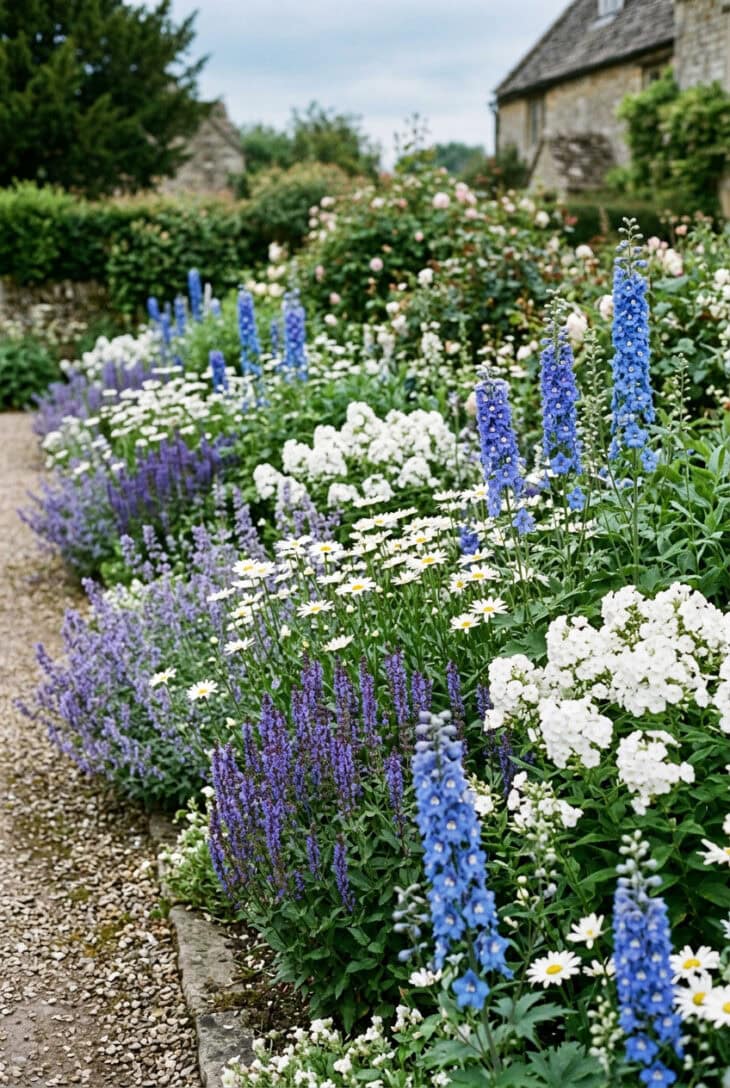
What you see A calm, elegant border in a strict palette of blue and white: tall blue delphiniums and spikes of salvia threaded with hazy catmint, lit up by white shasta daisies and cool white phlox. It feels composed and quiet, a border that soothes rather than shouts.
Why it works Blue and white is the most restful of color schemes, and the white flowers lift the blues and keep the scheme from reading heavy or dim. Cool colors recede, which makes the border feel deeper and more spacious, and the whole thing glows at dusk when hot colors would vanish.
How to get it Build the blues from delphinium, salvia (Salvia), catmint and hardy geranium, then weave in white with shasta daisy, white phlox and a few white foxgloves. Keep the palette disciplined, resisting the urge to add pink or yellow, and let silver foliage such as artemisia stand in as a neutral. Site it where you sit in the evening so you catch the way the whites glow as the light fades.
08. Pollinator Perennial Patch
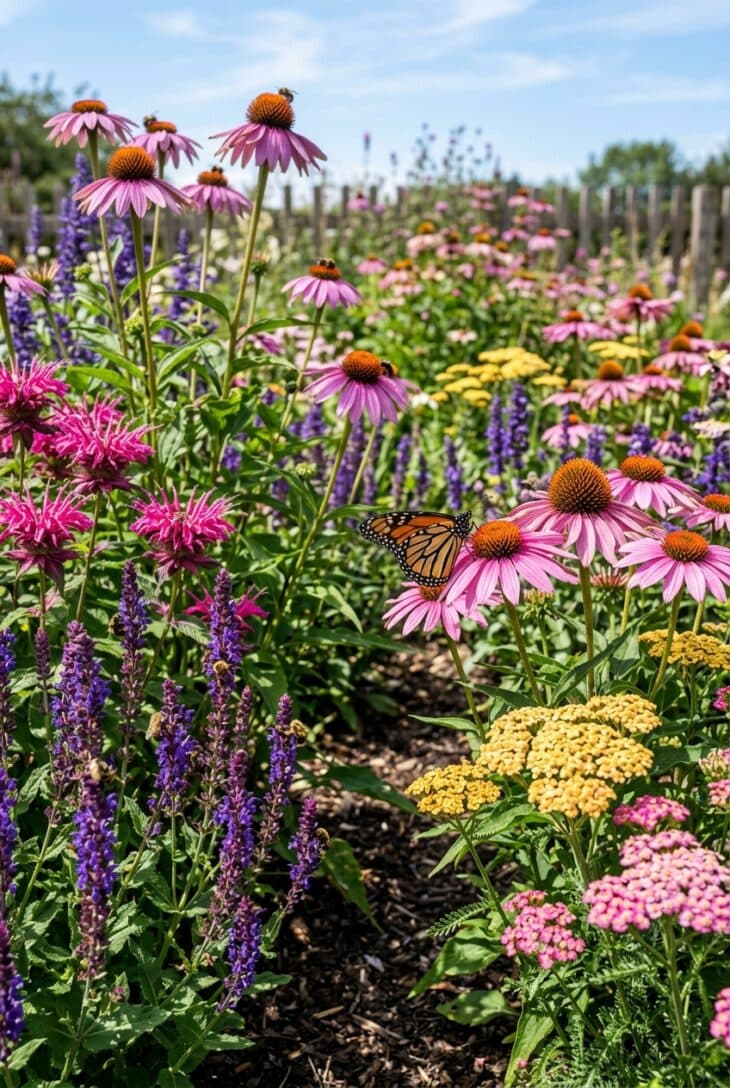
What you see A sun-drenched patch alive with movement: coneflowers, bee balm, salvia and flat-topped yarrow in purple, pink and gold, bees working every bloom and a butterfly resting open-winged in the middle. The planting is as busy with insects as it is with flower.
Why it works Perennials give pollinators a dependable, come-back-every-year food source, and a patch of nectar-rich single flowers becomes a genuine feeding station through the whole season. Choosing plants that bloom in succession means there is always something in flower, so bees and butterflies have reason to keep visiting.
How to get it Plant single-flowered, nectar-rich perennials in bold groups: coneflower, bee balm (Monarda), salvia, yarrow (Achillea millefolium) and catmint, avoiding double forms whose pollen is hard to reach. Aim for a relay of bloom from spring through autumn, skip all pesticides, and leave the seedheads standing to feed birds and shelter insects over winter. It sits at the heart of any good pollinator garden.
09. Drought-Tolerant Gravel Perennials
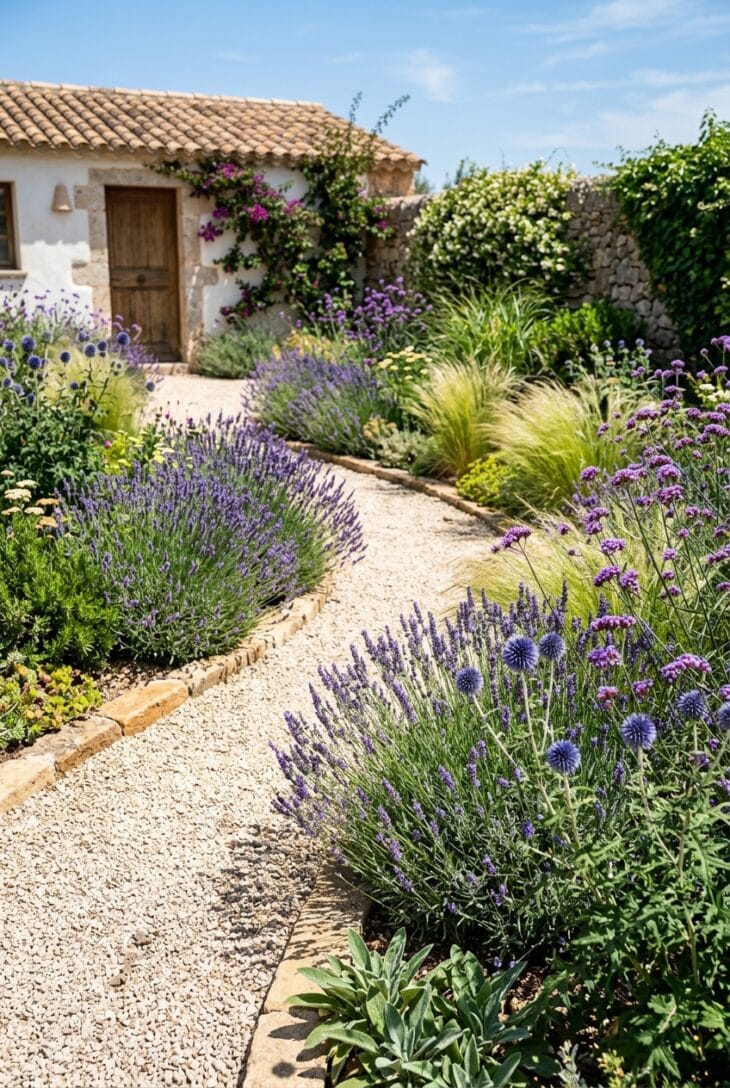
What you see Drought-proof perennials rising from a sheet of pale gravel: silvery lavender, steel-blue globe thistle, airy purple verbena and low grasses, all baking happily in full sun. The look is dry, sunlit and unmistakably Mediterranean.
Why it works A gravel mulch keeps roots cool, suppresses weeds and drains sharply, which is exactly what sun-loving, drought-tolerant perennials need to thrive on little water. Once established these plants barely need irrigating, making a gravel bed one of the most water-wise, low-effort ways to fill a hot spot.
How to get it Clear the ground, improve drainage with grit if your soil is heavy, and plant through a 2 to 3in (5 to 8cm) mulch of gravel. Choose sun-lovers that cope with drought: lavender (Lavandula angustifolia), globe thistle (Echinops), verbena (Verbena bonariensis), euphorbia and ornamental grasses. Water only while they root in, then leave them to it, and there are plenty more drought-tolerant garden ideas built on the same principle.
10. Perennial Ground Cover Carpet
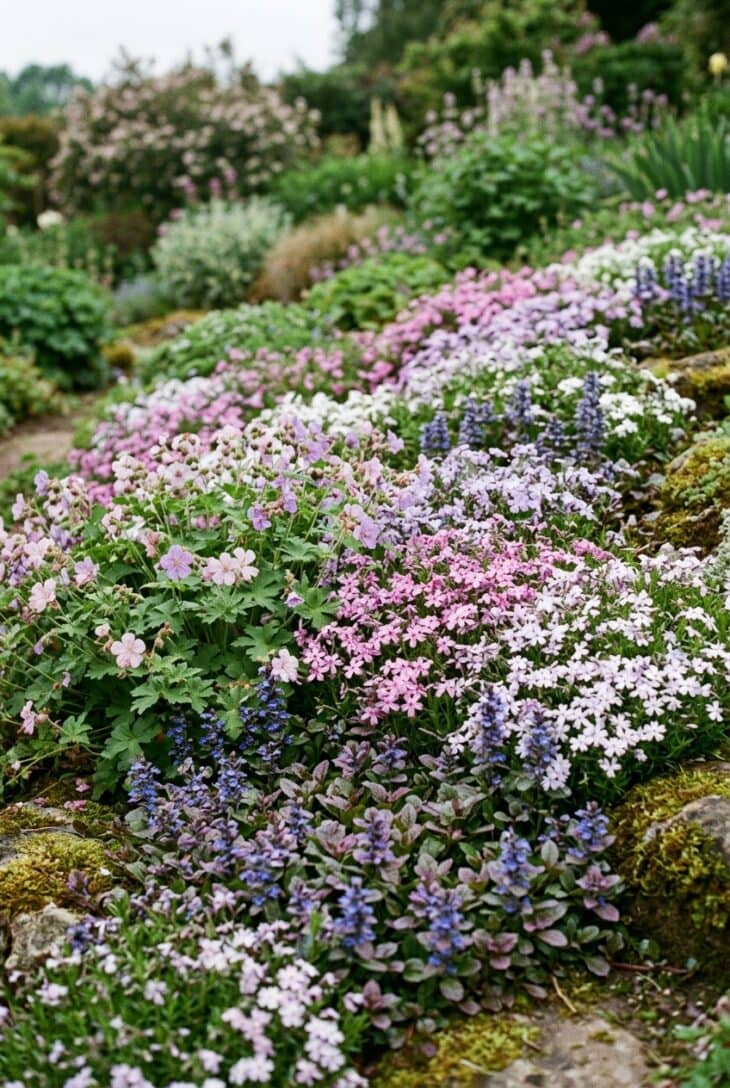
What you see A low, spreading carpet of ground-cover perennials knitting into one dense flowering mat: sheets of creeping phlox, sprawling hardy geranium and dark ajuga smothering a gentle slope so no soil shows at all. It flows across the ground like a planted blanket.
Why it works Ground-cover perennials spread to fill space, which crowds out weeds, holds soil on a slope and clothes the awkward gaps under shrubs and along paths. Once they join up they need almost no maintenance, turning bare, weed-prone ground into a self-sustaining green surface.
How to get it Match the plant to the spot: creeping phlox (Phlox subulata) for a sunny bank, hardy geranium for sun or part shade, and ajuga or epimedium for shade. Clear weeds thoroughly first and mulch between plants until they meet, since a patchy start lets weeds back in. Space them for their spread, water through the first summer, and shear the vigorous ones after flowering to keep them tidy. Ground cover is one of the smartest low-maintenance garden ideas going.
11. Peony Bed
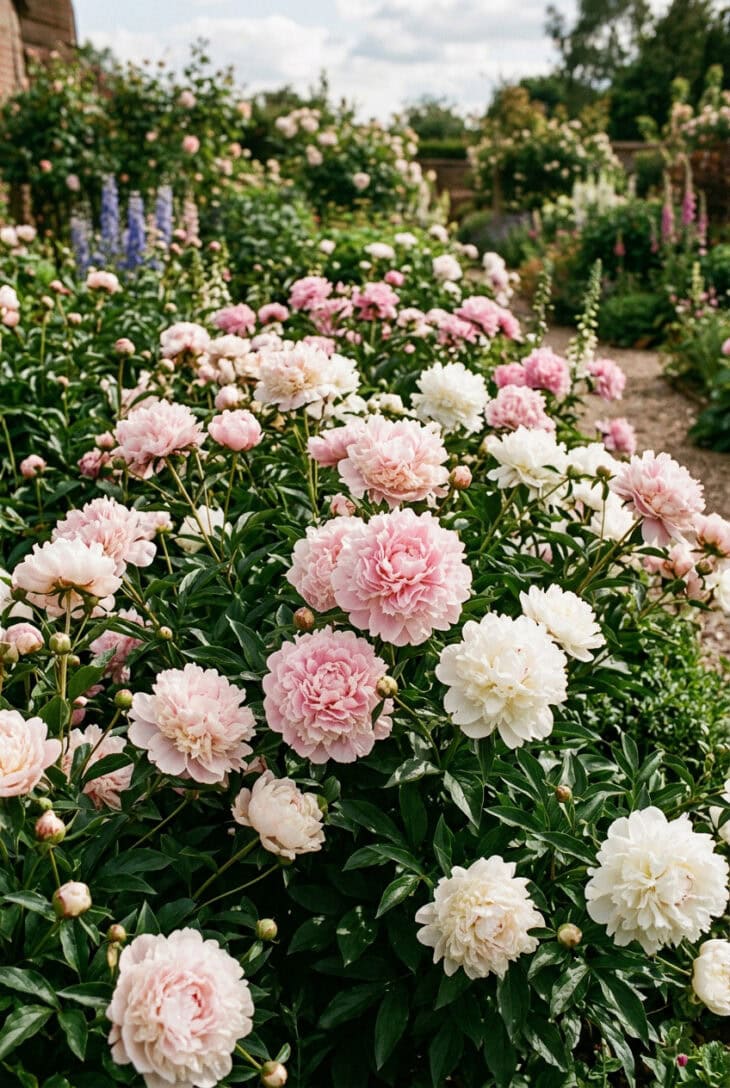
What you see A bed of peonies at their peak, huge double flowers in soft pink and cream nodding on strong stems above glossy divided leaves, so full and heavy they seem almost too lavish to be real. For a few weeks in early summer they are the most opulent thing in the garden.
Why it works Peonies are famously long-lived, often outlasting the gardener who plants them and flowering reliably for decades from a single crown. Their brief but spectacular bloom, followed by handsome foliage that stays neat all summer, earns them a permanent place at the front of a border.
How to get it Plant peony (Paeonia) crowns in autumn in rich, well-drained soil in full sun, and set them shallow: the buds must sit no more than 2in (5cm) below the surface or they will not flower. Put grow-through supports in place early, because the heavy blooms flop after rain, and resist moving established plants, which sulk for a year or two after any disturbance. Feed in spring, deadhead after flowering, and then leave them entirely alone.
12. Daylily Bank

What you see A sunny bank flooded with daylilies, trumpet flowers in gold, apricot and deep wine held on tall scapes above fountains of strappy green leaves, running down the slope like a river of color. Each bloom lasts a day, but there are so many buds the show never pauses.
Why it works Daylilies (Hemerocallis) are among the most indestructible perennials, coping with poor soil, heat, drought and neglect while still flowering for weeks. Their dense, spreading clumps knit banks together and smother weeds, which makes them ideal for covering a large or difficult sunny slope.
How to get it Plant daylilies 18 to 24in (45 to 60cm) apart in sun to light shade in almost any soil that is not waterlogged. Choose repeat-flowering or reblooming varieties for the longest season, and mix a few colors for a tapestry effect down the bank. Pull off the spent blooms to keep them tidy, cut back tired foliage in late summer, and divide the clumps every few years to keep them flowering freely. They are a fine choice for a tricky sloped garden.
13. Late-Season Sedum Border
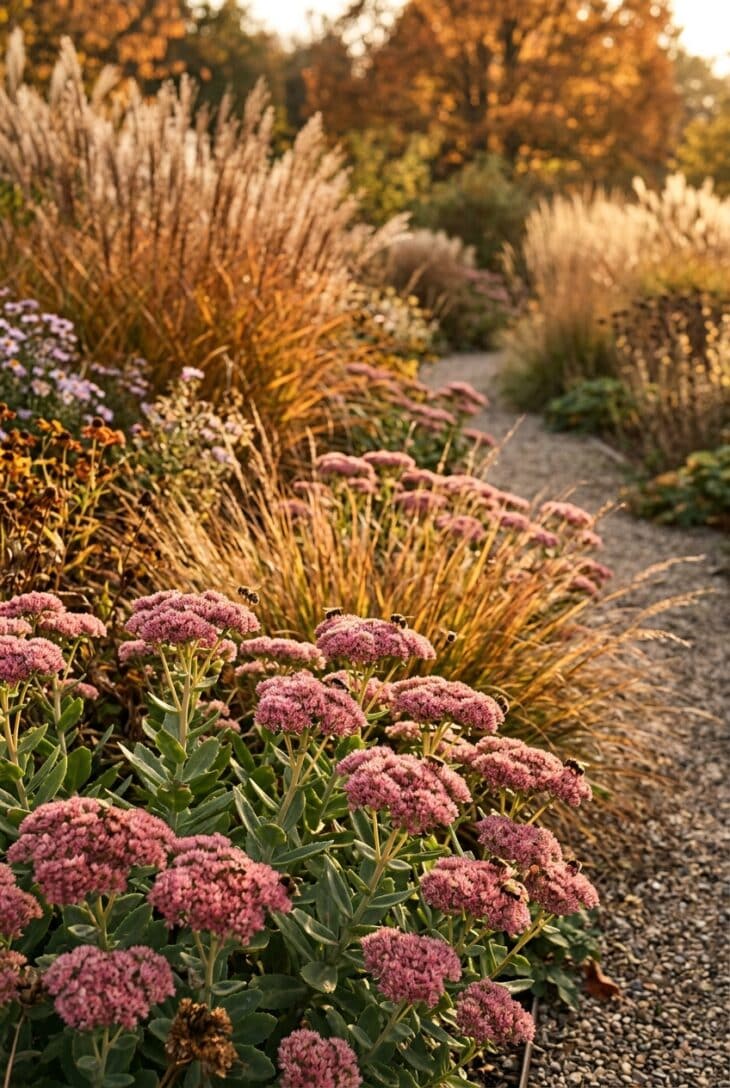
What you see An autumn border carried by sedum, broad flat heads of rose-pink flower sitting on fleshy grey-green stems, glowing in low light with bees still working them and bronzed grasses behind. It is the border’s last great flush before winter.
Why it works Sedum saves its show for late summer and autumn, exactly when many perennials are fading, so it extends the season when the border most needs it. Its plate-like heads are a magnet for late bees and butterflies, then dry to rich russet and stand right through winter, catching frost and snow.
How to get it Plant upright sedum (Sedum sieboldii and similar) in full sun and free-draining soil, spacing plants 15 to 18in (38 to 45cm) apart in a good group. On rich soil the stems flop open in the middle, so keep them lean, or pinch the shoots back by half in early summer to make them bushier and self-supporting. Leave the dried heads standing over winter for structure, then cut them down in early spring before the new rosettes push up.
14. Fern and Woodland Perennials
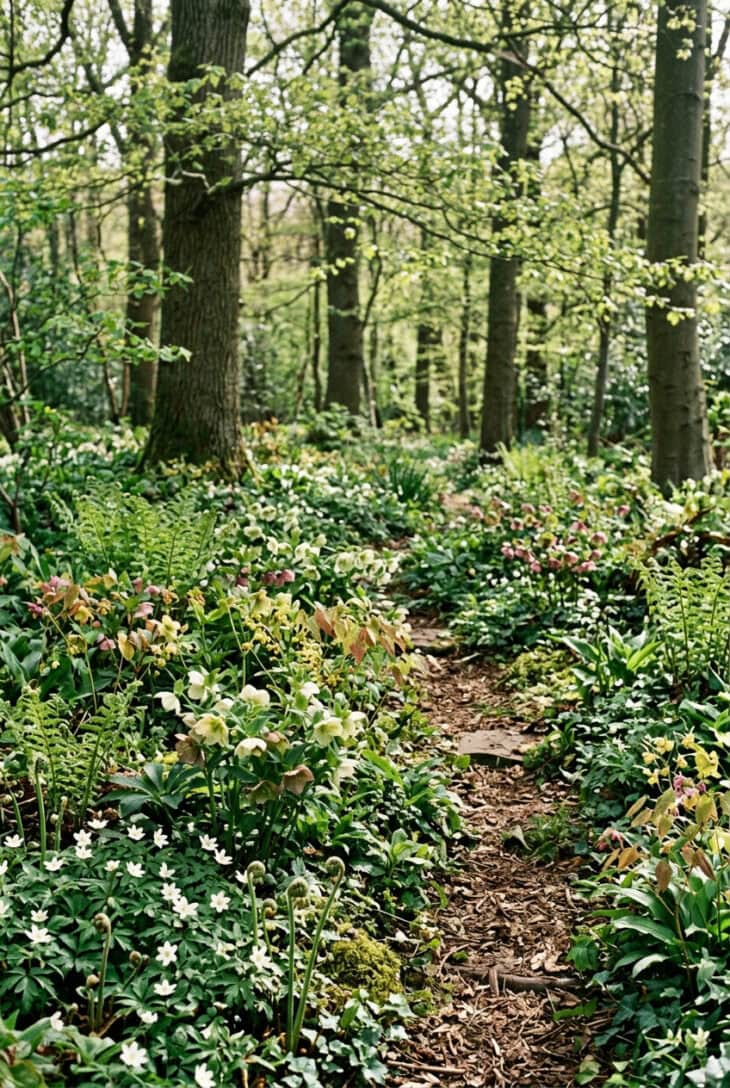
What you see A woodland floor recreated under the trees: fresh ferns unfurling their croziers, low epimedium, nodding hellebores and drifts of white wood anemone carpeting the cool ground beneath a light canopy. Everything is green, quiet and shade-dappled.
Why it works Woodland perennials evolved for exactly these conditions, flowering early before the canopy closes over and then settling into a long season of handsome foliage. Layering them under trees turns the dry, shady ground that defeats most plants into a naturalistic tapestry that mostly looks after itself.
How to get it Enrich the soil with leaf mould to mimic a forest floor, then plant astilbe (Astilbe), hardy ferns, epimedium, hellebore and wood anemone in natural-looking drifts. Water well through the first year while roots establish in competition with tree roots, and mulch each autumn with more leaf mould. Once settled it needs little beyond a tidy-up, and it makes one of the calmest shade garden corners you can grow.
15. Salvia and Catmint Ribbon
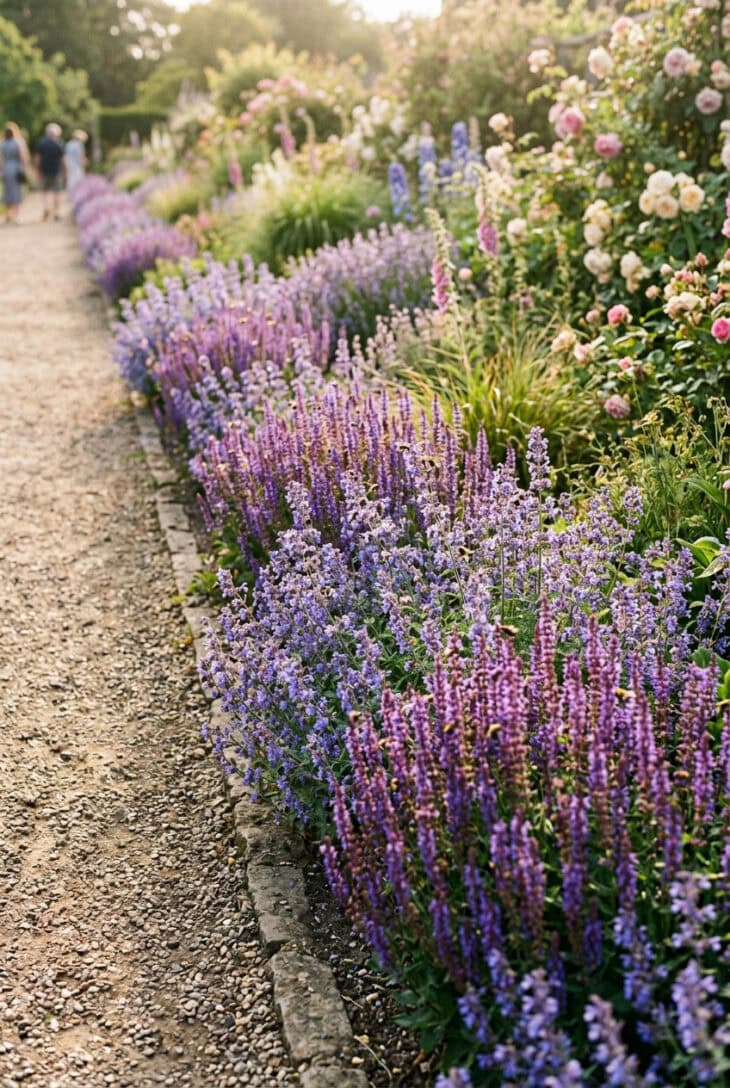
What you see A long ribbon of purple salvia and blue catmint running the length of a path, a low haze of blue-purple spikes alive with bees, the same two plants repeated over and over into one continuous drift. It reads as a single soft line drawn through the garden.
Why it works Repeating just two well-matched perennials in a long band gives a border rhythm and calm, an antidote to the busyness of a mixed bed. Salvia and catmint bloom for months, thrive in the same hot, dry conditions, and both respond to a mid-season cut by flowering all over again.
How to get it Plant hardy salvia (Salvia nemorosa) and catmint (Nepeta mussinii) alternately in a continuous band along a sunny path or the front of a border, about 15in (38cm) apart. Give them full sun and free-draining soil, and shear the whole ribbon back hard when the first flush fades to trigger a strong second flowering. Both are among the best plants for softening the hard edge of garden path ideas.
16. Perennial Cutting Border
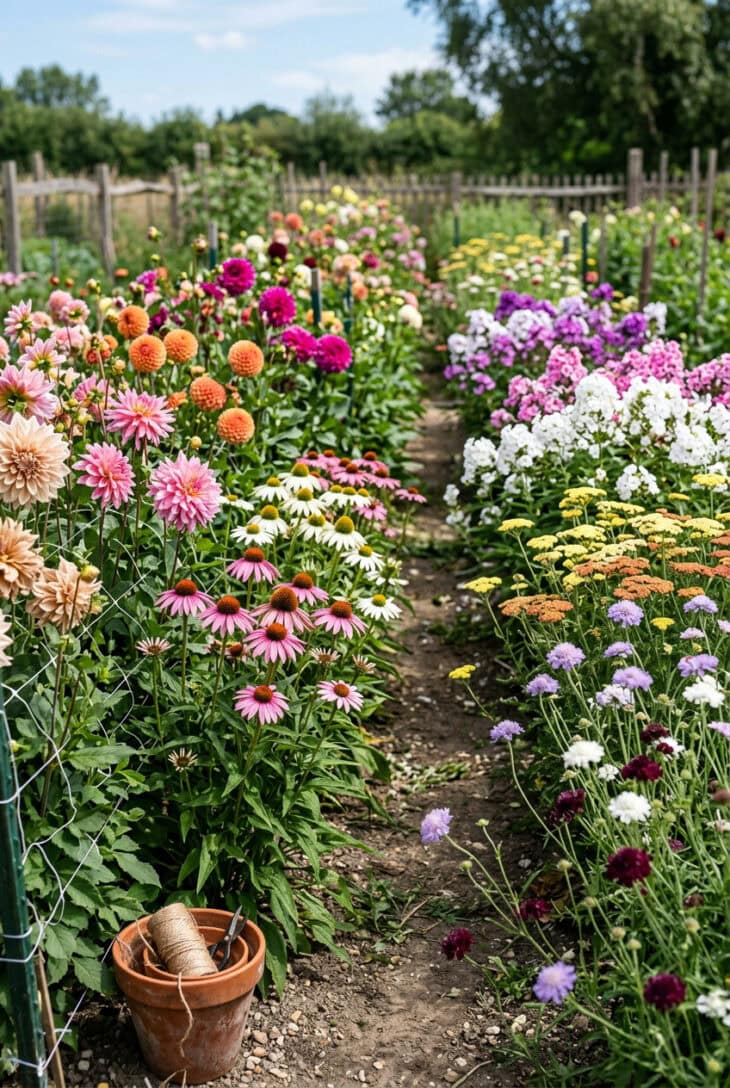
What you see A working border grown for the vase, rows of coneflower, phlox, yarrow and scabious in a jumble of colors and shapes, some stems already cut and others waiting. It has the honest, abundant look of a garden that earns its keep indoors as well as out.
Why it works A dedicated cutting patch of perennials lets you fill the house with flowers without stripping the display beds, and because perennials come back each year it costs almost nothing to keep going. Growing in rows makes picking, staking and feeding straightforward, so you cut freely knowing more buds are on the way.
How to get it Set aside a sunny strip and plant reliable, long-stemmed cutting perennials in rows: coneflower, phlox, yarrow (Achillea millefolium), scabious and tickseed (Coreopsis verticillata). Cut in the cool of the morning, taking long stems just above a leaf joint, and the more you pick the more most of them produce. Feed and water through summer to keep the stems long and strong, and net or stake the tall growers so wind does not spoil them.
17. Evergreen Perennial Structure
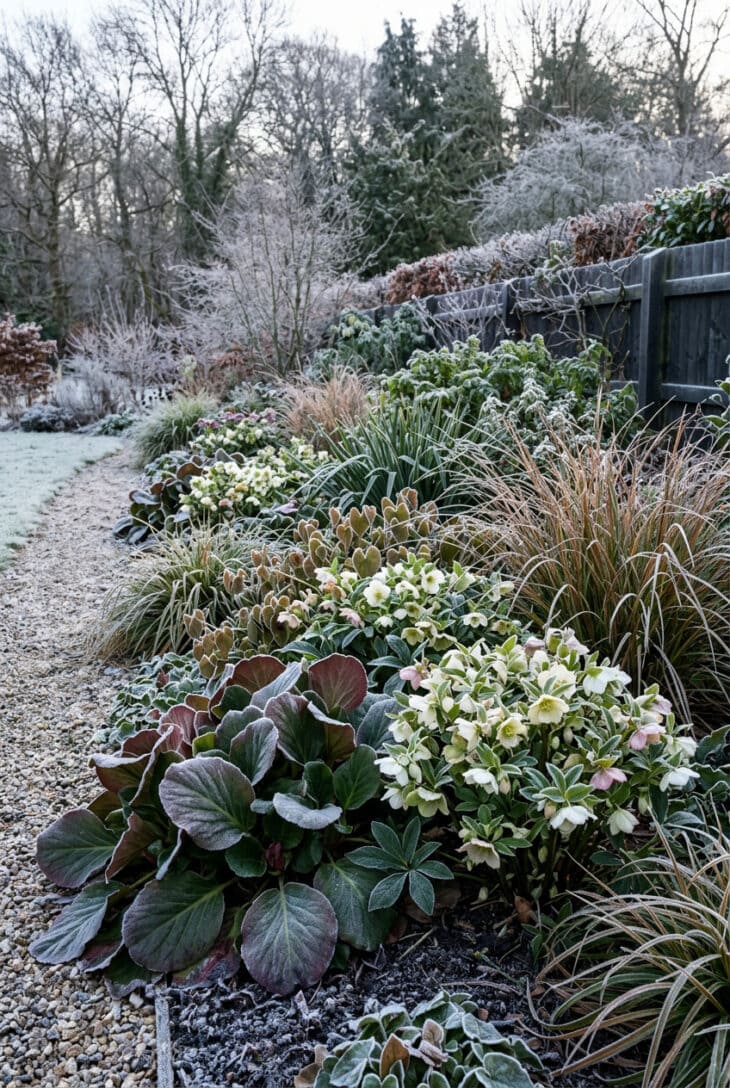
What you see A border still clothed in the depths of winter: bold clumps of leathery bergenia, evergreen hellebore, glossy epimedium and tufts of evergreen grass holding their green under a dusting of frost. Where a deciduous bed would be bare earth, this one keeps its shape.
Why it works Most perennials vanish underground in winter, so a backbone of evergreen ones keeps the garden furnished through the leanest months. Their solid foliage gives the border structure and a foil for flowers in summer, then carries the whole scene when everything around them has died back.
How to get it Thread evergreen perennials through the bed rather than lumping them together: bergenia (Bergenia), hellebore (Helleborus), epimedium, evergreen ferns and sedges such as Carex. Place them where they will read in winter, near the house, along a path or beside a seat, so the structure shows when you most need it. Trim tired leaves in early spring before the flowers come, and let them anchor the border year-round for genuine winter garden interest.
18. Ornamental Grass Feature
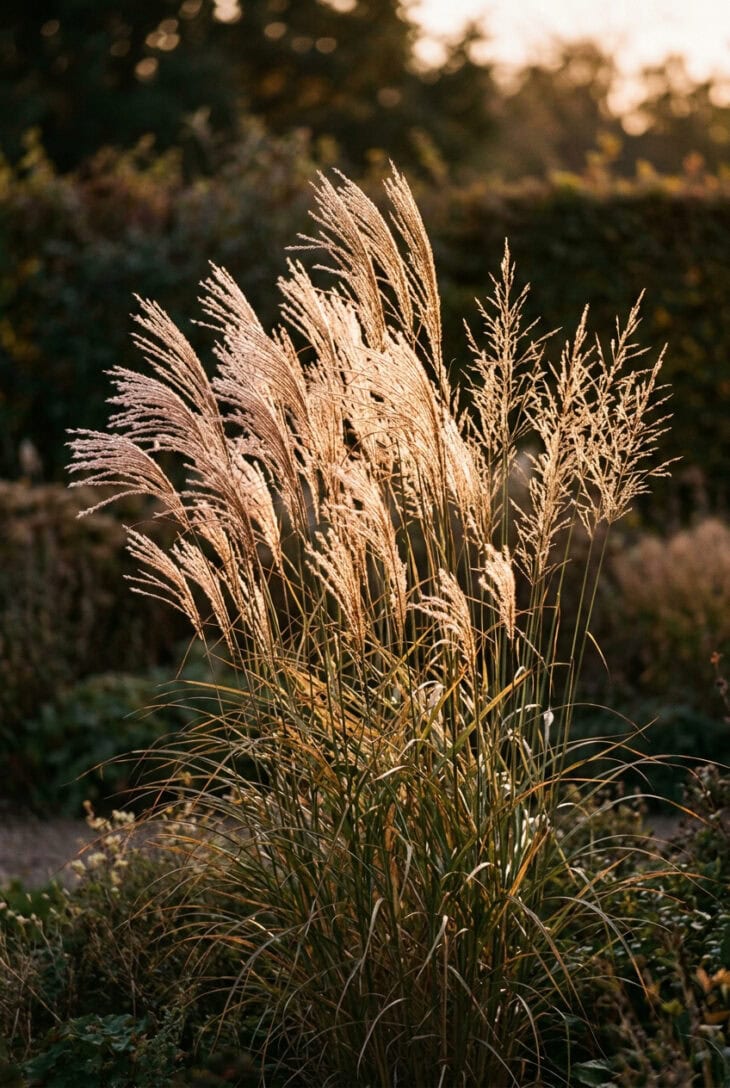
What you see A bold stand of tall grasses used as a feature in its own right, feathery miscanthus and molinia plumes backlit to a glow, swaying and whispering in the wind against a plain backdrop. It moves and shimmers where the rest of the garden stands still.
Why it works A single large grass, or a group of one kind, brings movement, sound and translucency that no flowering plant can match, and it looks its best from midsummer right through winter. Set against an open sky or a dark hedge it becomes a living sculpture, catching every breeze and every low sun.
How to get it Choose a clump-forming, non-invasive grass sized to the spot: miscanthus (Miscanthus sinensis) or moor grass (Molinia) for height, feather reed grass (Calamagrostis) for a narrow upright accent. Plant it where it will be backlit by morning or evening sun, and give it room to be seen in full. Leave the plumes standing all winter for structure, then cut deciduous grasses to the ground in late winter just before growth resumes.
19. Hardy Geranium Underplanting
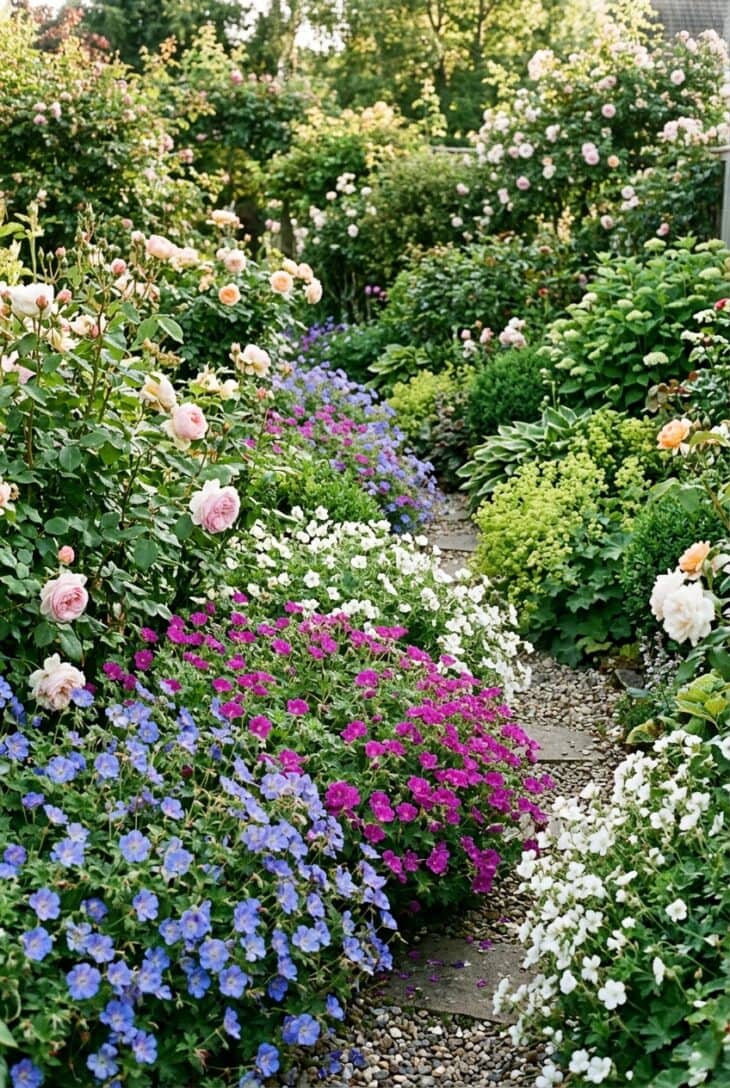
What you see A froth of hardy geraniums weaving through the base of the border, mounds of neatly cut foliage smothered in blue, magenta and white flowers, filling every gap between the roses and shrubs. It is the quiet connective tissue that makes the whole bed look full.
Why it works Hardy geraniums (not the tender bedding pelargoniums) are among the most useful perennials of all, flowering for months, thriving in sun or shade, and spreading to knit a border together and shade out weeds. They ask almost nothing and give a very long season, which is why they turn up in nearly every well-planted bed.
How to get it Use them as the underplanting that ties a border together, tucking them between shrubs, roses and taller perennials where they will scramble to fill the gaps. Choose ‘Rozanne’ for the longest bloom, ‘Ann Folkard’ to weave, or geranium (Geranium macrorrhizum) for dry shade. When the first flush finishes and the plant looks tired, shear the whole thing back hard and water it, and it will regrow fresh foliage and flower again within weeks.
20. Cottage Spires of Lupins and Delphiniums
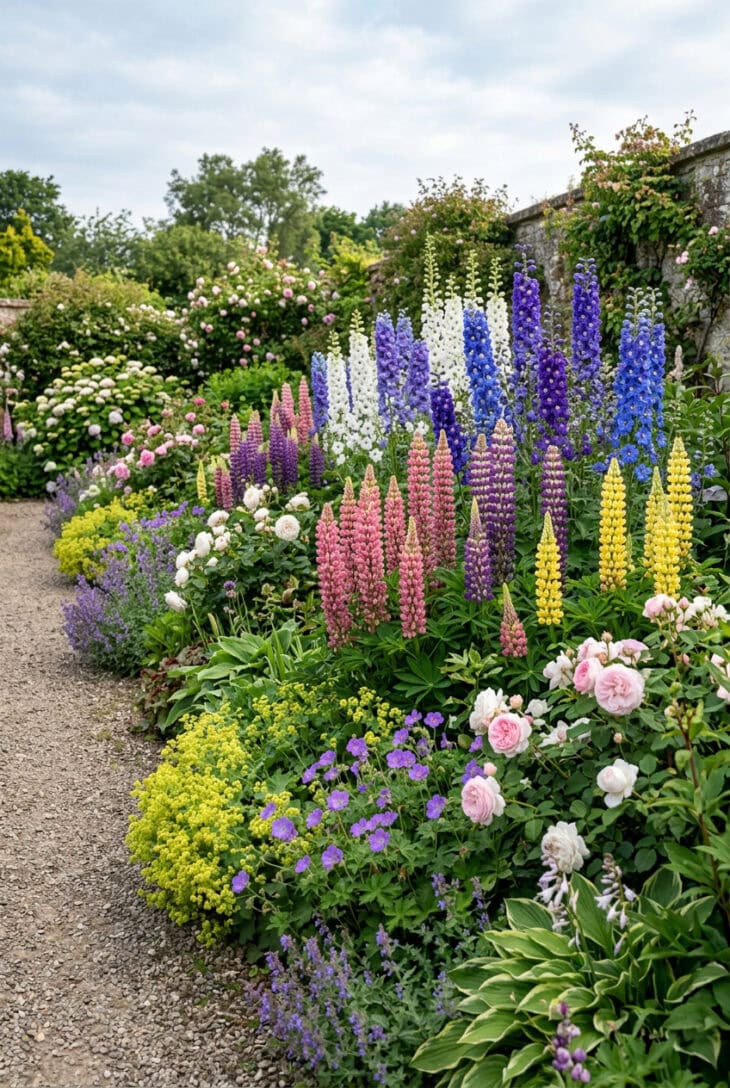
What you see A border shot through with tall flower spires, lupins in pink, purple and butter-yellow and towering blue delphiniums rising like exclamation marks above the rounded shapes below. The verticals lift the eye and give the early-summer bed its drama.
Why it works Spiky, upright perennials are the perfect counterpoint to all the mounds and daisies in a border, adding height and rhythm and stopping the planting reading flat. Lupins and delphiniums are the great cottage-garden verticals, delivering a spectacular early-summer show before many other perennials get going.
How to get it Plant lupins (Lupinus) and delphiniums (Delphinium) in groups through the middle and back of the border in rich, well-drained soil and full sun. Stake the delphiniums early, because the tall spikes snap in wind and rain, and protect the fresh spring shoots from slugs, which adore both. Cut the faded spikes right down and you may be rewarded with a smaller second flush later in the season.
21. Low Perennial Edging Ribbon
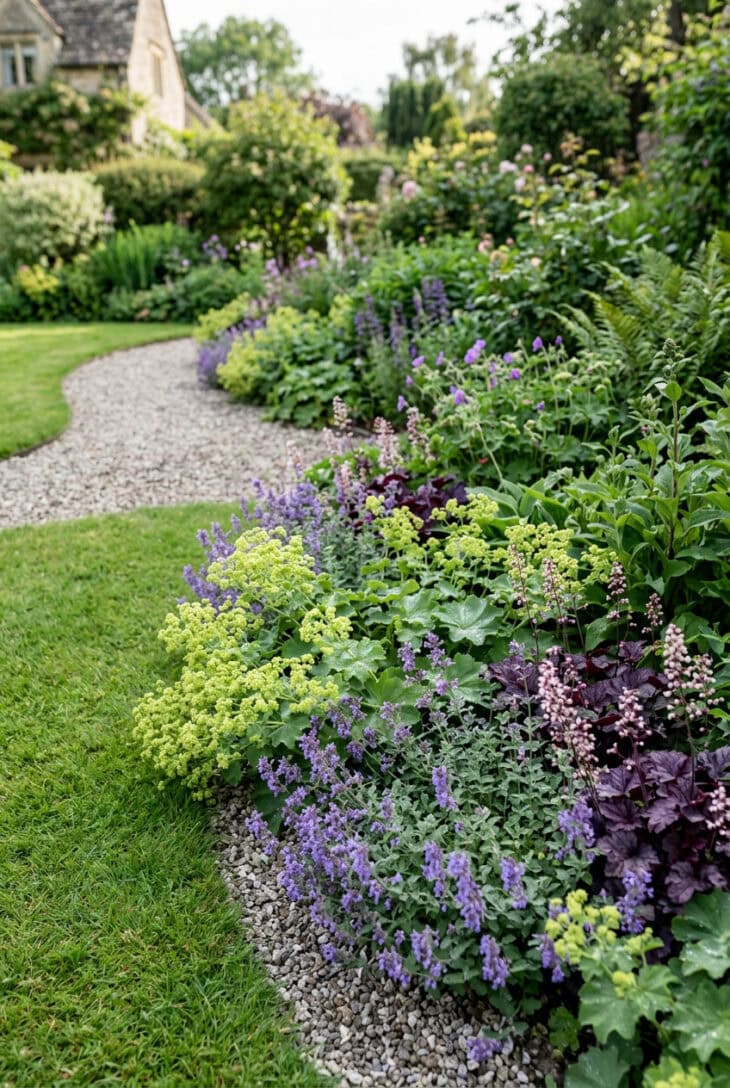
What you see A soft, low ribbon running along the very front of the border: lime-flowered lady’s mantle, mounded catmint and ruffled heuchera spilling gently over the edge onto the path or lawn. It frames the whole bed and hides the bare ankles of the taller plants behind.
Why it works A consistent low edging of one or two perennials gives a border a finished, deliberate line and softens the join between bed and lawn. Repeating the same plant along the front unifies a mixed planting behind it, much as a frame settles a busy picture.
How to get it Choose neat, front-of-border perennials that tolerate a clip: lady’s mantle (Alchemilla mollis), low catmint (Nepeta mussinii), coral bells (Heuchera sanguinea) or dwarf hardy geranium. Plant them in a continuous run 12in (30cm) apart so they meet into a solid ribbon, and shear alchemilla and catmint back after flowering to keep them fresh. It is a living take on classic garden edging that softens the line rather than drawing a hard one.
22. Rain Garden Perennials
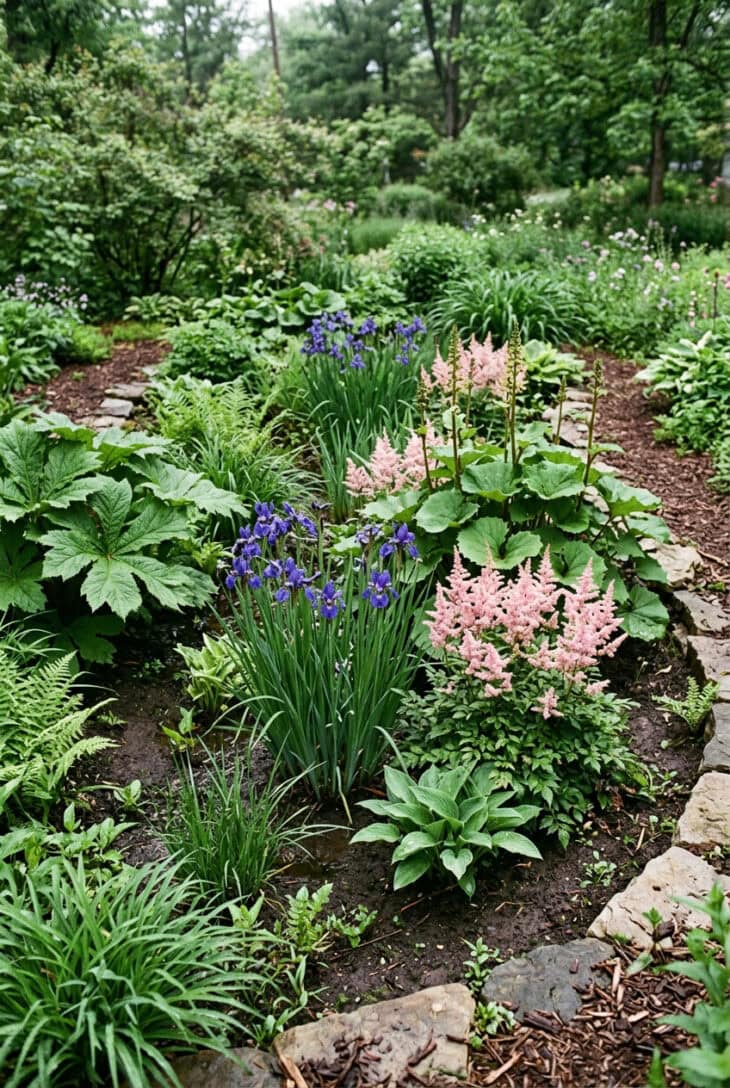
What you see A shallow, damp hollow turned into a lush planting: blue flag iris standing in the low ground, plumes of pink astilbe, big-leaved ligularia and bold rodgersia all reveling in the moisture. Where water used to pool and sit, there is now a leafy, thriving bed.
Why it works A rain garden puts a soggy low spot to work, planting it with perennials that actually want wet feet so runoff is soaked up and slowly released instead of standing stagnant. It solves a drainage headache and creates a distinctive, moisture-loving planting you could not grow anywhere else in the garden.
How to get it Direct downpipe or surface runoff into a shallow, saucer-shaped basin and plant it with moisture-lovers: astilbe (Astilbe), iris (Iris ensata), ligularia, rodgersia and hardy geranium around the drier rim. Choose plants that tolerate both a periodic flood and a dry spell between storms, and mulch to lock in moisture. Once established it needs little care, and it is one of the smartest ways to plant a spot that stays wet.
23. Silver and Grey Foliage Border
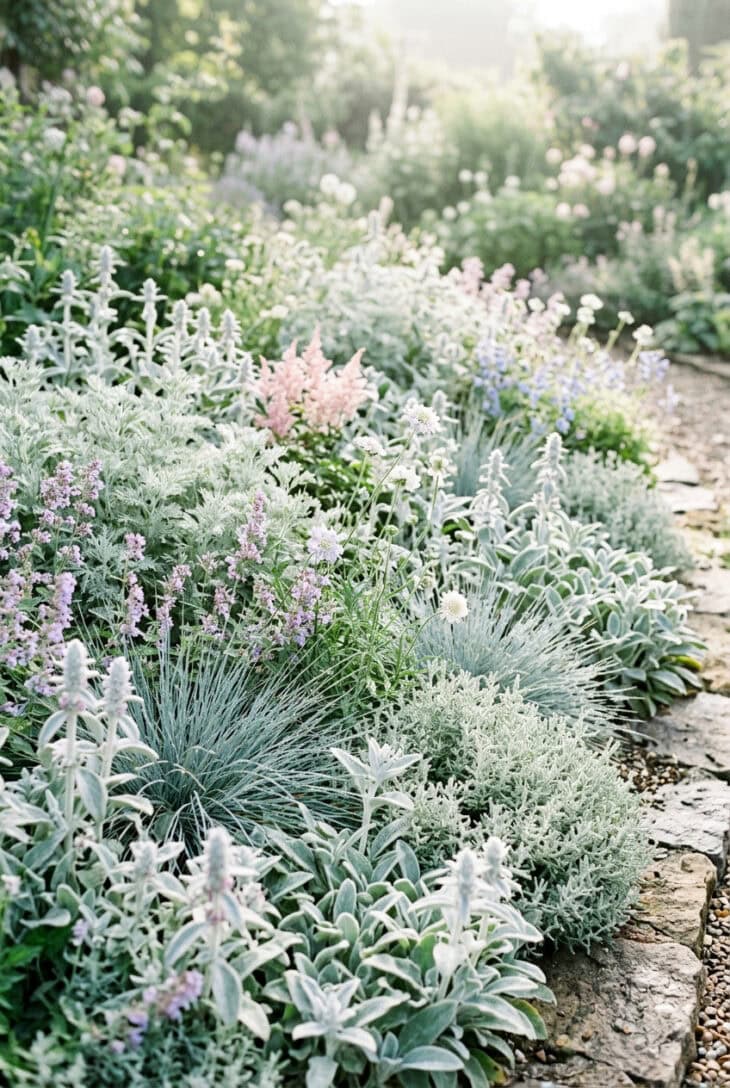
What you see A border that shimmers rather than shouts, built from silver and grey foliage: filigree artemisia, felted lamb’s ears, mounded santolina and blue-grey grasses, lit here and there by a soft pastel flower. In bright sun the whole bed seems to glow with a cool, silvery light.
Why it works Silver-leaved perennials bring a luminous, restful quality and act as a peacemaker between colors that would otherwise clash. Most have felted or waxy foliage evolved to cope with heat and drought, so a silver border is as tough and water-wise as it is beautiful, and it glows at dusk long after other colors have gone.
How to get it Plant silver foliage perennials in full sun and sharply drained soil, since most rot in winter wet: artemisia (Artemisia), lamb’s ears (Stachys byzantina), santolina and blue fescue. Let the foliage carry the bed and use flowers sparingly, in soft pinks, whites and mauves. Cut back untidy growth in spring rather than autumn to protect the crowns over winter, and add grit to heavy soil before planting.
24. Hellebore Winter Bed
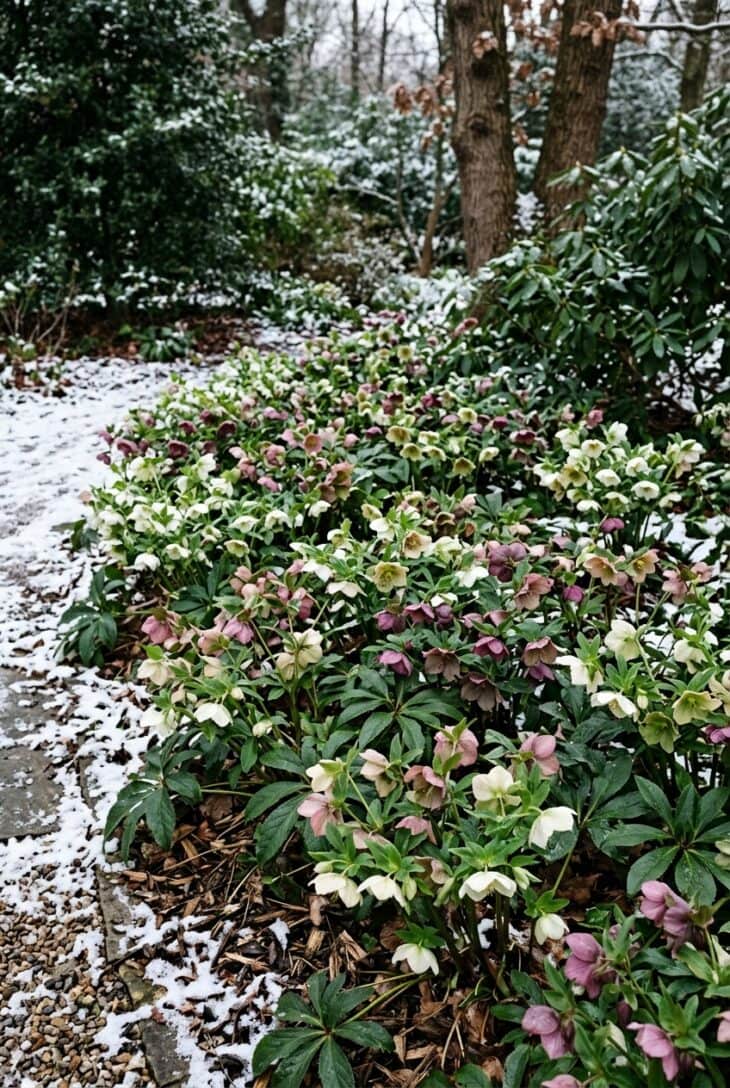
What you see A shaded bed flowering in the dead of winter, hellebores nodding their cup-shaped blooms in white, plum, dusky pink and green above dark evergreen leaves, with a rim of snow still lying at the edges. It is a border in full flower when almost nothing else dares.
Why it works Hellebores bloom from midwinter into spring, filling the bleakest weeks of the year with real flower when the garden most lacks it. They are shade-tolerant, evergreen and long-lived, and once planted they seed gently around to build up a colony that flowers a little more generously each year.
How to get it Plant hellebore (Helleborus x hybridus) in humus-rich soil in dappled or part shade, ideally on a slight slope or raised spot where you can look up into the nodding flowers. Cut off the old, tatty leaves in late winter so the blooms show clearly and to reduce leaf spot disease. Mulch each autumn, leave them undisturbed to clump up, and site them near a path or door for full winter garden impact.
25. Alpine Perennial Rockery
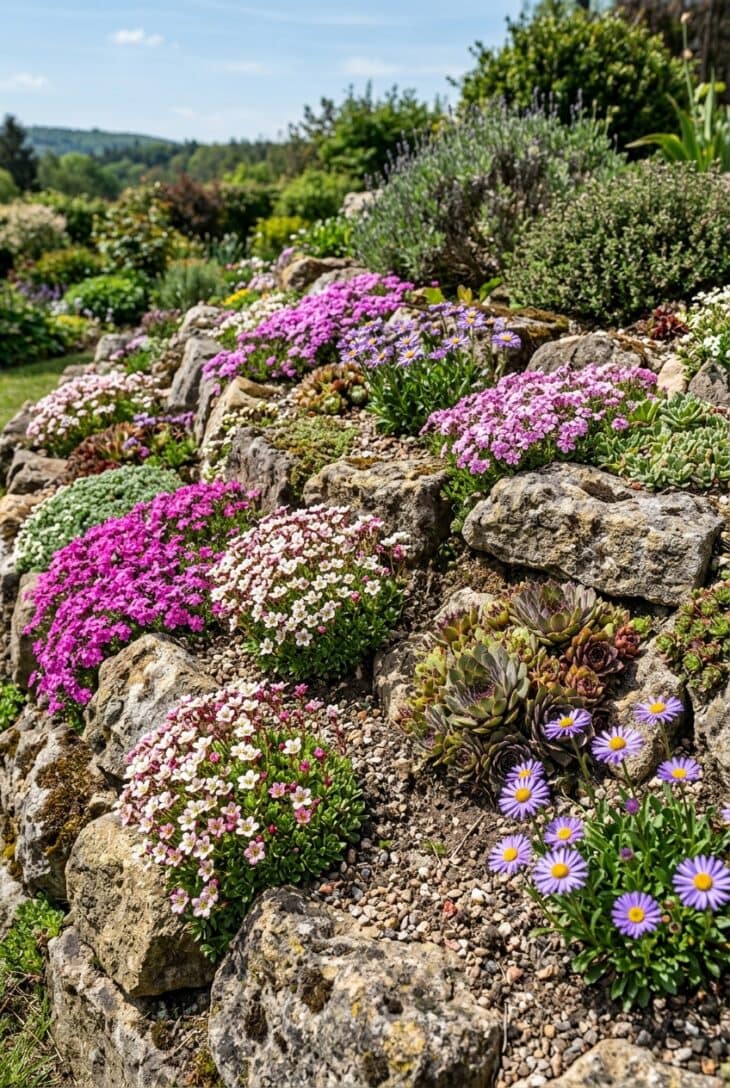
What you see A sunny raised rockery studded with tiny alpine perennials, cushions of saxifrage, mats of creeping phlox, starry alpine aster and rosettes of sempervivum tucked between weathered stones. Everything is small, jewel-like and perfectly at home among the rock.
Why it works Alpines are compact, tough perennials adapted to lean, fast-draining mountain soils, so a rockery gives them the sharp drainage and open, sunny site they need. Raised among rocks they get the free-draining root run that keeps them alive, and their slow, neat growth suits a small space where bigger perennials would overwhelm.
How to get it Build a raised bed or bank of gritty, free-draining soil topped with a stone mulch, and set weathered rocks partly buried so they look natural. Plant compact alpines between them: saxifrage, creeping phlox (Phlox subulata), alpine aster (Aster alpinus) and houseleeks. Keep the crowns dry with a gravel collar to prevent rot, weed by hand, and it makes an ideal, low-water rock garden in full sun.
26. Perennial Container Display
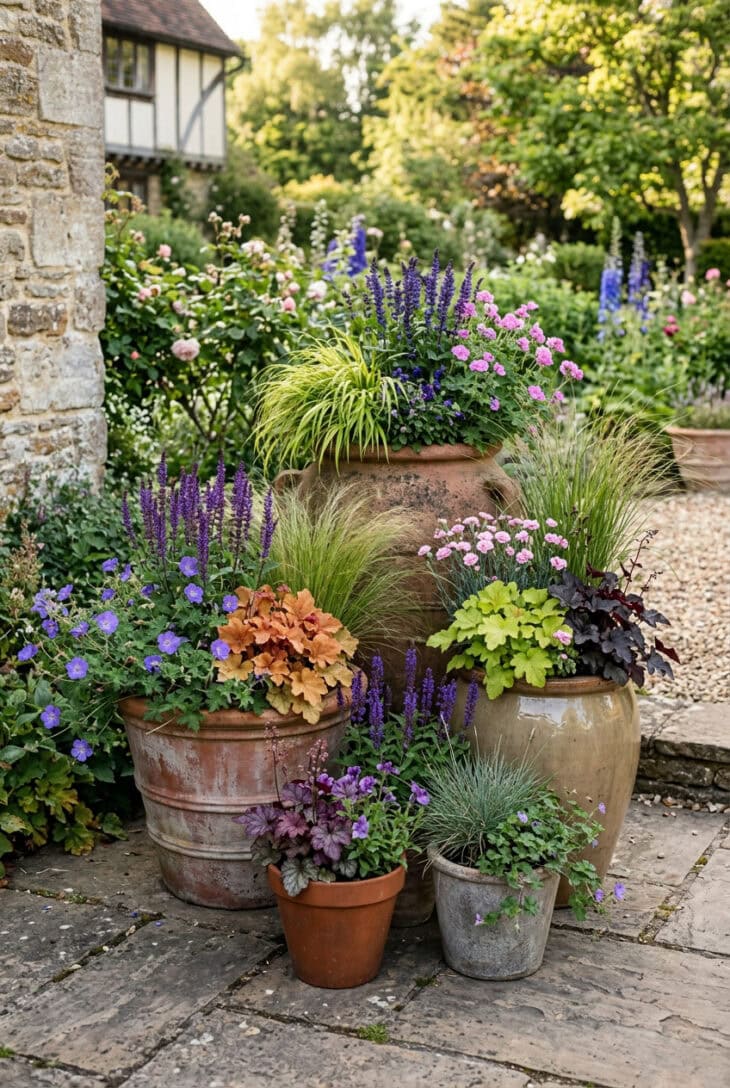
What you see A cluster of large pots on the patio planted not with fleeting bedding but with perennials: ruffled heuchera, arching grasses, purple salvia and mounding hardy geranium combined for a display that lasts. The grouping has the depth and permanence of a small border in containers.
Why it works Growing perennials in pots gives you a lasting, come-back-every-year display without replanting each season, and lets you garden on a patio, balcony or hard surface with no open ground. It also lets you grow things your soil would not allow and move the pots around as the seasons and your mood change.
How to get it Use large, frost-proof pots with good drainage and a loam-based compost, which holds nutrients and moisture better than multipurpose for long-term planting. Combine coral bells (Heuchera sanguinea), a grass, a salvia and a trailing geranium for contrast, and top-dress with fresh compost each spring. Water and feed more attentively than you would in the ground, and see our wider container garden ideas for more lasting combinations.
27. Astilbe and Moisture-Lovers
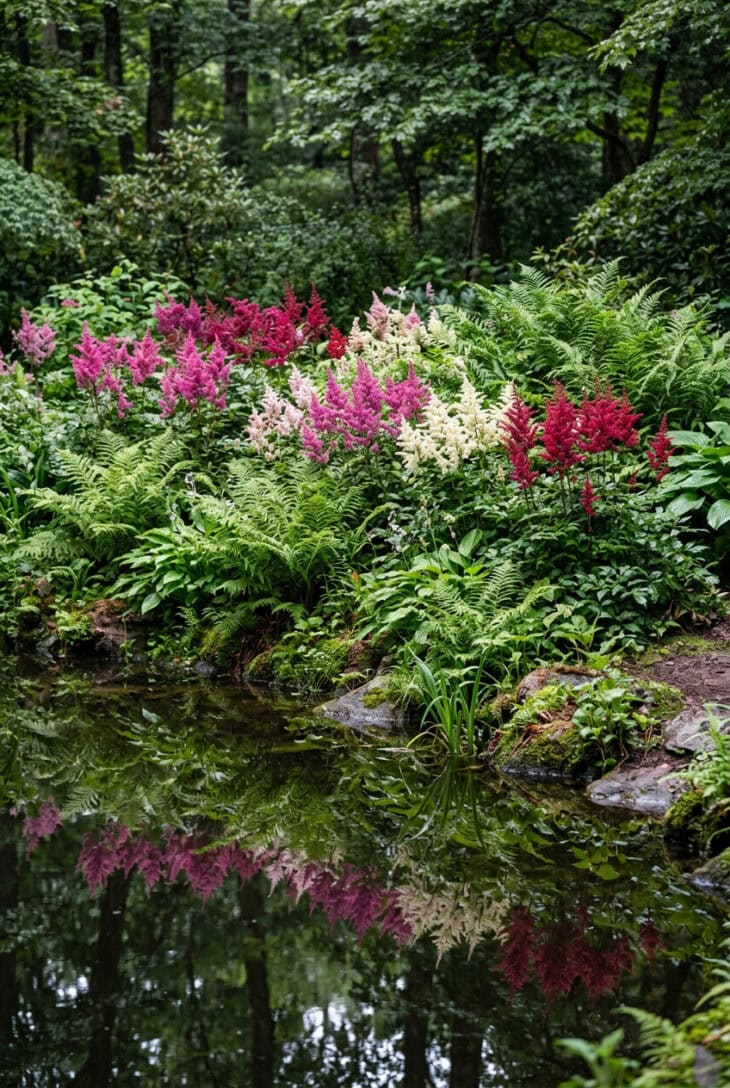
What you see A cool, damp bed at the water’s edge alight with astilbe, feathery plumes of pink, red and white rising above deeply cut ferny foliage and mirrored in the still pond beside it. It is soft, humid and luminous, the planting of a shaded streamside.
Why it works Astilbe thrives in the moist, part-shaded ground that many perennials hate, so it turns a boggy, dim spot into one of the most elegant plantings in the garden. Its plumes hold their shape and color for weeks, then dry to warm brown and stand well into winter, and its fern-like leaves stay handsome all season.
How to get it Plant astilbe (Astilbe) in humus-rich, reliably moist soil in part shade, never letting it dry out, since drought scorches the leaves and stops it flowering. Group it with other moisture-lovers such as hosta, ligularia and iris for a lush, layered effect, and mulch each spring to lock in moisture. Divide congested clumps every three or four years, and leave the dried plumes standing for winter structure.
28. Black-Eyed Susan Block

What you see A big, unbroken block of black-eyed Susans in full flower, a sea of golden-yellow daisies each with a dark chocolate eye, stretching back uniform and dazzling under a blue sky. Planted in a single mass they hit like a wall of pure sunshine.
Why it works Black-eyed Susan (Rudbeckia) is one of the most generous, reliable perennials for late-summer color, flowering for weeks in a gold so strong it carries right across the garden. Massed in a block it delivers maximum impact for minimum fuss, and the dark seedheads feed birds and stand through winter.
How to get it Plant black-eyed Susan (Rudbeckia hirta), or the sturdy perennial ‘Goldsturm’, in full sun and reasonable soil, spacing plants 18in (45cm) apart in a bold block. Water while establishing, then it copes with dry spells, and deadhead the early flowers to extend the show. Leave the last seedheads standing for the goldfinches, then cut down in spring, and divide the spreading clumps every few years. It is a mainstay of sunny flower bed planting.
29. Fragrant Perennial Border
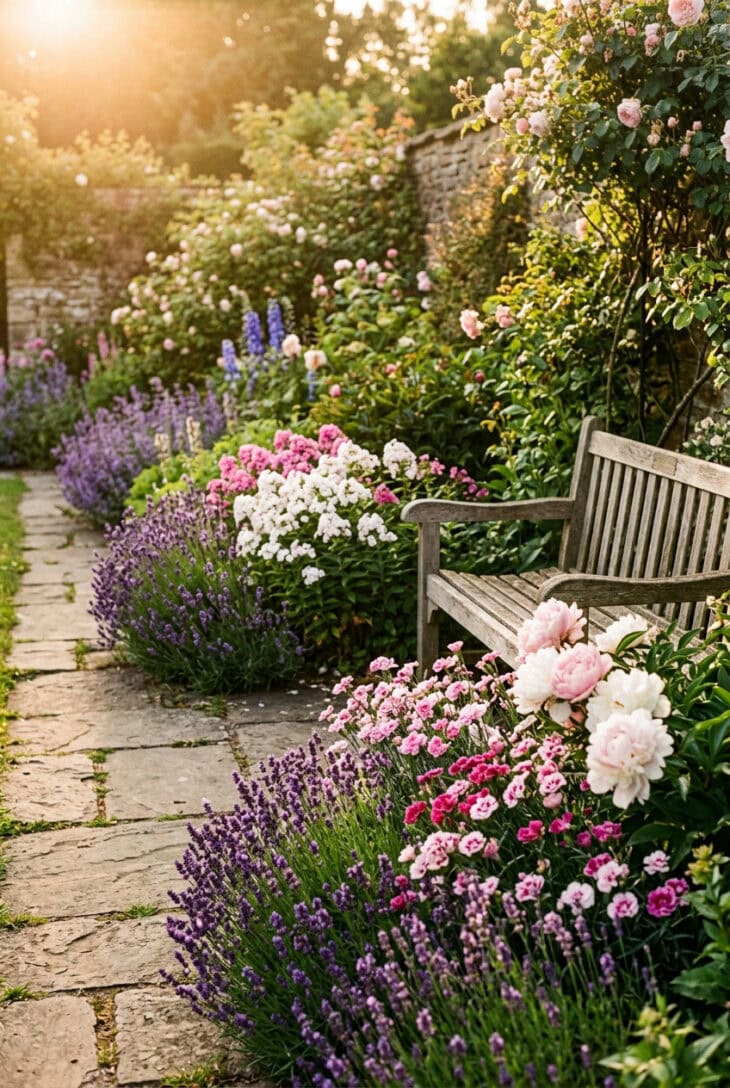
What you see A border planted to be smelled as much as seen, drifts of lavender, sweetly scented phlox, clove-perfumed dianthus and fragrant peonies grouped beside a bench where the perfume gathers in the warm, still air. You catch it before you reach it.
Why it works Fragrance is the dimension most borders forget, yet a scented perennial bed by a seat or path turns a simple pause into something memorable. Grouping several fragrant plants together and placing them where you linger concentrates the perfume, so it drifts up on warm evenings exactly where you sit.
How to get it Plant fragrant perennials close to seats, doors and paths where their scent is caught: lavender (Lavandula angustifolia), border phlox (Phlox paniculata), pinks (Dianthus) and scented peonies. Site the bed in sun and out of strong wind, which disperses perfume, and choose a succession so something is fragrant across the seasons. Brush past the aromatic foliage of lavender and dianthus to release their scent, and deadhead to keep the flowers, and the fragrance, coming.
30. Four-Season Island Bed
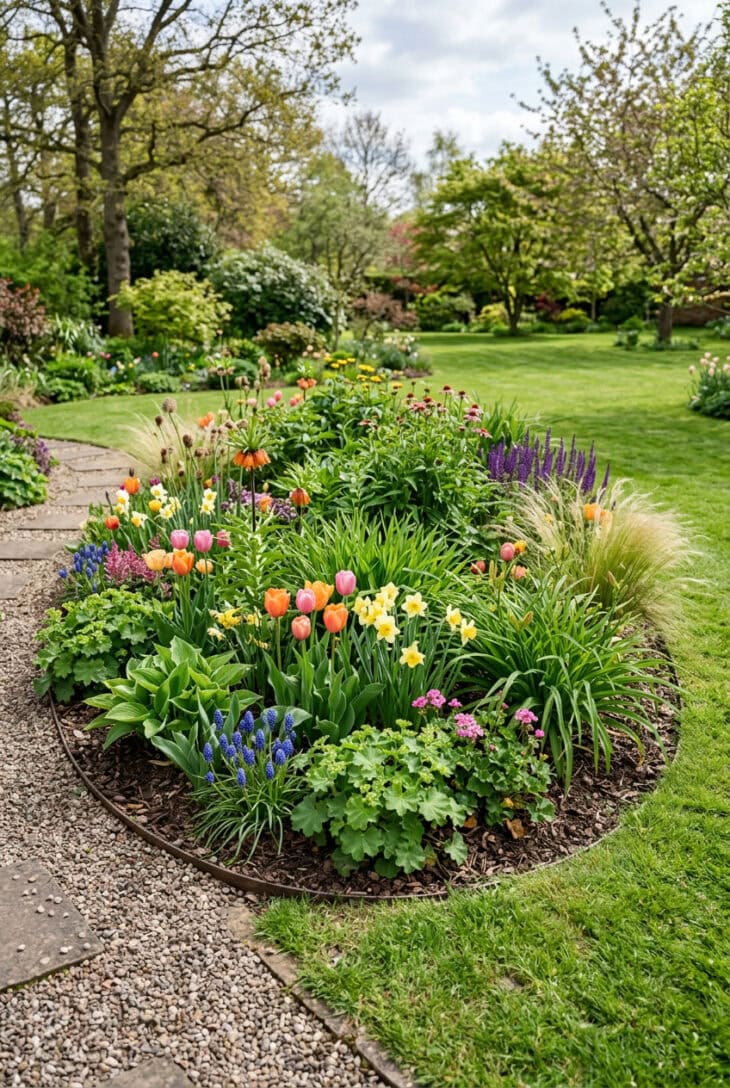
What you see A rounded island bed set in the lawn and planted to hold interest all year: spring bulbs pushing up through emerging perennials, summer flowers at their peak, and autumn grasses and seedheads still standing, the whole thing balanced to look good from every side. There is never a moment when it has nothing to offer.
Why it works An island bed is viewed in the round, so it needs a tall core tapering to low edges all the way around, and planting it for a relay of interest means something is always happening. Spreading the highlights across the seasons, spring bulbs, summer flowers, autumn grasses and winter seedheads, gives a single bed a full year of changing display.
How to get it Shape the bed with flowing curves and build the planting up to a tall centre, using height like miscanthus or a coneflower drift, falling away to low edging plants on every side. Plot the seasons deliberately: bulbs and hellebores for spring, coneflower, salvia and geranium for summer, sedum and grasses for autumn and winter structure. Repeat a few key plants around the bed to tie it together, mulch each spring, and divide crowded clumps every few years to keep the whole thing in balance.