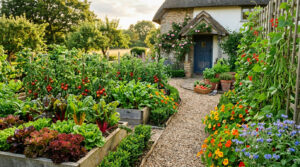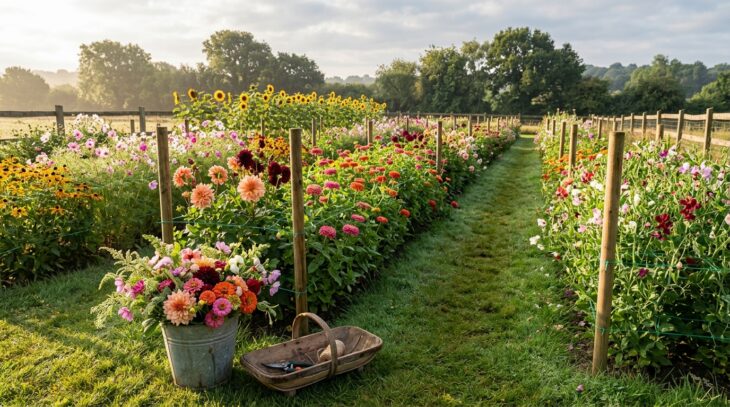
There is a particular pleasure in walking out with a bucket and snips and coming back with an armful of flowers you grew yourself. A cutting garden turns that from a rare treat into a weekly habit, with stems for the kitchen table, a friend’s birthday and the jar by your bed, all from the same patch of ground.
Contents
- 01. Four-Square Cutting Garden
- 02. Flower-Farm Rows in the Vegetable Plot
- 03. Dahlia Bed for Late-Summer Armloads
- 04. Zinnia and Cosmos Starter Bed
- 05. Raised Bed Cutting Patch
- 06. Sweet Pea Teepees
- 07. Spring Bulb Cutting Bed
- 08. Double-Duty Cutting Border
- 09. Patio Pot Cutting Garden
- 10. Plant-Once Perennial Cutting Bed
- 11. Peony Row
- 12. Garden Roses for Cutting
- 13. Foliage and Filler Bed
- 14. Everlasting Flower Patch
- 15. Succession-Sown Sunflower Rows
- 16. Shrubs for Branches and Blooms
- 17. Front-Yard Cutting Garden
- 18. Apricot and Blush Color Palette
- 19. Hardy Annuals Sown in Fall
- 20. Shady Cutting Corner
- 21. Heat-Loving Dry Garden Cutting Bed
- 22. Gladiolus and Lily Rows
- 23. Ranunculus and Anemones Under Low Tunnels
- 24. Roadside Flower Stand
- 25. Harvest and Conditioning Station
The ideas below range from a few patio pots and a single raised bed to flower-farm rows, a peony hedge and a roadside stand. Some cost no more than a handful of seed packets, while others are long-term plantings of roses, shrubs and perennials that repay you for decades. There are plans for spring bulbs, summer annuals, autumn dahlias and even winter branches, for full sun, dry heat and shade.
Scroll through for inspiration, or jump to the ideas that match your space and climate. Each one explains why it produces good cutting material and gives you the exact varieties, spacing and harvest tips to make it work.
01. Four-Square Cutting Garden
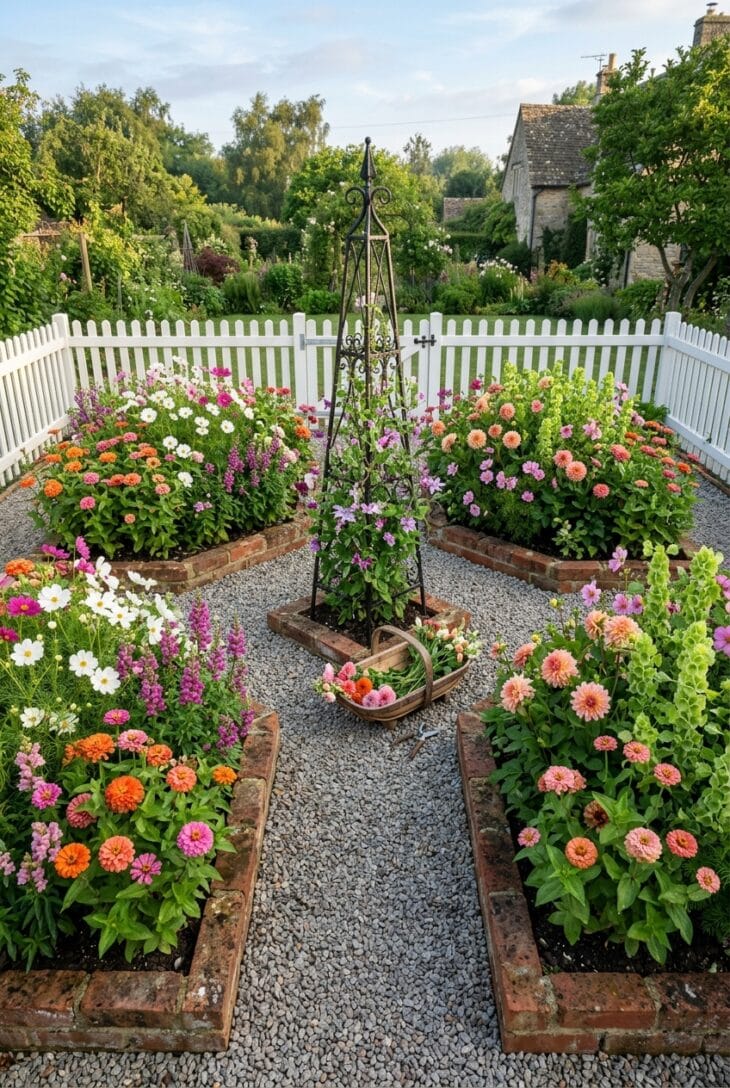
What you see Four square beds edged in old brick meet at a gravel crossing, where a black iron obelisk rises from the center. Each bed is packed with color: zinnias in orange and hot pink, cosmos swaying above them, spires of snapdragon and the pale green bells of Ireland. A picket fence wraps around the whole thing, and a trug of freshly cut stems waits on the path.
Why it works The four-square layout is centuries old because it is so practical: every plant is within arm’s reach of a path, so you can cut without trampling anything. It also looks tidy even when you have stripped half the flowers, since the brick edges and paths hold the shape. Splitting the space into four makes crop rotation and succession planting easy to plan, and it tucks neatly into a sunny backyard corner.
How to get it Mark out four beds of about 4 by 6ft (120 by 180cm), with paths at least 2ft (60cm) wide so a bucket fits between them. Give each bed a job: one for spring bulbs followed by summer annuals, one for dahlias, one for zinnias and cosmos, and one for snapdragons and fillers. Edge the beds with brick laid on its side and topped up with compost, then fill the paths with 3in (8cm) of pea gravel over landscape fabric. The central obelisk can carry sweet peas in spring and a climbing nasturtium later. Site the whole garden where it gets at least six to eight hours of sun.
02. Flower-Farm Rows in the Vegetable Plot
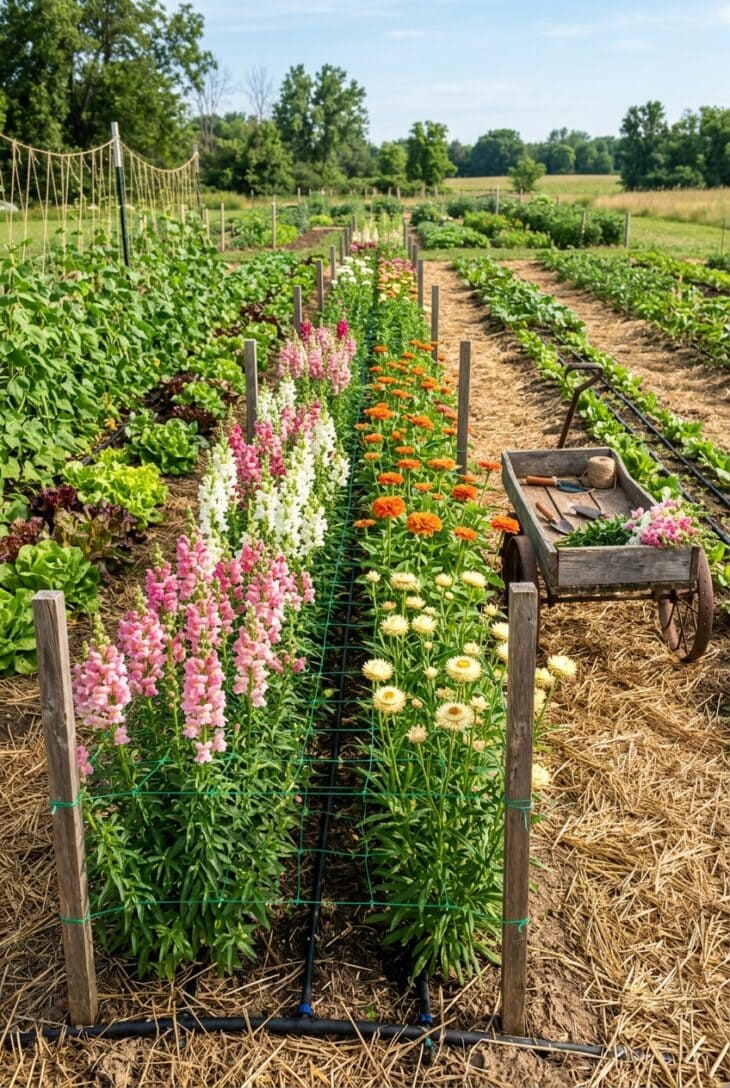
What you see Straight rows of snapdragons, zinnias and strawflowers run through the vegetable plot as if they were beans or onions. Green netting holds every stem upright, drip lines snake along the soil, and straw fills the paths. It looks less like a flower bed and more like a small farm, with flowers grown purely to be picked.
Why it works Rows are the most productive way to grow cut flowers. You can water, weed and harvest quickly, and nobody minds when you cut a row bare because it was never meant to be looked at. Flowers in the vegetable garden also draw in pollinators for your squash and beans.
How to get it Make beds 30 to 36in (75 to 90cm) wide so you can reach the middle from either side, and plant three or four rows per bed. Stretch horizontal flower netting with a 6in (15cm) mesh over the bed at planting time and lift it to about 12in (30cm) as plants grow, supported by stakes every 6 to 8ft (1.8 to 2.4m). Stems grow straight up through the netting instead of flopping, which is what gives you long, usable stems. Lay drip tape under a mulch of straw so water goes to the roots and the flowers stay clean. Grow the tallest crops on the north side so they do not shade the vegetables.
03. Dahlia Bed for Late-Summer Armloads
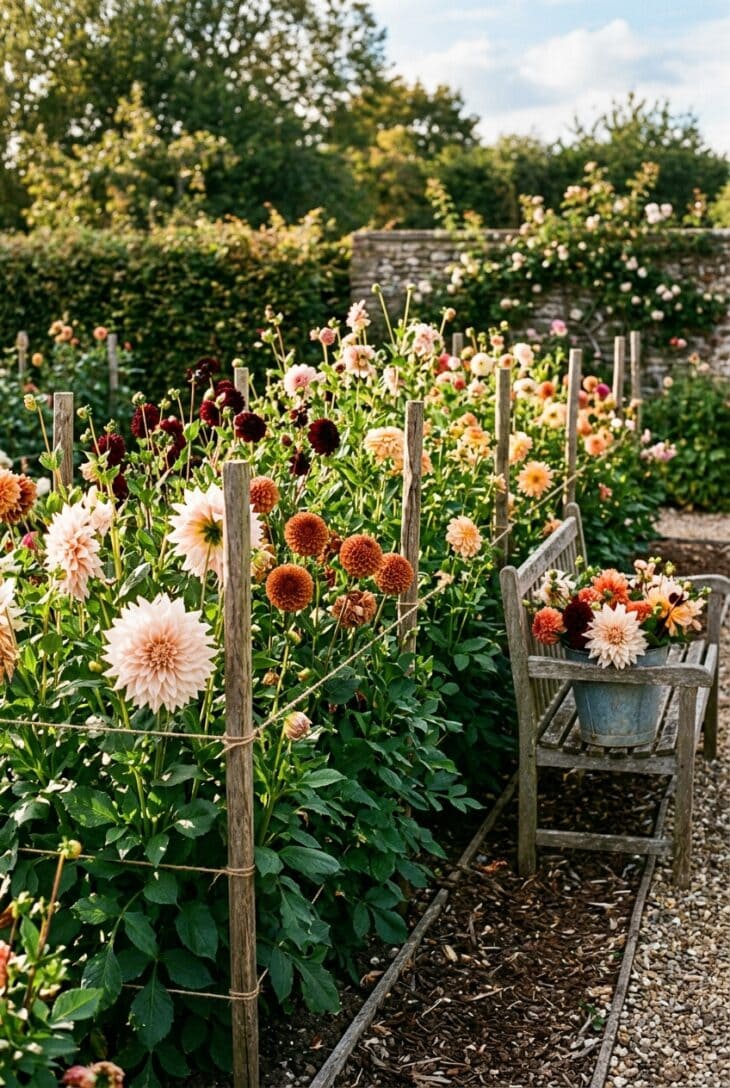
What you see A bed of dahlias at the peak of the season, chest high and covered in blooms. Huge creamy blush flowers the size of dinner plates sit beside tight bronze balls, velvety burgundy blooms and soft apricot waterlily shapes. Stakes and twine keep everything upright, and a bucket of cut stems waits on the bench in the warm September light.
Why it works Dahlias are the definition of cut-and-come-again. The more you pick, the more they flower, from midsummer right up to the first frost, which fills the gap when most other flowers are fading. A bed given over only to dahlias lets you stake, feed and water them properly, and the range of shapes and colors means one bed can supply every style of bouquet.
How to get it Plant tubers 4 to 6in (10 to 15cm) deep once the soil has warmed to about 60°F (16°C), spacing them 18 to 24in (45 to 60cm) apart, and hammer in a stake next to each tuber at planting so you do not spear it later. Pinch out the central tip when plants are 12 to 16in (30 to 40cm) tall to get more, longer stems. Good cutting varieties include ‘Café au Lait’ (blush), ‘Cornel Brons’ (bronze ball) and ‘Karma Choc’ (burgundy). Cut dahlias when they are almost fully open, because unlike roses they will not open further in the vase. In zones 7 and colder, dig the tubers after the first frost blackens the foliage and store them in barely damp peat or wood shavings over winter.
04. Zinnia and Cosmos Starter Bed
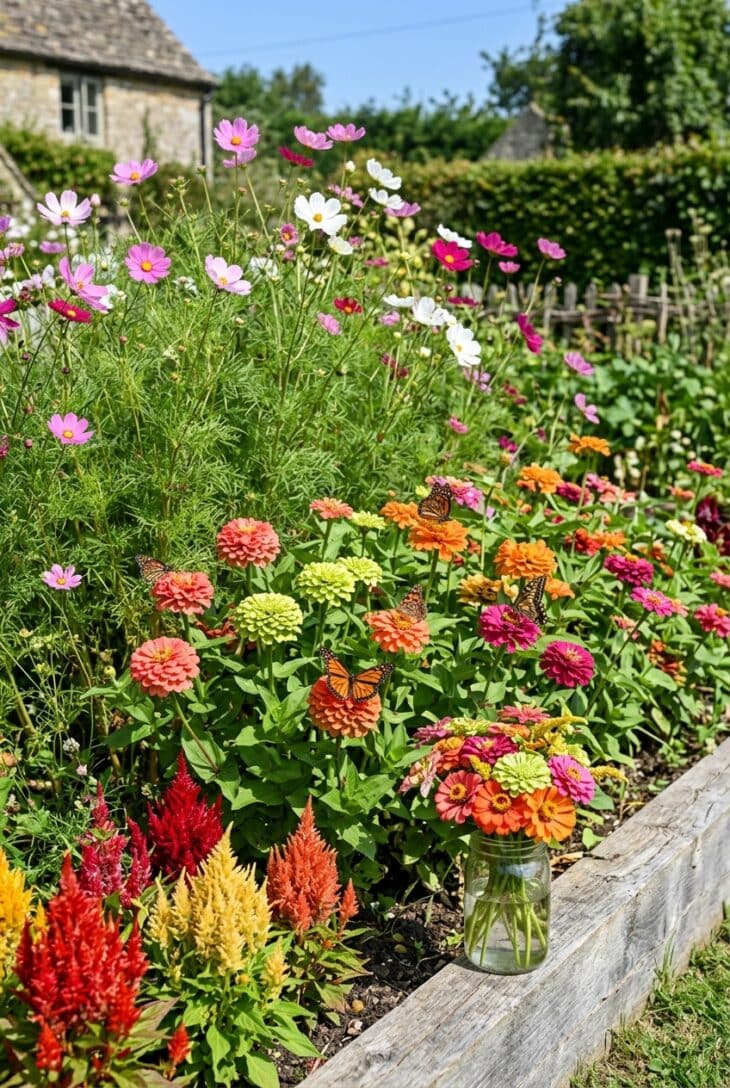
What you see A plain bed bursting with color: tall cosmos waving at the back, zinnias in coral, lime and hot pink crowding the middle, and fiery plumes of celosia along the front. Butterflies drift from flower to flower, and a jar of zinnias picked a few minutes ago sits on the edge of the bed.
Why it works Zinnias and cosmos are the easiest cutting flowers there are. Both grow fast from seed sown straight into warm soil, both bloom within about two months, and both produce more flowers the harder you cut them. For the price of three seed packets you get flowers from midsummer to frost, which makes this the best first project for anyone new to growing for the vase, and a cheerful flower bed in its own right.
How to get it Sow after your last frost, once the soil is warm, spacing zinnias (Zinnia elegans ‘Benary’s Giant’ or ‘Queen Lime’) and cosmos (Cosmos bipinnatus ‘Double Click’ or ‘Purity’) about 12in (30cm) apart. Pinch out the growing tip when plants are 8 to 12in (20 to 30cm) tall to get long, branching stems. Add a front row of plumed celosia (Celosia argentea var. plumosa), which lasts for weeks in water and dries well. Keep cosmos on the lean side, since rich soil gives you leaves instead of flowers. Test zinnias before cutting by gently wiggling the stem just below the flower: if it bends, wait a day; if it stays stiff, it is ready.
05. Raised Bed Cutting Patch
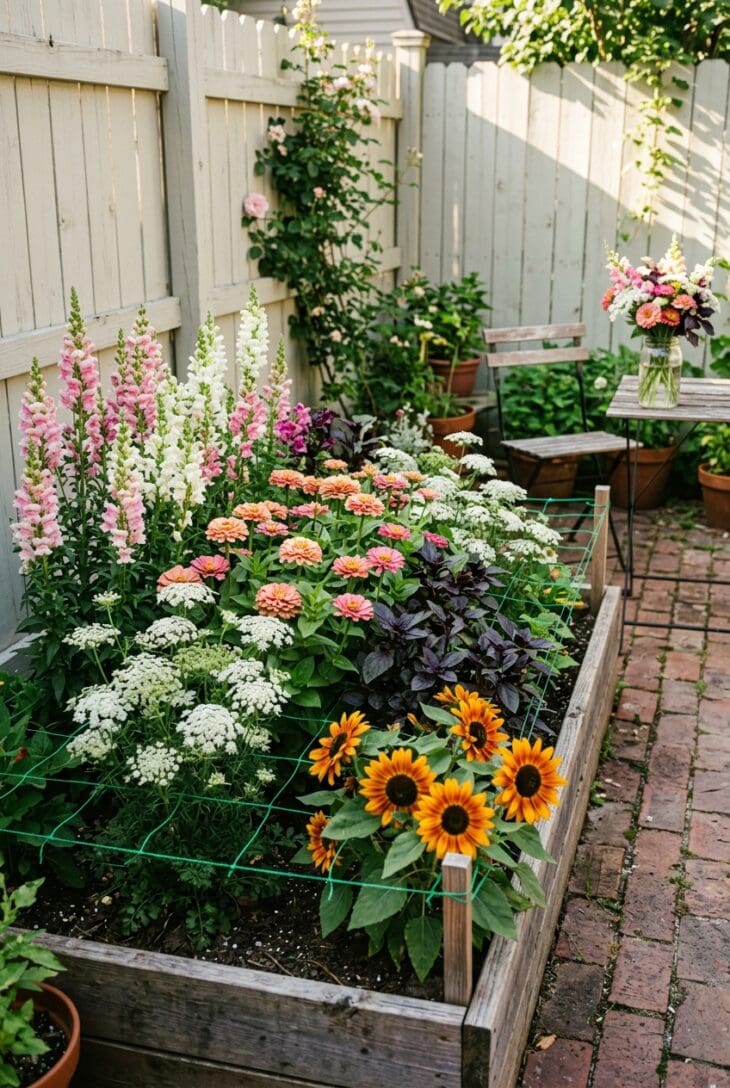
What you see One wooden raised bed in a compact yard, planted as tightly as a flower farm. Snapdragons stand at one end, zinnias fill the middle, frothy white lace flowers and dark purple basil weave between them, and little orange sunflowers face the sun. A jar of mixed stems on the bistro chair shows exactly what this one bed can do.
Why it works A raised bed warms up early, drains well and is easy to fill with rich, weed-free soil, so plants can go in closer than they would in the ground. That makes it the most productive way to grow cut flowers in a small garden. Planting a mix of focal flowers, spikes and fillers in one bed means every harvest is a complete bouquet.
How to get it A 4 by 8ft (120 by 240cm) bed at least 10in (25cm) deep is enough for weekly bouquets from June to frost. Fill it with a mix of topsoil and compost, and plant at 9in (23cm) spacing for snapdragons and single-stem sunflowers and 12in (30cm) for zinnias. Use roughly a third of the bed each for focal flowers, spike flowers and fillers. A single layer of netting across the top keeps everything upright. For more layouts and build ideas, see our raised bed designs.
06. Sweet Pea Teepees
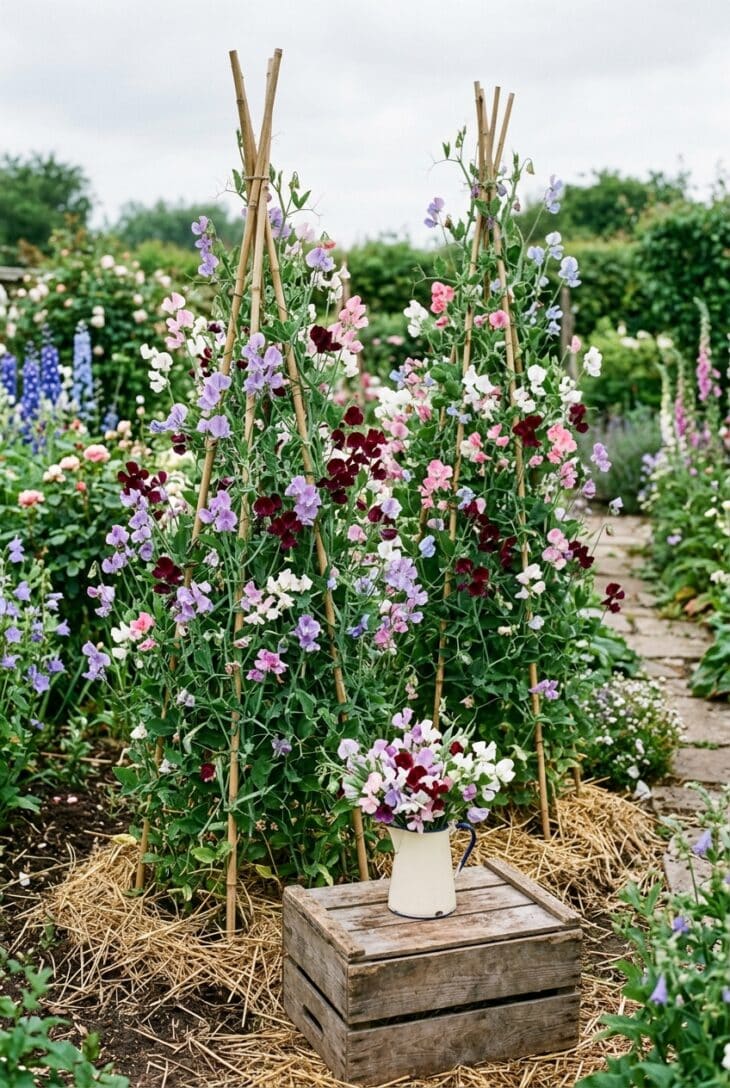
What you see Two bamboo teepees taller than a person, hidden under a cloud of sweet peas. Ruffled flowers in lavender, maroon, blush and white climb all the way to the top, and the air around them smells of honey and orange blossom. A little enamel jug of picked stems sits on a crate in front.
Why it works Sweet peas are the most fragrant cut flower you can grow, and they are prolific: the more you pick, the more they bloom. Growing them up a teepee puts a lot of flowers into a tiny footprint, one of the simplest vertical garden tricks there is. The teepee also makes picking easy, since the stems hang in plain view.
How to get it Sweet peas (Lathyrus odoratus) love cool weather, so time them to bloom before the summer heat. In zones 8 and warmer, sow in fall; elsewhere, start them indoors in late winter and plant out as soon as the ground can be worked. Push six to eight 7 to 8ft (2.1 to 2.4m) canes into a circle about 3ft (90cm) across, tie them at the top and plant two seedlings at the base of each cane. Pinch out the tips when plants have three or four pairs of leaves. Pick every two or three days and never let pods form, or the plants will stop flowering. Long-stemmed Spencer types such as ‘Mollie Rilstone’ and ‘Mrs Collier’ make the best cut flowers.
07. Spring Bulb Cutting Bed
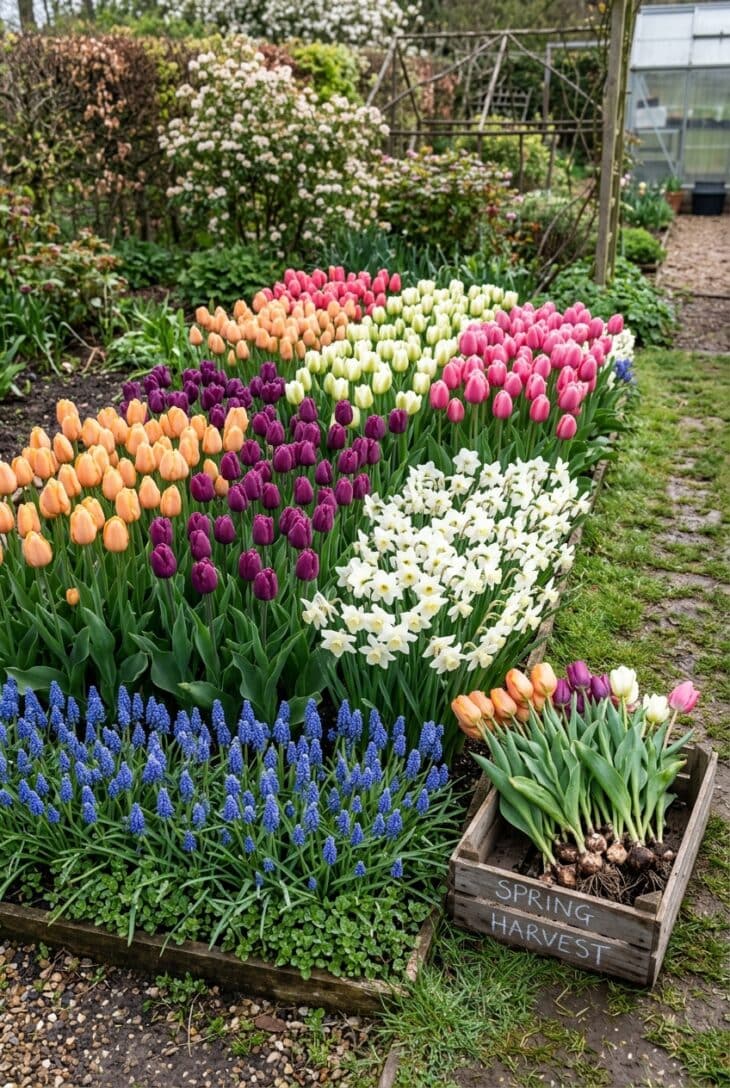
What you see A bed so packed with bulbs that the tulips stand shoulder to shoulder in blocks of apricot, plum, cream and rose. Pale narcissus fill one end and a ribbon of blue grape hyacinths runs along the front. In a crate on the path, a harvest of tulips still has the bulbs attached, which is the secret to their extra-long stems.
Why it works Bulbs give you cut flowers weeks before anything else in the garden, when a vase of tulips feels like a gift. Growing them in their own bed means you can cut every last one without leaving holes in your borders. Treating tulips as annuals and planting them tightly gives a huge crop from a small space, and the bed is free for summer annuals by early June.
How to get it Plant tulips in late fall, once the soil is below about 55°F (13°C), setting them 6in (15cm) deep with the bulbs almost touching. Late-flowering doubles and single lates such as ‘La Belle Époque’, ‘Queen of Night’ and ‘Menton’ give the longest stems. Harvest when the bud is colored but still closed, pulling the whole plant and then snipping off the bulb, which adds several inches of stem. Add a row of grape hyacinth (Muscari armeniacum) for small posies. Condition daffodils in their own bucket overnight before mixing them with other flowers, because their sap shortens the vase life of everything around them.
08. Double-Duty Cutting Border
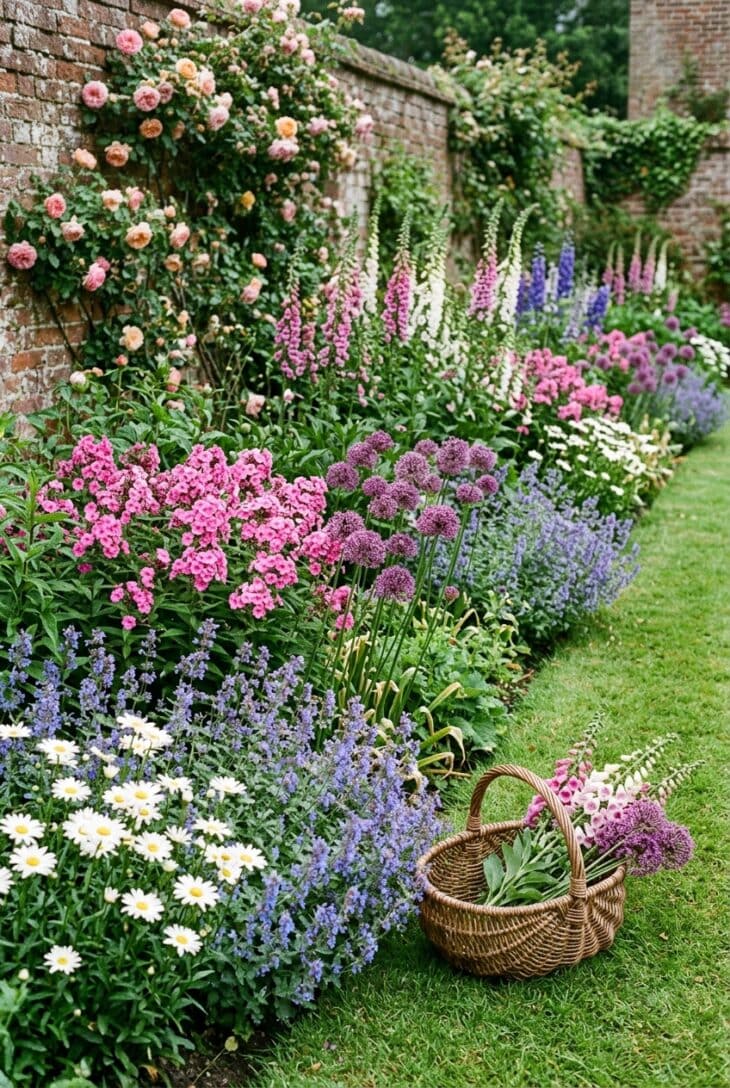
What you see A full, romantic border against an old brick wall: foxgloves at the back, purple allium globes and pink phlox rising through the middle, blue catmint and white daisies spilling onto the lawn. A basket already holds a handful of cut stems, but the border looks untouched.
Why it works Not everyone has room for a separate cutting garden. The answer is to plant an ornamental border that can take cutting, which means big drifts of each plant rather than singles. When there are seven foxgloves in a group, taking two leaves no gap, and the classic cottage garden look relies on exactly that kind of generous repetition.
How to get it Plant every cutting flower in groups of at least five, and repeat each group two or three times along the border. Good choices are foxglove (Digitalis purpurea), allium (Allium ‘Purple Sensation’), garden phlox (Phlox paniculata ‘David’) and shasta daisy (Leucanthemum × superbum ‘Becky’). Always cut from the back and middle of a clump, never the front edge, so the view from the house stays intact. Wear gloves when handling foxgloves, as every part of the plant is toxic. Tuck a few extra plants of your favorite cutters into the back row where cutting will never show.
09. Patio Pot Cutting Garden
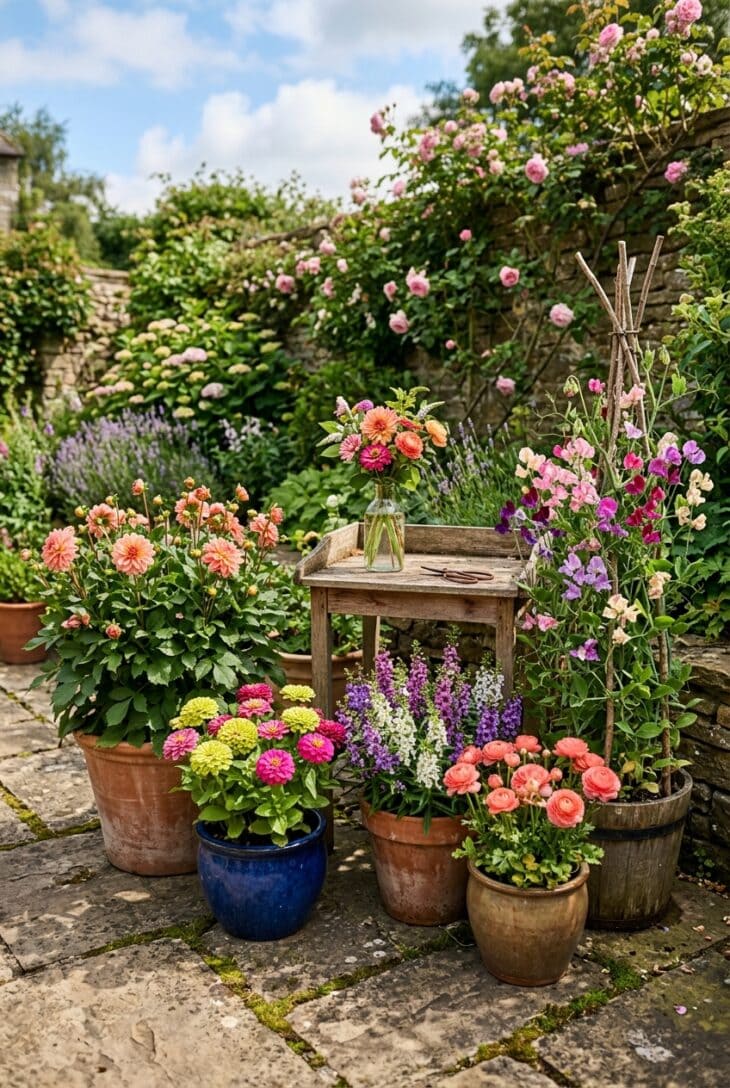
What you see A cluster of big terracotta and glazed pots crowds a sunny patio, each one full of flowers grown for cutting: a peach dahlia, a pot of zinnias, purple and white angelonia spikes and a froth of coral ranunculus. A little potting table holds snips and a bottle of stems, ready for the next small bouquet.
Why it works Pots bring a cutting garden to people with no beds at all, and they put the flowers where you actually walk past them every day. Choosing compact varieties means each pot gives a steady supply of short stems, perfect for bud vases and jam jars. You can rotate pots through the season, moving the spring ranunculus aside when the summer dahlias hit their stride.
How to get it Use pots of at least 5 gallons (19 liters) for zinnias and angelonia and 10 to 15 gallons (38 to 57 liters) for dahlias, and fill them with quality potting mix rather than garden soil. Pick compact cutters such as zinnia ‘Queeny Lime’ and border dahlias under 3ft (90cm) tall. Summer snapdragon (Angelonia angustifolia) is ideal for pots in hot climates, blooming all summer without deadheading. Feed every two weeks with a liquid fertilizer and water daily in hot weather, because pots dry out fast. Our container garden ideas have more on grouping and planting pots.
10. Plant-Once Perennial Cutting Bed
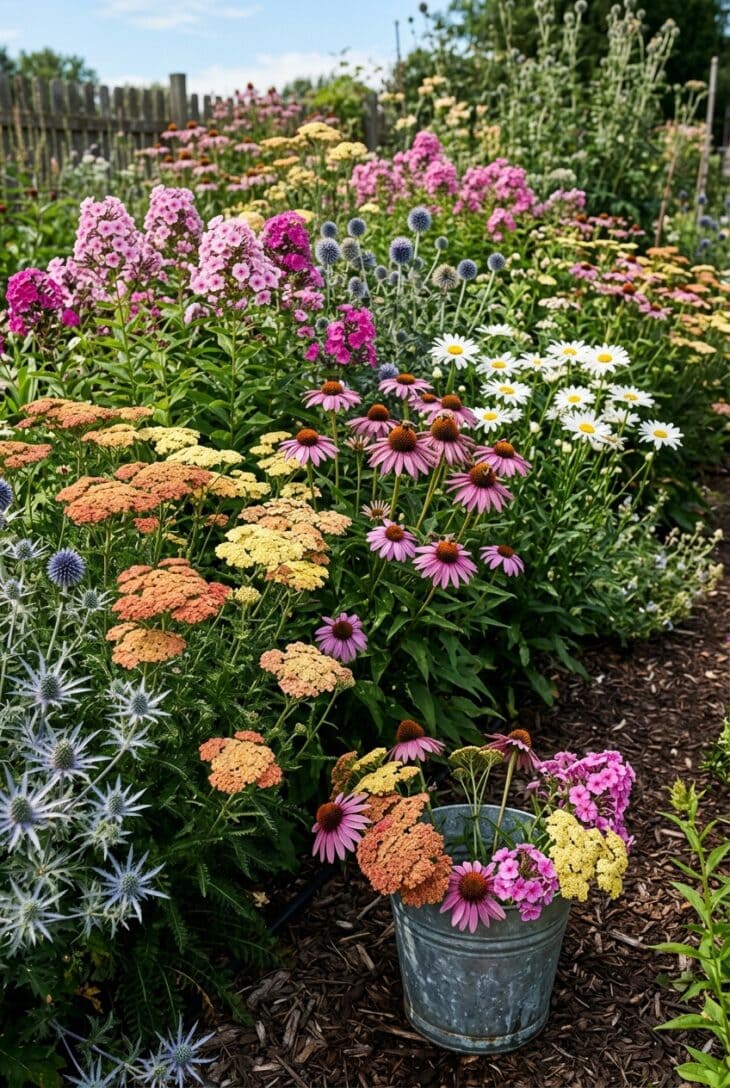
What you see A mature bed of big perennial clumps: flat yarrow plates in terracotta and butter yellow, pink phlox, purple coneflowers, white daisies and spiky blue globe thistles. Bees work the coneflowers, and a bucket of freshly cut stems sits on the path without leaving a visible dent in the planting.
Why it works Annuals need sowing every spring, but a perennial cutting bed comes back bigger every year with little more than a spring cleanup. Once established, these plants shrug off heat and dry spells, and many of them, like yarrow and globe thistle, also dry beautifully. It is the cutting garden for people who want flowers without the yearly work of a full perennial garden makeover.
How to get it Plant in spring or early fall, spacing most perennials 18 to 24in (45 to 60cm) apart in groups of three or more. Reliable cutters include yarrow (Achillea millefolium ‘Terracotta’), garden phlox (Phlox paniculata ‘Jeana’), purple coneflower (Echinacea purpurea), globe thistle (Echinops ritro) and shasta daisy. Cut yarrow when the flower heads are fully open and the pollen is visible, or it will wilt in the vase. Leave some coneflowers standing in fall for goldfinches and winter structure. Divide the clumps every three or four years to keep them vigorous.
11. Peony Row
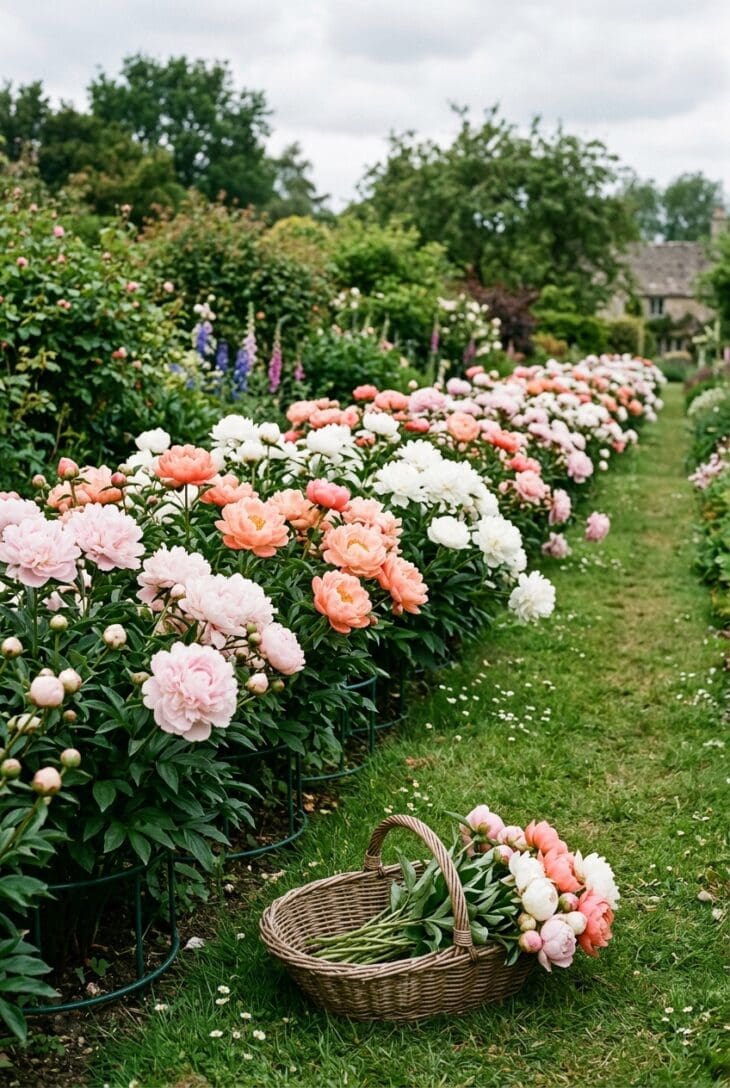
What you see A low hedge of peonies runs the length of a grass path, heavy with blooms: blush doubles like crumpled silk, glowing coral semi-doubles and big white flowers with a sweet, rosy scent. Fat round buds are still waiting to open, and a basket holds stems cut just as the buds turned soft.
Why it works Peonies are the ultimate luxury cut flower, and they are also among the longest-lived perennials in any garden. A plant set in the right spot can flower for 50 years or more with almost no care. Growing them in a row, rather than scattered through borders, makes it easy to support them and to cut heavily in the short, glorious peony season.
How to get it Plant bare-root peonies (Paeonia lactiflora) in fall in full sun, 3ft (90cm) apart, with the pink buds, called eyes, no more than 2in (5cm) below the soil; planting deeper is the most common reason peonies refuse to bloom. In zone 8, set them just 1in (2.5cm) deep and choose early varieties. Try ‘Sarah Bernhardt’ (pink), ‘Coral Charm’ (coral) and ‘Festiva Maxima’ (white). Leave the plants uncut in their first year and cut lightly in their second. Harvest when the bud feels like a soft marshmallow; wrapped dry and laid flat in the fridge, these buds will keep for two weeks or more and open when placed in water.
12. Garden Roses for Cutting
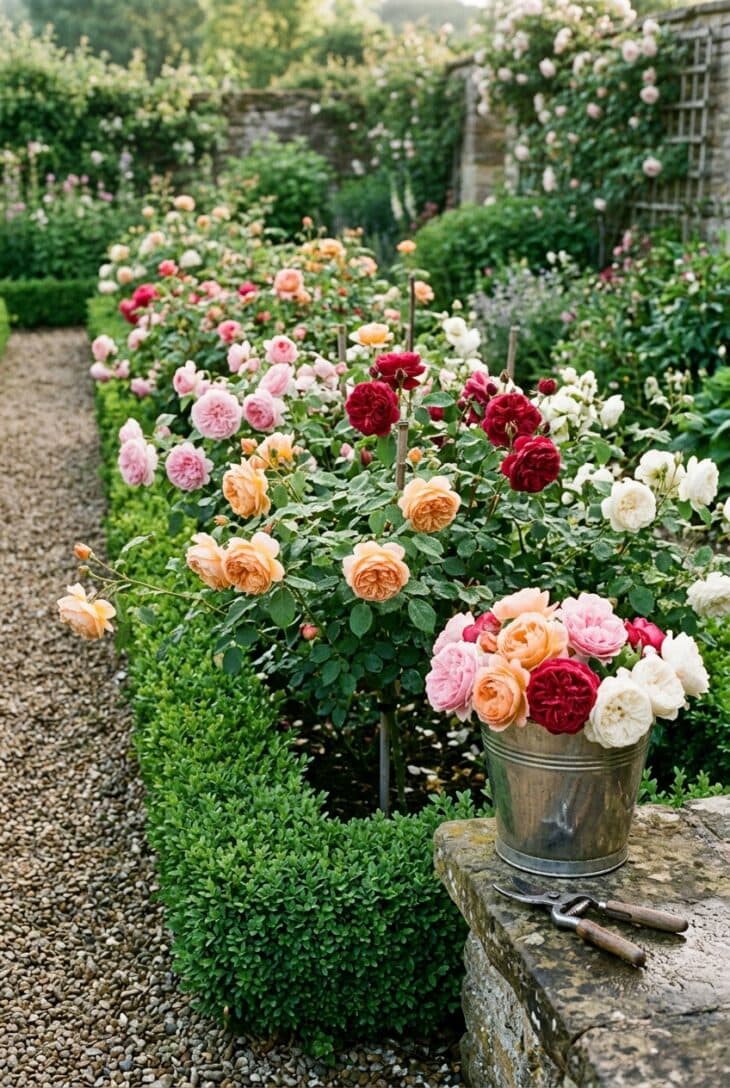
What you see A bed of full-petaled garden roses edged in low boxwood, the cupped flowers in apricot, shell pink, deep crimson and cream. Dew sits on the petals, and a silver pail of freshly cut roses rests on the ledge, filling the morning air with fragrance.
Why it works Store-bought roses are bred to travel and often have no scent. Garden roses are the opposite: soft, blowsy and heavily perfumed, with a romance no florist bunch can match. A dedicated bed lets you cut freely without spoiling a display, and roses repeat-flower from late spring to fall, making them a backbone of the classic English garden.
How to get it Choose repeat-blooming, disease-resistant varieties bred for cutting, such as ‘Olivia Rose Austin’, ‘Darcey Bussell’ and ‘Earth Angel’; in cold zones, tough Buck shrub roses like ‘Distant Drums’ are bred for cold winters. Plant 3ft (90cm) apart in rich, well-drained soil with at least six hours of sun. Cut in the cool early morning when the buds are just starting to unfurl, making each cut just above an outward-facing five-leaflet leaf. Plunge the stems straight into water, and recut them underwater indoors if the heads droop. Feed in spring and again after the first flush.
13. Foliage and Filler Bed
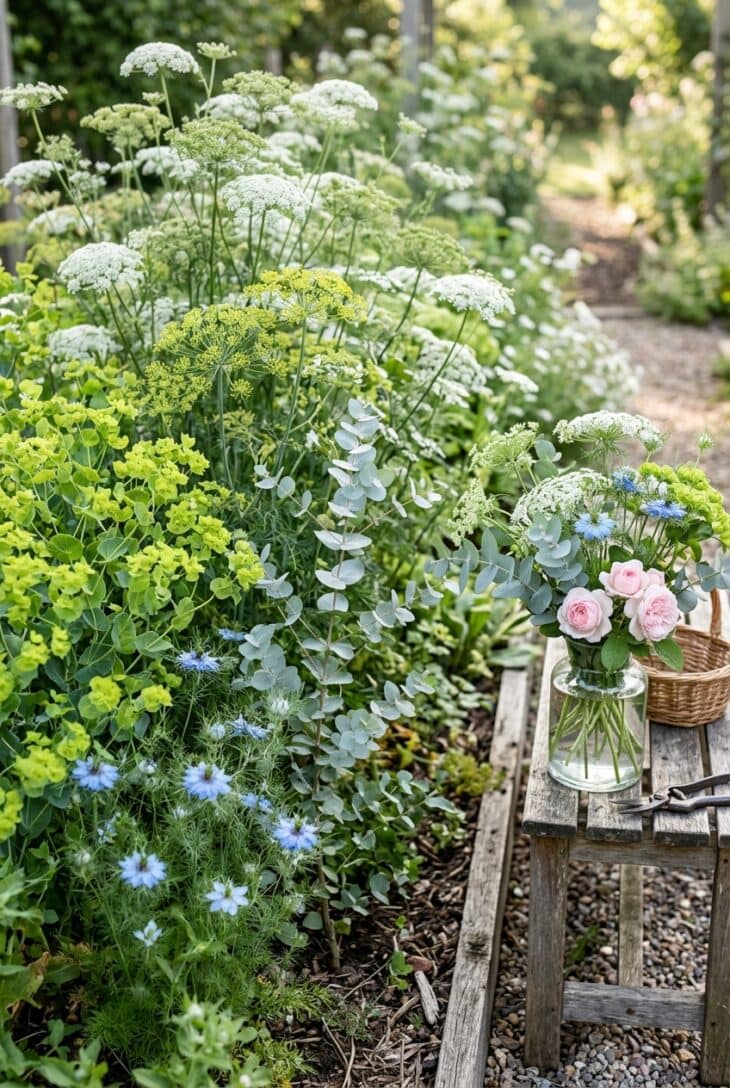
What you see A bed that is mostly green and white, and all the prettier for it. White lace umbels float above chartreuse dill, round silver-blue eucalyptus leaves catch the light, and blue love-in-a-mist peeks through feathery foliage. On the bench, a vase shows the point: a few roses, made twice as lovely by the greenery around them.
Why it works The difference between a jar of flowers and a proper bouquet is filler. Airy flowers and good foliage make a few focal blooms go twice as far and give arrangements a natural, just-picked look. Most beginners grow only showy flowers and then struggle to make them look finished, so a filler bed is the single biggest upgrade you can make.
How to get it Direct-sow bishop’s flower (Ammi majus), dill (Anethum graveolens ‘Bouquet’), love-in-a-mist (Nigella damascena) and bupleurum (Bupleurum rotundifolium ‘Griffithii’) in early spring, or in fall in zones 7 and warmer, thinning to 9in (23cm) apart. Wear gloves when cutting ammi, because its sap can cause a blistering rash in sunlight. Start silver dollar eucalyptus (Eucalyptus cinerea) indoors 10 to 12 weeks before your last frost; it grows as an annual in cold zones. Borrow mint, basil and rosemary from the herb garden too, since they last well and add scent.
14. Everlasting Flower Patch
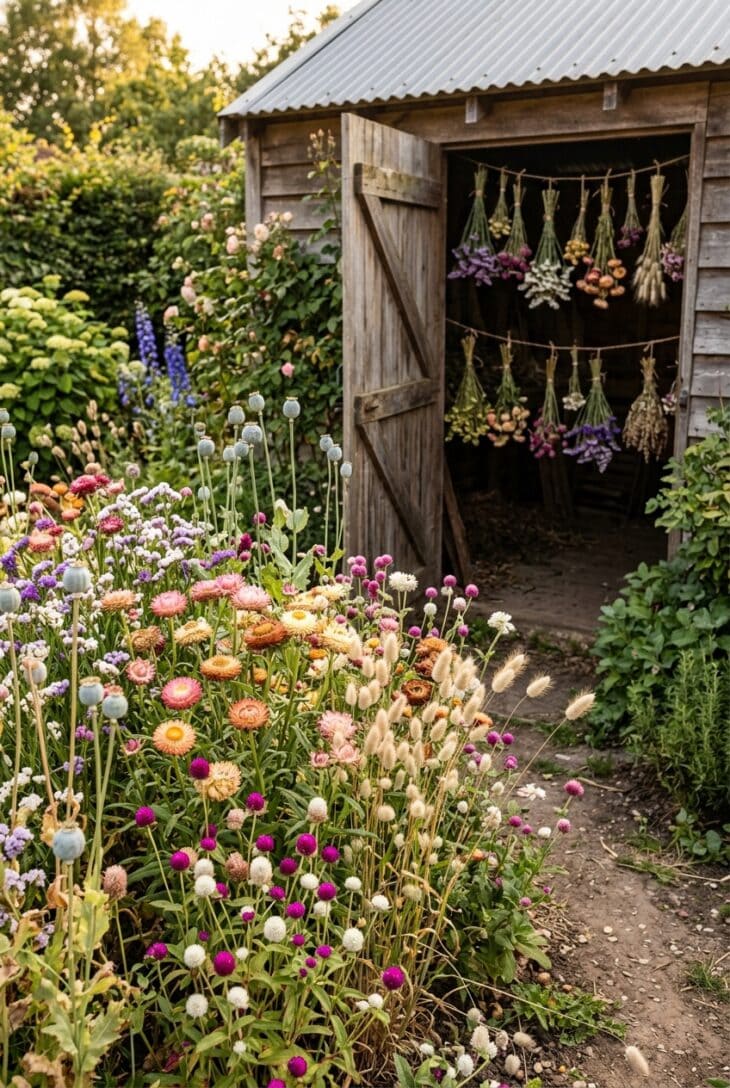
What you see A bed of papery strawflowers in apricot, rose and bronze, magenta and white globe amaranth, clusters of statice and soft tufts of bunny tail grass, with blue-gray poppy pods standing above them. Through the open shed door, bunches hang upside down from the rafters, drying into a winter’s worth of bouquets.
Why it works Everlastings stretch your cutting season to twelve months. These flowers hold their color and shape when dried, so a single summer’s harvest fills wreaths, winter vases and gift bundles long after frost. Most of them love heat and poor soil, which makes them easy to grow in a sunny spot where fussier flowers would sulk.
How to get it Start strawflower (Xerochrysum bracteatum), statice (Limonium sinuatum) and globe amaranth (Gomphrena globosa ‘QIS Carmine’) indoors six weeks before your last frost, and plant out 9 to 12in (23 to 30cm) apart. Sow breadseed poppy (Papaver somniferum) and bunny tail grass (Lagurus ovatus) directly in early spring. Pick strawflowers when the outer petals have opened but the center is still closed, and cut poppy pods once they have turned blue-gray and firm. Hang small bunches, held with rubber bands because the stems shrink, in a dark, dry, airy place for two to three weeks. Chinese lantern (Physalis alkekengi) adds bright orange husks in fall but spreads fast, so grow it in a bottomless bucket sunk into the ground.
15. Succession-Sown Sunflower Rows
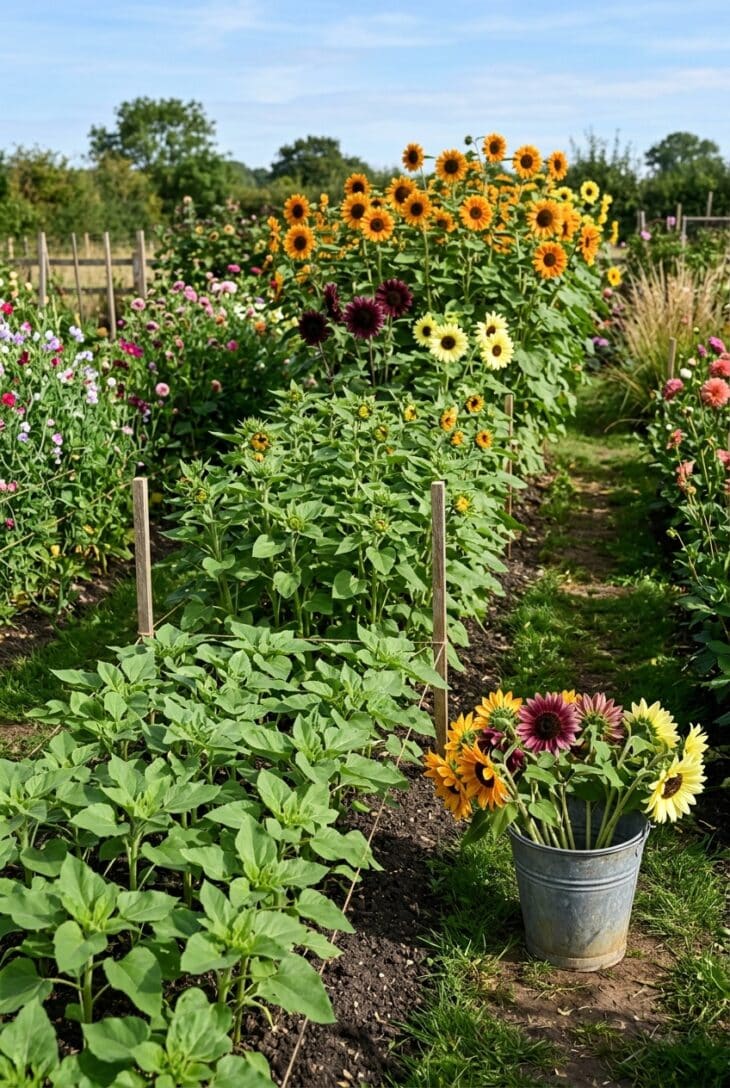
What you see Rows of sunflowers in three stages: the back row in full bloom with neat golden faces, the middle row just showing color, and the front row still knee-high and green. A few plum and lemon flowers glow among the gold, and a bucket of cut stems waits at the end of the rows.
Why it works Single-stem cutting sunflowers produce one perfect flower and then they are done, so a single sowing gives you a two-week glut and nothing after. Sowing a short row every couple of weeks turns that into a steady supply from midsummer to fall. Modern pollenless varieties also keep your tablecloths free of yellow dust.
How to get it Choose pollenless single-stem varieties such as ‘ProCut Orange’, ‘ProCut Lemon’ and ‘ProCut Plum’ (Helianthus annuus), which bloom in about 50 to 65 days. Start sowing after your last frost and sow a short row every 10 to 14 days until about ten weeks before your first frost. Space seeds 6in (15cm) apart: tight spacing gives vase-sized heads of 4 to 5in (10 to 13cm) and slimmer stems. Cover fresh sowings with row cover, because birds and squirrels will dig up the seed. Cut when the first petals are lifting away from the center, and the flowers will open fully indoors.
16. Shrubs for Branches and Blooms
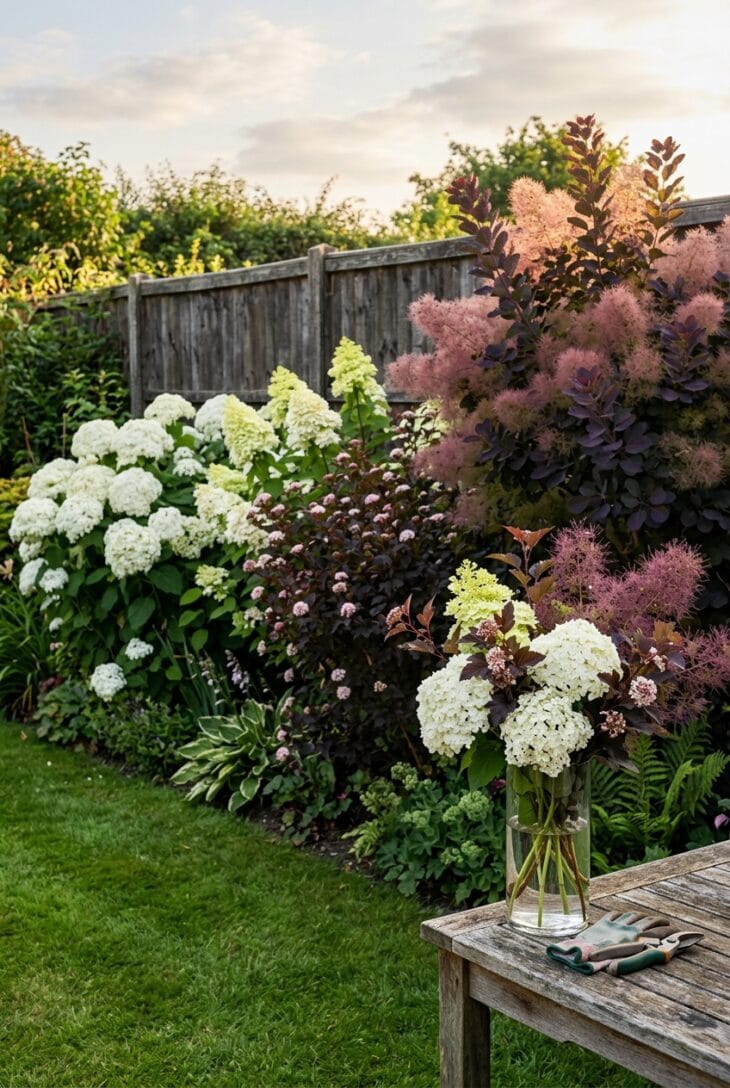
What you see A boundary planted with shrubs you can cut from: white snowball hydrangeas, lime-green panicle hydrangeas, a dark burgundy ninebark and a smokebush wreathed in purple haze. On the table in front, a big vase of branches and hydrangea heads makes an arrangement that no amount of annuals could match for scale.
Why it works Shrubs are the unsung heroes of the cutting garden. They give you big, dramatic material for large arrangements, they need almost no care once established, and they supply something to cut in every season: blossom and catkins in spring, hydrangeas and foliage in summer, berries in fall. They also double as a hedge or screen along the property line.
How to get it Plant shrubs 5 to 6ft (1.5 to 1.8m) apart along a sunny boundary. Good choices are smooth hydrangea (Hydrangea arborescens ‘Annabelle’), panicle hydrangea (Hydrangea paniculata ‘Limelight’), ninebark (Physocarpus opulifolius ‘Diabolo’) and smokebush (Cotinus coggygria ‘Royal Purple’). Cut hydrangeas only once the flowers have matured and feel slightly papery; young, soft heads wilt within hours. In late winter, cut stems of forsythia, flowering quince and pussy willow (Salix discolor) when the buds swell, and bring them indoors to bloom in a cool room within one to three weeks.
17. Front-Yard Cutting Garden
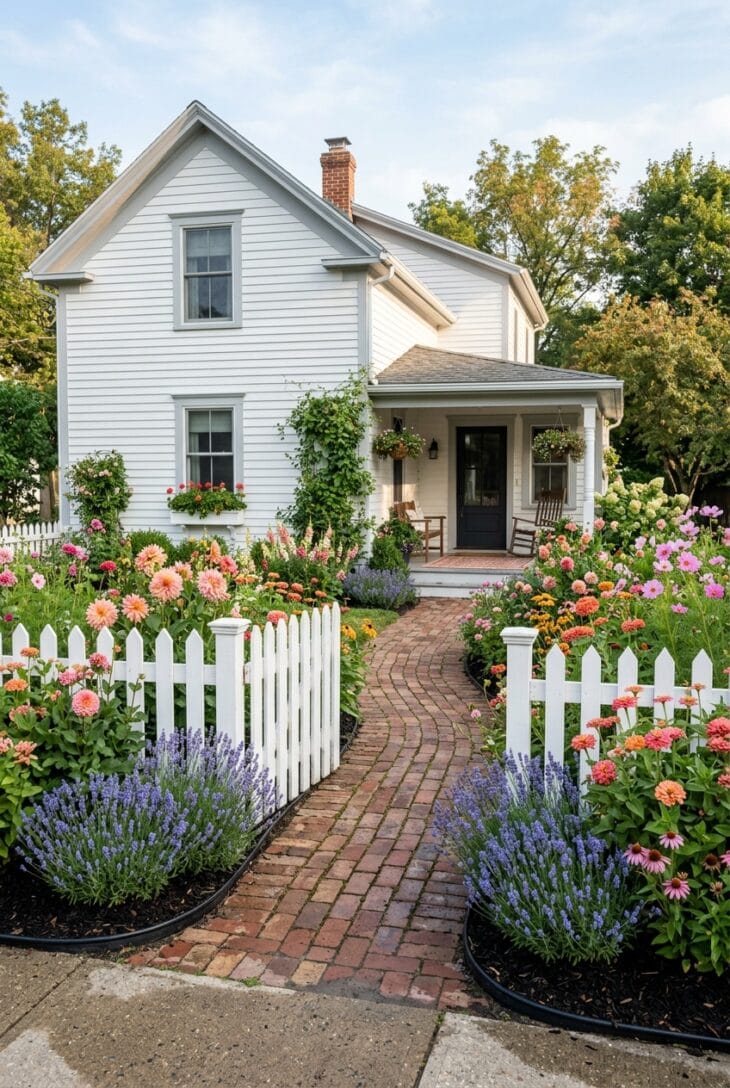
What you see A front yard where the lawn has given way to flowers. Dahlias, zinnias and cosmos fill curved beds behind a white picket fence, and a neat hedge of lavender lines the brick path to the door. It looks like a cottage garden, but every bloom is there to be cut.
Why it works The front yard is often the sunniest spot on the lot, and it is usually wasted on lawn. Turning it into a cutting garden gives you flowers and curb appeal at the same time. The trick is structure: a neat edge and a clipped low hedge keep it looking cared for even on the day after a big harvest.
How to get it Edge the beds with a low evergreen or long-flowering hedge so there is always a tidy frame. English lavender (Lavandula angustifolia ‘Hidcote’ or ‘Munstead’) is perfect, planted 12in (30cm) apart, and its stems can be cut too. Put the tallest cutters, like dahlias, toward the house and shorter zinnias toward the street, and cut from the back of the bed first. Keep a crisp edge on the beds with a spade every few weeks. Check your HOA or local rules before replacing a front lawn.
18. Apricot and Blush Color Palette
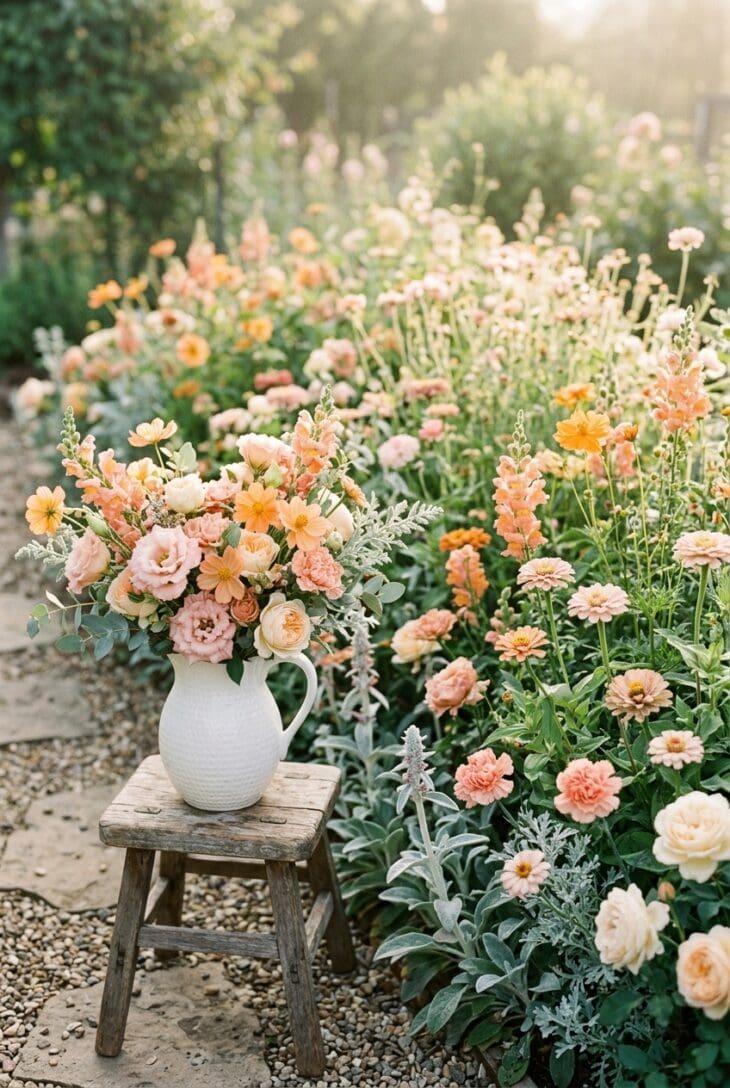
What you see A bed that looks like a wedding bouquet growing in the ground. Every flower is apricot, peach, blush or cream: ruffled lisianthus, soft cosmos, peach snapdragons, pale zinnias and creamy roses. The pitcher in front holds a bouquet picked at random, and it still looks planned.
Why it works When everything in a bed shares a color family, anything you cut goes with everything else, so arranging becomes effortless. Soft palettes like apricot and blush are also the most requested for weddings and gifts, and they photograph beautifully. The same approach works for any scheme: moody burgundies, hot sunset tones or all white.
How to get it Pick five or six flowers in one palette, such as cosmos ‘Apricotta’, snapdragon ‘Chantilly Peach’, zinnia ‘Queen Lime Blush’ and carnations (Dianthus caryophyllus) in coral or salmon. Add lisianthus (Eustoma grandiflorum) for its rose-like blooms that last two weeks in water; it takes five to six months from seed, so buy plugs in spring and plant them 6in (15cm) apart under netting. Include one silver or green foliage plant to break up the color. Order seed in winter, when the popular pastel varieties are still in stock.
19. Hardy Annuals Sown in Fall
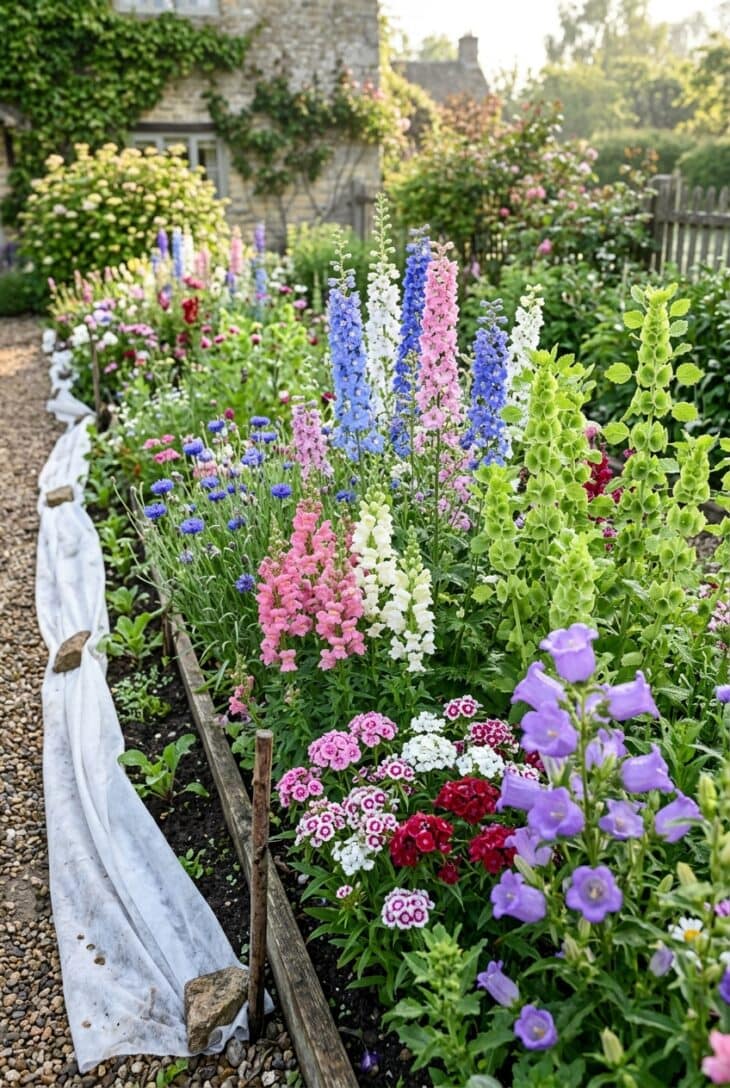
What you see A bed in full flower in early May, weeks before the summer annuals have even been planted. Spires of larkspur in blue and pink rise above snapdragons, green bells of Ireland, bright blue bachelor’s buttons and nodding Canterbury bells. A folded frost cloth at the side hints at how it all got through winter.
Why it works Many classic cutting flowers are hardy annuals that prefer cool weather. Planted in fall, they build big roots over winter and burst into bloom in spring, producing taller, stronger plants and far more flowers than spring-sown ones. They fill the gap between the tulips and the zinnias, and bees love the bachelor’s buttons.
How to get it In zones 7 and warmer, direct-sow larkspur (Consolida ajacis), bachelor’s buttons (Centaurea cyanus) and bells of Ireland (Moluccella laevis) about six weeks before your first fall frost, and set out snapdragon and sweet william (Dianthus barbatus) transplants at the same time. In colder zones, sow larkspur and bachelor’s buttons in late fall so they come up in spring, and cover young snapdragons with frost cloth. Bells of Ireland and larkspur both need cold to germinate, which is why fall sowing suits them so well. Sow biennial Canterbury bells (Campanula medium) in early summer to flower the following year.
20. Shady Cutting Corner
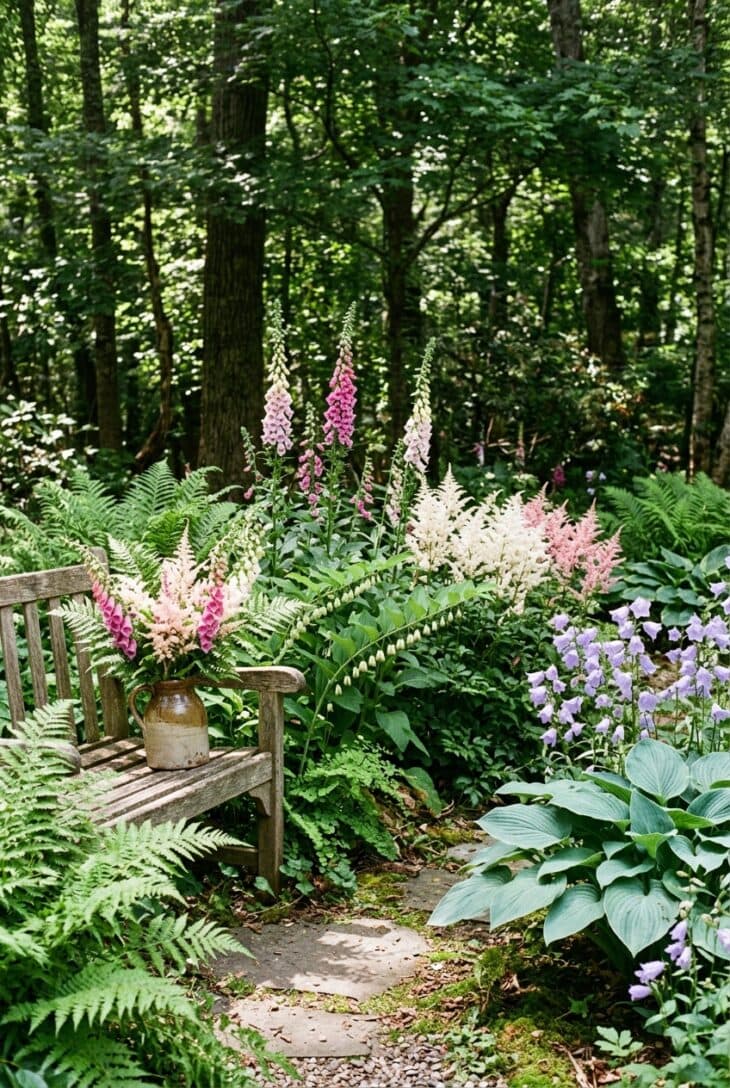
What you see A cool corner under the trees, where dappled light falls on foxgloves, feathery astilbe plumes and the arching stems of Solomon’s seal. Blue bellflowers and big hosta leaves fill the gaps, ferns unfurl at the back, and a jug on the bench shows that even this dim spot can fill a vase.
Why it works Most cutting flowers want full sun, which leaves shady gardeners assuming they cannot grow their own bouquets. They can: woodland plants give some of the most elegant material there is, with graceful shapes and cool colors. And shade-grown foliage, like hosta and fern, is exactly what florists pay for to finish arrangements.
How to get it Aim for dappled or morning sun rather than deep, dry shade. Plant astilbe (Astilbe × arendsii), Solomon’s seal (Polygonatum × hybridum), peach-leaved bellflower (Campanula persicifolia), hellebores (Helleborus orientalis) and hostas 18in (45cm) apart in rich, moist soil. Cut astilbe when about half the plume is open, and hellebores only once the seed pods start to swell, or both will wilt quickly. Pick hosta leaves and fern fronds when fully mature and firm, not soft and new. For more plants that thrive under trees, see our shade garden ideas.
21. Heat-Loving Dry Garden Cutting Bed
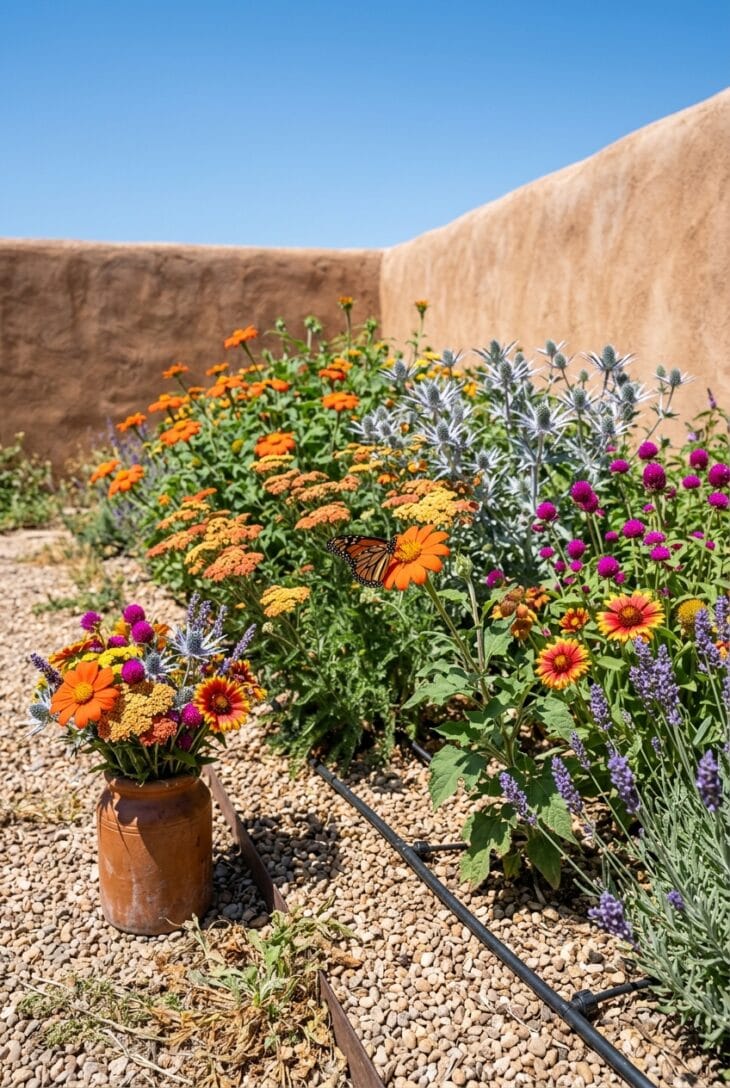
What you see A sun-baked bed against a warm adobe wall, full of color that thrives in heat: blazing orange Mexican sunflowers, terracotta yarrow, steel-blue sea holly, magenta globe amaranth and red and gold blanket flowers. A monarch rests on a sunflower, and a crock of the same flowers sits in the gravel.
Why it works In hot, dry regions, classic cutting flowers like sweet peas and delphiniums collapse by June. These plants do the opposite and get better as the heat builds. They need a fraction of the water, and many of them, like sea holly and globe amaranth, dry beautifully, so the bed supplies fresh and dried flowers at once. It is a natural fit for any drought-tolerant garden.
How to get it Grow Mexican sunflower (Tithonia rotundifolia ‘Torch’) from seed after frost, spaced 2ft (60cm) apart; its stems are hollow, so cut gently and dip the ends in hot water for a few seconds to help them last. Add yarrow, sea holly (Eryngium planum), globe amaranth and blanket flower (Gaillardia × grandiflora). Run drip irrigation under 2in (5cm) of gravel mulch and water deeply once or twice a week rather than a little every day. Harvest early in the morning, before the heat, and get the stems into water straight away.
22. Gladiolus and Lily Rows
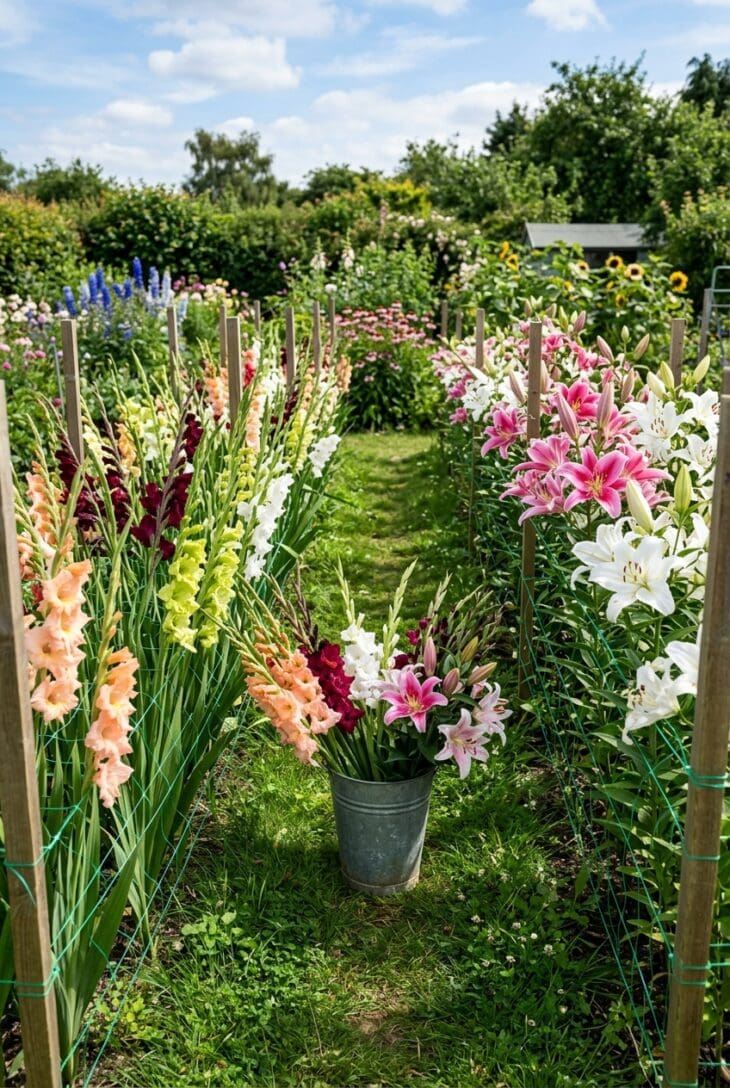
What you see Two tall rows in the summer sun: gladiolus spikes in peach, burgundy, lime and white, and beside them Oriental lilies with huge white and pink star-shaped flowers pouring out perfume. Netting keeps every stem ramrod straight, and a tall bucket on the path holds stems nearly as long as your arm.
Why it works Gladiolus and lilies give height and drama to big arrangements that annuals simply cannot. Both come from inexpensive bulbs and corms, both need little care, and both last well over a week in the vase. Gladiolus have shed their old-fashioned image, too: in soft modern colors, they look sophisticated rather than dated.
How to get it Plant gladiolus corms (Gladiolus × hortulanus) 4 to 6in (10 to 15cm) deep and 4 to 6in (10 to 15cm) apart, starting at your last frost and adding a new batch every two weeks until early summer for a long season. Cut when the bottom one or two florets show color. Plant Oriental lily bulbs (Lilium ‘Casa Blanca’ or ‘Stargazer’) 6 to 8in (15 to 20cm) deep in fall or early spring. When cutting lilies, leave at least a third of the stem and its leaves to feed the bulb, and pull off the pollen-laden anthers as the flowers open to prevent stains. Keep lilies out of homes with cats, as every part of the plant is highly toxic to them.
23. Ranunculus and Anemones Under Low Tunnels
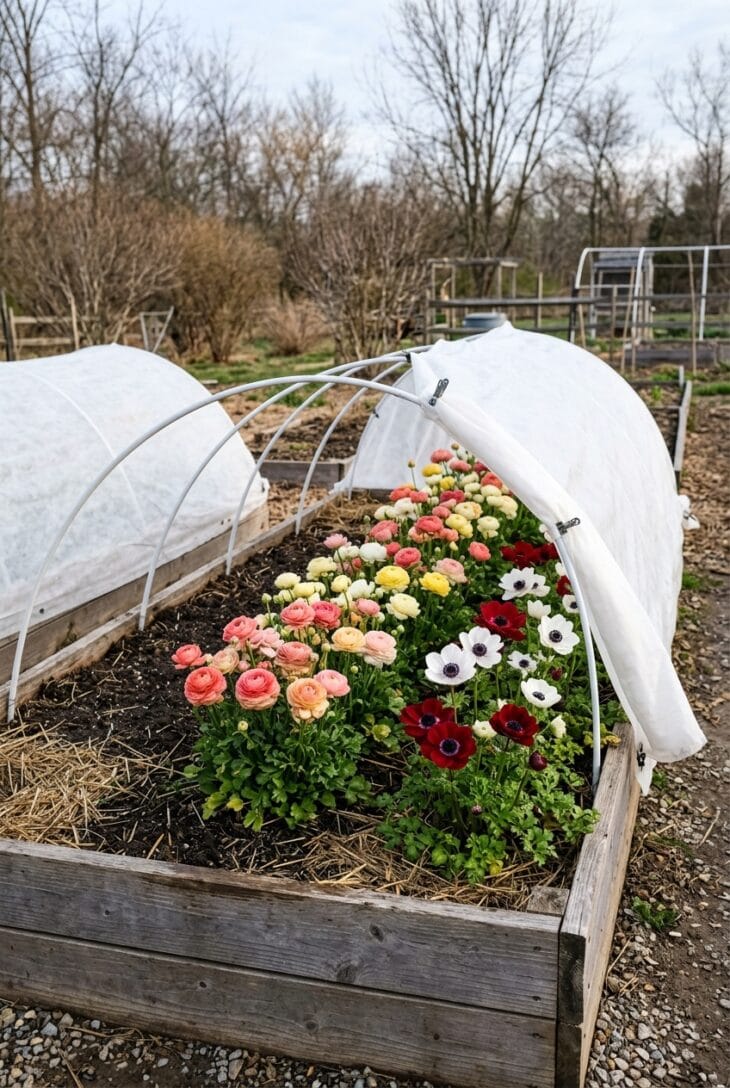
What you see The trees behind are still bare, but under a low tunnel of hoops and frost cloth a bed is in full bloom. Ranunculus open in layer upon layer of coral, blush, butter yellow and white, and anemones with inky black centers stare up from between them. It feels like a small, private spring arriving a month early.
Why it works Ranunculus and anemones are two of the most prized cut flowers in the florist trade, and they last up to ten days in a vase. They love cool weather but are only reliably hardy in mild winters. A simple low tunnel shelters them from hard frosts, letting you plant weeks earlier and harvest in early spring, when bought flowers are at their most expensive.
How to get it Soak ranunculus (Ranunculus asiaticus) and anemone (Anemone coronaria) corms in water for three to four hours, then pre-sprout them in trays of damp potting mix in a cool spot for about ten days. In zones 8 and warmer, plant them out in fall; in colder areas, plant in late winter, about six weeks before your last frost, under a tunnel. Set them 2in (5cm) deep and 9in (23cm) apart. Bend wire hoops over the bed every 4ft (120cm), cover them with frost cloth, and open the ends on sunny days so the plants do not overheat. Cut ranunculus when the buds are colored and feel like a soft marshmallow.
24. Roadside Flower Stand
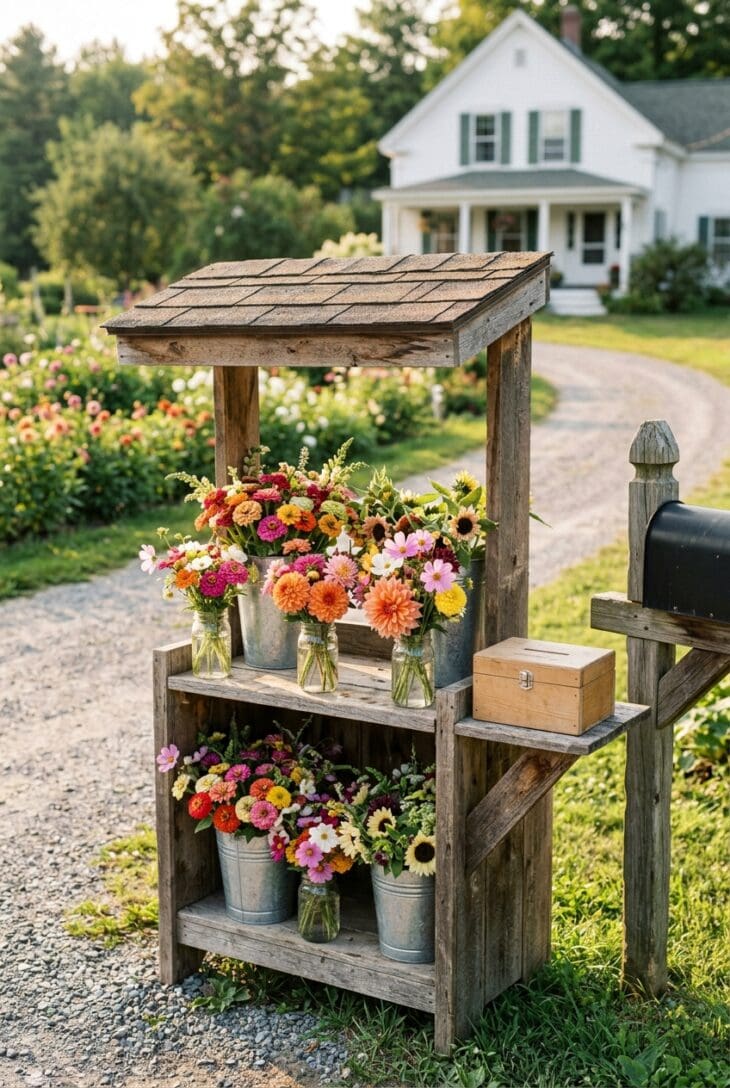
What you see A little wooden stand at the end of the driveway with a shingled roof and two shelves of jam-jar bouquets: zinnias, dahlias, cosmos and small sunflowers, bright against the weathered wood. A plain cash box sits on the counter, and the cutting garden they came from glows in the background.
Why it works A healthy cutting garden produces far more than one household can use, and the more you cut, the more it gives. A small honor-system stand turns the surplus into seed money for next year and brightens your neighbors’ days. It also gives you a reason to keep harvesting, which is exactly what keeps annuals like zinnias and cosmos flowering all season.
How to get it Check your local and HOA rules on selling from home before you start. Build or buy a simple stand with a roof to keep the sun and rain off, and place it where cars can pull in safely. Sell small mixed bouquets in recycled jars, which keep the flowers in water and let buyers carry them home easily. Harvest in the early morning, condition the stems for a few hours, and restock daily so nothing wilting sits on the shelf. Aim to grow a few easy, high-yield flowers in quantity, such as zinnias, cosmos, sunflowers and dahlias, rather than lots of fussy ones.
25. Harvest and Conditioning Station
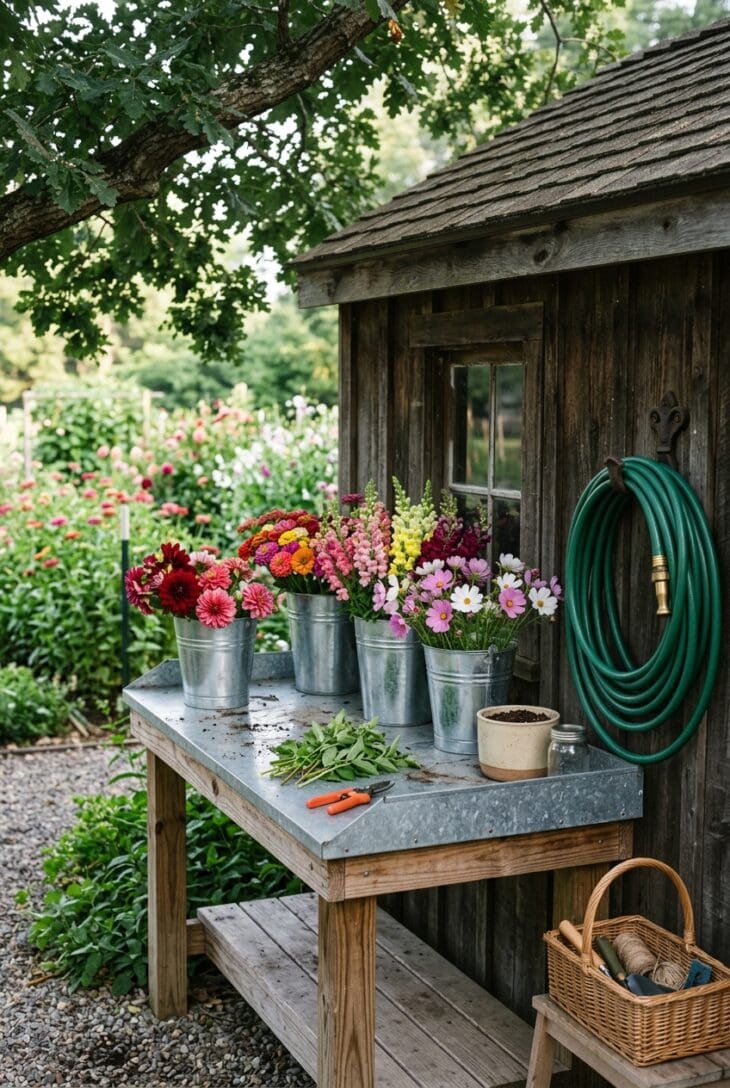
What you see A shaded potting bench beside the shed, lined with buckets of freshly cut zinnias, dahlias, snapdragons and cosmos. A pair of snips lies next to a pile of stripped leaves, the hose hangs ready, and beyond it the cutting garden waits for the next round.
Why it works How you handle flowers in the first few hours after cutting decides whether they last three days or ten. A dedicated spot in the shade, with clean buckets and water close by, makes good habits easy, and a garden full of flowers deserves a vase life to match. It also keeps the mess of stripping stems out of the kitchen.
How to get it Set up a sturdy bench in a spot that stays shaded in the morning, ideally near a hose or tap. Harvest in the cool of early morning or evening, carrying a bucket of water into the garden so stems go straight in. Strip every leaf that would sit below the water line, recut stems at an angle, and let the flowers rest in a cool, dark place for at least four hours before arranging. Scrub buckets with a weak bleach solution between uses, since bacteria clog stems and are the main cause of early wilting. Keep your snips sharp and clean, because a crushed stem cannot drink.