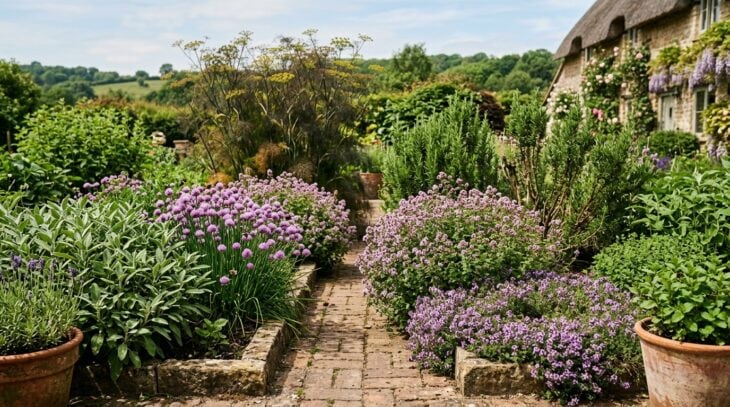
A cottage herb garden should feel useful before it feels decorative. You want rosemary for potatoes, mint for tea, basil for summer tomatoes, and a path that smells better every time you brush past it.
Contents
- 01. Kitchen-Door Herb Border
- 02. Lavender-Lined Herb Path
- 03. Rosemary, Sage and Gravel Bed
- 04. Thyme Between Stepping Stones
- 05. Raised Herb Potager
- 06. Terracotta Herb Pot Cluster
- 07. Mint Tub for Tea and Dessert
- 08. Basil and Tomato Patio Pots
- 09. Chive and Parsley Edging
- 10. Dill, Fennel and Calendula Strip
- 11. Chamomile Seat Nook
- 12. Bay Tree Topiary Pair
- 13. Herb Spiral for a Tiny Plot
- 14. Cottage Herb Window Box
- 15. Hanging Herb Basket
- 16. Mini Herb Knot Garden
- 17. Herb and Flower Cottage Border
- 18. Shady Parsley and Mint Corner
- 19. Dry Stone Wall Herb Pockets
- 20. Scented Herb Trail for Children
- 21. Tea Herb Bed
- 22. Cut-and-Dry Herb Patch
- 23. Bee-Friendly Hyssop and Oregano Bed
- 24. Winter Evergreen Herb Bed
- 25. Tiny Balcony Herb Shelf
The ideas below range from a single kitchen-door pot to a full potager, with sunny gravel beds, raised planters, shady mint corners, and tiny balcony shelves along the way. Some are neat and clipped, others spill into flowers and self-seeders.
Use the whole list as a design menu, then pick the pieces that match your light, space, and cooking habits. A good herb garden starts small, stays close to the kitchen, and rewards regular picking.
01. Kitchen-Door Herb Border
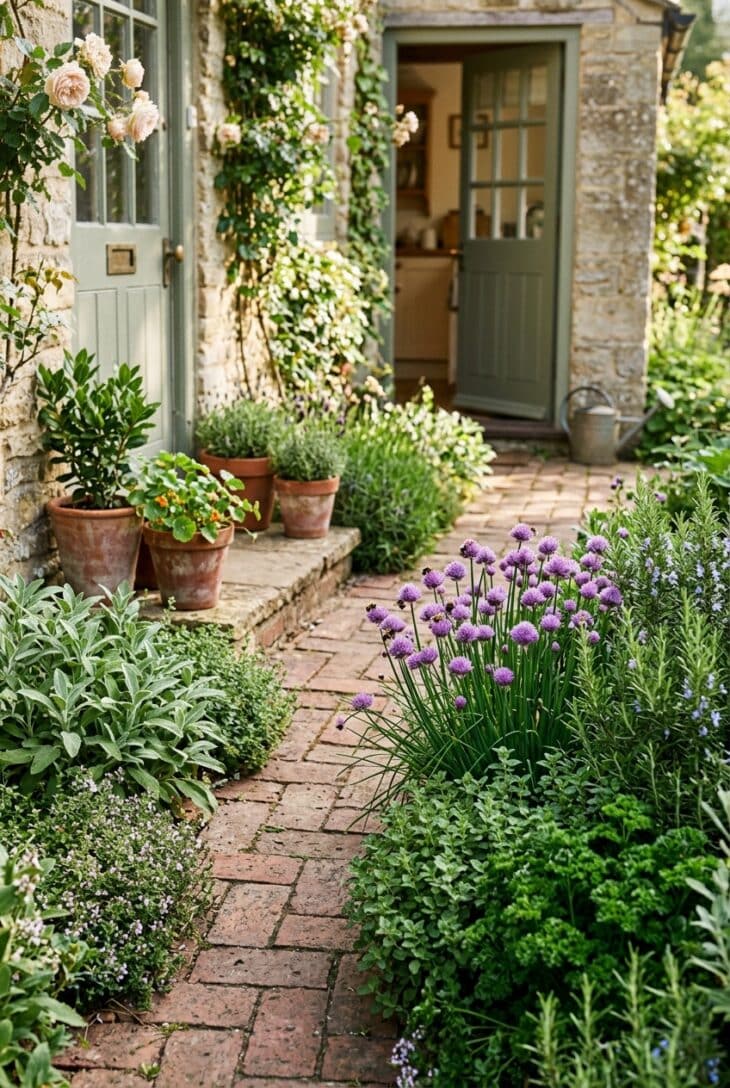
What you see A narrow herb border runs right beside the kitchen door, close enough to snip from while dinner is on the stove. Rosemary (Salvia rosmarinus), sage (Salvia officinalis), thyme, oregano and chives crowd the edge of a brick path, with parsley tucked into the cooler pockets near the step. The whole planting looks informal, fragrant, and used.
Why it works Herbs earn their place when they are convenient. Putting them by the door turns picking into a habit, and the mixed textures make a small strip feel like a real garden rather than a utility bed. The cottage look comes from letting the plants lean a little into the path without losing access.
How to get it Choose the sunniest door or path you use every day, even if the bed is only 18in (45cm) deep. Plant woody Mediterranean herbs like rosemary, sage, thyme and oregano where drainage is sharpest, and keep parsley and chives where the soil stays a little cooler. Set plants 12 to 18in (30 to 45cm) apart so you can harvest without overcrowding. Pick lightly but often, cutting just above leaf joints to keep growth compact.
02. Lavender-Lined Herb Path
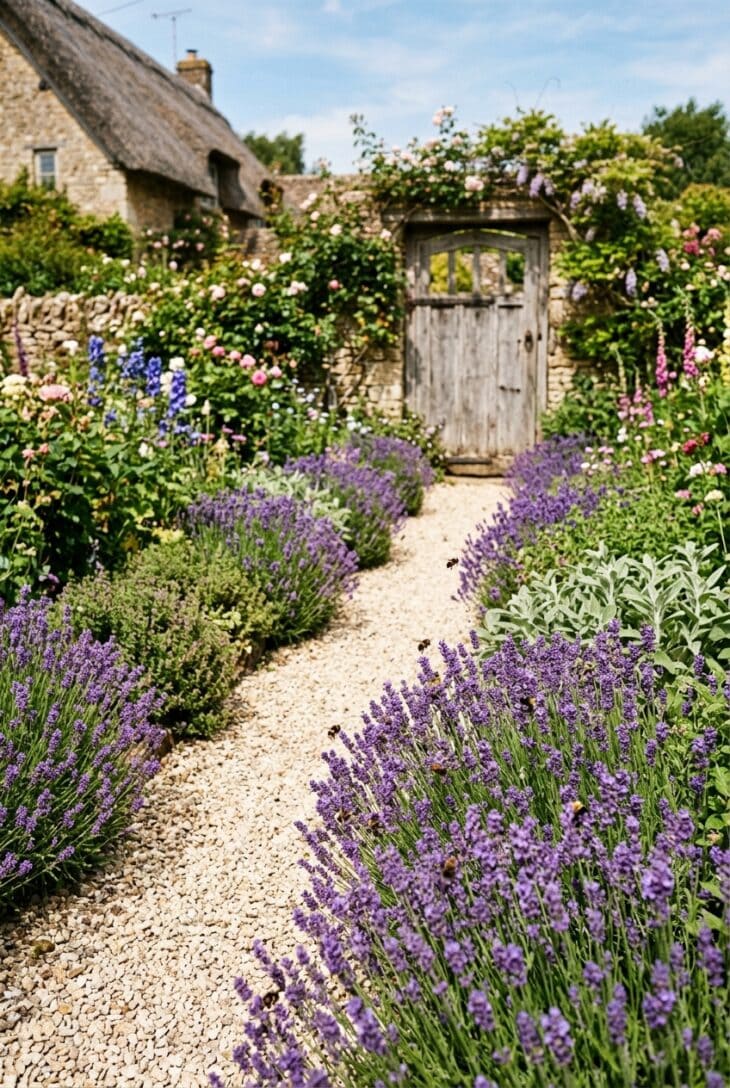
What you see A path edged with English lavender (Lavandula angustifolia) turns a simple route into a scented ribbon. Purple flower spikes lean over pale gravel, while thyme and sage fill the sunny bed just behind them. Every step releases fragrance, especially on a hot afternoon.
Why it works Lavender gives a loose cottage planting just enough order. Repeating one plant along the edge makes the path feel intentional, while the herbs behind it keep the bed productive. It also links this article naturally with broader cottage garden ideas, where scent, bees, and soft edges do much of the work.
How to get it Plant compact varieties such as ‘Hidcote’ or ‘Munstead’ 12 to 18in (30 to 45cm) apart in full sun. Lavender hates wet feet, so improve heavy soil with grit or plant on a slight ridge. Trim after flowering, cutting into leafy growth but never into bare old wood. Keep the path at least 30in (75cm) wide so the plants can billow without blocking the way.
03. Rosemary, Sage and Gravel Bed
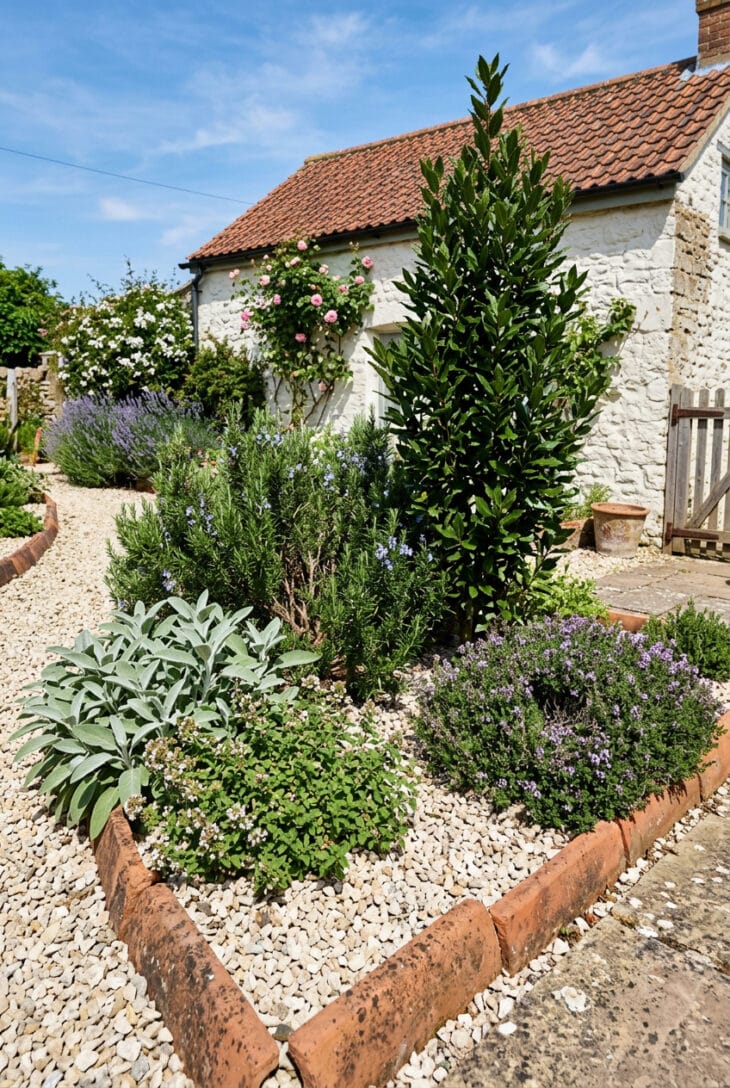
What you see This sunny bed is all silver leaves, woody stems and pale gravel. Rosemary rises at the back, broad grey sage cushions the middle, and low thyme and oregano creep along the front edge. It feels like a cottage version of a small Mediterranean herb garden.
Why it works Many culinary herbs come from dry, bright places, so gravel is more than a decorative mulch. It reflects light, keeps crowns dry, and makes the whole bed feel clean and deliberate. If you already like gravel garden ideas, this is the edible version.
How to get it Pick a site with at least 6 hours of sun and avoid low spots where winter water sits. Work in grit if your soil is heavy, then mulch 1 to 2in (2.5 to 5cm) deep with gravel after planting. Space rosemary 3ft (90cm) from its neighbors, sage 18 to 24in (45 to 60cm), and thyme or oregano 10 to 12in (25 to 30cm). Do not overfeed, because rich soil makes these herbs soft and less aromatic.
04. Thyme Between Stepping Stones
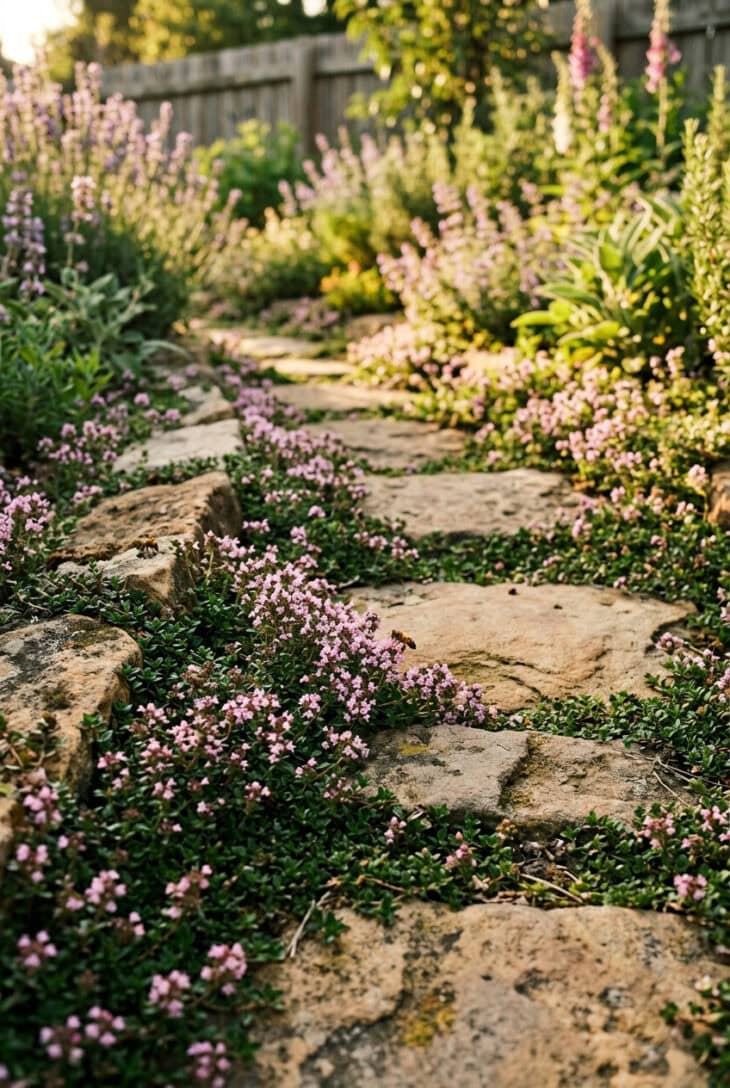
What you see Low mats of creeping thyme soften the cracks between stepping stones, flowering in tiny pink clouds in early summer. The stones still give you a clear route through the bed, but the planting blurs every hard edge. Brush it with your shoe and the path smells warm and herbal.
Why it works A herb path makes the ground plane useful and beautiful at the same time. Thyme tolerates light foot traffic, loves lean soil, and turns awkward gaps into a feature. It is also one of the easiest ways to make a path feel softer and more planted.
How to get it Use creeping thyme rather than upright culinary thyme for the tightest carpet. Set small plants 6 to 8in (15 to 20cm) apart in gritty soil, then water regularly until they root. Keep the stones slightly proud of the soil so feet land on stone, not plant crowns. Trim after flowering if the stems start to sprawl over the walking surface.
05. Raised Herb Potager
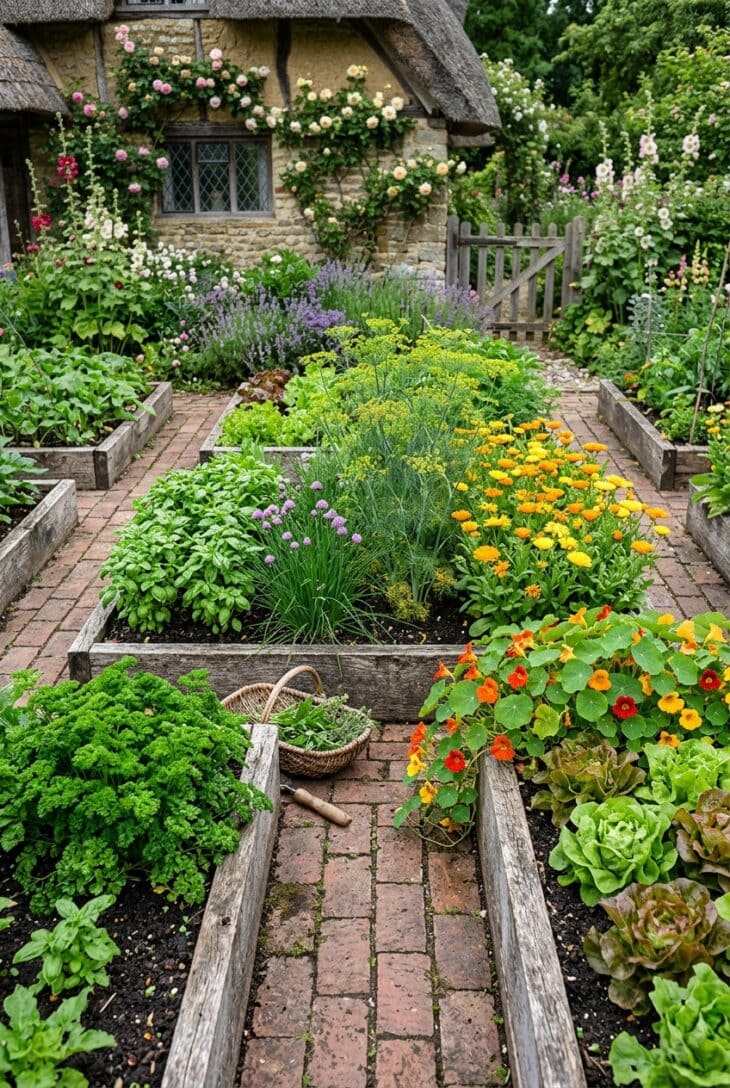
What you see A raised herb potager divides the harvest into neat, reachable blocks. Parsley, basil (Ocimum basilicum), chives, dill, calendula and nasturtiums grow beside lettuce and edible flowers, framed by low timber beds and narrow brick paths. It is productive, but it looks dressed enough to sit near the house.
Why it works Raised beds warm quickly, drain well, and make frequent picking comfortable. The potager layout gives kitchen crops the structure of an ornamental garden, which is why it suits cottage herb growing so well. It also borrows the best parts of raised bed garden ideas without needing a huge vegetable plot.
How to get it Build beds no wider than 4ft (120cm) so you can reach the middle without stepping on soil. Fill with a free-draining mix enriched with compost, then group herbs by water need. Keep basil, parsley and dill together where you can water more often, and put thyme, oregano and sage in the driest corner. Re-sow fast annual herbs every few weeks for a steady supply.
06. Terracotta Herb Pot Cluster
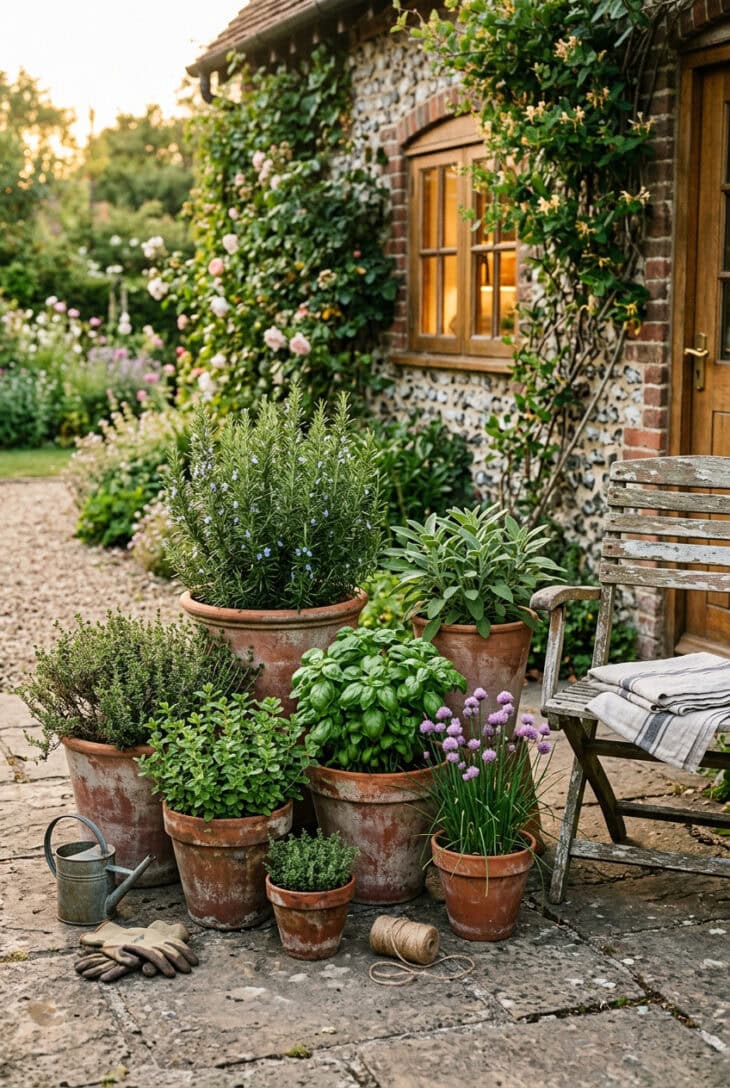
What you see Weathered terracotta pots gather on a sunny patio, each one holding a different herb. Rosemary gives height, sage makes silver mounds, basil shines green, and chives send up purple pom-poms. The group feels casual, as if the cook has been adding favorites for years.
Why it works Pots let you match each herb to its own soil and watering routine. They also solve the classic problem of herbs needing sun when the garden beds are already full. For renters or paved spaces, this is the simplest bridge between herb gardening and container garden ideas.
How to get it Use pots at least 10 to 12in (25 to 30cm) wide for individual herbs, with larger containers for rosemary and bay. Raise each pot on feet so drainage holes stay clear. Use gritty compost for woody herbs, richer compost for basil and parsley, and water according to the plant rather than the calendar. Group pots in threes or fives, repeating terracotta so the collection looks intentional.
07. Mint Tub for Tea and Dessert
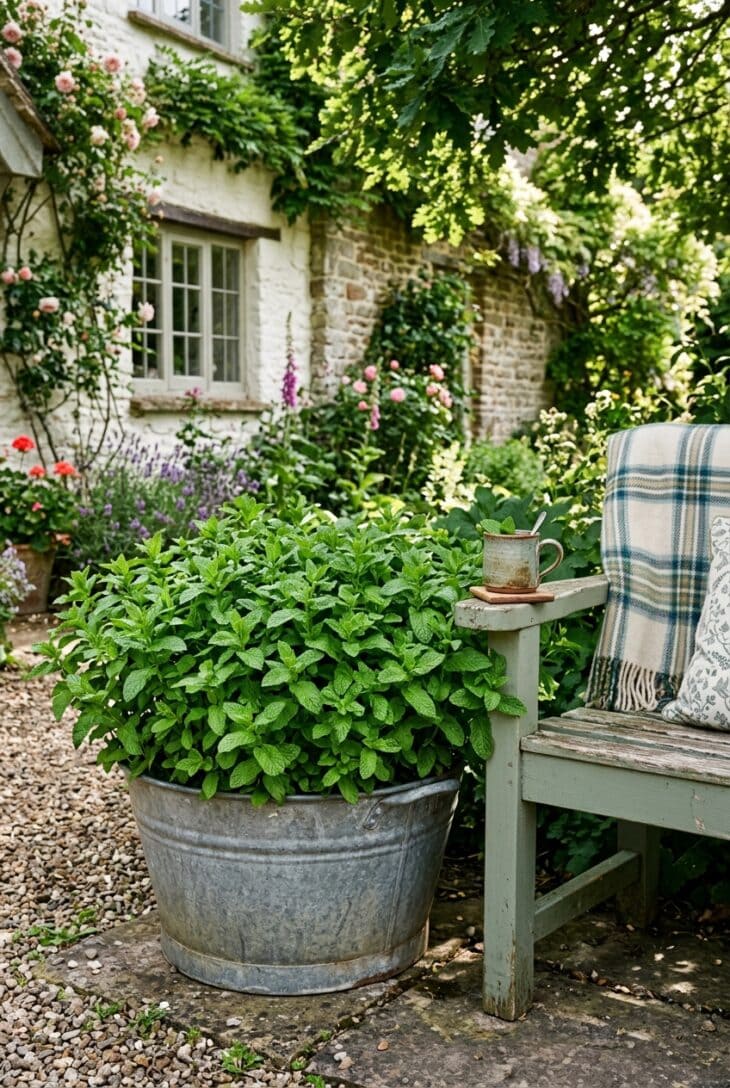
What you see A galvanized tub overflows with mint, its bright green leaves spilling over the rim beside a bench. It looks abundant and fresh, ready for tea, new potatoes, lemonade and desserts. The container is important, because mint wants to roam.
Why it works Mint is one of the most useful herbs and one of the least polite in open ground. Growing spearmint (Mentha spicata) or peppermint (Mentha x piperita) in a tub gives you the harvest without the takeover. It also lets you place the plant in partial shade, where the leaves stay softer and less stressed.
How to get it Choose a pot or tub at least 12in (30cm) wide with drainage holes. Use moisture-retentive compost and keep it evenly damp, especially in summer. Cut stems often to encourage fresh shoots, and shear the whole plant back if it becomes leggy. Refresh the tub every 2 or 3 years by dividing the roots and replanting the youngest pieces.
08. Basil and Tomato Patio Pots
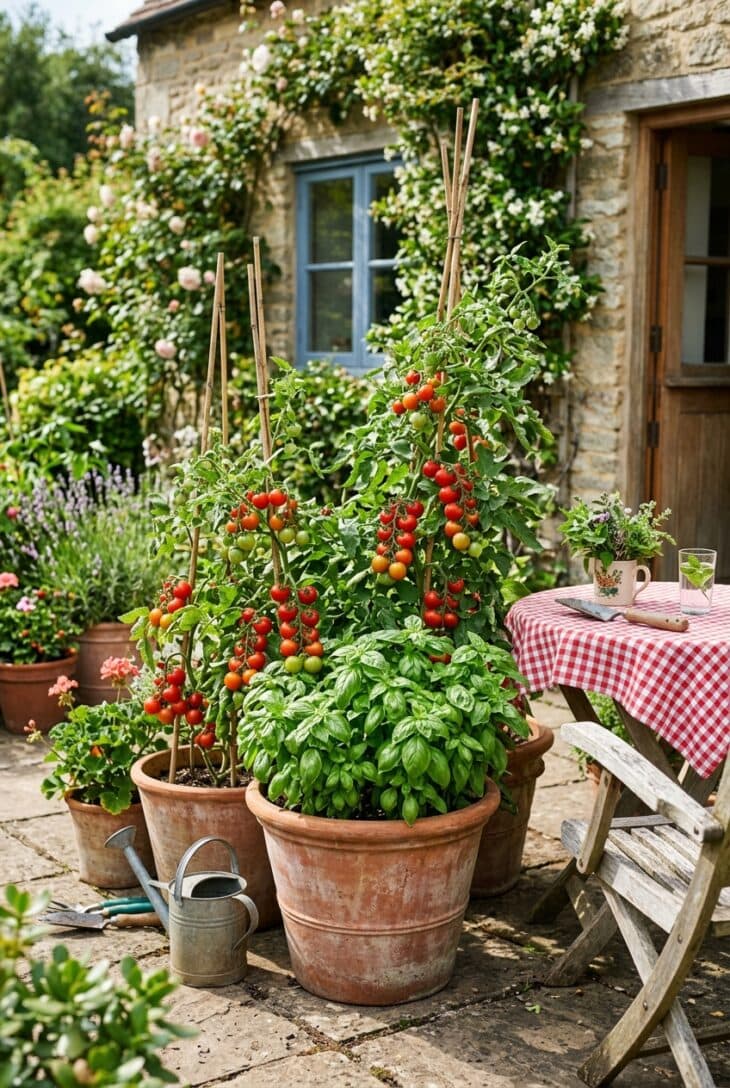
What you see Tomatoes climb from large patio pots with glossy basil tucked around their feet. The pairing looks like summer: red fruit, green leaves, terracotta, and a small table waiting for lunch. It is a herb garden you can eat straight from the patio.
Why it works Basil and tomatoes like warmth, regular water, and easy access for harvesting. Keeping them in pots lets you place them in the hottest sheltered spot you own, even if that spot is paved. It also connects the herb garden to vegetable garden ideas in the most delicious way.
How to get it Use a pot at least 14in (35cm) wide for each tomato, or a deep trough for one compact tomato and several basil plants. Wait until nights are reliably warm before planting basil outdoors. Water consistently, feed tomatoes weekly once flowers appear, and pinch basil tips to stop it flowering too soon. Keep basil at the sunny front of the pot so it is not shaded out by tomato foliage.
09. Chive and Parsley Edging
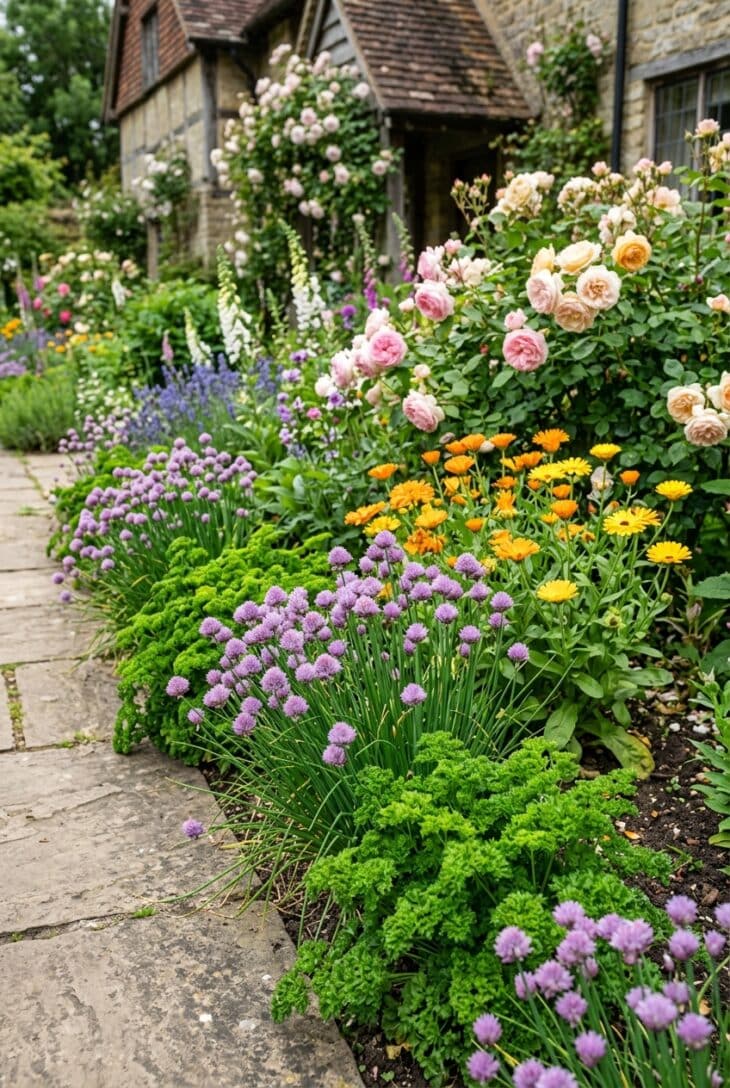
What you see Chives and parsley form a soft edible edge along a flower bed, neat enough to define the border but loose enough for cottage style. Purple chive flowers rise above fresh green parsley mounds, with roses, calendula and other flowers behind them. The edge is both garnish and garden detail.
Why it works Low herbs make excellent edging because they stay compact, tolerate regular picking, and soften the front of a bed. Chives (Allium schoenoprasum) bring early flowers for pollinators, while parsley fills gaps with lush leaf. It is a practical twist on classic garden border ideas.
How to get it Plant chive clumps 8 to 10in (20 to 25cm) apart along the front of the bed, then tuck parsley between or just behind them. Parsley is biennial, so sow or plant fresh every year for the best leaves. Cut chive flowers after they fade unless you want seedlings. Keep the edge weeded while young, because small edible plants dislike competition.
10. Dill, Fennel and Calendula Strip
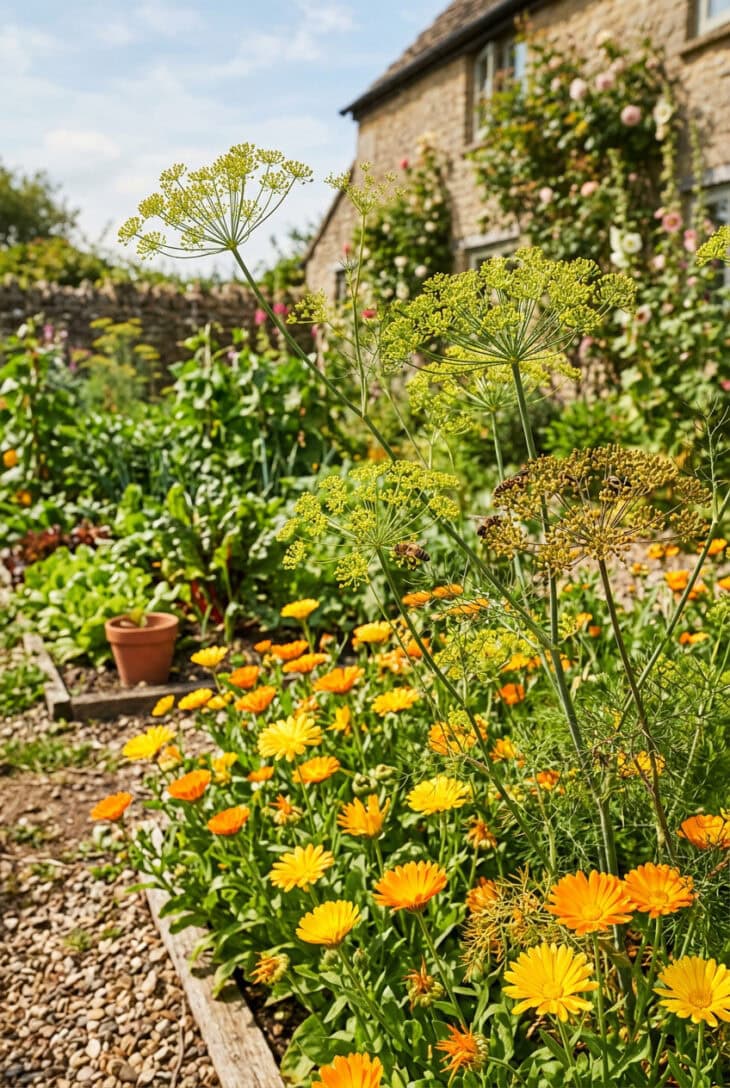
What you see Feathery dill and bronze fennel rise above orange calendula in a sunny strip beside the vegetable beds. Their umbrella-shaped flowers are alive with hoverflies, bees and tiny beneficial insects. The planting looks airy rather than bulky, so it fits even along a narrow edge.
Why it works Umbellifer flowers are magnets for beneficial insects, and many of those insects help keep pests in balance. Dill (Anethum graveolens) and fennel (Foeniculum vulgare) also give you leaves, seeds and scent. This is where herb growing overlaps beautifully with wildlife garden ideas.
How to get it Sow dill directly where it will grow, because it dislikes transplanting. Give fennel room, at least 2 to 3ft (60 to 90cm), and avoid planting it too close to delicate seedlings it may shade. Let some calendula self-seed for next year, but thin the seedlings so they do not smother the herbs. Keep this strip sunny, open, and free of insecticides.
11. Chamomile Seat Nook
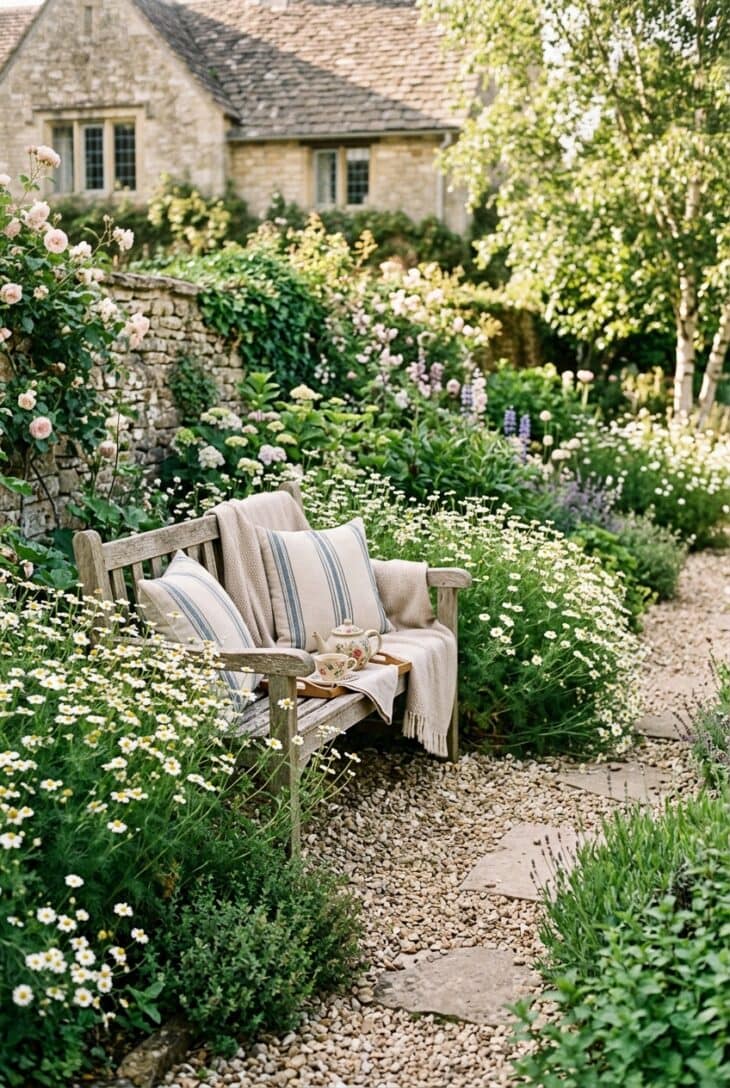
What you see A small bench sits among low chamomile, with white daisy flowers and ferny leaves softening the gravel around it. The planting is quiet, fragrant and a little old-fashioned. It feels like the place you would sit with a cup of tea rather than rush past.
Why it works Chamomile gives a cottage herb garden a gentle, restful note. German chamomile (Matricaria chamomilla) is best for flowers and tea, while lawn chamomile is better for low scented carpets. Planted around a seat, its scent is right where you pause.
How to get it Use German chamomile in a flower bed or pot, and use low-growing Roman chamomile if you want a lawn-like effect. Give both full sun and soil that drains well. Harvest flowers when the petals are open and dry them on a screen in a warm airy place. Do not expect chamomile to tolerate heavy daily traffic, especially in wet soil.
12. Bay Tree Topiary Pair
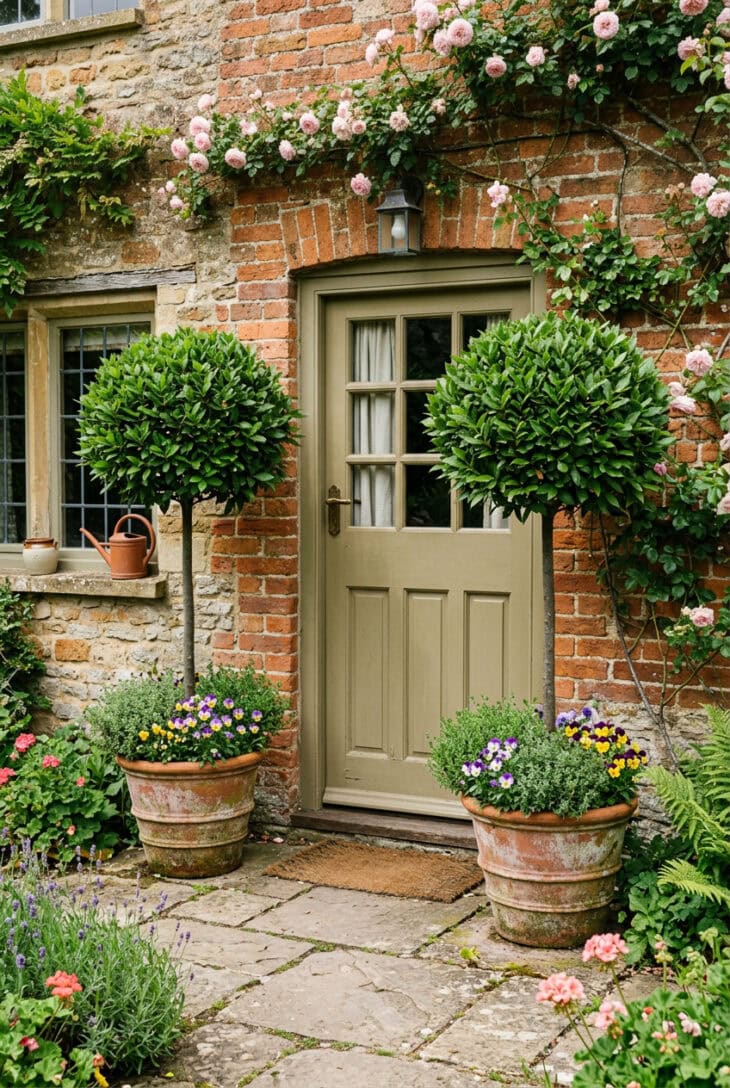
What you see Two clipped bay trees stand in terracotta pots on either side of a kitchen door, their round heads giving the entrance a calm, formal note. Thyme and violas soften the pot surface below. The look is tidy, but still homely enough for a cottage setting.
Why it works Bay tree (Laurus nobilis) is evergreen, edible and sculptural, so it gives a herb garden year-round structure. A pair by the door frames the entrance in the same way clipped shrubs do in front garden ideas. The leaves also end up in soups and stews all winter.
How to get it Buy young bay standards if you want the shape quickly, or train a single-stem plant over several years. Use a heavy pot that will not tip in wind, and a soil-based compost for long-term stability. Clip lightly in late spring and again in summer to keep the head dense. Move pots to a sheltered wall in very cold spells, because container-grown bay is more exposed than plants in the ground.
13. Herb Spiral for a Tiny Plot
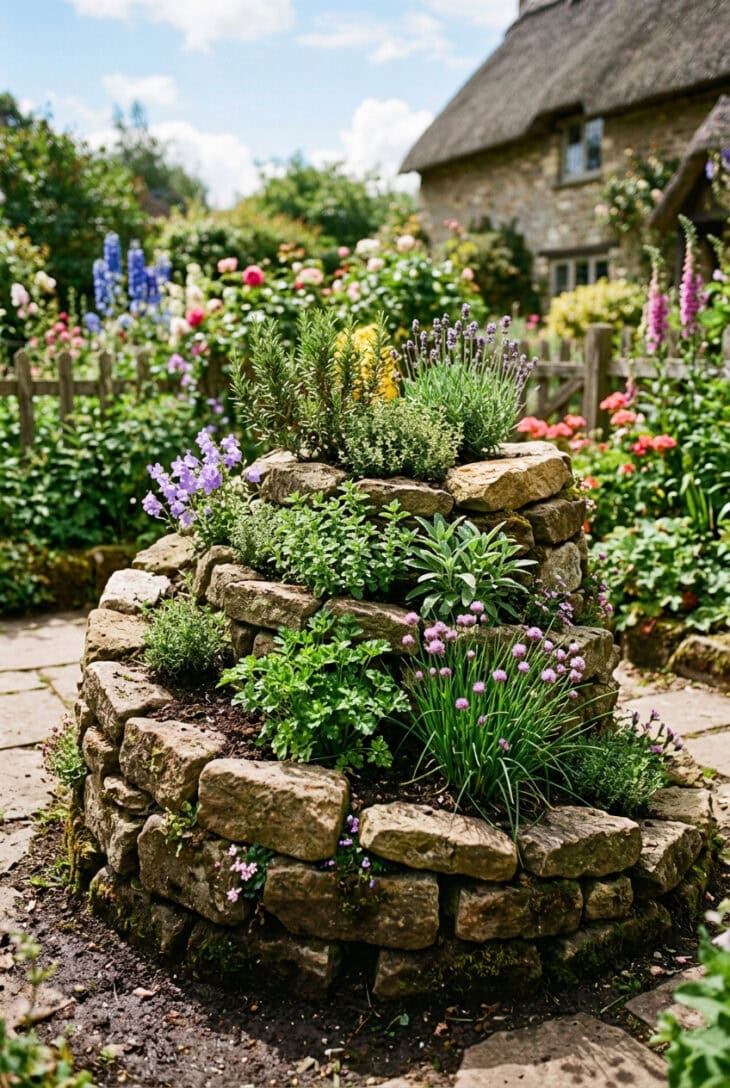
What you see A stone herb spiral rises from a small bed like a miniature hill, packed with rosemary, thyme, oregano, parsley and chives. The top is dry and sunny, the lower curve cooler and a little damper. Flowers tuck into the cracks, making the structure feel settled rather than engineered.
Why it works A spiral creates several growing conditions in one compact footprint. Dry-loving herbs go high, leafier herbs go low, and the whole thing gives a tiny garden more planting surface than a flat bed. It is especially useful for small garden ideas, where every square foot has to work hard.
How to get it Build the spiral 3 to 5ft (90 to 150cm) wide with stone, brick or reclaimed pavers. Fill the center with rubble for drainage, then add soil, using a grittier mix at the top and richer compost near the base. Plant the tallest herbs where they will not shade the rest. Water carefully the first season while roots establish, then let the dry top stay lean.
14. Cottage Herb Window Box
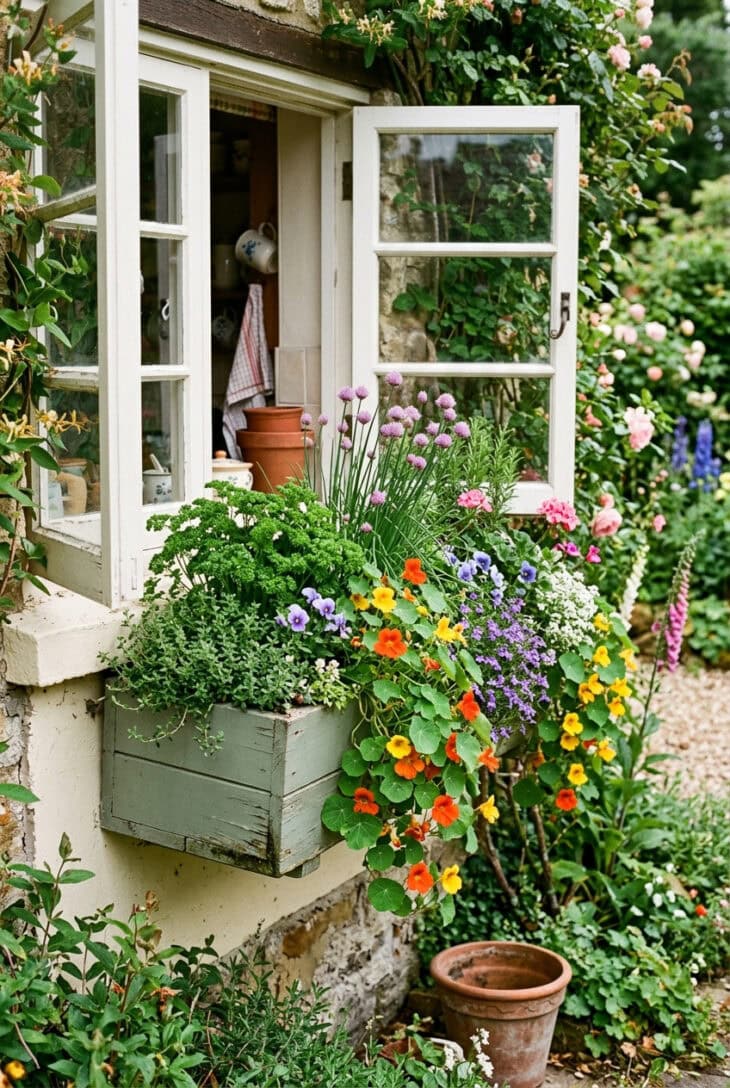
What you see A wooden window box below the kitchen window holds parsley, chives, thyme and trailing nasturtiums. The herbs are close enough to reach from inside, and the nasturtium flowers tumble down the front like edible bunting. It is a small gesture that makes the whole wall feel alive.
Why it works Window boxes put herbs exactly where space is tight but visibility is high. A mix of upright, mounding and trailing plants gives the box the same fullness as a flower display, with more practical value. Nasturtiums (Tropaeolum spp.) are ideal because their leaves, flowers and seeds are all useful in the kitchen.
How to get it Choose a box at least 8in (20cm) deep with firm brackets and drainage holes. Use a moisture-retentive compost, because window boxes dry faster than ground beds. Put thyme at the sunny end, parsley where it gets a little shade, and trailing nasturtiums near the front corners. Water every day in hot weather and feed lightly every few weeks.
15. Hanging Herb Basket
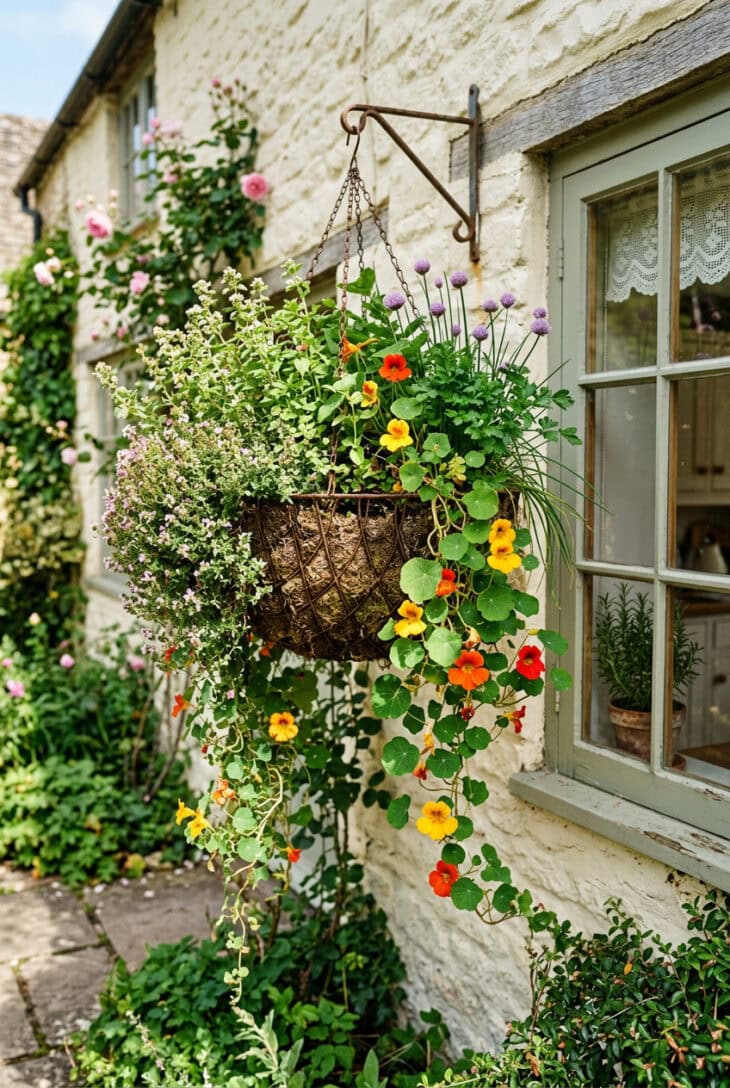
What you see A hanging basket overflows with thyme, oregano, parsley, chives and trailing nasturtiums. Instead of a purely floral basket, this one gives scent, flowers and kitchen pickings at eye level. It softens a blank wall without taking up any ground space.
Why it works Hanging baskets are useful when the sunniest spot is a wall, balcony rail or porch. Herbs with trailing or compact habits cope well if they are watered consistently. This is a good way to make container gardening feel productive rather than purely decorative.
How to get it Use the biggest basket you can hang safely, because small baskets dry out too quickly for edible plants. Line it well, add water-retentive compost, and mix in slow-release fertilizer. Choose compact herbs and avoid large rosemary or bay, which will outgrow the basket. Water daily in summer, and cut regularly so the herbs stay bushy rather than stringy.
16. Mini Herb Knot Garden
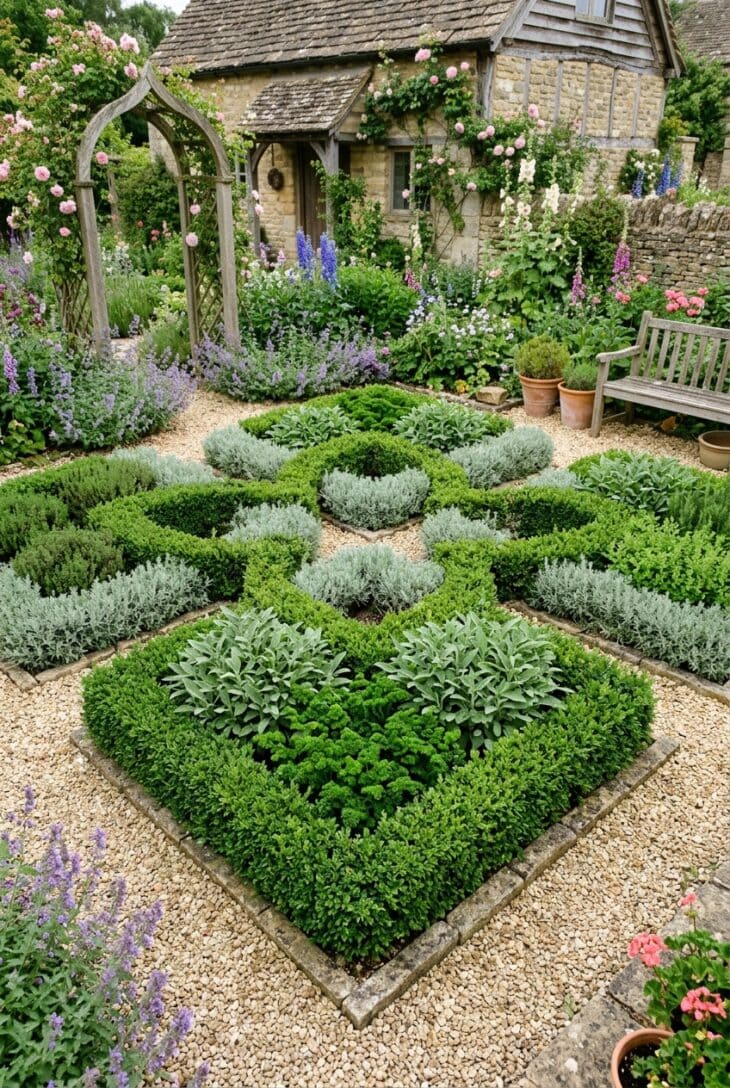
What you see A mini knot garden draws simple loops and diamonds with low clipped herbs. Thyme, lavender and germander outline the pattern, while sage and parsley fill the small compartments. From above, the planting looks formal, but the herbs keep it warm and cottage-friendly.
Why it works Knot gardens bring structure to plants that can otherwise look loose and scruffy by late summer. The geometry makes a small herb bed feel designed, and the repeated clipping releases scent as you work. It is the herb garden’s answer to neat border edging.
How to get it Keep the pattern simple, especially in a small yard. Mark it with string and sand before planting, then set edging herbs 6 to 10in (15 to 25cm) apart depending on variety. Clip little and often rather than waiting until growth is woody. Leave stepping stones or gravel access so you can harvest and trim without crushing the design.
17. Herb and Flower Cottage Border
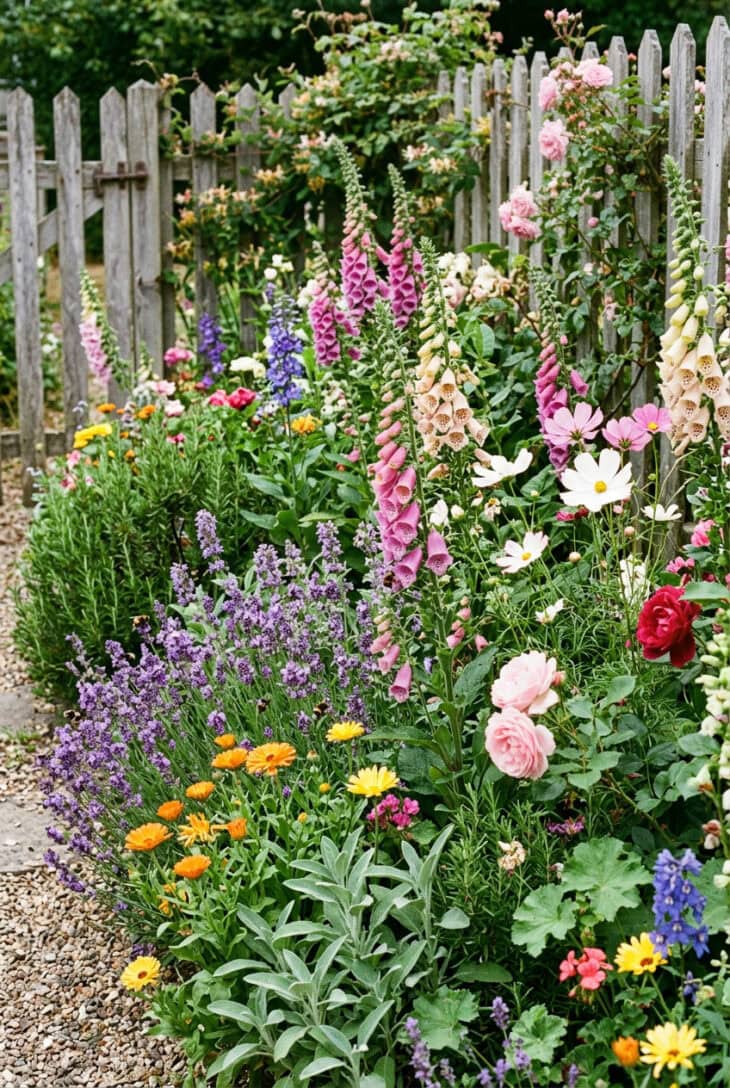
What you see Herbs mingle with flowers in a full cottage border, so lavender, rosemary, sage and catmint (Nepeta mussinii) sit among roses, calendula, cosmos and foxgloves. The herbs do not look like a separate kitchen crop. They look like part of the ornament.
Why it works Many herbs have excellent flowers, foliage and scent, so separating them from ornamentals is often unnecessary. Mixing them through flower bed ideas gives you a prettier, more useful border with more pollinator value. The flowers also distract from the gaps left by harvesting.
How to get it Place woody herbs where they can become permanent shrubs, then weave annual herbs and flowers around them each year. Repeat one or two herbs through the bed to make the mix feel cohesive. Avoid planting thirsty annuals right against lavender or rosemary, because they need different watering. Deadhead flowers, but let a few calendula and dill plants seed for next season.
18. Shady Parsley and Mint Corner
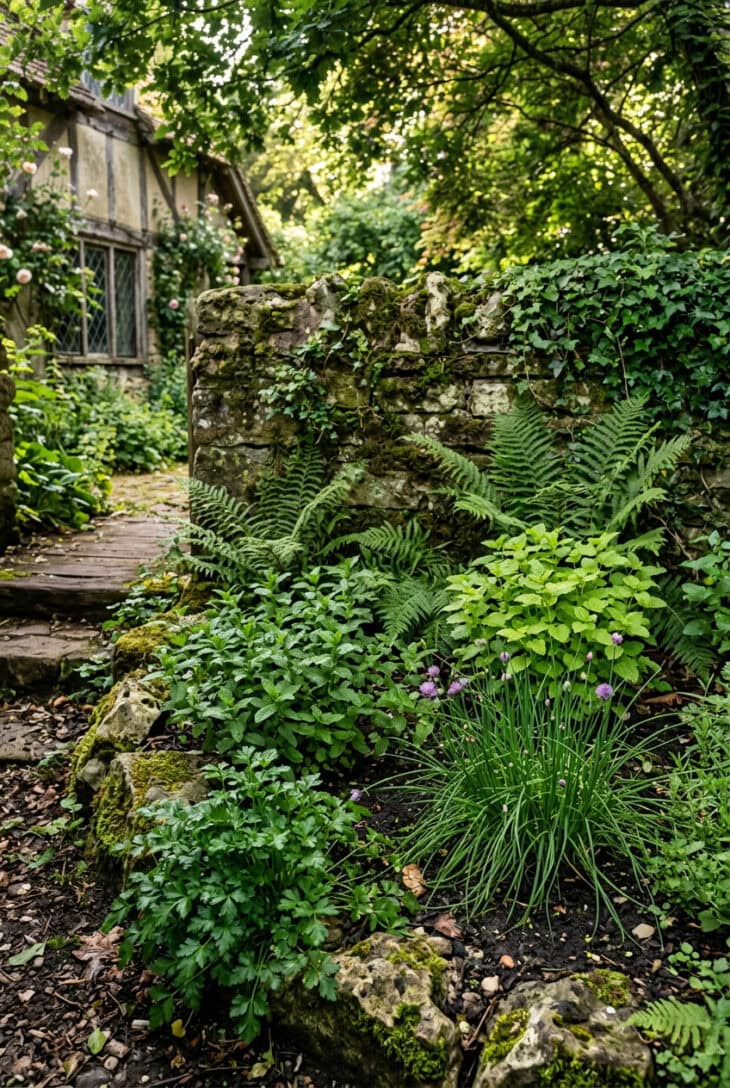
What you see A cool corner by a wall holds parsley, mint, chives and lemon balm, with ferny foliage behind them. The colors are fresh greens rather than sun-baked silver. It proves a herb garden does not have to be all lavender and gravel.
Why it works Leafy herbs often prefer a little afternoon shade, especially in hot summers. Parsley stays softer, mint wilts less, and chives keep producing without racing to seed. This is the edible version of shade garden ideas, focused on herbs that like cooler roots.
How to get it Choose partial shade rather than deep dry shade, and improve the soil with compost before planting. Keep mint and lemon balm in buried pots or separate containers if you do not want them spreading. Sow parsley (Petroselinum crispum) fresh each year, because second-year plants run to flower. Water during dry spells, since leafy herbs lose quality when stressed.
19. Dry Stone Wall Herb Pockets
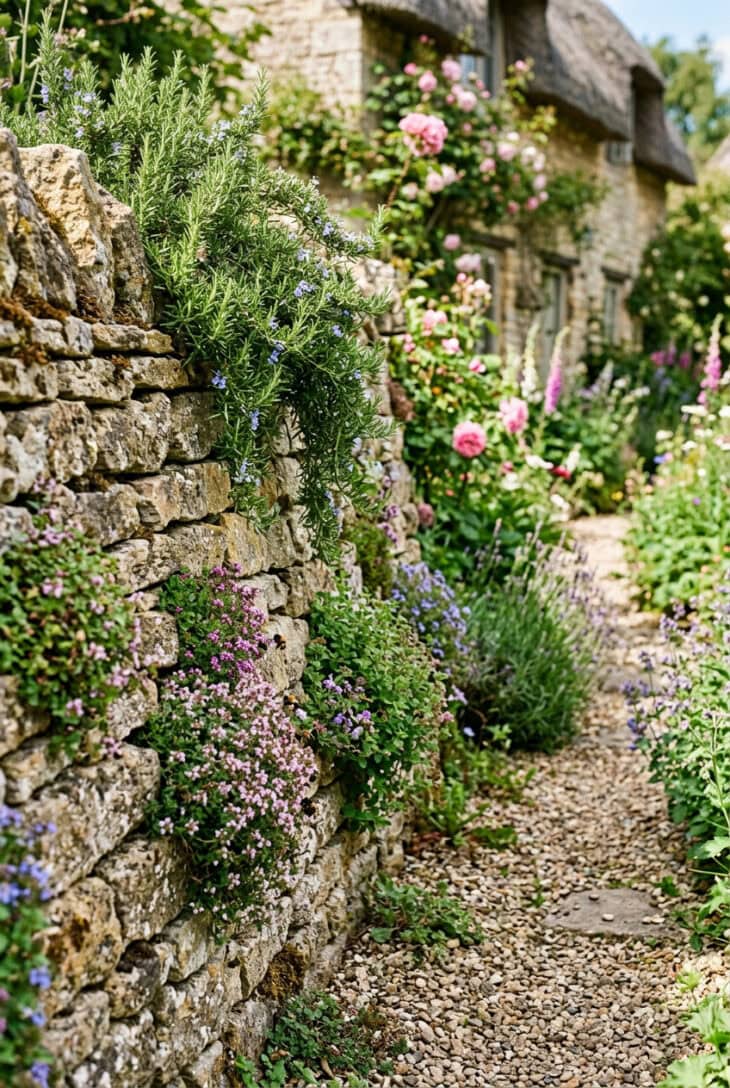
What you see Thyme, oregano and trailing rosemary spill from pockets in a rustic dry stone wall. Tiny flowers soften the cracks, and the stones stay warm long after the sun moves on. The whole wall becomes a vertical herb bed.
Why it works Wall pockets suit herbs that love heat, drainage and lean soil. They turn a hard boundary into a planted feature, and they keep aromatic leaves at picking height. For slopes or level changes, it is a cottage-friendly alternative to plain retaining walls.
How to get it Plant young herbs into pockets while building the wall, or wedge small rooted divisions into existing gaps filled with gritty soil. Choose drought-tolerant plants such as thyme, oregano, marjoram and prostrate rosemary. Water carefully until roots reach into the wall, then reduce irrigation. Avoid large, woody herbs that could push stones apart as they mature.
20. Scented Herb Trail for Children
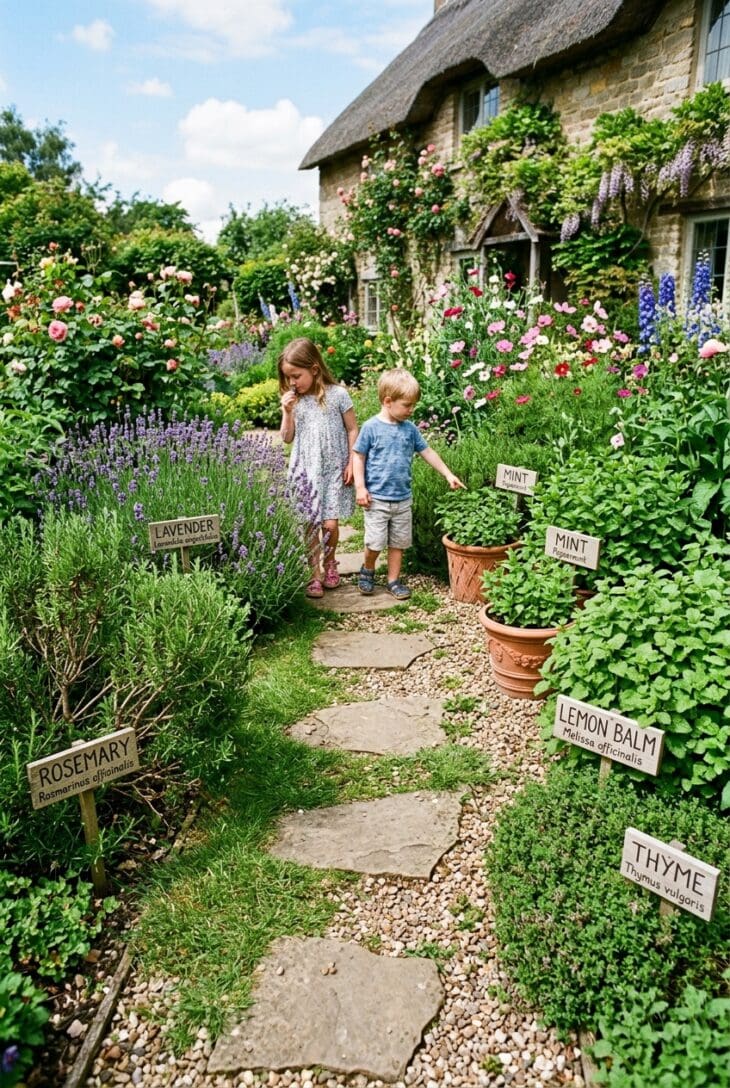
What you see A winding path invites children to touch and smell herbs as they move through the garden. Mint grows safely in pots, lavender and thyme edge the stones, and rosemary sits where small hands can brush the leaves. Simple labels turn it into a little discovery trail.
Why it works Herbs are perfect for sensory gardening because scent is immediate and memorable. A child can understand the difference between mint, rosemary and lavender in seconds. It also makes a sensory garden feel practical rather than complicated.
How to get it Choose non-toxic culinary herbs and avoid anything with sharp spines or confusing lookalikes. Keep mint contained, place lavender away from narrow pinch points if bees worry you, and teach children to ask before tasting. Use sturdy stepping stones so the route is clear. Replace worn labels often, because names help children connect scent, plant and use.
21. Tea Herb Bed
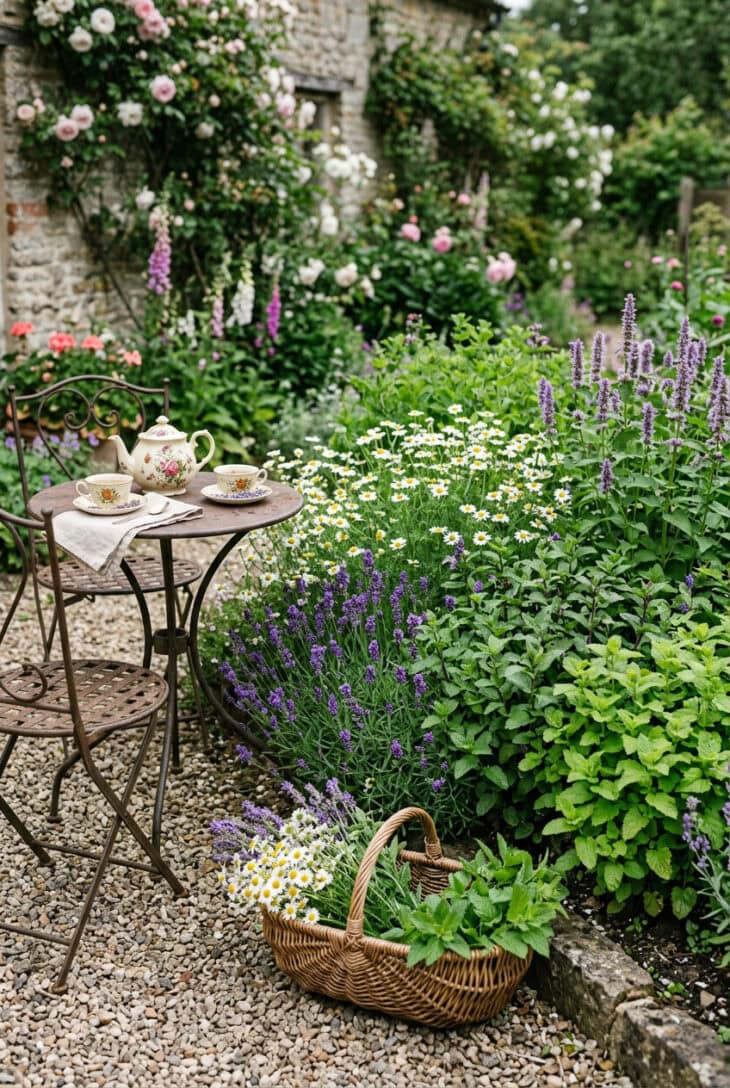
What you see Chamomile, peppermint, lemon balm, lavender and hyssop grow together near a small table, ready for fresh or dried tea. The colors are gentle: white chamomile, purple lavender, green mint and soft blue hyssop. A harvest basket makes the bed feel quietly productive.
Why it works A tea bed gives the herb garden a clear purpose beyond cooking. It also combines leaf, flower and scent, so the planting looks good even when you are not harvesting. Hyssop (Hyssopus officinalis) brings upright blue flowers that bees love and that fit the cottage mood.
How to get it Keep spreading tea herbs like peppermint and lemon balm contained, either in pots or in a separate section you can manage. Harvest flowers on dry mornings after dew has lifted, and dry them somewhere warm, dark and airy. Label plants clearly so no one confuses edible herbs with ornamentals. Start with small quantities in tea until you know what flavors you actually enjoy.
22. Cut-and-Dry Herb Patch
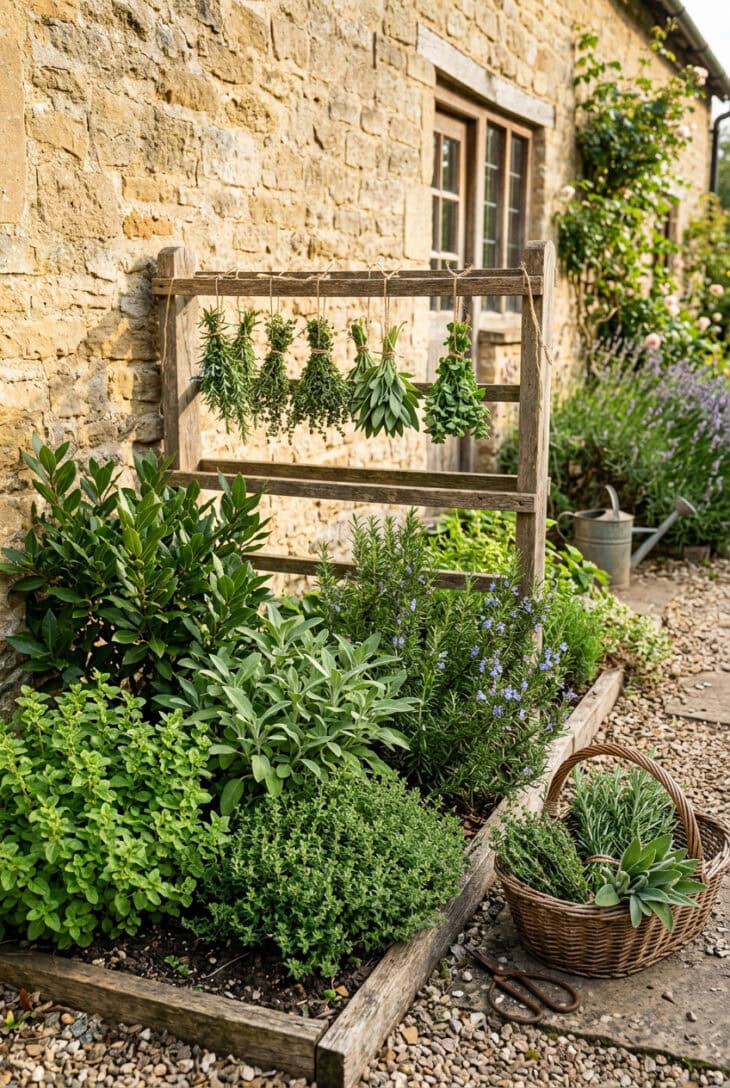
What you see A sunny patch of oregano, sage, thyme, rosemary and bay sits beside a simple drying rack hung with small bundles. The garden looks like it is storing summer for winter. It is practical, but the tied bunches make it quietly beautiful.
Why it works Some herbs become more useful when you grow enough to dry. Sage, oregano, thyme, rosemary and bay keep their flavor well, and regular cutting keeps the plants compact. This makes a herb garden feel productive beyond the fresh-picked season, much like edible gardens that focus on storage as well as beauty.
How to get it Harvest on dry mornings before plants flower heavily, when oils are strongest. Cut no more than one third of a woody plant at a time, and never strip it bare before winter. Tie small bundles so air can circulate, then hang them somewhere dry, shaded and ventilated. Store fully dry leaves in airtight jars away from light, and compost any bundles that smell musty.
23. Bee-Friendly Hyssop and Oregano Bed
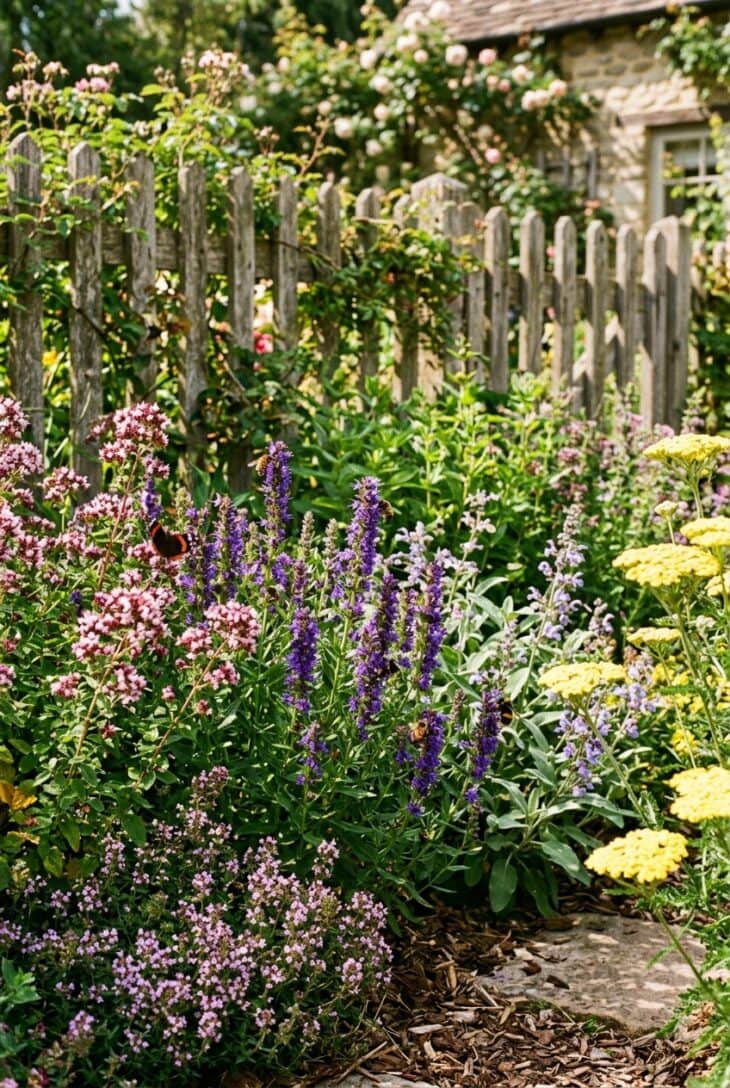
What you see Purple hyssop spikes, flowering oregano, thyme, sage blooms and yarrow make a herb bed that hums all day. Bees move from flower to flower, and butterflies pause on the flat yarrow heads. The planting looks ornamental even though much of it is edible or useful.
Why it works Letting herbs flower turns them into some of the best pollinator plants in the garden. Oregano (Origanum vulgare), thyme and sage feed insects at a time when the kitchen has already had plenty of leaves. It is a natural fit with wildlife gardening and low-maintenance planting.
How to get it Grow more than one clump of each herb so you can harvest some and let others bloom. Avoid deadheading every flower immediately, because the insects need that nectar window. Plant in full sun and lean soil to keep growth compact and flowering strong. Add common yarrow (Achillea millefolium) if you want flat landing pads for smaller beneficial insects.
24. Winter Evergreen Herb Bed
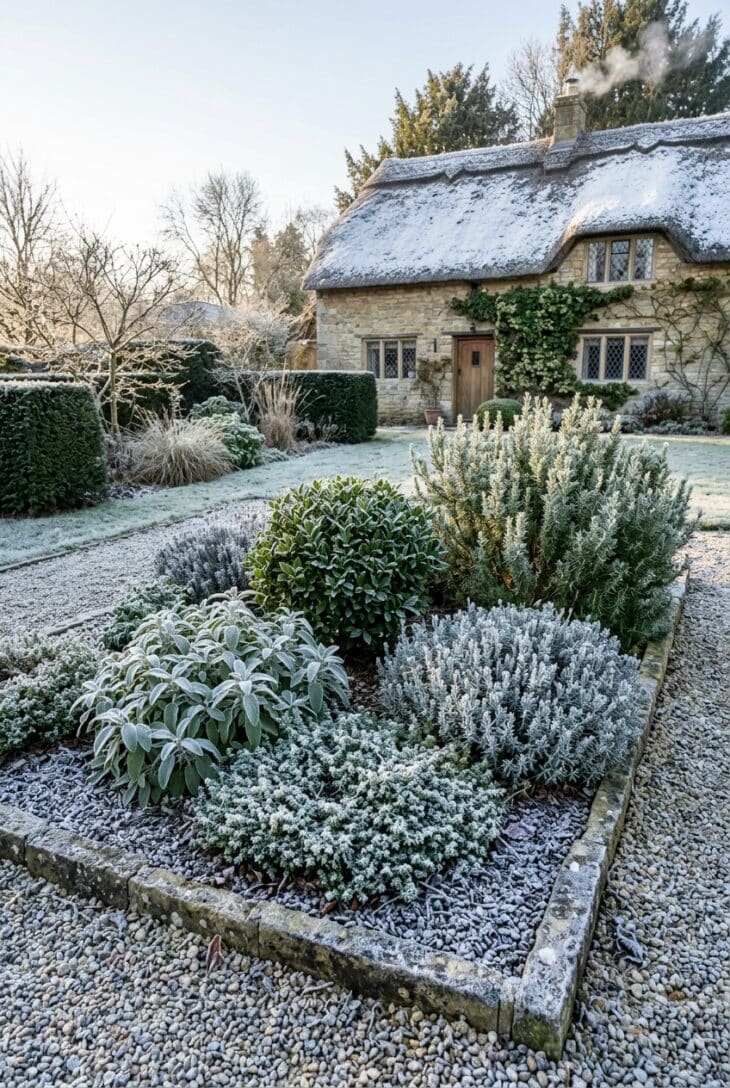
What you see Even in winter, the herb bed still has shape. Rosemary, bay, sage, thyme and lavender hold grey-green leaves above a gravel mulch, catching low light and frost. It is quieter than summer, but not empty.
Why it works Evergreen herbs give a cottage garden structure when annuals and soft perennials have disappeared. They also keep the kitchen supplied with hardy flavors through the cold months. This is the edible side of low-maintenance gardening, where foliage, form and access matter more than flowers.
How to get it Choose hardy varieties suited to your zone, and plant them in spring so roots establish before winter. Keep the crowns dry with gravel mulch and avoid heavy late-season feeding. Harvest lightly in cold weather, because plants replace growth slowly then. In exposed gardens, use a low woven hurdle or evergreen windbreak to reduce winter scorch.
25. Tiny Balcony Herb Shelf
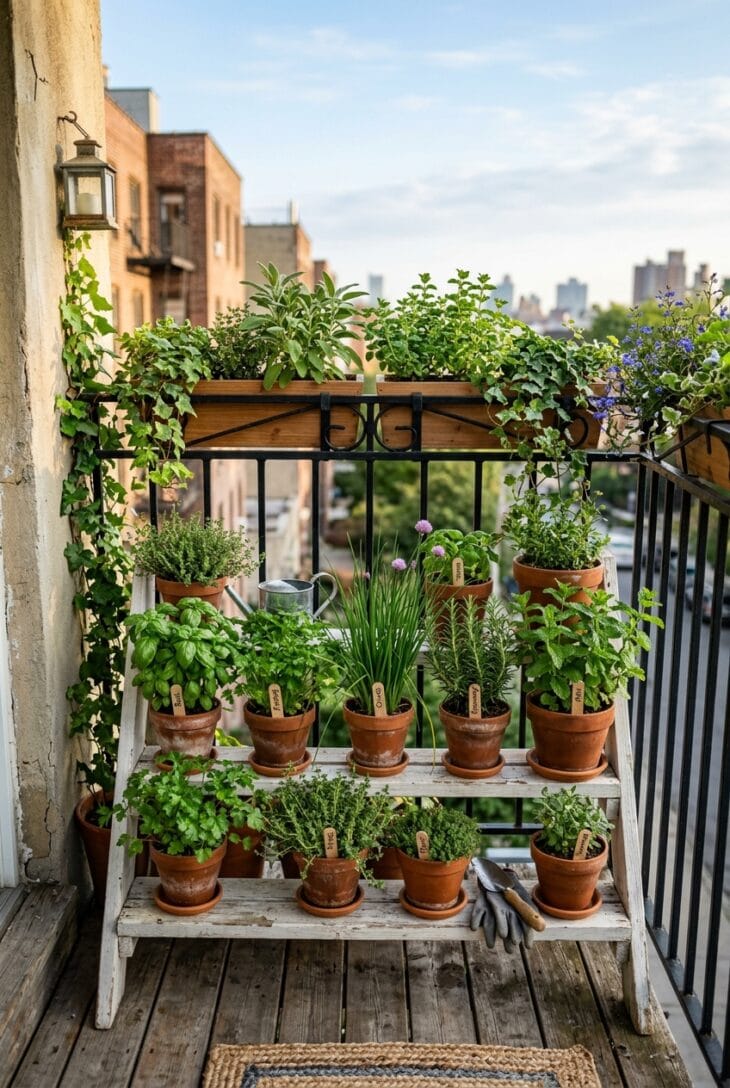
What you see A small balcony becomes a cottage herb garden with a tiered wooden shelf and a collection of terracotta pots. Basil, parsley, thyme, chives, mint and rosemary sit at different heights, with the smallest pots closest to hand. It is compact, lush and easy to water in one pass.
Why it works Vertical staging turns a tiny outdoor space into a productive herb wall without blocking the floor. Pots let you move tender basil into shelter, keep mint contained, and rotate sun-lovers to the brightest shelf. It is one of the simplest tiny-space herb ideas for renters.
How to get it Check balcony weight limits before adding large containers, and secure shelves so wind cannot tip them. Use saucers only where drainage water will not cause problems, and empty them after rain. Put drought-tolerant herbs on the hottest top shelf and leafier herbs lower down. Start with the six herbs you actually cook with, then expand only when you know the watering routine works.