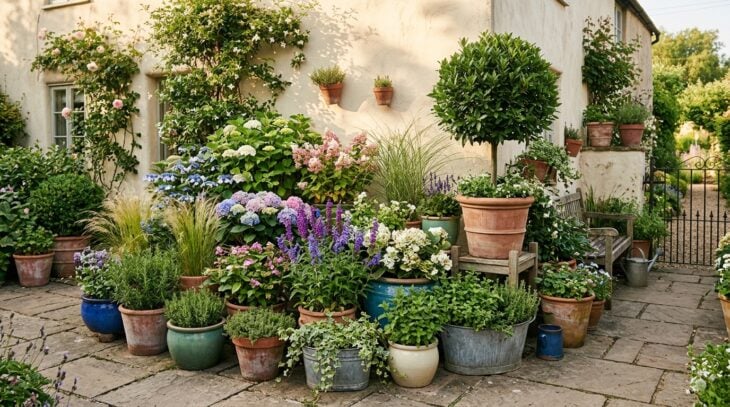
A pot is the most democratic way to garden. No soil, no border, no yard at all. Just a container, some compost and a plant. And suddenly a doorstep, a balcony or a bare patio is alive and growing. Containers let anyone garden anywhere.
Contents
- 01. Master the Thriller, Filler, Spiller Formula
- 02. Group Pots in Odd Numbers for Impact
- 03. Make a Statement with One Big Pot
- 04. Pack a Pot with Spring Bulbs
- 05. A Lush Summer Annual Display
- 06. A Fall Pot of Foliage and Berries
- 07. A Winter Container for the Cold Months
- 08. A Herb Pot by the Kitchen Door
- 09. Grow Vegetables in Pots
- 10. A Cut-and-Come-Again Salad Bowl
- 11. A Strawberry Planter
- 12. A Container Water Garden
- 13. A Succulent and Cactus Bowl
- 14. An Alpine Trough
- 15. A Drought-Tolerant Mediterranean Pot
- 16. A Shade-Loving Foliage Container
- 17. Overflowing Hanging Baskets
- 18. Window Boxes Full of Color
- 19. A Small Tree in a Pot for Structure
- 20. Clipped Topiary in a Container
- 21. Stacked and Tiered Vertical Pots
- 22. Upcycle Quirky Containers
- 23. A Pollinator Pot Buzzing with Bees
- 24. A Fragrant Pot Beside Your Seat
- 25. Classic Pelargoniums for Nonstop Color
- 26. A Naturalistic Grasses-and-Perennials Pot
- 27. A Single-Color Statement Scheme
- 28. A Bold Tropical Container
- 29. Go Self-Watering for Easy Care
- 30. Keep Pots Going Year-Round
The 30 ideas below run the full range of what a pot can do: classic planting formulas, seasonal displays for every month, edible pots of herbs and vegetables, succulent bowls and alpine troughs, hanging baskets and window boxes, and statement containers that anchor a whole scheme. There are ideas for blazing sun and deep shade, for tiny balconies and grand entrances, for beginners and old hands.
Read straight through for the full picture, or scroll and pick the pots that suit your space. Each idea explains what you are looking at, why it works, and exactly how to plant and keep it.
01. Master the Thriller, Filler, Spiller Formula
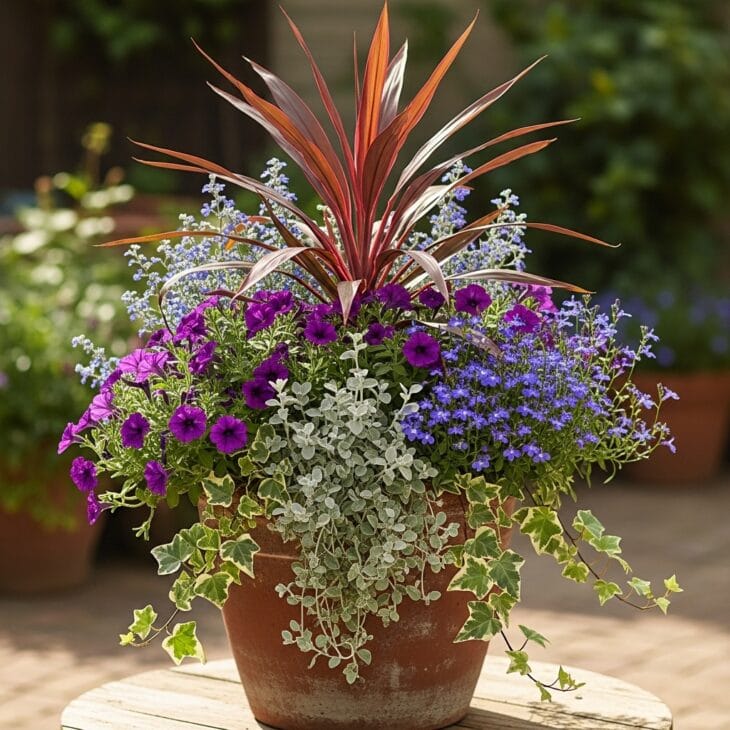
What you see The single most useful trick in container gardening is the “thriller, filler, spiller” formula. A tall, eye-catching plant stands at the center as the thriller, mounding plants fill the middle, and trailing plants spill over the rim — three roles that together turn a pot of odds and ends into a balanced, professional-looking display.
Why it works The formula works because it builds in height, mass and movement, so the eye travels from top to bottom and the container reads as full and generous from every angle. It takes the guesswork out of combining plants, which is exactly why nurseries and designers lean on it. Learn this one idea and every pot you plant improves.
How to get it Choose a thriller with real height or drama — a cordyline, an upright salvia, a grass or a canna. Surround it with one or two fillers, like mounding petunias, silver-leaved foliage or geraniums, then edge with spillers such as trailing lobelia, ivy or nasturtium that tumble over the sides. Stick to a tight color palette so the combination reads as deliberate. Plant densely — containers are meant to look full from day one — and feed and water well to keep all that growth going.
02. Group Pots in Odd Numbers for Impact
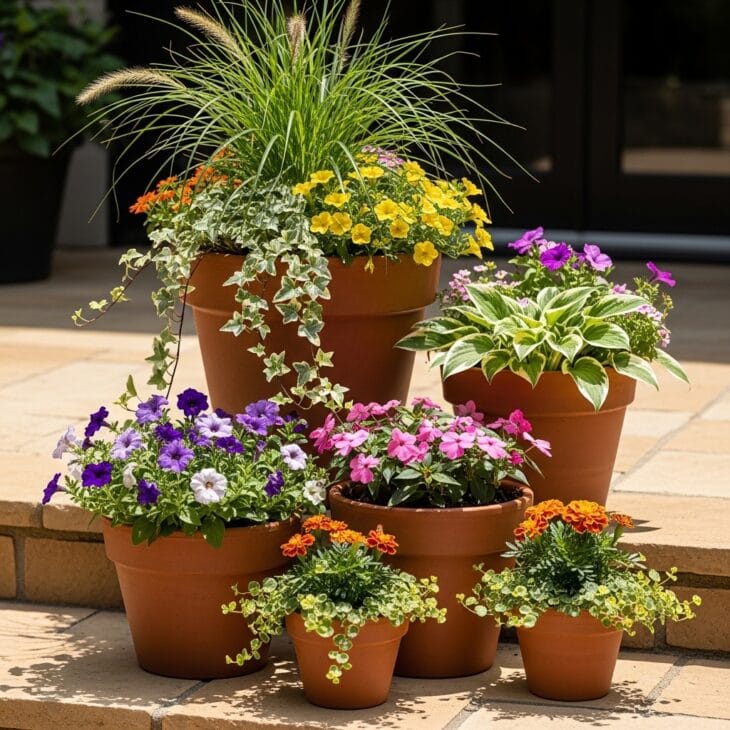
What you see A single small pot can look lonely, but cluster three or five together and they become a display. Grouping containers of different sizes and heights, planted to complement one another, creates a generous, layered scene far greater than the sum of its parts.
Why it works Pots gathered together read as one bold statement rather than a scatter of afterthoughts, and the varied heights give the grouping depth and rhythm. Odd numbers look more natural and dynamic to the eye than even ones, which is why florists and designers swear by threes and fives. Grouping also makes watering easier and helps the pots shade and shelter one another.
How to get it Vary the heights, standing smaller pots on bricks, stands or upturned containers so each plant is seen. Repeat a plant, a color or a pot material through the group to tie it together rather than letting it look random. Place the tallest pot at the back or center and step the others down around it. Leave a little space between pots for air to circulate, and turn them occasionally so all sides grow evenly.
03. Make a Statement with One Big Pot
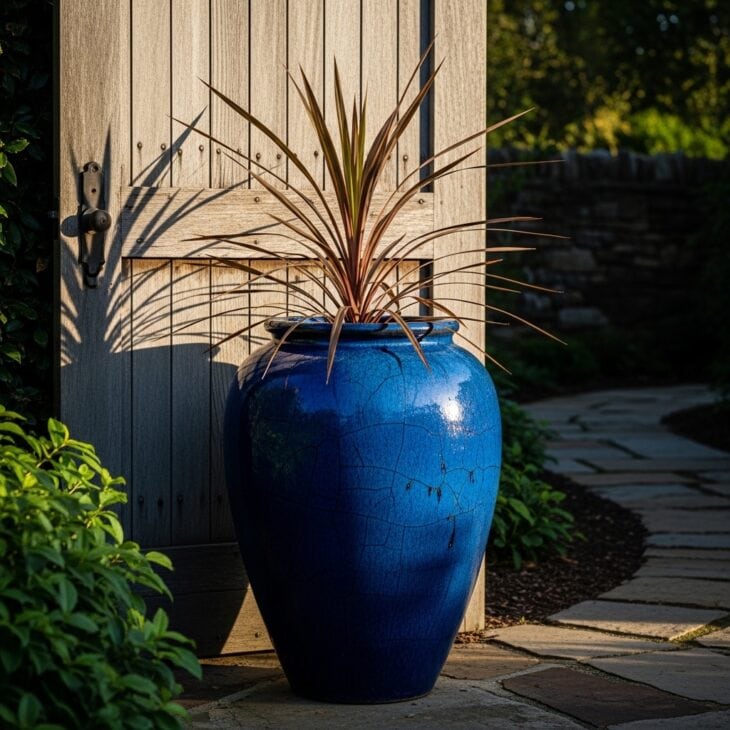
What you see Sometimes one is enough. A single oversized pot — a handsome glazed urn or a tall planter — holding one striking plant becomes a focal point that anchors a whole space, whether flanking a door or closing the view at the end of a path.
Why it works A big container has real presence, and planting it simply with one bold specimen lets both the pot and the plant be admired. Used as a focal point, it draws the eye and gives a space structure and a sense of intention. It is also far easier to look after than a fiddly mixed planting, since one large pot holds more compost and water than several small ones.
How to get it Choose a pot that is beautiful in its own right, since it will be on show, and the largest you can accommodate and move. Plant it with a single architectural specimen — a phormium, an olive (Olea europaea), a clipped box (Buxus sempervirens) or a billowing grass. Position it where it will be seen and will earn its keep: by an entrance, at a turn in a path, or centered in a key view. Raise it on pot feet for drainage and to keep the base off the paving.
04. Pack a Pot with Spring Bulbs
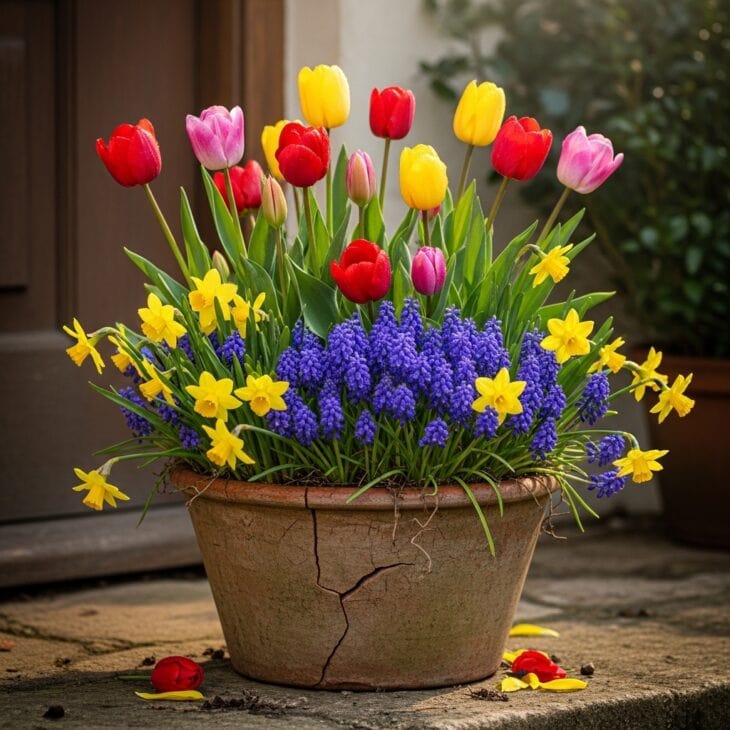
What you see Few container displays are as joyful as a pot crammed with spring bulbs. Tulips, daffodils and grape hyacinths bursting into bloom together announce the end of winter, bringing fresh color to a doorstep weeks before the garden proper wakes up.
Why it works Bulbs are made for pots: cheap, easy and almost foolproof, they pack a spectacular amount of color into a small space. Planting them in containers lets you put the display right where you will see it and swap it out the moment it fades. You can also layer different bulbs to extend the show over many weeks.
How to get it Plant bulbs in fall in a pot with good drainage, using the “lasagne” method — layers of bulbs at different depths, with later, larger tulips deepest and early, smaller crocus near the top — for a long succession of bloom. Pack them in far more tightly than you would in the ground, almost shoulder to shoulder. Combine daffodils (Narcissus), tulips and grape hyacinths for a layered display. Keep the pot somewhere cool over winter, then move it center stage as the flowers emerge.
05. A Lush Summer Annual Display
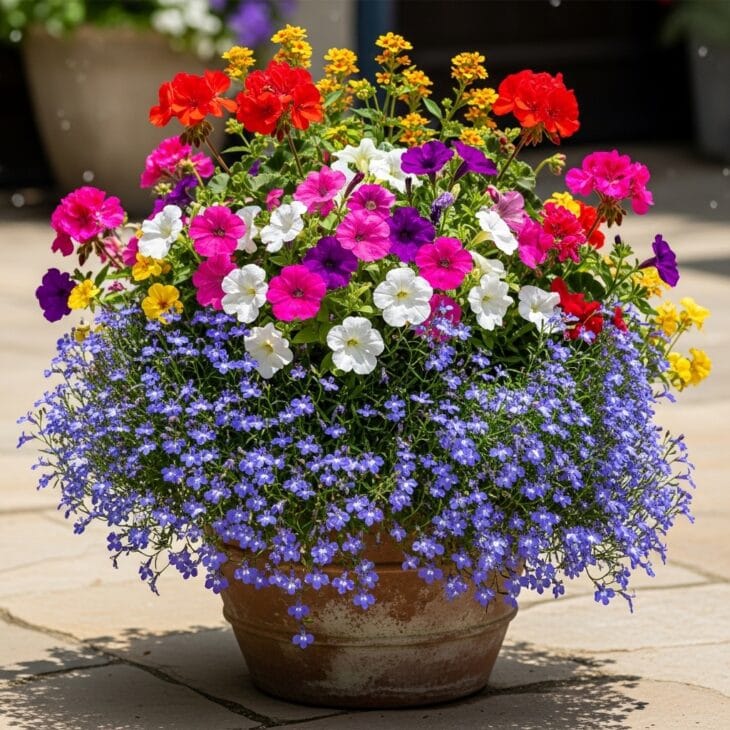
What you see The classic summer pot is a froth of annuals flowering their hearts out from June to the first frost. Petunias, geraniums, trailing lobelia and golden bidens mass together and spill over the sides in a long, generous wave of color that asks only for water and feeding in return.
Why it works Summer annuals are bred to bloom continuously, so a single planting carries a pot through the whole season. Grown in containers, they bring intense, sustained color exactly where you want it — by the door, on the table, around the seating. It is the most reliable way to guarantee months of flower from a small space.
How to get it Wait until the danger of frost has passed before planting tender summer annuals outside. Pack them in densely for instant fullness, using a peat-free multipurpose compost. Annuals in pots are hungry and thirsty — water daily in hot weather and feed weekly with a high-potash liquid feed to keep the flowers coming. Deadhead regularly, or choose self-cleaning varieties like trailing petunias, and the display will run right through to fall.
06. A Fall Pot of Foliage and Berries
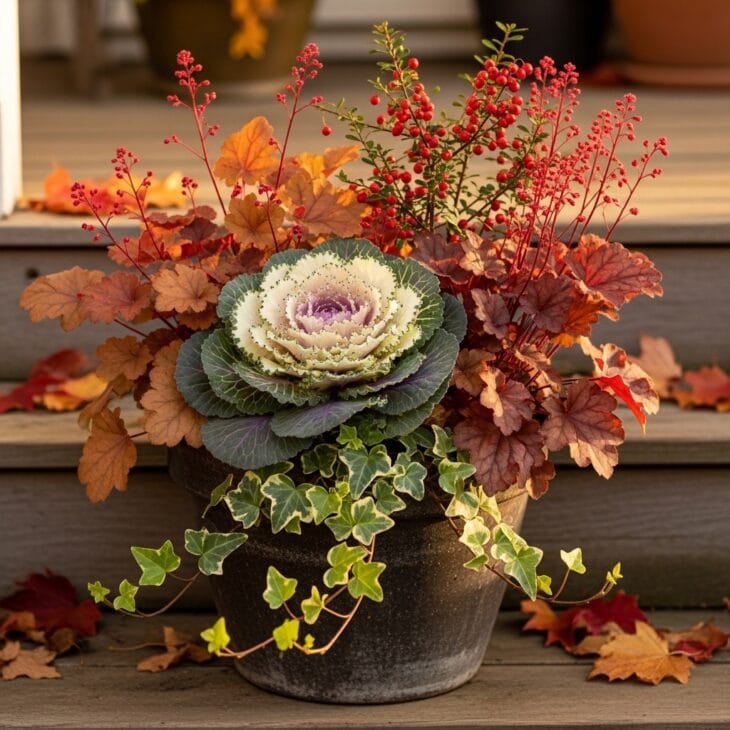
What you see As summer annuals fade, a fall container keeps a pot looking good through the cooler months. Russet heucheras, ornamental cabbages, trailing ivy and a berried shrub combine into a display of warm autumn tones — leaf and berry rather than flower.
Why it works Fall is too often a gap in the container year, but it need not be: a wealth of foliage plants and berries peak just as the flowers fade. Leaning on leaf color, texture and form gives a longer-lasting display than fleeting blooms, and the rich oranges, reds and purples suit the season perfectly. It bridges the months between summer’s exuberance and winter’s structure.
How to get it Build the pot around evergreen and semi-evergreen foliage that will carry on into winter — heuchera, ornamental grasses, ivy and a small berried shrub like skimmia or gaultheria. Add seasonal color with ornamental cabbages, violas or autumn-flowering cyclamen. Plant a little more loosely than a summer pot, as growth slows in fall. Site it where the low autumn light can catch the colors, and it will look good well into the new year.
07. A Winter Container for the Cold Months
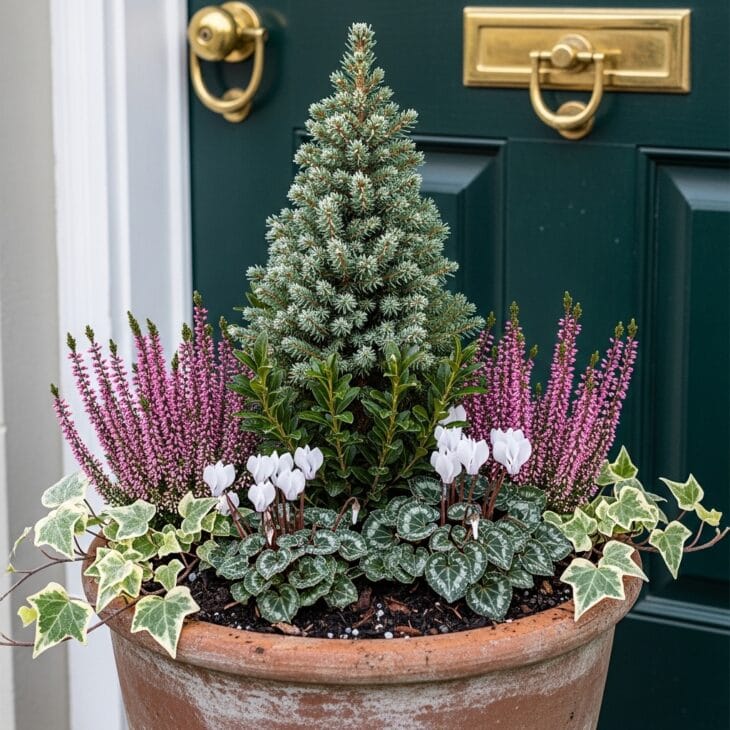
What you see A well-planted winter pot keeps the doorstep welcoming through the bleakest months. Structural evergreens, a small conifer, variegated ivy, winter heathers and white cyclamen hold their own against frost and grey skies, proving a container can earn its keep all year.
Why it works Winter is when a pot by the door matters most, because there is so little else in the garden to lift the spirits. Evergreen structure and a few hardy flowers give color and form when everything around them is bare. Placed by an entrance, a winter container is a small, daily piece of cheer in the darkest season.
How to get it Choose tough, hardy evergreens as the backbone — a dwarf conifer, variegated ivy, skimmia, or an evergreen fern — and add winter color with heathers, violas, hardy cyclamen and the early flowers of hellebores. Plant firmly in fresh compost and ensure excellent drainage, since waterlogged compost that freezes is the main killer of winter pots. Raise the container on feet so it never sits in water, and group winter pots near the house where you will see and enjoy them.
08. A Herb Pot by the Kitchen Door
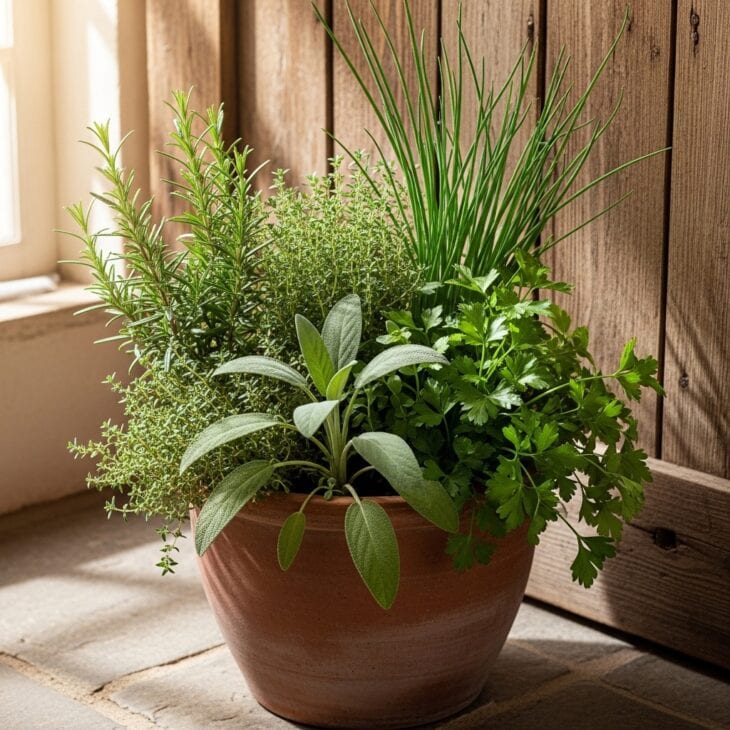
What you see A pot of mixed herbs by the kitchen door is one of the most useful containers you can grow. Rosemary, thyme, sage and chives (Allium schoenoprasum) growing together put fresh flavor a few steps from the stove, ready to snip whenever you cook.
Why it works Herbs are perfect for pots: most are compact, many actively prefer the sharp drainage a container gives, and growing them by the door means you actually use them. Fresh herbs transform cooking, and having them within reach is far more convenient — and cheaper — than buying cut packets. Many are pretty and aromatic enough to earn their place on looks alone.
How to get it Group herbs with similar needs together: Mediterranean rosemary (Salvia rosmarinus), thyme, sage and oregano all love sun and gritty, free-draining compost, so they thrive in one pot. Keep thirstier, leafier herbs like basil, parsley, mint and chives in a separate pot you can water more freely, and confine mint to its own container as it spreads aggressively. Site herbs in full sun and pick regularly to keep them bushy. A large pot or a trough holds enough for a steady kitchen supply.
09. Grow Vegetables in Pots
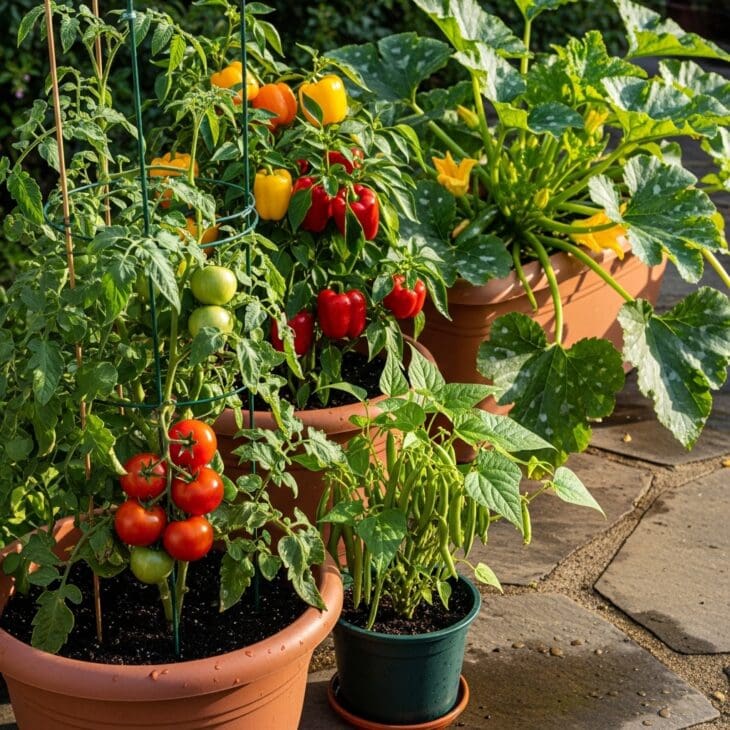
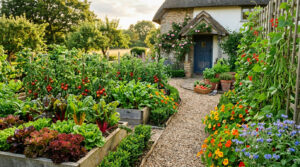
What you see You do not need a vegetable plot to grow your own. A large pot of tomatoes, a planter of peppers, dwarf beans and a tub of zucchini will crop happily on a sunny patio or balcony, proving that container growing can feed you as well as look good.
Why it works Growing vegetables in pots brings fresh food to those with no garden at all, and lets you put crops in the sunniest, most convenient spot. Containers also sidestep poor soil and many soil-borne pests, and warm up quickly in spring for an early start. There is real satisfaction in eating something you grew in a pot by the back door.
How to get it Choose compact or patio varieties bred for containers, and give each crop a big enough pot — tomatoes, zucchini and peppers need at least a 12in (30cm) container, the bigger the better. Use a rich, moisture-retentive compost, and water consistently, since erratic watering causes split tomatoes and bitter crops. Feed fruiting vegetables with a high-potash tomato feed once they flower. Place them in full sun, and pick regularly to keep the plants productive.
10. A Cut-and-Come-Again Salad Bowl
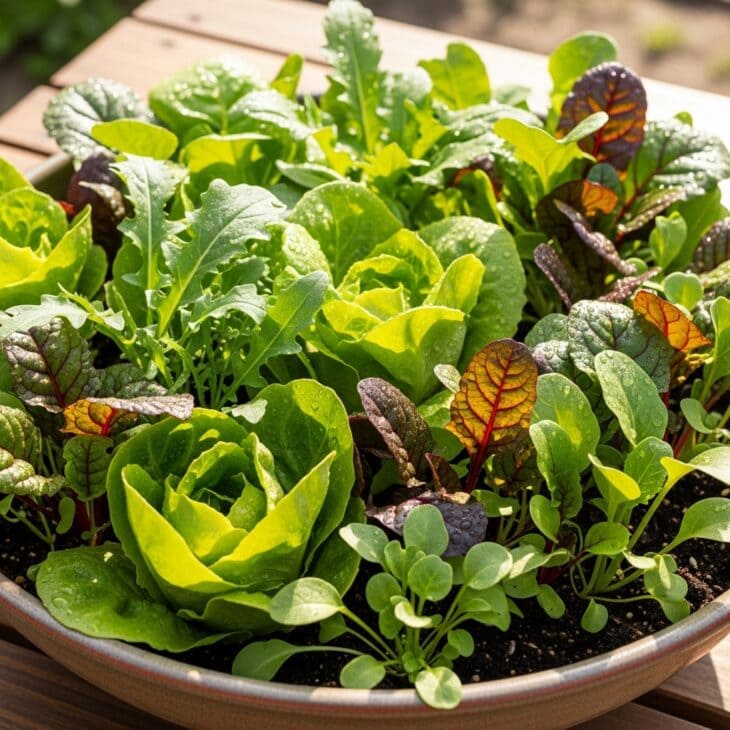
What you see A wide bowl of salad leaves is the quickest, easiest edible container there is. Loose-leaf lettuces, peppery rocket, mustard and baby chard grow shoulder to shoulder in greens and reds, ready to pick a few leaves at a time for weeks on end.
Why it works Cut-and-come-again salads are ideal for pots because they are shallow-rooted, fast-growing and need very little space. Picking a few outer leaves rather than the whole plant means each sowing keeps producing for weeks, giving you fresh, pesticide-free salad far tastier than anything bagged. It is the perfect crop for beginners and small spaces.
How to get it Sow salad-leaf seed thinly across a wide, shallow container of multipurpose compost, and keep it consistently moist. Start picking once the leaves are a few inches tall, taking the outer leaves and leaving the center to regrow. Sow a fresh container every few weeks through spring and summer for a continuous supply, and provide some afternoon shade in high summer to stop leaves bolting. A sunny windowsill will even keep a salad bowl going into the cooler months.
11. A Strawberry Planter
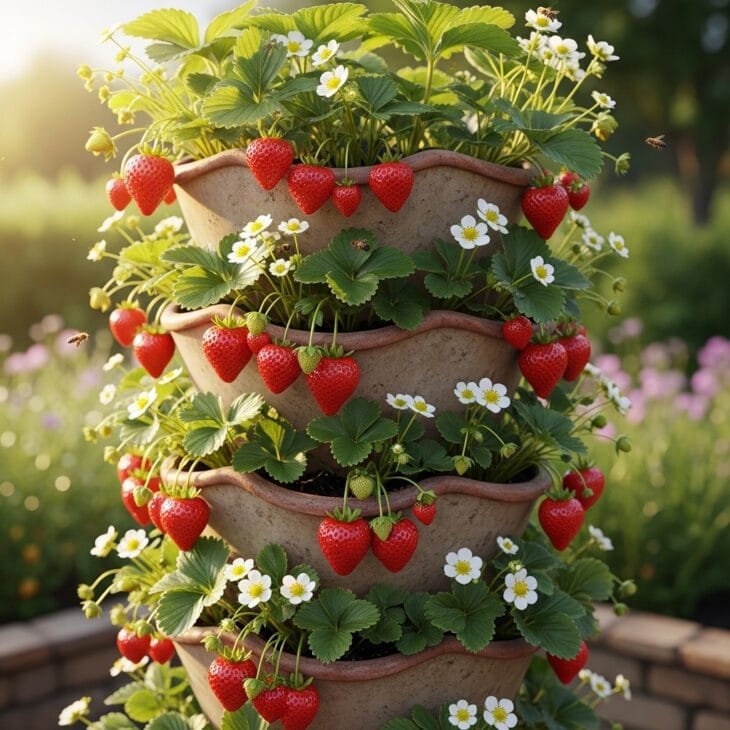
What you see A strawberry planter turns a few square inches into a tower of fruit. Plants tumble from pockets up the sides, hung with white flowers and ripening red berries, keeping the fruit off the soil and right at picking height.
Why it works Strawberries are perfect for containers: growing them up a planter saves ground space, keeps the fruit clean and away from slugs, and makes picking effortless. A pot also lets you give them the rich soil and sun they crave, and you can move it to the warmest spot for an earlier crop. Homegrown strawberries, still warm from the sun, are a world away from shop-bought.
How to get it Plant young strawberry plants into the pockets and top of a dedicated strawberry planter in spring, using good compost. Water carefully and consistently, as the pockets dry out fast — a central watering tube or a self-watering design helps enormously. Feed with a high-potash feed once flowers appear, and net the planter against birds as the fruit ripens. Replace tired plants every three years or so, using the runners they send out to raise fresh ones for free.
12. A Container Water Garden
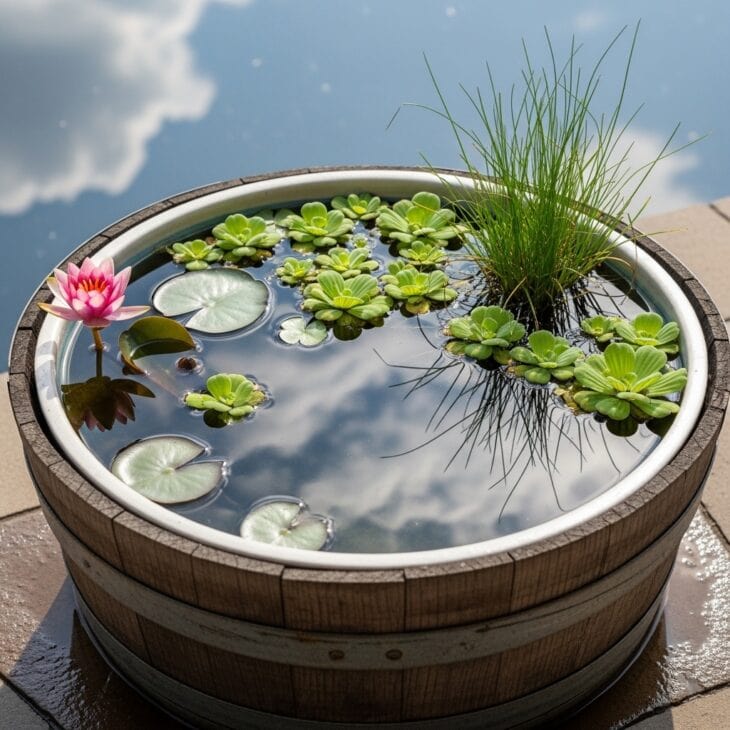
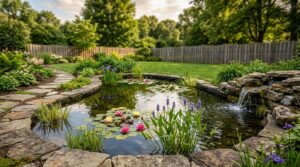
What you see A watertight container can become a tiny water garden, bringing the magic of a pond to a patio or balcony. A half-barrel or large glazed bowl planted with a miniature water lily, a marginal grass and a floating plant or two reflects the sky and adds a cool, calm presence.
Why it works Water in a container brings reflection, a new range of plants, and surprising amounts of wildlife to spaces with no room for a real pond. Even a small barrel will draw in birds to drink and may attract dragonflies. It is an unexpected, eye-catching feature that does something no planted pot can.
How to get it Use a watertight container, or line a porous one, and site it in sun for most aquatic plants. Add a miniature water lily (Nymphaea) for the surface, an upright marginal like a dwarf reed for height, and an oxygenating plant to keep the water clear. Stand marginals on bricks so their crowns sit at the right depth. Top up with rainwater in hot weather, and in cold-winter areas move tender plants to shelter or float a ball on the surface to stop it freezing solid.
13. A Succulent and Cactus Bowl
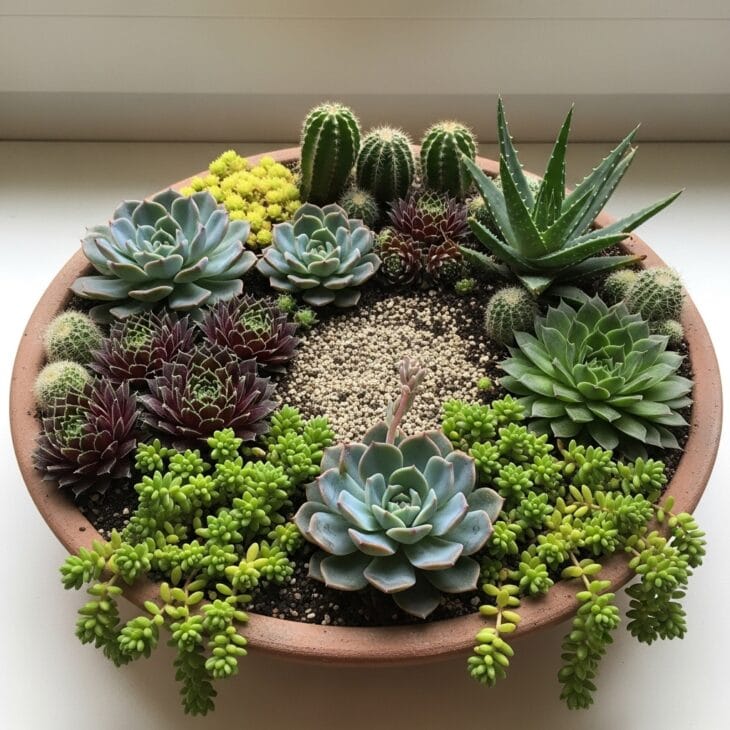
What you see A shallow bowl of succulents is a living sculpture that practically looks after itself. Rosettes of echeveria, tight clusters of houseleeks (Sempervivum), trailing sedums and a small aloe pack together in greens, blues and purples, finished with a topping of grit.
Why it works Succulents are made for container life and for forgetful gardeners — they store water in their leaves, thrive on neglect, and ask only for sun and sharp drainage. Their geometric rosettes and varied colors make a bowl of them endlessly tactile and photogenic. For anyone who travels, forgets to water, or gardens in a hot, dry spot, they are close to ideal.
How to get it Plant in a shallow bowl with plenty of drainage holes, using a free-draining cactus compost or multipurpose compost mixed with sharp grit. Pack the plants close for an instant, jewel-like effect and top-dress with gravel to set them off and keep their necks dry. Water sparingly — only when the compost is dry — and not at all in winter. Hardy houseleeks and many sedums survive outdoors year-round, but bring tender echeverias and aloes inside before the first frost.
14. An Alpine Trough
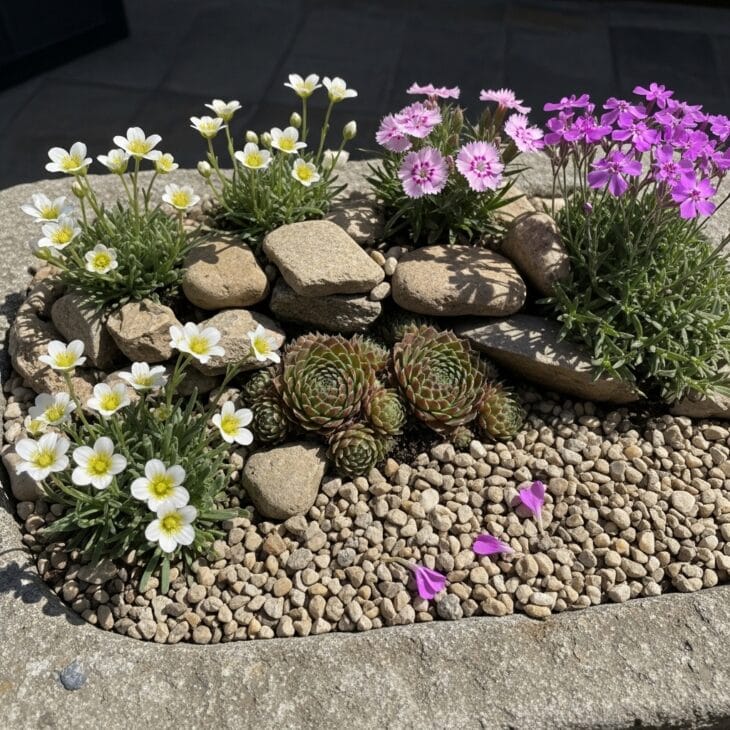
What you see An alpine trough is a whole miniature mountain landscape in a single container. Tight cushions of saxifrage, houseleeks, alpine pinks (Dianthus) and creeping phlox nestle among carefully placed rocks and gravel, rewarding a close look with jewel-like detail.
Why it works Alpines are tiny, slow and perfectly suited to the controlled conditions of a trough, where they get the sharp drainage and lean soil they need and you can appreciate their delicate flowers up close. A trough raises these little plants to eye level and keeps them from being swamped by larger neighbors. It is collecting and gardening in miniature, endlessly absorbing for a small space.
How to get it Use a stone or stone-effect trough with excellent drainage, and fill it with a gritty, free-draining alpine mix rather than ordinary compost. Arrange a few rocks to create levels and crevices, then plant small alpines in the gaps and top-dress generously with grit to keep their necks dry. Site the trough in an open, sunny position, since most alpines hate winter wet and shade far more than cold. Water in dry spells but never let it stay soggy.
15. A Drought-Tolerant Mediterranean Pot
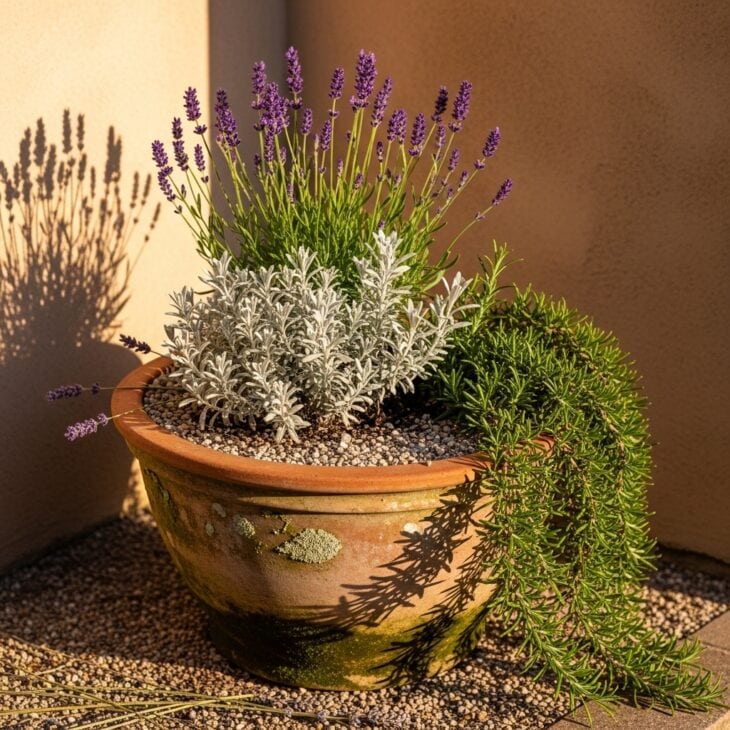
What you see A terracotta pot of Mediterranean plants brings sun-baked, aromatic charm to a hot corner and barely needs watering. Lavender (Lavandula angustifolia), silver santolina and trailing rosemary thrive on heat and drought, releasing their scent every time you brush past.
Why it works For a baking, forgotten spot where thirsty annuals would frazzle, drought-tolerant Mediterranean plants are the perfect answer — they positively prefer the heat and the dry. Many are silver-leaved and aromatic, bringing texture and fragrance as well as flower, and most are evergreen, so the pot looks good year-round. It is a beautiful, water-wise way to plant in an age of hotter summers.
How to get it Use a terracotta pot, which breathes and suits the style, with a very free-draining, gritty compost. Choose sun-lovers that relish dry conditions: lavender, rosemary, santolina, thyme and trailing sedums. Add a gravel mulch on top to keep the necks dry and conserve what little moisture there is. Water only until established and then sparingly, and ensure sharp drainage over winter, since wet cold kills these plants far faster than frost alone.
16. A Shade-Loving Foliage Container
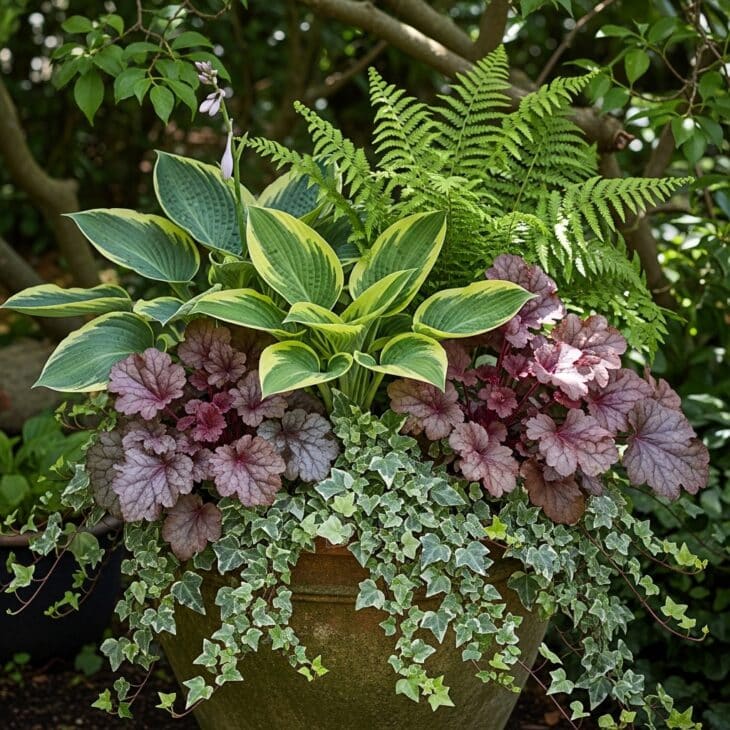
What you see A shady corner is no barrier to a beautiful pot — it just calls for foliage over flowers. Hostas, ferns, heucheras and trailing ivy combine into a cool, luxuriant container of greens, silvers and purples that seems to glow in low light.
Why it works Many gardeners write off shade, but a wealth of handsome foliage plants positively prefer it, and a pot lets you give them the rich, moist compost they enjoy. Leaning on leaf shape, texture and color rather than flower gives a long-lasting, sophisticated display that holds up all season. It transforms a dim, difficult spot into a fresh, green focal point.
How to get it Choose proven shade-lovers — hostas, ferns, heuchera, and trailing ivy or creeping Jenny to spill over the edge — and contrast bold leaves with fine, feathery ones. Use a moisture-retentive compost and keep it damp, as pots in dry shade under eaves or trees can still parch. Guard hostas against slugs, which find potted plants easy pickings, by using copper tape or grit around the rim. For more planting ideas in low light, see our shade garden ideas.
17. Overflowing Hanging Baskets
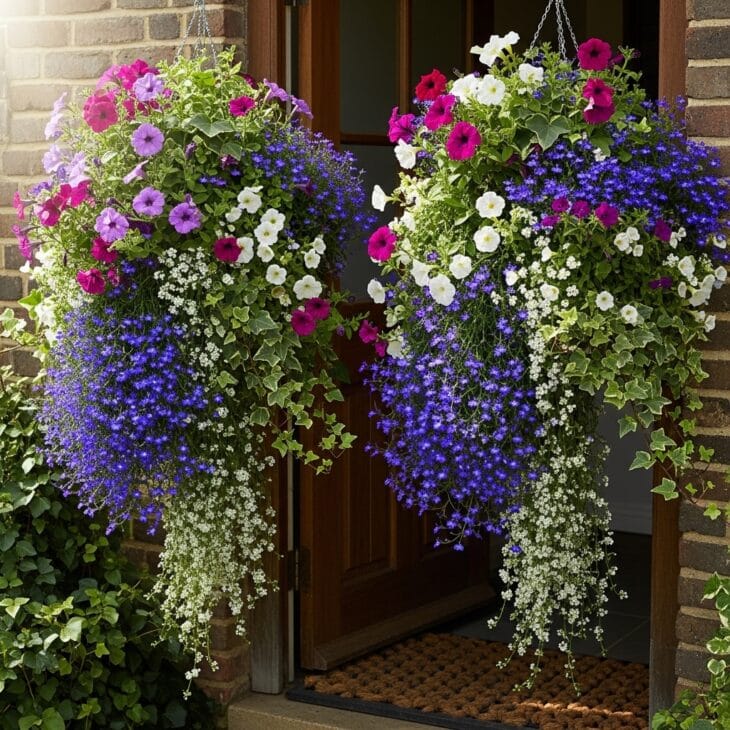
What you see Hanging baskets carry color up into the air where no other container can. Brimming with trailing petunias, lobelia, bacopa and ivy, a well-stuffed basket becomes a tumbling cascade of flower that frames a doorway or brightens a bare wall.
Why it works Baskets use vertical space that would otherwise sit empty, lifting flowers to eye level and beyond. A pair flanking a door creates a warm, symmetrical welcome, and the trailing habit of basket plants gives a generous, spilling shape unlike any pot on the ground. Few things deliver more cheerful impact for the space they take.
How to get it Use the largest basket you can hang, as small ones dry out alarmingly fast, and line it with a moisture-retentive liner. Plant densely, including trailers through the sides as well as the top for full coverage, and mix water-retaining granules into a quality compost. Hang baskets on sturdy, accessible brackets and water daily — sometimes twice in a heatwave — and feed weekly. Deadhead and trim through summer to keep the display full and flowering until frost.
18. Window Boxes Full of Color
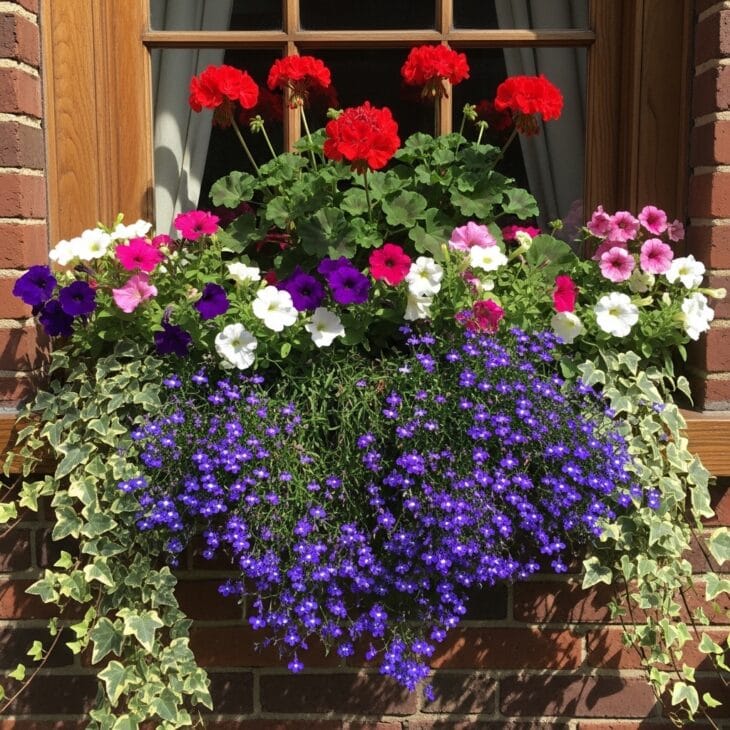
What you see A window box brings the garden right up to the glass and into view from indoors. Overflowing with geraniums, trailing lobelia, petunias and ivy, it frames the window with flowers and makes even a plain facade look cared for.
Why it works Window boxes are the perfect way to garden with no ground at all, putting color exactly where you and passers-by see it most. They dress the house, soften hard architecture, and let you enjoy the planting from inside as well as out. For apartments and town houses, they may be the only growing space available — and a hugely rewarding one.
How to get it Fix boxes securely with proper brackets, since a planted box full of wet compost is heavy. Plant the classic trio of an upright like a geranium, a filler such as petunia or bacopa, and trailers like ivy and trailing lobelia to spill down the wall. Use a peat-free compost with added water-retaining granules, as boxes dry quickly in sun and wind. Water daily in summer and feed weekly, and swap in bulbs, violas and evergreens for a fresh winter and spring display.
19. A Small Tree in a Pot for Structure
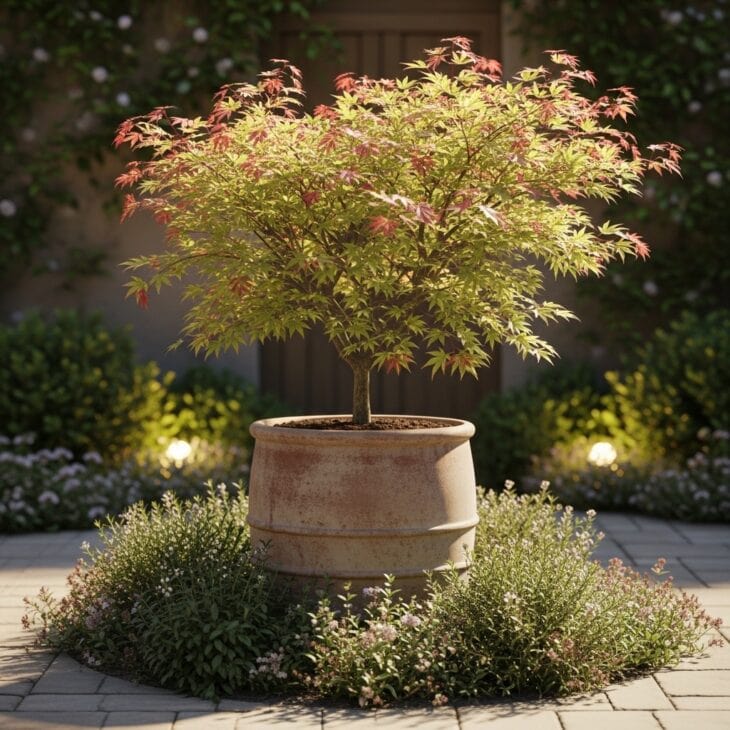
What you see A tree in a pot brings height, structure and permanence to a container garden. A Japanese maple (Acer palmatum) with its delicate, coloring foliage, or a silvery potted olive, rises above the lower pots and gives the whole display a backbone.
Why it works Most container planting sits low, so a potted tree adds the vertical scale and year-round presence that pots of flowers cannot. It can act as a focal point, a screen, or the anchor of a group, and many small trees offer blossom, fall color or evergreen structure depending on what you choose. A tree in a pot lets even a paved courtyard have a canopy.
How to get it Pick a tree happy in a container — Japanese maple, olive, bay (Laurus nobilis) or a small ornamental — and the largest pot you can manage, with excellent drainage. Use a loam-based compost, which holds moisture and nutrients and gives stability against wind. Water and feed consistently through the growing season, since a potted tree depends entirely on you. Top-dress with fresh compost each spring, and repot or root-prune every few years to keep it healthy in its container.
20. Clipped Topiary in a Container
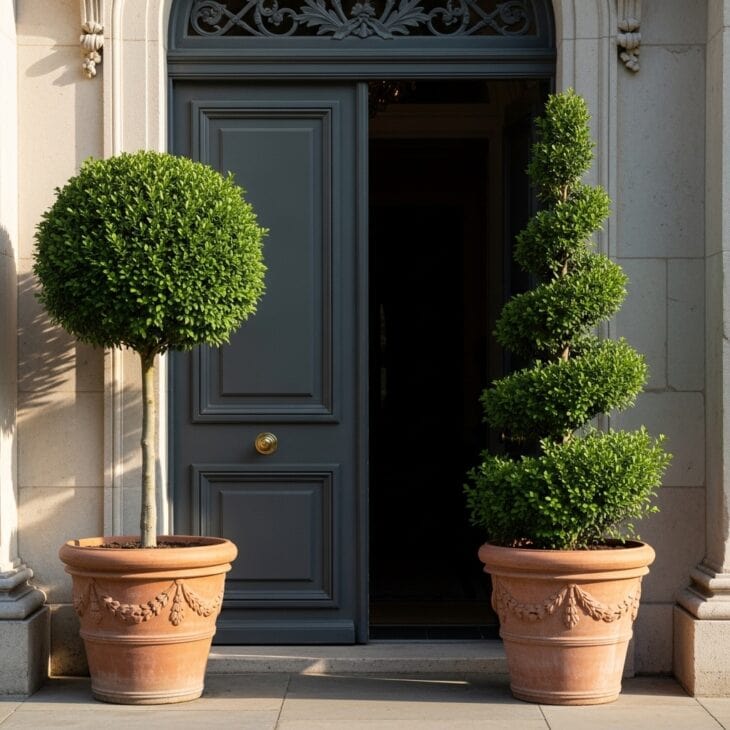
What you see Clipped topiary in a pot brings instant elegance and formality. A pair of box balls, cones or spirals in smart matching containers, flanking a door or framing a path, gives a container garden crisp, sculptural structure that holds all year.
Why it works Topiary provides evergreen architecture, a calm green counterpoint to the busyness of flowering pots, and a sense of order and arrival. A symmetrical pair instantly signals care and intention, and the simple geometric shapes suit both traditional and modern settings. It is the structural element that pulls a collection of pots together.
How to get it Choose a dense, small-leaved evergreen that takes clipping well — box (Buxus sempervirens), or alternatives like Japanese holly or Euonymus if box blight is a concern in your area. Plant in a good loam-based compost in a sturdy, frost-proof pot scaled to the plant. Clip once or twice in the growing season to keep the shape crisp, ideally on a dry, overcast day. Feed in spring, water steadily, and turn the pots occasionally so the topiary grows evenly on all sides.
21. Stacked and Tiered Vertical Pots
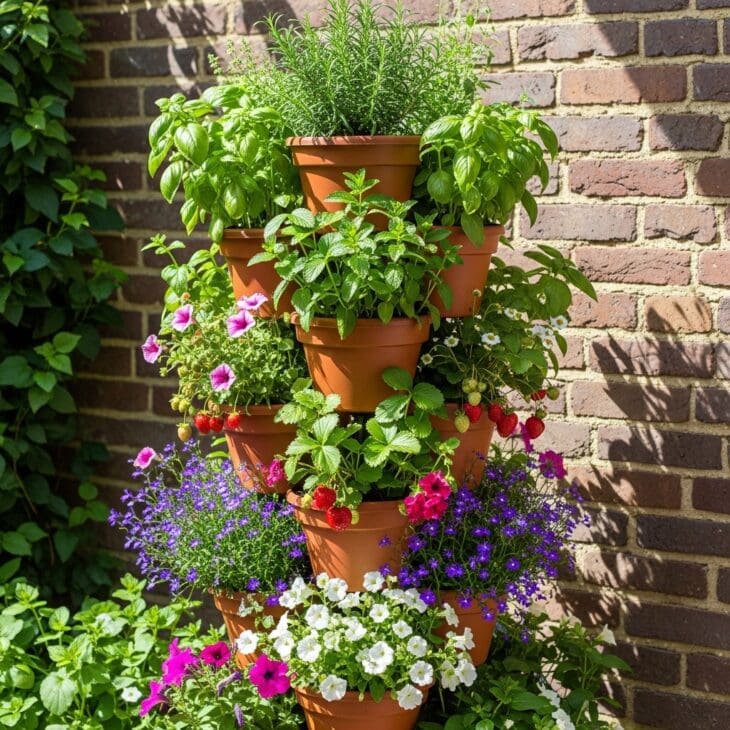
What you see When floor space runs out, the answer is to go up. Stacked or tiered pots, a vertical planter, or a tower of containers on a frame turn a tiny footprint into a wall of greenery, packing herbs, trailing flowers and strawberries into the vertical plane.
Why it works Vertical container gardening multiplies the growing space of a balcony, courtyard or narrow side return, where every inch counts. Stacking and tiering also lifts plants to different heights, creating a lush, layered effect from a small base. It is the ideal solution for renters and small-space gardeners who want to grow far more than the floor allows.
How to get it Use a purpose-made tiered planter, a sturdy étagère of pots, or wall-mounted containers fixed to a solid surface. Put sun-lovers and the things you pick most often — herbs, salads, strawberries — at the top and front where they are easiest to reach and best lit. Water from the top and let it trickle down, but check the lower pots, which often stay drier. Make sure any vertical structure is stable and well-anchored once the pots are full and heavy.
22. Upcycle Quirky Containers
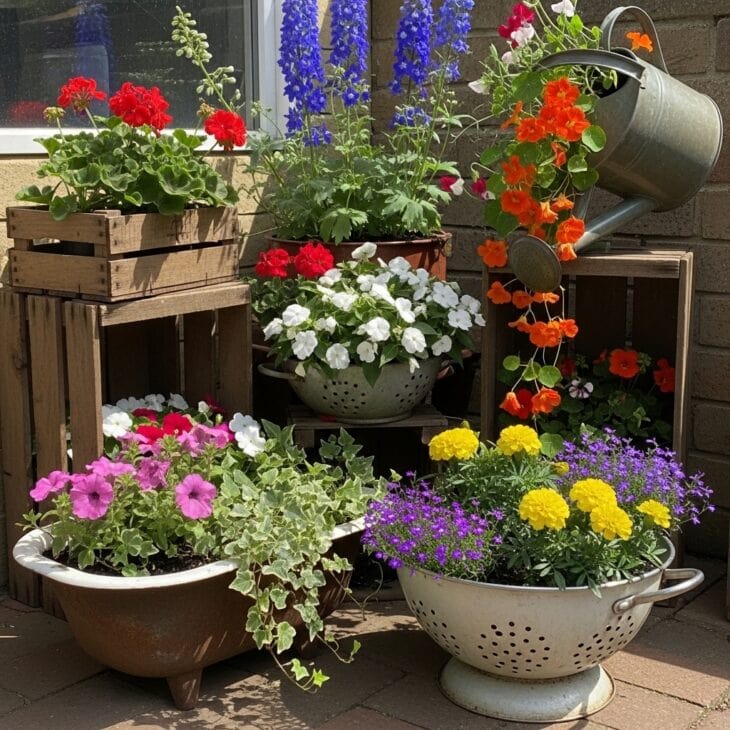
What you see Almost anything that holds compost can become a plant pot. An old colander, a tin bath, wooden crates or a vintage watering can, planted up and overflowing with blooms, give a container garden character and charm that shop-bought pots rarely match.
Why it works Upcycling containers is thrifty, sustainable and full of personality, turning junk into something that tells a story. A quirky, repurposed planter becomes a talking point and a chance to express your own style. It also proves you need not spend a fortune on pots to make a beautiful display.
How to get it The one essential is drainage — drill or punch holes in the base of anything you plant into, or roots will rot. Line porous or rusting containers if you want them to last, and avoid anything that has held toxic chemicals if you are growing edibles. Match the planting to the vessel’s size and depth, remembering small metal containers heat up and dry out fast. Beyond that, let your imagination run: the more unexpected the container, the more charm it brings.
23. A Pollinator Pot Buzzing with Bees
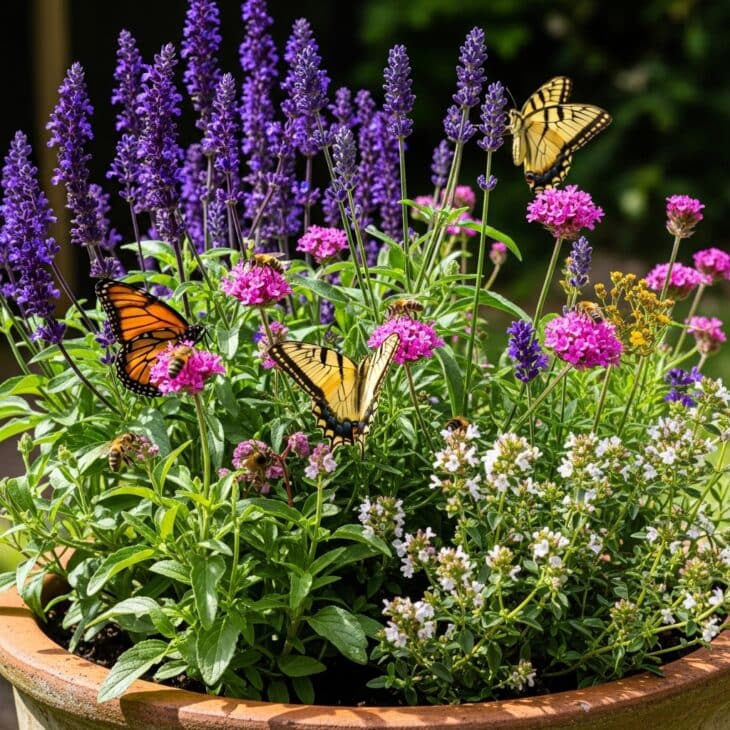
What you see Even a single pot can become a vital pit stop for pollinators. Planted with nectar-rich, single-flowered plants like salvia, Verbena bonariensis, lavender and marjoram, a container hums with bees and butterflies from spring to fall.
Why it works With wild habitat shrinking, even a pot of the right flowers on a balcony makes a real difference to local insect life. Single, open flowers let bees reach the nectar that double blooms hide, and a long succession of bloom keeps the food coming. A buzzing pot is also more alive and absorbing to watch than any static planting.
How to get it Choose single-flowered, nectar-rich plants and aim for a long flowering season, mixing in herbs like marjoram, thyme and chives, which bees adore once they bloom. Place the pot in a sunny, sheltered spot where insects like to forage. Avoid pesticides entirely, and leave a few seedheads standing rather than cutting everything back. Group several pollinator pots together to create a bigger, more reliable patch of forage.
24. A Fragrant Pot Beside Your Seat
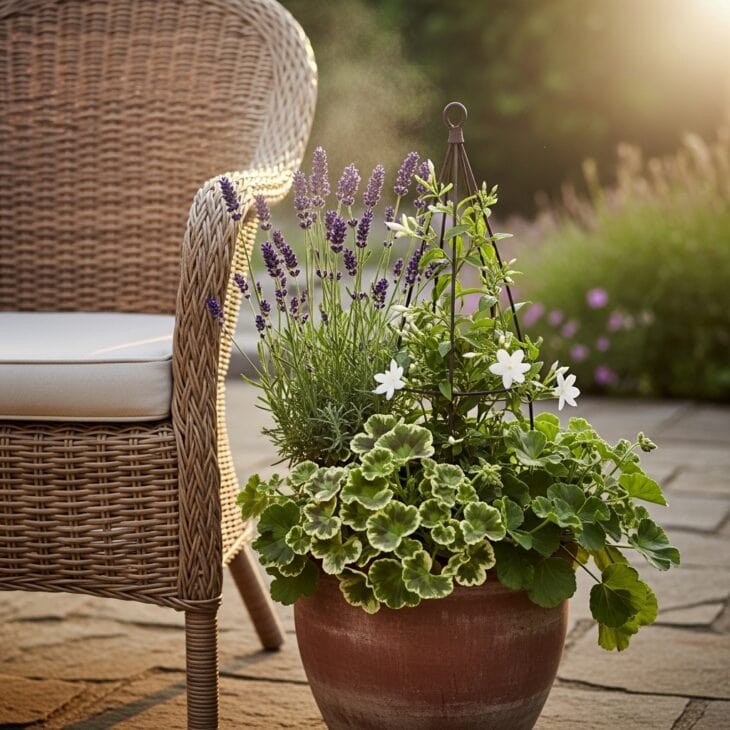
What you see A pot is the perfect way to place scent exactly where you will enjoy it. Set a container of scented pelargoniums, lavender and a small climbing jasmine right beside a favorite seat, and every warm evening fills with fragrance as you brush past the leaves and flowers.
Why it works Scent is the most evocative and underused dimension of a garden, and a container lets you put it precisely where it counts — by a chair, a door or a path. Because you can move pots around, you can follow the fragrance through the seasons and keep the best-scented plant of the moment closest to you. It turns a simple seat into a sensory retreat.
How to get it Position fragrant pots within arm’s reach of seating, doorways and paths rather than far across the garden. Choose plants whose scent comes from the flowers, like lavender, jasmine and lilies, or from the foliage, like scented pelargoniums and rosemary that release perfume when touched. Include something for the evening — tobacco plants or a night-scented stock — where you sit after dark. Keep a succession going by swapping pots as different plants come into their scented peak.
25. Classic Pelargoniums for Nonstop Color
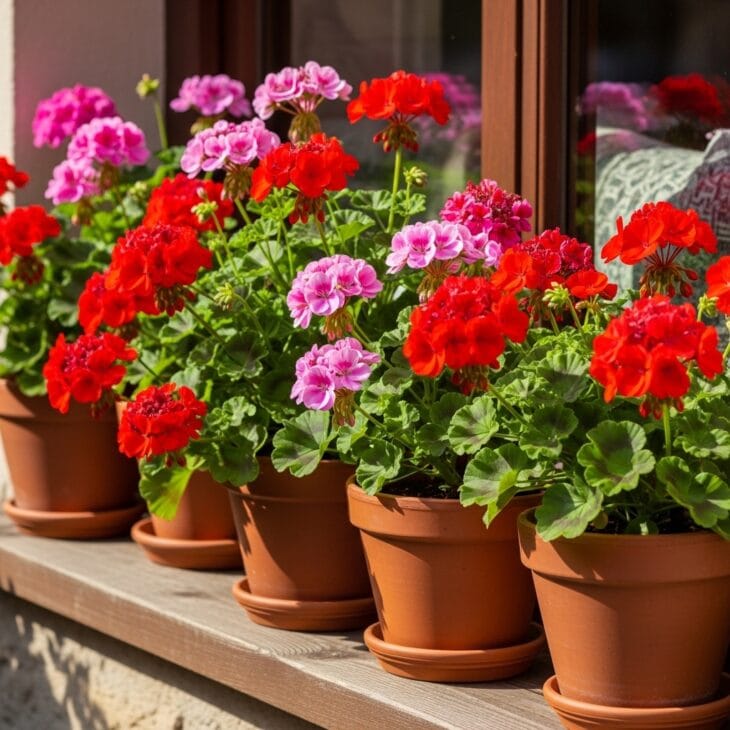
What you see There is a reason pelargoniums (Pelargonium) — the plants most people call geraniums — are the classic pot flower the world over. Brimming from terracotta pots in bold reds, pinks and whites, they bloom tirelessly all summer with very little fuss, the very picture of a sunny doorstep.
Why it works Pelargoniums are the ultimate easy container plant: drought-tolerant, sun-loving and astonishingly free-flowering, they shrug off the heat and the odd missed watering that would finish thirstier annuals. Their long season and reliable color make them perfect for anyone who wants maximum impact for minimum effort. They are also easy to overwinter and propagate, so a few plants soon become many.
How to get it Plant pelargoniums in free-draining compost in a sunny spot, and resist overwatering — they prefer to dry out a little between drinks. Deadhead regularly by snapping off spent flower stems at the base to keep the blooms coming. Feed with a high-potash feed through summer for the best flowering. Before the first frost, take cuttings or lift and overwinter the plants somewhere frost-free, and they will give you years of color.
26. A Naturalistic Grasses-and-Perennials Pot
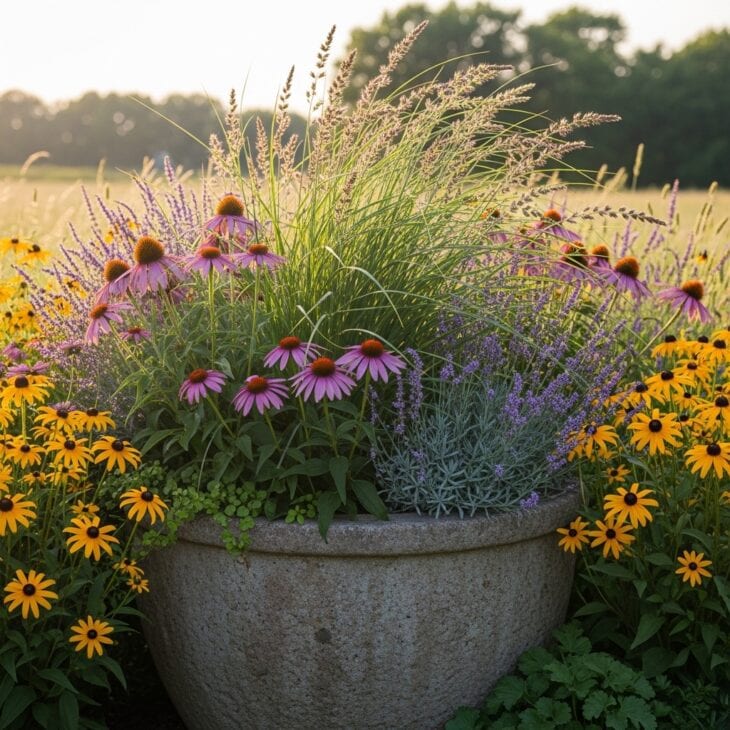
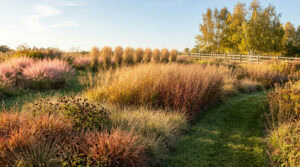
What you see For a contemporary, relaxed look, plant a pot in the naturalistic prairie style. Airy ornamental grasses sway above perennials like coneflower (Echinacea) and black-eyed Susan (Rudbeckia) woven through them, bringing softness, movement and a long season of interest to a single container.
Why it works This loose, meadowy planting is a refreshing change from tightly packed bedding, and the grasses add the movement and light that flowers alone lack. Many of these perennials and grasses also look good well into winter, their seedheads and faded stems catching frost and feeding birds. It is a low-maintenance, wildlife-friendly style that suits modern settings beautifully.
How to get it Use a large, deep pot, since perennials and grasses need more root room than annuals and you want them to last several years. Combine an airy grass such as Stipa or Hakonechloa with a few long-flowering perennials like coneflower, rudbeckia or salvia. Plant in a loam-based compost, and resist the urge to cut everything back in fall — leave the seedheads for winter structure and trim in early spring. Divide and refresh the planting every few years as it fills out.
27. A Single-Color Statement Scheme
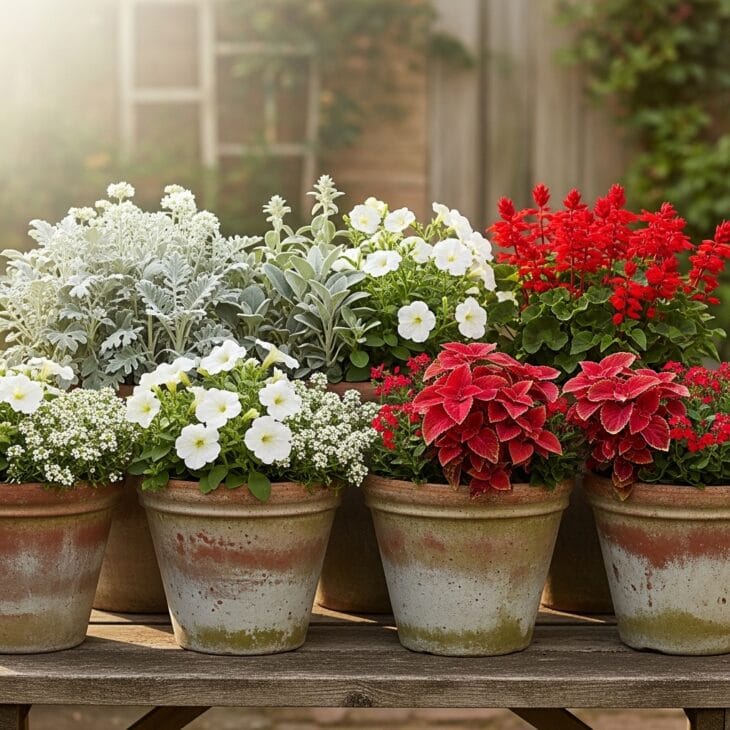
What you see Limiting a display to a single color is a designer’s trick that makes pots look instantly sophisticated. A row of containers all in white and silver, or all in hot reds and oranges, reads as one bold, coordinated statement rather than a jumble of competing colors.
Why it works A restricted palette brings calm and cohesion, letting the eye appreciate the variety of plant shapes and textures without being distracted by clashing hues. A single color also has real impact and elegance, and is one of the easiest ways to make a container display look deliberately designed. White and silver schemes are especially lovely at dusk, when they glow in the fading light.
How to get it Pick one color story and gather plants that fit it, using foliage — silver, lime, dark purple — as well as flowers to add depth. Vary the plant shapes and textures so the scheme has interest despite the single color. Repeating the same pot style reinforces the coordinated, intentional look. To extend the effect, choose a succession of plants in your chosen color so the scheme holds through the seasons.
28. A Bold Tropical Container
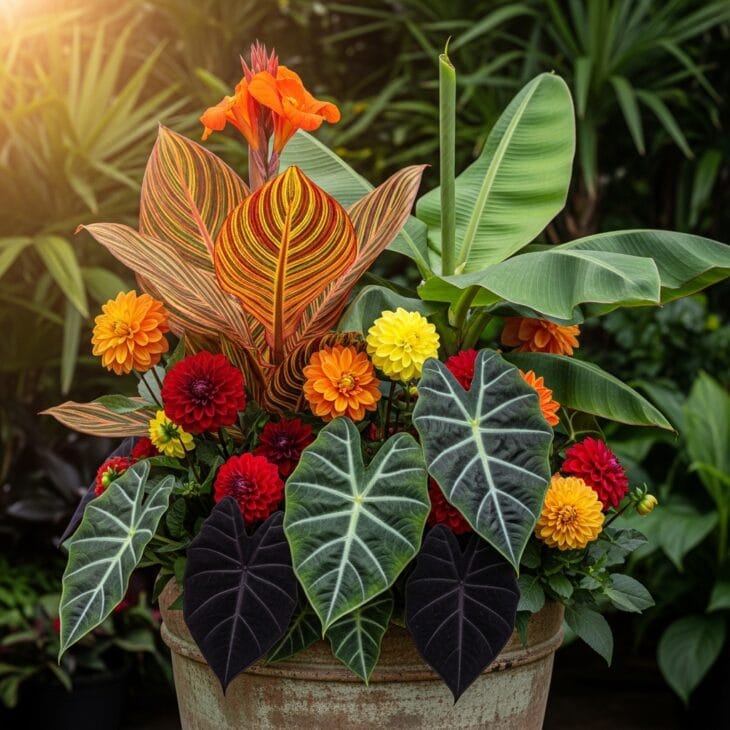
What you see For pure drama, nothing beats a big, bold tropical pot. Canna lilies (Canna), a banana plant, fiery dahlias and the huge leaves of colocasia combine into a lush, exotic display that brings a jungle flavor to a patio or doorway.
Why it works Tropical plants bring scale, bold color and architectural leaves that no temperate bedding can match, turning a container into a real showstopper. A pot is the ideal way to grow them in a cooler climate, since you can move tender exotics under cover when the weather turns. The fast, luxuriant growth fills a big container quickly for an immediate, theatrical effect.
How to get it Use a large, sturdy pot and a rich, moisture-retentive compost, since these hungry, thirsty plants grow fast and large. Build the planting around a tall centerpiece like a canna or banana, and surround it with bold foliage and hot-colored flowers. Feed and water generously through summer to fuel the lush growth, and give them the warmest, most sheltered spot you have. In cold-winter areas, lift tender plants and tubers or move the whole pot into a frost-free place before the first frost.
29. Go Self-Watering for Easy Care
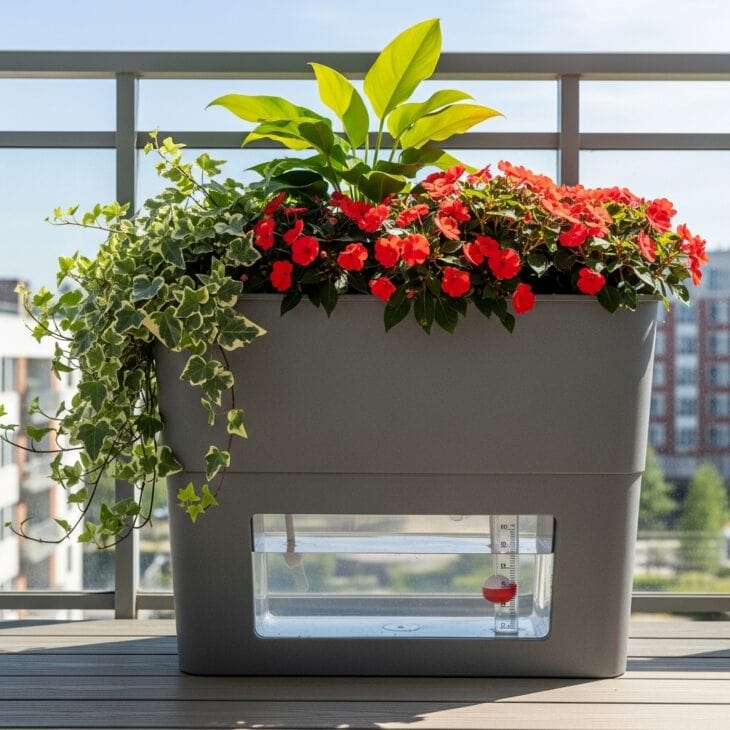
What you see The hardest part of container gardening is the watering, and self-watering planters take much of that worry away. A hidden reservoir in the base lets plants draw up moisture as they need it, keeping the compost evenly damp and the planting lush even when you cannot water every day.
Why it works Pots dry out fast, and a single hot day away can undo a whole summer’s display — self-watering containers buy you days of grace and even out the feast-and-famine that stresses plants. They cut watering frequency dramatically, which is a gift for busy people, frequent travelers and anyone with lots of pots. Consistent moisture also produces healthier, more productive plants, especially vegetables.
How to get it Buy ready-made self-watering containers, or make your own with a reservoir and a wicking system in the base. Fill the reservoir through its pipe and check the water-level indicator rather than guessing. Use a compost that wicks moisture well, and let the surface dry slightly between top-ups so roots do not sit sodden. They suit thirsty plants like tomatoes and leafy crops best; avoid them for succulents and Mediterranean plants that prefer to dry out.
30. Keep Pots Going Year-Round
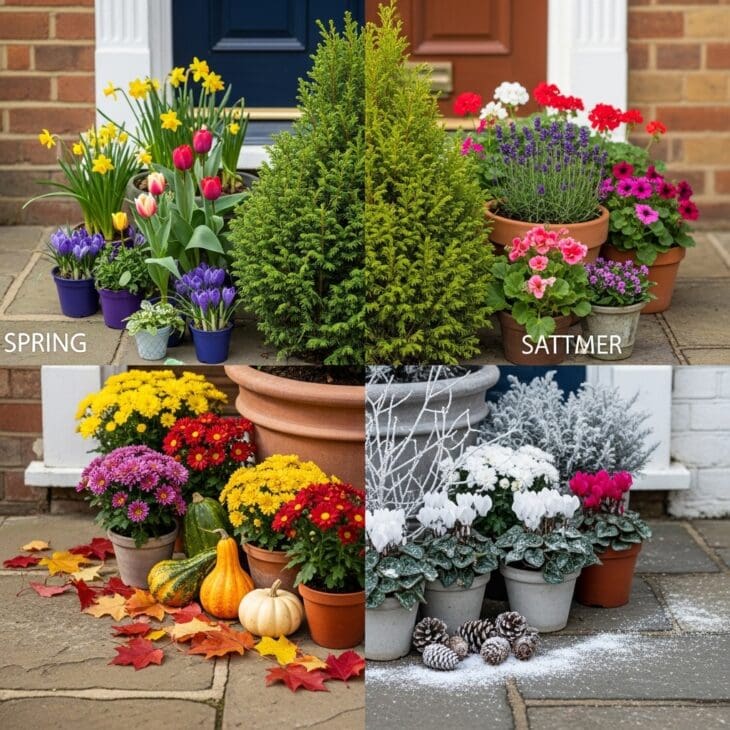
What you see The secret to a container garden that always looks good is to plan for every season, not just summer. A backbone of evergreens in key pots, with seasonal planting swapped around them, keeps the display fresh from spring bulbs through summer flowers to fall foliage and winter structure.
Why it works Many container gardens peak for a few months and then sit empty and forlorn, but a little planning keeps them earning their place all year. Permanent evergreen anchors provide structure in the lean months, while a rotation of seasonal stars keeps the color changing. Thinking in terms of the whole year, rather than one season, is what separates a thoughtful container garden from a fleeting summer flourish.
How to get it Keep a few large pots planted permanently with evergreens — box, a small conifer, or an olive — as year-round anchors. Around them, use smaller pots you can refresh each season: bulbs for spring, annuals for summer, foliage for fall, and hardy evergreens and violas for winter. Keep a quiet corner to grow on the next season’s display before it takes center stage. Refresh the top few inches of compost and feed when you replant, and your pots will reward you in every month of the year.